
Notch-Leaf Scorpionweed (Phacelia crenulata)
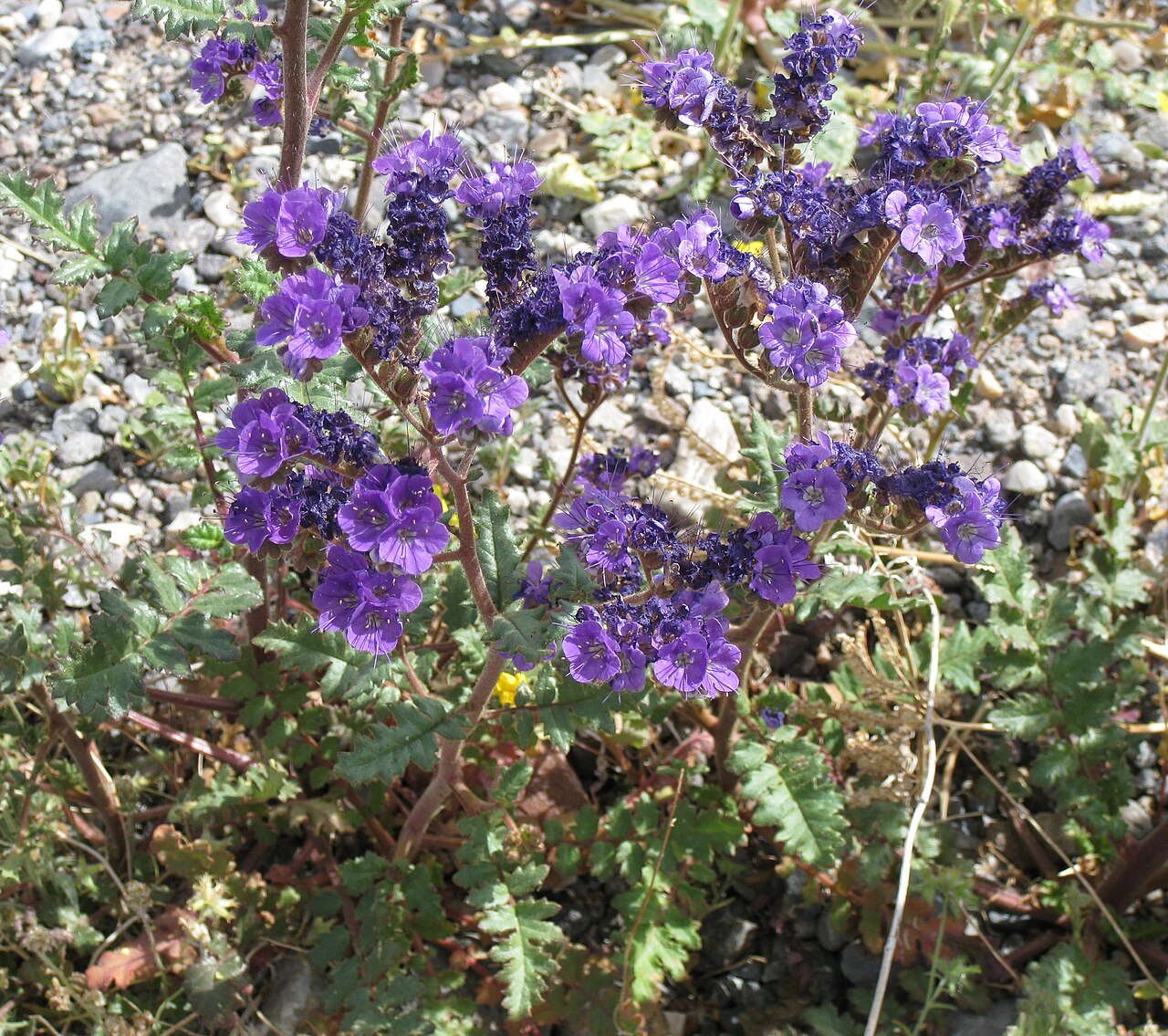
Phacelia crenulata, known as Notch-Leaf Scorpionweed (USDA: cleftleaf wildheliotrope; also notch-leaved phacelia or heliotrope phacelia), is one of the most common spring wildflowers of the deserts of the Southwest. It belongs to the borage family (Boraginaceae; formerly the waterleaf family, Hydrophyllaceae). After winter rains, it carpets washes, slopes and roadsides with violet-purple flowers held in coiled clusters that unroll like a scorpion’s tail, the source of the name scorpionweed.
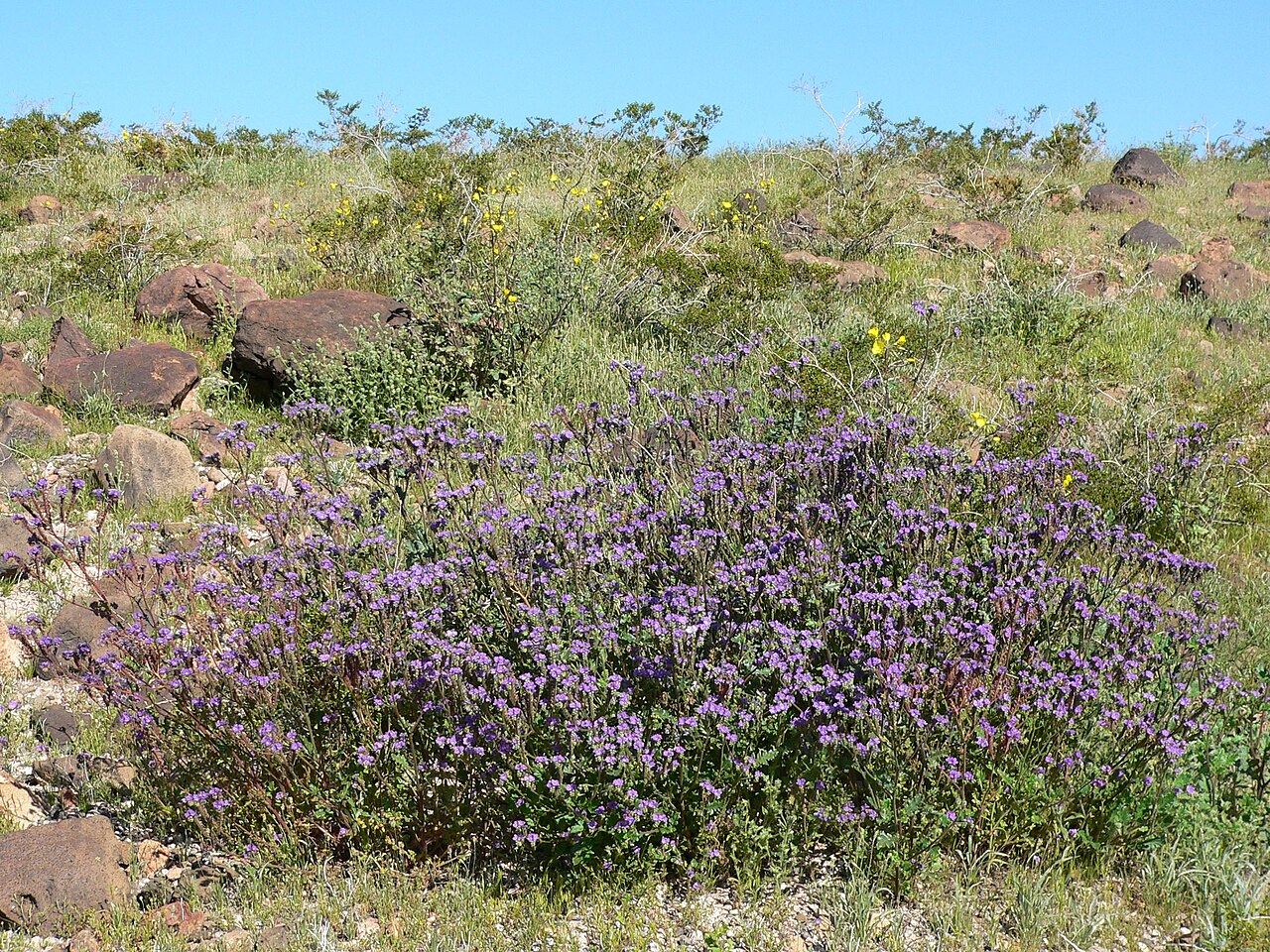
It is an annual that sprouts in fall or winter and blooms from about February to May, growing from a few inches to over 2 feet tall depending on rain. The whole plant is covered in stiff, sticky, glandular hairs and has a strong, unpleasant odor. Its oblong leaves have wavy, scalloped or deeply notched edges. The flowers are a favorite of native bees, and in wet years it is a major part of desert “superblooms” in Death Valley, the Mojave and the Sonoran Desert.
Safety note: like many phacelias, notch-leaf scorpionweed can cause an itchy, blistering contact dermatitis similar to poison oak in sensitive people. Avoid handling it with bare skin, and wash promptly if you do. It can be grown from seed in desert gardens, but most people enjoy it best in the wild.
Identification
Look for a low to medium, sticky-hairy annual with dark green, scalloped or notched leaves and coiled clusters of violet bell-shaped flowers with long protruding stamens, on desert flats, washes and rocky slopes in spring.
Stems & Habit
Notch-leaf scorpionweed is an annual with one to several stems, upright or spreading, from a few inches to about 30 inches tall. In dry years plants are small and single-stemmed; in wet years they branch into mounds. The stems are often reddish and covered with stiff hairs and sticky glands.
Leaves
The leaves are 3/4 to 4 3/4 inches (2 to 12 cm) long, largest near the base, smaller and fewer up the stem. They are oblong in outline, with wavy, scalloped (crenulate) or deeply notched to lobed edges, and are dark green and glandular-hairy. Crushed leaves have a strong, skunky odor.
Flowers
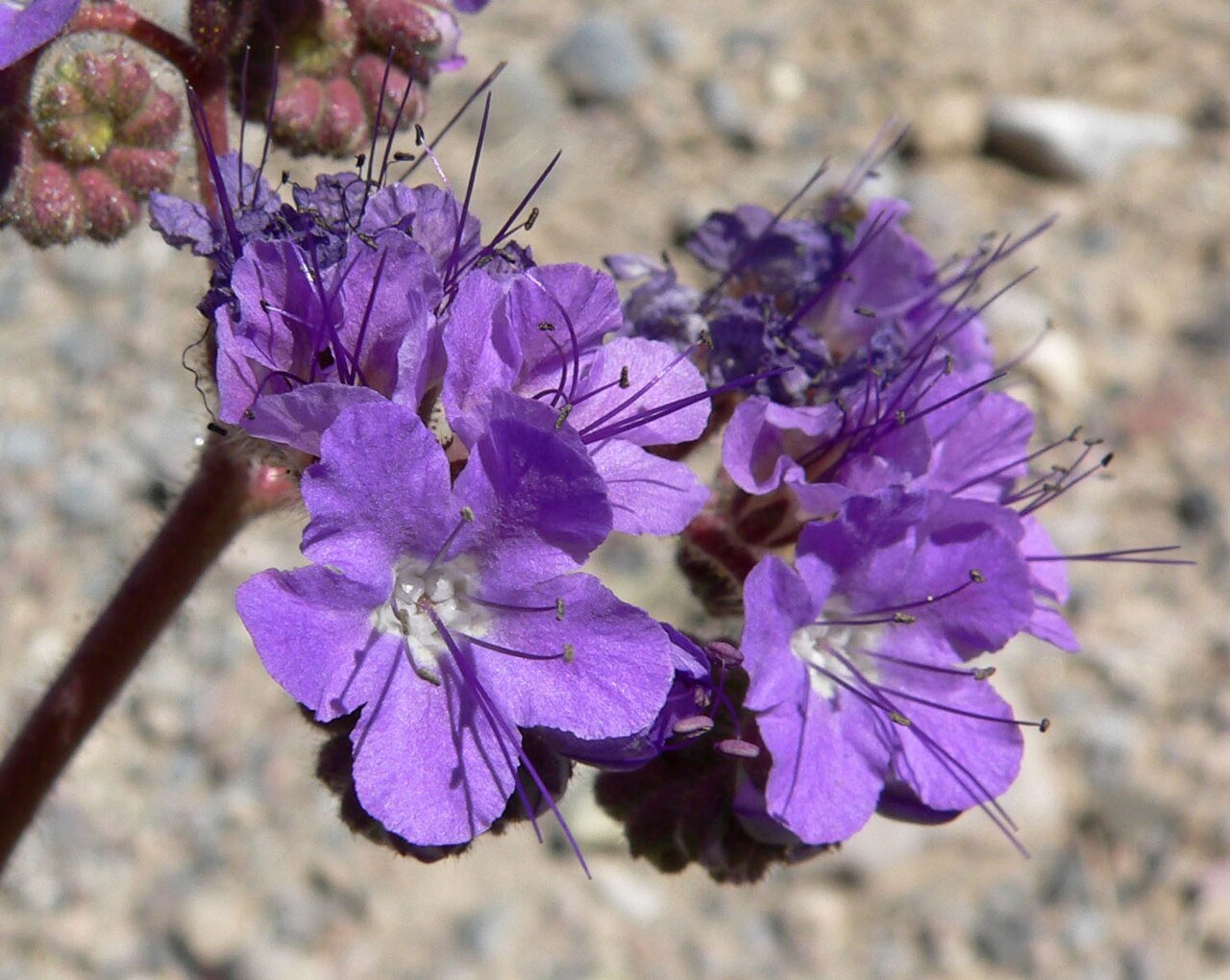
The flowers are borne in dense, one-sided, coiled cymes that uncoil as the flowers open from the base upward. Each flower is bell-shaped, about 1/8 to 3/8 inch (4 to 10 mm) long, violet to purple or blue-purple, with a white tube and often a white throat. The stamens and style stick out well beyond the petals. Bloom time is February to May at most sites.
Fruit & Seeds
Each flower produces a small, rounded capsule a few millimeters wide containing several pitted seeds. The plant dies after setting seed in late spring, and the seeds wait in the soil, sometimes for years, until the next good winter rain.
Look-alikes
Distant phacelia (Distant Phacelia, Phacelia distans) has finely divided, fern-like leaves and paler, blue flowers. Lacy phacelia (P. tanacetifolia) also has fern-like leaves. Fremont’s phacelia (P. fremontii) has lavender flowers with a yellow throat. Notch-leaf scorpionweed is recognized by its oblong, scalloped to notched (not fern-like) leaves and violet flowers with pale throats. Botanists recognize several varieties, including var. ambigua with larger flowers and var. minutiflora with tiny flowers.
Safety & Conservation
The glandular hairs of notch-leaf scorpionweed can cause contact dermatitis, an itchy rash with blisters similar to poison oak, in sensitive people. Wear gloves and long sleeves when handling it, and keep children and pets from rolling in patches. Do not eat it. The species is common and widespread and is not of conservation concern, though some local varieties are uncommon.
Quick Facts
| Scientific Name | Phacelia crenulata |
| Family | Boraginaceae (borage family); formerly Hydrophyllaceae |
| Plant Type | Winter annual wildflower |
| Mature Height | 4–30 in |
| Mature Spread | 6–24 in |
| Growth Rate | Fast |
| Sun Exposure | Full sun |
| Water Needs | Very low; relies on winter rain |
| Soil Type | Sandy, gravelly or rocky desert soils; washes and slopes |
| Soil pH | About 7.0–8.5 |
| Bloom Time | February–May |
| Flower Color | Violet to blue-purple, with white throat |
| Fall Color | None; annual, dies after seeding |
| Fruit | Small rounded capsule with pitted seeds |
| Deer Resistant | Yes; sticky, smelly foliage is avoided by most browsers |
| USDA Hardiness Zones | Annual; grows where zones 7–10 occur |
Native Range
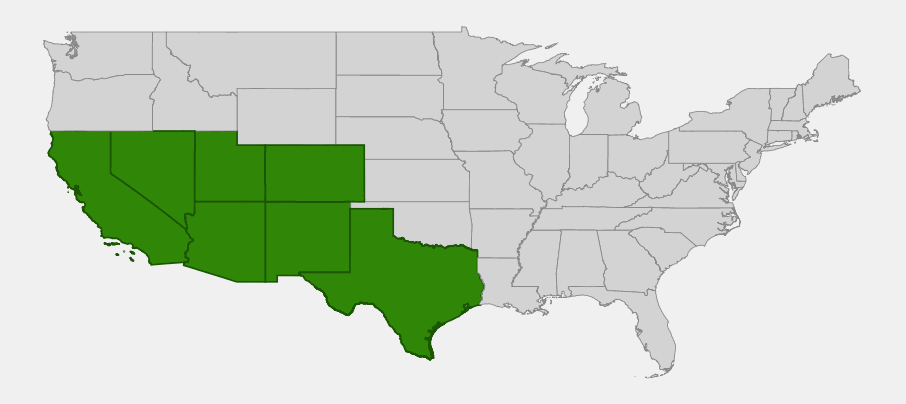
Notch-leaf scorpionweed is native to the southwestern United States and northwestern Mexico. USDA PLANTS lists it as native in Arizona, California, Colorado, Nevada, New Mexico, Texas and Utah. It also grows in Baja California and Sonora. Remarkably, the same species also occurs in South America, in southern Peru, western Bolivia and northern Chile, an example of the “amphitropical” distributions shared by several desert plants of North and South America.
In the United States it is most common in the Mojave and Sonoran deserts of southeastern California, southern Nevada and western Arizona, including Death Valley, Joshua Tree, Red Rock Canyon and Lake Mead. It extends north and east across the Colorado Plateau of Utah, western Colorado and northern Arizona and New Mexico, and into the Chihuahuan Desert of southern New Mexico and far western Texas.
It grows in open, sunny desert habitats: sandy and gravelly washes, alluvial fans, rocky slopes, canyon bottoms and roadsides, often in creosote bush scrub and blackbrush, and higher up into pinyon-juniper woodland. It is abundant mainly in years with good winter rain.
📋 Regional plant lists featuring Notch-Leaf Scorpionweed: Idaho, Eastern Oregon & Eastern Washington · Utah & Western Colorado · Arizona & New Mexico · South & West Texas · California & Nevada
Growing & Care Guide
Notch-leaf scorpionweed is easy to grow from seed in desert gardens, where it behaves like a self-sowing wildflower. Because of its sticky, irritating hairs, plant it away from paths and play areas.
Light
Full sun. It flowers poorly and becomes leggy in shade.
Soil & Water
It prefers sandy, gravelly or rocky soil with excellent drainage. Rely on winter rain; in dry winters, water every few weeks from germination to bloom. Rich soil and frequent watering produce floppy plants.
Planting Tips
Scatter seed on bare, raked ground in fall, ideally before the first winter rains, and press it lightly into the soil. Do not cover deeply. Mix it with other desert annuals such as desert marigold, desert bluebells and poppies for a wildflower display.
Pruning & Maintenance
No pruning is needed. Let plants set seed before removing them in late spring. Wear gloves when pulling plants, and wash skin afterward if you touch them.
Propagation
Seed only. Fresh seed often has some dormancy; sowing outdoors in fall lets natural weathering and cool, moist conditions trigger germination. Some seed may wait in the soil for later years.
Landscape Uses
- Desert wildflower gardens: a reliable, self-sowing spring annual
- Pollinator gardens: a top nectar and pollen plant for native bees
- Desert restoration: native annual for seeding disturbed desert ground
- Superbloom viewing: a key part of the purple carpets in wet years
- Informal roadside plantings: tolerates poor, gravelly ground
Wildlife & Ecological Value
Notch-leaf scorpionweed is a key early-season resource for desert insects, especially native bees.
For Pollinators
The Xerces Society notes that it has special value to native bees. Mining bees, mason bees, bumblebees and many other bees visit the flowers, along with bee flies, butterflies and moths. Some specialist desert bees depend heavily on phacelias for pollen.
For Birds
Seed-eating birds such as sparrows and finches may eat the small seeds, and insect-eating birds hunt among the flowers.
For Mammals
Most mammals avoid the sticky, smelly foliage. Desert rodents may gather the seeds.
Ecosystem Role
As a winter annual, it turns good rain years into a flush of flowers that feeds pollinators, then leaves a seed bank in the soil to survive dry years. It is one of the most important native annuals for bee diversity in the desert Southwest.
Cultural & Historical Uses
The genus name Phacelia comes from the Greek phakelos, “bundle,” referring to the crowded flower clusters. The name scorpionweed describes the coiled flower stems, which resemble a scorpion’s curled tail. The species name crenulata means “with small rounded teeth,” describing the scalloped leaf edges.
Phacelias are well known for causing contact dermatitis. People hiking or photographing wildflowers in desert superblooms sometimes develop itchy rashes on their hands, arms and legs from brushing against the glandular hairs, even without noticing contact.
Its presence in both the North American and South American deserts has interested botanists, who think birds or other agents may have carried seeds between the two continents long ago. On this site, related species include Distant Phacelia.
Frequently Asked Questions
Can notch-leaf scorpionweed cause a rash?
Yes. Like many phacelias, its sticky glandular hairs can cause an itchy, blistering rash similar to poison oak in sensitive people. Wear gloves and long sleeves when handling it.
Why is it called scorpionweed?
The flower clusters are coiled at the tip and unroll as the flowers open, like a scorpion’s curled tail.
Is it an annual or perennial?
It is a winter annual. It germinates after fall or winter rain, blooms in spring and dies after setting seed.
Is notch-leaf scorpionweed good for bees?
Yes. It is one of the most valuable desert wildflowers for native bees, which visit it heavily for nectar and pollen.
How do I grow it?
Scatter seed on bare, well-drained soil in full sun in fall, before winter rains, and let it self-sow. No fertilizer or summer water is needed.

Looking for a nursery that carries Notch-Leaf Scorpionweed?
Browse our native plant nursery directory: Arizona · California · Colorado · Nevada & New Mexico · Texas & Utah