
Pacific False Bindweed (Calystegia purpurata)
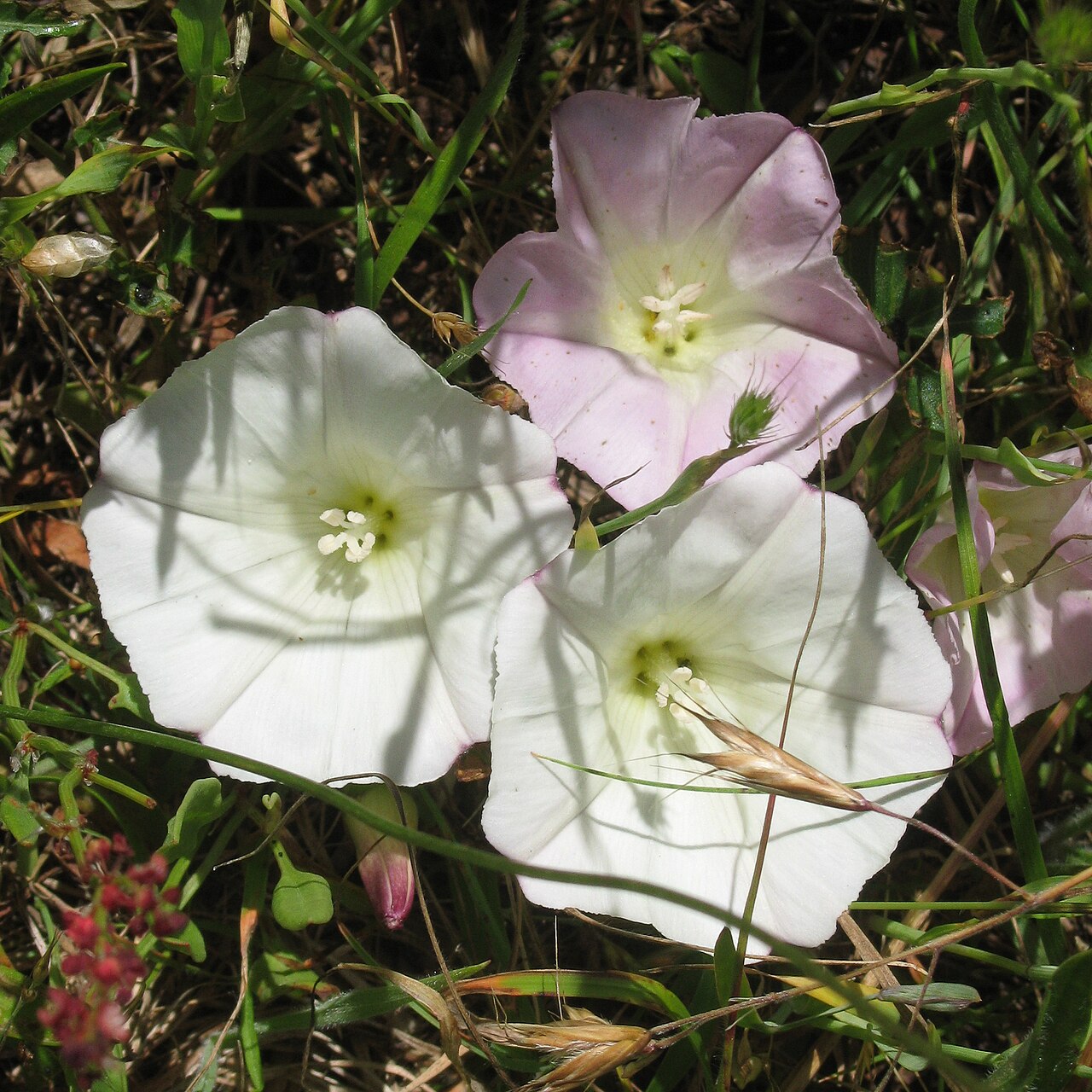
Calystegia purpurata, known as Pacific False Bindweed, smooth western morning glory or purple western morning glory, is a perennial native vine found only in California. It twines through coastal scrub, chaparral and oak woodland in the Coast Ranges, with arrow-shaped leaves and large, funnel-shaped flowers of white, pink or pale purple from spring into summer.
It belongs to the morning glory family (Convolvulaceae). The genus Calystegia, the false bindweeds, differs from true bindweeds (Convolvulus) mainly in having two leafy bracts just below each flower and a different stigma. The species name purpurata, “made purple”, refers to the purple-tinged flowers, though many plants have white flowers that age to pink.
Pacific false bindweed is not the weedy field bindweed of farms and gardens, which is an introduced European plant. It is a well-behaved native vine that is easy to grow in dry California gardens, where it can scramble over shrubs or a fence and attract bees. This guide covers how to identify it, where it grows, and how to grow it.
Identification
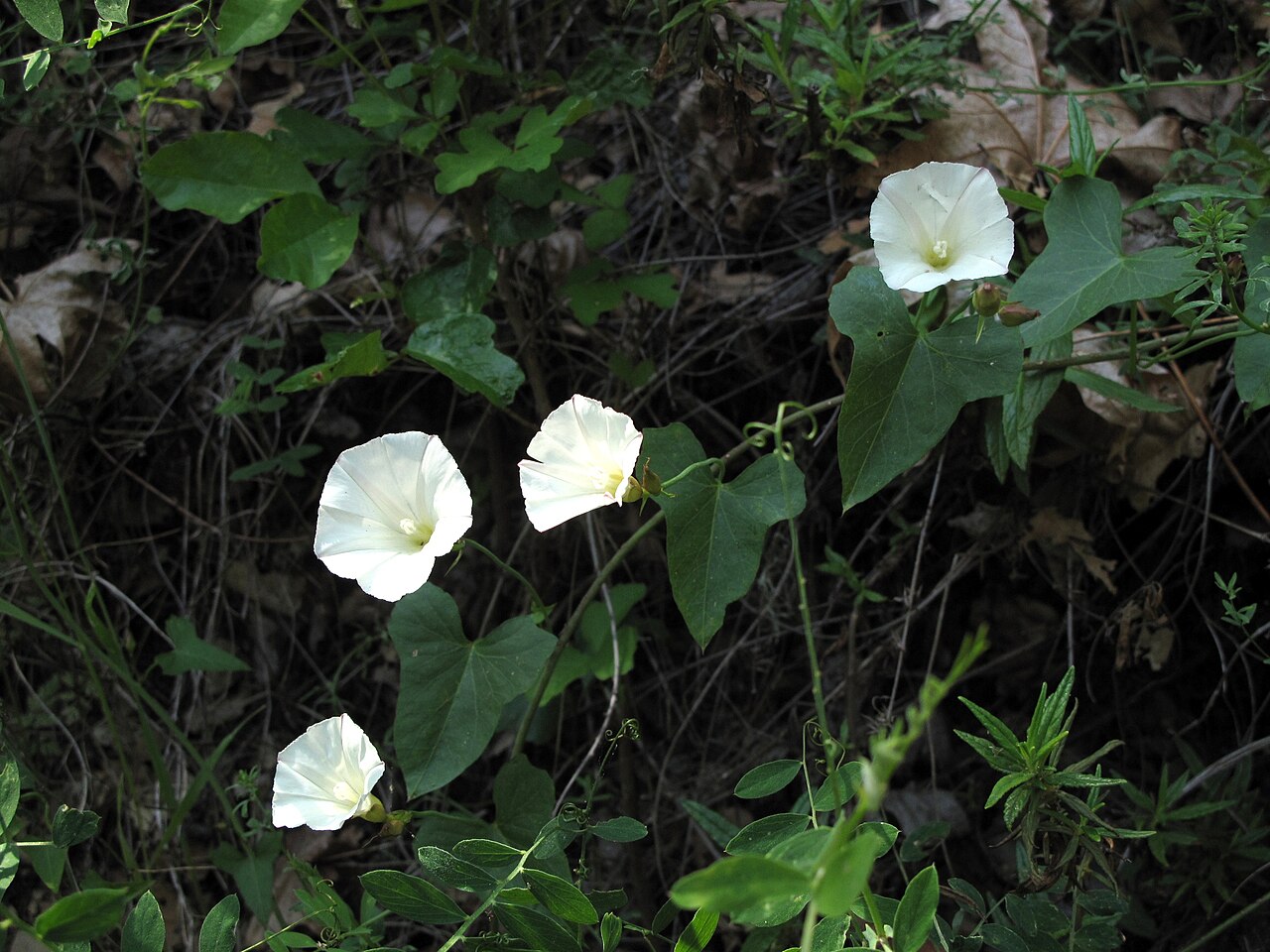
Pacific false bindweed is easy to spot when its large flowers are open. Look for a slender, twining vine with arrow-shaped leaves, climbing over shrubs or sprawling across slopes.
Growth Habit
It is a perennial vine that grows from a deep, woody root. The slender, mostly hairless stems twine around other plants or trail over the ground, often reaching 3 to 10 feet long and sometimes longer. The stems die back partly in dry summers and fall, and grow again with the winter rains.
Leaves
The leaves are alternate, triangular to arrow-shaped, with two pointed or squared basal lobes, usually 1 to 2 inches long. They are smooth or only slightly hairy, which gives the plant the name smooth western morning glory.
Flowers
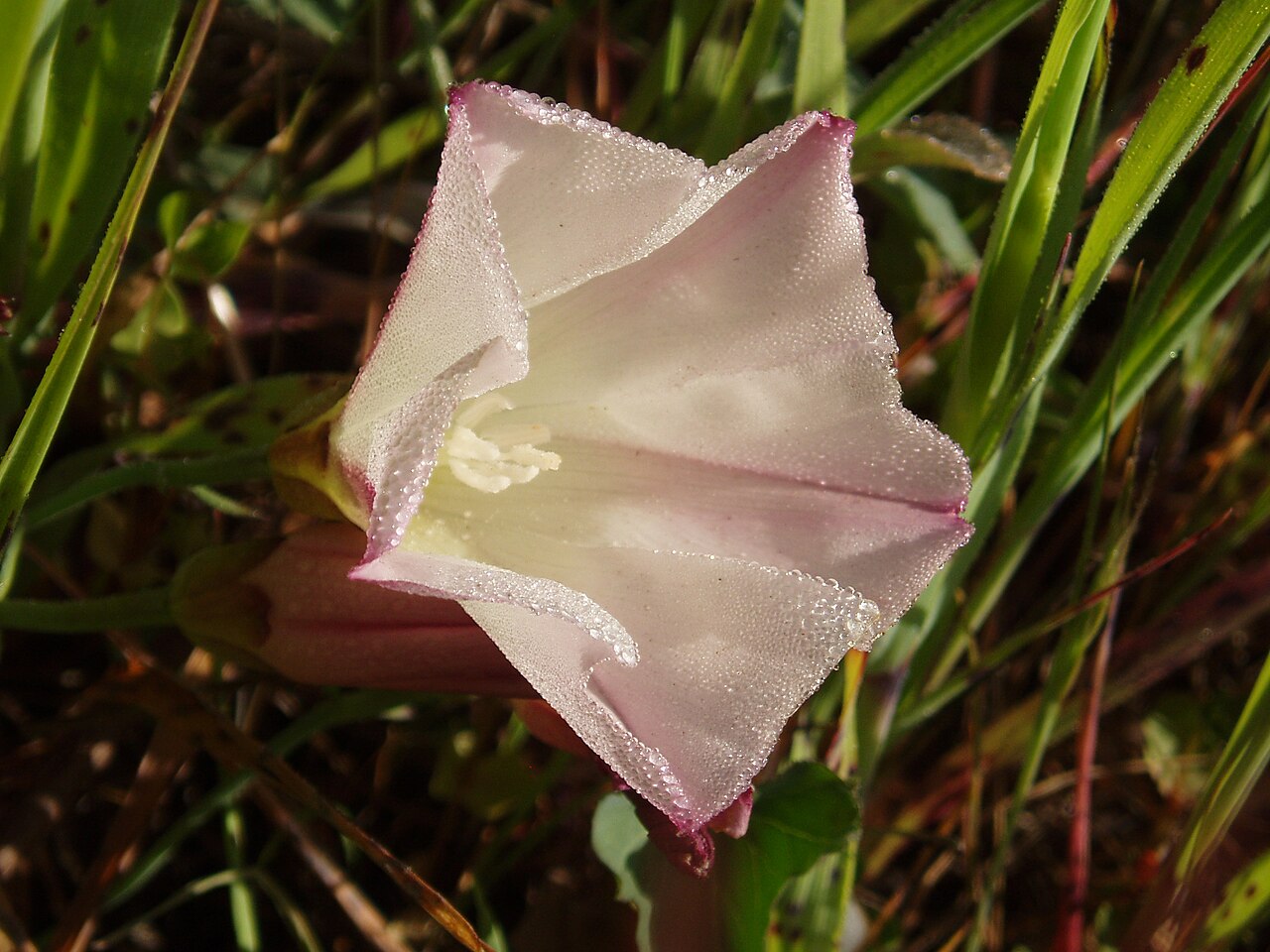
The flowers are funnel-shaped, about 1 to 2 inches long, and open from spiraled buds. They are white, cream, pink or pale purple, often with darker pink or purple stripes along the folds of the corolla. Two small, leafy bracts sit just below the sepals. Bloom time is mainly April to August, peaking in late spring.
Fruit & Seeds
After flowering, each flower forms a round capsule about 1/2 inch across with a few large, dark seeds.
Look-alikes
Chaparral false bindweed (Calystegia occidentalis) is a grayish-hairy vine with white to cream flowers, common in chaparral and mountains. Sea bindweed (Calystegia soldanella) creeps across beach sand, with thick, kidney-shaped leaves. Field bindweed (Convolvulus arvensis), an introduced weed, has smaller flowers, tiny bracts set well below the flower, and no leafy bracts against the sepals. Pacific false bindweed is identified by its smooth, arrow-shaped leaves, its twining habit and its white to pink or purple flowers.
Quick Facts
| Scientific Name | Calystegia purpurata (Greene) Brummitt |
| Family | Convolvulaceae (morning glory family) |
| Plant Type | Perennial twining vine |
| Mature Height | Climbs or trails 3–10 ft |
| Mature Spread | 3–10 ft |
| Growth Rate | Moderate to fast |
| Sun Exposure | Full sun to part shade |
| Water Needs | Low; drought tolerant once established |
| Soil Type | Well-drained loam, sand, clay or rocky soils |
| Soil pH | About 6.0–8.0 |
| Bloom Time | April–August |
| Flower Color | White, cream, pink or pale purple, often striped |
| Fall Color | None; stems die back in late summer and fall |
| Fruit | Round capsule with a few large dark seeds |
| Deer Resistant | Moderately; not a favored browse plant |
| USDA Hardiness Zones | 8–10 |
Native Range
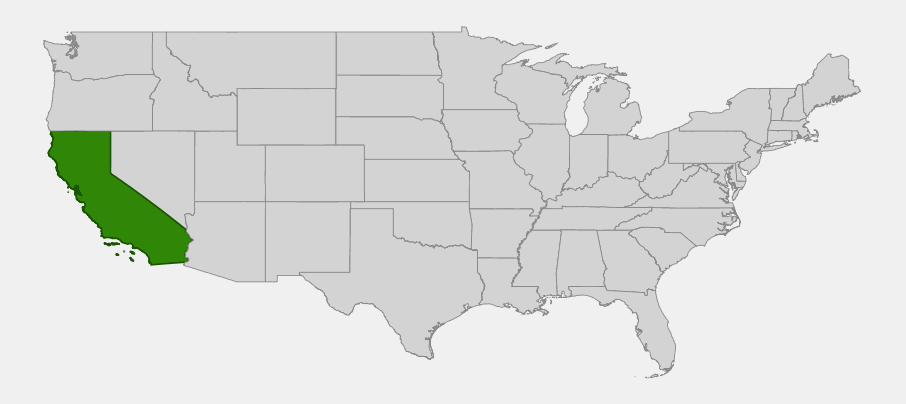
Pacific false bindweed is endemic to California, so it grows nowhere else in the world. USDA PLANTS lists it only in California, and it is not native to Oregon or Nevada.
It grows near the coast and in the Coast Ranges, from Humboldt County south through the San Francisco Bay Area and the Central Coast to Santa Barbara and Ventura Counties. It is common in the hills of Marin County, the East Bay and the Monterey Peninsula. A low, compact form, subspecies saxicola, grows on coastal bluffs and dunes along the northern coast and is considered rare.
It grows in coastal scrub, chaparral, oak woodland and grassland edges, often climbing over shrubs such as coyote bush and California sagebrush. It is mostly found at low elevations, from coastal bluffs to the lower slopes of the Coast Ranges.
📋 Regional plant lists featuring Pacific False Bindweed: California & Nevada
Growing & Care Guide
Pacific false bindweed is a good native vine for dry California gardens, wildlife gardens and naturalistic plantings. It is sometimes available from California native plant nurseries and native plant society sales. It is far less aggressive than the weedy field bindweed, but it does spread from its roots in good conditions, so give it room to roam.
Light
Grow it in full sun near the coast and in part shade inland. It flowers best with several hours of direct sun.
Soil & Water
It grows in most well-drained soils, from sand to clay, as long as they don’t stay waterlogged. Once established, it needs little or no summer water near the coast and only occasional deep watering inland. Too much summer water can make it grow rank and spread more.
Planting Tips
Plant it in fall or winter so the roots establish with the rains. Give it something to climb, such as a fence, trellis or open shrub, or let it trail down a bank. It looks natural twining through coyote bush, sagebrush or other open shrubs.
Pruning & Maintenance
Cut back the old, dead stems in late fall or winter. Pull out runners that spread beyond where you want them. Otherwise it needs little care.
Propagation
Grow it from seed, nicking or soaking the hard seeds before sowing in fall or spring. It can also be propagated from root divisions or from cuttings in spring.
Landscape Uses
- Fences and trellises: a native flowering vine for dry California gardens
- Banks and slopes: trails over the ground and through shrubs
- Pollinator gardens: large, open flowers for native bees
- Habitat restoration: a native component of coastal scrub and chaparral
- Wildlife gardens: pairs well with coyote bush, sagebrush and monkeyflower
Wildlife & Ecological Value
Pacific false bindweed is part of the coastal scrub and chaparral plant community in California, and its flowers support a variety of insects.
For Pollinators
The large, open flowers are visited by bees, including bumble bees and native solitary bees, which collect pollen and nectar. Flies and small beetles also visit the flowers.
For Birds
Birds use the tangled vines in shrubs for cover, and they feed on insects that live on the plant. The seeds are eaten by some seed-eating birds.
For Mammals
Rodents may eat the seeds. It is not a major food plant for deer.
Ecosystem Role
As a native vine, it adds structure and flowers to coastal scrub and chaparral. Its leaves are food for some native insects, and its deep roots help it regrow after fire and dry summers.
Cultural & Historical Uses
The genus name Calystegia comes from the Greek kalyx, cup, and stege, covering, referring to the bracts that cover the sepals. The species was first described by the California botanist Edward Lee Greene, and later moved to Calystegia by the British botanist Richard Brummitt, who studied the genus.
The name false bindweed sets Calystegia apart from the true bindweeds, Convolvulus. While field bindweed is one of the world’s most troublesome agricultural weeds, most of California’s native Calystegia species are modest, well-behaved members of native plant communities.
Pacific false bindweed is one of the most familiar spring wildflowers on hiking trails in the San Francisco Bay Area and along the Central Coast, where its large flowers stand out among the shrubs of coastal scrub.
Frequently Asked Questions
Is Pacific false bindweed invasive?
No. It is a California native vine. It can spread from its roots in gardens, but it is far less aggressive than field bindweed, an introduced weed.
Where does Pacific false bindweed grow?
It is endemic to California, growing in coastal scrub, chaparral and oak woodland near the coast and in the Coast Ranges, from Humboldt County to Santa Barbara and Ventura Counties.
How do I tell it from field bindweed?
Pacific false bindweed has larger flowers with two leafy bracts just below the sepals and twines over shrubs. Field bindweed has smaller flowers, tiny bracts set well below the flower and creeps through crops and lawns.
What color are the flowers?
They are white, cream, pink or pale purple, often with darker pink or purple stripes, and may change color as they age.
Can I grow Pacific false bindweed?
Yes. Plant it in fall in well-drained soil and full sun to part shade, and give it a fence or shrub to climb. It needs little water once established.

Looking for a nursery that carries Pacific False Bindweed?
Browse our native plant nursery directory: California

