
Yellow Puff (Neptunia lutea)
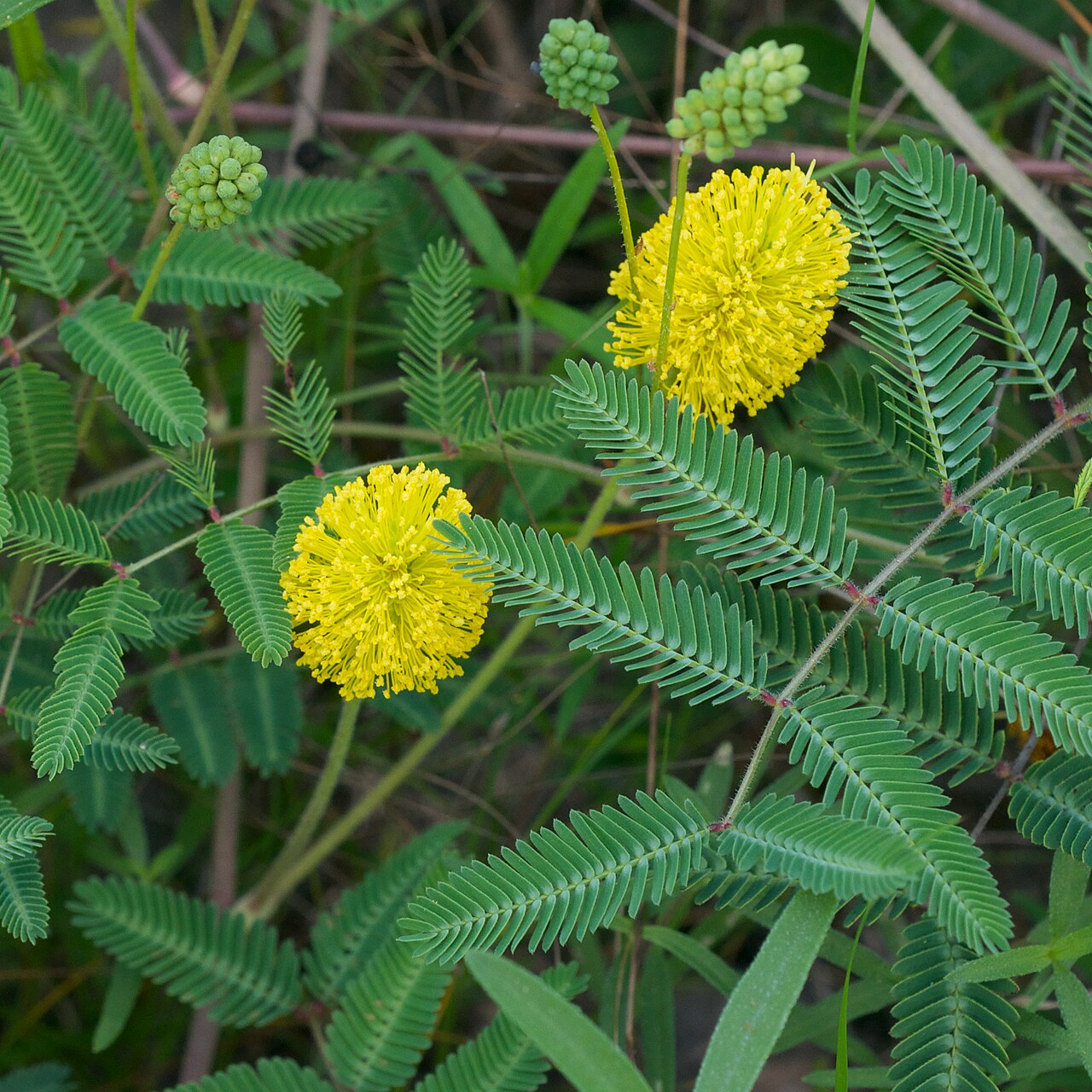
Neptunia lutea, known as Yellow Puff (the USDA name), yellow neptunia or yellow sensitive briar, is a low, sprawling native perennial legume of prairies, roadsides and open woodlands in the south-central United States. From late spring into summer it bears bright yellow, fluffy, ball- to egg-shaped flower heads on long stalks, held above trailing stems with delicate, fern-like leaves.
It belongs to the pea family (Fabaceae), in the same group as the mimosas and acacias, which share its powder-puff flower heads. Unlike the sensitive briars (Mimosa), its stems have no prickles, although its leaflets may fold slightly when touched or at night. The genus is named for Neptune, the Roman god of the sea, because some tropical relatives grow floating in water; lutea means yellow.
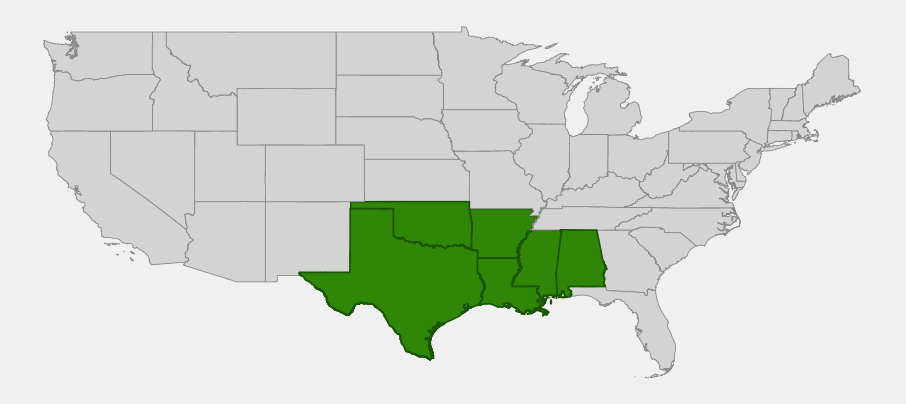
Yellow puff grows from Texas and Oklahoma east to Arkansas, Louisiana, Mississippi and Alabama. It is a tough, drought-tolerant groundcover for sunny prairie gardens and a nitrogen-fixing member of native grasslands. This guide covers how to identify it, where it grows, how to grow it and its value to wildlife.
Identification
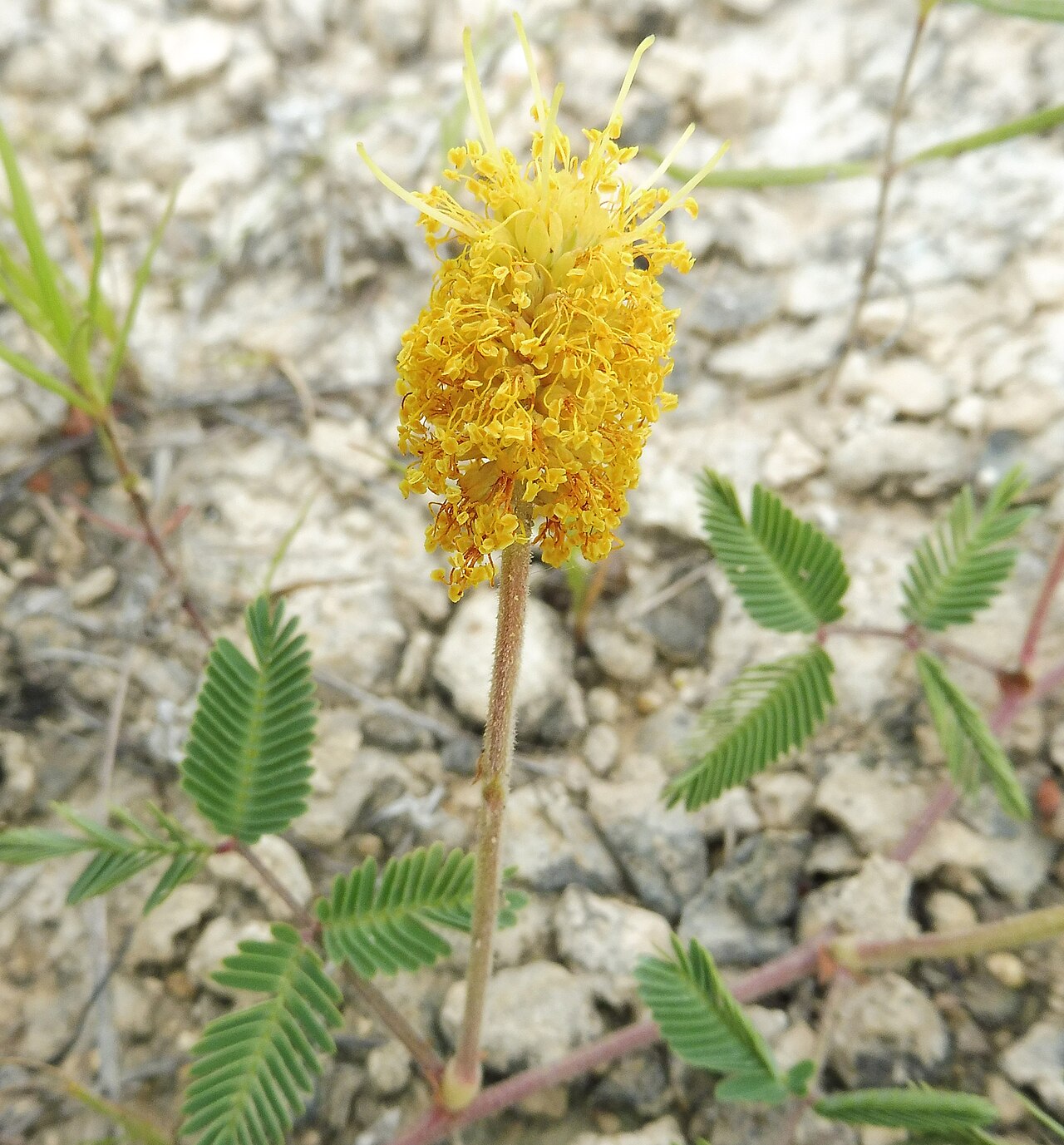
Yellow puff is easy to recognize in bloom: look for bright yellow puffballs on long stalks rising from trailing, prickle-free stems with feathery leaves, usually in grassy, sunny places.
Growth Habit
It is a perennial with a stout, woody taproot. Several stems spread from the crown, lying on the ground or leaning on grasses, often 1 to 3 feet long and occasionally to about 6 feet. The plant rarely stands more than about 1 foot tall. It dies back to the root in winter.
Leaves
The leaves are alternate and twice divided (bipinnate), with several pairs of side branches, each bearing many small, narrow leaflets. The overall effect is fine and fern-like, similar to other mimosa relatives. The leaflets may close partly at night or when disturbed, but less dramatically than in sensitive briars.
Flowers
The flowers are packed into dense, rounded to egg-shaped heads, about 3/4 to 1 inch long, at the ends of long stalks from the leaf axils. The upper flowers are fertile, with ten bright yellow stamens. The lower flowers are sterile and have long, flattened, yellow petal-like stamens, which give the head a shaggy look. Bloom time is mainly April to July, with scattered flowers later in summer.
Fruit & Seeds
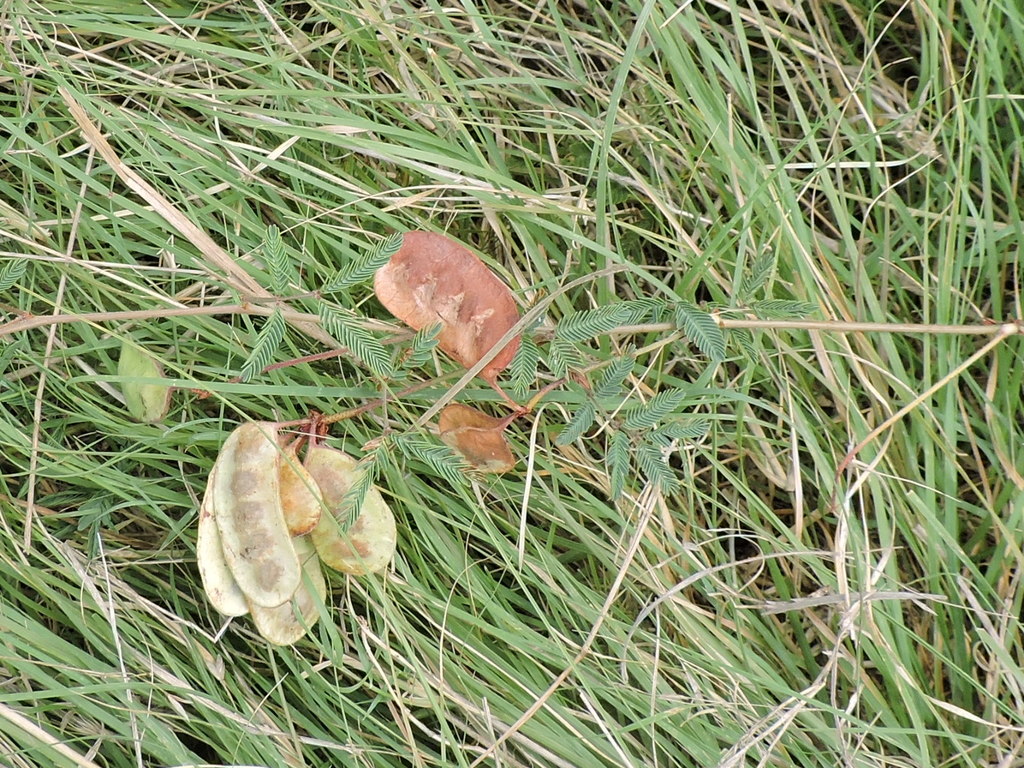
The fruit is a flat, oblong pod about 1 to 2 inches long on a short stalk, several of them clustered on each head. The pods are green at first and turn brown and papery as they ripen in summer, splitting to release several flat seeds.
Look-alikes
Powderpuff (Mimosa strigillosa) has a similar low, trailing habit but pink flower heads. Sensitive briars such as littleleaf sensitive briar (Mimosa microphylla) have pink flowers and hooked prickles on the stems and pods. Illinois bundleflower (Desmanthus illinoensis) has similar leaves but is upright, with small white flower heads and curved, clustered pods.
Quick Facts
| Scientific Name | Neptunia lutea (Leavenw.) Benth. |
| Family | Fabaceae (pea family) |
| Plant Type | Herbaceous perennial (trailing legume) |
| Mature Height | 6–12 in |
| Mature Spread | 1–3 ft (stems occasionally to 6 ft) |
| Growth Rate | Moderate |
| Sun Exposure | Full sun |
| Water Needs | Low to moderate; drought tolerant once established |
| Soil Type | Clay, loam or sandy soils; well-drained to seasonally moist |
| Soil pH | About 6.0–8.0 |
| Bloom Time | April–July (scattered later) |
| Flower Color | Bright yellow |
| Fall Color | None notable; dies back in winter |
| Fruit | Flat, oblong pods that turn brown and papery |
| Deer Resistant | No; legume foliage is browsed |
| USDA Hardiness Zones | 7–9 |
Native Range
Yellow puff is native to the south-central United States. USDA PLANTS lists it in Texas, Oklahoma, Arkansas, Louisiana, Mississippi and Alabama. Texas is the heart of its range, where it is common in the Blackland Prairie, Cross Timbers, Post Oak Savannah and Pineywoods and extends south and west to the coastal prairies, South Texas and the Edwards Plateau.
In Oklahoma it grows mainly in the central and southwestern parts of the state. In Arkansas and Louisiana it is scattered through prairies, open woods and roadsides, and in Mississippi and Alabama it reaches the eastern edge of its range, notably in the Black Belt prairies.
It grows in sunny, open places: tallgrass and coastal prairies, prairie remnants along roadsides and railroads, open oak and pine woodlands, old fields and pastures. It is found on clay, loam and sandy soils, including the dark, calcareous soils of blackland prairies, at low to moderate elevations.
📋 Regional plant lists featuring Yellow Puff: Alabama, Georgia & Mississippi · Arkansas, Louisiana, Eastern Oklahoma & Eastern Texas · South & West Texas
Growing & Care Guide
Yellow puff is an easy, low-maintenance native for sunny gardens in the South. Seed is offered by some native seed companies in Texas, and plants are occasionally available from native nurseries. It is best used as a loose groundcover or in a meadow with bunchgrasses.
Light
Plant it in full sun. In shade it becomes sparse and blooms poorly.
Soil & Water
It grows in clay, loam or sandy soils, including heavy, alkaline blackland clay, as long as the site is not waterlogged for long periods. Water new plants until established; after that its deep taproot makes it drought tolerant, and it seldom needs irrigation except in long droughts. Like other legumes, it fixes nitrogen and needs no fertilizer.
Planting Tips
Use it as a low, trailing groundcover at the front of a prairie garden, along a dry slope or in a meadow among little bluestem, sideoats grama and other short to mid-height natives. Give it room to sprawl, about 2 to 3 feet. Its open habit lets spring bulbs and other low plants grow through it.
Pruning & Maintenance
Little maintenance is needed. Cut back the dead stems in late winter. In meadows, mowing in late winter helps keep woody plants from shading it out.
Propagation
Grow it from seed. The seeds have a hard coat; nicking them or soaking them in hot water before sowing improves germination. Sow in spring in warm soil, or in fall to let the seeds soften over winter. Established plants have deep taproots and do not transplant well.
Landscape Uses
- Prairie and meadow gardens: bright yellow puffs among grasses in late spring
- Low groundcover: a trailing, fine-textured cover for sunny, dry slopes
- Pollinator gardens: pollen and nectar for native bees
- Restoration plantings: a nitrogen-fixing legume for prairie and roadside seed mixes
- Low-water landscapes: drought tolerant once its taproot is established
Wildlife & Ecological Value
As a native prairie legume, yellow puff feeds pollinators and wildlife and improves the soil it grows in.
For Pollinators
The fluffy flower heads offer abundant pollen and some nectar to native bees, including small sweat bees and other solitary bees, as well as honey bees, flies and beetles.
For Birds
Seed-eating birds, including quail and other ground-foraging birds, may eat the seeds, and its sprawling stems provide low cover in grasslands.
For Mammals
Deer and livestock browse the protein-rich legume foliage. Small mammals may eat the seeds.
Ecosystem Role
Like most legumes, yellow puff hosts nitrogen-fixing bacteria in its roots, adding nitrogen to the soil and benefiting neighboring grasses and wildflowers. It is a characteristic plant of blackland and coastal prairie remnants, which have largely been converted to farmland and development.
Cultural & Historical Uses
The species was first described in the 1830s by the American physician and botanist Melines Conkling Leavenworth, who collected in the South, and was later moved to Neptunia by the English botanist George Bentham. The genus Neptunia honors Neptune, the Roman god of the sea, because some tropical species, such as water mimosa (Neptunia oleracea), float on water.
Its common names reflect its looks. Yellow puff and yellow neptunia describe the flowers, and yellow sensitive briar compares it to the pink-flowered sensitive briars, although it lacks their prickles and is only weakly sensitive to touch.
Yellow puff is a familiar roadside wildflower in Texas, where it often blooms along mowed highway shoulders in late spring, mixing with Indian blanket and black-eyed Susan. Native plant groups recommend it as a tough, colorful groundcover for prairie-style gardens.
Frequently Asked Questions
Is yellow puff a mimosa?
It is a close relative. It belongs to the same group of the pea family as mimosas and acacias, but it is in the genus Neptunia and has no prickles.
Is yellow puff sensitive to touch?
Only slightly. Its leaflets may fold a little when touched or at night, but much less than in sensitive briars.
Where does yellow puff grow?
In prairies, roadsides and open woods in Texas, Oklahoma, Arkansas, Louisiana, Mississippi and Alabama.
Is yellow puff drought tolerant?
Yes. Once established, its deep taproot lets it survive long dry periods in full sun.
How do I grow yellow puff from seed?
Nick or soak the hard seeds in hot water, then sow them in spring in warm soil, or sow in fall, in a sunny, well-drained spot.

Looking for a nursery that carries Yellow Puff?
Browse our native plant nursery directory: Alabama & Arkansas · Louisiana & Mississippi · Oklahoma · Texas

