
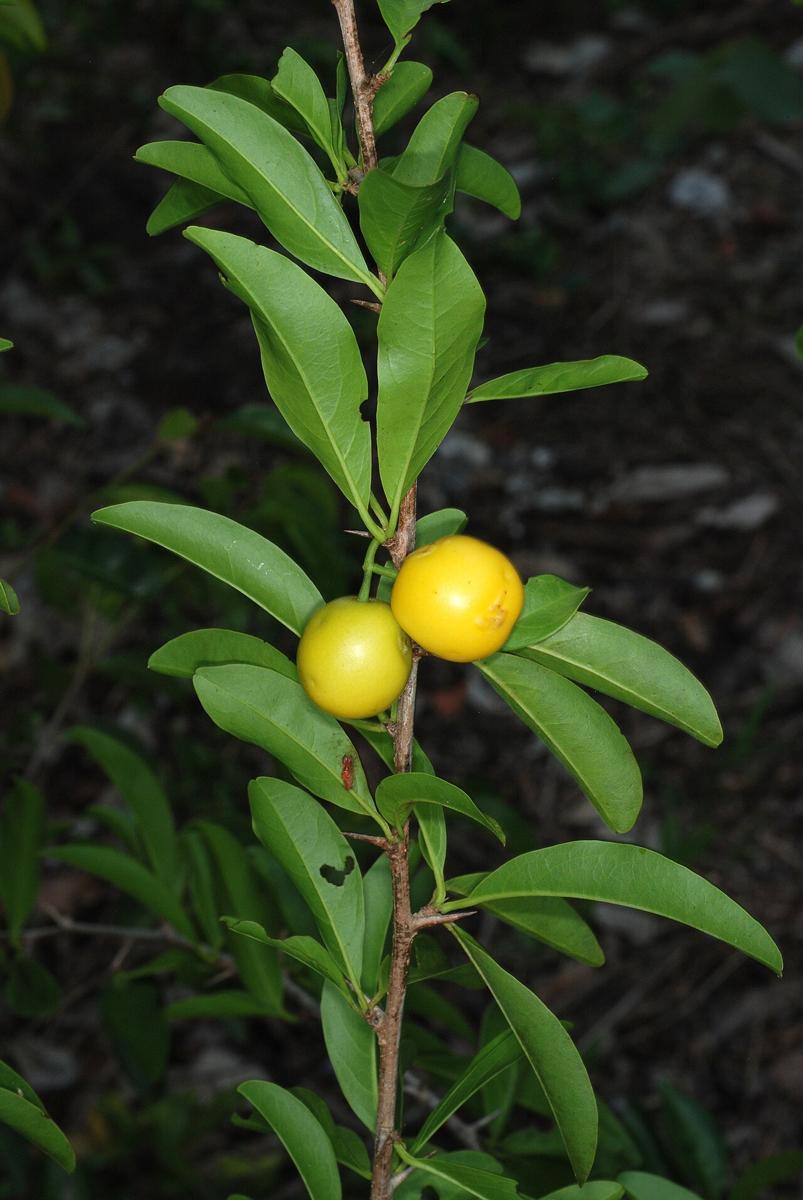
Tallowwood’s narrow, glossy leaves and small, plum-like fruit ripening from green to golden-yellow. Photo: Douglas Goldman, Wikimedia Commons (CC BY-SA 4.0) Ximenia americana, commonly known
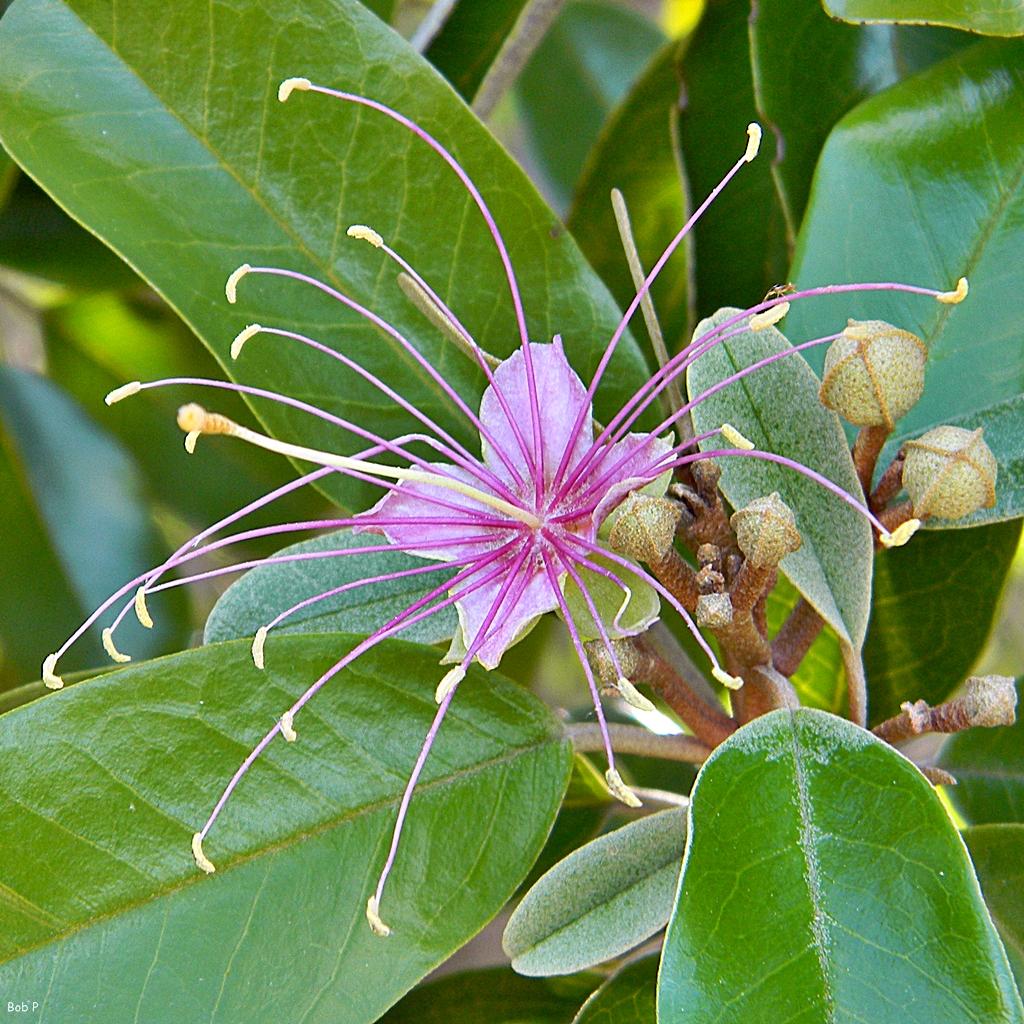
A Jamaica caper flower a couple of hours after opening, its petals shifting from white to lavender-pink. Photo: Bob Peterson, Wikimedia Commons (CC BY-SA 2.0)
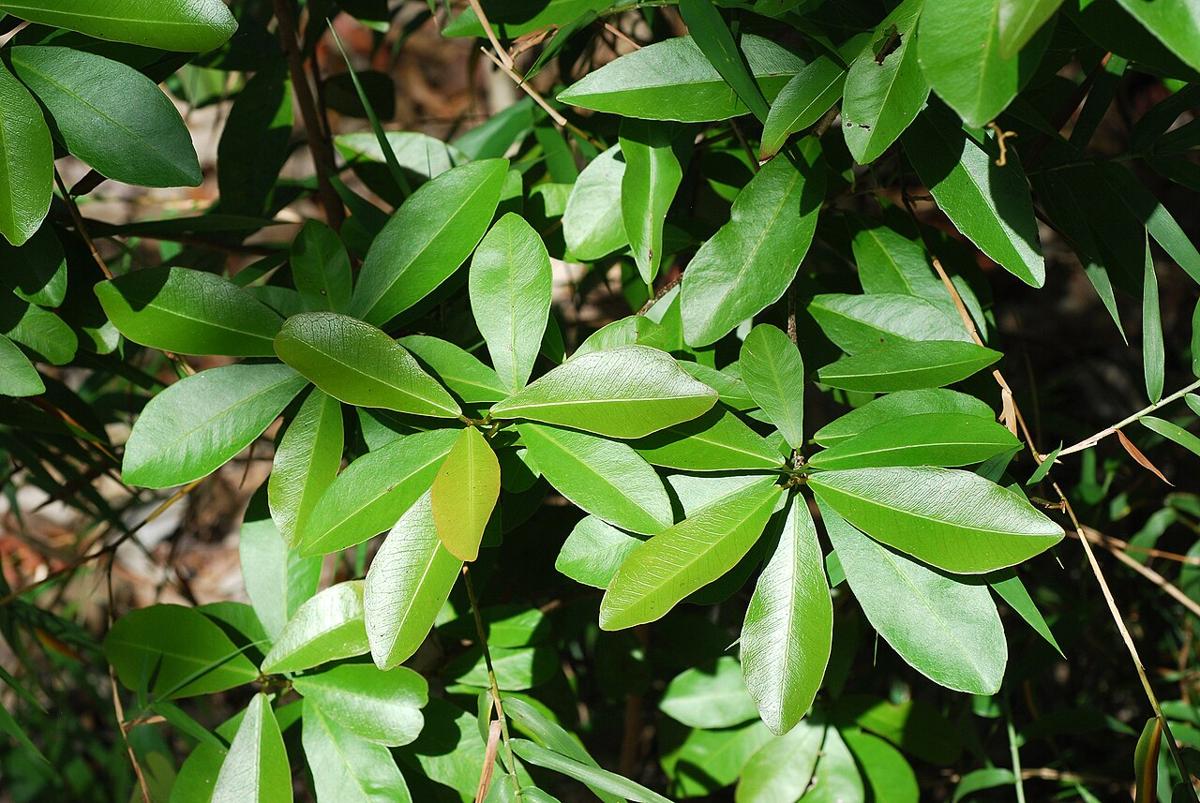
Crabwood’s glossy, leathery leaves cluster toward the ends of its branches. Photo: Douglas Goldman, Wikimedia Commons (CC BY-SA 4.0) Gymnanthes lucida, commonly known as Crabwood
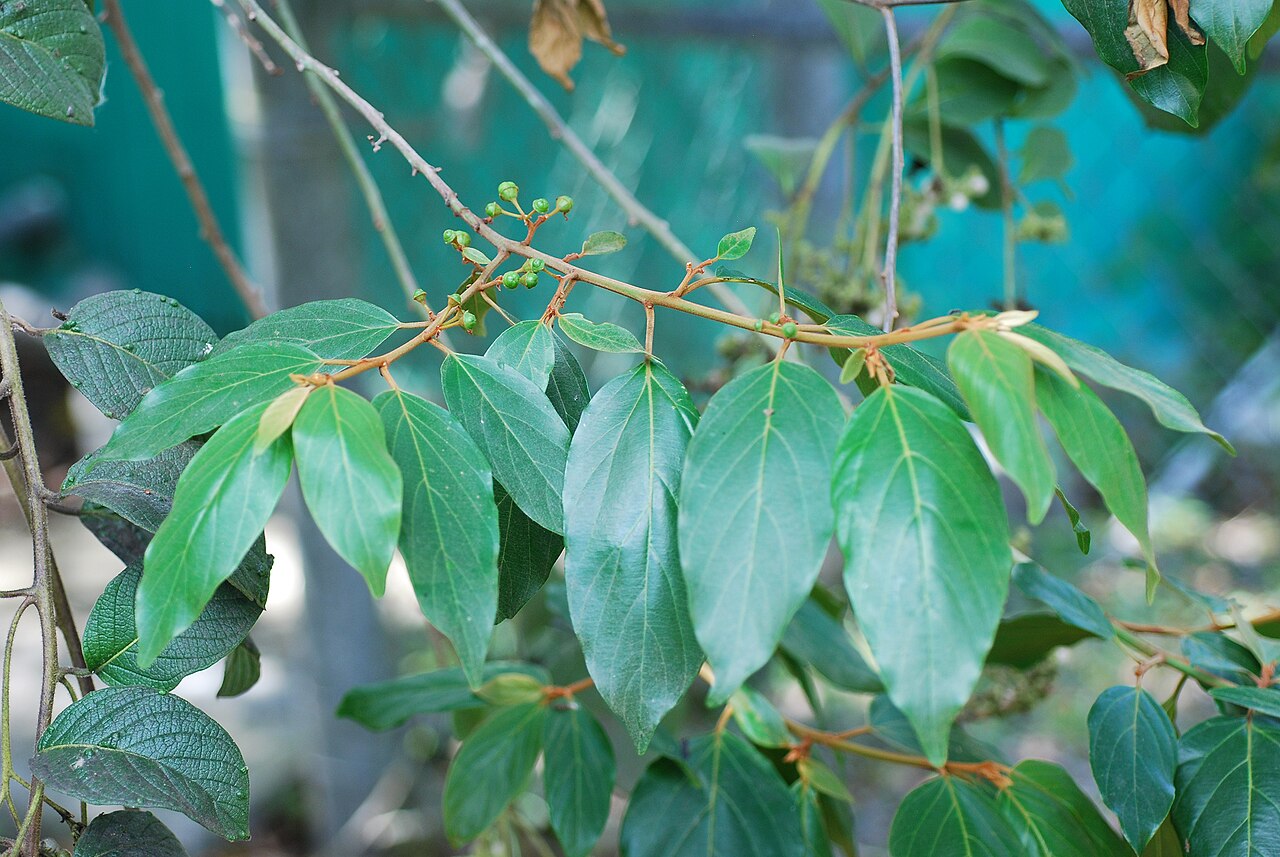
Coffee Colubrina’s glossy foliage and small green fruit, which ripen through purple to black. Photo: Douglas Goldman, Wikimedia Commons (CC BY-SA 4.0) Colubrina arborescens —
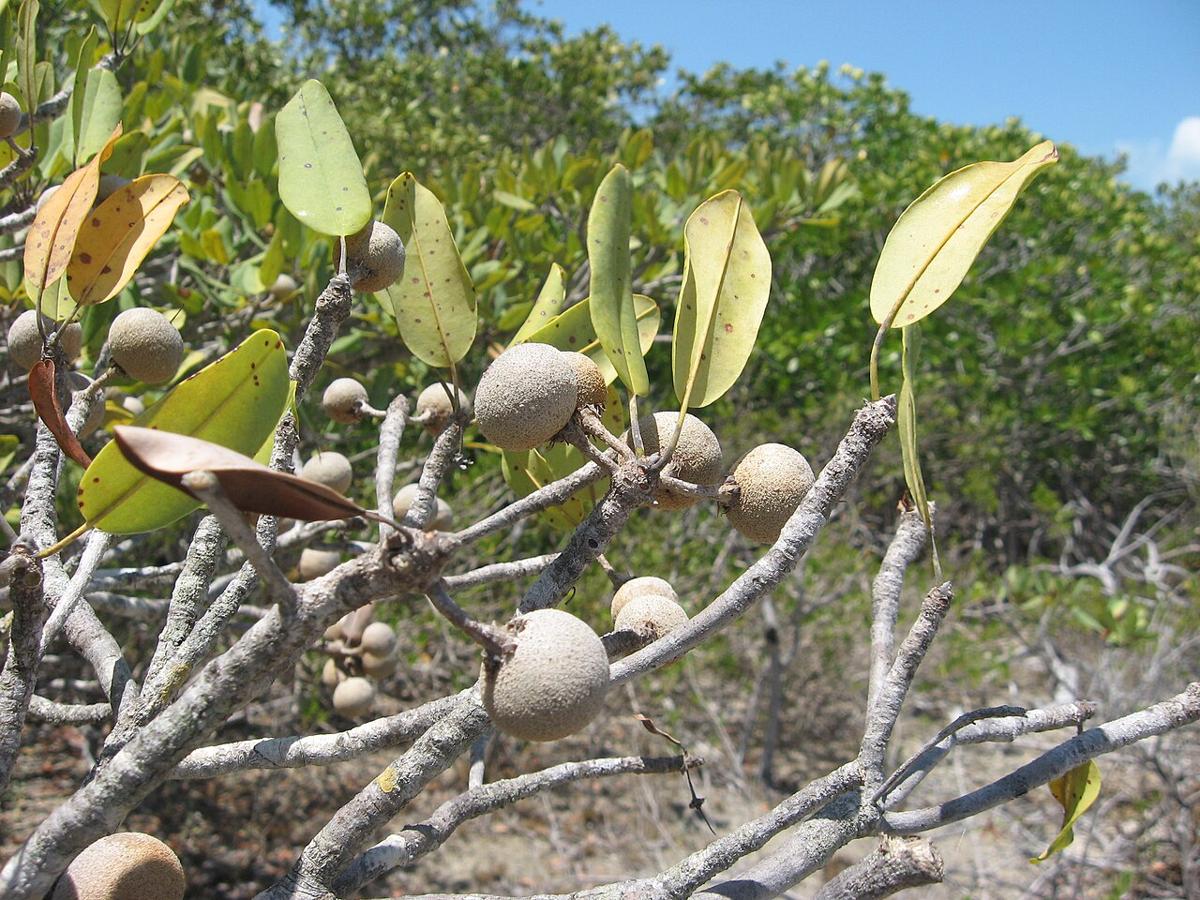
Wild Dilly’s rough-skinned, golf-ball-sized fruit clusters along the branches. Photo: Mason Brock / Wikimedia Commons (Public Domain) Manilkara jaimiqui subsp. emarginata, commonly called Wild Dilly,
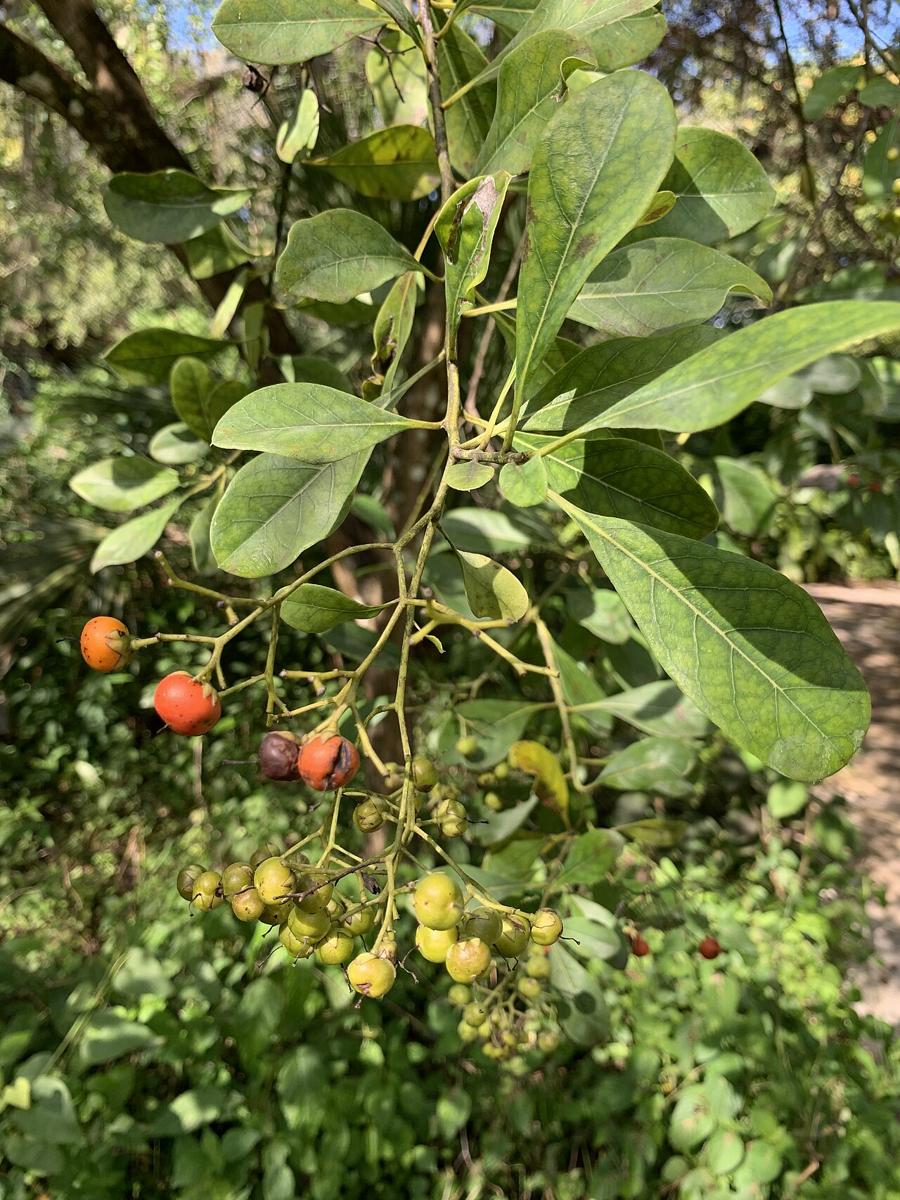
Rough Strongbark fruit ripening from green to bright orange at Fairchild Tropical Botanic Garden. Photo: Katherine Wagner-Reiss / Wikimedia Commons (CC BY-SA 4.0) Bourreria succulenta,
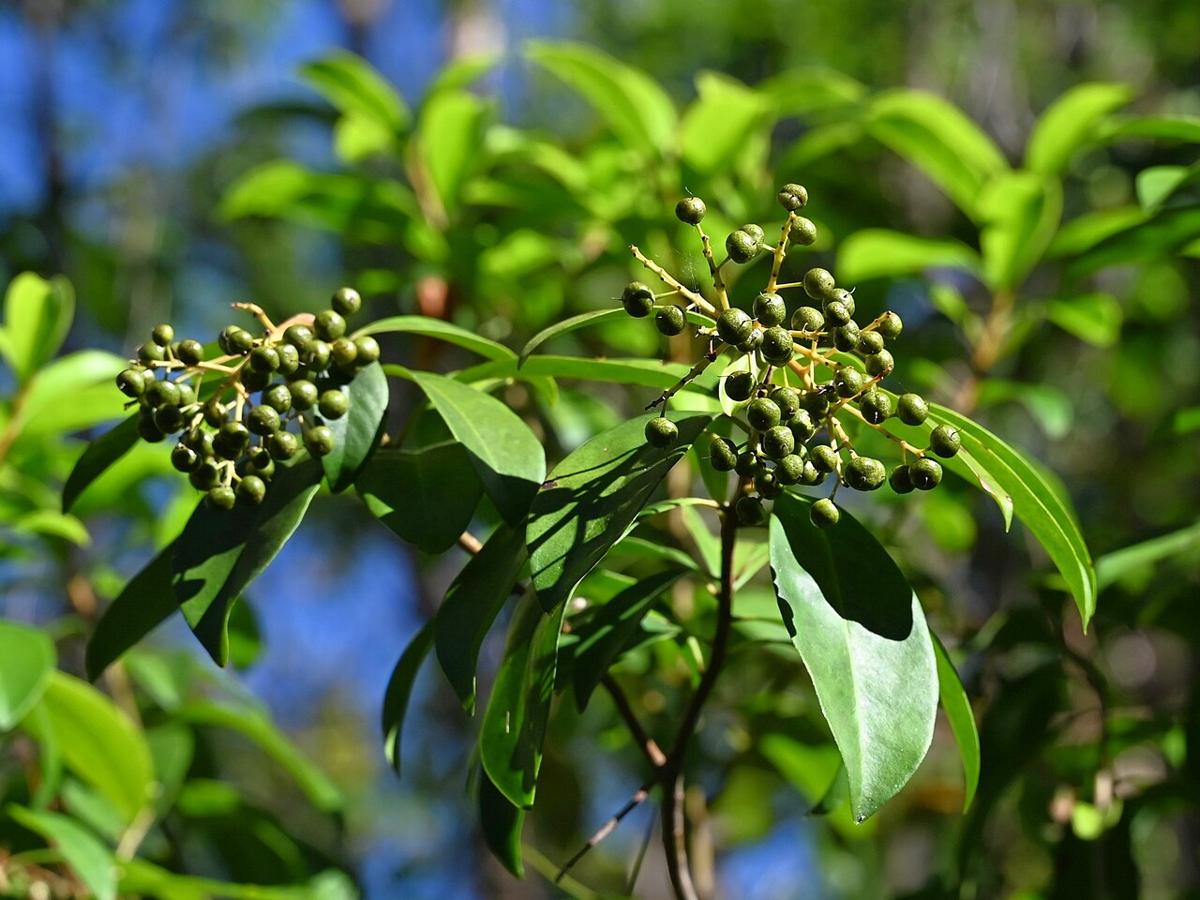
Marlberry branch heavy with berries along the Anhinga Trail, Everglades National Park. Photo: Krzysztof Ziarnek, Kenraiz / Wikimedia Commons (CC BY-SA 4.0) Ardisia escallonioides (also
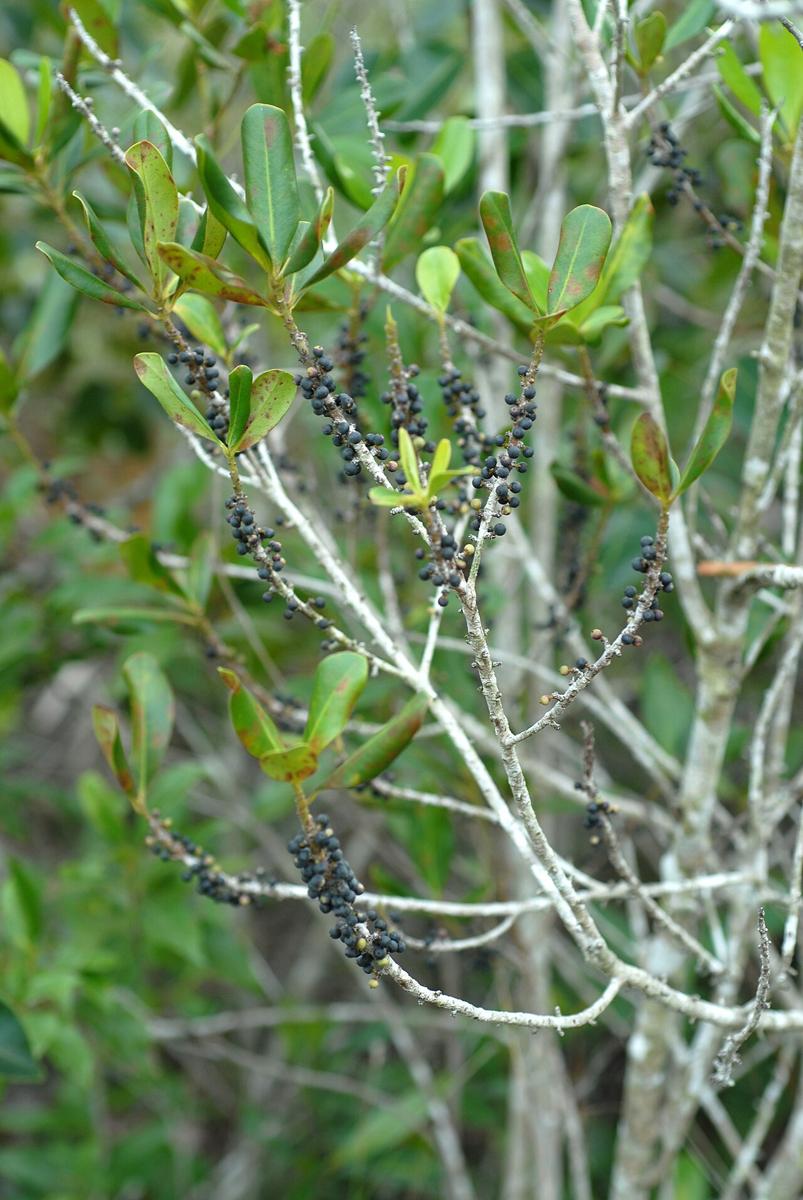
Colicwood’s whitish, lichen-dusted branches strung with clusters of small black fruit. Photo: DouglasGoldman / Wikimedia Commons (CC BY-SA 4.0) Myrsine cubana (long known in Florida
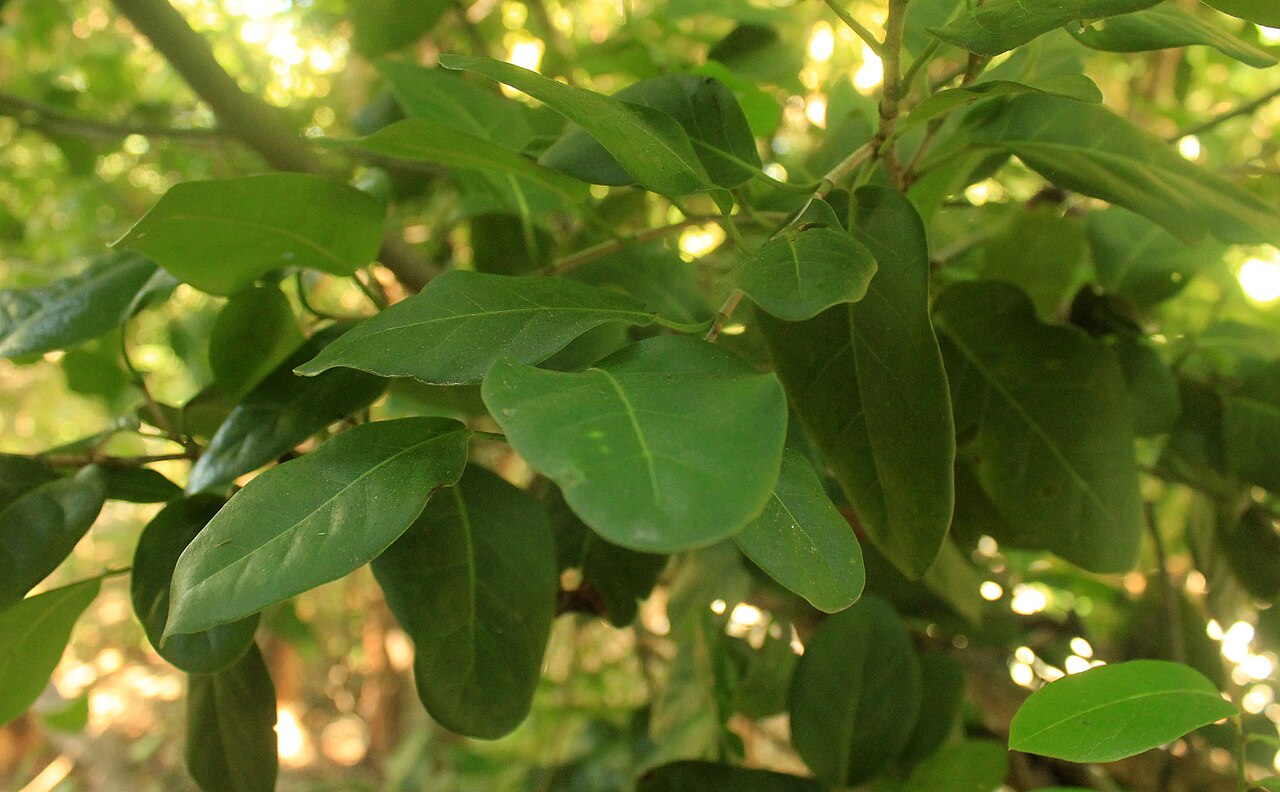
Spicewood’s dense, glossy, aromatic foliage, a signature shrub of South Florida’s tropical hardwood hammocks. Photo: Wikimedia Commons (Public Domain) Calyptranthes pallens, commonly known as Spicewood
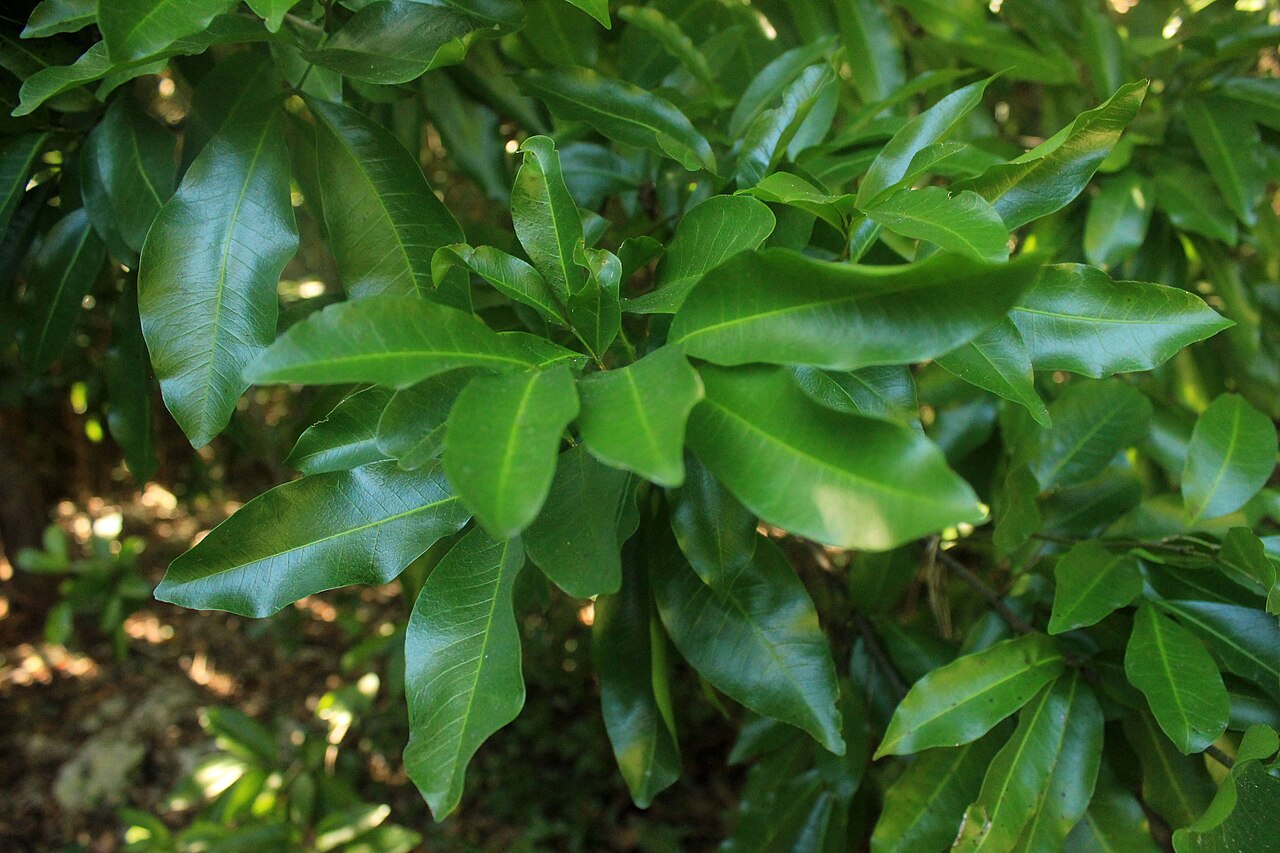
Redberry stopper’s dense, glossy dark green canopy, a classic hardwood hammock tree of South Florida. Photo: Wikimedia Commons (Public Domain) Eugenia confusa, known as Redberry
View More