
Purpledisk Sunflower (Helianthus atrorubens)
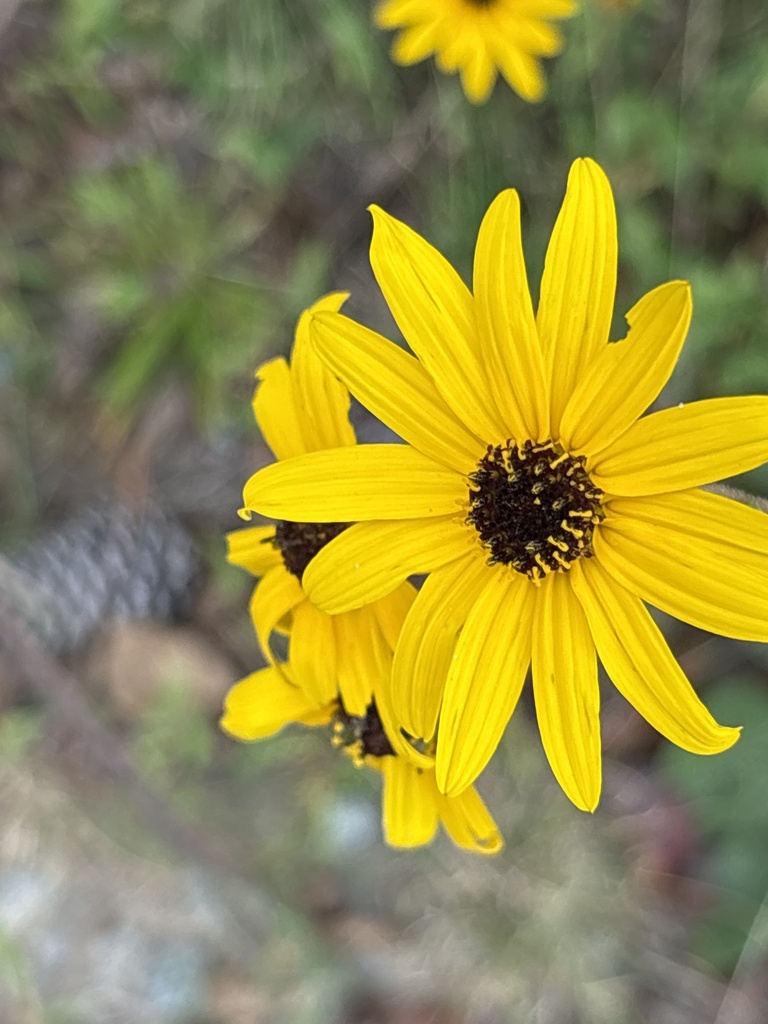
Helianthus atrorubens, the Purpledisk Sunflower (also spelled purple-disk sunflower, and sometimes called hairy wood sunflower), is a perennial sunflower of the southeastern United States. It grows in open woods, woodland edges, clearings, roadsides and dry, sandy or rocky openings from Virginia and Kentucky south to Florida and west to Louisiana.
It is easy to recognize by its dark reddish-purple center and by its leaves, most of which are large, rough and hairy and crowded at the base of the plant. Tall, nearly leafless stems rise from this basal cluster in late summer and fall and carry several bright yellow flower heads.
Purpledisk sunflower is a good late-season wildflower for dry, sunny to lightly shaded gardens in the Southeast, where it feeds bees and butterflies and its seeds feed birds. This guide covers how to recognize it, where it grows, how to grow it and its value to wildlife.
Identification
Purpledisk sunflower forms a rosette-like cluster of large, rough basal leaves, from which tall, sparsely leafy stems rise to carry yellow flower heads with dark purple centers.
Leaves
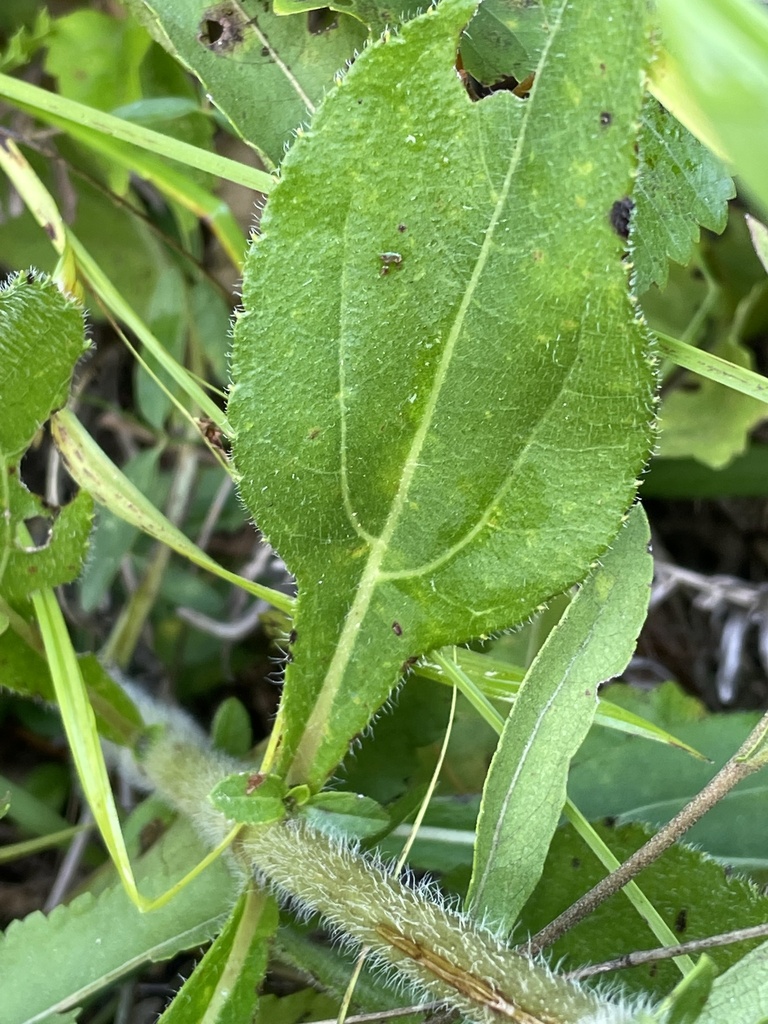
Most leaves are near the base of the plant. They are opposite, oval to broadly lance-shaped, about 4 to 10 inches long including a winged stalk, with toothed edges. Both surfaces are rough and hairy, like sandpaper. The leaves on the flowering stem are few, much smaller and often widely spaced, so the upper stem looks nearly bare.
Stems
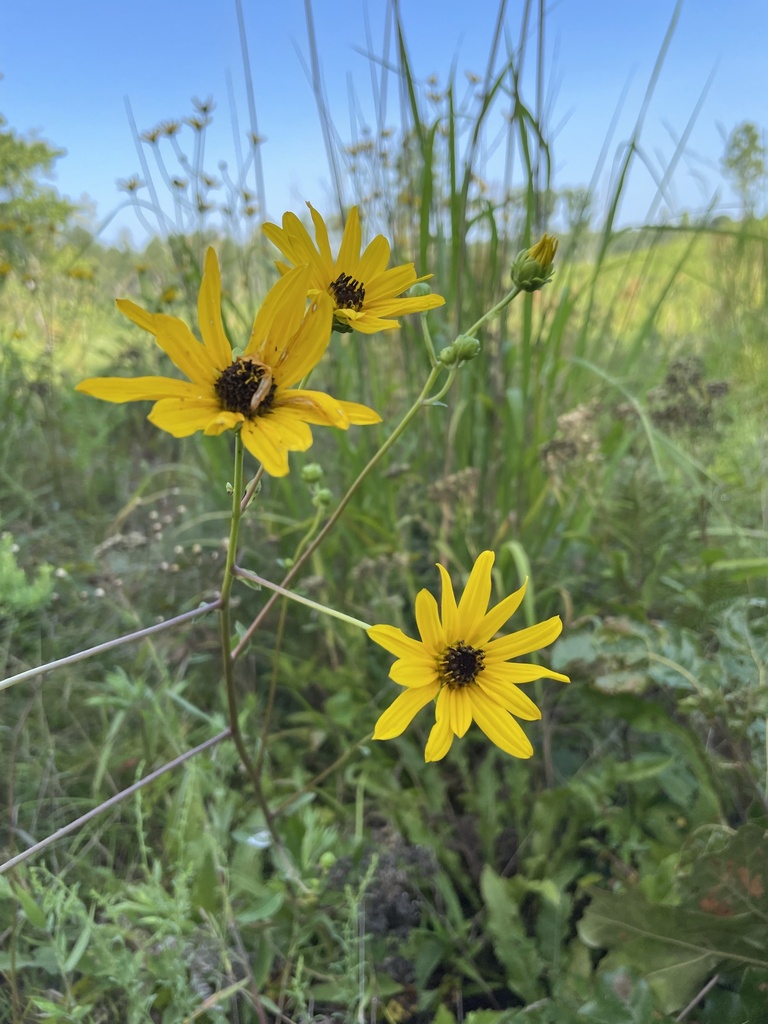
The flowering stems are 2 to 6 feet tall, slender and stiff, with spreading hairs on the lower part. They branch near the top into several long stalks, each carrying a flower head.
Flowers
From August to October, each plant produces one to about fifteen flower heads, each 2 to 3 inches across. There are about 10 to 15 bright yellow ray florets around a dome of dark red to purple disk florets, which give the plant its name. The bracts under the head are short, green and rounded.
Look-alikes
Many sunflowers have yellow disks, which rules them out quickly. Swamp Sunflower also has a purple center but has very narrow leaves all along its tall, leafy stems and grows in wetter places. Other dark-centered sunflowers, such as the narrow-leaved H. heterophyllus of the Coastal Plain, differ in leaf shape. Black-eyed Susans have a dark center but alternate leaves.
Quick Facts
| Scientific Name | Helianthus atrorubens L. |
| Family | Asteraceae (aster family) |
| Plant Type | Herbaceous perennial |
| Mature Height | 2–6 ft (in flower) |
| Mature Spread | 1–2 ft |
| Growth Rate | Moderate |
| Sun Exposure | Full sun to partial shade |
| Water Needs | Low to moderate; drought tolerant |
| Soil Type | Dry to moist, sandy, loamy or rocky; well-drained |
| Soil pH | About 5.0–7.0 |
| Bloom Time | August–October |
| Flower Color | Yellow rays with dark red-purple center |
| Fall Color | Basal leaves may turn bronze |
| Fruit | Small dry achene (seed) |
| Deer Resistant | Low to moderate |
| USDA Hardiness Zones | 6–9 |
Native Range
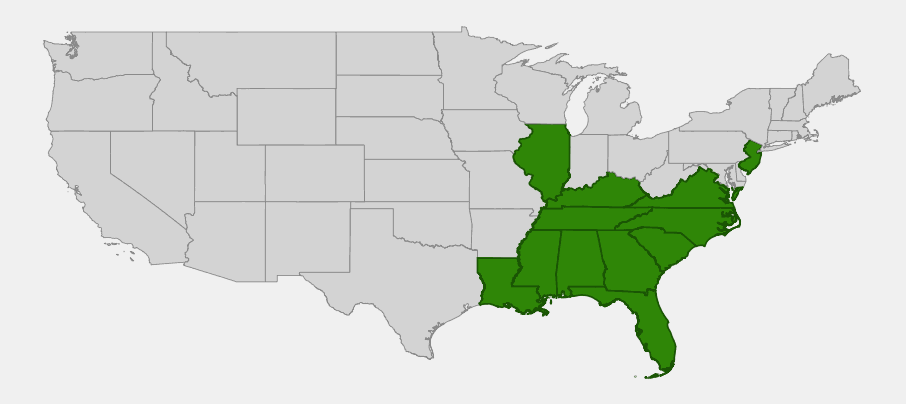
Purpledisk sunflower is native to the southeastern United States. It is found from Virginia, Kentucky and Tennessee south through the Carolinas, Georgia, Alabama and Mississippi to northern Florida and Louisiana. USDA PLANTS also lists outlying records from Illinois and New Jersey, well north of its main range.
It is most common in the Piedmont and the uplands of the Southeast, including the Carolinas, northern Georgia and Alabama, and it becomes scarcer on the outer Coastal Plain and in Florida, where it grows mainly in the northern counties.
It grows in dry to moderately moist, open woods of oak and pine, woodland edges and clearings, glades, roadsides, power-line cuts and old fields, usually on acidic, sandy, clay or rocky soil. It does best where fire, mowing or thin tree cover keeps the canopy open.
📋 Regional plant lists featuring Purpledisk Sunflower: North & South Florida · Alabama, Georgia & Mississippi · North & South Carolina · Maryland, Virginia & West Virginia · Kentucky & Tennessee · Arkansas, Louisiana, Eastern Oklahoma & Eastern Texas · Illinois, Iowa & Missouri · New York, Pennsylvania & Northern New Jersey · Delaware, Southern New Jersey & Long Island
Growing & Care Guide
Purpledisk sunflower is sold by some native plant nurseries in the Southeast. It is a tough, long-lived perennial for dry, sunny or lightly shaded spots, and it stays more compact and less aggressive than many other perennial sunflowers.
Light
Full sun to partial shade. It blooms most heavily in full sun but performs well at woodland edges with a few hours of direct sun.
Soil & Water
It prefers well-drained, average to poor, acidic soil and is drought tolerant once established. It also tolerates clay. Avoid rich, wet soil, which can lead to floppy stems.
Planting Tips
Plant in spring or fall, 18 to 24 inches apart. The low basal leaves make it a good mid-border plant, with its tall flower stems rising above shorter plants. Combine it with grasses, asters and goldenrods for fall color.
Pruning & Maintenance
Little care is needed. Leave the seed heads standing for birds into winter, then cut the old stems down in late winter. It spreads slowly by short rhizomes and is not usually aggressive.
Propagation
Divide clumps in early spring. Seeds need about 30 to 60 days of cold, moist stratification before sowing; fall sowing outdoors also works.
Landscape Uses
- Pollinator gardens: late-season nectar and pollen for bees and butterflies
- Woodland edges: tolerates light shade under open trees
- Meadow and roadside plantings: drought tolerant and long-lived
- Bird gardens: seed heads feed finches in fall
Wildlife & Ecological Value
Like other native sunflowers, purpledisk sunflower is a valuable late-summer and fall resource for insects and birds.
For Pollinators
The flower heads attract a wide range of bees, including specialist sunflower bees, as well as butterflies, skippers and beetles. Native sunflowers are larval host plants for butterflies such as the silvery checkerspot and for many moths.
For Birds
Goldfinches and other finches, sparrows and other songbirds eat the seeds in fall and winter.
For Mammals
Deer and rabbits sometimes browse the leaves, and small mammals eat the fallen seeds.
Ecosystem Role
It is part of the herb layer of fire-maintained open oak and pine woodlands in the Southeast. It responds well to prescribed fire and other disturbances that keep woodlands open.
Cultural & Historical Uses
Carl Linnaeus named Helianthus atrorubens in 1753, from specimens sent from the American colonies. The species name means “dark red,” referring to the color of the central disk.
Purpledisk sunflower was grown in European gardens in the 18th and 19th centuries and appears in old botanical illustrations, including William Clark’s Flora Conspicua.
The genus name Helianthus comes from the Greek words for “sun” and “flower.” North America is the center of diversity for the genus, which includes the annual common sunflower and the edible Jerusalem artichoke.
Frequently Asked Questions
Why is it called purpledisk sunflower?
Its central disk is dark reddish-purple instead of the yellow or brown of many other sunflowers. The scientific name atrorubens also means “dark red.”
Where does purpledisk sunflower grow?
In open woods, clearings and roadsides in the southeastern United States, from Virginia and Kentucky to northern Florida and Louisiana.
When does purpledisk sunflower bloom?
From about August to October.
Does purpledisk sunflower spread aggressively?
No. It spreads slowly by short rhizomes and is much better behaved in gardens than many other perennial sunflowers.
Is purpledisk sunflower good for pollinators?
Yes. Its late-season flowers feed many bees, butterflies and other insects, and finches eat the seeds.

Looking for a nursery that carries Purpledisk Sunflower?
Browse our native plant nursery directory: Alabama · Florida & Georgia · Illinois · Kentucky, Louisiana & Mississippi · New Jersey & North Carolina · South Carolina, Tennessee & Virginia

