
River Cane (Arundinaria gigantea)
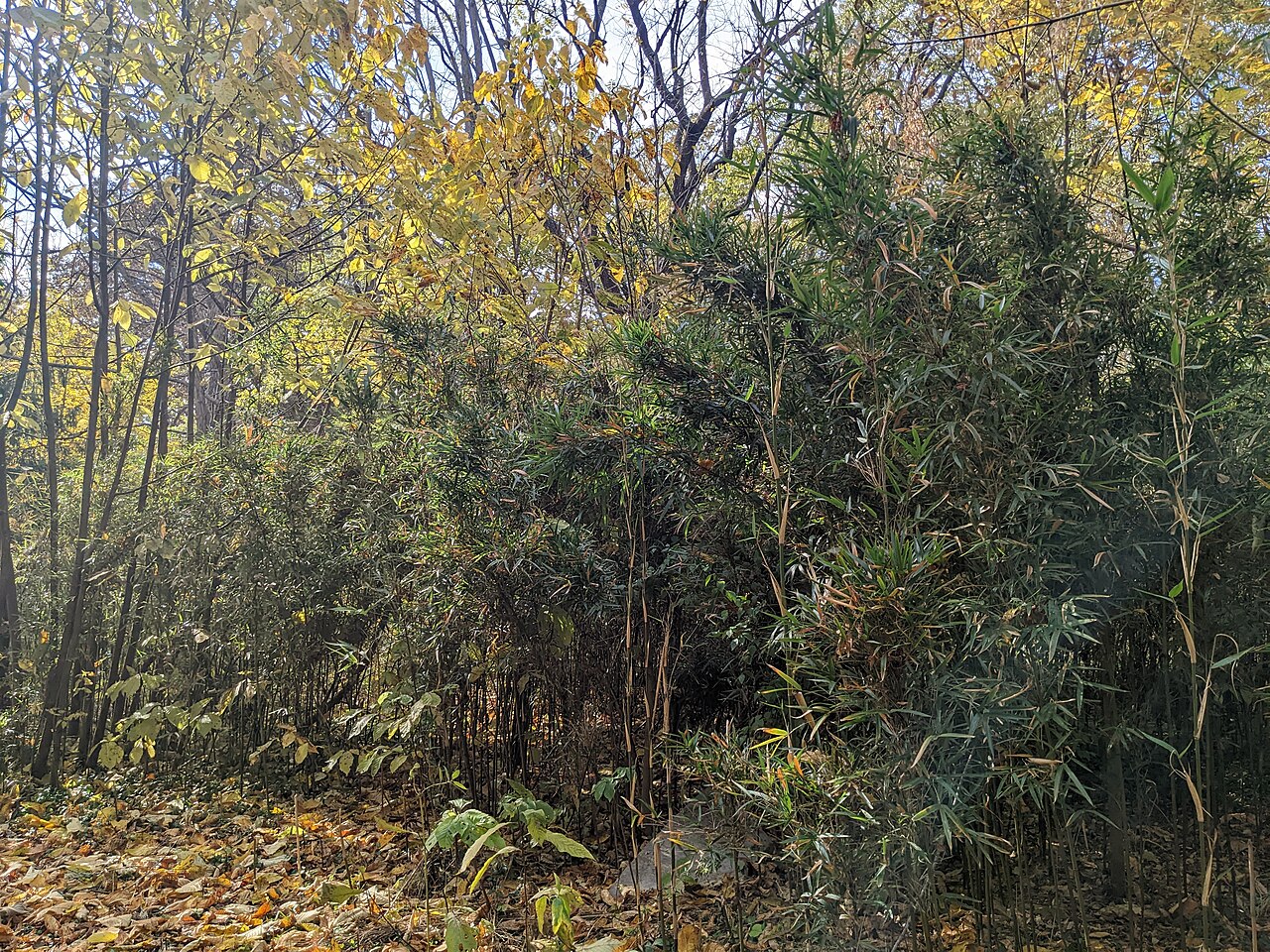
Arundinaria gigantea, known as River Cane, giant cane (its USDA name), giant river cane or switchcane, is one of the few bamboos native to North America. It is a woody, evergreen grass that grows from a dense network of rhizomes into thickets of hollow, jointed canes, usually 6 to 20 feet tall and occasionally taller, along rivers and in bottomland forests of the southeastern and south-central United States.
Before European settlement, river cane formed vast stands called canebrakes that covered floodplains and uplands for miles. These have been reduced by an estimated 98 percent or more by grazing, clearing, drainage and the end of the regular burning that maintained them. Today river cane is the focus of restoration efforts for its value to wildlife, its ability to filter runoff along streams, and its deep cultural importance to Southeastern Native nations.
For gardeners it is a native alternative to the invasive Asian bamboos, useful for screens, streambank planting and wildlife habitat. This guide covers identification, range, growing it, its ecology and its long history as a material for baskets, tools and homes. (Do not confuse it with giant reed, Arundo donax, a non-native invasive grass also sometimes called “giant cane.”)
Identification
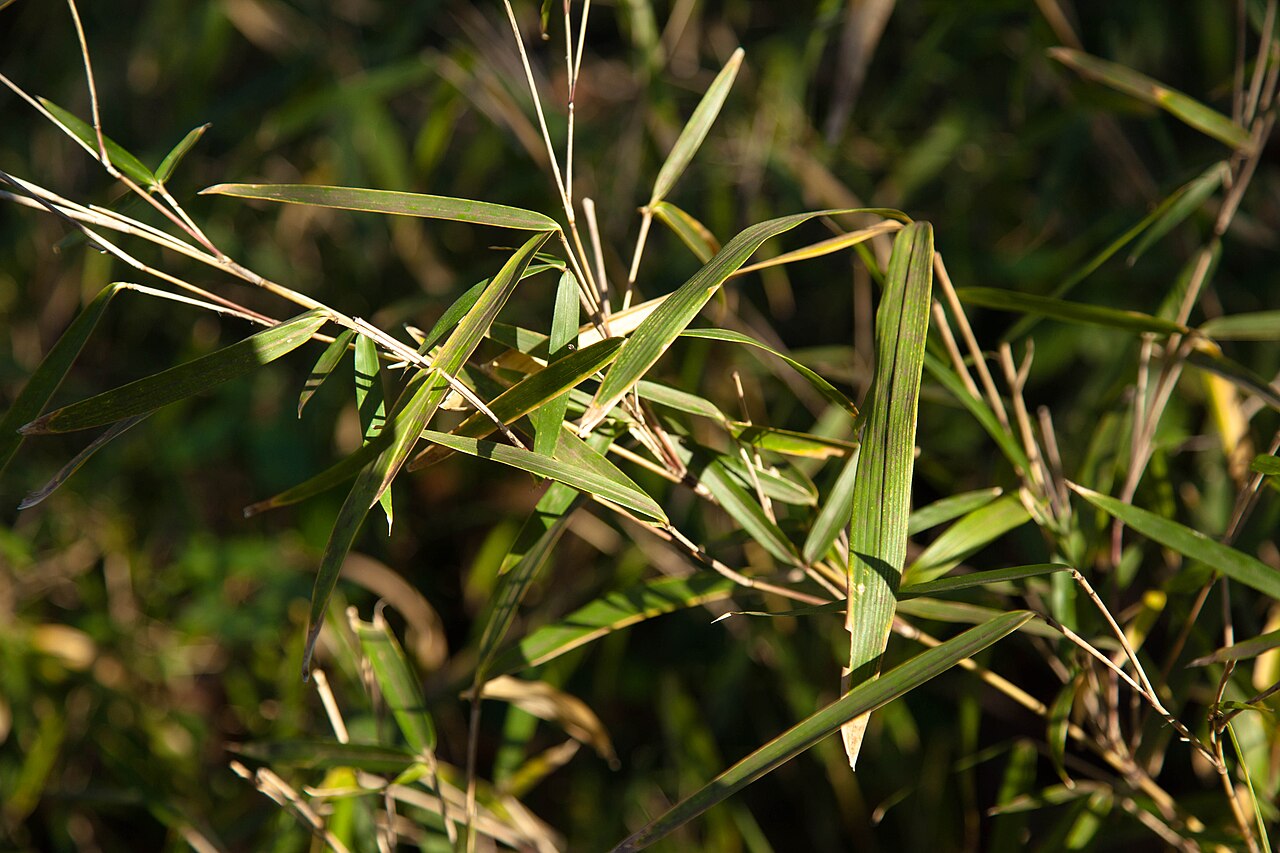
River cane looks like a small bamboo, which it is. Look for evergreen, hollow, jointed stems that branch at the upper nodes, sprays of lance-shaped leaves, and dense colonies along streams and in bottomlands.
Canes
The stems (culms) are round, hollow between the joints, smooth and woody, green turning olive-tan with age, and typically ½ to 1½ inches thick. Historic canes in rich, regularly burned bottomlands were reported to reach about 3 inches thick and well over 20 feet tall. Each cane lives about 10 years, and new shoots arise from the rhizomes each spring.
Leaves & Branches
Short branches grow in clusters from the joints of the upper stem, each bearing a fan of lance-shaped, flat leaves up to about 12 inches long and 1½ inches wide, with fine bristles at the top of the leaf sheath. The leaves stay green through most winters.
Flowers & Seeds
River cane flowers rarely and irregularly, sometimes after many years. Flowering stems carry loose clusters of narrow spikelets 1½ to 3 inches long. Seeds are large and grain-like; stands that flower heavily often decline afterward. Nearly all reproduction is vegetative, by spreading rhizomes.
Similar Species
Switch cane (Arundinaria tecta) of the Atlantic and Gulf Coastal Plain is usually shorter, has air canals in its rhizomes and grows in wetter, acidic swamps and pocosins. Hill cane (Arundinaria appalachiana) of the southern Appalachians is shorter still and drops its leaves in winter. Non-native running bamboos such as golden bamboo (Phyllostachys aurea) have grooved stems and are invasive. Giant reed (Arundo donax) is a non-native grass with broad, gray-green leaves along unbranched stems.
Quick Facts
| Scientific Name | Arundinaria gigantea |
| Family | Poaceae (grass family; bamboo subfamily) |
| Plant Type | Evergreen woody bamboo (perennial grass), colony-forming |
| Mature Height | 6–20 ft; occasionally taller |
| Mature Spread | Spreads by rhizomes to form thickets |
| Growth Rate | Moderate to fast once established |
| Sun Exposure | Full sun to part shade; tolerates shade |
| Water Needs | Moderate to high; moist soil, tolerates flooding |
| Soil Type | Moist, rich alluvial loam; also sandy or clay soils |
| Soil pH | About 5.0–7.5 |
| Bloom Time | Rare and irregular; usually spring |
| Flower Color | Green to purplish spikelets (inconspicuous) |
| Fall Color | Evergreen; leaves may bronze in hard winters |
| Fruit | Large, grain-like seeds, produced rarely |
| Deer Resistant | No; deer and livestock browse the leaves |
| USDA Hardiness Zones | 6–9 |
Native Range
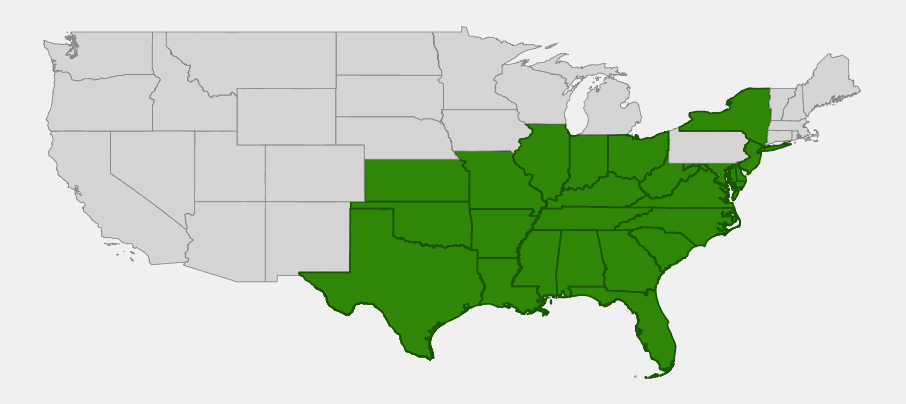
River cane is native to the southeastern and south-central United States. USDA PLANTS records it from Delaware, Maryland and Virginia south to Florida, west through the Gulf states to eastern Texas and Oklahoma, and north up the Mississippi and Ohio valleys to Missouri, Kansas, Illinois, Indiana, Ohio and West Virginia. It is most common in the floodplains of the lower Mississippi, Ohio and Tennessee rivers and on the coastal plain.
The New York record is an outlying one, at the far northern edge of the species’ range, and New Jersey populations are also near that edge. In Texas it is found in the eastern part of the state, and in Kansas it reaches only the southeastern corner.
It grows along rivers and streams, in bottomland hardwood forests and swamp margins, on floodplain terraces, and in moist open woods and pine flatwoods. Historically, regular fires, both natural and set by Native peoples, kept canebrakes open and vigorous; today most stands are narrow strips along streams, field edges and roadsides.
📋 Regional plant lists featuring River Cane: New York, Pennsylvania & Northern New Jersey · Ohio & Indiana · Kentucky & Tennessee · Nebraska, Kansas & Eastern Colorado · Maryland, Virginia & West Virginia · Delaware, Southern New Jersey & Long Island · Illinois, Iowa & Missouri · Alabama, Georgia & Mississippi · North & South Florida · North & South Carolina · Arkansas, Louisiana, Eastern Oklahoma & Eastern Texas
Growing & Care Guide
River cane is a robust native plant for large spaces, streambanks and screens. It spreads by rhizomes, so site it where it can form a colony or contain it with a root barrier or mowing.
Light
It grows in full sun to fairly deep shade. Canes are taller and denser with more light; in heavy shade stands become thin.
Soil & Water
Plant it in moist, fertile soil, ideally a floodplain loam. It tolerates periodic flooding and heavy soils and, once established, short dry spells. Water regularly during the first two growing seasons.
Planting Tips
Plant rhizome divisions or potted plants in late winter or early spring, 3 to 6 feet apart for a screen or buffer. Natural companions include sycamore, river birch and big bluestem on more open sites. In small gardens, install a root barrier at least 24 inches deep or plant it where mowing will contain it.
Pruning & Maintenance
Remove dead or old canes at ground level in late winter to keep stands vigorous. Restoration managers renew old canebrakes with occasional cutting or prescribed burning, which stimulates new shoots. Mow or cut runners that extend beyond where you want the stand.
Propagation
Propagate it by digging rhizome sections with a few nodes and a cane attached in late winter, before new growth. Pot them in moist soil and keep them well watered until new shoots appear. Seed is rarely available because the plant flowers so seldom.
Landscape Uses
- Riparian buffers and streambanks: dense rhizomes hold soil and filter runoff
- Living screens and hedges: an evergreen native alternative to invasive Asian bamboos
- Wildlife habitat: cover and nesting sites for canebrake birds
- Canebrake restoration: reestablishing a nearly lost Southeastern ecosystem
- Craft and cultural plantings: a source of material for traditional basketry
Wildlife & Ecological Value
Canebrakes are a habitat in their own right. River cane has been documented as providing food and shelter for about 70 animal species, including several that depend on it almost entirely.
For Pollinators
River cane is wind-pollinated and flowers rarely, so it offers little to bees. It is, however, an essential larval host for several butterflies, including the southern pearly-eye (Lethe portlandia), the creole pearly-eye (Lethe creola), and the lace-winged and Carolina roadside skippers, whose caterpillars feed on cane.
For Birds
Dense canebrakes are important breeding habitat for Swainson’s warbler, hooded warbler, Kentucky warbler and white-eyed vireo. The loss of canebrakes may have contributed to the decline and probable extinction of Bachman’s warbler, a songbird closely tied to cane thickets. Turkeys and other birds eat cane seed in the rare years it flowers.
For Mammals
White-tailed deer, rabbits and livestock browse the evergreen leaves, which stay green in winter when other forage is scarce. Swamp rabbits, bears and other mammals use canebrakes for cover.
Ecosystem Role
Thick rhizome networks stabilize streambanks, and studies have found that cane buffers between fields and streams are very effective at trapping sediment and removing nitrate from runoff. Canebrakes are fire-adapted and historically were maintained by burns every few years.
Cultural & Historical Uses
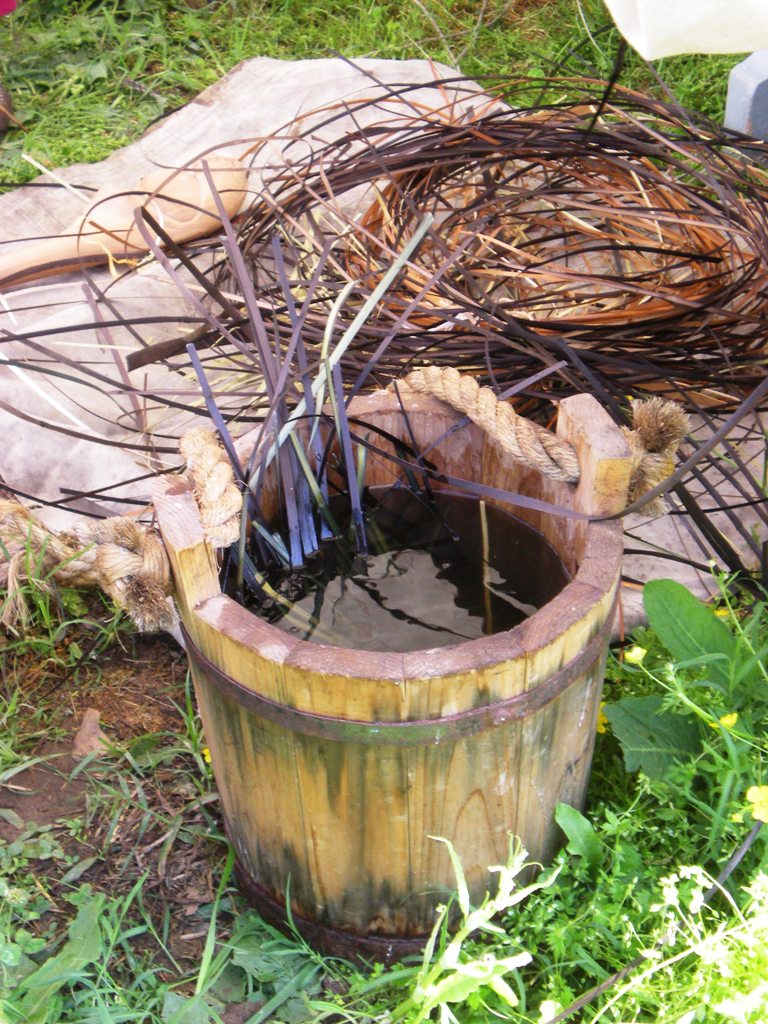
River cane is one of the most culturally important plants of the Southeast. The Cherokee, Choctaw, Chickasaw, Seminole and other Native nations used it for baskets, mats, blowguns, arrows, flutes, fish traps, walls of houses, and food. River cane basketry, made with split, dyed cane woven into complex double-weave patterns, is an important living art of the Eastern Band of Cherokee Indians and the Choctaw. The Cherokee and other nations maintained canebrakes by cutting and burning, and the loss of those canebrakes has made good cane hard to find; organizations such as the Revitalization of Traditional Cherokee Artisan Resources work to restore it.
European settlers crossing the Appalachians in the eighteenth century were struck by the canebrakes of the Bluegrass region of Kentucky, which early histories describe as carpeted with cane. Livestock grazing, land clearing and fire suppression then eliminated most canebrakes within a few generations, and much of the remaining cane persists only along fence lines and creeks.
The genus name Arundinaria comes from the Latin arundo, “reed,” and gigantea means “giant.” Some botanists recognize two closely related species split from it, switch cane (A. tecta) and hill cane (A. appalachiana), so older references may include them under this name.
Frequently Asked Questions
Is river cane a true bamboo?
Yes. It belongs to the bamboo subfamily of grasses and is one of only three bamboos native to North America, all in the genus Arundinaria.
Will river cane take over my yard?
It spreads by rhizomes and can form large stands, though it is far less aggressive than invasive Asian running bamboos. Plant it where it has room, or contain it with a deep root barrier or regular mowing around the edges.
What is the difference between river cane and giant reed?
Giant reed (Arundo donax) is a non-native, invasive grass with broad gray-green leaves along tall unbranched stems. River cane is a native bamboo with woody, branching canes and sprays of narrow leaves.
Why is river cane important to Native nations?
River cane provided material for baskets, mats, blowguns, arrows, houses and many tools. Cherokee and Choctaw river cane basketry is a living tradition, and the loss of canebrakes has made restoring cane a cultural priority.
How do I tell river cane from switch cane?
Switch cane (Arundinaria tecta) is usually shorter and grows in wetter, more acidic coastal plain swamps; its rhizomes have air canals. River cane is generally taller and grows on floodplains and stream terraces across a wider range.

Looking for a nursery that carries River Cane?
Browse our native plant nursery directory: Alabama & Arkansas · Delaware, Florida & Georgia · Illinois, Indiana & Kansas · Kentucky, Louisiana, Maryland, Mississippi & Missouri · New Jersey, New York, North Carolina, Ohio & Oklahoma · South Carolina, Tennessee, Texas & Virginia · West Virginia