Sweet Goldenrod (Solidago odora)
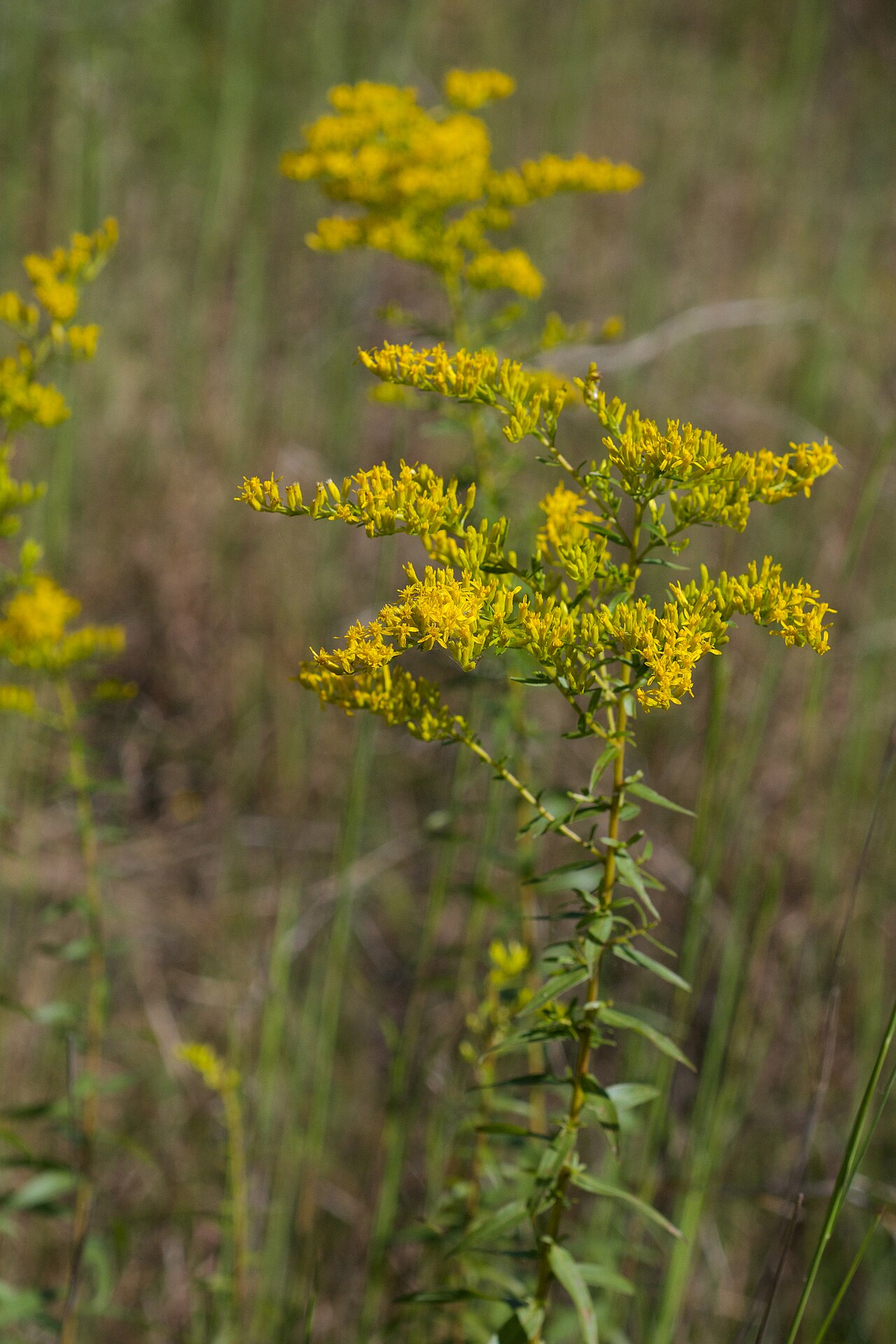
Sweet goldenrod offers the familiar late-season yellow of the goldenrod family in a comparatively manageable garden plant. Solidago odora is best known for the anise-like fragrance released by its leaves, but its slender foliage and arching flowering branches are just as useful to a gardener. A plant in bloom adds a fine-textured layer rather than a heavy block of color.
It is generally clump-forming and less aggressively spreading than some other goldenrods, although any native plant can behave differently when given rich soil and abundant water. The species suits relatively dry, open settings and can tolerate some shade. It is a good candidate for a border that needs late flowers without assuming that every goldenrod must be confined to a large meadow.
For the Arkansas, Louisiana, eastern Oklahoma and eastern Texas regional list, this is a native species with a genuine regional connection. The best choice is still locally appropriate nursery-propagated material, not an unidentified yellow-flowered plant taken from a roadside. Goldenrod identification can be subtle, and this guide uses foliage, flower arrangement, scent and botanical sources together rather than relying on color or a common name alone.
Identification
Stems and stature
Sweet goldenrod rises from a perennial base, usually as a relatively compact group of upright stems with branching near the flowering top. A useful garden expectation is roughly 1–3 feet tall, while some plants and source accounts describe taller stems. The difference should be treated as natural and horticultural variation, not as a reason to force every plant into one fixed height. Fertility, light and local form can influence the final outline.
Leaves and scent
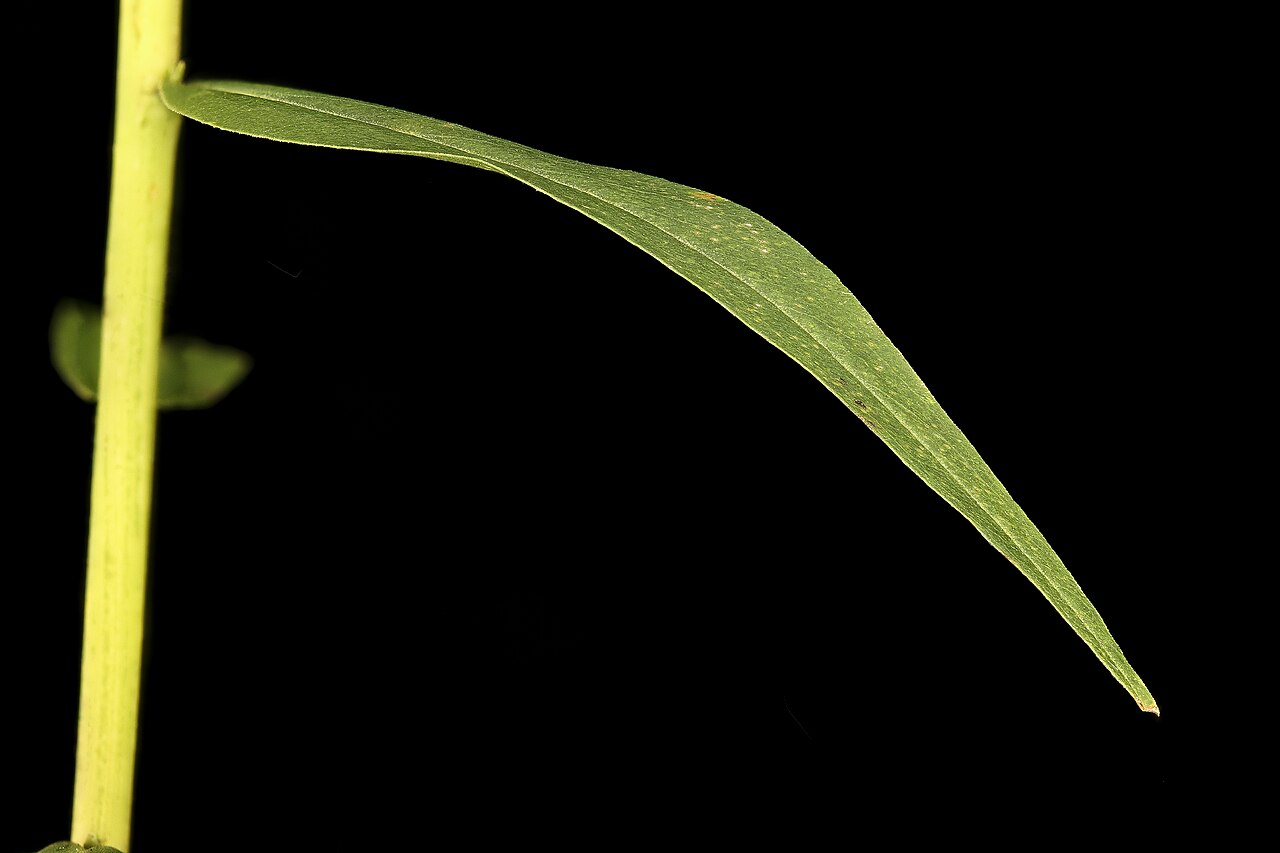
Leaves are narrow, alternate and generally lack the coarse toothy appearance of some larger goldenrods. A gently crushed leaf commonly has an anise or licorice-like scent. That odor is an identification aid rather than an invitation to taste an unknown plant. The leaf can show tiny translucent glands when held to light. Use these clues together with a botanical key, especially where several goldenrods grow side by side.
Flowers
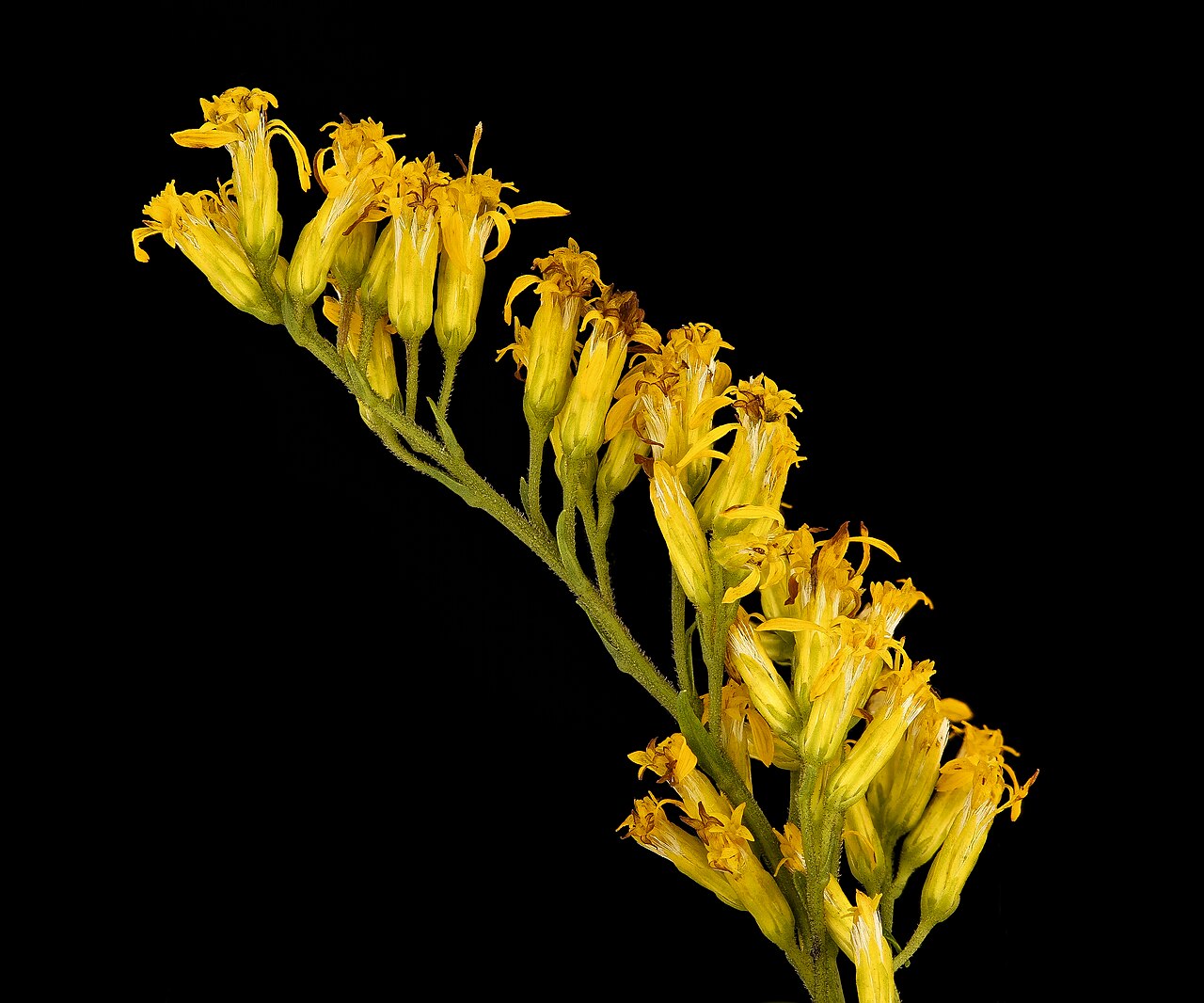
Small yellow composite heads are arranged along branching upper stems, creating a graceful, often one-sided or arching display. Each head is made of multiple small florets, not one large flower with ordinary petals. The principal display is in late summer and fall, when many spring perennials have already finished. A photograph of the entire flowering branch is more useful for identification than an isolated close-up of one yellow head.
Seeds and lookalikes
After flowering, dry fruits with fine dispersal hairs replace the yellow heads. Leave a portion if natural seed production fits the garden plan. Other goldenrods can have similar flowering silhouettes, so also examine leaves and stem structure. The name sweet goldenrod should not be applied merely because a plant is short or attractive. The sources used here treat Solidago odora itself; related segregate taxa should be checked separately rather than added to its range automatically.
Quick Facts
| Scientific Name | Solidago odora |
| Family | Asteraceae (daisy family) |
| Plant Type | Herbaceous perennial wildflower |
| Mature Height | Commonly 1–3 feet; taller plants possible |
| Mature Spread | Clump-forming, roughly 1–2 feet initially |
| Growth Rate | Moderate; usually less running than aggressive goldenrods |
| Sun Exposure | Full sun to partial shade |
| Water Needs | Dry to average once established; well-drained soil |
| Soil Type | Sandy or loamy soils; tolerates clay if drainage is adequate |
| Soil pH | Often acidic to near neutral; avoid unnecessary amendment |
| Bloom Time | Late summer into fall |
| Flower Color | Yellow |
| Fall Color | Golden flower display; foliage color not the main feature |
| Fruit | Small dry fruits with dispersal hairs |
| Deer Resistant | Variable; no absolute browsing guarantee |
| USDA Hardiness Zones | Commonly grown in zones 4–9 |
Native Range
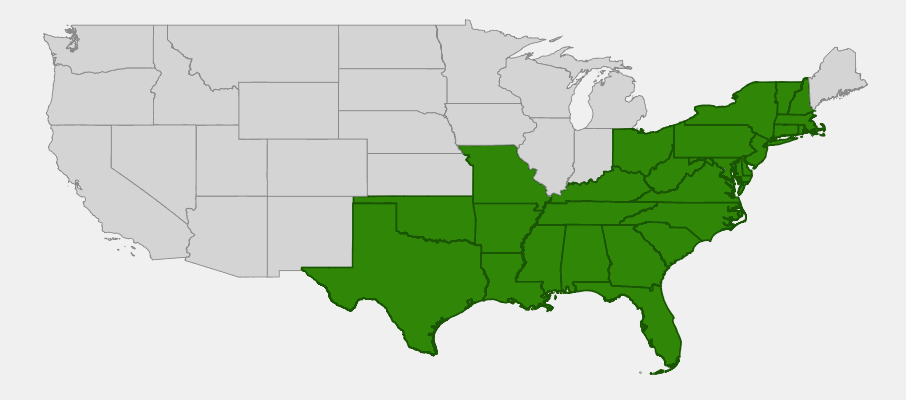
The native-range map follows Kew’s current list for Solidago odora, covering parts of the central and eastern United States. All four states of the regional list linked below—Arkansas, Louisiana, Oklahoma and Texas—are included. The range is not the same as that of every plant historically placed beneath the sweet-goldenrod name, and state shading does not mean the species occurs in every county or habitat.
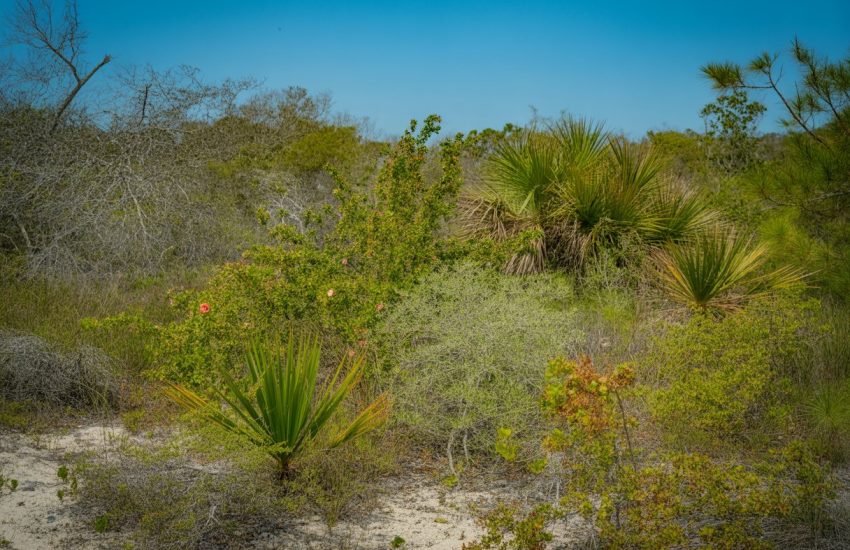
Dry open woodland, barrens, sandy openings and woodland margins are characteristic settings. The Flora of Pennsylvania describes it in dry open woods and barrens and documents the species primarily in the eastern part of that state. In the South, match the plant to an open, reasonably drained site rather than a saturated lowland simply because the county falls within a shaded state.
Some broad popular summaries extend the name into Mexico, whereas the Kew treatment used for this page limits the species’ native range to the United States. This guide does not merge that broader concept into its map. Where taxonomic treatments differ, verify the local name and voucher records before making restoration decisions. Canadian occurrence is not inferred from proximity to northern U.S. populations.
📋 Regional plant list: Arkansas, Louisiana, Eastern Oklahoma and Eastern Texas
Growing & Care Guide
Light
Full sun is a reliable starting point for flowering, but sweet goldenrod tolerates more partial shade than some meadow goldenrods. Open woodland edges are a useful model. Avoid putting a young plant where a dense summer canopy will suddenly overtake it. If stems stretch and lean toward a path, inspect the light pattern before deciding that the species always needs staking.
Soil and water
Use a drained site and avoid turning a lean native planting into a heavily fertilized flower bed. Sandy loam is suitable, and clay can work if it does not remain waterlogged. Water during establishment based on soil moisture, not on a rigid daily routine. Once established, the plant’s dry-site tolerance is useful, but a newly divided clump still has limited roots. An occasional deep watering during establishment differs from keeping the crown constantly wet.
Planting
Choose correctly identified nursery plants or seed from a reputable source. Set crowns at their original depth and leave room for a clump to develop. In a mixed border, keep vigorous runners from crowding its base during the first season. A restrained layer of mulch can help a new plant, but do not bury growing shoots. For a naturalistic planting, keep records of the source and observe how the population behaves before expanding it widely.
Pruning and seasonal care
There is no need to shear every stem simply because the plant is a goldenrod. Let the late-season flowers develop and decide whether to leave seed heads for winter structure. Remove old stems when appropriate for the garden, taking care around emerging basal growth. If a clump is too wide for its space, divide or reduce it during a suitable cool period. The right intervention is usually managing the clump boundary, not repeatedly cutting away every flower bud.
Propagation
Division is practical for increasing a known garden plant; retain sound roots and growing points and keep divisions watered while establishing. Seed can supply a more variable population, which is useful when the seed source is documented. Follow the supplier’s sowing guidance and avoid mixing seed from different goldenrods under one common-name label. Small seedlings should be weeded around carefully, because confusion at that stage can undo the effort made to obtain a verified species.
Troubleshooting
Poor flowering may reflect too much shade, heavy competition or an immature plant rather than a fertilizer deficiency. Floppy growth can be encouraged by a very rich, moist bed. Persistent crown decline calls for inspection of drainage and planting depth. If self-sown plants appear, verify their identity before distributing them: nearby goldenrods and variable seedlings make casual naming risky. A photograph of the leaves, whole stem and mature inflorescence is a useful garden record.
Landscape Uses
- Late yellow bloom near a path where the foliage can be observed closely.
- A dry native border with grasses and similarly restrained perennials.
- An open woodland edge with sufficient light for flowering.
- A smaller pollinator planting where aggressive spreading goldenrods would be difficult to manage.
Wildlife & Ecological Value
Pollinators
Late-season flowers provide a useful insect resource when spring bloom is long over. A variety of visitors can work the many small heads, making the plant worth observing on warm days. Combine it with earlier flowering species so that a pollinator garden is not concentrated into one brief season. Avoid spraying the flower clusters and retain a range of flower shapes elsewhere in the planting.
Birds
The mature heads produce dry seed rather than berries. Leaving some stems adds seasonal structure and allows natural dispersal, while nearby shrubs and grasses supply complementary habitat. Do not inflate the plant’s role into a claim that it alone sustains winter birds. It is most useful as one element in a diverse planting with food, shelter and water over a longer period.
Mammals
Browsing response varies by animal pressure and site. A description of the plant as aromatic is not a guarantee of protection from deer. Protect young plants if needed and observe local results before expanding a border. This page does not recommend using an identified or unidentified goldenrod as livestock feed.
Ecological role
Sweet goldenrod is useful in places where a relatively restrained perennial can occupy open ground without the rapid rhizomatous expansion associated with some other species. That is a comparative tendency, not a promise that no seedlings or lateral growth will occur. Manage the community as a whole, keeping invasive plants out and allowing several native species to share light and soil resources.
Cultural & Historical Uses
The English name sweet goldenrod refers to the aromatic foliage, and the species epithet odora likewise points toward fragrance. Botanical naming records trace Solidago odora to Aiton’s eighteenth-century treatment. Those historical details help connect old plant literature with the current scientific name without assuming that every historical use applies to every goldenrod.
Aromatic leaves have been associated with herbal traditions, but identification and historical use do not establish a preparation’s safety or efficacy. This guide does not prescribe tea or medicine. For most gardeners, the immediate value is ornamental and ecological: a manageable late-season flowering plant whose scent provides an additional observation to enjoy responsibly.
Goldenrods are often blamed for seasonal hay fever because their yellow flowers are conspicuous when less conspicuous wind-pollinated plants are also releasing pollen. Sweet goldenrod’s insect-visited flowers should not be confused with ragweed merely because they bloom in the same season. A diverse native garden can retain goldenrods while identifying and managing actual weeds on their own merits.
Frequently Asked Questions
Does every goldenrod smell like anise?
No. The scent is a useful feature of sweet goldenrod, but use leaves, flower structure and a botanical reference together rather than odor alone.
Will it take over a small border?
It is usually more clump-forming and less aggressive than several other goldenrods. Still leave room, monitor seedlings and manage the edge if the site is especially favorable.
Is sweet goldenrod the same as ragweed?
No. They are different plants. Their overlapping bloom season often leads to confusion, but goldenrod’s showy insect-visited heads are not ragweed flowers.
Can it grow in partial shade?
Yes, open partial shade can work. Dense shade may reduce flowering and encourage leaning; observe the site through summer.
Should I water it every day?
Not once established in a suitable drained site. Check soil moisture and water new plants as needed; constant saturation is not the intended growing condition.
Sources & Further Reading
- NC State Extension: sweet goldenrod
- Kew: Solidago odora taxonomy and native distribution
- Flora of Pennsylvania: identification and habitat
- USDA PLANTS: anisescented goldenrod
- International Plant Names Index: nomenclature
Find Native Plants
Ask growers about nursery propagation and regional provenance. Browse our AR native plant nurseries, LA native plant nurseries, OK native plant nurseries, TX native plant nurseries directory for suppliers. Explore the native nursery finder.