
Tree Clover (Trifolium ciliolatum)
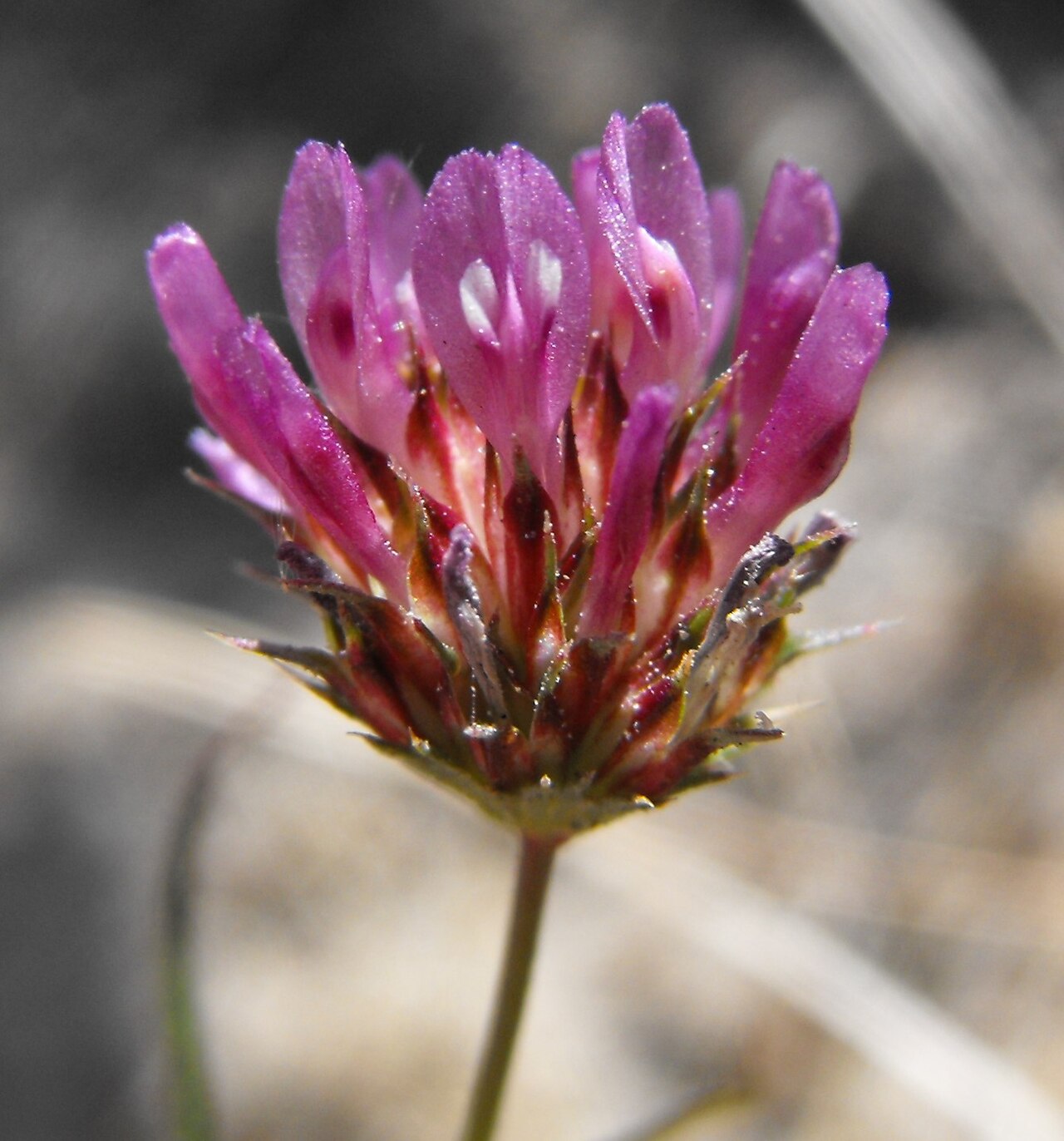
Trifolium ciliolatum, known as Tree Clover or foothill clover (the name used by USDA PLANTS), is a native annual clover of the Pacific Coast states. Despite the common name, it is a small herb, usually 4 to 20 inches tall, with smooth stems, three-part leaves of finely toothed leaflets, and rounded heads of rose-pink to purple pea flowers in spring. It belongs to the legume family (Fabaceae) and grows in grasslands, oak woodland openings, chaparral clearings and disturbed ground from Washington south through California into Baja California.
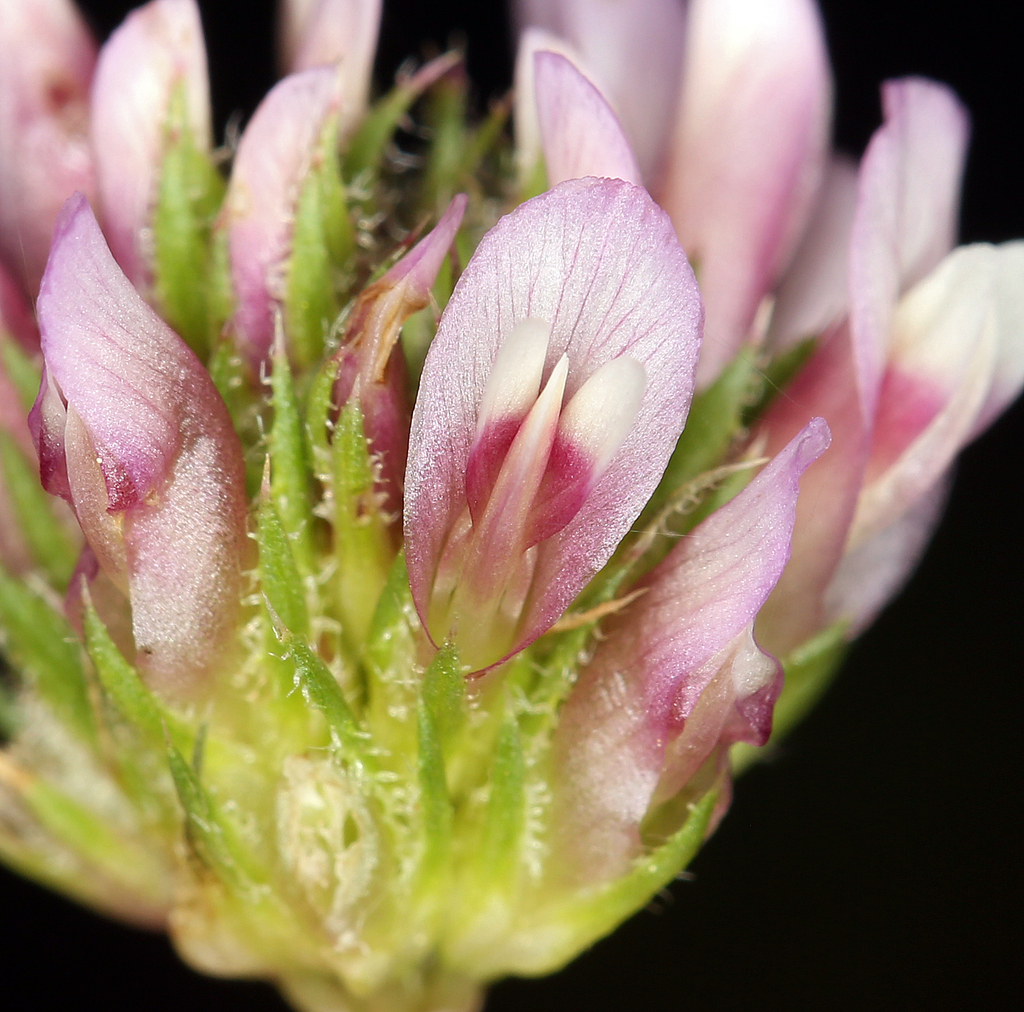
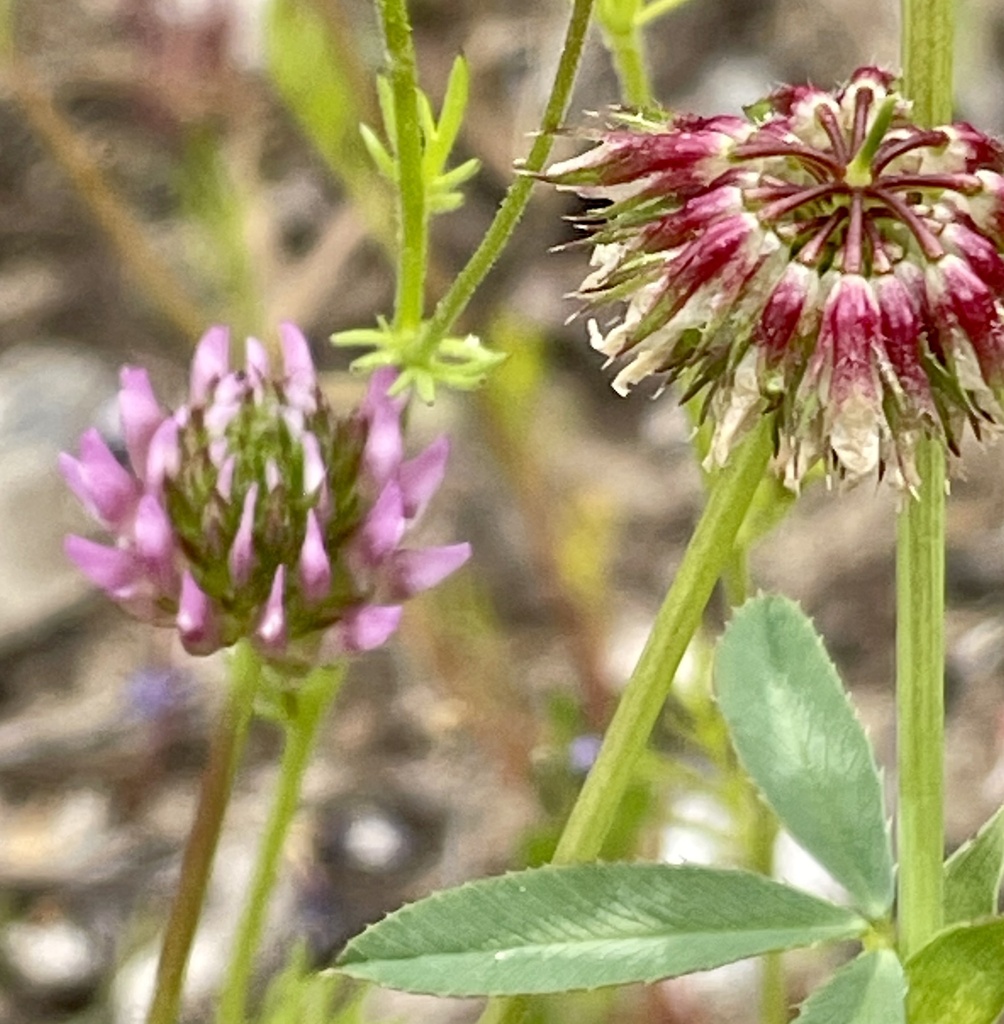
Tree clover is easiest to recognize by its flower heads. Fresh heads are upright and rose-purple, but as each flower is pollinated it bends sharply downward and fades to reddish-brown, so older heads look like small, drooping pompoms with a cluster of green stalks in the center. Under a hand lens the calyx teeth are slender bristles edged with fine hairs, which is where the species name ciliolatum, “finely fringed,” comes from.
Like other native clovers, tree clover hosts nitrogen-fixing bacteria in its roots, feeds native bees, and was once an important spring green and seed food for California Native peoples. It is common in many places, but native annual clovers have lost ground to introduced grasses and weedy European clovers. This guide covers how to identify it, where it grows, how to sow it in a native meadow, and why it matters to wildlife.
Identification
California alone has more than 50 native and introduced clovers, and many have pink to purple heads. Tree clover stands out for its combination of hairless leaves and stems, heads with no ring of bracts (involucre) beneath them, and flowers that turn down as they age.
Stems & Growth Habit
Tree clover is an annual that germinates with the fall and winter rains, grows as a small rosette through the cool season, and bolts in spring. Plants have one to several upright or ascending stems, usually 4 to 20 inches tall, that are smooth and often reddish near the base. In crowded, grassy sites they grow taller and more slender; on thin soil they may stay just a few inches high.
Leaves
The leaves are alternate and palmately compound with three leaflets, like most clovers. Each leaflet is oval to oblong or wedge-shaped, about ½ to 1¼ inches long, smooth, and finely toothed along the margin. At the base of each leaf stalk is a pair of papery stipules that end in slender bristle-like points.
Flowers
Flowers are crowded in rounded heads about ½ to ¾ inch wide on long, slender stalks, with no ring of leafy bracts below the head. Each flower is about ⅜ inch long, with a rose-pink to purple corolla, often paler at the base. The calyx is the key detail: its five teeth are long and bristle-like, and their edges are lined with fine hairs. Flowers open from the bottom of the head upward, then bend sharply downward after pollination and turn reddish or brownish. Bloom runs from about March to June, depending on elevation and latitude.
Fruit & Seeds
Each pollinated flower produces a small pod hidden in the persistent calyx and withered petals. The pods hold one or two small seeds. By early summer the plants have dried, and seeds drop near the parent plant, where they wait in the soil for the next rainy season.
Quick Facts
| Scientific Name | Trifolium ciliolatum |
| Family | Fabaceae (legume or pea family) |
| Plant Type | Annual herb (cool-season, winter-germinating) |
| Mature Height | 4–20 in |
| Mature Spread | 3–10 in |
| Growth Rate | Fast |
| Sun Exposure | Full sun to partial shade |
| Water Needs | Low to moderate; relies on winter and spring rain, dry by summer |
| Soil Type | Clay, loam or gravelly soils; tolerates serpentine and disturbed soils |
| Soil pH | About 5.5–7.5 |
| Bloom Time | March–June |
| Flower Color | Rose-pink to purple, aging reddish-brown |
| Fall Color | None; plants die back by early summer |
| Fruit | Small pod with one or two seeds, enclosed in the calyx |
| Deer Resistant | No; browsed by deer and other grazing animals |
| USDA Hardiness Zones | 7–10 (grown as a cool-season annual) |
Native Range
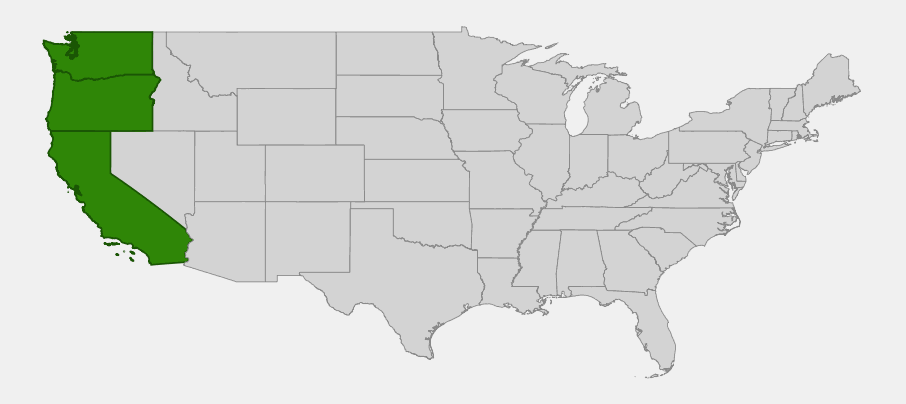
Tree clover is a Pacific Coast species. USDA PLANTS records it as native in California, Oregon and Washington, and it continues south into northern Baja California, Mexico. California is the center of its range: it grows in the foothills and valleys of most of the state, from the North Coast Ranges, Klamath region and Sierra Nevada foothills through the Central Coast and Transverse Ranges to the Peninsular Ranges of San Diego County.
North of California it becomes more local. In Oregon it grows mainly in the interior valleys and foothills of the southwest, such as the Rogue and Umpqua valleys, and USDA records it at the northern edge of its range in Washington, where it is scarce. It is absent from the high mountains and the deserts, growing mostly below about 6,000 feet.
Within its range tree clover is a plant of open, sunny to lightly shaded places that are wet in winter and dry in summer: valley and foothill grassland, oak savanna and woodland openings, chaparral clearings and burns, grassy slopes, roadsides and trail edges. It tolerates disturbance well, which helps it persist in grazed and mowed grasslands.
📋 Regional plant lists featuring Tree Clover: California & Nevada · Western Oregon & Western Washington · Idaho, Eastern Oregon & Eastern Washington
Growing & Care Guide
Tree clover is rarely sold as a plant, but it is easy to grow from seed and fits naturally into native meadow and wildflower plantings in California and southwestern Oregon. Treat it as a cool-season annual: sow in fall, let winter rain do the work, enjoy the spring bloom, and let it set seed before mowing.
Light
Give it full sun or light, dappled shade, such as the edge of an oak canopy. It flowers best in sun, and in deep shade it becomes spindly.
Soil & Water
Tree clover grows in a wide range of soils, from clay and loam to gravelly, rocky ground, as long as it is moist in winter and spring. Because it fixes its own nitrogen with root bacteria, it needs no fertilizer, and rich soil only favors weedy grasses. In its native range, rainfall is usually enough. In a dry winter, water the seeded area every week or two until plants are established. Summer water is not needed; the plants finish their life cycle by early summer.
Planting Tips
Sow seed in fall, from October to December, just before or after the first rains. Scarify the hard seed coat lightly by rubbing the seed between sheets of sandpaper, then scatter it on bare, weeded soil and rake it in lightly, no more than about ⅛ inch deep. Mix it with other native annual wildflowers and bunchgrasses for a meadow effect. Control competing annual weeds, especially non-native grasses, in the first year.
Pruning & Maintenance
No pruning is needed. If you mow a meadow, wait until the clover and its neighbors have dried and dropped their seed, usually by early to midsummer. Leaving some bare patches each fall gives the next generation room to germinate.
Propagation
Propagate only by seed. Collect ripe, dry heads in late spring or early summer, rub out the seeds, and store them in a cool, dry place until fall. Scarifying the seed coat improves germination. As with other clovers, seedlings form root nodules with naturally occurring rhizobia bacteria in most native soils.
Landscape Uses
- Native meadows and wildflower mixes: adds spring color, nectar and soil nitrogen to California and southwestern Oregon meadow plantings
- Grassland and oak woodland restoration: a native annual legume for restoration seed mixes within its range
- Pollinator gardens: its pink flower heads attract bumble bees and other native bees in spring
- Erosion control on slopes: quick winter growth helps cover bare soil alongside native bunchgrasses
- Educational and ethnobotanical gardens: illustrates the native clovers once gathered as spring food
Wildlife & Ecological Value
Native clovers are some of the most valuable plants in western grasslands. Tree clover feeds insects, birds and mammals, and it enriches the soil it grows in.
For Pollinators
Tree clover flowers are adapted to bees, which push open the keel petals to reach nectar and pollen. Bumble bees, long-horned bees, mason bees and other native bees visit them, along with honey bees and small butterflies. Native clovers are also host plants for the caterpillars of several sulphur and blue butterflies.
For Birds
Quail, doves, finches and sparrows eat clover seeds and fresh leaves. Clover patches also attract the insects that many grassland songbirds feed to their nestlings.
For Mammals
The tender spring foliage is grazed by black-tailed deer, rabbits, ground squirrels and pocket gophers, and by livestock. Native clovers are among the most nutritious forage plants in California grasslands, high in protein because they fix nitrogen.
Ecosystem Role
Through its partnership with rhizobia bacteria in root nodules, tree clover converts atmospheric nitrogen into a form plants can use, adding nitrogen to grassland soils as its roots and leaves decay. As a winter-germinating annual it helps cover bare soil during the rainy season, and its seed bank lets it return after fire, drought or grazing.
Cultural & Historical Uses
The English botanist George Bentham described Trifolium ciliolatum in the mid-1800s, in his account of plants collected in California by Karl Theodor Hartweg. The name refers to the finely fringed calyx teeth. The species is widely called foothill clover, and California botanists also know it as tree clover.
Native clovers were an important spring food for many California Native peoples. Ethnographic records describe the fresh leaves and flower heads of several species being eaten raw or steamed in early spring, and seeds being gathered later in the season. Wikipedia and ethnobotanical sources list tree clover among the clovers whose seeds and greens were commonly eaten. In parts of central California, gatherings to eat the first fresh clover were a recorded spring custom.
Today tree clover remains common in many California foothills, but native annual clovers have declined in grasslands dominated by introduced Mediterranean grasses and weedy clovers such as rose clover. Restoration ecologists increasingly include native clovers in seed mixes because they add nitrogen, feed pollinators, and help rebuild the diverse spring wildflower displays that once covered California valleys.
Frequently Asked Questions
Why is it called tree clover if it is so small?
The name is long-standing but not descriptive; tree clover is a small annual, usually under 20 inches tall. USDA PLANTS and many references call it foothill clover instead. Using the scientific name Trifolium ciliolatum avoids confusion.
Is tree clover a perennial?
No. It is a cool-season annual that sprouts after fall and winter rains, blooms in spring, sets seed and dies by early summer. It returns each year from seed.
How can I tell tree clover from other pink clovers?
Look for smooth, hairless leaves and stems, heads without a leafy ring of bracts underneath, bristle-like calyx teeth with fine hairs along their edges, and flowers that turn sharply downward as they age. Clovers such as Tomcat Clover have a conspicuous involucre below the head.
Can I add tree clover to a lawn?
It does not tolerate frequent mowing or summer irrigation well, and it disappears in summer. It is better in a native meadow or wildflower area that is mowed only once, after seed has dropped.
Is tree clover edible?
Native clovers, including this one, were traditionally eaten as spring greens and their seeds gathered for food. Raw clover can cause bloating in large amounts, and you should only gather plants you have identified with certainty from areas free of herbicides.

Looking for a nursery that carries Tree Clover?
Browse our native plant nursery directory: California · Oregon · Washington

