
Sierra Snapdragon (Sairocarpus multiflorus)
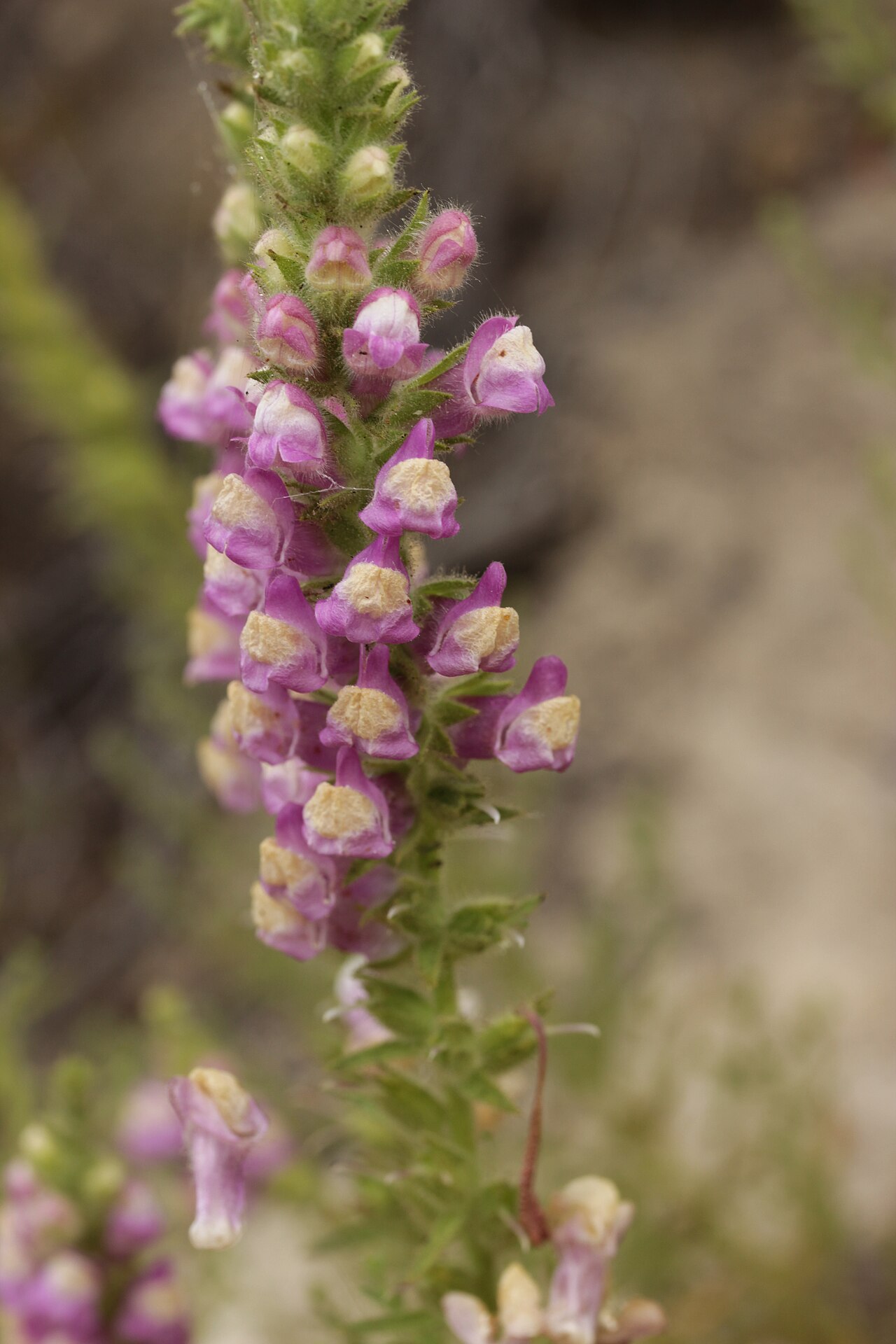
Sairocarpus multiflorus, known as Sierra Snapdragon or many-flowered snapdragon, is a native snapdragon found only in California. It is a sticky-haired, upright perennial or short-lived subshrub that sends up stems 2 to 4 feet tall, each ending in a long, crowded spike of pink to rose-purple snapdragon flowers with a pale cream or yellowish lip. In late spring and early summer a good stand looks like a burst of wild foxgloves on a dry chaparral slope.
It is best known as a fire follower. Sierra snapdragon is often scarce or hidden in mature chaparral, then appears in quantity on slopes that burned the year before, along with other post-fire wildflowers such as whispering bells and poodle-dog bush. It also comes up on road cuts, landslides and other freshly disturbed ground. The plant was long called Antirrhinum multiflorum; botanists now place the native California snapdragons in their own genus, Sairocarpus, separate from the Old World garden snapdragon.
It grows in the central Coast Ranges, the Transverse Ranges of southern California and part of the Sierra Nevada foothills. This guide covers how to identify Sierra snapdragon, where it grows, how to grow it from seed in a dry garden, and its value to native bees.
Identification
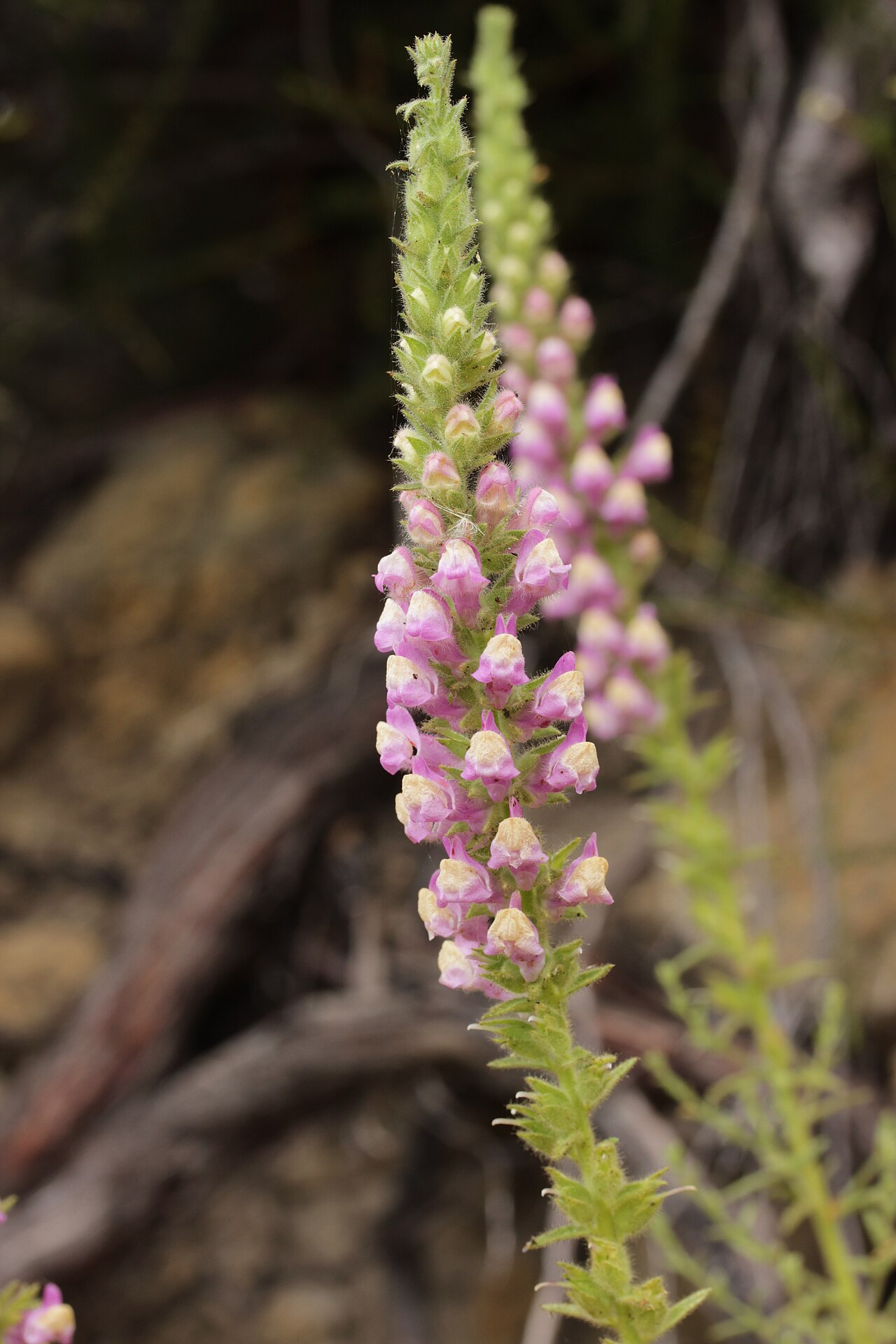
Look for a stiff, glandular-sticky stem with many small, pointed leaves, topped by a dense spike of pink to magenta snapdragon flowers on a dry slope, often in a recent burn.
Growth Habit
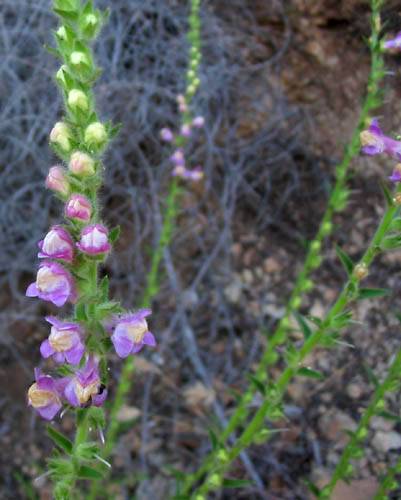
Sierra snapdragon is an erect herbaceous perennial that often becomes woody at the base, so it can behave like a small subshrub. It may also flower in its first year and live only a few seasons. Stems are usually 2 to 4 feet tall (sometimes taller), unbranched or with a few upright branches, and covered with sticky glandular hairs. Unlike several other native snapdragons, it does not twine or climb on neighboring shrubs.
Leaves
The leaves are small, narrowly lance-shaped to oval and pointed, about 1/2 to 1 1/2 inches long, and arranged alternately along the stem. They are green, slightly sticky and often crowded on the lower part of the stem.
Flowers
The flowers are packed into a long, many-flowered raceme that can make up the top foot or more of the stem, which is where the name multiflorus (“many-flowered”) comes from. Each flower is a classic two-lipped snapdragon, roughly 1/2 to 3/4 inch long, pink to rose-purple, with a pale, cream to yellowish swelling (the palate) that closes the mouth of the flower. Bloom time is mainly April through July.
Fruit & Seeds
After flowering, each flower forms a small, rounded capsule that opens by pores to release many tiny dark seeds. The seeds can lie dormant in the soil for years until a fire or disturbance triggers germination.
Look-alikes
Nuttall’s snapdragon (Sairocarpus nuttallianus) is a smaller, more branched plant of coastal southern California with fewer, violet-blue flowers spaced along the stems, and it often clambers with twining branchlets. Kellogg’s snapdragon (Sairocarpus kelloggii) twines through shrubs and has fewer, widely spaced blue-violet flowers. Garden snapdragon (Antirrhinum majus) is a Mediterranean species with much larger flowers and smooth, hairless leaves.
Quick Facts
| Scientific Name | Sairocarpus multiflorus (Pennell) D.A. Sutton |
| Family | Plantaginaceae (plantain family; formerly placed in Scrophulariaceae) |
| Plant Type | Short-lived perennial herb or subshrub, woody at the base |
| Mature Height | 2–4 ft (occasionally taller) |
| Mature Spread | 1–2 ft |
| Growth Rate | Fast |
| Sun Exposure | Full sun |
| Water Needs | Low; dry, well-drained soil |
| Soil Type | Dry, rocky, sandy or gravelly soils on slopes, burns and disturbed ground |
| Soil pH | About 6.0–8.0 |
| Bloom Time | April–July |
| Flower Color | Pink to rose-purple, with a cream to pale yellow palate |
| Fall Color | None; stems dry to tan after seed set |
| Fruit | Small rounded capsule with many tiny dark seeds |
| Deer Resistant | Usually lightly browsed; sticky hairs make it unappealing |
| USDA Hardiness Zones | 8–10 |
Native Range
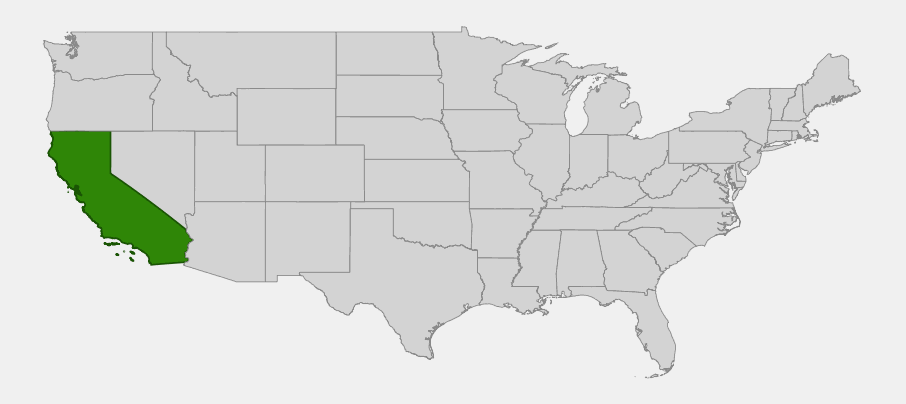
Sierra snapdragon is endemic to California: it grows wild nowhere else. USDA PLANTS lists it only in California, and it is not found in neighboring states.
Its main areas are the central Coast Ranges, from the inner ranges south of the San Francisco Bay region toward the Santa Lucia Range and the mountains of San Luis Obispo County, the Transverse Ranges of southern California, including the Santa Monica, San Gabriel and San Bernardino Mountains, and a limited section of the western Sierra Nevada foothills. Populations rise and fall with fire: a slope can be covered in flowering stems for a year or two after a burn and then seem to lose the plant as the shrubs grow back.
It grows on dry, open slopes in chaparral, coastal sage scrub and oak or pine woodland openings, usually at low to middle elevations, roughly from near sea level to about 5,000 feet. It is most often seen in recent burns, on road cuts and on other bare, disturbed ground where competition from shrubs is low.
📋 Regional plant lists featuring Sierra Snapdragon: California & Nevada
Growing & Care Guide
Sierra snapdragon is an easy, fast plant for a dry, sunny California garden, though it is short-lived and best treated as a self-sowing wildflower rather than a permanent shrub. Seed is offered by some California native seed suppliers, and plants occasionally turn up at native plant sales.
Light
Give it full sun. In shade it becomes lanky and flowers poorly.
Soil & Water
It needs fast-draining soil: sandy, gravelly or rocky ground on a slope is ideal, and heavy, wet clay is the most common cause of failure. Once established it needs little or no summer water in coastal and foothill gardens; occasional deep watering in very hot inland areas can extend flowering, but overwatering shortens its life.
Planting Tips
Sow seed on the soil surface in fall so winter rains can settle it in, or set out small container plants in fall or winter. Plant it in drifts among low chaparral shrubs, buckwheats and sages, where the tall flower spikes can rise above lower plants.
Pruning & Maintenance
Little care is needed. Let some spikes ripen and drop seed so new plants replace the old ones. Cut back dry stems in late summer or fall if you want a tidier look. Expect plants to decline after two or three years, especially in rich soil.
Propagation
Grow it from seed. In the wild, germination is triggered by fire; in cultivation, a smoke-water or charred-material treatment, or simply sowing fresh seed on disturbed, bare soil, improves results. Seedlings grow quickly and often bloom in their first or second year. Collect seed only in small amounts and only where permitted.
Landscape Uses
- Dry chaparral and slope gardens: tall pink spikes for sunny, rocky, unirrigated ground
- Pollinator gardens: its closed snapdragon flowers are worked by bumble bees and other large native bees
- Post-fire and erosion restoration: a native fire follower that quickly covers burned or disturbed slopes
- Wildflower meadows and seed mixes: a short-lived, self-sowing perennial that adds height and late-spring color
- Native habitat gardens: a host of native bees and insects in a water-wise setting
Wildlife & Ecological Value
Sierra snapdragon blooms in quantity on burned and disturbed slopes, providing nectar and pollen at a time when much of the surrounding shrubland is still recovering.
For Pollinators
The mouth of each flower is closed by the swollen palate, so only strong insects such as bumble bees and other large bees can push their way in to reach the nectar. They carry pollen between flowers as they work up the spike. Smaller insects visit for pollen spilled on the outside of the flowers.
For Birds
Seed-eating birds and quail forage on burned slopes where the plant is common, and insect-eating birds hunt among the sticky stems.
For Mammals
The sticky glandular hairs make it unpalatable to most browsers, so it is usually only lightly grazed by deer and rabbits.
Ecosystem Role
As a fire follower, it is part of the short-lived wave of wildflowers that covers chaparral slopes in the first years after a burn, helping to hold soil and feeding insects until the shrubs regrow. Its long-lived seed bank then waits in the soil for the next fire.
Cultural & Historical Uses
Sierra snapdragon was described as Antirrhinum multiflorum by the botanist Francis Pennell. Later work showed that the native New World snapdragons are not close relatives of the Old World garden snapdragon, and they were moved into the genus Sairocarpus, a name that refers to the drawn-up, puckered look of the seed capsules. Many field guides and seed catalogs still use the older name.
The plant is a reminder of how much of California’s wildflower diversity depends on fire. Hikers who visit chaparral the spring after a burn often find tall pink spikes of Sierra snapdragon where there were none before, along with whispering bells, fire poppies and other species that spend most of their lives as seeds in the soil.
There are no widely documented food or medicinal uses for this species. Like other snapdragons it is grown mainly for its flowers, and it is not known to be dangerously toxic, but it should not be eaten.
Frequently Asked Questions
Is Sierra snapdragon the same as the garden snapdragon?
No. The garden snapdragon (Antirrhinum majus) comes from the Mediterranean. Sierra snapdragon is a California native that now belongs to the separate genus Sairocarpus, although it was long called Antirrhinum multiflorum.
Where does Sierra snapdragon grow?
It is found only in California, in the central Coast Ranges, the Transverse Ranges and part of the Sierra Nevada foothills, on dry slopes in chaparral and woodland openings.
Why does it appear after wildfires?
Its seeds can lie dormant in the soil for years, and chemicals in smoke and charred wood, along with the open, sunny ground left by a fire, trigger mass germination. Plants bloom heavily for a few years and then fade as the shrubs grow back.
Can I grow Sierra snapdragon in my garden?
Yes, in a sunny, well-drained spot in a California or similar dry-summer garden. Sow seed in fall, give little summer water, and let it self-sow, since individual plants are short-lived.
When does Sierra snapdragon bloom?
Mainly from April through July, with the long flower spikes opening from the bottom up over several weeks.

Looking for a nursery that carries Sierra Snapdragon?
Browse our native plant nursery directory: California

