
Poodle-dog Bush (Eriodictyon parryi)
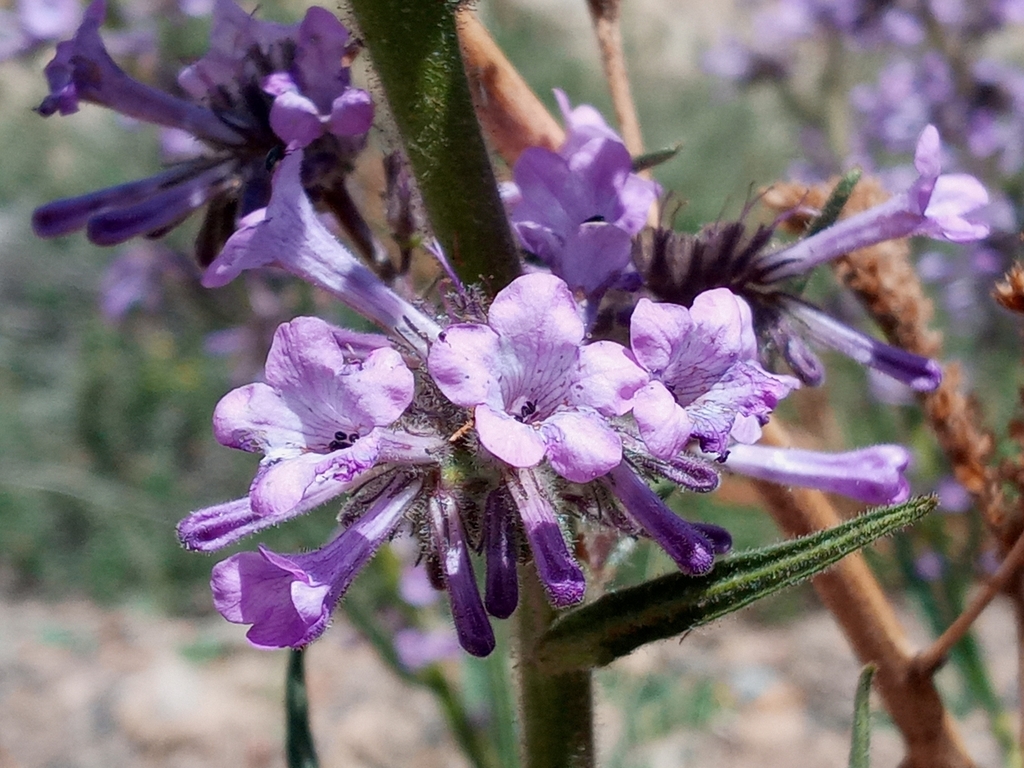
Eriodictyon parryi, known as Poodle-dog Bush and formerly as Turricula parryi, is a striking, short-lived native shrub of the mountains of southern and central California. After wildfires it can spring up by the thousands, covering burned slopes with tall, cone-shaped plants, long, narrow, sticky leaves and big clusters of lavender to purple, bell-shaped flowers in summer.
Safety note: do not touch it. Contact with any part of poodle-dog bush, including the leaves, stems, flowers and the hairs that cling to clothing, can cause a severe, itchy, blistering rash much like poison oak. The rash may not appear for a day or more and can last for weeks. Hikers, firefighters and trail crews in recently burned areas should learn to recognize it, wear long sleeves, long pants and gloves, and keep dogs from brushing against it.
It belongs to a small group of plants related to yerba santa, now usually placed in the family Namaceae (USDA PLANTS lists it in the waterleaf family, Hydrophyllaceae). The name poodle-dog bush comes from its drooping, curling leaves, which can look like the curly coat of a poodle. This guide covers how to identify it, where it grows, why it is not a garden plant, and its important role in healing burned landscapes.
Identification
Poodle-dog bush is easiest to recognize in the first years after a fire, when it forms dense stands on burned slopes. Look for tall, unbranched, leafy stems radiating from the base, a strong, sickly-sweet or minty smell and, in summer, showy purple flower clusters. Identify it from a distance and avoid contact.
Growth Habit
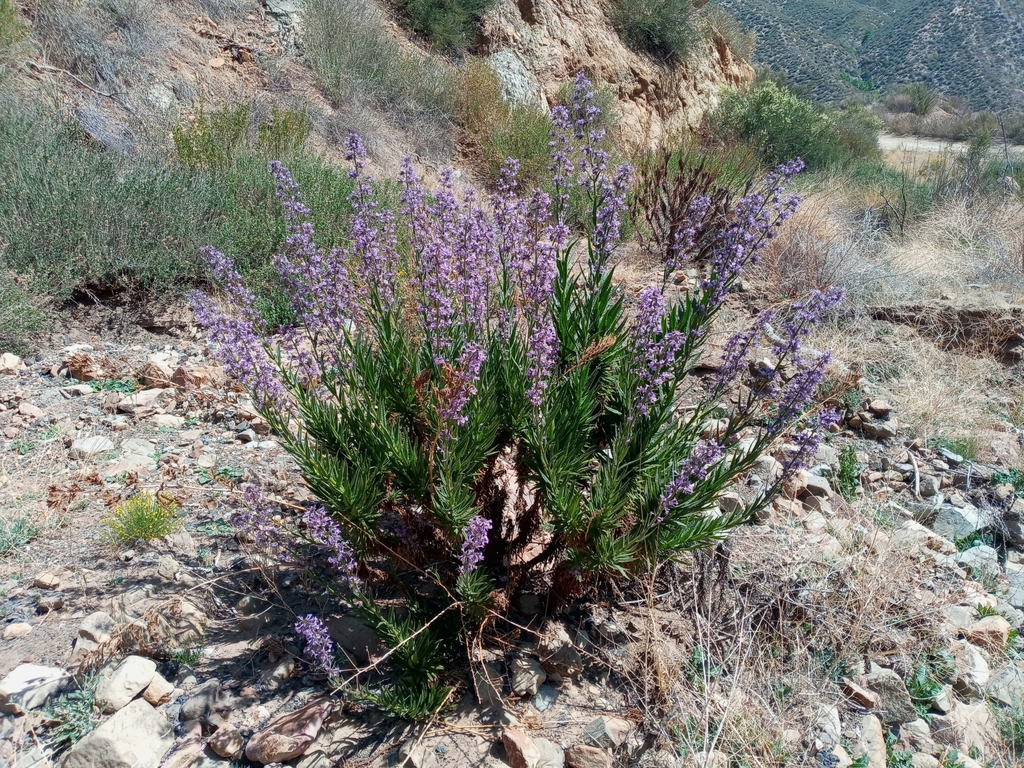
It is a short-lived, somewhat woody shrub, usually 3 to 8 feet tall. Several thick stems rise from a common base and grow nearly straight up, each densely clothed in leaves, so a plant often looks like a cluster of narrow cones. The whole plant is covered in sticky, glandular hairs and has a strong, rank to minty odor even when not in flower. Individual plants live only a few years.
Leaves
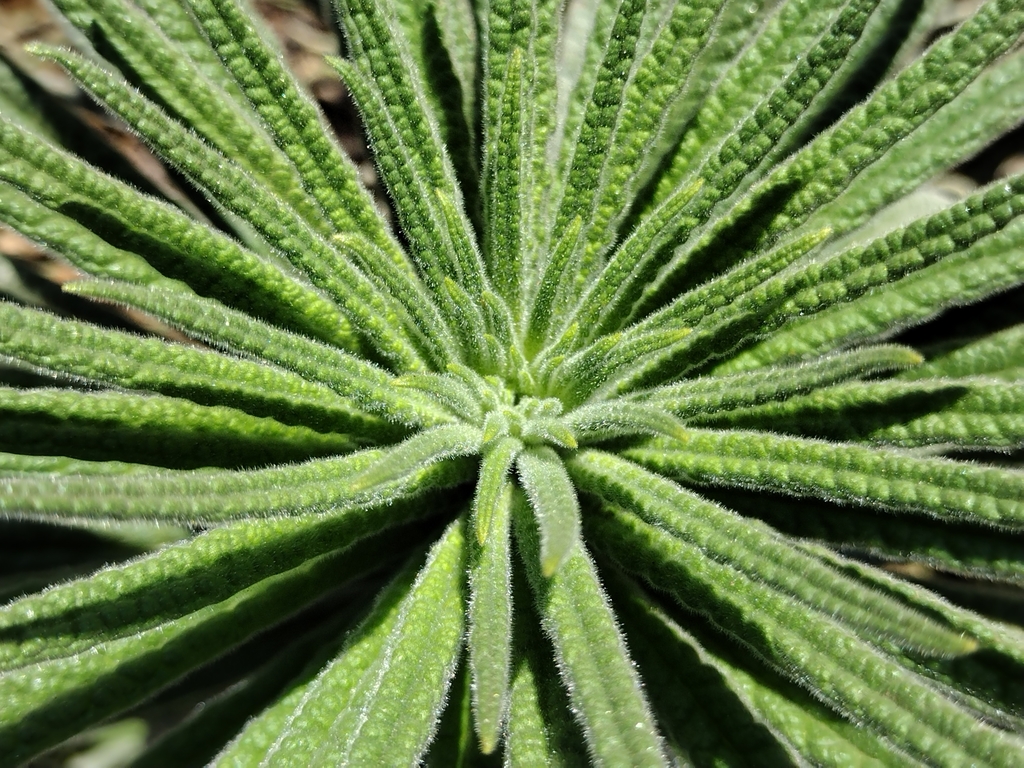
The leaves are long and narrow, from about 1 1/2 to 12 inches long, often with toothed edges, and are crowded along the stems. They are green and sticky-hairy. In dry periods older leaves droop and curl, giving the plant its “poodle” look. Young plants form neat rosettes of narrow leaves on bare, burned ground.
Flowers
The flowers are borne in large, branched, coiled clusters at the tops of the stems. Each flower is bell- to funnel-shaped, about 1/2 to 3/4 inch long, and lavender, blue-violet or purple. Bloom time is mainly June to August.
Fruit & Seeds
The fruit is a small capsule with many tiny seeds. The seeds can remain dormant in the soil for many years and germinate in large numbers after fire or other disturbance.
Look-alikes
The closest look-alikes are its relatives the yerba santas, such as hairy yerba santa (Eriodictyon trichocalyx), thick-leaf yerba santa (Eriodictyon crassifolium) and yerba santa (Eriodictyon californicum), which are not skin irritants. Yerba santas have smaller flowers, branching woody stems and tougher, leathery leaves, and they usually resprout from the crown after fire, while poodle-dog bush comes up from seed and grows as straight, leafy stems from one base. Large Phacelia species have similar coiled flower clusters but are much shorter. When in doubt, do not touch.
Quick Facts
| Scientific Name | Eriodictyon parryi (A. Gray) Greene |
| Family | Namaceae (USDA: Hydrophyllaceae, waterleaf family) |
| Plant Type | Short-lived shrub (fire follower) |
| Mature Height | 3–8 ft |
| Mature Spread | 2–5 ft |
| Growth Rate | Fast |
| Sun Exposure | Full sun |
| Water Needs | Low; dry summers |
| Soil Type | Well-drained, often granitic, rocky or sandy soils on disturbed slopes |
| Soil pH | About 6.0–7.5 |
| Bloom Time | June–August |
| Flower Color | Lavender, blue-violet to purple |
| Fall Color | None; leaves may curl and brown in drought |
| Fruit | Small capsule with many long-lived seeds |
| Deer Resistant | Yes; sticky, irritating foliage is avoided |
| USDA Hardiness Zones | 7–10 |
Native Range
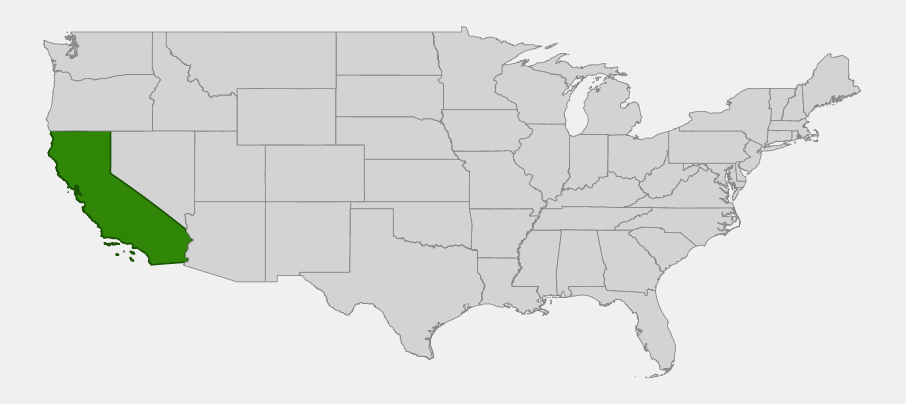
Poodle-dog bush is native to California and northern Baja California. USDA PLANTS lists it only in California, where it grows in the mountains of the southern half of the state. In Baja California it is rare, appearing after fires in the Sierra de Juárez and Sierra de San Pedro Mártir.
It is especially common in the Transverse Ranges, including the San Gabriel, San Bernardino and Santa Ynez Mountains and the mountains of Ventura and northern Los Angeles Counties. It also grows in the southern Coast Ranges from about San Luis Obispo County south, in the Peninsular Ranges of Riverside, Orange and San Diego Counties, and in the southern Sierra Nevada north to the Kings Canyon area, including Tulare, Kern and Fresno Counties.
It grows in chaparral and in yellow pine and mixed conifer forest, mostly on granitic slopes and ridges at about 1,000 to 7,500 feet. It is a classic fire follower: it is most abundant in the first years after a wildfire or landslide, dominates some burned slopes for up to about a decade, then dies back as shrubs and trees recover, leaving seed in the soil for the next fire.
📋 Regional plant lists featuring Poodle-dog Bush: California & Nevada
Growing & Care Guide
Poodle-dog bush is not recommended for gardens. Because of its severe skin irritant, it is a hazard to people and pets in any landscape, and it is short-lived and difficult to grow outside its natural, post-fire setting. Appreciate it in the wild, from the trail. For similar purple flowers and fragrant foliage without the rash, plant a yerba santa or a native sage instead.
Light
In the wild it grows in full sun on open, burned or disturbed slopes. It disappears as shade returns.
Soil & Water
It grows in well-drained, rocky, sandy or decomposed granite soils and depends on winter rain, surviving hot, dry summers without irrigation.
Planting Tips
Do not plant it near trails, homes, play areas or anywhere people or pets brush past. In restoration projects in burned areas, it usually arrives on its own from the soil seed bank and does not need to be planted. Never handle the plant or its seed without gloves and full skin protection.
Pruning & Maintenance
If it must be cleared from a trail or work area, wear gloves, long sleeves, long pants and eye protection, keep the plant material away from skin, and bag contaminated gloves and clothing. Wash affected clothing separately. If you are exposed, wash the skin promptly and consult a doctor for a severe or widespread rash.
Propagation
It grows from long-lived seed that germinates after fire, likely triggered by heat, smoke or chemicals from burned plant material. It is not practical or advisable to propagate at home.
Landscape Uses
- Post-fire restoration: a natural colonizer that holds soil on burned slopes
- Wildflower viewing: spectacular purple displays in the first summers after a fire
- Pollinator habitat: abundant summer flowers for bees and other insects in burn areas
- Nature education: a striking example of a fire-adapted, short-lived shrub
- Trail safety awareness: an important plant for hikers and crews to recognize and avoid
Wildlife & Ecological Value
Poodle-dog bush is a key early player in the recovery of southern California mountain landscapes after fire.
For Pollinators
Its large, long-blooming flower clusters provide nectar and pollen in summer, when burned areas offer few other flowers. Bumblebees, carpenter bees and other native bees, as well as butterflies, visit the flowers.
For Birds
Its dense stands provide cover on otherwise bare burned slopes, and the insects drawn to it are food for birds.
For Mammals
Its sticky, strong-smelling foliage is not browsed much by deer or other mammals. Small animals may shelter beneath it.
Ecosystem Role
As a fire follower, poodle-dog bush germinates from a long-lived seed bank after fire and quickly covers bare soil, helping to reduce erosion on steep burned slopes. It dominates for a few years to a decade, then gives way as chaparral shrubs and forest trees recover, and its seeds wait in the soil for the next fire.
Cultural & Historical Uses
The species was first described by the Harvard botanist Asa Gray as Nama parryi, from specimens collected by Charles Christopher Parry, a 19th-century botanist and explorer of the American West. It was later placed in its own genus, Turricula, a name still used in many field guides, and more recent molecular studies support including it in Eriodictyon, the yerba santa genus.
Its irritant comes from compounds produced by glandular hairs on the plant, which stick to skin and clothing. Hikers who walk through burn areas in southern California often learn of the plant the hard way, and after major fires land managers post warnings and close or reroute trails where it is abundant.
Despite its reputation, poodle-dog bush is a remarkable native. Its seeds can wait in the soil for decades between fires, and its mass appearances, followed by its disappearance a decade later, illustrate how chaparral and mountain forests renew themselves after fire.
Frequently Asked Questions
Is poodle-dog bush poisonous to touch?
Yes. Contact can cause a severe, itchy, blistering rash similar to poison oak, sometimes appearing a day or more later and lasting for weeks. Avoid touching any part of the plant.
Why is it called poodle-dog bush?
In dry weather its long, narrow leaves droop and curl, giving the plant a shaggy look like a poodle’s curly coat.
Where does poodle-dog bush grow?
In the mountains of southern and central California and northern Baja California, mostly in chaparral and pine forest that has recently burned.
Should I plant poodle-dog bush?
No. It is a skin hazard, short-lived and hard to grow. Plant a yerba santa or a native sage for a similar look without the risk.
Why does poodle-dog bush appear after fires?
Its long-lived seeds germinate after fire and quickly cover burned slopes. It dominates for several years, then fades as other plants recover.

Looking for a nursery that carries Poodle-dog Bush?
Browse our native plant nursery directory: California

