
Willowleaf Sunflower (Helianthus salicifolius)
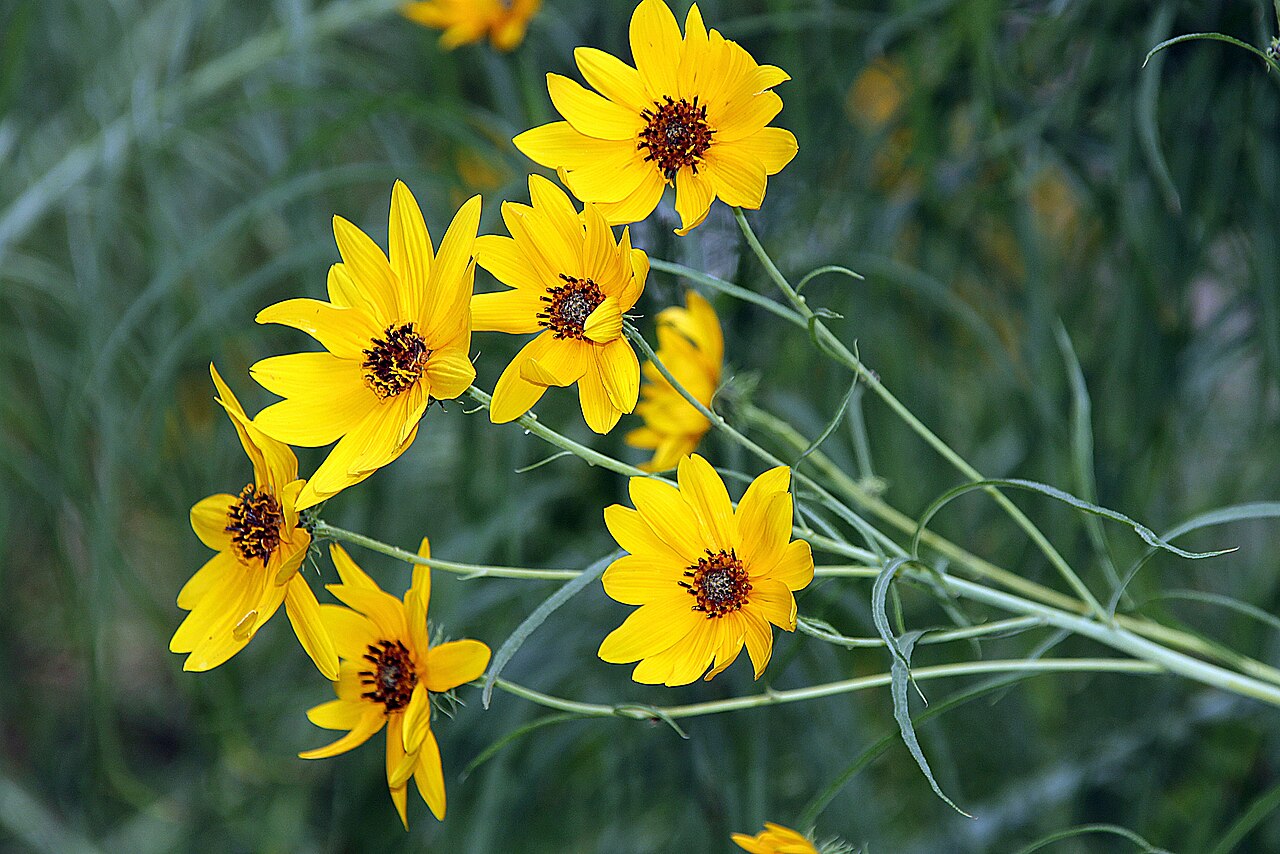
Helianthus salicifolius, known as Willowleaf Sunflower (USDA: willowleaf sunflower; also called willow-leaved sunflower), is a tall native perennial in the aster family (Asteraceae). Its stems, 4 to 8 feet tall, are clothed in hundreds of very narrow, drooping leaves up to 8 inches long, giving the plant a fine, fountain-like texture that looks almost like an ornamental grass. In late summer and fall it is topped with golden-yellow, 2- to 3-inch flower heads with dark reddish-purple centers.
It is a plant of the southern Great Plains and Ozark border, native mainly to Kansas, Missouri, Oklahoma and north-central Texas, where it grows on limestone prairies, rocky glades and calcareous bluffs. Scattered records farther north and east, including those listed by USDA for Illinois, Maryland, New York, Ohio and Wisconsin, are generally considered escapes from cultivation.
It has become a popular garden plant, prized for its foliage as much as its flowers, and the compact cultivar ‘Low Down’ is widely sold. Its late flowers feed native bees, butterflies and migrating monarchs, and its seeds feed finches and other birds into winter.
Identification
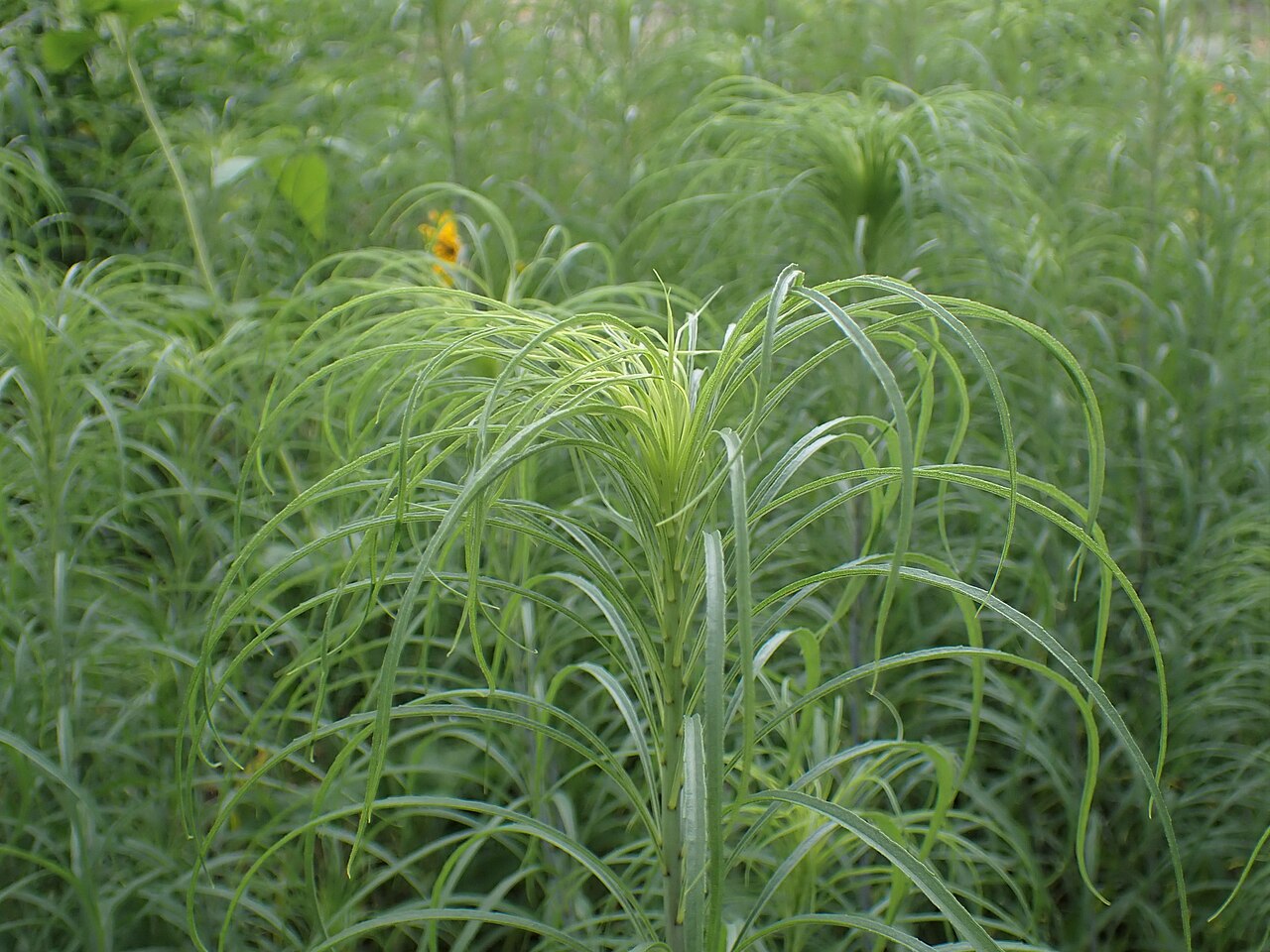
Willowleaf sunflower is the easiest of our tall perennial sunflowers to recognize, even without flowers: no other sunflower has such long, narrow, crowded, drooping leaves.
Growth Habit & Stems
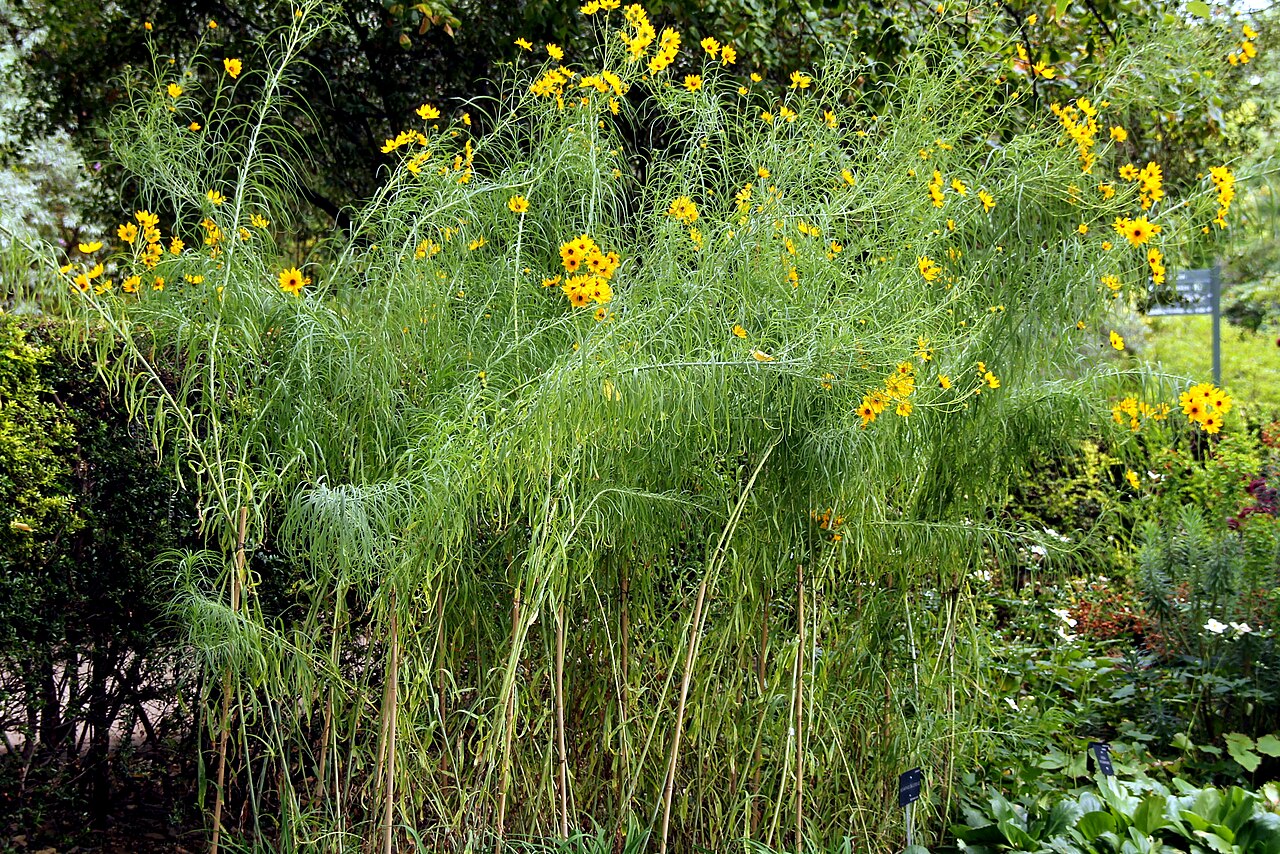
A clump-forming perennial that spreads slowly by short rhizomes. The stems are usually 4 to 8 feet tall, mostly smooth and often glaucous (with a whitish bloom), and densely leafy along their full length. In rich garden soil the stems can flop; in lean prairie soil they stand upright.
Leaves
The leaves are alternate, linear and very narrow: up to about 8 inches long but rarely more than 1/2 inch wide. They are crowded along the stem, arch outward and droop at the tips, and often have a slight blue-green cast. This dense, willow-like foliage is the plant’s signature.
Flowers
From about late August into October (sometimes November in Texas), each stem branches near the top into a cluster of 6 to 15 or more flower heads, each 2 to 3 inches across. Each head has 10 to 20 golden-yellow ray florets around a dome of 50 or more dark reddish-purple to brownish disc florets.
Fruit
The fruits are small, dark, wedge-shaped achenes (cypselae) that ripen in the seed heads in fall and are eaten by birds.
Look-alikes
Maximilian Sunflower (Helianthus maximiliani) also grows tall in the Great Plains, but its leaves are broader, folded lengthwise and rough, and its flower heads have yellow centers and are borne along the upper stem. Swamp Sunflower (H. angustifolius) has narrow leaves too, but they are rough, fewer and not drooping, and it grows in wet sites in the Southeast.
Garden Forms
The cultivar ‘Low Down’ is a dwarf selection only about 1 to 1 1/2 feet tall that covers itself in flowers. The straight species is far taller and has more open flower clusters.
Quick Facts
| Scientific Name | Helianthus salicifolius A. Dietr. |
| Family | Asteraceae (aster or sunflower family) |
| Plant Type | Herbaceous perennial wildflower |
| Mature Height | 4–8 ft (dwarf cultivars 1–2 ft) |
| Mature Spread | 2–3 ft; spreads slowly by rhizomes |
| Growth Rate | Fast |
| Sun Exposure | Full sun |
| Water Needs | Low to medium; drought tolerant once established |
| Soil Type | Well-drained loam, clay or rocky limestone soils |
| Soil pH | About 6.5–8.0 |
| Bloom Time | Late August–October |
| Flower Color | Golden yellow with a dark reddish-purple center |
| Fall Color | Foliage turns tan to bronze after frost |
| Fruit | Small dark achenes in fall seed heads |
| Deer Resistant | Moderately; deer and rabbits sometimes browse young shoots |
| USDA Hardiness Zones | 4–9 |
Native Range
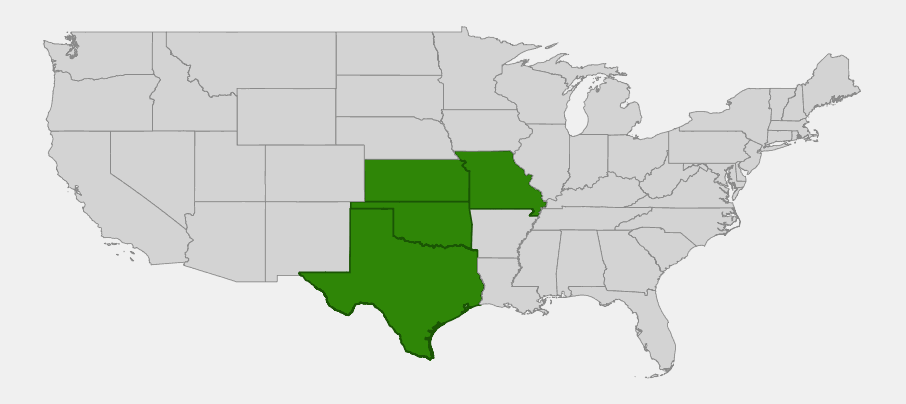
Willowleaf sunflower has a small natural range in the south-central United States. It is native mainly to eastern Kansas, western and southern Missouri, Oklahoma and north-central Texas, where it is most common on the limestone prairies of the Flint Hills and Osage Plains and the rocky glades and bluffs at the western edge of the Ozarks.
USDA PLANTS also lists it for Illinois, Maryland, New York, Ohio and Wisconsin. These scattered northern and eastern records are generally considered to be plants that escaped from gardens, which is how most people in those states encounter it today, so they are not shown on our native range map.
Typical habitats are upland limestone prairies, rocky calcareous glades, open slopes and bluffs, roadsides and prairie remnants along railroads. It favors heavy but well-drained, alkaline soils over limestone and often grows on thin, rocky ground.
📋 Regional plant lists featuring Willowleaf Sunflower: Nebraska, Kansas & Eastern Colorado · Illinois, Iowa & Missouri · Arkansas, Louisiana, Eastern Oklahoma & Eastern Texas
Growing & Care Guide
Willowleaf sunflower is an easy, adaptable perennial for sunny borders, prairie gardens and large-scale plantings. Grow it for its fountain of fine foliage from early summer and for its burst of gold in fall, when many other perennials are fading.
Light
Plant in full sun. In shade the stems stretch and flop and flowering is sparse.
Soil & Water
It tolerates a wide range of well-drained soils, from rocky limestone to clay loam, and is drought tolerant once established. Lean soil keeps it shorter and sturdier; rich, moist soil makes it grow taller and more likely to lean. Avoid soils that stay waterlogged in winter.
Planting Tips
Plant in spring or fall, spacing plants 2 to 3 feet apart. Use it at the back of a border, as a summer screen or as a fine-textured accent among shorter prairie plants and grasses. Choose a dwarf cultivar such as ‘Low Down’ for small gardens and containers.
Pruning & Maintenance
To keep tall plants from flopping, cut the stems back by about half in late May or early June; they will branch, flower a little later and stay shorter. Leave seed heads standing into winter for birds, then cut the stems to the ground in late winter. Divide clumps every few years in spring if they become crowded or spread too far.
Propagation
Divide established clumps in early spring, or take stem cuttings in late spring. Seed sown outdoors in fall, or given 1 to 2 months of cold, moist stratification before spring sowing, germinates well. Cultivars should be propagated by division or cuttings to stay true.
Landscape Uses
- Back of the border: a tall, fine-textured accent that blooms after most perennials
- Prairie and meadow plantings: native to limestone prairies of the southern Plains
- Pollinator and monarch gardens: late nectar for bees, butterflies and migrating monarchs
- Bird gardens: seed heads feed finches and other birds into winter
- Containers and small gardens: dwarf cultivars such as ‘Low Down’ stay 1–2 ft tall
Wildlife & Ecological Value
Like other native sunflowers, willowleaf sunflower is an important late-season food source for insects and birds in the prairie.
For Pollinators
The flower heads attract many native bees, including sunflower specialist bees such as long-horned bees (Melissodes), along with bumble bees, butterflies and beneficial wasps. Its fall bloom coincides with the monarch migration through the southern Plains, offering nectar to migrating monarchs. The Xerces Society lists it as having special value to native bees.
For Birds
American goldfinches, chickadees and other seed-eating birds feed on the ripe seed heads from fall into winter.
For Mammals
Small mammals eat fallen seeds, and the dense stems give cover. Deer and rabbits occasionally browse young growth.
Ecosystem Role
Sunflowers are host plants for the caterpillars of the silvery checkerspot and bordered patch butterflies and many moths, and they support a large community of specialist insects. As a late bloomer, willowleaf sunflower extends the flowering season in prairie plantings.
Cultural & Historical Uses
The species was formally described by the German botanist Albert Dietrich in the mid-1800s. It was grown in European botanical gardens early on and remains a favorite there, valued for its unusual foliage.
The species name salicifolius means “willow-leaved,” for its long, narrow leaves. The genus name Helianthus combines the Greek words for sun and flower.
Researchers have studied willowleaf sunflower, along with other perennial sunflowers, for traits such as drought and frost tolerance, and as a possible biomass crop. In gardens its main role is ornamental, and nurseries have selected several compact cultivars for smaller spaces.
Frequently Asked Questions
How tall does willowleaf sunflower get?
The wild species usually grows 4 to 8 feet tall. Dwarf cultivars such as ‘Low Down’ stay about 1 to 2 feet tall.
When does willowleaf sunflower bloom?
From late August into October, and sometimes into November in the southern part of its range.
Where is willowleaf sunflower native?
Mainly Kansas, Missouri, Oklahoma and north-central Texas, on limestone prairies, glades and bluffs. Populations farther north and east are generally garden escapes.
How do I keep it from flopping?
Grow it in full sun and lean soil, and cut the stems back by about half in late spring. This makes the plant shorter and bushier.
Is willowleaf sunflower invasive?
It spreads slowly by short rhizomes and can form large clumps but is not considered invasive. Divide it every few years to keep it in bounds.


