
Wishbone Bush (Mirabilis laevis)
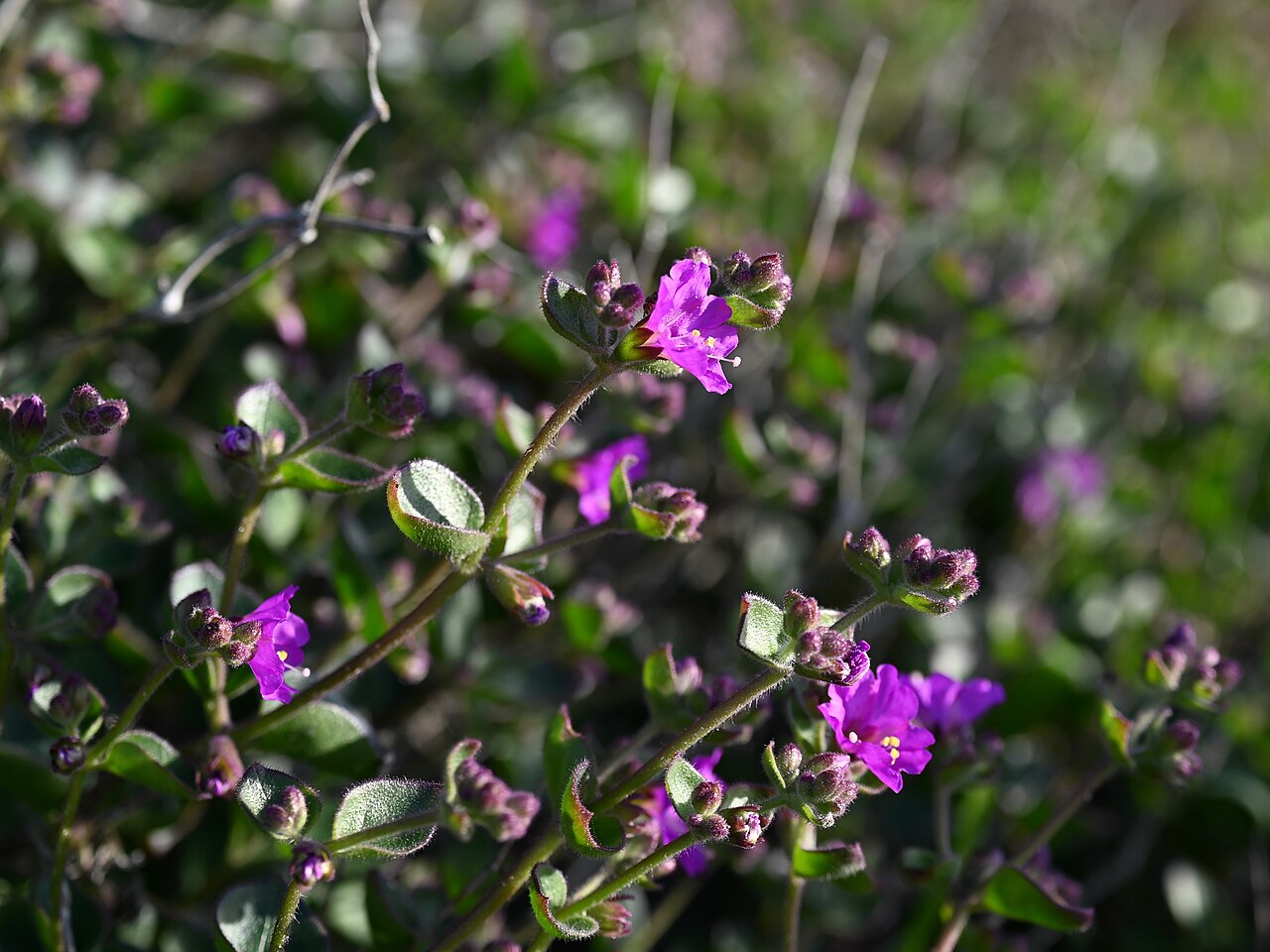
Mirabilis laevis, known as Wishbone Bush and listed by USDA PLANTS as desert wishbone-bush, is a native perennial of the four o’clock family (Nyctaginaceae) in the deserts, chaparral and coastal scrub of the Southwest. It forms a sprawling or mounded subshrub 1 to 3 feet tall from a woody base, with brittle stems that fork repeatedly into pairs. Each fork looks like a little wishbone, which gives the plant its name.
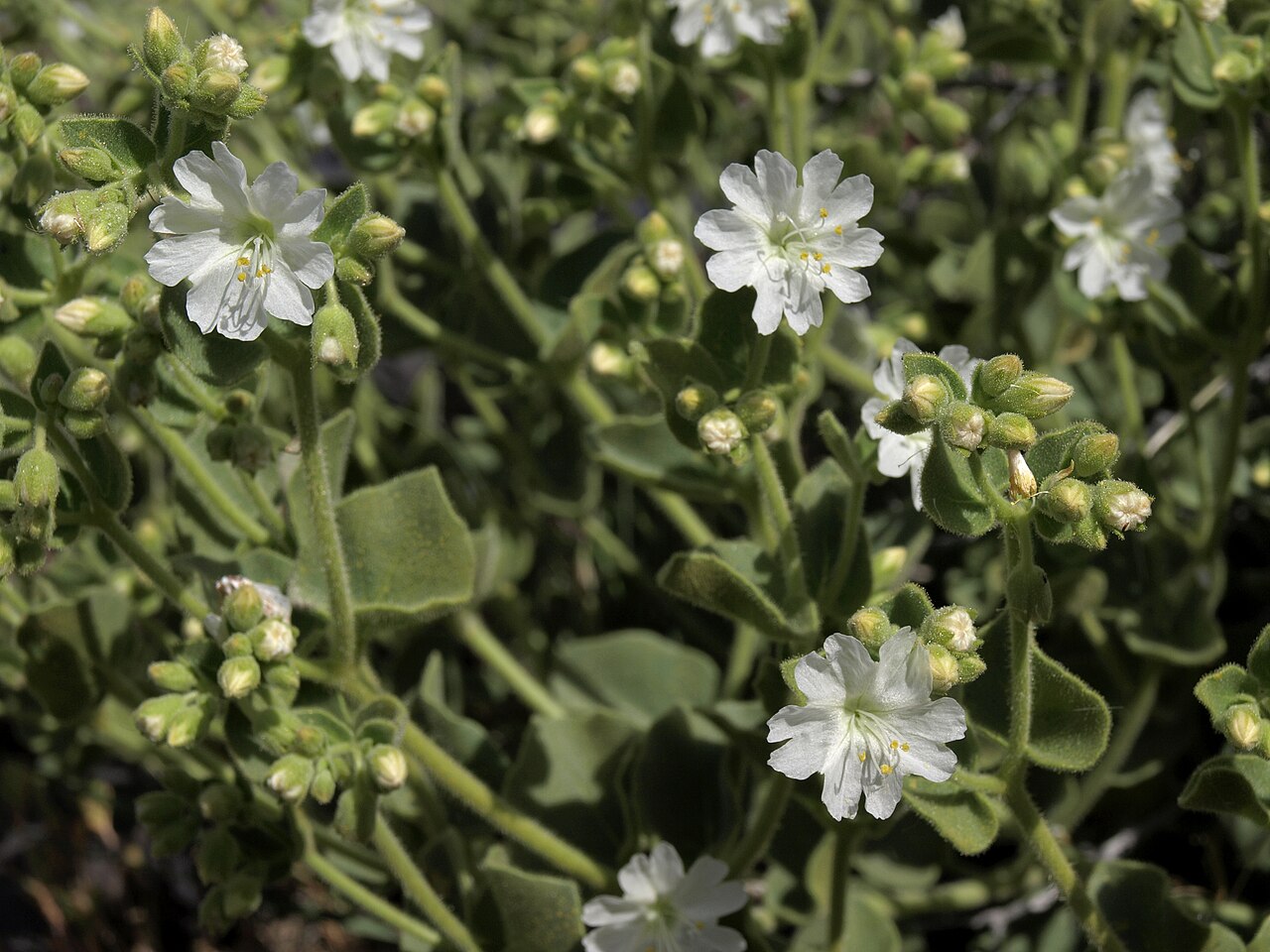
For much of the year wishbone bush is covered with funnel-shaped flowers about half an inch to an inch across. Near the Southern California coast they are typically bright magenta, while in the deserts they are usually white to pale pink. Like garden four o’clocks, many flowers open in the afternoon or evening and close the next morning, which suits the moths and other evening insects that visit them.
Wishbone bush grows on dry, rocky slopes, canyon walls, washes and brushy hillsides from Southern California and Baja California across the Mojave and Sonoran deserts to Arizona, southern Nevada and southwestern Utah, with an outlying population along the Owyhee River in southeastern Oregon. It is a tough, drought-tolerant plant for dry gardens, and this guide covers how to identify it, where it grows, how to grow it and its value to wildlife.
Identification
Wishbone bush varies a lot across its range in flower color, hairiness and leaf thickness, and botanists recognize several varieties. Its forked stems, opposite leaves and four o’clock flowers, each held in a small green cup of bracts, make it recognizable everywhere.
Growth Habit & Stems
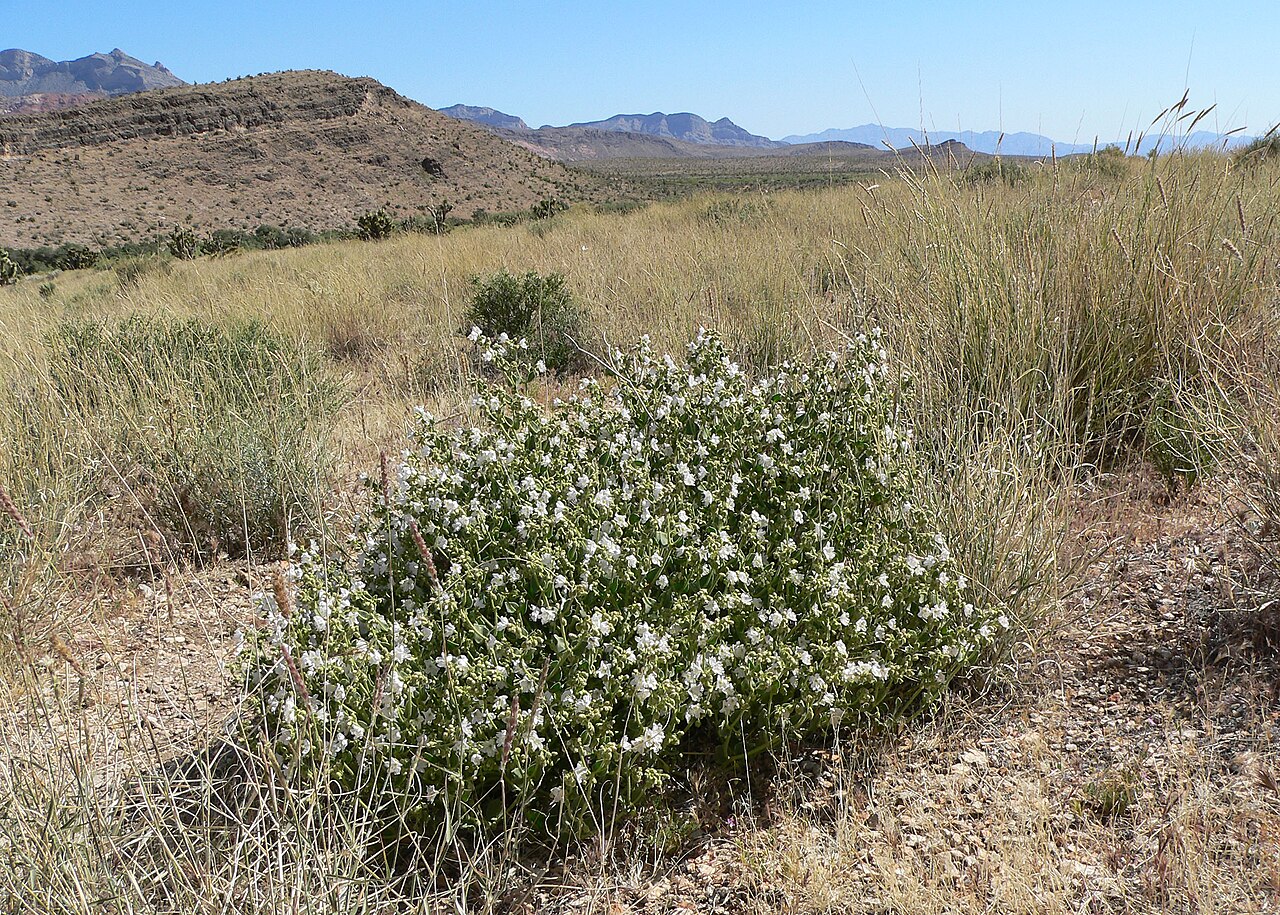
Plants grow from a woody, branched base and form a loose mound or sprawl over rocks and through other shrubs, usually 1 to 3 feet tall and up to several feet across. Plants that climb through shrubs can reach 4 to 5 feet. The stems are brittle and branch again and again in even pairs, forming the Y-shaped “wishbones.” They range from smooth to densely hairy and sticky depending on the variety.
Leaves
The leaves are opposite, simple, oval to triangular or heart-shaped, about ½ to 2 inches long, with smooth edges and short stalks. They are green to gray-green, often somewhat fleshy, and may be smooth or covered with fine, sticky glandular hairs. In severe drought many leaves drop, and the plant can look half dormant until it rains.
Flowers
What looks like the calyx of each flower is actually an involucre: a small, bell-shaped cup of fused green bracts, usually holding a single flower. The flower itself has no true petals. Its colorful, funnel-shaped parts are petal-like sepals, about ½ to 1 inch across, with five shallow lobes and long, protruding stamens. Flower color is magenta to purplish pink in coastal Southern California and white to pale pink in most desert populations. The main bloom is from late winter through spring, but plants may flower at almost any time after rain.
Fruit & Seeds
Each flower produces a single seed enclosed in a hard, ribbed, egg-shaped fruit about ¼ inch long. The fruit is smooth or slightly warty and often becomes sticky when wet, which may help it attach to animals or soil.
Varieties
Three varieties are commonly recognized. Var. crassifolia (California four o’clock, formerly Mirabilis californica) has magenta flowers and grows in coastal sage scrub and chaparral of Southern California. Var. villosa has white to pale pink flowers and grows in the Mojave Desert and adjacent mountains. Var. retrorsa (formerly Mirabilis bigelovii var. retrorsa) has white flowers and backward-pointing hairs and grows in desert regions, including the Oregon population.
Quick Facts
| Scientific Name | Mirabilis laevis (syn. Mirabilis californica, Mirabilis bigelovii) |
| Family | Nyctaginaceae (four o’clock family) |
| Plant Type | Perennial subshrub with a woody base |
| Mature Height | 1–3 ft (to about 5 ft when climbing through shrubs) |
| Mature Spread | 2–4 ft |
| Growth Rate | Moderate |
| Sun Exposure | Full sun to partial shade |
| Water Needs | Very low; drought tolerant once established |
| Soil Type | Well-drained rocky, gravelly or sandy soil |
| Soil pH | About 6.5–8.5 (neutral to alkaline) |
| Bloom Time | Mainly February–June; sporadic year-round after rain |
| Flower Color | Magenta (coastal) or white to pale pink (desert) |
| Fall Color | None; may drop leaves in drought |
| Fruit | Single-seeded hard, ribbed fruit |
| Deer Resistant | Moderately; occasionally browsed |
| USDA Hardiness Zones | 7–10 |
Native Range
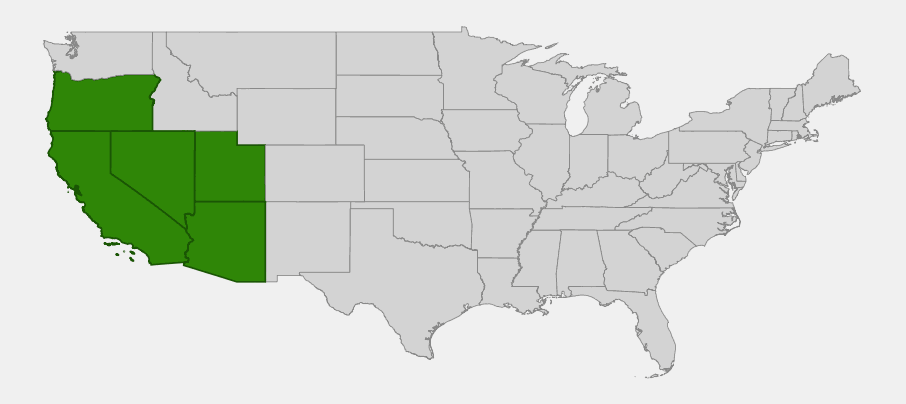
Wishbone bush is native to the arid and semi-arid Southwest. USDA PLANTS records it in California, Nevada, Arizona, Utah and Oregon, and it extends south into Baja California, Mexico. Its heartland is Southern California, from the coast inland through the Transverse and Peninsular Ranges to the Mojave and Colorado deserts, and north along the eastern Sierra and the White and Inyo Mountains.
In Nevada it is found mainly in the southern part of the state, including the Spring Mountains and Red Rock Canyon area. In Arizona it grows in the western deserts and canyon country, and in Utah it is mostly confined to the warm southwestern corner. The Oregon population is a notable outlier: it is known from volcanic cliffs and rocky slopes in the Owyhee River canyon in Malheur County, documented by herbarium specimens and state heritage records.
Across this range it grows in coastal sage scrub, chaparral, creosote bush scrub, desert grassland, pinyon-juniper woodland edges, rocky canyon walls and washes, from near sea level to roughly 6,000 feet. It often grows tucked among rocks or other shrubs, which provide shade, protection from browsing animals and support for its brittle stems.
📋 Regional plant lists featuring Wishbone Bush: Idaho, Eastern Oregon & Eastern Washington · Utah & Western Colorado · Arizona & New Mexico
Growing & Care Guide
Wishbone bush is an easy, long-lived plant for dry gardens in Southern California and the desert Southwest. It needs good drainage and little water, and it rewards gardeners with months of flowers. Choose the variety native to your area when possible: the magenta coastal form for coastal gardens, the white desert forms for desert gardens.
Light
Plant it in full sun or partial shade. Along the coast it flowers well in full sun. In the low deserts, light afternoon shade or the shelter of a larger shrub or boulder helps it stay green longer in summer.
Soil & Water
Wishbone bush needs fast-draining soil. Rocky, gravelly or sandy soils are ideal, and it tolerates alkaline conditions. Water it regularly the first season to establish the deep root system. After that, it survives on natural rainfall in most of its range, with occasional deep watering in very dry years. Overwatering, especially in heavy soil, causes rot.
Planting Tips
Plant in fall or winter so that winter rains help establish the roots. Give it room to sprawl, or let it scramble through a larger shrub or over a rock wall, as it does in the wild. It looks good spilling over boulders, on slopes and in rock gardens.
Pruning & Maintenance
Little care is needed. Cut back old, woody or untidy stems in late fall or winter to encourage fresh growth and a more compact shape. Do not fertilize. Plants that go partly dormant in summer drought will green up again after rain.
Propagation
Grow it from seed sown in fall or late winter. Seeds germinate fairly readily in warm, well-drained soil. Stem cuttings can also be rooted in a gritty mix. Established plants do not transplant well because of their deep, woody roots.
Landscape Uses
- Dry and water-wise gardens: long bloom season with very little water
- Rock gardens and slopes: spills over boulders, walls and banks
- Coastal sage scrub and chaparral gardens: the magenta coastal form among sages, buckwheats and California sagebrush
- Desert gardens: white-flowered desert forms with creosote bush, bursage and brittlebush
- Pollinator and moth gardens: evening flowers for moths, plus visits from bees
Wildlife & Ecological Value
In dry landscapes where few plants bloom for long, wishbone bush can flower for months and is a valuable food source for nocturnal and daytime pollinators alike.
For Pollinators
Many flowers open late in the day and stay open through the night, attracting moths, including sphinx moths with long tongues that reach nectar in the flower tube. Bees, especially native solitary bees, visit flowers that remain open in the morning.
For Birds
Ground-feeding birds such as quail may eat the seeds, and the low, tangled stems provide cover for small birds and lizards among the rocks.
For Mammals
Deer, rabbits and rodents may browse the stems and leaves, which is one reason wishbone bush often grows wedged among rocks or inside other shrubs.
Ecosystem Role
Wishbone bush helps stabilize rocky slopes and washes with its deep, woody roots. Its long, rain-triggered blooming makes it an important nectar source in desert and scrub communities when little else is flowering.
Cultural & Historical Uses
The genus name Mirabilis is Latin for “wonderful” or “marvelous.” It was chosen for the garden four o’clock, Mirabilis jalapa, whose flowers famously open in late afternoon and can show several colors on one plant. The species name laevis means “smooth,” though many populations are hairy.
The classification of wishbone bush has changed several times. The magenta coastal plants were long known as Mirabilis californica, and some desert plants as Mirabilis bigelovii, after the botanist John Milton Bigelow, who collected plants in the Southwest during the 1850s railroad surveys. These are now usually treated as varieties of a single species, Mirabilis laevis.
Some Southwestern Indigenous peoples used various Mirabilis species as medicine. Roots and seeds of several four o’clocks, especially the garden four o’clock, are considered toxic if eaten, so wishbone bush should be enjoyed as an ornamental and wildlife plant, not as food or medicine.
Frequently Asked Questions
Why is it called wishbone bush?
Its stems branch repeatedly into even pairs, forming Y-shaped forks that look like the wishbone of a bird.
Why are some wishbone bush flowers magenta and others white?
Color varies by variety and region. Coastal Southern California plants (var. crassifolia, once called California four o’clock) usually have magenta flowers, while desert plants (var. villosa and var. retrorsa) usually have white to pale pink flowers.
Is wishbone bush drought tolerant?
Very. Once established it survives on natural rainfall in most of its range, though it may drop leaves and stop blooming in long dry spells. It quickly recovers after rain.
When do the flowers open?
Many flowers open in the afternoon or evening and close the next morning, like their relative the garden four o’clock, but on cool or cloudy days they may stay open longer.
Is wishbone bush toxic?
It is not known as a significant poison, but the roots and seeds of related four o’clocks are considered toxic if eaten. Do not eat any part of the plant, and keep children and pets from chewing it.

Looking for a nursery that carries Wishbone Bush?
Browse our native plant nursery directory: Arizona · California · Nevada · Oregon · Utah