Stiff Sunflower (Helianthus rigidus): Native Plant Guide
Last updated: August 21, 2026
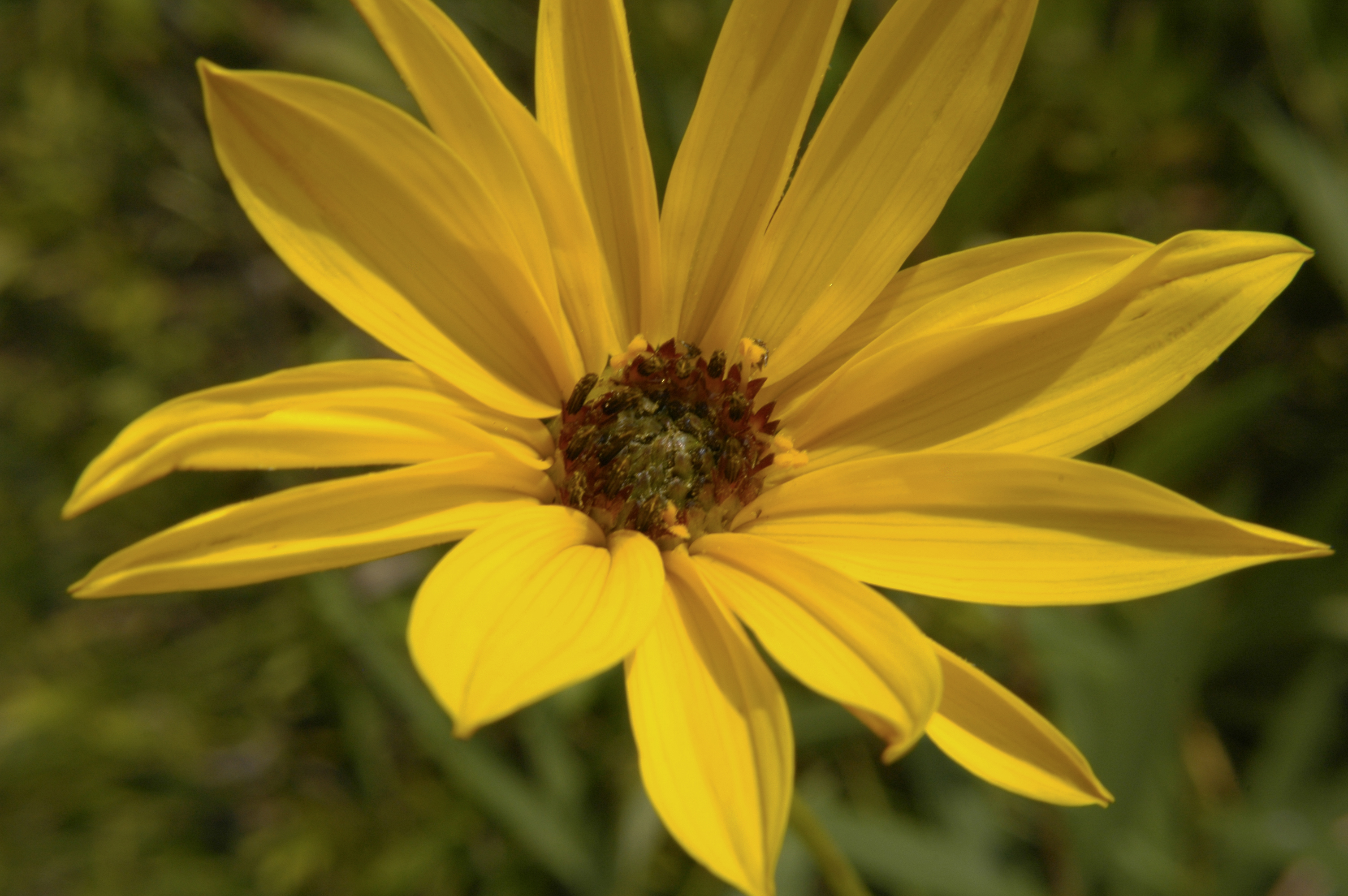
Helianthus rigidus (syn. Helianthus pauciflorus), commonly known as Stiff Sunflower or Prairie Sunflower, is a robust native perennial that stands as one of the Great Plains’ most enduring and resilient wildflowers. This member of the Asteraceae (sunflower) family earns its common name from its sturdy, upright stems and relatively stiff leaves that help it withstand the harsh winds and weather of prairie landscapes. Growing 3–6 feet tall, Stiff Sunflower produces brilliant yellow flowers from July through September, creating spectacular late-summer displays across native prairies from the Great Lakes region south to Texas.
What makes Stiff Sunflower particularly distinctive among its Helianthus relatives is its tolerance for drought and poor soils, along with its characteristic dark red disk florets that create a striking contrast against the bright yellow ray petals. The plant spreads by underground rhizomes, forming colonies that can dominate prairie openings and disturbed sites, making it an exceptional choice for restoration projects and naturalized gardens. Its deep taproot allows it to access water sources unavailable to shallow-rooted competitors, while its late-season blooms provide crucial nectar for migrating butterflies and other pollinators when many other flowers have finished their display.
Despite habitat loss across much of its range due to agricultural conversion, Stiff Sunflower remains an outstanding choice for native plant gardens, prairie restorations, and wildlife habitat throughout the central United States. Its adaptability to various soil conditions, exceptional drought tolerance, and spectacular autumn flowering make it a cornerstone species for anyone seeking to establish authentic prairie plantings or low-maintenance wildflower displays that support native wildlife.
Identification
Stiff Sunflower is a robust perennial herb that typically grows 3 to 6 feet tall, though exceptional specimens in optimal conditions may reach 8 feet. The plant forms colonies through underground rhizomes, often creating impressive stands that can dominate prairie landscapes. The overall appearance is upright and sturdy, with multiple branching stems that give the plant a bushy, full appearance when mature.
Stems
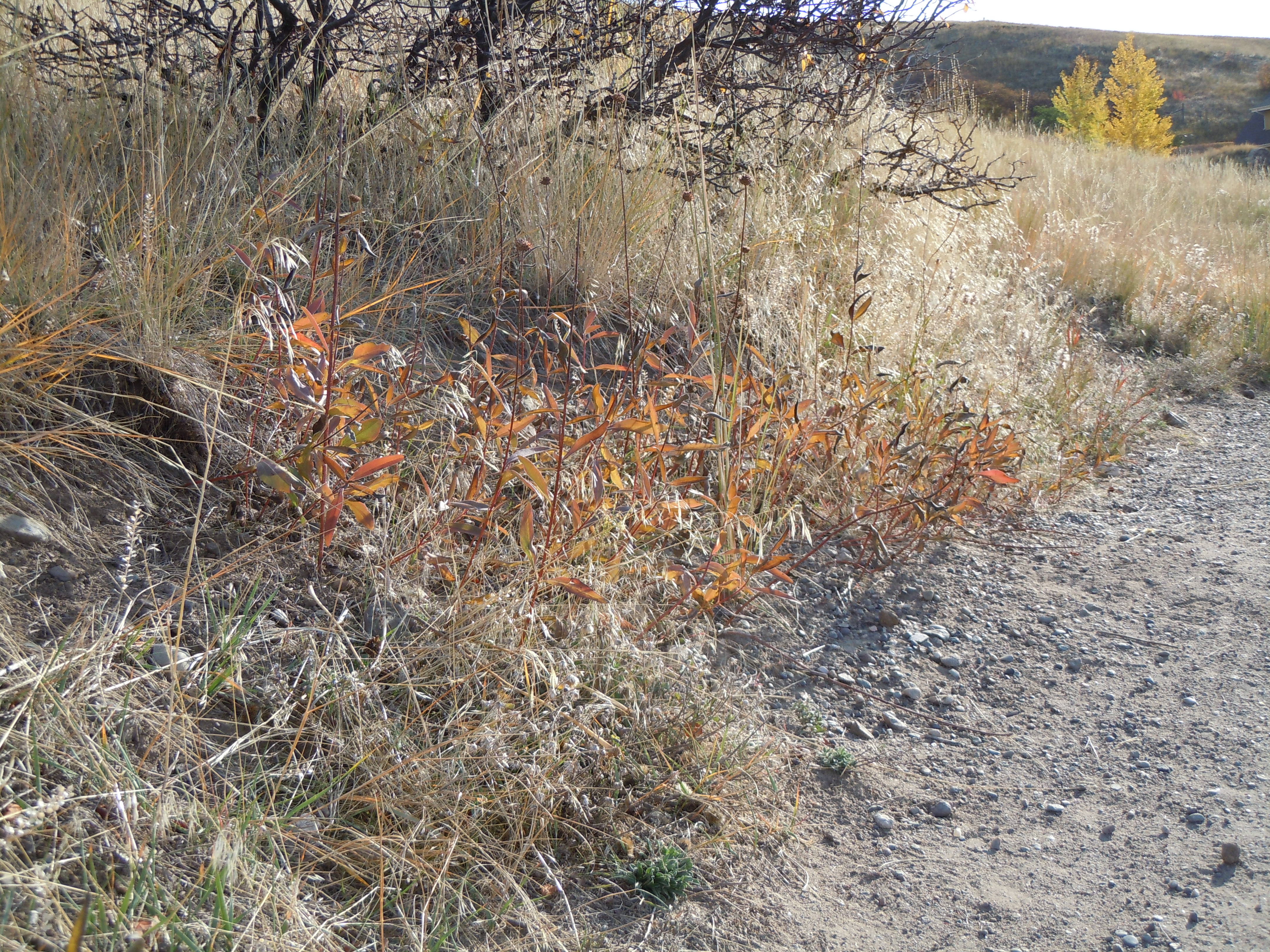
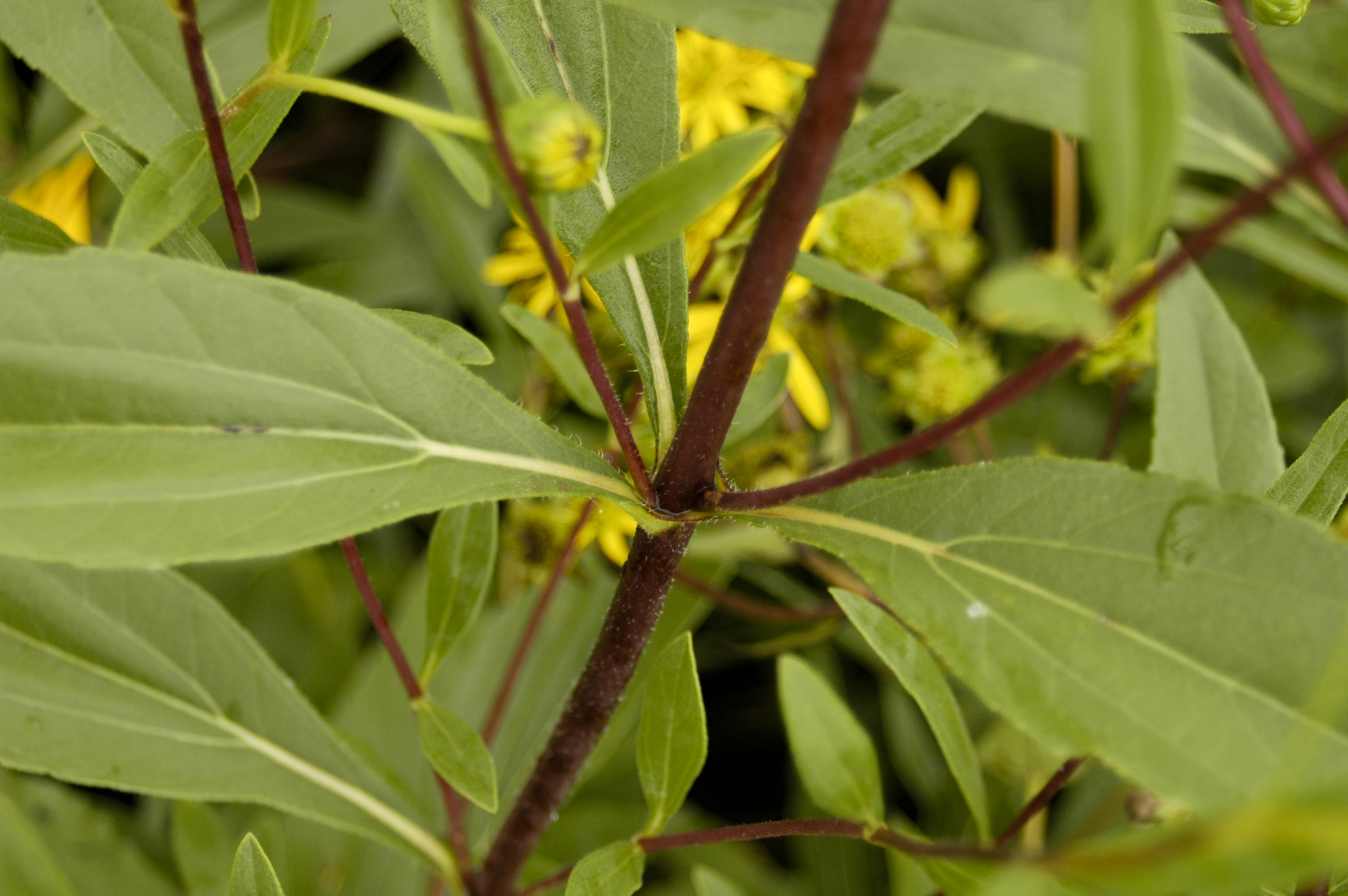
The stems are notably stiff and sturdy — living up to the plant’s common name — and are typically reddish or purplish, especially toward the base and on younger growth. They are covered with short, stiff hairs (hispid) and often have a somewhat rough texture. The stems branch in the upper portion of the plant, with each branch typically terminating in a flower head. The reddish coloration of the stems becomes more pronounced in fall and is one of the plant’s most distinctive identifying features.
Leaves
The leaves are simple, opposite on the lower stem and often alternate higher up — a characteristic pattern shared by many Helianthus species. Individual leaves are lanceolate to ovate, typically 2 to 6 inches long and 1 to 3 inches wide, with a distinctly rough texture due to short, stiff hairs on both surfaces. The leaf margins are usually entire (smooth-edged) or occasionally with very fine teeth. The leaves have prominent parallel veins that create a ribbed texture, and they tend to be somewhat thick and leathery, helping the plant conserve water during drought periods. Lower leaves often wither and drop by flowering time.
Flowers & Fruit
The flower heads are the plant’s most striking feature — brilliant yellow composites typically 2 to 4 inches across, borne at the ends of branches in late summer and fall. Each head consists of 10 to 20 bright yellow ray petals (actually ray flowers) surrounding a central disk of numerous small disk flowers. The disk flowers are particularly distinctive, displaying a deep reddish-brown to dark red color that creates a dramatic contrast against the yellow rays — this dark disk is one of the best identifying characteristics of Stiff Sunflower.
The involucre (the cup-like structure of bracts beneath the flower head) is composed of several rows of bracts that are roughly as broad as they are long, giving them an almost square appearance. These bracts are green with pointed tips and covered in short hairs. After pollination, the disk flowers develop into typical sunflower seeds (achenes) that are dark brown to black, roughly egg-shaped, and topped with two papery scales rather than the fluffy pappus found in many other composites.
Quick Facts
| Scientific Name | Helianthus rigidus (syn. Helianthus pauciflorus) |
| Family | Asteraceae (Sunflower) |
| Plant Type | Perennial Herb |
| Mature Height | 3–6 ft (0.9–1.8 m) |
| Sun Exposure | Full Sun |
| Water Needs | Low/Drought Tolerant |
| Bloom Time | July–September |
| Flower Color | Yellow with dark red center |
| USDA Hardiness Zones | 3–9 |
Native Range
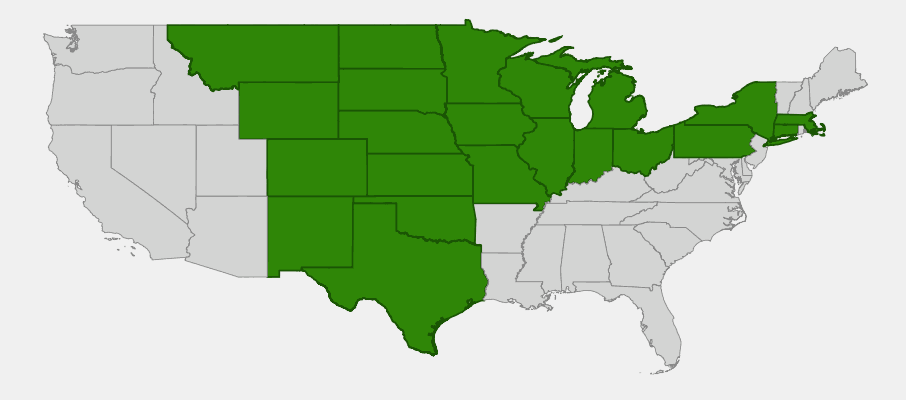
Stiff Sunflower is native to a vast swath of central North America, ranging from southern Canada south to Texas and from the Great Lakes region west to the Rocky Mountain foothills. This extensive distribution reflects the species’ remarkable adaptability to different climate conditions and soil types. The plant is most abundant in the Great Plains states, where it thrives in the continental climate characterized by hot summers, cold winters, and periodic droughts.
Historically, Stiff Sunflower was a dominant component of tall-grass and mixed-grass prairies, often forming extensive colonies in areas with moderate disturbance such as bison wallows, prairie dog towns, and areas affected by periodic fires. The species shows a particular affinity for sites with some soil disturbance, which is why it often colonizes roadsides, abandoned fields, and other human-disturbed areas within its native range. It grows from near sea level in eastern portions of its range to elevations of about 6,000 feet in the western Great Plains and Rocky Mountain foothills.
Today, while much of its original prairie habitat has been converted to agriculture, Stiff Sunflower persists in remnant prairies, along railroad rights-of-way, in ditches, and on marginal lands throughout its range. The species has proven remarkably resilient to habitat fragmentation and continues to be an important component of prairie reconstruction efforts across the Great Plains.
📋 Regional plant lists featuring Stiff Sunflower: North Dakota, South Dakota & Western Minnesota
Growing & Care Guide
Stiff Sunflower is one of the most low-maintenance native plants you can grow, thriving in conditions that challenge many garden plants. Once established, it requires minimal care and actually performs better with some neglect than with intensive management. Understanding its prairie origins is key to successful cultivation — this is a plant that evolved to handle extremes of weather, poor soils, and intense competition.
Light & Location
Full sun is absolutely essential for Stiff Sunflower — it will not tolerate shade and becomes weak and floppy in anything less than 6-8 hours of direct sunlight daily. Choose the sunniest, most open location in your garden, preferably one that receives good air circulation. The plant actually benefits from some wind exposure, which helps strengthen the stems and reduce potential fungal issues. Avoid planting near trees or large shrubs that might shade the plant or compete for water and nutrients.
Soil Requirements
One of Stiff Sunflower’s greatest strengths is its tolerance for poor soils. It thrives in average to poor, well-drained soils and actually struggles in rich, heavily amended garden soil, which can cause excessive vegetative growth at the expense of flowers. The plant tolerates a wide pH range from slightly acidic to alkaline (pH 6.0-8.0) and shows remarkable tolerance for clay, sandy, or rocky soils. Avoid areas that stay wet or have poor drainage — while the plant is drought-tolerant, it will not survive in consistently soggy conditions.
Watering
After the first growing season, Stiff Sunflower typically requires no supplemental watering in most climates. During establishment, water deeply but infrequently to encourage deep root development — this usually means a thorough soaking once or twice per week during dry spells, then allowing the soil to dry out between waterings. Overwatering is more likely to harm the plant than underwatering, so err on the side of drought. In extremely dry years, even established plants may benefit from occasional deep watering during prolonged droughts, but this is rarely necessary.
Planting & Propagation
Stiff Sunflower can be grown from seed or divisions. Seeds require cold stratification and are best direct-seeded in fall for spring germination, or stratified seeds can be started indoors in late winter. Space plants 2-3 feet apart, as they will spread by rhizomes to form colonies. The easiest propagation method is division of established clumps in early spring before growth begins. Simply dig up a portion of the rhizomatous root system and replant — success rates are very high with this method.
Maintenance
Minimal maintenance is required and often beneficial. In naturalized settings, no care is needed beyond occasional monitoring for invasive weeds. In more formal garden settings, you may choose to deadhead spent flowers to extend the blooming period, though this prevents seed formation that feeds birds. Cut plants back to 4-6 inches in late fall or early spring. The plant may self-seed moderately in suitable conditions, and seedlings can be easily transplanted or removed as desired. Be prepared for the plant to spread by rhizomes — this is natural behavior and creates attractive colonies over time.
Wildlife & Ecological Value
Stiff Sunflower provides exceptional value for native wildlife and plays a crucial role in prairie ecosystems. Its late-summer and fall blooming period makes it particularly important for wildlife preparing for winter migration and dormancy. The plant serves multiple ecological functions, from providing nectar and pollen to offering seeds, nesting sites, and overwintering habitat for various species.
For Pollinators
The bright yellow flowers are magnets for a wide variety of pollinators. Native bees, including bumble bees, sweat bees, and specialist sunflower bees, are frequent visitors, along with honeybees, butterflies, and beneficial wasps. The timing of the blooms is particularly valuable for late-season butterflies, including monarchs preparing for their southern migration. Many species of hoverflies and other beneficial insects also rely on the flowers for nectar. The large, flat flower heads provide excellent landing platforms for butterflies and other insects.
For Birds
The seeds of Stiff Sunflower are an important food source for many bird species, particularly during fall and winter when other food sources may be scarce. American Goldfinches are perhaps the most notable consumers, but the seeds also attract chickadees, nuthatches, various sparrows, and finches. The sturdy stems provide perching sites for small birds, and the dense growth habit of established colonies offers some shelter and potential nesting sites. During winter, the persistent seed heads continue to provide food, making this plant valuable for year-round bird support.
For Other Wildlife
Small mammals, particularly ground squirrels and mice, collect and cache the seeds for winter food supplies. The foliage is occasionally browsed by rabbits and deer, though it’s not a preferred food source. The plant’s rhizomatous growth habit helps stabilize soil and prevent erosion, while its deep root system improves soil structure and water infiltration. In prairie ecosystems, Stiff Sunflower colonies provide microhabitat for various insects, spiders, and other small invertebrates.
Ecosystem Services
Beyond direct wildlife benefits, Stiff Sunflower contributes to ecosystem health through its deep taproot, which can extend 6-10 feet into the soil, helping to break up hardpan layers and improve water and nutrient cycling. The plant’s tolerance for disturbed areas makes it valuable for stabilizing degraded sites and preventing erosion. As a long-lived perennial, it helps build soil organic matter through its extensive root system and leaf litter.
Cultural & Historical Uses
Stiff Sunflower, like other members of the Helianthus genus, has a rich history of use by Indigenous peoples of the Great Plains. Various Plains tribes utilized the plant for both practical and ceremonial purposes, though it was generally less important than its larger relative, the Common Sunflower (Helianthus annuus).
Indigenous Uses
Several Plains Indian tribes used parts of Stiff Sunflower for medicinal purposes. The Dakota and Lakota peoples reportedly used root preparations to treat stomach ailments and snake bites, while some tribes used the plant in poultices for wound healing. The seeds, while smaller than those of Common Sunflower, were sometimes collected and eaten or ground into meal. The sturdy stems were occasionally used in construction of temporary shelters or as components in various tools.
The plant also held ceremonial significance for some tribes, particularly in relation to sun ceremonies and harvest celebrations. The bright yellow flowers, blooming during late summer hunting seasons, were seen as symbols of abundance and the sun’s continued presence as winter approached.
Historical Ecology
Stiff Sunflower was an important component of the vast prairie ecosystems that once covered much of central North America. Historical accounts from early explorers and settlers frequently mention the spectacular displays of sunflowers that dominated prairie landscapes in late summer and fall. The plant’s ability to colonize disturbed areas made it one of the first species to return to areas affected by bison grazing, prairie fires, or other natural disturbances.
The species played a role in the complex fire ecology of the Great Plains. Its late-season growth and seed production occurred after most prairie fires, allowing it to complete its reproductive cycle and contribute to ecosystem recovery. The plant’s rhizomatous root system helped it survive fires that killed above-ground parts, and it often increased in abundance following burns.
Modern Conservation
Today, Stiff Sunflower is widely used in prairie restoration projects across the Great Plains. Its hardiness, drought tolerance, and ability to establish on poor soils make it valuable for restoration of degraded sites, mine reclamation, and erosion control projects. The plant is also increasingly popular in native landscaping and wildlife gardens, where its late-season blooms and wildlife value make it a prized addition to pollinator gardens and natural landscapes.
Frequently Asked Questions
How do I tell Stiff Sunflower apart from other sunflowers?
The key distinguishing features are the dark red disk center (most other sunflowers have yellow or brown centers), the stiff, rough-textured stems and leaves, and the relatively broad involucral bracts that are about as wide as they are long. The late flowering time (August-September) and prairie habitat also help distinguish it from many other sunflower species.
Will Stiff Sunflower take over my garden?
The plant does spread by rhizomes and can form colonies, but this happens relatively slowly and is easily controlled by dividing clumps every few years or removing unwanted shoots. In most garden settings, it’s less aggressive than many other spreading perennials and is easily kept in bounds with minimal maintenance.
Can I grow Stiff Sunflower from seed?
Yes, but seeds require cold stratification (3 months of cold, moist conditions) for best germination. The easiest method is to direct-seed in fall, allowing natural winter conditions to provide the needed cold treatment. Seeds can also be stratified artificially in the refrigerator and started indoors in late winter. Germination rates are typically moderate to good with properly treated seeds.
How drought-tolerant is Stiff Sunflower really?
Once established (after the first growing season), Stiff Sunflower is extremely drought-tolerant and can survive on natural precipitation alone in most climates within its native range. It can withstand extended dry periods that would kill many other garden plants. However, during the first year, some supplemental watering during extreme dry spells will help ensure successful establishment.
Does Stiff Sunflower need fertilizer?
No, and fertilizing is often counterproductive. The plant evolved in nutrient-poor prairie soils and too much fertility, especially nitrogen, can cause excessive leafy growth at the expense of flowers, and may make plants more susceptible to lodging (falling over). In fact, the plant often performs better in poor soils than in rich, amended garden soil.
When should I plant Stiff Sunflower?
Container plants can be planted in spring after the last frost or in fall at least 6-8 weeks before hard freeze. Seeds are best sown in fall for spring germination. Division of established plants should be done in early spring before new growth begins. In harsh winter climates, spring planting may be safer for container plants to ensure good root establishment before winter.

Looking for a nursery that carries Stiff Sunflower?
Browse our native plant nursery directory: North Dakota · South Dakota · Minnesota