
Wild Cucumber (Echinocystis lobata)
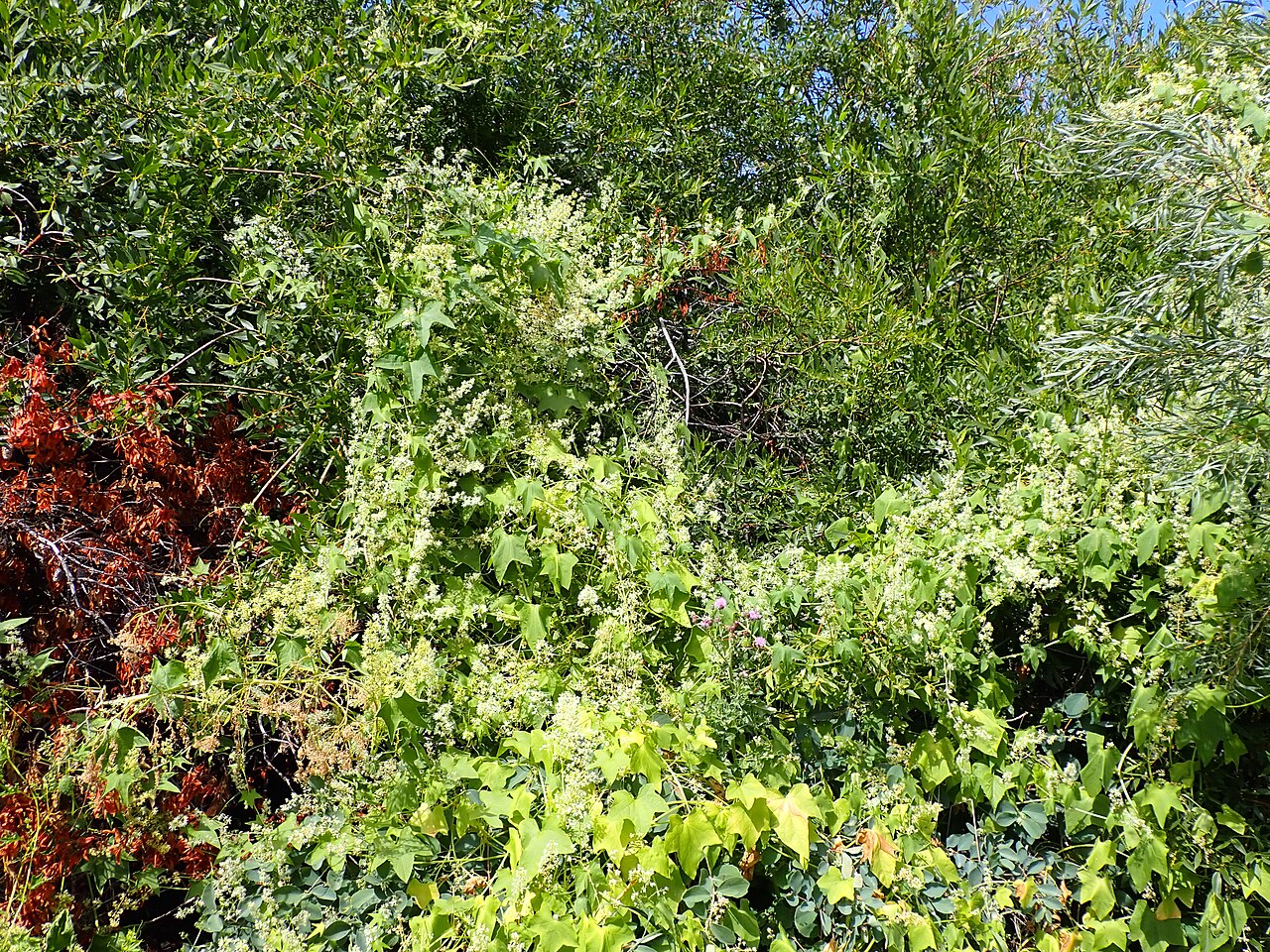
Echinocystis lobata, commonly known as Wild Cucumber or Prickly Cucumber, is a fast-growing native annual vine found across much of the northern and eastern United States and Canada. Despite its common name and passing resemblance to a true cucumber vine, Wild Cucumber is in its own genus within the gourd family (Cucurbitaceae) and produces a small, egg-shaped, spiny fruit that is not edible — it should never be eaten and is grown purely as an ornamental and wildlife plant, not a food crop.
True to its energetic nature, a single Wild Cucumber seed can produce a vine that climbs 15 to 25 feet in a single growing season, using branched, coiling tendrils to scramble over fences, shrubs, and streamside thickets. Clouds of small, star-shaped, greenish-white flowers appear in mid- to late summer, followed by clusters of inflated, bristly seed pods that give the plant its “prickly cucumber” nickname. It is a short-lived but vigorous addition to naturalistic gardens, popular with gardeners who want fast seasonal screening and want to support native pollinators and seed-eating birds.
Identification
Wild Cucumber is a herbaceous annual vine, not a woody or perennial plant — it germinates, grows, flowers, fruits, and dies back within a single year, relying on seed to return the following season. Stems are angular, ridged, and often slightly hairy, climbing by means of branched tendrils that emerge opposite the leaves and coil tightly around any available support.
Leaves
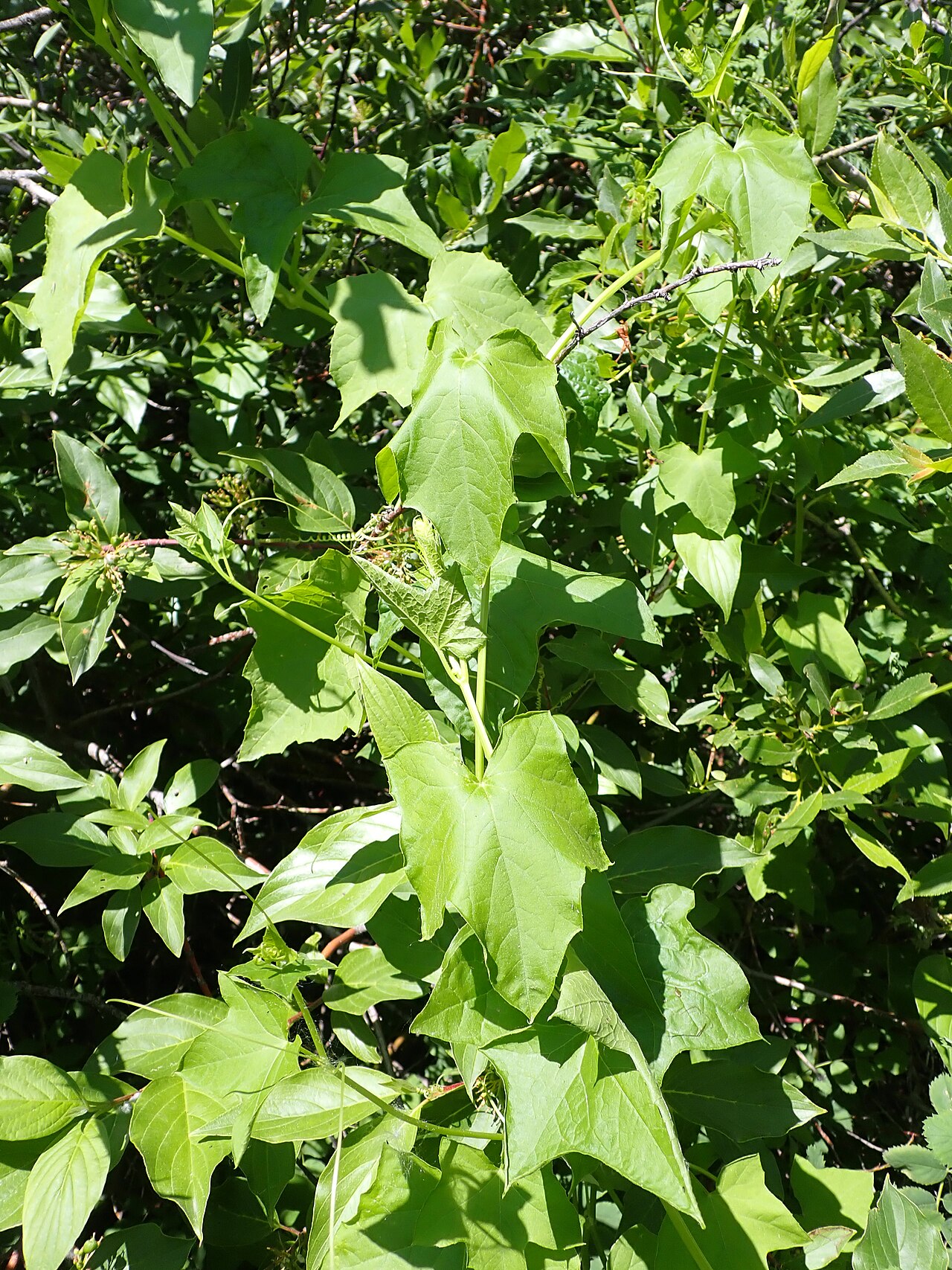
Leaves are alternate, long-stalked, and palmately lobed into five pointed, maple-leaf-like lobes, typically 3 to 8 inches across. The leaf surface is thin and slightly rough to the touch, with a fresh green color that stays attractive through the growing season until frost.
Flowers & Fruit
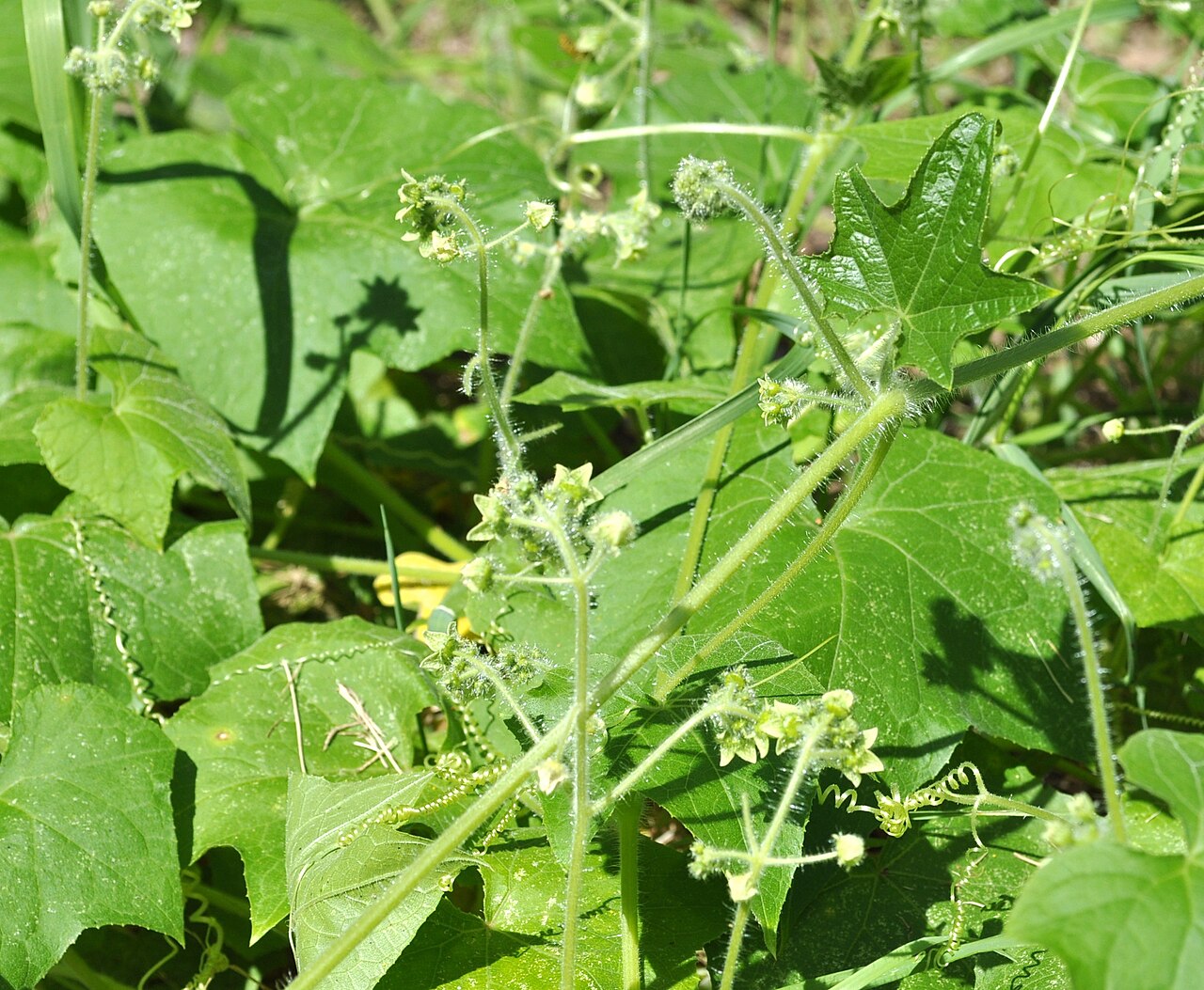
Wild Cucumber is monoecious, meaning separate male and female flowers occur on the same plant. Male flowers are small, star-shaped, greenish-white to creamy, and borne in long, upright, branched clusters (panicles) that can look almost frothy en masse. Female flowers are inconspicuous and solitary, appearing at the base of the male flower clusters, each sitting atop a small, spiny, immature fruit. Bloom runs from mid-summer into early fall. The fruit that follows is an inflated, oval capsule up to 2 inches long, covered in soft but definite spines; it resembles a tiny spiky melon but is not a food plant — the flesh is bitter and the plant is grown strictly for its ornamental and wildlife value. Ripe capsules dry, turn papery brown, and split open at the tip to release large, flat seeds.
Quick Facts
| Scientific Name | Echinocystis lobata |
| Family | Cucurbitaceae (Gourd) |
| Plant Type | Annual Vine |
| Mature Length | 15–25 ft in a single season |
| Growth Rate | Very fast |
| Sun Exposure | Full Sun to Part Shade |
| Water Needs | Moderate to High |
| Soil Type | Moist, rich, well-drained; tolerates disturbed ground |
| Bloom Time | Mid-summer to early fall |
| Flower Color | Greenish-white to creamy white |
| Fruit | Spiny inflated capsule, ~2 in., NOT edible |
| Life Cycle | Reseeding annual |
Native Range
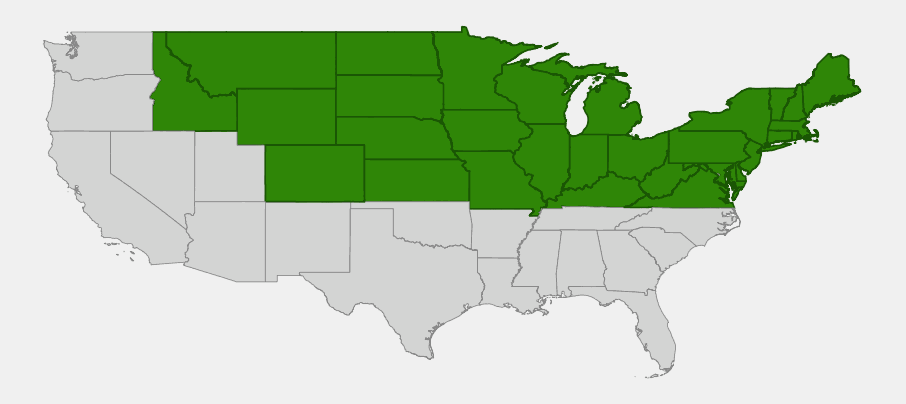
Wild Cucumber is native across a broad swath of the northern and eastern United States and most of Canada, from New England and the Mid-Atlantic west through the Great Lakes states and upper Midwest, the northern Great Plains, and into parts of the Rocky Mountain states. Confirmed native states include the Northeast, Mid-Atlantic, Great Lakes, upper Midwest, Great Plains, and scattered populations reaching into Montana, Wyoming, Colorado, and Idaho. It is not native to Nevada, Hawaii, or Alaska, and BONAP county records show it largely absent as a native plant across the Deep South and most of Texas and the Gulf Coast, where it occurs only as a rare introduced escape, if at all. Within the Kentucky–Tennessee region it is native to Kentucky but not confirmed native in Tennessee.
In the wild, Wild Cucumber favors moist, sunny edges — streambanks, pond margins, fencerows, and disturbed thickets — where its tendrils can quickly find shrubs, trees, or structures to climb. It often grows alongside willows, dogwoods, and other streamside shrubs, draping over them by midsummer.
📋 Regional plant lists featuring Wild Cucumber: New Hampshire, Maine & Vermont · Connecticut, Massachusetts & Rhode Island · Delaware, Southern New Jersey & Long Island · Maryland, Virginia & West Virginia · North Dakota, South Dakota & Western Minnesota · Montana & Wyoming · New York, Pennsylvania & Northern New Jersey · Kentucky & Tennessee · Ohio & Indiana · Illinois, Iowa & Missouri · Michigan, Wisconsin & Eastern Minnesota · Nebraska, Kansas & Eastern Colorado · Idaho, Eastern Oregon & Eastern Washington
Growing & Care Guide
Wild Cucumber is one of the easiest and fastest native vines to grow from seed, making it a favorite for gardeners who want quick seasonal cover without a permanent woody vine.
Light
Grow Wild Cucumber in full sun to part shade. More sun generally means more vigorous growth and heavier flowering, but the vine tolerates the dappled light found at woodland and streambank edges, its natural habitat.
Soil & Water
This vine prefers consistently moist, rich soil and performs best with regular water through the growing season, reflecting its natural preference for streambanks and pond margins. It is not a drought plant and will decline in prolonged dry spells, though it tolerates occasional dry periods once well rooted. It also tolerates disturbed, average garden soil without special amendment.
Planting Tips
Direct-sow seed in spring after the soil has warmed, or start seed indoors a few weeks before the last frost for an earlier start. Give the vine a trellis, fence, or shrub to climb — it will find its own support quickly with its coiling tendrils. Because it reseeds readily where happy, expect volunteer seedlings in following years; remove unwanted ones while young if you want to control its spread.
Pruning & Maintenance
Wild Cucumber needs no pruning during the growing season beyond guiding it onto a support if desired. At season’s end, the vine dies back with frost and can be cut down and composted. Because it is a vigorous, fast-covering annual, keep an eye on its spread near small shrubs that could be smothered by its weight.
Landscape Uses
Its speed and climbing habit make Wild Cucumber useful in several garden situations:
- Quick seasonal screening on fences, trellises, or arbors
- Naturalistic pond and streambank plantings
- Pollinator and wildlife gardens — flowers and seeds support insects and birds
- Covering unsightly structures for a single season
- Restoration plantings along disturbed moist edges within its native range
Wildlife & Ecological Value
Despite being an annual, Wild Cucumber plays a useful seasonal role for pollinators and wildlife in the moist edge habitats where it grows.
For Pollinators
The abundant small flowers attract a range of native bees and wasps, including scoliid and tiphiid wasps that nectar on the blooms alongside many other late-summer flowers. The long bloom period provides a reliable nectar source into early fall when many other flowers have finished.
For Insects
Wild Cucumber hosts several insects specific to the gourd family, including leaf-footed bugs that feed along its stems and developing roots, and stink bugs that feed on the developing fruit. These insect visitors, in turn, support insect-eating birds.
For Birds & Small Mammals
The large, flat seeds released from dried fruit capsules in fall and winter are eaten by some birds and small mammals, and the dense summer foliage offers temporary cover for nesting songbirds in the edge habitats where it typically grows.
A Note on the Fruit — Not Edible
Despite the common name “Wild Cucumber,” the spiny fruit of Echinocystis lobata is not a food plant and should not be eaten. The flesh is bitter and the plant is not used as a culinary crop; it is valued strictly for its rapid growth, ornamental flowers, and wildlife benefits. Historically, some Indigenous peoples used extracts from the bitter root medicinally — the Taos Pueblo used it to treat rheumatism, and the Menominee of Wisconsin made a bitter root extract used as an analgesic — but these are historical ethnobotanical uses, not food preparations or guidance for home use today.
Frequently Asked Questions
Can you eat Wild Cucumber fruit?
No. Despite its name, the fruit of Echinocystis lobata is not edible — it is bitter and is not grown or used as a food crop. Treat it strictly as an ornamental and wildlife plant.
Is Wild Cucumber the same as garden cucumber?
No. Wild Cucumber is a different genus (Echinocystis) in the same broad gourd family as garden cucumbers and squash, but it is not a food crop and the fruit should not be eaten.
Is Wild Cucumber invasive?
Within its native range in the northern and eastern U.S. and Canada, it is a native annual, though its fast growth and reseeding habit can make it act aggressively in small garden spaces. Outside its native range — including parts of Europe, where it has become an introduced species — it can behave more invasively.
Does Wild Cucumber come back every year?
The individual vine is an annual and dies each fall, but it reseeds readily where conditions suit it, so new plants commonly return from dropped seed in following seasons.
Will Wild Cucumber hurt the shrubs it climbs on?
In small amounts it is generally harmless, but a vigorous stand can shade out and weigh down small shrubs over a growing season. Monitor it on young or delicate plantings and remove excess growth if needed.

Looking for a nursery that carries Wild Cucumber?
Browse our native plant nursery directory: NE to OK (Northeast/Midwest) · WV to WY · ID to KS