
Spotted Beebalm (Monarda punctata)
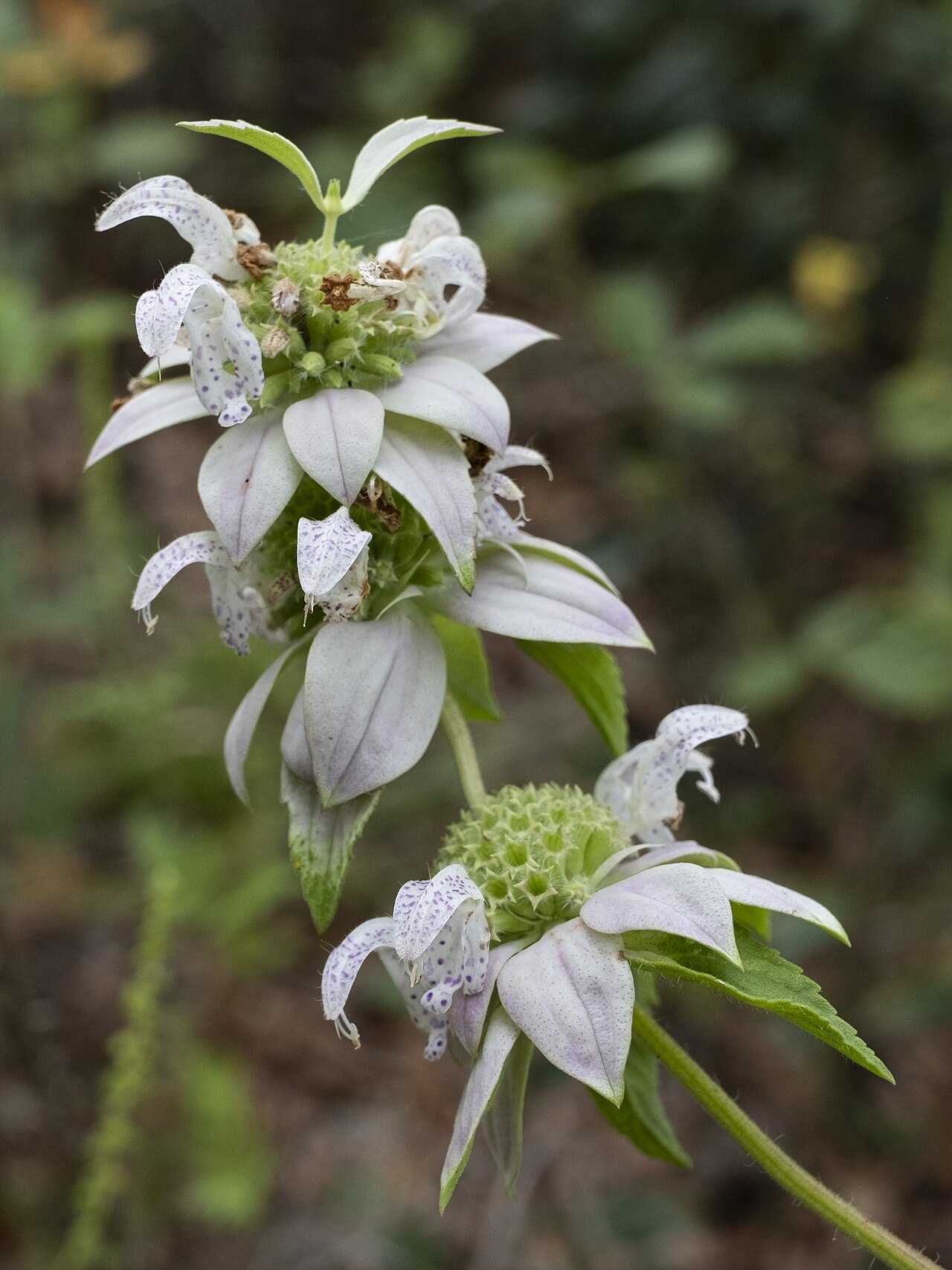
Monarda punctata, known as Spotted Beebalm or Spotted Horsemint, is an aromatic, thyme-scented perennial wildflower in the mint family (Lamiaceae) found across an unusually wide swath of the eastern, central, and southwestern United States. Unlike its showier cousin wild bergamot, spotted beebalm carries its small, purple-spotted yellow flowers in tight tiers stacked up a square stem, each whorl cradled by large, papery bracts that shade from pale green to white, pink, or lavender. The effect, especially in a mass planting, is more architectural than floral — a plant as valued for its structure and fragrance as for its bloom color.
Spotted beebalm is a true pioneer of poor, sandy, well-drained ground: dunes, sandy old fields, dry prairies, open pine woods, and roadside shoulders where few other wildflowers compete. That tolerance for lean, droughty soil, combined with a long summer bloom period and an outsized pull on pollinators — especially predatory wasps that help control garden pests — has made it a favorite for naturalistic and pollinator-focused native plantings from New England to Texas and beyond.
The plant contains thymol, the same aromatic, antiseptic compound found in garden thyme, and its foliage has a long history of use in folk remedies and herbal teas. Deer and rabbits generally leave it alone because of its strong scent, making it a reliable, low-maintenance choice for gardeners dealing with browse pressure as well as poor soil.
Identification
Spotted beebalm is an upright, clump-forming perennial typically reaching 1 to 3 feet tall, occasionally taller in rich conditions, with square, often branched stems characteristic of the mint family. The whole plant is softly hairy and strongly aromatic when brushed or crushed, with a sharp, thyme-like scent distinct from the more minty fragrance of bee balm (Monarda didyma) or wild bergamot (Monarda fistulosa).
Leaves
Leaves are opposite, lance-shaped to narrowly oval, 1 to 3 inches long, with finely toothed margins and a grayish-green cast from fine hairs. They are sessile or short-stalked and release a strong, thyme-like aroma when bruised.
Flowers
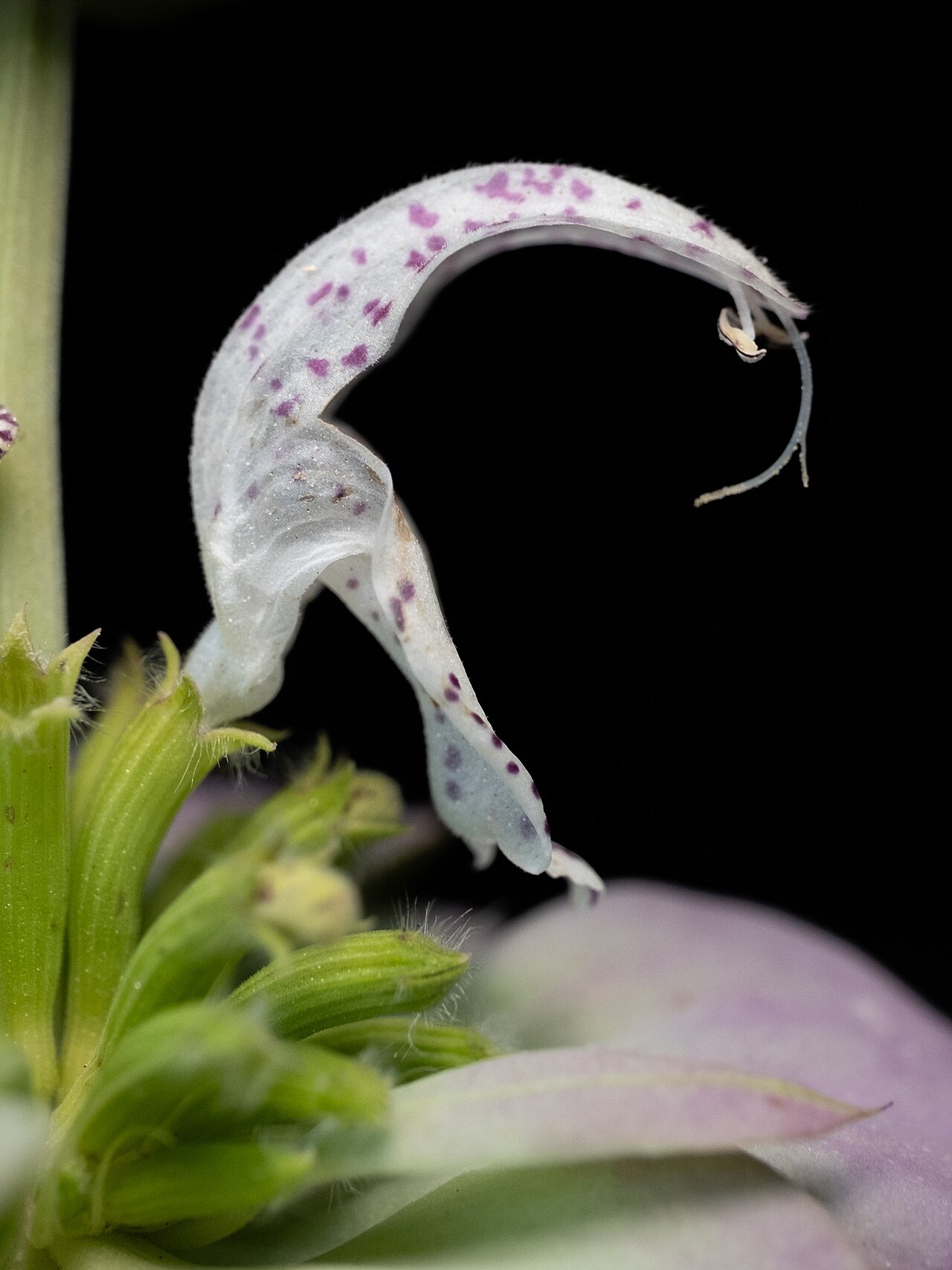
The flowers are small, tubular, pale yellow to cream and heavily marked with purple or maroon spots, packed into dense whorls that stack at intervals up the flowering stem — often three to seven whorls per stalk. Each whorl sits above a ring of conspicuous, petal-like bracts that range from pale green to white, pink, or lavender-tinged, and it is these bracts, more than the flowers themselves, that give the plant its ornamental presence. Bloom runs through mid to late summer, typically July into September, sometimes lingering into October in the South.
Fruit & Seeds
Like other mints, spotted beebalm produces small, dry nutlets rather than showy fruit, held within the persistent calyx after the flowers fade. The dried seed heads and bracts remain attractive into fall and are often left standing for winter interest and for the seed-eating birds that visit them.
Quick Facts
| Scientific Name | Monarda punctata |
| Family | Lamiaceae (Mint) |
| Plant Type | Herbaceous Perennial Wildflower |
| Mature Height | 1–3 ft |
| Mature Spread | 1–2 ft |
| Growth Rate | Moderate to Fast |
| Sun Exposure | Full Sun |
| Water Needs | Low; drought tolerant once established |
| Soil Type | Sandy, dry, well-drained; tolerates poor soil |
| Soil pH | 6.0–7.0 (slightly acidic to neutral) |
| Bloom Time | July – September |
| Flower Color | Pale yellow, purple-spotted, with pink/lavender bracts |
| Fall Color | None (herbaceous; dried bracts persist) |
| Fruit | Small dry nutlets, not showy |
| Deer Resistant | Yes (strongly aromatic foliage) |
| USDA Hardiness Zones | 3–9 |
Native Range
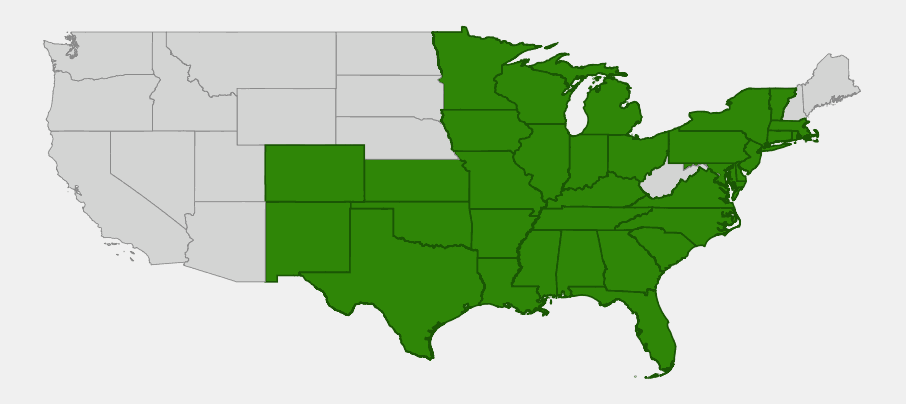
Spotted beebalm has one of the broadest native ranges of any plant in the mint family in North America, stretching from southern New England and the Great Lakes south through the Appalachians and Gulf Coast states, and west across the prairies into Kansas, Colorado, and New Mexico. It also reaches into southeastern Canada (Ontario and Quebec). Despite that breadth, it is patchy within its range: county-level BONAP records show it absent from most of West Virginia and from Maine and New Hampshire, where only scattered or historical populations exist, and the Ohio Department of Natural Resources lists it as a species of conservation concern even though it remains native there.
Across this range, spotted beebalm is consistently a plant of dry, sandy, disturbed, or otherwise marginal ground: coastal dunes and sand plains in the Northeast, sand prairies and glades in the Midwest, longleaf and shortleaf pine sandhills in the Southeast, and dry prairie and caprock margins in the southern Plains and New Mexico. It thrives in full sun on soils too lean and well-drained for most competing vegetation, which is part of why it persists so readily along roadsides, utility corridors, and old fields.
Reports of isolated populations in California and a few other western states almost certainly reflect garden escapes or naturalized plantings rather than a native presence that far west; Plant Native follows the BONAP county-level record and excludes those occurrences from the native range described here.
📋 Regional plant lists featuring Spotted Beebalm: New Hampshire, Maine & Vermont · Connecticut, Massachusetts & Rhode Island · New York, Pennsylvania & Northern New Jersey · Delaware, Southern New Jersey & Long Island · Maryland, Virginia & West Virginia · North Carolina & South Carolina · Georgia, Alabama & Mississippi · Arkansas, Louisiana, Eastern Oklahoma & Eastern Texas · Kentucky & Tennessee · Ohio & Indiana · Illinois, Iowa & Missouri · Michigan, Wisconsin & Eastern Minnesota · Nebraska, Kansas & Eastern Colorado · Arizona & New Mexico
Growing & Care Guide
Spotted beebalm is one of the easiest native wildflowers to grow precisely because it prefers the kind of lean, sandy conditions many gardeners struggle with elsewhere in the yard.
Light
It needs full sun to perform well; in partial shade, plants grow leggy and flop, and bloom is sparse. Give it the hottest, driest, most open spot available.
Soil & Water
This is a plant for poor soil — sandy, rocky, or otherwise lean, fast-draining ground is ideal, and rich garden soil actually tends to produce weaker, shorter-lived plants prone to flopping and disease. Once established, it needs little to no supplemental water and tolerates drought extremely well; overly wet or heavy clay soils are its biggest limitation. It is not fussy about soil pH and tolerates mildly acidic to neutral conditions.
Planting Tips
Start from seed sown in fall for natural cold stratification, or set out container plants in spring after the soil has warmed. Space plants 12 to 18 inches apart; they fill in readily and often self-seed modestly in open, sandy ground. Avoid heavy mulch or rich amended soil at the planting site, which works against the plant’s natural preference for lean conditions.
Pruning & Maintenance
Spotted beebalm needs very little maintenance. It is generally more resistant to the powdery mildew that often troubles other Monarda species, thanks to its airier growth habit and preference for dry sites. Deadheading is optional — many gardeners leave the dried bracts and seed heads standing through fall and winter for visual interest and for goldfinches and other seed-eating birds. Cut plants back in late winter before new growth emerges. In rich soil or with excess water, plants can become floppy and may benefit from staking or being grown among supportive neighbors like little bluestem.
Landscape Uses
Its tolerance for poor soil and its wasp-magnet blooms make spotted beebalm useful in several settings:
- Pollinator and wildlife gardens, especially for beneficial predatory wasps
- Dry, sandy or rocky garden beds where few other wildflowers thrive
- Coastal and dune plantings in the Northeast and mid-Atlantic
- Prairie and meadow restorations on sandy or well-drained sites
- Roadside and erosion-control plantings on lean soils
- Cut and dried flower arrangements, thanks to the long-lasting bracts
Wildlife & Ecological Value
Spotted beebalm punches well above its weight as a wildlife plant, particularly for pollinating insects that many other wildflowers overlook.
For Pollinators
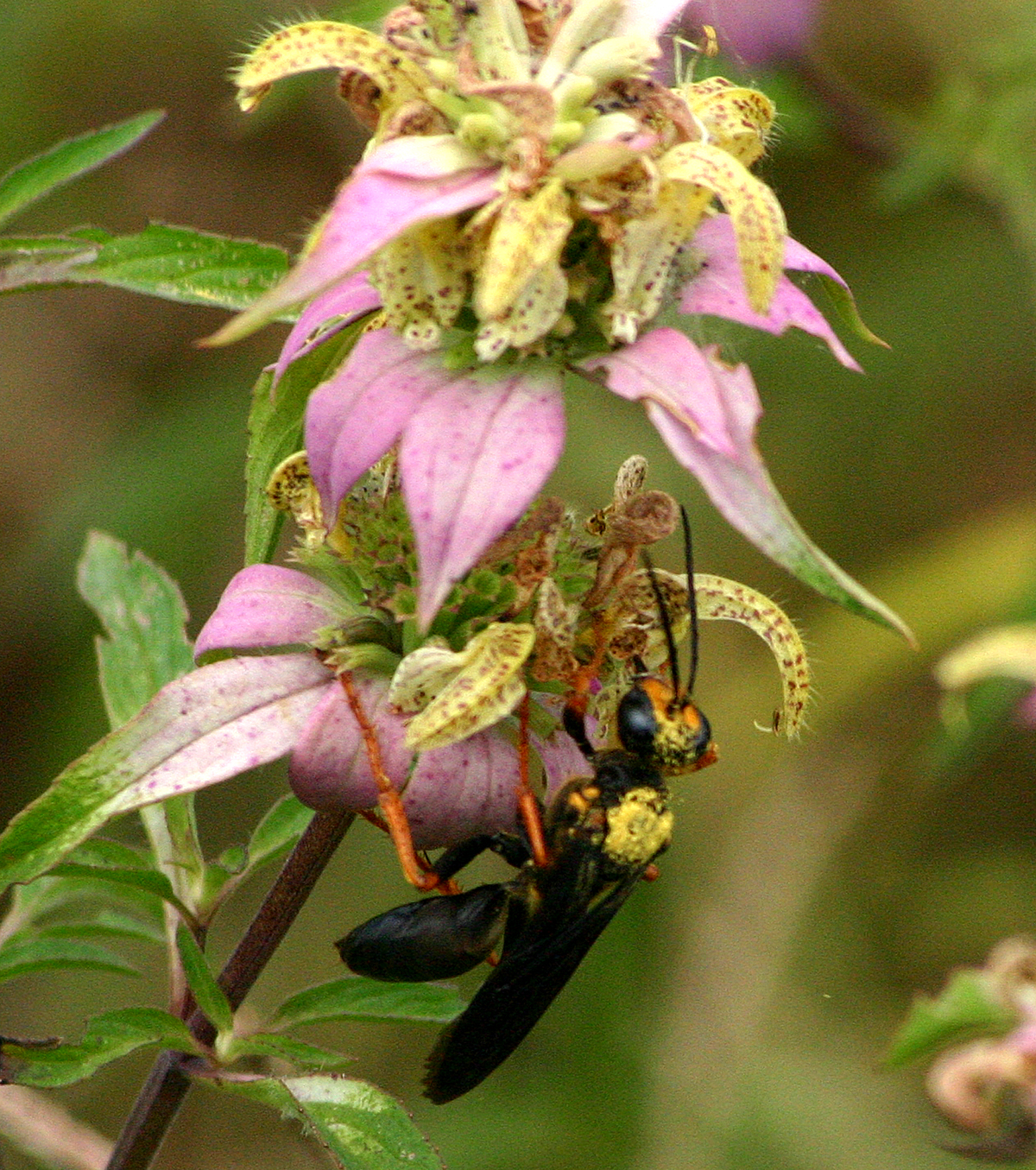
The flowers attract pollinators in exceptional numbers, especially wasps — including many beneficial predatory and parasitic species that help control grubs, caterpillars, and other garden pests. Bees, including specialist species, also visit heavily; the plant is the sole pollen source for the specialist bee Protandrena abdominalis. Butterflies and moths nectar at the flowers as well.
For Birds
Hummingbirds, including the ruby-throated hummingbird, visit the tubular flowers for nectar, while the dried seed heads left standing into fall and winter provide seed for goldfinches and other small songbirds.
For Mammals
The strongly aromatic foliage makes spotted beebalm unappealing to deer and rabbits, which generally avoid browsing it — a useful trait in gardens where browse pressure limits plant choices.
Ecosystem Role
As a pioneer of disturbed, sandy, and otherwise marginal ground, spotted beebalm helps stabilize and vegetate open sand plains, dunes, and dry prairie openings, and its dense summer bloom provides a mid-to-late-season nectar pulse in habitats where floral resources can otherwise be sparse during the hottest, driest part of the year.
Cultural & Historical Uses
Spotted beebalm’s thymol content gives it a long history of use in folk medicine and herbal tradition among both Indigenous peoples and later European settlers, who brewed the leaves and flowering tops into teas used for upset stomachs, colds, neuralgia, and other common complaints. Thymol itself is a recognized natural antiseptic and fungicide, and historical accounts describe the plant being used topically as well as in infusions.
The Texas naturalist and writer tradition has long highlighted spotted beebalm’s regional abundance on sandy soils across the state, where its late-summer bloom stands out on otherwise parched ground. It has also been a long-documented nectar and pollen source noted by beekeepers for its appeal to wasps and native bees.
These historical uses are worth knowing as botanical and cultural history, but they are not a basis for self-medication; spotted beebalm today is grown almost exclusively as a garden and habitat plant rather than an herbal product.
Frequently Asked Questions
Is spotted beebalm the same as bee balm (Monarda didyma)?
No. They are both in the genus Monarda, but spotted beebalm has small, purple-spotted yellow flowers in stacked whorls beneath pale bracts, while bee balm has large, showy red or pink flowers in a single terminal head. Spotted beebalm is also far more drought- and heat-tolerant.
Why do wasps love spotted beebalm so much?
The flower shape and nectar reward are especially attractive to a wide range of wasp species, including beneficial predatory wasps that hunt garden pests such as caterpillars and grubs. Gardeners who want fewer pests without pesticides often plant it for exactly this reason.
Does spotted beebalm spread aggressively?
It can self-seed in open, sandy conditions, but it is not rhizomatous or running like some other mints, so it stays in place rather than spreading by root. Deadheading before seed drop will limit volunteer seedlings if you prefer a more contained planting.
Why isn’t spotted beebalm native in West Virginia if it’s native all around it?
County-level BONAP records show it essentially absent from West Virginia’s mountainous interior, even though it is native in the surrounding lowland states; its preference for sandy, lower-elevation ground likely explains the gap.
Is spotted beebalm deer resistant?
Generally yes — its strong, thyme-like aroma makes it unappealing to deer and rabbits compared to many other perennials, though no plant is completely deer-proof under heavy browse pressure.

Looking for a nursery that carries Spotted Beebalm?
Browse our native plant nursery directory: CT, MA, MD, MS, LA, KY, MO, MI & MN · NY, NJ, NC, OK, OH & NM · VT, RI, PA, VA, SC, TX & TN · DE, GA, FL & CO · IN, IL, IA & KS · AL & AR · WI