
Texas Frogfruit (Phyla nodiflora)
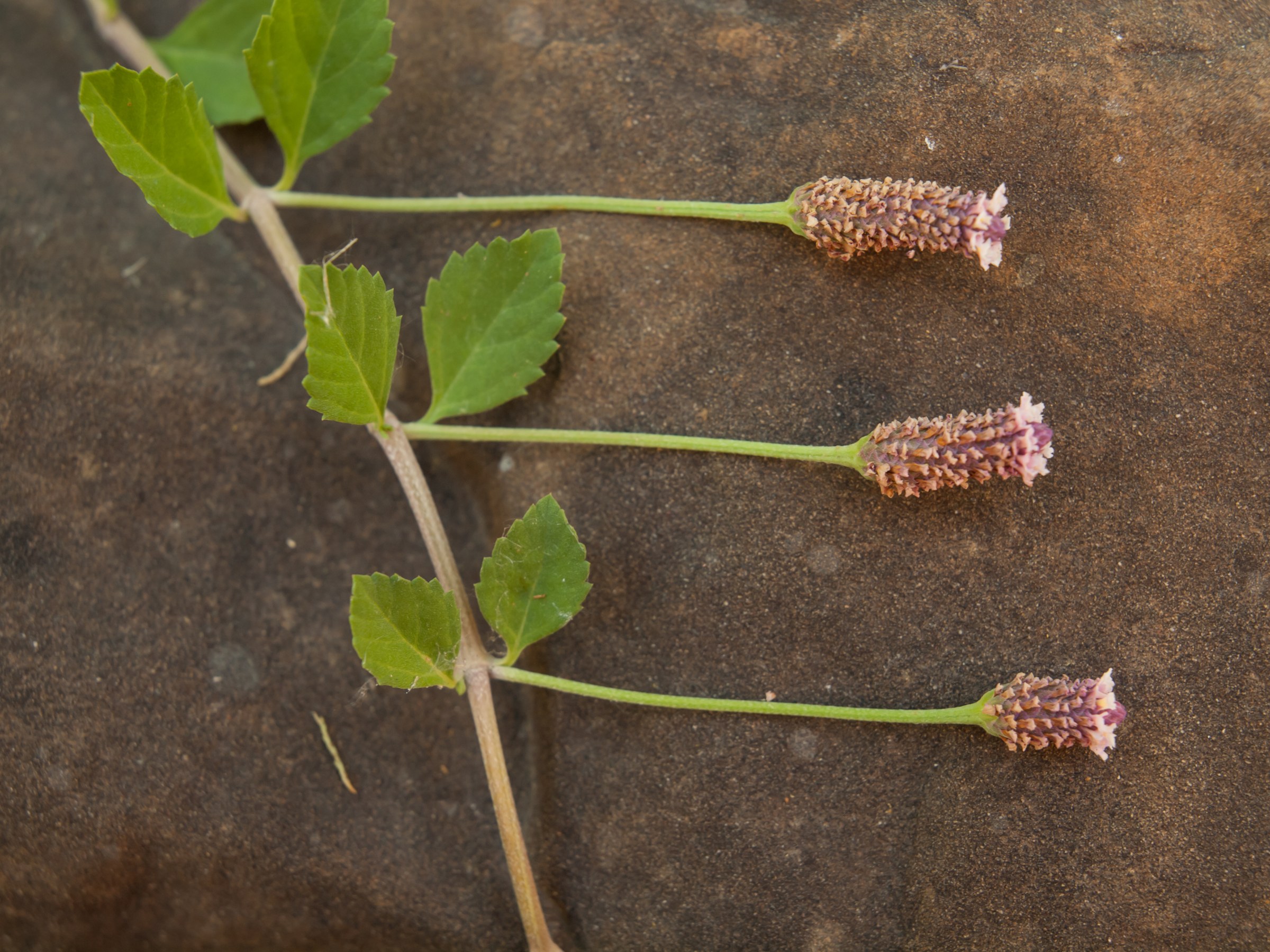
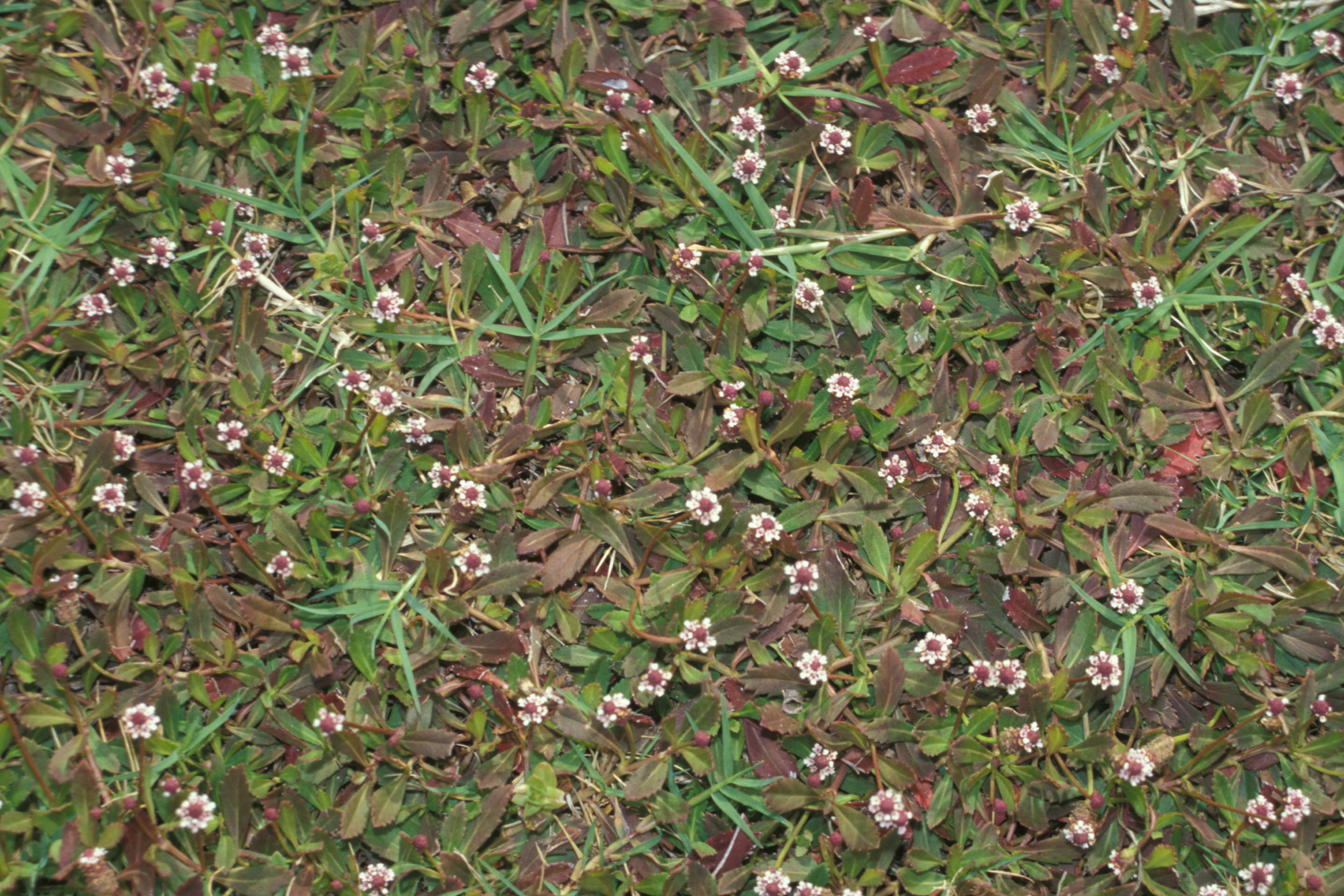
Phyla nodiflora, commonly called Texas Frogfruit or Turkey Tangle Fogfruit, is a low, mat-forming native perennial that quietly does more ecological work per square foot than almost any other groundcover in its range. Despite the odd common name, it has nothing to do with frogs — “fogfruit” is thought to be a corruption of an older folk name, and the small knobby seed heads do resemble tiny fruit. This member of the Verbenaceae (vervain family) spreads by rooting stems that hug the ground, quickly knitting together a dense, evergreen-in-mild-climates mat studded with tiny white-and-lavender flower clusters almost year-round.
Texas Frogfruit grows wild across a huge swath of the warmer United States, from California and the desert Southwest through Texas and the Gulf Coast states, north into the Ohio and mid-Atlantic lowlands and west again to the Pacific Northwest’s warmer valleys. It thrives in exactly the places most lawns struggle — compacted roadside soil, pond margins, ditches, floodplains, and disturbed ground — tolerating both standing water after storms and extended dry spells once established. Its tiny flowers are a magnet for small native bees, skippers, and several butterfly species that use it as a larval host plant.
In the garden, Texas Frogfruit has become popular as a low-mow or no-mow lawn substitute, a living mulch between stepping stones, and erosion control on slopes and bare patches. It tolerates foot traffic, mowing, and poor soil better than most turfgrasses, while asking for none of the fertilizer or irrigation a traditional lawn demands. For gardeners wanting a genuinely native, pollinator-friendly alternative to turf, it is hard to beat.
Identification
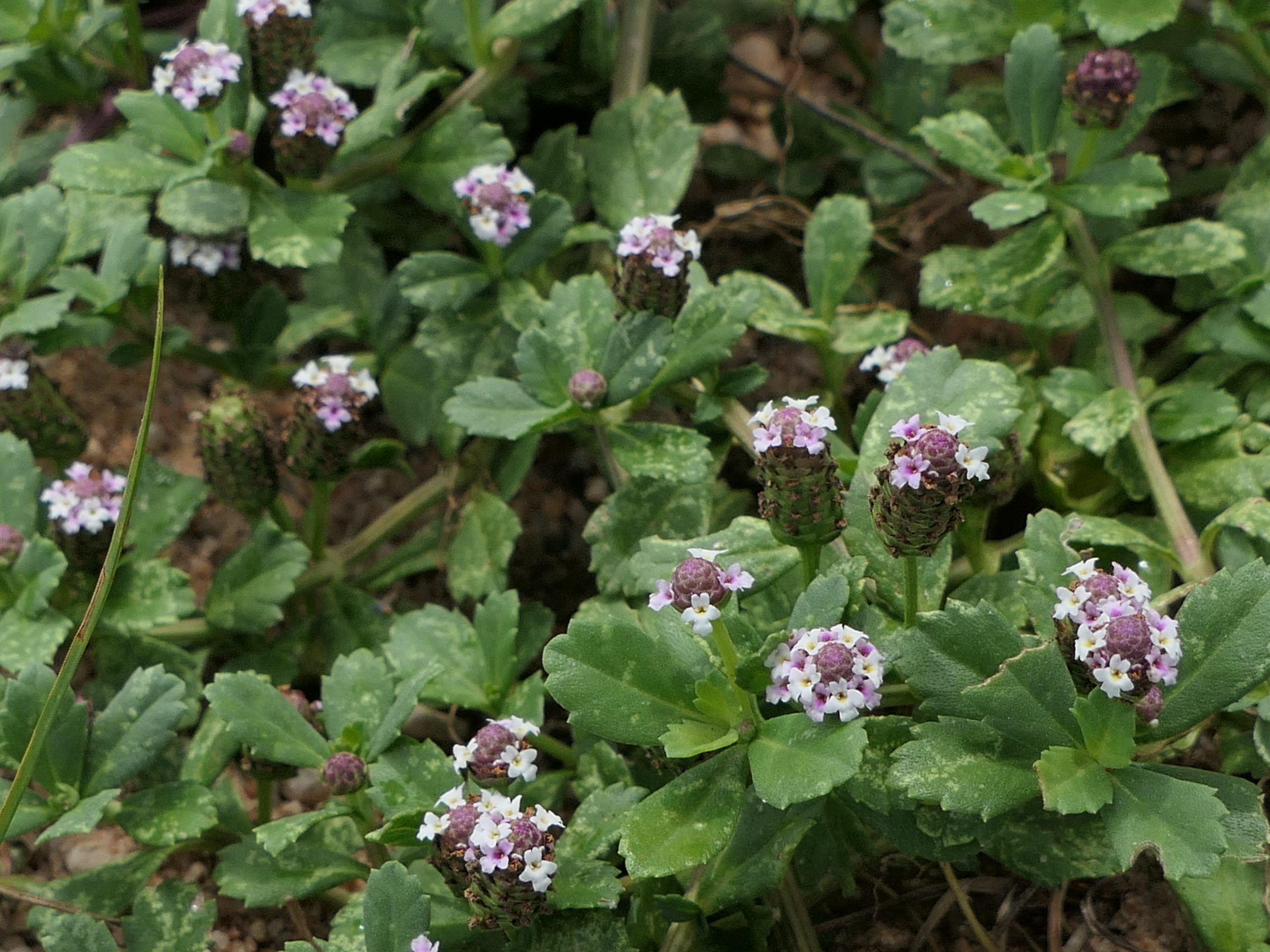
Texas Frogfruit is a creeping, mat-forming perennial herb, typically only 2 to 6 inches tall but capable of spreading several feet wide from a single plant as its stems root at the nodes wherever they touch soil. Where conditions are favorable it can form continuous patches many yards across.
Leaves
Leaves are opposite, oval to spoon-shaped, ½ to 1½ inches long, with coarsely toothed margins on the upper two-thirds and smooth margins near the base. They are a dull gray-green, somewhat fleshy, and slightly rough to the touch. Foliage is semi-evergreen in zones 8 and warmer, dying back to the crown after hard frost farther north.
Flowers
The flowers are tiny — each individual bloom only about ⅛ inch across — but they are packed into dense, rounded to cylindrical flower heads about ¼ to ½ inch long, held on slender stalks above the foliage. Flowers open in a ring starting at the base of the head and moving upward, so each head often shows a ring of open white-to-pale-lavender flowers with a pinkish-purple, unopened crown above and below. Bloom is nearly continuous from spring through fall where winters are mild, and heaviest after rain.
Fruit & Seeds
Fruit is a small, dry, two-seeded nutlet hidden within the dried flower head; it is inconspicuous and not ornamentally significant. Plants reproduce readily both by seed and, more importantly in the landscape, by rooting stems, which is why a small planting fills in so quickly.
Quick Facts
| Scientific Name | Phyla nodiflora (syn. Lippia nodiflora) |
| Family | Verbenaceae (Vervain) |
| Plant Type | Mat-Forming Perennial Groundcover |
| Mature Height | 2–6 in (5–15 cm) |
| Mature Spread | 3 ft and wider, spreading indefinitely by rooting stems |
| Growth Rate | Fast |
| Sun Exposure | Full Sun to Part Shade |
| Water Needs | Low to Moderate; tolerates both brief flooding and drought once established |
| Soil Type | Adaptable; sand, clay, loam, even compacted roadside soil |
| Soil pH | Wide range, 5.5–8.5 |
| Bloom Time | Spring – Fall, nearly year-round in zones 9–11 |
| Flower Color | White to pale lavender-pink |
| Fall Color | None notable; semi-evergreen where winters are mild |
| Fruit | Tiny dry nutlets, inconspicuous |
| Deer Resistant | Yes, generally avoided by deer and tolerates mowing |
| USDA Hardiness Zones | 7–11 (behaves as a perennial groundcover; may die back as an annual in colder pockets) |
Native Range
Texas Frogfruit is native across most of the warmer United States, from coastal and interior California east through the desert Southwest, across Texas, Oklahoma and the Gulf Coast states, north through the Mississippi and Ohio valley lowlands into the mid-Atlantic coastal plain, and west again into the warmer valleys of the Pacific Northwest. It is one of the most widely distributed native groundcovers in the country, though it is far more common and vigorous in the South and Southwest than at the cooler edges of its range.
Within this range it is a plant of open, disturbed, and often seasonally wet ground: pond and lake margins, irrigation ditches, floodplains and riverbanks, coastal flats, and the compacted edges of roads and parking areas. It is frequently found growing alongside bermudagrass, saltgrass, spikerush, and other low, moisture-tolerant species in places too disturbed or too wet for most woody plants to establish.
Where winters are mild it stays green and flowers nearly continuously; in the cooler, drier portions of its range (Utah, the higher Southwest, and the Pacific Northwest) it behaves more like a warm-season perennial, dying back in winter and regrowing vigorously from the crown and surviving rhizomes once the soil warms.
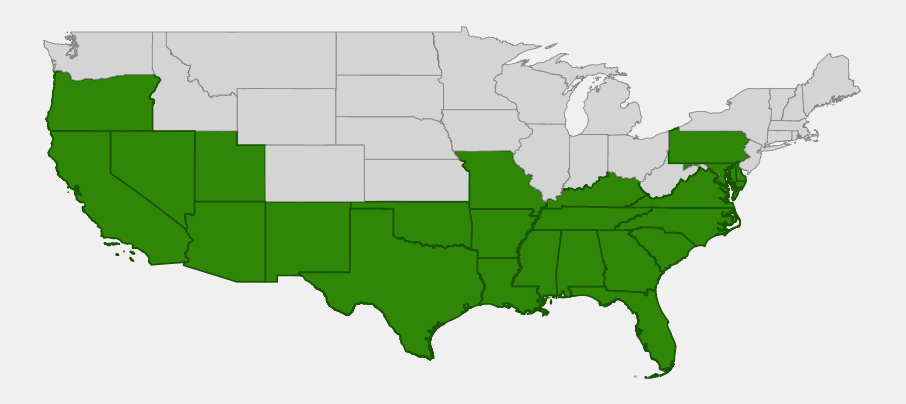
📋 Regional plant lists featuring Texas Frogfruit: Georgia, Alabama & Mississippi, Arkansas, Louisiana, Eastern Oklahoma & Eastern Texas, North Carolina & South Carolina, Arizona & New Mexico, Utah & Western Colorado, Western Oregon & Western Washington, Kentucky & Tennessee, Maryland, Virginia & West Virginia, Delaware, Southern New Jersey & Long Island, New York, New York, Pennsylvania & Northern New Jersey, Illinois, Iowa & Missouri
Growing & Care Guide
Texas Frogfruit is about as low-maintenance as native groundcovers get. Once a few plugs or sprigs take hold, it fills in quickly on its own, needing only occasional watering during its first season and virtually nothing afterward.
Light
Give it full sun for the densest growth and heaviest bloom; it also tolerates part shade, though flowering and density taper off as shade increases. In the hottest desert climates, afternoon shade helps keep the mat lush through summer.
Soil & Water
Texas Frogfruit is remarkably unfussy about soil, growing in sand, clay, caliche, and compacted fill alike. It prefers consistent moisture while establishing but, once rooted, tolerates both standing water after storms and real drought, making it a good choice for rain gardens, swales, and dry patches in the same yard.
Planting Tips
Set out small plugs or rooted cuttings 12 to 18 inches apart in spring; they will knit together into a solid mat within a season or two. Keep new plantings watered until stems begin rooting at the nodes, then taper off. It establishes readily from cuttings taken from an existing patch, so one donor plant can cover a large area for free.
Pruning & Maintenance
No pruning is required. Where it is used as a lawn substitute, an occasional mowing on a high setting (or a trim with a string trimmer) keeps it tidy and encourages denser growth, but it looks fine left alone as a flowering groundcover too. It tolerates foot traffic better than most low groundcovers.
Propagation
By far the easiest method is division or rooted stem cuttings — any node that touches moist soil will root within a couple of weeks. Seed is also viable but slower and less predictable than vegetative propagation.
Landscape Uses
- No-mow or low-mow lawn substitute in warm climates
- Erosion control on slopes, ditches, and bare disturbed ground
- Rain garden and swale planting that tolerates both wet and dry spells
- Pollinator lawn or butterfly garden groundcover
- Living mulch between stepping stones and pavers
- Bank and pond-margin stabilization
Wildlife & Ecological Value
Few native groundcovers pull as much weight for pollinators and butterflies as Texas Frogfruit, especially given how little space and care it needs.
For Pollinators
The small, nectar-rich flower heads are visited constantly by native bees, honeybees, and wasps, and they bloom for most of the growing season, filling a gap when larger wildflowers are between bloom cycles.
For Birds
While not a major bird-food plant, the dense mat provides cover for ground-foraging birds and insects that birds feed on, and the abundant insect activity it supports indirectly benefits nesting songbirds.
For Mammals
The low, tough mat is browsed lightly by rabbits in some areas but is not a preferred forage for deer, which is part of why it holds up so well in open landscapes.
Ecosystem Role
As a larval host plant for the Phaon crescent, White peacock, and Common buckeye butterflies, Texas Frogfruit punches well above its size ecologically. Its mat-forming habit also stabilizes bare and disturbed soil, reducing erosion along ditches, pond edges, and floodplains where few other plants can get a foothold.
Cultural & Historical Uses
Texas Frogfruit has long been a familiar, if unassuming, plant of ditches, pastures, and disturbed ground across the South and Southwest, often overlooked as “just a weed” in lawns where it volunteers on its own. Ranchers and rural landowners have recognized for generations that it holds wet, trampled ground together better than turfgrass, and it has traditionally been left in place along stock ponds and irrigation ditches for exactly that reason.
In parts of its range it has also been used as low-input livestock forage, since it tolerates grazing and trampling and regrows quickly. Various regional common names — frogfruit, fogfruit, matchweed, turkey tangle — reflect just how widely scattered populations have been noticed and nicknamed independently across the country.
Interest in Texas Frogfruit as an intentional landscape plant is much more recent, growing out of the native-lawn and pollinator-garden movements of the last two decades, as gardeners looked for drought-tough, mowable alternatives to high-water turfgrass.
Frequently Asked Questions
Can Texas Frogfruit replace my lawn?
In warm climates, yes — it tolerates mowing and light foot traffic and needs far less water and fertilizer than turfgrass. It will not look exactly like a mowed lawn, but it forms a dense, low, walkable, flowering mat.
Is Texas Frogfruit invasive?
Within its native range it is not considered invasive; it spreads by rooting stems but stays low and is easy to contain by mowing or trimming an edge. Outside its native range or in irrigated beds it can spread more aggressively than gardeners expect, so give it defined edges.
Will it survive a hard freeze?
In the warmer parts of its range it stays semi-evergreen; farther north and in colder snaps it dies back to the ground but regrows from the crown and roots once the soil warms in spring.
Does Texas Frogfruit need a lot of water?
No. It establishes best with regular water the first season, then tolerates both periodic drought and occasional flooding, which is part of why it thrives along ditches and pond margins.
What butterflies use Texas Frogfruit?
It is a larval host plant for the Phaon crescent, White peacock, and Common buckeye butterflies, in addition to feeding many bees and other pollinators with its nearly continuous bloom.

Looking for a nursery that carries Texas Frogfruit?
Browse our native plant nursery directory: Oregon · California · Nevada, New Mexico, North Carolina & Oklahoma · Alabama, Arizona & Arkansas · Kentucky, Louisiana, Maryland & Missouri · Delaware, Florida & Georgia · Pennsylvania, South Carolina, Tennessee, Texas, Utah & Virginia