
Field Pussytoes (Antennaria neglecta)
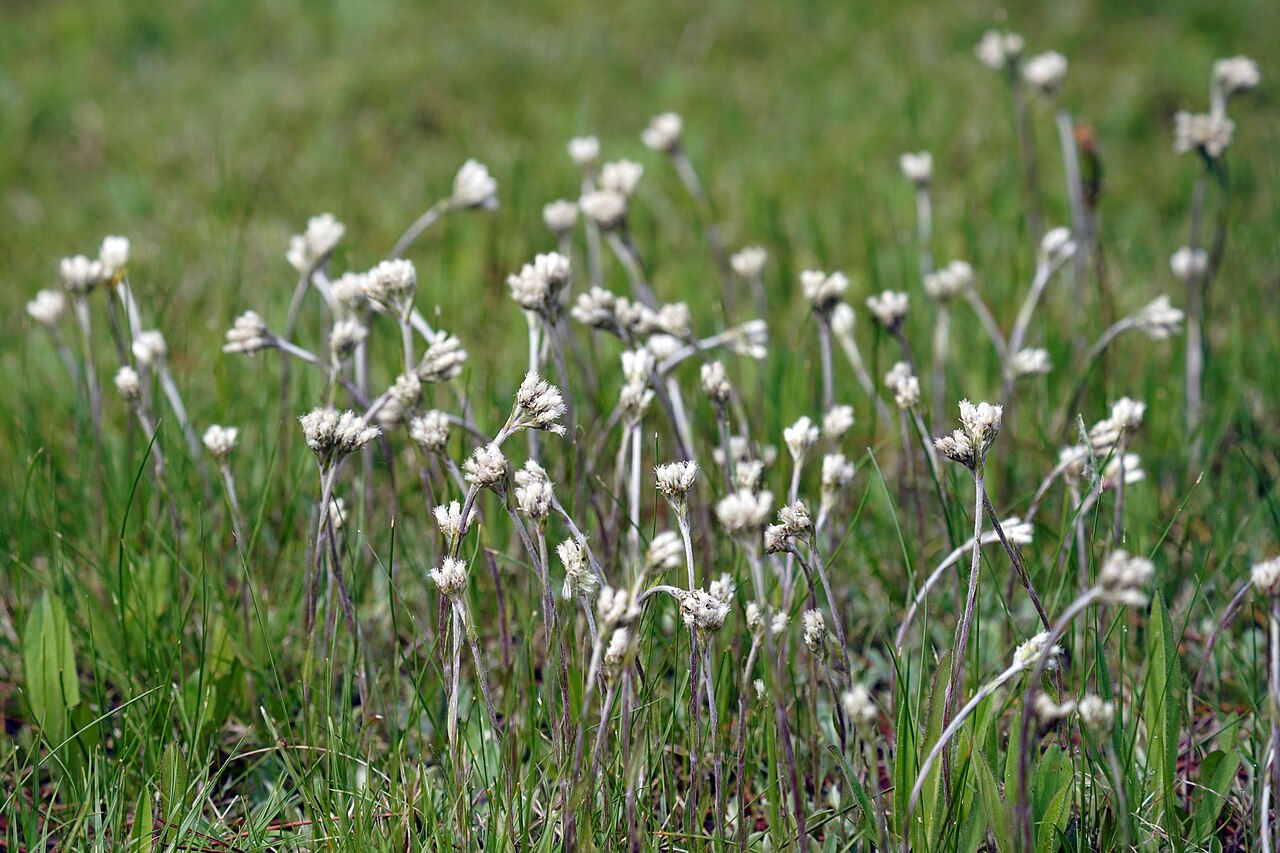
Antennaria neglecta, commonly called Field Pussytoes, is a low, silvery-gray, mat-forming perennial wildflower found across a broad swath of the northern and central United States. A member of the aster family, Asteraceae, it spreads by surface runners into dense colonies of soft, felted rosettes, each topped in spring by clusters of small, fuzzy white flower heads whose shape gives the plant its common name — they do look remarkably like a cat’s paw.
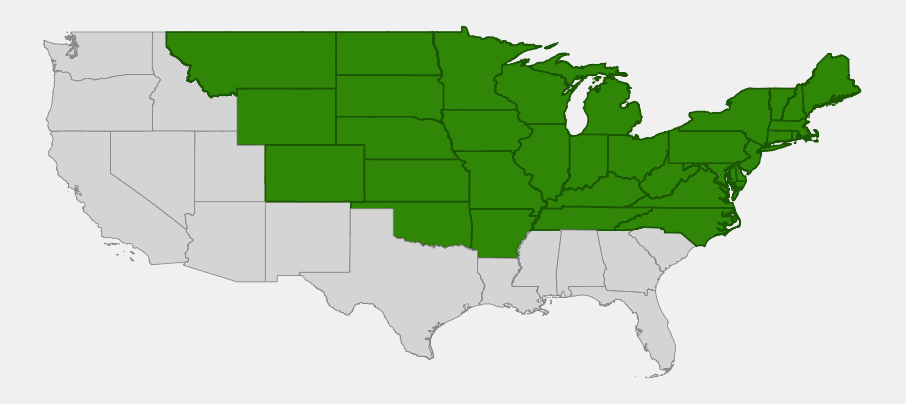
Field pussytoes is native from New England and the Mid-Atlantic west across the Great Lakes states and the northern Plains to Montana and Wyoming, and south through the central states to Kansas, Oklahoma, Arkansas, Tennessee and North Carolina. It thrives in dry, open, sunny ground — fields, pastures, prairies, and thin or rocky soil — where taller, more competitive plants struggle to establish. It is absent from the Deep South, Florida, Texas, and the arid and Pacific West, so gardeners outside its native range should look to regional alternatives rather than planting it where it does not belong.
For native plant gardeners, field pussytoes is a tough, low-care, drought-tolerant groundcover for sunny, lean soil — exactly the spot where lawn grass struggles. It is also ecologically valuable as a larval host plant for the American lady butterfly, making it a worthwhile addition to a pollinator or wildlife garden within its native range.
Identification
Field pussytoes forms low, spreading mats only 2 to 6 inches (5–15 cm) tall in leaf, with flowering stems rising to about 4 to 12 inches (10–30 cm). Plants spread by leafy stolons (surface runners) that root at the tip and form new rosettes, so a single plant can slowly build a dense, continuous patch of ground cover.
Leaves
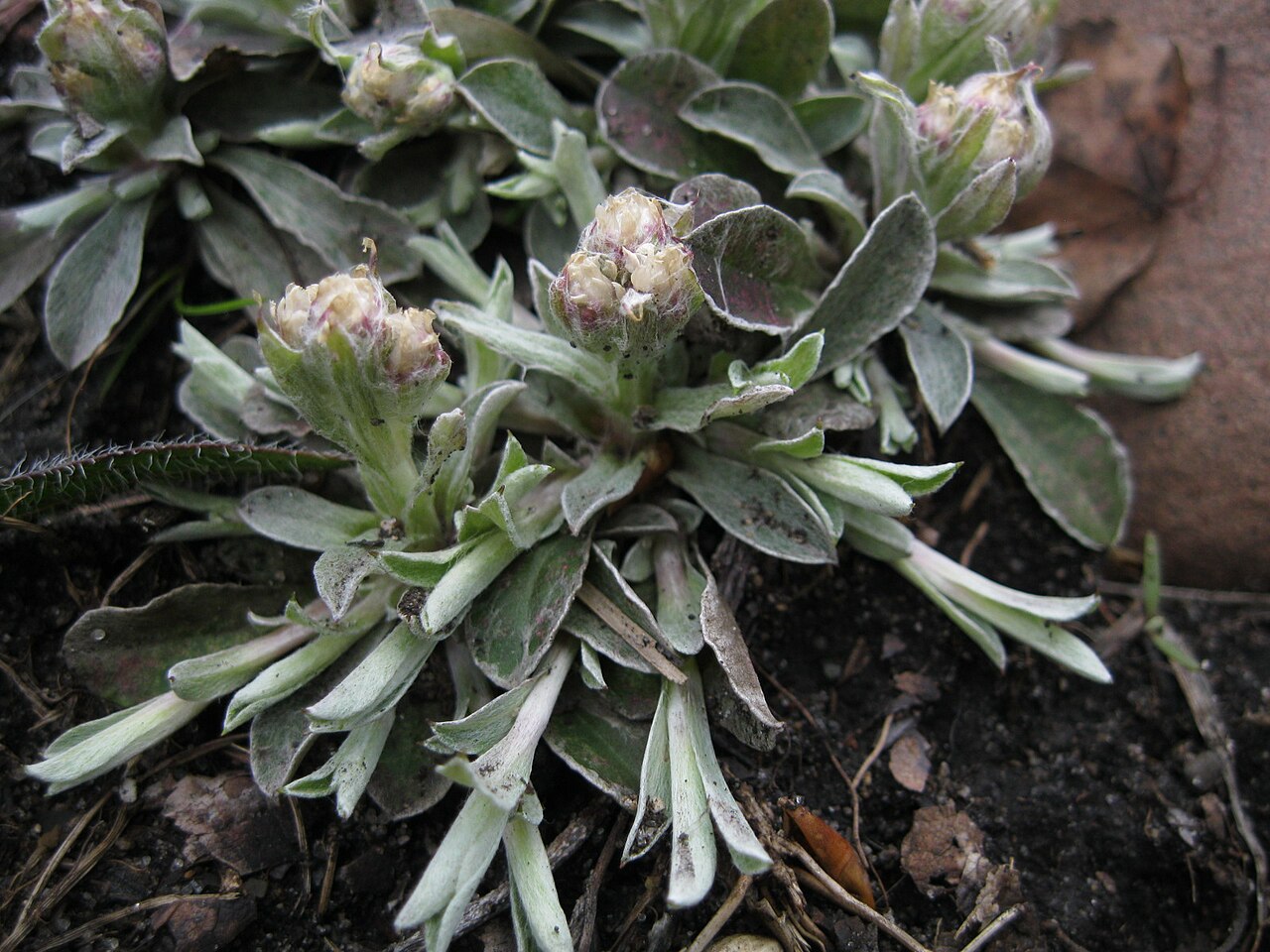
The basal leaves form a tight rosette, spoon-shaped to narrowly oblong, ½ to 1½ inches (1.5–4 cm) long, covered in fine white-gray wool (tomentum) that gives the whole plant a soft, silvery-green color. Stem leaves are smaller, narrower, and more sparsely spaced up the flowering stalk. The dense hairy covering reduces water loss and is part of what allows the plant to thrive in dry, exposed sites.
Flowers
Field pussytoes is dioecious, meaning individual plants are either male or female. Flower heads are small, ¼ to ⅜ inch (6–10 mm), clustered in tight groups of 3 to 15 atop woolly stalks; they lack showy rays and instead display small tufts of white to cream-colored bracts and florets, giving the characteristic soft, paw-like look. Female plants produce the more conspicuous, fluffier heads, since much of the native population reproduces more by stolons than by seed. Bloom time is April through June, among the earliest wildflowers to flower in open fields.
Fruit & Seeds
After flowering, female plants develop small achenes topped with a tuft of fine bristles (a pappus), similar to a miniature dandelion seed, allowing some wind dispersal. Because so much of the plant’s spread happens vegetatively through stolons, dense colonies are often made up of many genetically identical rosettes connected underground.
Quick Facts
| Scientific Name | Antennaria neglecta |
| Family | Asteraceae (Aster) |
| Plant Type | Herbaceous perennial; mat-forming groundcover |
| Mature Height | 2–6 in foliage; 4–12 in in flower |
| Mature Spread | Spreads indefinitely by stolons into a dense mat |
| Growth Rate | Moderate to fast spread by runners |
| Sun Exposure | Full Sun to Part Shade |
| Water Needs | Low; excellent drought tolerance once established |
| Soil Type | Dry, lean, well-drained; sandy, rocky or gravelly soils |
| Soil pH | Neutral to slightly acidic |
| Bloom Time | April – June |
| Flower Color | White to cream |
| Fall Color | None; foliage stays gray-green and semi-evergreen |
| Fruit | Small achenes with a bristly pappus, on female plants |
| Deer Resistant | Yes |
| USDA Hardiness Zones | 3–7 |
Native Range
Field pussytoes is native across a wide band of the northern and central United States, from Maine and the Mid-Atlantic states west through the Great Lakes region and the northern Plains to Montana and Wyoming, and south through the central Plains and Ohio and Mississippi valleys to Kansas, Oklahoma, Arkansas, Tennessee and North Carolina. Within this broad range it is one of the more common early-spring wildflowers of dry, open ground.
Typical habitat is dry fields, pastures, prairies, roadsides, and open woodlands with thin, well-drained, often sandy or gravelly soil — places where competition from taller grasses and forbs is naturally reduced. It tolerates poor, compacted, or disturbed soils better than most native perennials, which is part of why it persists in old pastures and along unmown roadside edges throughout its range.
The species is not native in the Southeast beyond its documented edge in North Carolina and Tennessee, nor in Florida, the Gulf Coast states, Texas, or anywhere in the arid Southwest or Pacific states; occasional appearances outside this range are typically escaped or planted populations rather than native occurrences. Field pussytoes remains common and secure through most of its native range and is not a conservation concern.
📋 Regional plant lists featuring Field Pussytoes: New Hampshire, Maine & Vermont · Connecticut, Massachusetts & Rhode Island · New York, Pennsylvania & Northern New Jersey · Delaware, Southern New Jersey & Long Island · Maryland, Virginia & West Virginia · North Carolina & South Carolina · Arkansas, Louisiana, Eastern Oklahoma & Eastern Texas · Kentucky & Tennessee · Ohio & Indiana · Illinois, Iowa & Missouri · Michigan, Wisconsin & Eastern Minnesota · North Dakota, South Dakota & Western Minnesota · Nebraska, Kansas & Eastern Colorado · Montana & Wyoming
Growing & Care Guide
Field pussytoes is one of the easiest native groundcovers to grow, provided it has the full sun and lean, dry soil it prefers. It is a plant for difficult, droughty, low-fertility spots rather than rich garden beds.
Light
Give it full sun for the densest growth and best flowering, though it tolerates light part shade, especially in hotter parts of its range. In too much shade, growth thins out and flowering decreases.
Soil & Water
Field pussytoes wants dry to average, well-drained soil and actively dislikes rich, moist, or heavily mulched conditions, which favor more aggressive competitors over its low rosettes. Sandy, gravelly, or thin rocky soils suit it perfectly. Once established, it needs no supplemental watering outside of extended drought and should never be planted in a damp or poorly drained spot.
Planting Tips
Plant divisions or small container plants in spring or fall in a sunny spot with lean soil — a rock garden, dry slope, or meadow planting are ideal settings. Space plants 10 to 12 inches apart if trying to establish a groundcover more quickly, since the stolons will fill in the gaps within a season or two. Avoid rich garden soil and avoid competing with vigorous turf grasses, which can outcompete young plants before they establish.
Pruning & Maintenance
Essentially no maintenance is needed. Spent flower stalks can be left in place or trimmed back after bloom for a tidier look, but this is purely cosmetic. The plant tolerates occasional light foot traffic and mowing after flowering, which is part of why it persists so well in old pastures and unmown roadside edges.
Propagation
The simplest method is division of rooted stolons in spring or fall; each rooted segment can be lifted and replanted as a new start. Seed can also be collected from female plants and sown in fall, though division is faster and more reliable for establishing a garden patch.
Landscape Uses
- Dry groundcover for sunny slopes, banks, and lean soil where turf struggles
- Rock gardens and gravel plantings, where its low, felted foliage pairs well with stone
- Prairie and meadow restorations as an early-blooming, low-growing component
- Pollinator gardens, since it hosts American lady butterfly caterpillars
- Between stepping stones or in lightly trafficked areas, where it tolerates occasional foot traffic
Wildlife & Ecological Value
Despite its modest size, field pussytoes supports a surprising range of early-season wildlife activity in the open habitats where it grows.
For Pollinators
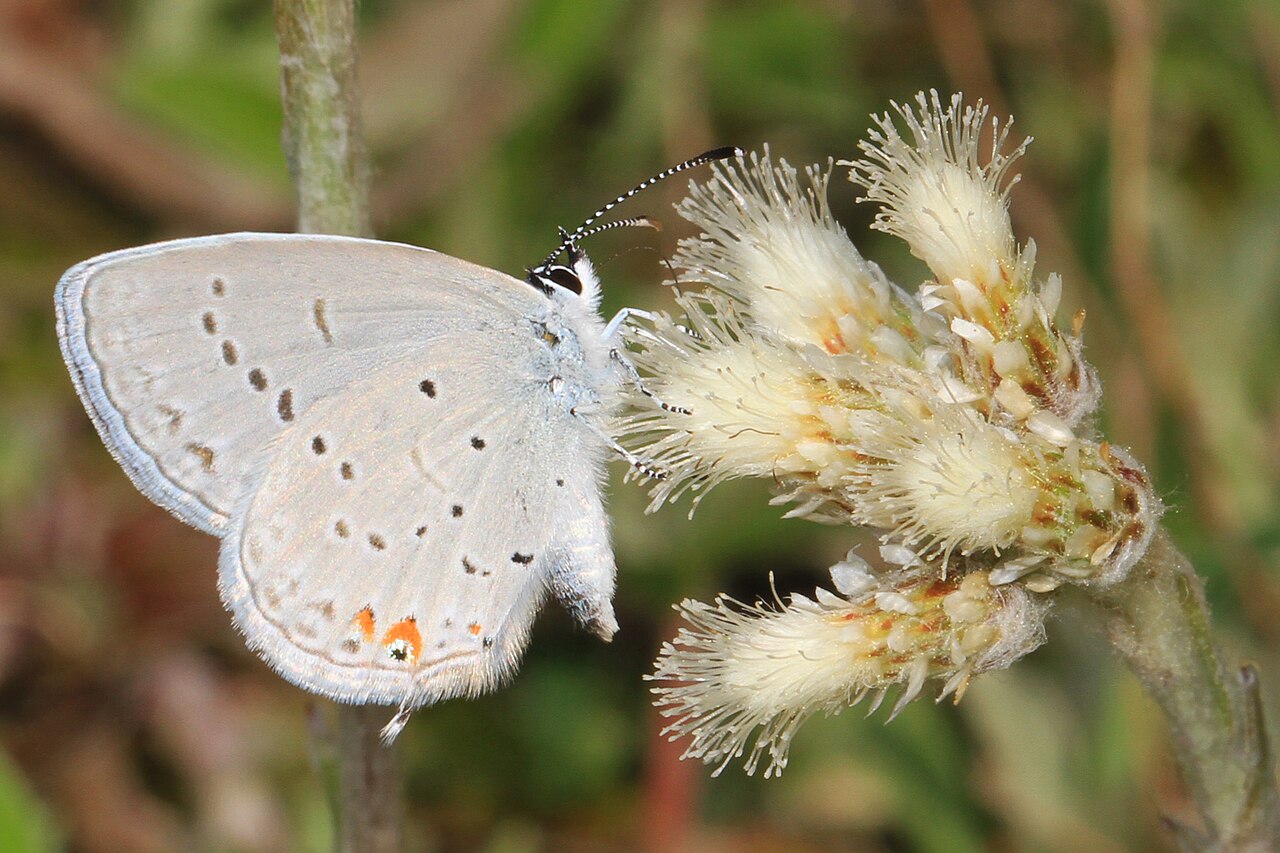
The spring flowers draw small bees, flies, and butterflies, including the eastern tailed-blue, at a time when few other nectar sources are available in dry, open fields. Field pussytoes and its relatives are also the primary larval host plants for the American lady butterfly (Vanessa virginiensis), whose caterpillars feed on the woolly foliage.
For Birds & Mammals
The dense, low mats provide ground-level cover for small insects and invertebrates that in turn support foraging songbirds. The plant’s tough, drought-tolerant growth habit also helps stabilize thin or disturbed soils in pastures and old fields, indirectly supporting the broader grassland wildlife community.
Ecosystem Role
As an early colonizer of dry, disturbed, or thin-soiled ground, field pussytoes helps stabilize bare patches and build soil structure ahead of other prairie and meadow species, while its early bloom time fills a niche before most summer-blooming prairie wildflowers get going.
Cultural & Historical Uses
Some Indigenous peoples across the plant’s range used pussytoes species in minor traditional ways, including as a component of various herbal preparations, though detailed, well-documented uses specific to Antennaria neglecta are limited compared to more prominent prairie plants. Its primary historical significance has been as a familiar, unassuming wildflower of pastures and open ground rather than an important food, fiber, or medicine plant.
The common name “pussytoes” reflects the soft, fuzzy appearance of the clustered flower heads, said to resemble a cat’s paw — a description so apt that it has stuck as the standard common name for the entire genus Antennaria across North America. Field pussytoes in particular earned “neglecta” in its scientific name from early botanists who felt the species had been overlooked relative to its showier relatives, not from any lack of ecological importance.
Today the plant’s main significance is horticultural and ecological: a tough, low-maintenance native groundcover for dry, sunny sites, and a quietly important host plant supporting American lady butterfly populations across its wide range.
Frequently Asked Questions
Is field pussytoes native to the Southeast?
Only at the northern edge. Its native range reaches into North Carolina, Tennessee and Arkansas, but it is not native further south into Georgia, Alabama, Mississippi, South Carolina, Florida, Louisiana, or Texas, so it should not be planted as a native species in those states.
Does field pussytoes spread aggressively?
It spreads steadily by surface stolons to form a dense mat, which is exactly what makes it useful as a groundcover. It is easy to contain by simply pulling or mowing off unwanted runners, and it does not spread by aggressive underground rhizomes or reseed itself as a weed problem in most settings.
Why are some field pussytoes plants showier than others?
The species is dioecious, with separate male and female plants. Female plants generally produce fuller, fluffier flower heads that go on to set seed, while male plants have smaller, less conspicuous heads. Much of a colony’s spread happens by stolons regardless of flower type.
What butterfly relies on field pussytoes?
The American lady butterfly (Vanessa virginiensis) uses field pussytoes and other Antennaria species as its primary larval host plants, making this an especially valuable addition to a butterfly or native pollinator garden within its range.
Can field pussytoes replace a lawn?
In a sunny spot with poor, dry soil and light foot traffic, field pussytoes can work as a low, soft groundcover alternative to turf grass, though it is best suited to smaller accent areas, slopes, and informal plantings rather than a full lawn replacement meant for heavy use.

Looking for a nursery that carries Field Pussytoes?
Browse our native plant nursery directory: ME, MA, MD, KY, MI, MN, MO & MT · NH, NJ, NY, NC, ND, NE, OH & OK · VT, RI, PA, VA, SD & TN · CT, DE & CO · AR · WV, WI & WY · IL, IN, IA & KS