
California Brome Grass (Bromus carinatus)
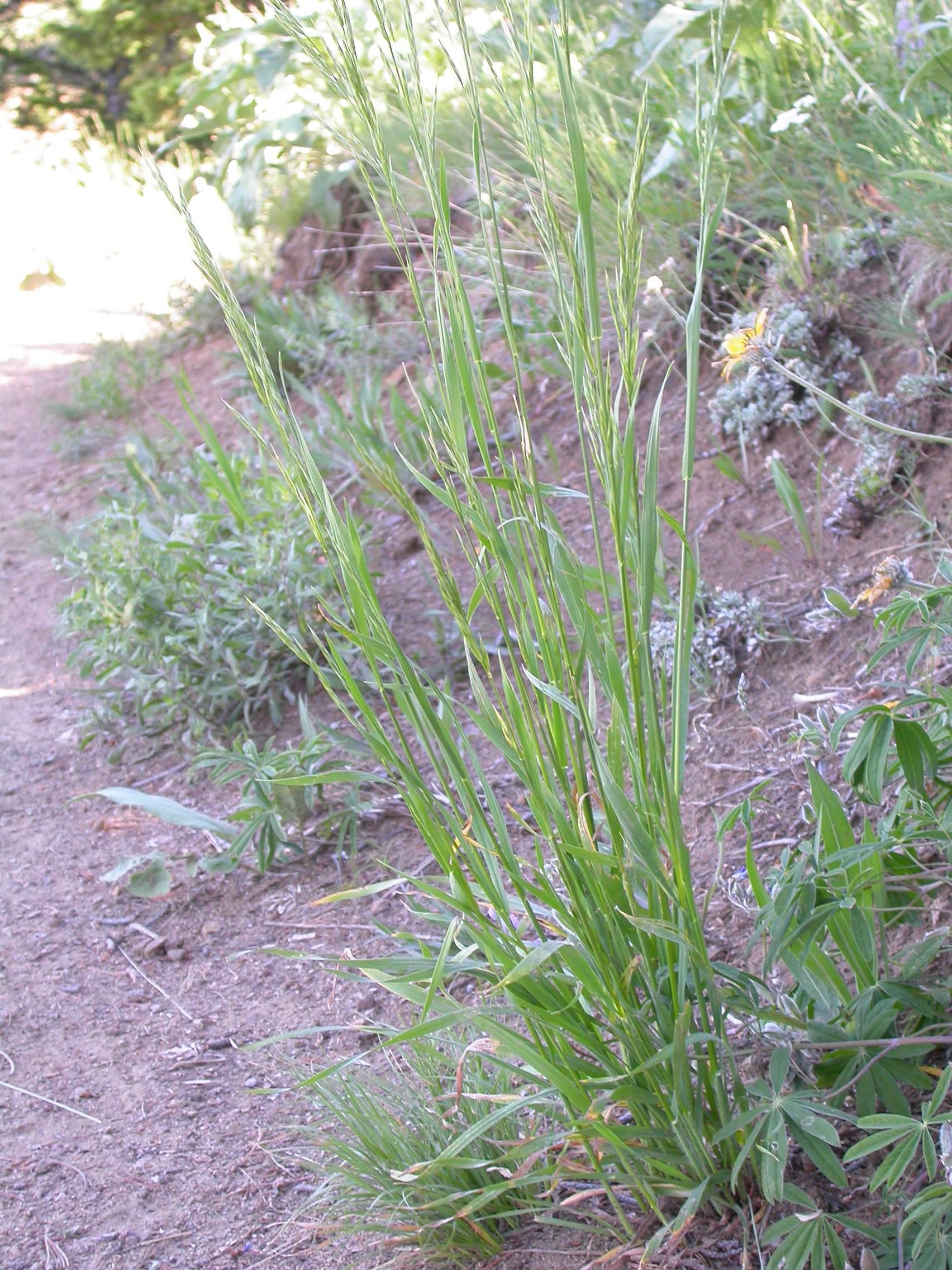
Bromus carinatus, known as California Brome Grass or California brome, is one of the most widespread native bunchgrasses in western North America — a quietly useful plant that shows up everywhere from coastal bluffs to subalpine meadows, roadcuts to recovering burn scars. Unlike the aggressive, seed-bank-dominating annual bromes that have invaded so much of the West, California brome is a short-lived native perennial (sometimes behaving as a biennial) that plays well with its neighbors and is a mainstay of erosion-control and restoration seed mixes.
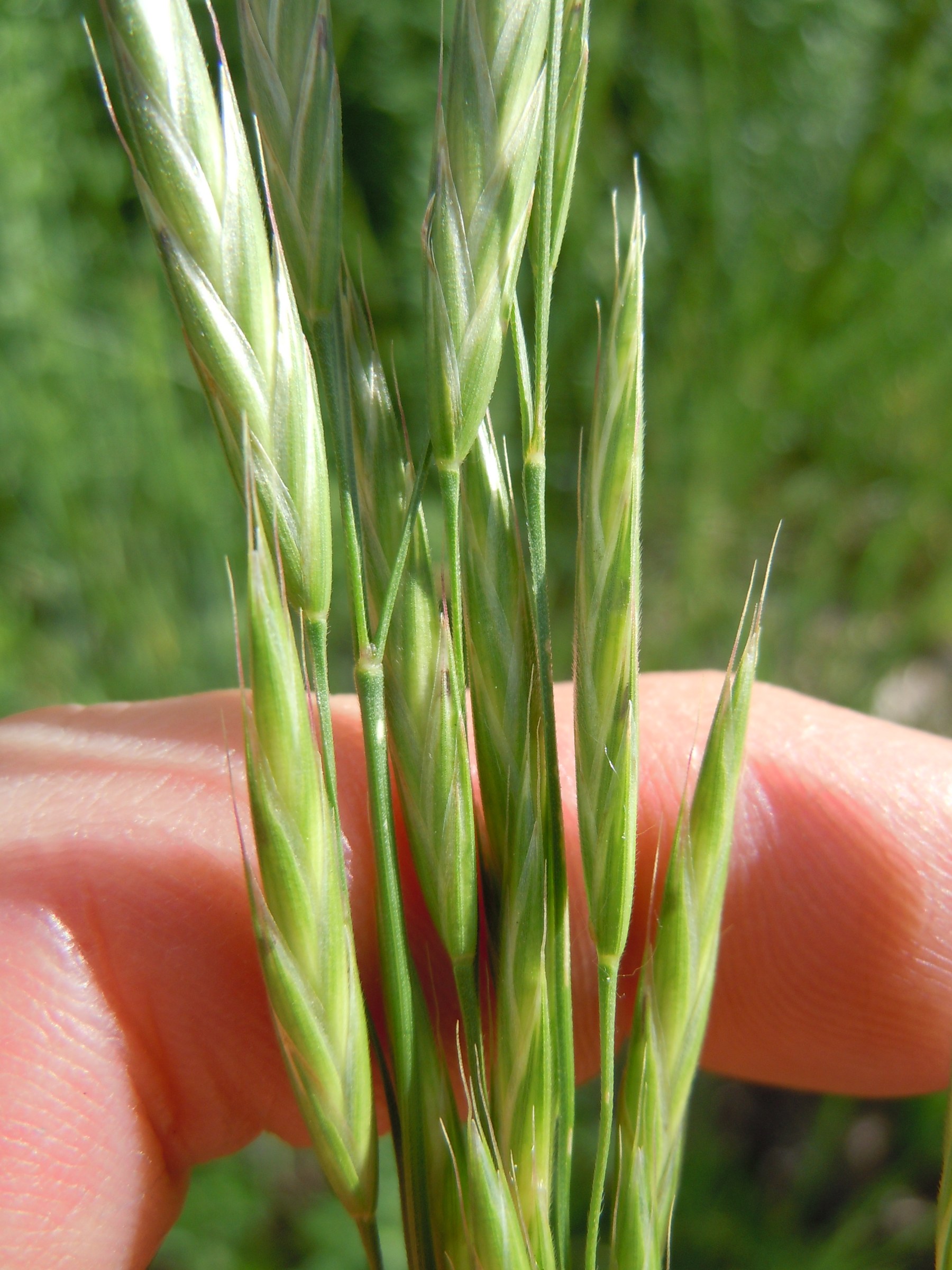
This is a true bunchgrass, forming upright to arching clumps 1.5 to 5 feet tall with broad, flat leaf blades and open, nodding seed heads that catch the afternoon light beautifully when backlit. The strongly keeled spikelets — flattened and ridged like the bottom of a boat — give the species its name, carinatus, Latin for “keeled.” It flowers in late spring and early summer, setting seed quickly and often dying back by late summer in drier sites, only to reappear from seed the following year.
California brome’s combination of rapid establishment, broad soil tolerance, and genuine wildlife value — as forage, nesting cover, and seed — has made it one of the most-planted native grasses in western restoration work. For a home gardener, it brings the same qualities to a naturalistic meadow or slope planting: quick cover, graceful texture, and a grass that belongs exactly where it’s planted.
Identification
California brome is a tufted, cool-season perennial bunchgrass, typically short-lived, growing from 1.5 to 5 feet tall depending on site conditions. Clumps are loose and often somewhat sprawling, with culms (stems) that may stand upright or lean outward, especially once the seed heads mature and weigh the tips down.
Leaves
Leaf blades are flat, relatively broad for a native bunchgrass, up to 16 inches long, and typically hairy on both surfaces along with the sheaths — a useful identification clue shared with most other brome species. The ligule is a short, membranous collar at the junction of blade and sheath.
Flowers & Seed Heads
The inflorescence is an open, branched panicle, often nodding or drooping to one side as it matures, sometimes held stiffly ascending in younger plants. Spikelets are large, flattened, and distinctly keeled — the glumes and lemmas come to a sharp ridge rather than rounding over, which separates this species from many other native bromes at a glance. Each spikelet carries numerous florets with awns up to half an inch long. Flowering runs from May through July depending on elevation and latitude.
Fruit & Seeds
Seed set is prolific in good years, and the grass reseeds readily, which is exactly why it’s favored in erosion-control mixes — it establishes a protective cover crop quickly while slower-growing perennials get established underneath.
Quick Facts
| Scientific Name | Bromus carinatus |
| Family | Poaceae (Grass) |
| Plant Type | Perennial (short-lived) Bunchgrass |
| Mature Height | 1.5–5 ft (in flower) |
| Mature Spread | 1–2 ft clump |
| Growth Rate | Fast |
| Sun Exposure | Full Sun to Part Shade |
| Water Needs | Low to Moderate |
| Soil Type | Adaptable; sandy to loamy, well-drained |
| Soil pH | 6.0–8.0 |
| Bloom Time | May – July |
| Flower Color | Green, drying to tan/straw |
| Fall Color | Tan, straw-gold |
| Fruit | Awned grain (caryopsis) in keeled spikelets |
| Deer Resistant | No (readily grazed as forage) |
| USDA Hardiness Zones | 3–9 |
Native Range
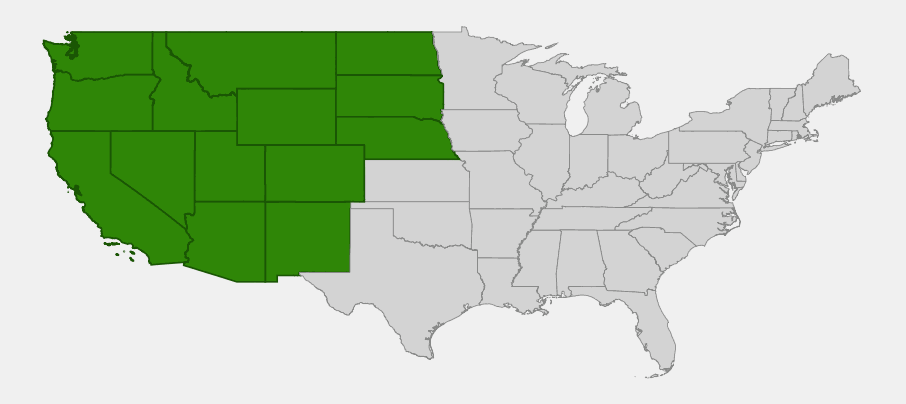
California brome is native across most of western North America, from British Columbia south through the Pacific Coast states, the Great Basin, and the Rocky Mountain states, extending east onto the northern Great Plains. It grows from near sea level along the coast up into subalpine meadows well above 9,000 feet, making it one of the most elevationally versatile native grasses in the West.
It occupies a wide range of habitats — open woodlands, meadows, chaparral margins, roadsides, streambanks, and disturbed or recently burned ground. It is especially quick to colonize after fire or other disturbance, which is part of why it is so heavily used in post-fire erosion-control seeding throughout its range.
Because it has also been seeded outside its native range as a quick-cover forage and erosion-control grass, California brome sometimes turns up as an introduced or naturalized plant well beyond the area covered here; this page describes only its native range in the western mountains, Pacific states, and northern plains.
📋 Regional plant lists featuring California Brome Grass: Arizona & New Mexico · Utah & Western Colorado · Idaho, Eastern Oregon & Eastern Washington · Western Oregon & Western Washington · Montana & Wyoming · North Dakota, South Dakota & Western Minnesota · Nebraska, Kansas & Eastern Colorado
Growing & Care Guide
California brome is one of the easiest native grasses to establish from seed, which is exactly why restoration crews reach for it so often — and why it works just as well in a home meadow planting.
Light
Grows best in full sun to light part shade. In hot, dry, low-elevation sites, a little afternoon shade helps it persist longer into summer before going dormant.
Soil & Water
Adaptable to a wide range of soils, from sandy to loamy, as long as drainage is reasonable. It needs regular moisture through spring while actively growing and flowering, but tolerates summer drought well once established, typically going dormant and browning off in the driest months. Avoid constantly soggy soils.
Planting Tips
Direct-seed in fall for best germination the following spring, taking advantage of winter moisture and cold stratification. Broadcast seed lightly and rake in, or drill at a shallow depth. Because individual plants are often short-lived, allow some seed to mature and drop each year to maintain a self-sustaining stand.
Pruning & Maintenance
Little maintenance is needed. Mowing or cutting back dead growth in late fall or early spring tidies the planting and can encourage fresh growth, but is optional in a naturalistic planting where the dry seed heads add winter interest and feed birds.
Landscape Uses
California brome earns its keep in several practical roles:
- Erosion control on slopes, roadcuts, and burned areas
- Native meadow and prairie plantings, especially as a quick-establishing companion grass
- Restoration seed mixes for disturbed or post-fire sites
- Wildlife forage plantings
- Naturalized slopes and banks where low maintenance is a priority
Wildlife & Ecological Value
California brome punches well above its weight ecologically for a plant that most people walk right past.
For Birds
Seed-eating songbirds and game birds forage on the abundant grain, and the dense bunch form provides nesting cover and concealment for ground-nesting species in meadows and open woodlands.
For Mammals
California brome is palatable, nutritious forage for deer, elk, and livestock, and is widely included in range and wildlife forage seed mixes for exactly that reason. Its rapid growth after disturbance also makes it an early food source in recovering burned areas.
For Pollinators
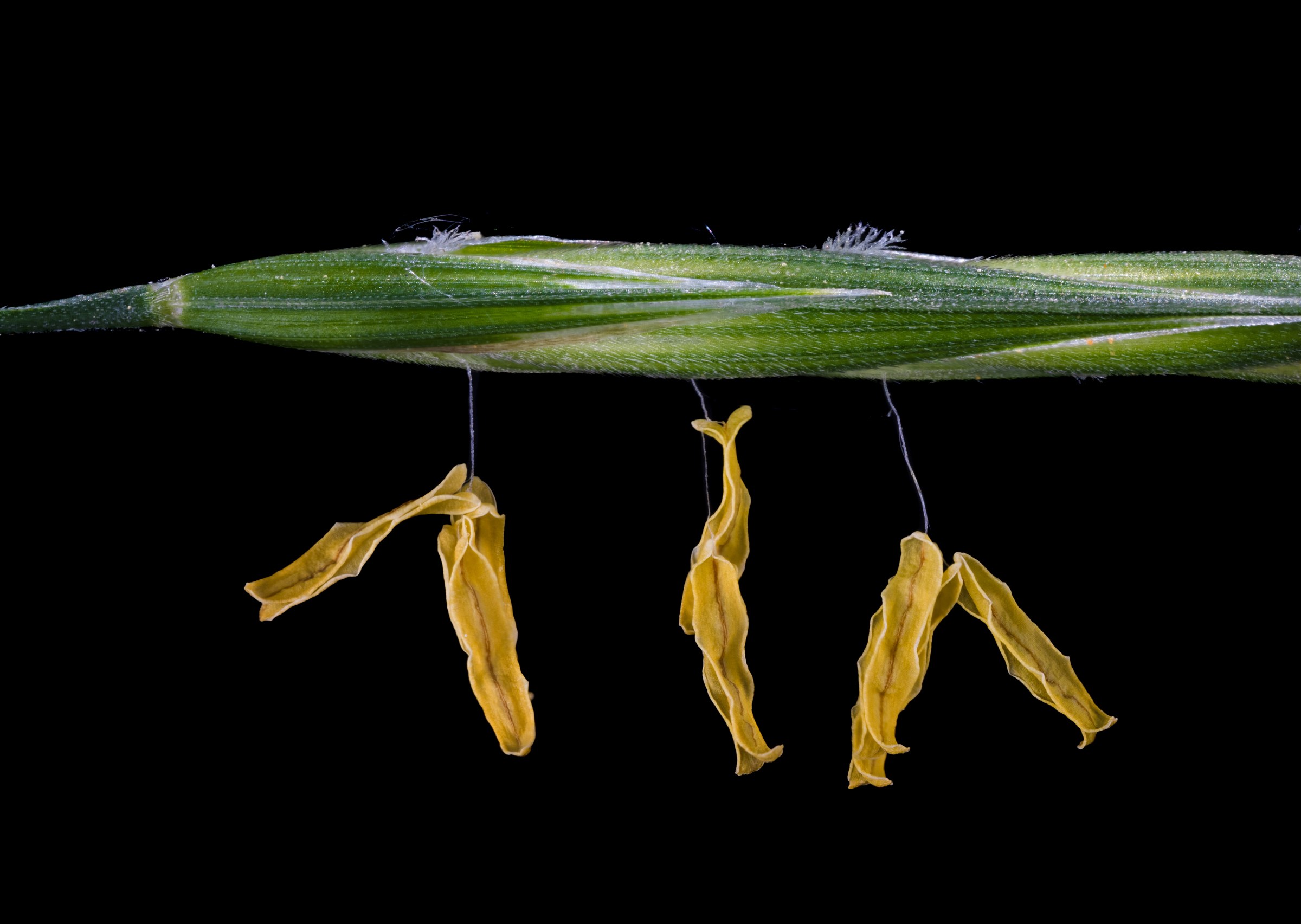
As a wind-pollinated grass it doesn’t offer nectar, but its early-season growth and seed production support the broader insect food web that in turn feeds birds and other wildlife through the grassland and woodland-edge habitats where it grows.
Ecosystem Role
Because it germinates and establishes so quickly after fire or soil disturbance, California brome plays an outsized role in stabilizing soil and suppressing erosion in the critical first year or two after a burn, buying time for slower-growing native perennials to reestablish around it.
Cultural & Historical Uses
California brome has long been recognized by range managers and restoration ecologists as one of the most useful native grasses in the West, prized for exactly the traits that make it valuable in a garden: fast germination, broad adaptability, and genuine wildlife benefit. It has been a standard component of post-fire and post-logging revegetation seed mixes across the western United States for decades.
There is no significant documented record of use by Indigenous peoples as a food or craft plant comparable to seed grasses like Indian ricegrass, though as a common and widespread native bunchgrass it would have been part of the broader grassland and woodland ecosystems those communities managed with fire and grazing.
Its modern legacy is largely agronomic: plant breeders developed several cultivated varieties of California brome for rangeland seeding programs through the twentieth century, cementing its reputation as a workhorse species for western land restoration.
Frequently Asked Questions
Is California brome the same as the invasive annual bromes?
No. Invasive species like cheatgrass (Bromus tectorum) and red brome (Bromus rubens) are introduced annuals that aggressively dominate disturbed ground and fuel wildfires. California brome (Bromus carinatus) is a native, short-lived perennial that behaves very differently in the landscape and is not considered invasive anywhere in its native range.
How long does California brome live?
Individual plants are often short-lived, behaving as biennials or short-lived perennials, especially in drier sites. Stands persist over time through reseeding rather than individual plants living for many years.
Will California brome spread aggressively in my garden?
It reseeds readily, which is useful in a meadow or restoration planting but means it can show up where you didn’t plant it. In a small, tidy garden bed, some editing of volunteer seedlings may be needed to keep it in bounds.
Does California brome need irrigation once established?
Generally no, beyond normal seasonal rainfall within its native range. It is adapted to go summer-dormant and brown off in dry months, greening up again with fall and winter moisture.
What’s the difference between California brome and mountain brome?
“Mountain brome” is sometimes used as another common name for the same species or for the closely related Bromus marginatus, which many botanists now treat as part of Bromus carinatus. The two are very similar in appearance and ecology.

Looking for a nursery that carries California Brome Grass?
Browse our native plant nursery directory: Arizona · California · Colorado · Idaho · Montana · Nebraska, Nevada, New Mexico & North Dakota · Oregon · South Dakota & Utah · Washington · Wyoming