
Miner’s Lettuce (Claytonia perfoliata)
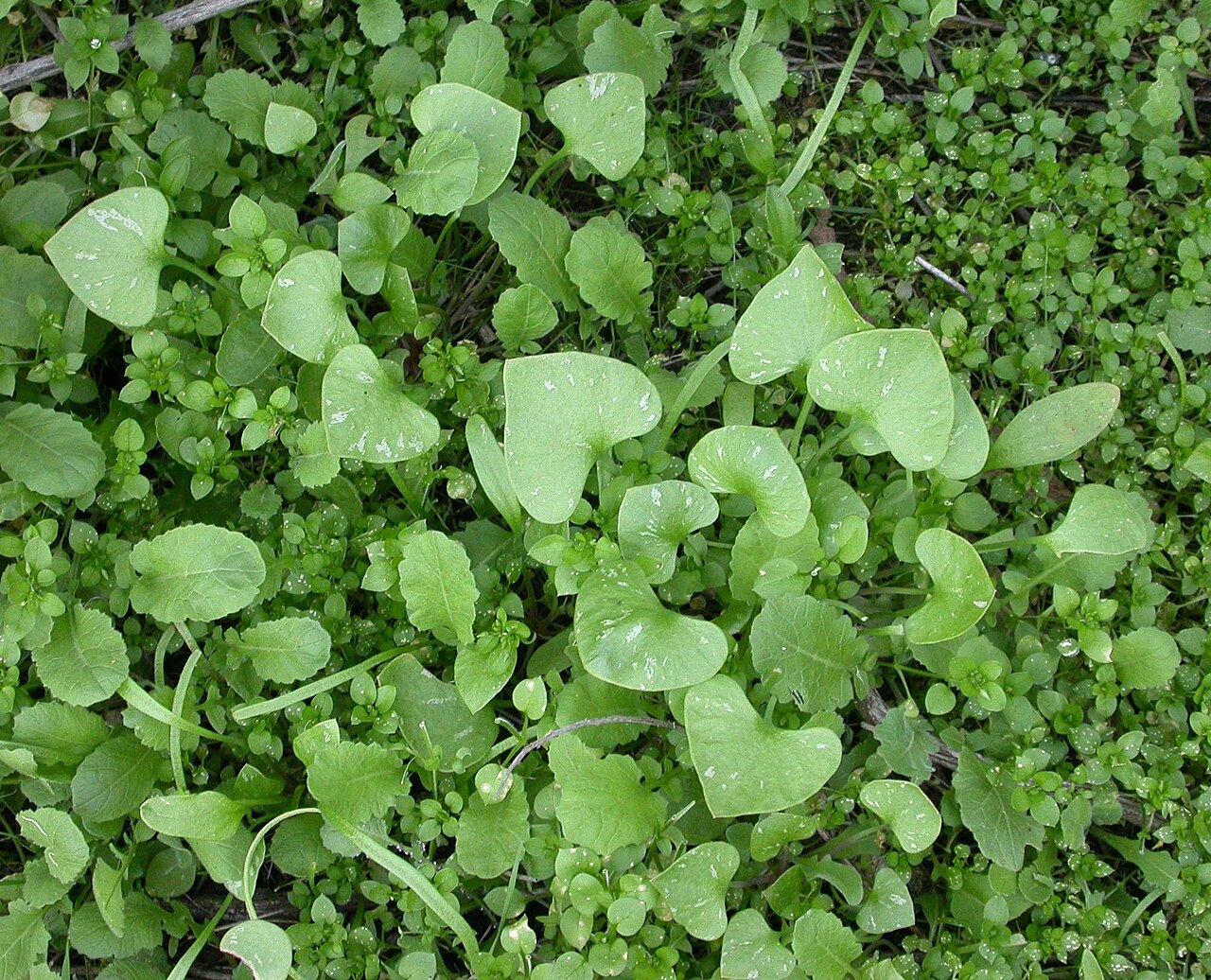
Claytonia perfoliata, commonly known as Miner’s Lettuce or Winter Purslane, is one of the most instantly recognizable native wildflowers of the western United States, thanks to a single odd-looking trait: its round, cup-shaped upper leaf appears to have the flower stalk growing straight up through its center. This small, succulent annual (occasionally short-lived perennial) in the family Montiaceae carpets shaded slopes, streambanks, and open woodland floors across much of the West every winter and spring, often in dense enough stands to blanket the ground in soft green.
The common name comes directly from the California Gold Rush, when miners reportedly ate the tender, mild-flavored leaves to stave off scurvy during long winters in the Sierra foothills — the plant’s high vitamin C content made it a genuinely useful wild food at a time when fresh greens were scarce. That reputation has stuck, and miner’s lettuce remains one of the very few native California plants still regularly foraged and eaten today, prized by cooks for its crisp texture and delicate, slightly tangy flavor reminiscent of spinach or watercress.
In the garden and in the wild, miner’s lettuce is a welcome, low-maintenance presence: it germinates with fall and winter rains, fills in shaded, damp ground where little else will grow, flowers through late winter and spring, and dies back on its own as the dry season sets in, leaving behind a bank of seed for the following year.
Identification
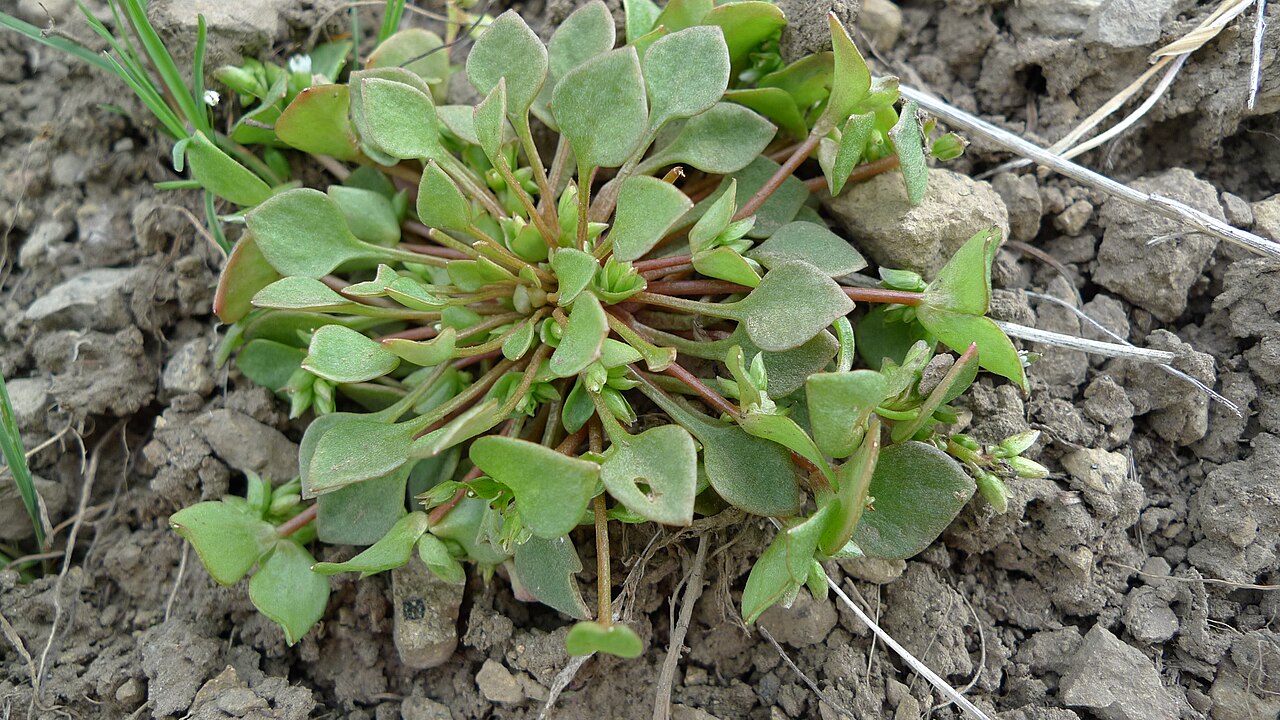
Miner’s lettuce is a low, tender, succulent annual herb, usually 4 to 12 inches (10–30 cm) tall, though it can sprawl wider in ideal shaded, moist conditions. The whole plant is hairless, bright green, and noticeably fleshy to the touch.
Leaves
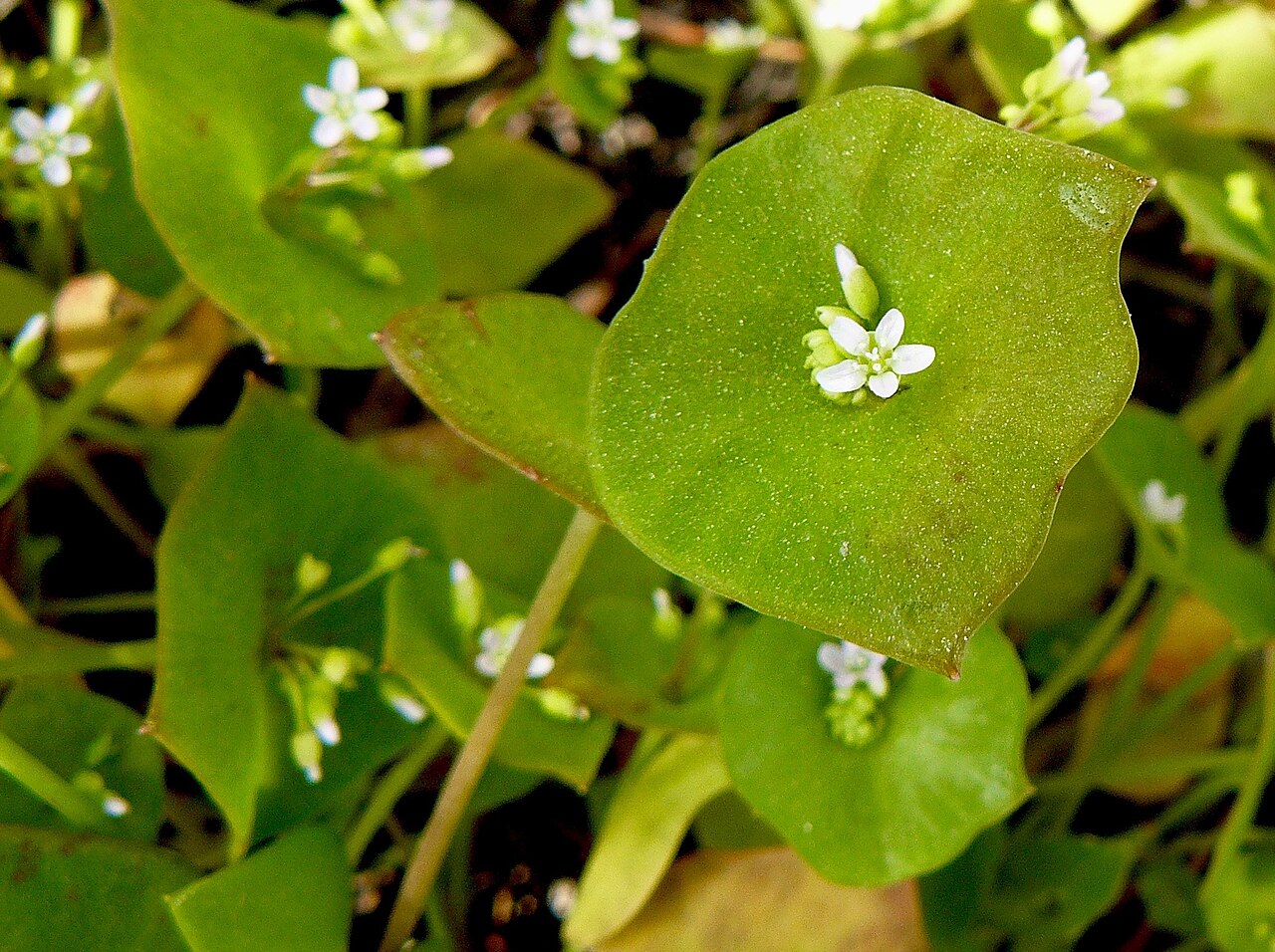
Young plants first produce a rosette of long-stalked, diamond- to spoon-shaped basal leaves. As the plant matures, it sends up flowering stems bearing a single, very distinctive round leaf partway up each stalk — this upper leaf is perfoliate, meaning the stem appears to pass directly through its center, so the leaf forms a shallow green saucer beneath the flower cluster. This perfoliate leaf is the single easiest field mark for identifying the species.
Flowers
Small white to pale pink, five-petaled flowers, each about ¼ inch (6 mm) across, are held in a short cluster (raceme) that appears to rise directly from the center of the round perfoliate leaf. Flowers bloom over an extended period from late winter into late spring, depending on elevation and moisture, with lower-elevation coastal populations flowering earliest.
Fruit & Seeds
Each flower produces a small, three-valved seed capsule that splits open to release a few shiny black seeds. Seed set is heavy and reliable, and the species readily self-sows, often returning to the same shaded patches of ground year after year.
Quick Facts
| Scientific Name | Claytonia perfoliata (syn. Montia perfoliata) |
| Family | Montiaceae (Miner’s Lettuce) |
| Plant Type | Annual (occasionally short-lived perennial) Herb |
| Mature Height | 4–12 in (10–30 cm) |
| Mature Spread | 6–12 in (15–30 cm), often forming dense patches |
| Growth Rate | Fast (annual life cycle) |
| Sun Exposure | Part Shade to Full Shade |
| Water Needs | Moderate; needs consistent moisture while growing |
| Soil Type | Moist, humusy; tolerates clay or rocky soil |
| Soil pH | 5.5–7.0 (slightly acidic to neutral) |
| Bloom Time | January – May (varies by elevation) |
| Flower Color | White to pale pink |
| Fall Color | None (annual; dies back by early summer) |
| Fruit | Tiny three-valved capsule with shiny black seeds |
| Deer Resistant | No (readily browsed) |
| USDA Hardiness Zones | 6–10 (grown as a cool-season annual) |
Native Range
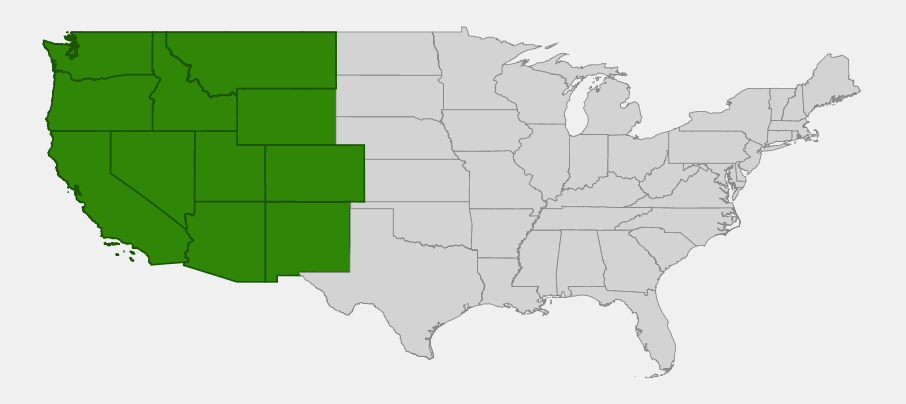
Miner’s lettuce is native to much of the western United States, with its core range running from Washington and Oregon south through California, and east through Idaho, Nevada, Utah, Arizona, Montana, Wyoming, Colorado, and New Mexico. It also occurs natively in British Columbia and, under the Pacific coast subspecies, well up into southeastern Alaska. It is one of the most widely distributed native annual wildflowers in the West, tracking damp, shaded ground wherever it occurs.
Within this broad range, miner’s lettuce favors shaded, moist habitats: woodland understories, north-facing slopes, streambanks, the base of rock outcrops, and disturbed shady ground such as trail edges and the undersides of shrubs. It grows from near sea level up to roughly 6,000 feet (1,800 m) in the mountains, and is often one of the first native wildflowers to bloom each year at lower elevations.
Miner’s lettuce has also become naturalized well outside its native range — including parts of the eastern United States and Europe — following its introduction as a salad crop and ornamental; those naturalized populations are not part of its native distribution and should not be confused with the wild western plant described here.
📋 Regional plant lists featuring Miner’s Lettuce: Western Oregon & Western Washington · Idaho, Eastern Oregon & Eastern Washington · Utah & Western Colorado · Montana & Wyoming · Arizona & New Mexico
Growing & Care Guide
Miner’s lettuce is one of the easiest native plants to grow in a shaded garden corner, and it is unusual among natives in actually preferring the damp, shady spots that frustrate so many other plantings.
Light
Give miner’s lettuce part to full shade. It grows best under trees, on the north side of structures, or beneath shrubs where the soil stays cool and moist longer into the season. In cooler, foggy coastal climates it can also tolerate more open sun.
Soil & Water
This species wants consistently moist, humus-rich soil and will wilt quickly if it dries out while actively growing. It is not picky about soil texture — clay, loam, or rocky soil are all fine — as long as moisture is reliable through the winter and spring growing season. Established patches often need no supplemental water beyond normal winter rainfall in climates with a wet season.
Planting Tips
Direct-sow seed in fall onto bare, shaded, moist soil; miner’s lettuce germinates readily with cool, wet conditions and needs no pretreatment. It also transplants acceptably while young, if you’d rather start with nursery starts or divisions from an existing patch. Once established in a favorable shaded spot, it will self-sow and return reliably every year without further planting.
Pruning & Maintenance
No pruning is needed. Plants die back naturally on their own as the soil dries in late spring or early summer; simply let the dried foliage lie to drop its remaining seed, or clear it away for tidiness once it has browned.
Propagation
Propagate from seed collected once the small capsules have dried and begun to split. Scatter seed onto prepared shaded soil in fall. Established patches also spread readily on their own through self-sown seed.
Landscape Uses
Miner’s lettuce fills several practical niches in the native garden:
- Shade groundcover under trees and large shrubs where turf struggles
- Woodland garden understory planting
- Edible landscaping — a genuine, mild salad green from the garden
- Seasonal fill for damp bare ground in the off-season
- Naturalized banks along shaded streambeds or drainage areas
Wildlife & Ecological Value
Though small and short-lived, miner’s lettuce plays a real role in shaded woodland plant communities across the West, where it is often one of the dominant winter-spring groundcovers.
For Pollinators
The small white flowers attract native bees, syrphid flies, and other small pollinating insects during the late-winter and early-spring period when few other flowers are blooming in shaded woodland understories, making the species a useful early-season nectar source in the shade layer.
For Birds & Mammals
Small mammals and some ground-foraging birds eat the seeds and tender foliage, and deer readily browse the leaves, which can limit stands in areas with heavy deer pressure. The dense low growth also offers brief ground cover for small wildlife during the wet season.
Ecosystem Role
As a fast-growing winter annual, miner’s lettuce helps occupy and stabilize bare shaded soil during the wet season, reducing erosion on slopes and streambanks before summer-dormant perennials take over. Its heavy, reliable seed production also helps sustain the broader soil seed bank typical of western woodland understories.
Cultural & Historical Uses
Miner’s lettuce has a long history of use by Indigenous peoples throughout its range, who ate the leaves and stems fresh as a spring green and sometimes used the plant medicinally in traditional practice; those traditional medicinal uses are part of its documented history and are not a basis for modern use.
Its common name comes from the California Gold Rush era, when prospectors and miners are said to have eaten the plentiful, vitamin C-rich leaves to prevent scurvy during winters in the Sierra Nevada foothills, when fresh produce was difficult to obtain. The plant’s abundance in shaded gold country ravines made it a convenient and genuinely nutritious wild food.
That food use continues today: miner’s lettuce is a well-regarded wild edible and is sometimes cultivated or sold at farmers’ markets as a mild salad green, eaten raw or lightly cooked. Miner’s lettuce is a genuinely edible native plant and a pleasant addition to a spring salad — but as with any wild food, forage only where it is legal to do so, only in locations you are confident are free of herbicide, pesticide, or other contamination, and always confirm your identification carefully before eating any wild plant.
Frequently Asked Questions
Is Miner’s Lettuce actually edible?
Yes. It is one of the few California and western native plants still commonly and safely eaten, with a mild, slightly tangy flavor similar to spinach. Eat only plants you have correctly identified, gathered where foraging is legal, and collected away from roadsides, treated land, or other contaminated sites.
What is the round leaf that looks like it has a hole for the flower stem?
That is the species’ signature perfoliate leaf: a single round upper leaf that the flowering stalk appears to pierce straight through, so the small white flower cluster sits in the center of a green disc. It is the easiest way to confirm the identification.
Does Miner’s Lettuce need shade to grow?
It strongly prefers shade to part shade and consistently moist soil. In full sun, especially in warm inland gardens, it tends to dry out and finish its life cycle more quickly, with a shorter bloom period.
Will Miner’s Lettuce take over my garden?
It can self-sow enthusiastically in favorable shaded, moist spots, forming dense patches, but it is a shallow-rooted annual that is easy to pull or thin by hand if it spreads further than you’d like, and it dies back completely on its own each summer.
Is Miner’s Lettuce the same as Spring Beauty?
No, though both belong to the genus Claytonia. “Spring beauty” more often refers to other Claytonia species, such as the eastern Claytonia virginica or the western Claytonia lanceolata; miner’s lettuce is best identified by its distinctive round perfoliate leaf, which those other species lack.

Looking for a nursery that carries Miner’s Lettuce?
Browse our native plant nursery directory: California · Oregon · Washington · Idaho · Nevada & New Mexico · Utah · Arizona · Montana · Wyoming · Colorado