
Scarlet Beeblossom (Oenothera suffrutescens)
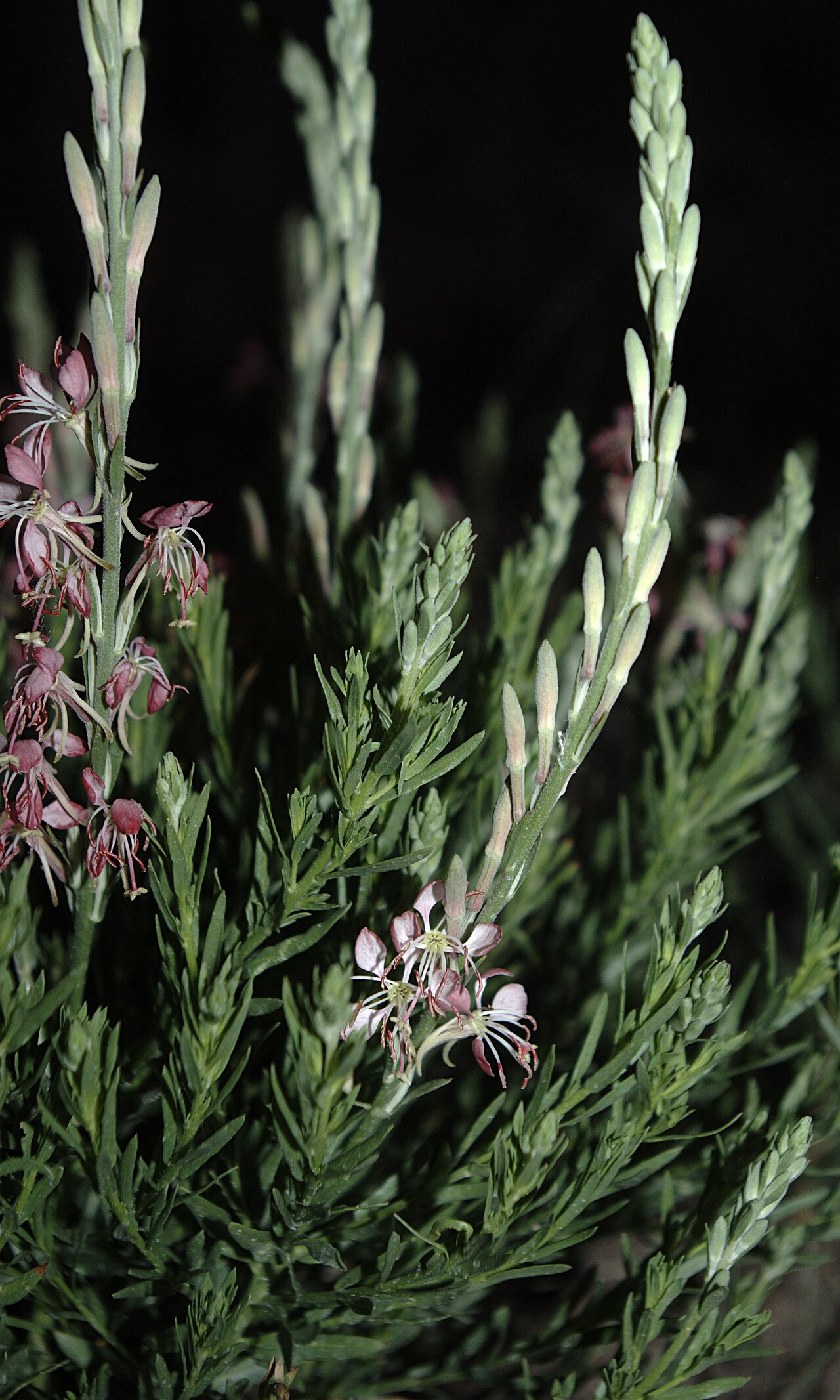
Oenothera suffrutescens, best known as Scarlet Beeblossom and also widely sold as Scarlet Gaura, is a tough, long-blooming perennial wildflower of the Great Plains and American Southwest. For most of the 20th century it was classified in its own genus as Gaura coccinea, and that older name — along with “scarlet gaura” and “wild honeysuckle” — is still how most nurseries, seed catalogs, and older field guides list it. Genetic studies eventually folded Gaura into the evening primrose genus Oenothera, but the plant itself hasn’t changed: a wiry, clump-forming subshrub that produces airy spikes of small flowers from late spring well into fall.
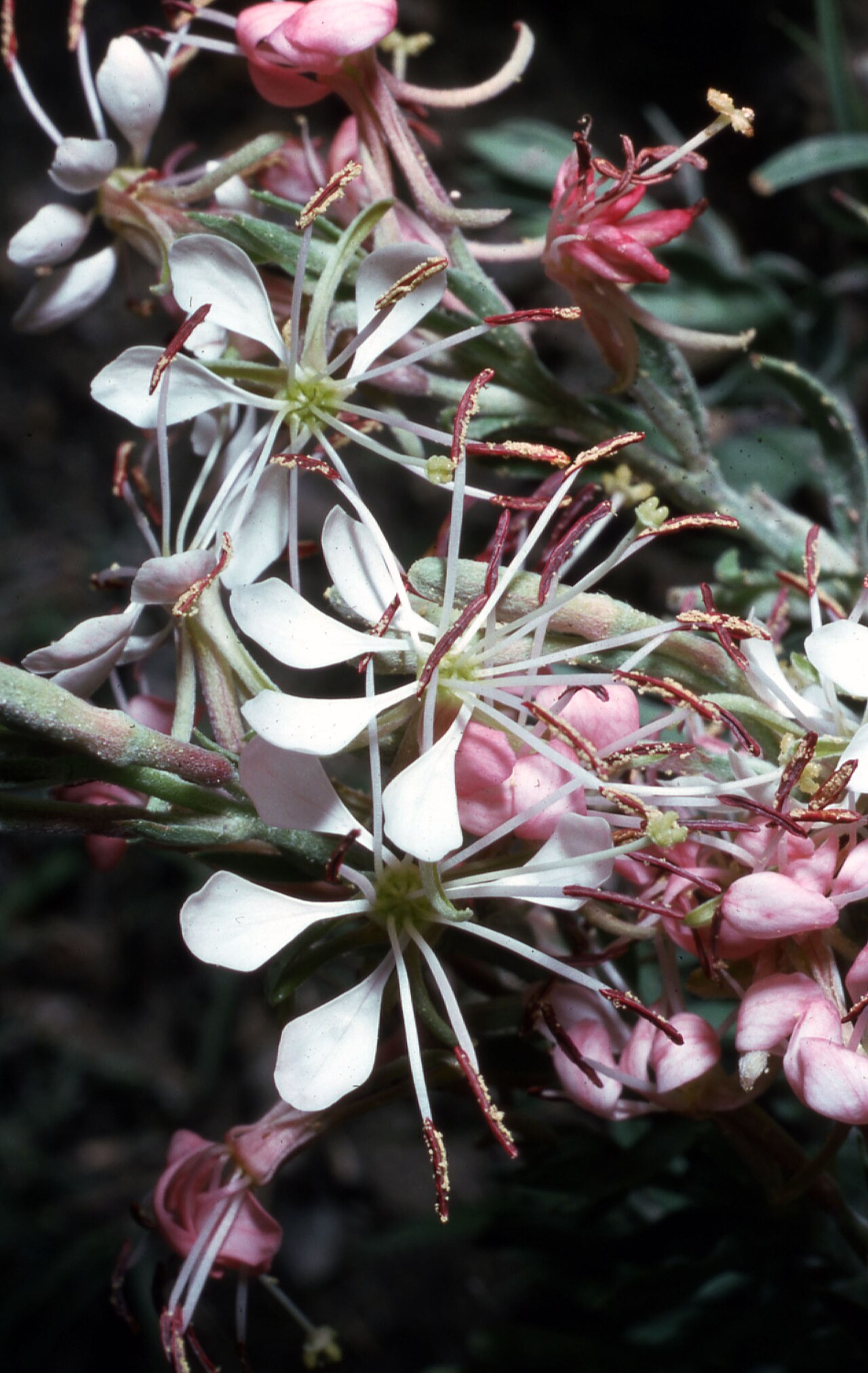
What makes Scarlet Beeblossom distinctive in the garden is its flowers’ color change: buds and newly opened petals are white to pale pink, and each flower deepens to rose, scarlet, or deep red as it ages over just a day or two. A single flower spike can show every stage of that transition at once, giving the plant a shifting, two-toned look that is part of its appeal to gardeners and part of what makes it so attractive to hawkmoths and other evening pollinators. It thrives in difficult, dry, sun-baked ground where many other perennials struggle, which has made it a favorite for xeriscaping and prairie restoration across its native range.
Identification
Scarlet Beeblossom is a perennial forb or subshrub growing from a woody base and deep, tenacious roots, with stems ranging from a sprawling 4 inches to over 3 feet tall depending on site conditions. Plants often form loose, rounded clumps of several stems, usually covered in fine, short hairs that give the foliage a slightly gray-green, dusty cast.
Leaves
Leaves are narrow and linear to lance-shaped, 1 to 3 inches long, with smooth to slightly wavy or shallowly toothed margins. They are arranged alternately along the stem and are small enough that the plant reads as fine-textured and wispy rather than leafy, especially once the flowering spikes extend above the foliage.
Flowers
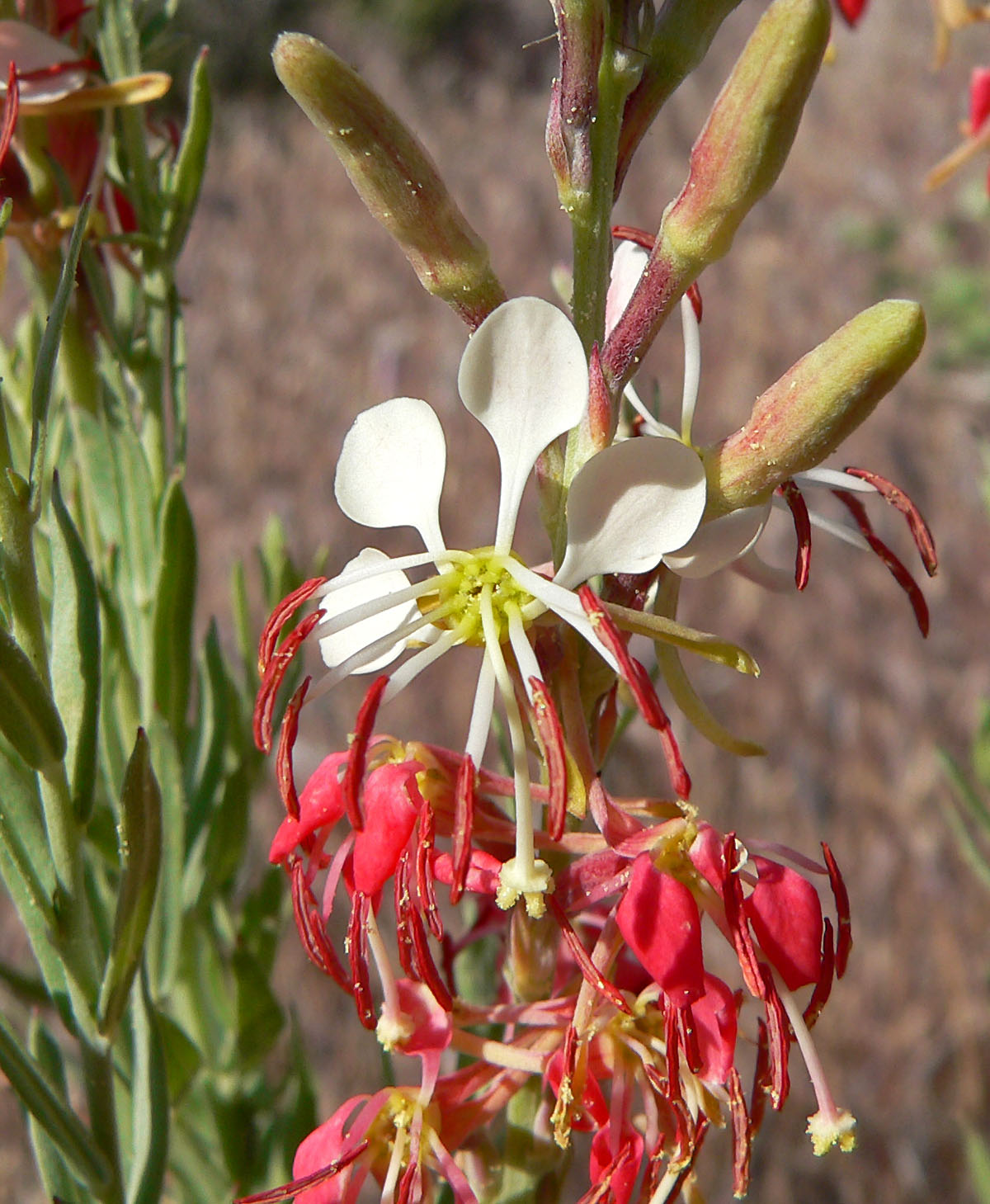
Flowers are borne in loose, upright spikes at the stem tips, each with four spoon-shaped petals, eight long stamens tipped with showy pink or red anthers, and a long central style. Buds and fresh flowers are white to pale pink; as each flower ages over a day or so it shifts through pink to a deep rose-red, so a single spike typically shows white, pink, and red flowers together. The flowers are lightly fragrant and open mostly in late afternoon and evening, closing again by the following midday — a pattern typical of moth-pollinated evening primroses.
Fruit
After flowering, each bloom develops into a small, hard, four-angled woody capsule about ⅓ to ½ inch long, containing several seeds. The capsules persist on the spike well after the petals drop, giving the plant textural interest into late fall.
Quick Facts
| Scientific Name | Oenothera suffrutescens (syn. Gaura coccinea) |
| Family | Onagraceae (Evening Primrose) |
| Plant Type | Perennial Forb / Subshrub |
| Mature Height | 1–3 ft (sprawling forms stay lower) |
| Growth Rate | Moderate; spreads slowly by rhizomes |
| Sun Exposure | Full Sun |
| Water Needs | Low once established |
| Soil Type | Dry, well-drained; sandy, gravelly, or clay |
| Drought Tolerance | Excellent |
| Bloom Time | Late spring – fall |
| Flower Color | White to pink, aging to scarlet-red |
| Deer Resistant | Yes, generally |
| USDA Hardiness Zones | 4–9 |
Native Range
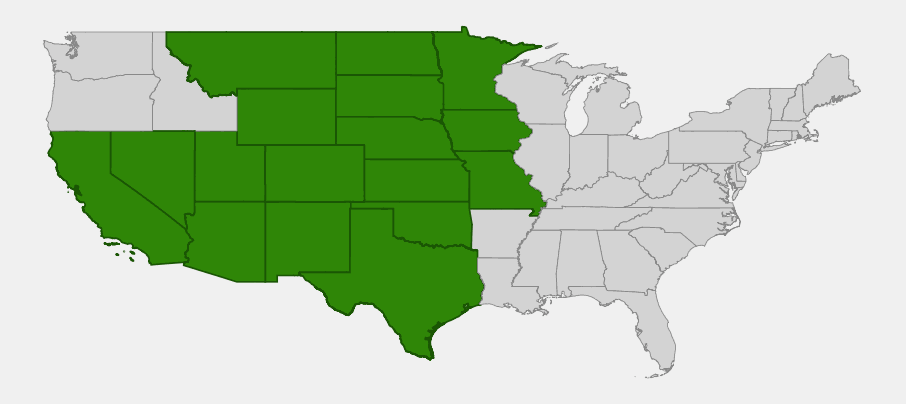
Scarlet Beeblossom is native across the Great Plains and much of the interior American West and Southwest, from Montana, North Dakota, and South Dakota south through Wyoming, Nebraska, Kansas, Colorado, Utah, and the eastern/desert portion of California, into New Mexico, Arizona, and Texas, with its range also reaching into western Minnesota, Iowa, Missouri, Oklahoma, and Nevada. Note that it is native only in these western and central states: populations found in Illinois, Indiana, Michigan, Wisconsin, New York, and coastal/southern California (Los Angeles, San Diego, Santa Barbara, and Ventura counties) are naturalized garden escapes outside the plant’s natural range, not native occurrences.
Within its native range it grows in dry prairie, shortgrass and mixed-grass grassland, sandy or gravelly plains, roadsides, and disturbed open ground, from the lowlands up into foothill elevations. It is a genuine survivor of heavy grazing and drought, often persisting in overgrazed pastures and eroded ground where more palatable prairie species have thinned out.
📋 Regional plant lists featuring Scarlet Beeblossom: Arizona & New Mexico · North Dakota, South Dakota & Western Minnesota · Illinois, Iowa & Missouri · Montana & Wyoming · Nebraska, Kansas & Eastern Colorado · Utah & Western Colorado · Arkansas, Louisiana, Eastern Oklahoma & Eastern Texas
Growing & Care Guide
Scarlet Beeblossom is about as low-maintenance as native wildflowers get, provided it has full sun and soil on the dry side. It is an excellent choice for xeriscapes, gravel gardens, and prairie restorations, though its spreading habit means it needs the right spot — not a tidy, contained border.
Light
Give it full sun. Plants grown in shade become leggy, flop over, and bloom poorly. This is a plant adapted to open plains and does best where it gets unobstructed sun for most of the day.
Soil & Water
Scarlet Beeblossom wants dry, well-drained soil and is remarkably tolerant of poor, sandy, gravelly, or clay ground, including alkaline soils. It needs regular water only while establishing in its first season; after that, supplemental irrigation usually does more harm than good; soggy or overwatered conditions promote crown rot and encourage the plant to flop. This is a plant built for drought, not for rich garden beds.
Planting Tips
Start from container plants or direct-sow seed in fall or early spring. Give plants 18 to 24 inches of space, since established clumps spread by deep, tough rhizomes and can be slow to remove once settled in. Because of that spreading habit, some gardeners dislike it in small, formal beds — it is best suited to naturalistic plantings, meadows, and larger open areas where its tendency to wander is an asset rather than a nuisance.
Pruning & Maintenance
Cutting plants back by half in mid-summer can encourage denser regrowth and a fresh flush of bloom, though it is not required. Leave the woody capsules on through fall and winter for seed-eating birds and winter structure, then cut the old stems back close to the ground in late winter before new growth begins.
Landscape Uses
Scarlet Beeblossom earns its keep in several settings:
- Xeriscaping and dry, low-water gardens
- Prairie and shortgrass restoration plantings
- Pollinator gardens, especially for moths and hummingbirds
- Gravel gardens and rock garden borders
- Erosion control on dry slopes and disturbed ground
- Roadside and highway plantings in its native region
Wildlife & Ecological Value
With its long bloom season and evening-opening flowers, Scarlet Beeblossom fills a pollinator niche that many showier daytime wildflowers miss.
For Pollinators
Hawkmoths (sphinx moths) are the primary pollinators, visiting at dusk and after dark for nectar and inadvertently pollinating the flowers as they feed; the flowers’ pale color and light fragrance are classic adaptations for being found in low light. Bees and butterflies also visit during the day, especially earlier-opened flowers that remain open into the morning.
For Birds
Hummingbirds, particularly during migration, visit the flowers for nectar. The small, hard seed capsules that persist through fall and winter provide seed for sparrows and other seed-eating birds when little else is available on the open plains.
Ecosystem Role
As a deep-rooted perennial adapted to disturbed and heavily grazed ground, Scarlet Beeblossom helps stabilize soil on dry slopes and overgrazed rangeland, and its persistence in degraded prairie makes it a useful indicator and early colonizer species in restoration work across the shortgrass and mixed-grass prairie.
Cultural & Historical Uses
Several Plains tribes used parts of Gaura coccinea medicinally in traditional practice, including preparations applied to sores and used in other remedies; these are historical ethnobotanical uses, not instructions, and the plant is not considered a food or medicinal plant in modern use. The plant’s old genus name, Gaura, comes from the Greek for “superb” or “proud,” a nod to its showy, long-lasting bloom, while “beeblossom” reflects its value to bees and other pollinators drawn to the flowers.
Frequently Asked Questions
Is Scarlet Gaura the same plant as Scarlet Beeblossom?
Yes. “Scarlet Gaura” reflects the plant’s former scientific name, Gaura coccinea; it was reclassified into the genus Oenothera as Oenothera suffrutescens, and “Scarlet Beeblossom” is now USDA’s preferred common name. Nurseries and seed catalogs often still use “gaura.”
Why do the flowers change color?
Each flower opens white to pale pink and gradually darkens to rose or scarlet as it ages over a day or two. This is a normal part of the flower’s life cycle, not a sign of stress, and it means a single spike shows several colors at once.
Is Scarlet Beeblossom invasive?
Within its native Great Plains and interior Southwest range, no — it is a native prairie plant. It has naturalized outside that range in parts of the Midwest, East, and coastal California, where it should be considered a garden escape rather than planted intentionally.
How much water does Scarlet Beeblossom need?
Very little once established. It is adapted to dry plains and desert-margin conditions and tolerates drought well; overwatering is more likely to cause problems than underwatering.
Does Scarlet Beeblossom spread aggressively?
It spreads slowly by rhizomes and can form larger clumps over time, which some gardeners find too vigorous for small formal beds. It is best suited to naturalistic plantings, meadows, or larger open areas where spreading is welcome.

Looking for a nursery that carries Scarlet Beeblossom?
Browse our native plant nursery directory: Arizona · California · Colorado · Iowa & Kansas · Minnesota, Missouri & Montana · North Dakota, Nebraska, New Mexico, Nevada & Oklahoma · South Dakota, Texas & Utah · Wyoming