
Mountain Ninebark (Physocarpus monogynus)
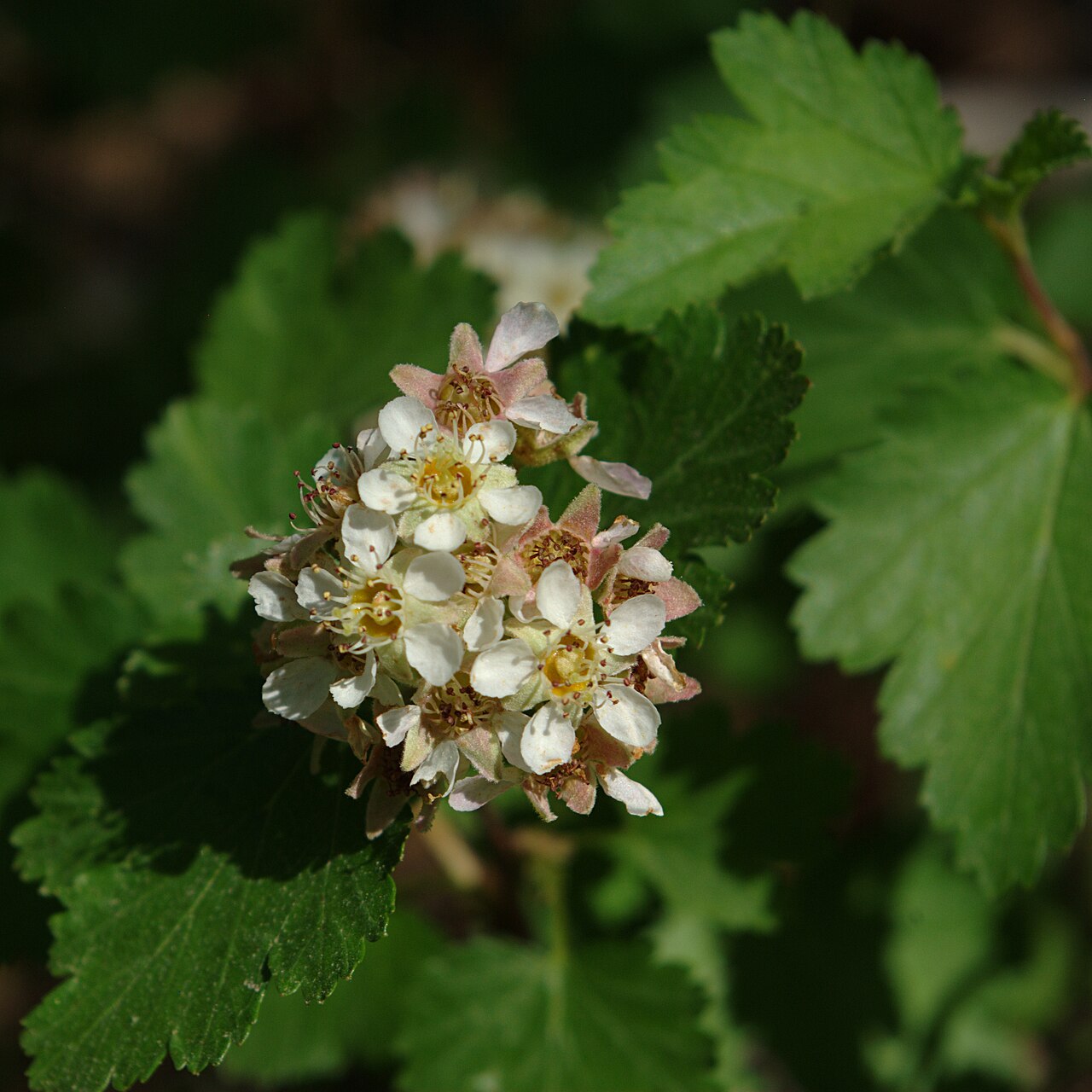
Physocarpus monogynus, commonly known as Mountain Ninebark or Low Ninebark, is a modest, rounded shrub of rocky canyons and mountain slopes across the southern and central Rocky Mountains. A member of the rose family, Rosaceae, it shares the genus’s signature trait of shaggy, peeling bark that reveals many papery layers beneath — the origin of the “ninebark” name — paired with dainty clusters of white to pale pink flowers each spring.
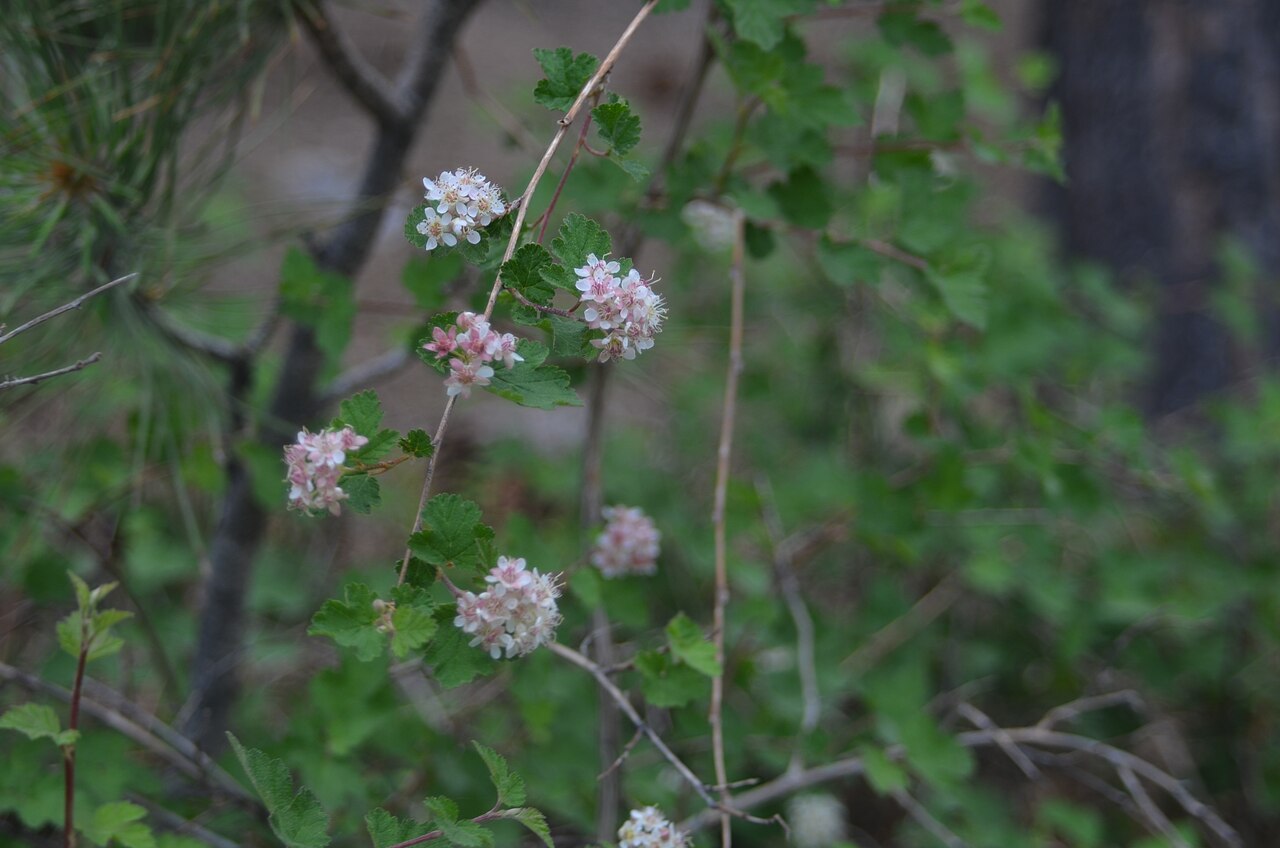
Mountain Ninebark grows as a compact, many-stemmed shrub reaching about 2 to 4 feet tall, with lobed, toothed leaves that resemble those of a currant or gooseberry bush. In late spring and early summer it bears rounded clusters of small five-petaled flowers, white or tinged with rose, that mature into inflated, papery seed pods lasting into winter. It favors shaded canyon bottoms and north-facing slopes, often tucked beneath ponderosa pine or scrub oak where few other shrubs compete for the limited moisture.
For gardeners in the interior West, Mountain Ninebark offers a tough, low-care native shrub with real textural interest — shredding bark, neat lobed foliage, and modest but attractive spring bloom — scaled to fit smaller spaces than many of its larger ninebark relatives. It asks for little beyond reasonably drained soil and some relief from the hottest afternoon sun.
Identification
Mountain Ninebark is a rounded, multi-stemmed shrub typically 2 to 4 feet tall and similar in width, occasionally taller in favorable sites. Its many slender stems arise from the base and branch loosely, giving the shrub an airy, open form rather than a dense mass.
Bark & Stems
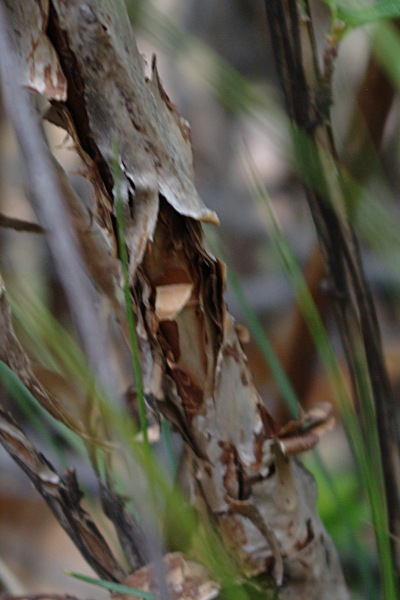
The bark is one of the shrub’s most distinctive features: brownish and thin, it peels and shreds in long strips to reveal multiple papery layers beneath, a trait shared with other ninebarks and the source of the common name. On older stems this shredding bark gives the base of the plant a shaggy, weathered look even on young shrubs.
Leaves
Leaves are alternate, simple, and roughly maple-like or currant-like in outline, with 3 to 5 shallow, doubly toothed lobes. They are dull green above and paler beneath, typically 1 to 2 inches long, and turn undistinguished shades of yellow-brown in fall rather than offering strong autumn color.
Flowers & Fruit
In May or June, Mountain Ninebark produces small, rounded clusters of flowers at the branch tips, each flower about ⅓ inch across with five white or pale rose petals surrounding a ring of pink-tipped stamens set in a cup-like base. Unlike many other ninebarks, which have multiple styles per flower, Mountain Ninebark has only a single style — the source of its species name monogynus, “one female part.” After flowering, the inflated, papery seed capsules (follicles) develop, turning reddish-brown and often persisting on the shrub well into winter. The small, shiny, bean-shaped seeds inside are bright yellowish when ripe.
Quick Facts
| Scientific Name | Physocarpus monogynus |
| Family | Rosaceae (Rose) |
| Plant Type | Deciduous shrub |
| Mature Height | 2–4 ft (occasionally to 5 ft) |
| Mature Spread | 2–4 ft |
| Growth Rate | Slow to moderate |
| Sun Exposure | Part Sun to Part Shade |
| Water Needs | Low to moderate; drought tolerant once established |
| Soil Type | Well-drained, rocky or gravelly; tolerates lean soil |
| Soil pH | Neutral to slightly alkaline |
| Bloom Time | May – July |
| Flower Color | White to pale rose |
| Fall Color | Undistinguished yellow-brown |
| Fruit | Inflated reddish-brown papery follicles |
| Deer Resistant | Moderate; occasionally browsed |
| USDA Hardiness Zones | 4–8 |
Native Range
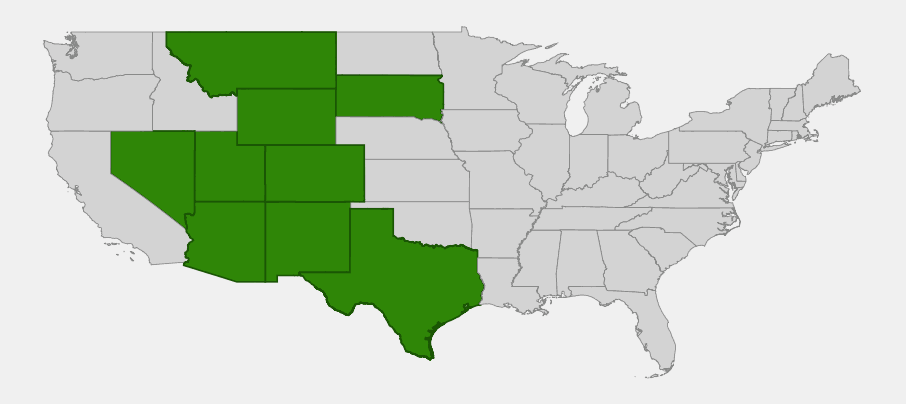
Mountain Ninebark is native to the Rocky Mountain region, ranging from Montana and South Dakota south through Wyoming, Utah, Colorado, Nevada and New Mexico to Arizona and west Texas, with its range extending into northern Mexico. It is most abundant and most often encountered through the central and southern Rockies, where it is a familiar, if modest, component of montane shrub communities.
Typical habitat is well-drained slopes, canyon bottoms, and rocky outcrops at elevations of roughly 5,600 to 9,800 feet, usually on sites shaded either by canyon walls or a north-facing aspect. In the southern part of its range it is especially characteristic of ponderosa pine and scrub oak woodlands, growing as a scattered understory shrub rather than forming the dense thickets typical of some other ninebark species.
Because it tolerates both the aridity and the rocky, thin soils typical of its mountain habitat, Mountain Ninebark is well adapted to the climate extremes of the interior West, but it is not found in the humid lowland and coastal regions where other native shrubs, including the larger Common Ninebark (Physocarpus opulifolius) of the eastern and midwestern United States, are more at home.
📋 Regional plant lists featuring Mountain Ninebark: Montana & Wyoming · Utah & Western Colorado · Nebraska, Kansas & Eastern Colorado · Arizona & New Mexico · North Dakota, South Dakota & Western Minnesota
Growing & Care Guide
Mountain Ninebark is an easygoing shrub for gardeners in the Mountain West, asking mainly for decent drainage and a break from the most intense afternoon sun in hotter, lower-elevation gardens.
Light
Part sun to part shade suits it best, mirroring the canyon and north-slope sites where it grows wild. In cooler, higher-elevation gardens it tolerates more sun, but in hot lowland or desert-adjacent plantings, afternoon shade helps prevent scorch and keeps the shrub looking its best through summer.
Soil & Water
Well-drained, rocky or gravelly soil is ideal, echoing its native mountain-slope habitat. Mountain Ninebark tolerates lean, mineral soils poorly suited to many other garden shrubs and does not need rich amendment. It is reasonably drought tolerant once established, needing only occasional deep watering during the driest part of summer, though it also handles the brief seasonal moisture of mountain snowmelt without trouble.
Planting Tips
Plant in spring or fall, siting the shrub where it will get some relief from the hottest sun, such as the north or east side of a building, boulder, or taller planting. Space plants 3 to 4 feet apart to allow for their modest mature spread. Container-grown nursery stock transplants well; avoid overly rich potting soil carried into the planting hole, which can encourage weak, floppy growth out of character for this tough mountain shrub.
Pruning & Maintenance
Mountain Ninebark needs little pruning. Remove dead or damaged stems in late winter, and thin out a few of the oldest stems every few years to keep the shrub open and encourage fresh growth, since the attractive peeling bark is most visible on well-spaced stems. It has no serious pest or disease issues and, once established, needs only minimal supplemental care.
Propagation
Semi-hardwood cuttings taken in summer root reasonably well with rooting hormone and a well-drained mix. Seed requires cold, moist stratification over winter and can be slow and uneven to germinate. Division is generally not practical given the shrub’s single-crowned, woody growth habit.
Landscape Uses
Mountain Ninebark’s compact size and textural bark make it a versatile choice for western gardens:
- Foundation and border plantings where a smaller-scale native shrub is needed
- Rock garden backdrops and slope plantings
- Winter-interest plantings for the peeling bark and persistent seed pods
- Naturalistic woodland-edge or canyon-themed gardens
- Wildlife and pollinator gardens in the interior West
- Erosion control on rocky slopes
Wildlife & Ecological Value
In the montane shrub communities where it grows, Mountain Ninebark supports a modest but genuine range of wildlife, especially in winter when other browse becomes scarce.
For Mammals
Mountain Ninebark is browsed by deer and other large mammals, particularly during winter when its persistent twigs and buds become a more significant part of the diet as more palatable forage disappears under snow. Rocky Mountain goats are also known to eat the twigs of ninebarks when smaller plants are buried.
For Pollinators
The small spring flowers, held in rounded clusters, attract native bees and other short-tongued pollinators able to access their shallow, open blooms. Flowering in late spring to early summer, Mountain Ninebark adds to the nectar resources available in montane woodland understories during this period.
For Birds
While not a major food source, the dense, many-stemmed structure of Mountain Ninebark offers cover and nesting structure for small birds in otherwise open rocky or wooded terrain, and its persistent seed capsules may be investigated by seed-eating species through fall and winter.
Ecosystem Role
As an understory shrub tolerant of shade and thin, rocky soils, Mountain Ninebark fills a niche in ponderosa pine and scrub oak woodlands that larger, more water-demanding shrubs cannot occupy, adding structural diversity to these relatively open plant communities and helping stabilize soil on the rocky slopes where it typically grows.
Cultural & Historical Uses
Mountain Ninebark has a documented history of use among Indigenous peoples of the Southwest as a folk remedy. According to ethnobotanical accounts, the roots were boiled and the resulting warm poultice applied externally to relieve pain — a traditional application rather than a modern medicinal recommendation, and one not substituted for professional medical care today.
Beyond this recorded use, Mountain Ninebark has little broader documented history as a food, craft, or trade plant among Indigenous or settler communities, unlike some of its showier native shrub relatives. Its modern significance is chiefly horticultural and ecological: a reliable, low-maintenance native shrub increasingly used in water-wise and native plant landscaping across the interior West, and a minor but consistent browse species for wildlife in the mountain woodlands it inhabits.
Frequently Asked Questions
How is Mountain Ninebark different from Common Ninebark?
Mountain Ninebark is smaller overall — typically 2 to 4 feet tall compared to the 5 to 10 feet or more of Common Ninebark (Physocarpus opulifolius) — and has flowers with a single style rather than several, reflected in its species name monogynus. Their native ranges also differ sharply: Mountain Ninebark belongs to the Rocky Mountain region, while Common Ninebark is native to the eastern and midwestern United States.
Does Mountain Ninebark need full sun?
No. It naturally grows in canyon bottoms and on shaded, north-facing slopes, and generally performs best with part sun to part shade, especially in hotter, lower-elevation gardens where full sun can cause stress or scorch.
Can you eat Mountain Ninebark berries or seeds?
No edible use of Mountain Ninebark is documented, and its seed pods are dry, papery follicles rather than fleshy fruit. It should not be treated as a food plant; its only recorded traditional use is an external poultice made from the roots.
Is Mountain Ninebark deer resistant?
Not especially — deer browse the twigs and buds, particularly in winter when other forage is covered by snow. In high deer-pressure areas, young plants may need protection until they are well established.
Why does Mountain Ninebark bark peel and shred?
The shredding, multi-layered bark is a natural characteristic shared by all ninebark species and the source of the common name “ninebark,” a folk reference to the many papery layers visible when the bark peels back. It is not a sign of disease or stress and is considered an attractive winter-interest feature.

Looking for a nursery that carries Mountain Ninebark?
Browse our native plant nursery directory: Arizona · Colorado · Montana · New Mexico & Nevada · South Dakota, Texas & Utah · Wyoming