
Gray-headed Coneflower (Ratibida pinnata)
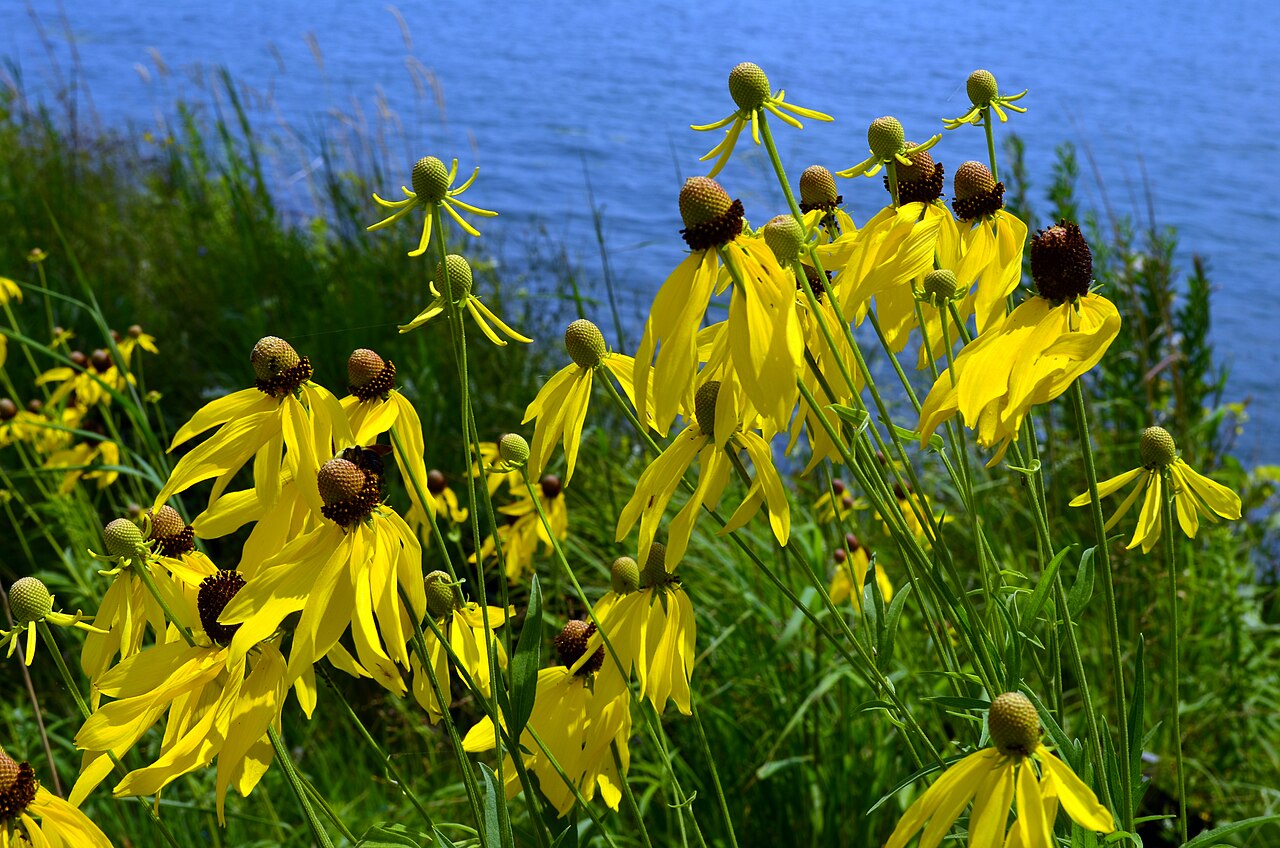
Ratibida pinnata, commonly known as Gray-headed Coneflower (also called Yellow Coneflower, Drooping Coneflower or Pinnate Prairie Coneflower), is one of the most recognizable tall wildflowers of the central and eastern North American tallgrass prairie. Its tall, airy stems and loosely drooping yellow ray petals surrounding a distinctive gray-brown, thimble-shaped central cone make it an easy plant to pick out from a distance, nodding above the grasses in a summer prairie breeze.
A long-lived herbaceous perennial, Gray-headed Coneflower typically reaches 3 to 5 feet tall on wiry, branching stems topped with finely cut, fern-like leaves. Crush the foliage or the central cone and you’ll notice a pleasant anise or licorice-like scent, a helpful identification clue that sets this species apart from other prairie composites. It blooms over a long season from early summer into fall, making it one of the most dependable sources of mid-summer color in a prairie planting.
Gray-headed Coneflower is widely available from native plant nurseries and seed suppliers across its range, and for good reason: it is drought tolerant once established, attracts a steady stream of pollinators, and its seedheads stand through winter, feeding goldfinches and other birds while adding structure to the dormant-season garden. It is an excellent anchor plant for a sunny prairie or meadow planting of almost any size.
Identification
Gray-headed Coneflower grows as an upright, clump-forming perennial, typically 3 to 5 feet tall, with slender, hairy, often branched stems rising from a tough, rhizomatous rootstock.
Stems & Foliage
Stems are slender, ridged and rough-hairy, usually branching in the upper portion of the plant to carry multiple flowerheads. Leaves are alternate, pinnately divided into 3 to 7 narrow, toothed or lobed segments, giving the foliage a fine, ferny texture quite different from the coarser leaves of purple coneflower or black-eyed Susan. Both leaves and stems have a rough, slightly sandpapery feel.
Flowers
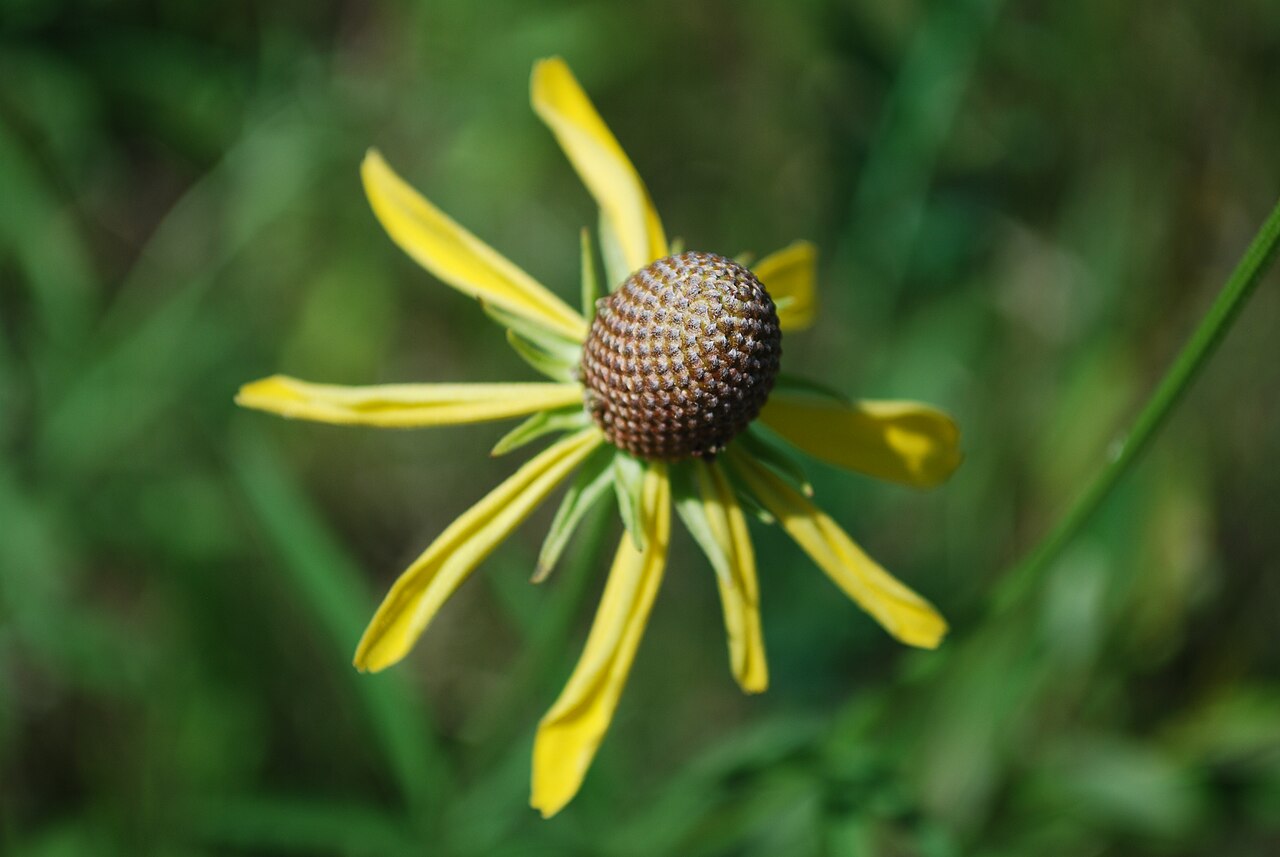
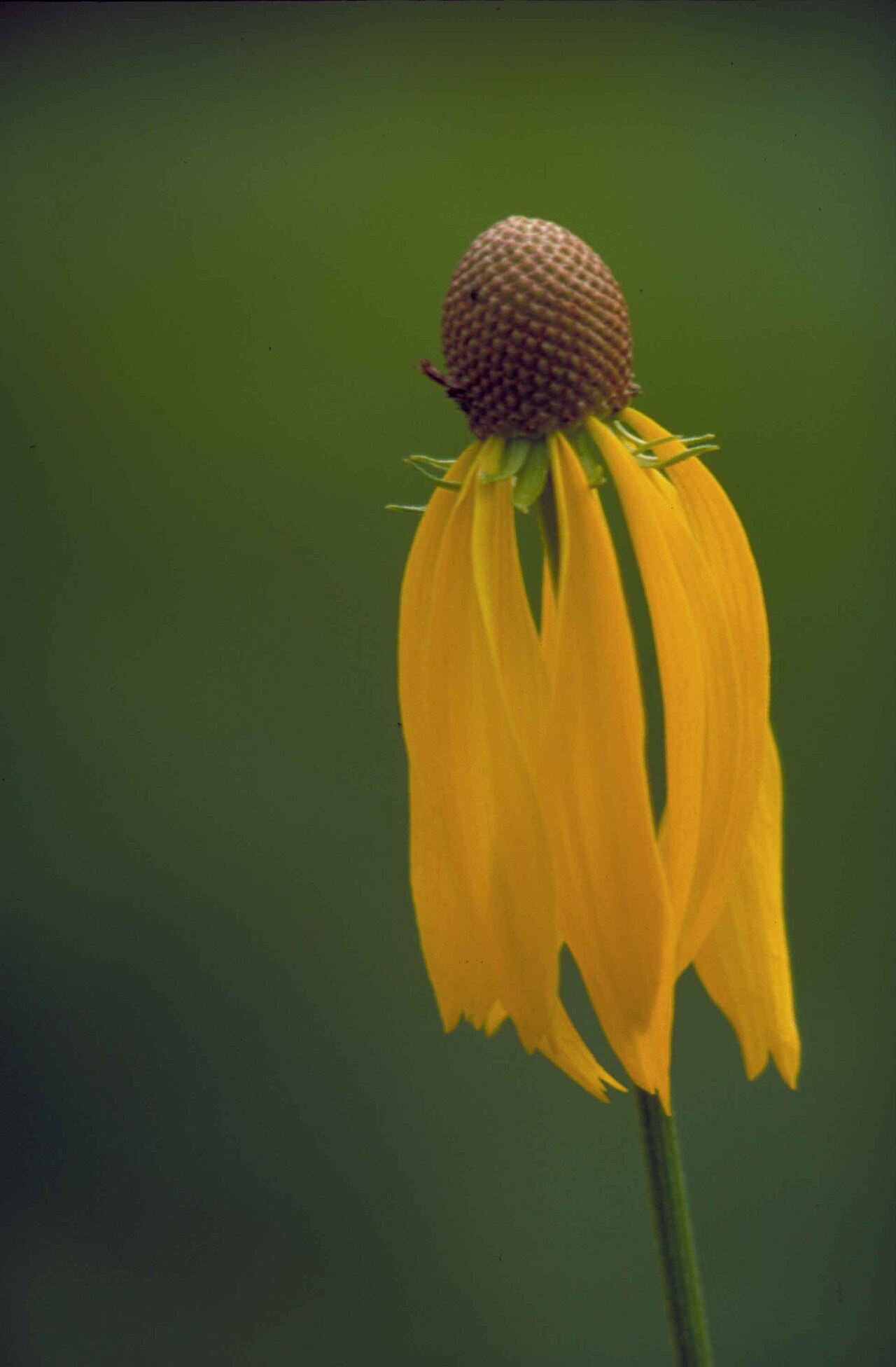
The flowerhead is the plant’s signature feature: 6 to 13 bright yellow ray flowers, each 1 to 2 inches long, droop or hang downward from a raised, cylindrical to thimble-shaped central disk of tiny gray-brown to dark brown disk flowers. The drooping rays and prominent, elevated cone give the flower a distinctive silhouette that is easy to recognize even from a distance or in a fast-moving car along a prairie road. Flowers are borne singly atop branching stems and bloom over a long period from early summer through early fall.
Fruit & Seeds
After bloom, the gray-brown cone persists and dries, holding numerous small, flattened achenes that ripen through late summer and fall. The sturdy dried seedheads remain upright through winter, providing a reliable food source for finches and other seed-eating birds and adding winter interest to a naturalistic planting.
Quick Facts
| Scientific Name | Ratibida pinnata |
| Family | Asteraceae (Aster/Sunflower) |
| Plant Type | Herbaceous perennial wildflower |
| Mature Height | 3–5 ft |
| Mature Spread | 1.5–2.5 ft, slowly clump-forming |
| Growth Rate | Moderate to fast |
| Sun Exposure | Full sun to light part shade |
| Water Needs | Average to dry; drought tolerant once established |
| Soil Type | Adaptable; loam, clay-loam or well-drained sandy soils |
| Soil pH | Neutral to slightly alkaline, tolerates mildly acidic |
| Bloom Time | June – September |
| Flower Color | Yellow rays, gray-brown central cone |
| Fall Color | Foliage browns; dried seedheads persist |
| Fruit | Small achenes in a persistent dry cone |
| Deer Resistant | Yes, generally avoided |
| USDA Hardiness Zones | 3–8 |
Native Range
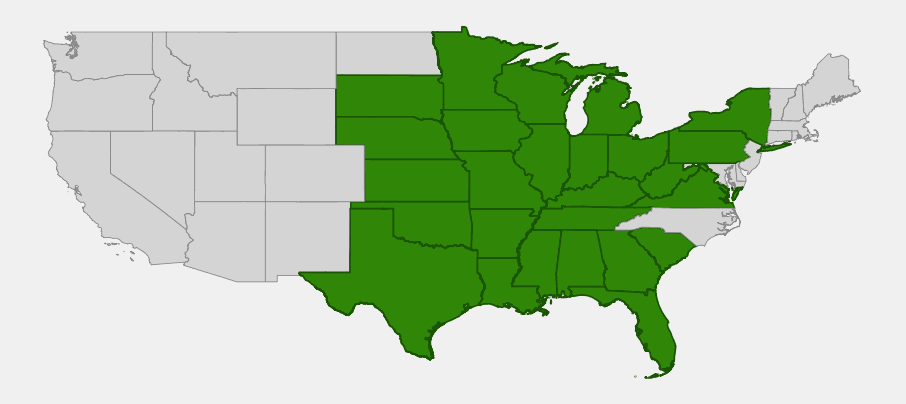
Gray-headed Coneflower is native across a broad swath of the central and eastern United States and adjacent Ontario, Canada, reflecting its origin as a characteristic tallgrass and mixed-grass prairie species. Its core range runs through the Midwest and Great Plains states — Illinois, Indiana, Iowa, Kansas, Michigan, Minnesota, Missouri, Nebraska, Ohio, South Dakota and Wisconsin — and extends south and east into Arkansas, Louisiana, Oklahoma, Texas, Kentucky, Tennessee, Alabama, Georgia, Mississippi, Florida, South Carolina, and north and east into New York and Pennsylvania (it is not native in Vermont or the rest of New England), with scattered rarer populations at the edges of this range.
Typical habitat is open, sunny prairie, savanna and oak-opening ground, along with dry to mesic meadows, glades, roadsides and open woodland edges. It thrives in the deep, fertile soils of tallgrass prairie remnants but is adaptable enough to colonize disturbed, sunny ground as well, which has helped it remain widespread even as intact prairie has become rare across much of its range.
Gray-headed Coneflower is popular in wildflower seed mixes and has been planted well beyond its documented native range, including parts of the Northeast where some populations are considered naturalized from seeding rather than historically native — gardeners in those areas should check regional sources before assuming local nativity.
📋 Regional plant lists featuring Gray-headed Coneflower: Arkansas, Louisiana, Eastern Oklahoma & Eastern Texas · Georgia, Alabama & Mississippi · North Carolina & South Carolina · Illinois, Iowa & Missouri · Michigan, Wisconsin & Eastern Minnesota · North Dakota, South Dakota & Western Minnesota · Nebraska, Kansas & Eastern Colorado · Kentucky & Tennessee · Ohio & Indiana · Maryland, Virginia & West Virginia · New York, Pennsylvania & Northern New Jersey
Growing & Care Guide
Gray-headed Coneflower is one of the easiest and most rewarding tallgrass prairie perennials to grow, thriving on neglect once it is established in the right spot.
Light
Give it full sun for the sturdiest stems, strongest flowering and most compact growth. In light shade, plants tend to grow taller and lankier and may need the support of neighboring plants to stay upright.
Soil & Water
Gray-headed Coneflower adapts to a wide range of soils, from fertile prairie loam to clay-loam and well-drained sandy ground. It prefers average to dry moisture and is notably drought tolerant once its deep roots are established, needing supplemental water only during extended drought in the first year or two. Avoid consistently wet or poorly drained soils, which can lead to rot.
Planting Tips
Direct-sow seed in fall for natural cold stratification, or plant container-grown divisions in spring or fall. Space plants 18 to 24 inches apart to allow for mature clump size and air circulation. New plantings typically take two to three years to reach full flowering size, which is typical for most prairie perennials establishing a deep root system before putting energy into top growth.
Pruning & Maintenance
Deadheading is not necessary and removes a valuable winter food source for birds; leave spent flowerheads standing through winter and cut back dead stems in late winter or early spring before new growth emerges. Plants can self-seed readily in open soil, so thin seedlings if a tidier look is wanted, or let it naturalize in a larger meadow planting.
Propagation
Propagate by seed, which benefits from a period of cold, moist stratification (achieved naturally by fall sowing or by refrigerating moist seed for 30 to 60 days before spring sowing). Established clumps can also be divided in early spring or fall.
Landscape Uses
Gray-headed Coneflower is a workhorse of the native plant palette:
- Prairie and meadow restoration as a tall, structural summer bloomer
- Pollinator gardens paired with Black-eyed Susan, Purple Coneflower and native grasses
- Cut flower gardens, where its long stems and unusual drooping form stand out in arrangements
- Rain gardens and roadside plantings thanks to its drought tolerance and adaptable soil needs
- Winter interest plantings, where its persistent seedheads add structure and feed birds
Wildlife & Ecological Value
Gray-headed Coneflower is a dependable workhorse for prairie wildlife, offering nectar, pollen and seed across a long season.
For Pollinators
The long summer bloom period attracts a wide range of native bees, honeybees, butterflies and beneficial wasps seeking nectar and pollen. Its abundance in restored prairies makes it one of the more reliable mid-summer nectar sources for pollinator populations building up through the warm months.
For Birds
American Goldfinches are especially fond of the seed, often visiting dried seedheads through fall and winter; other seed-eating songbirds take advantage of the crop as well. The tall, clustered stems also provide perching and foraging structure in an open prairie setting.
For Mammals
The foliage is generally left alone by deer and rabbits, which makes Gray-headed Coneflower a reliable choice in landscapes with heavy browsing pressure; its persistence in grazed pastures across its native range reflects this general unpalatability to large herbivores.
Ecosystem Role
As a common and often abundant component of tallgrass and mixed-grass prairie, Gray-headed Coneflower contributes structural diversity and a long nectar season to these increasingly fragmented grassland ecosystems. Its deep, fibrous root system also helps stabilize prairie soils and improve infiltration, functions shared by many deep-rooted prairie perennials.
Cultural & Historical Uses
Several Indigenous peoples of the prairie region historically used Gray-headed Coneflower and its relatives in the genus Ratibida in traditional ways, including steeping the aromatic, anise-scented foliage and flowerheads for a beverage-style infusion. These uses are documented as historical ethnobotanical practice rather than a recommendation for contemporary medicinal use.
The plant’s anise-like fragrance, released when the foliage or cone is crushed, has long made it a memorable and easily identified prairie plant for naturalists and prairie restorationists alike, and it remains a favorite “teaching plant” for introducing people to tallgrass prairie flora because of this distinctive scent combined with its unmistakable drooping yellow flowers.
In more recent decades, Gray-headed Coneflower has become a mainstay of the native seed and nursery trade, reflecting the broader prairie restoration movement across the Midwest and its reputation as an easy, reliable, long-blooming native perennial.
Frequently Asked Questions
What is the difference between Gray-headed Coneflower and Purple Coneflower?
They are different genera entirely. Gray-headed Coneflower (Ratibida pinnata) has drooping yellow rays around a raised gray-brown cone and fine, ferny foliage, while Purple Coneflower (Echinacea purpurea) has broader pink-purple rays around a spiny orange-brown cone and coarser leaves. Both are popular tallgrass prairie natives but look quite different up close.
Why does my coneflower smell like anise?
That’s normal and a helpful identification feature. Crushing the leaves or the central cone of Gray-headed Coneflower releases a pleasant anise or licorice-like fragrance, caused by aromatic compounds in the foliage.
How long does Gray-headed Coneflower live?
It is a true long-lived perennial, often persisting for a decade or more once established, unlike some shorter-lived prairie “pioneer” species such as black-eyed Susan that tend to fade out as a planting matures.
Does Gray-headed Coneflower spread aggressively?
It spreads mainly by self-seeding rather than aggressive rhizomes, so it can fill in open ground in a prairie planting over time but is not considered a thuggish spreader. Thin volunteer seedlings if you want to control its spread in a smaller garden bed.
Is Gray-headed Coneflower native to my state?
It has a broad native range across the central and eastern United States, but it has also been widely planted from wildflower seed mixes outside its historical range, especially in parts of the Northeast. Check a regional flora or native plant society resource to confirm local native status before planting.

Looking for a nursery that carries Gray-headed Coneflower?
Browse our native plant nursery directory: Illinois, Indiana, Iowa & Kansas · Kentucky, Louisiana, Michigan, Minnesota, Mississippi & Missouri · Nebraska, New York, Ohio & Oklahoma · Pennsylvania, South Carolina, South Dakota, Tennessee, Texas & Virginia · West Virginia & Wisconsin · Arkansas & Alabama · Georgia & Florida