
Laurel Greenbrier (Smilax laurifolia)
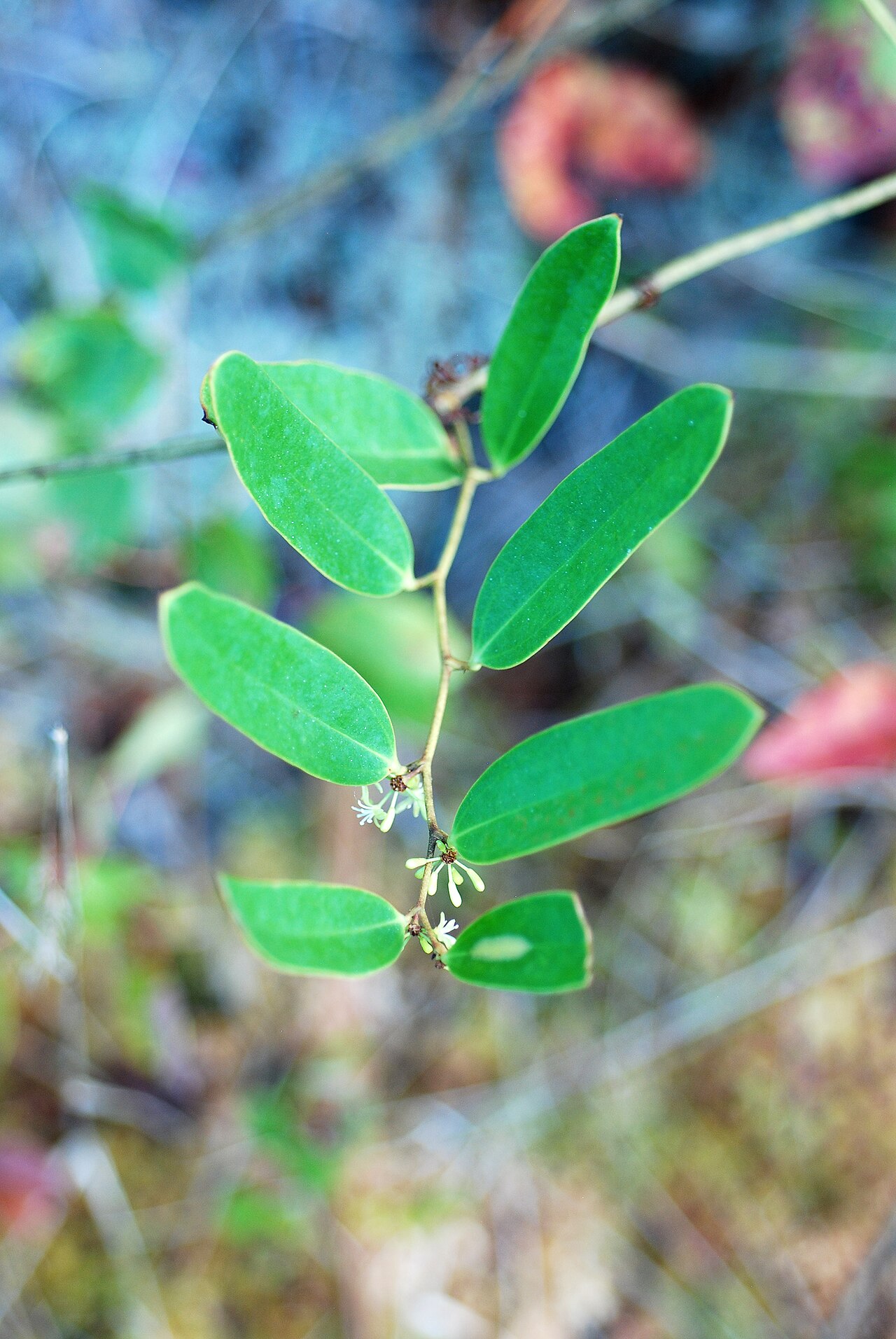
Smilax laurifolia, commonly known as Laurel Greenbrier (also laurel-leaf greenbrier, bamboo vine, or — memorably — blaspheme vine), is a tough, evergreen, high-climbing vine of southeastern wetlands. Unlike the smaller, deciduous greenbriers of upland woods, laurel greenbrier is built for wet ground: it thrives in pocosins, bay forests, and swamp margins where few other woody vines compete, forming dense, nearly impenetrable thickets armed with stout, hooked prickles.
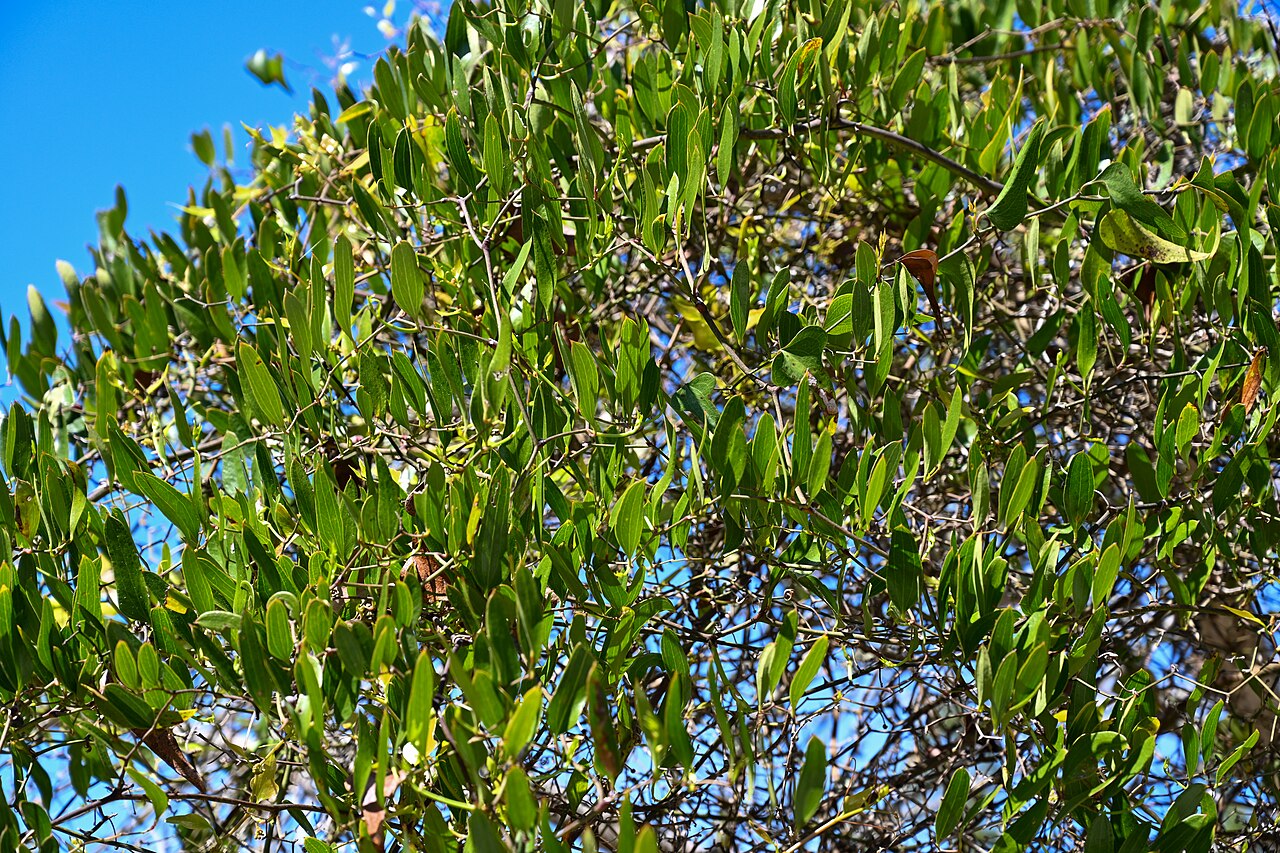
The vine’s long, narrow, leathery evergreen leaves resemble those of the mountain laurel or true laurel — hence laurifolia, “laurel-leaved” — and persist year-round, giving pocosin thickets their characteristic dark green cast through every season. Stout, straight to slightly curved thorns line the woody stems, catching clothing and skin with enough force to have earned the plant its coarser nickname among hunters and loggers who have pushed through a thicket of it.
This is not a plant for the ornamental border — it is an aggressive, thicket-forming wetland species best left to naturalized restoration plantings, pocosin and bog conservation projects, or simply appreciated and identified where it already grows wild. Its ecological value in the Southeast’s vanishing pocosin wetlands, however, is considerable.
Identification
Laurel greenbrier is readily told apart from the region’s other common greenbrier, roundleaf greenbrier (Smilax rotundifolia), by its narrow, evergreen, laurel-shaped leaves and its strong preference for consistently wet ground — roundleaf greenbrier has broader, deciduous, rounded leaves and grows in both wet and dry upland sites.
Stems
Stems are woody, round to somewhat angled, and climb by paired tendrils, reaching high into the canopy of pond pine and bay forests — 20 feet or more is common, with older vines climbing considerably higher. Stems are armed with stout, flattened, often slightly recurved prickles that make the plant genuinely difficult to move through without protective clothing.
Leaves
Leaves are evergreen, alternate, narrowly elliptic to lance-shaped, 2 to 5 inches long, thick and leathery, glossy dark green above and paler beneath, with three to five prominent parallel veins — the classic venation pattern of the genus. Unlike most Smilax, the leaves persist through winter, which is a reliable identification clue in the dormant season.
Flowers & Fruit
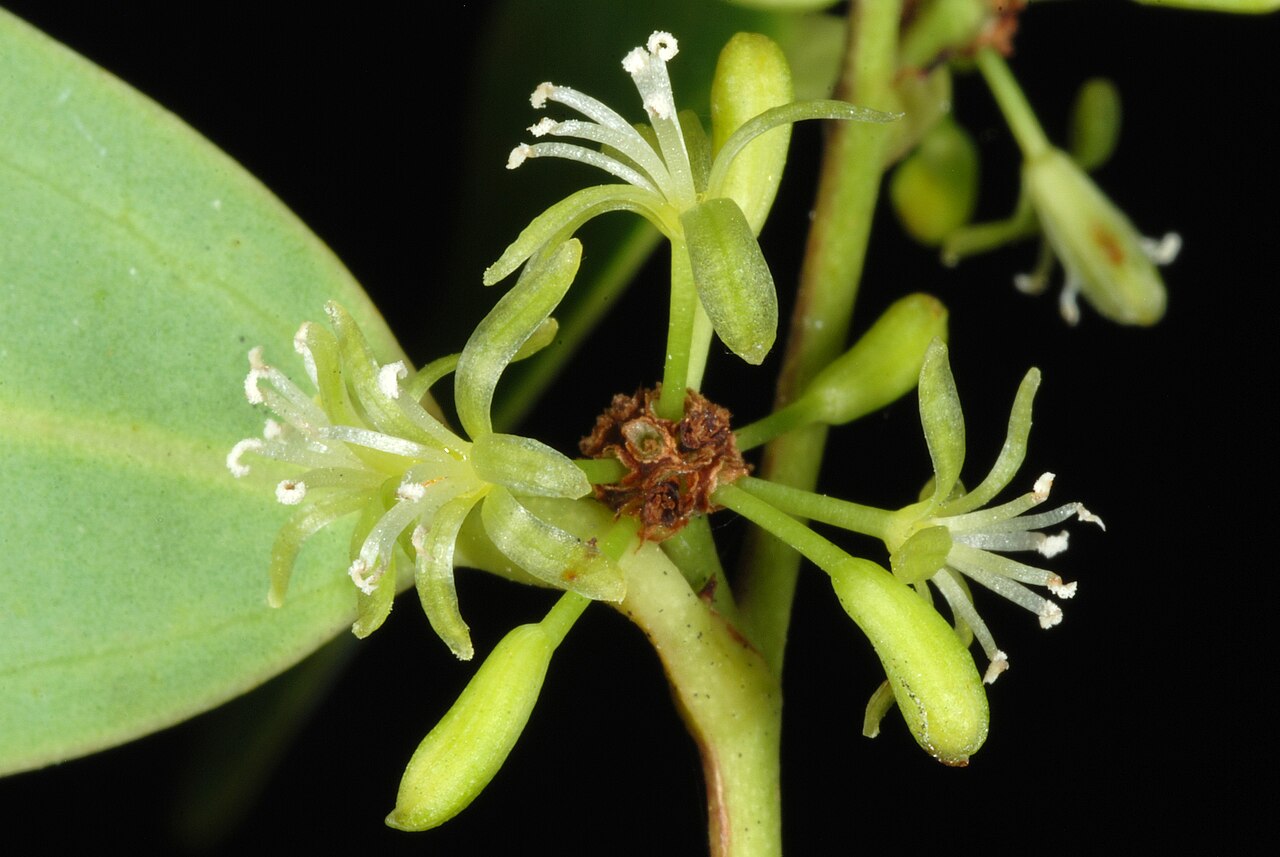
Laurel greenbrier flowers notably later than most other native Smilax, typically from August into October, producing small, rounded umbels of greenish-white to yellow-green flowers in the leaf axils. The plant is dioecious. Pollinated female flowers develop into small black berries that are unusual among Smilax in taking about two years to fully ripen, so a single vine may carry both current-season green fruit and the previous year’s ripe black berries at the same time.
Quick Facts
| Scientific Name | Smilax laurifolia |
| Family | Smilacaceae (Greenbrier) |
| Plant Type | Woody Evergreen Vine (liana) |
| Mature Height | 20–40+ ft (climbing) |
| Mature Spread | Forms dense thickets via rhizomes |
| Growth Rate | Moderate to Fast |
| Sun Exposure | Full Sun to Part Shade |
| Water Needs | High (wet to consistently moist) |
| Soil Type | Wet, acidic, sandy or peaty |
| Soil pH | 4.5–6.0 (acidic) |
| Bloom Time | August – October |
| Flower Color | Greenish-white |
| Fall Color | Evergreen (no change) |
| Fruit | Black berries, ripen over ~2 years |
| Deer Resistant | Yes (heavily prickled) |
| USDA Hardiness Zones | 7–10 |
Native Range
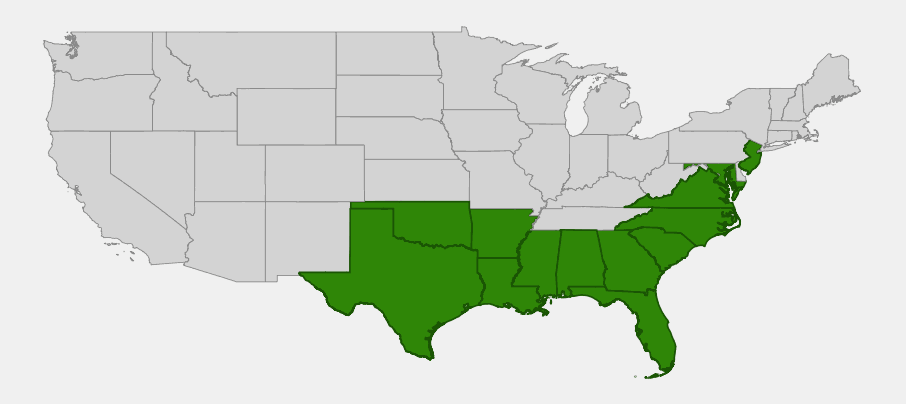
Laurel greenbrier is native to the Atlantic and Gulf Coastal Plains of the southeastern United States, from southern New Jersey south through the Carolinas, Georgia, and the length of Florida, west along the Gulf Coast through Alabama, Mississippi, and Louisiana to eastern Texas, with an inland extension north through Arkansas and into eastern Oklahoma. It is absent from the interior Piedmont and mountains, remaining a coastal-plain specialist throughout its range.
Within this range, laurel greenbrier is a defining species of pocosins — the shrub-and-vine wetlands of the Carolinas and Virginia — as well as bay forests, swamp margins, and wet pine flatwoods. It tolerates standing water and saturated, acidic, sandy or peaty soils that few other climbing woody plants can handle, which is exactly why it dominates so completely where it does occur.
Because pocosin and bay-forest wetlands have been extensively drained and converted for agriculture and development, intact stands of laurel greenbrier thicket are an indicator of relatively undisturbed coastal-plain wetland habitat, and the plant’s decline in a given area often tracks the broader loss of those wetlands.
📋 Regional plant lists featuring Laurel Greenbrier: Delaware, Southern New Jersey & Long Island · Maryland, Virginia & West Virginia · North Carolina & South Carolina · Georgia, Alabama & Mississippi · Arkansas, Louisiana, Eastern Oklahoma & Eastern Texas
Growing & Care Guide
Laurel greenbrier is not a typical landscape plant, and it’s worth being candid about that up front: it is prickly, aggressive, and spreads readily by rhizome once established in suitable wet ground. It earns a place only in large naturalized or restoration settings with genuinely wet, acidic soil, where few other woody climbers can compete with it anyway.
Light
Tolerates full sun to part shade; in the wild it grows equally well in open pocosin shrub-bogs and in the dappled light beneath pond pine and bay trees.
Soil & Water
This is the one native Smilax genuinely suited to wet, even seasonally flooded, ground. It needs consistently moist to wet, acidic, sandy or peaty soil — conditions that would stress or kill most other woody vines. It is a poor fit for typical garden soil or anywhere that dries out over summer.
Planting Tips
Reserve laurel greenbrier for wetland restoration, pocosin or bay-forest habitat projects, and rural properties with naturally wet, acidic ground — not small home gardens. Give it a sturdy, mature tree or shrub to climb, and plenty of room, since established thickets expand steadily by rhizome.
Pruning & Maintenance
Wear heavy gloves and thick long sleeves for any pruning — the stout, recurved prickles readily tear skin and clothing. Cut back unwanted growth at ground level; because the plant resprouts vigorously from its rhizome, ongoing control rather than a single removal is usually necessary if it needs to be managed.
Propagation
Propagate by rhizome division, or by seed following the roughly two-year fruit maturation period and a cold-stratification period over winter.
Landscape Uses
Appropriate uses are narrow but valuable:
- Wetland and pocosin habitat restoration on suitable sites
- Wildlife thicket plantings in rural or conservation settings with wet, acidic ground
- Not recommended for typical home landscapes, where its thorns and spreading habit make it difficult to manage
Wildlife & Ecological Value
In the pocosin and bay-forest wetlands where it dominates, laurel greenbrier is far more than a nuisance vine — it is foundational habitat structure.
For Birds
Dense laurel greenbrier thickets provide essential nesting and escape cover for a number of pocosin-dependent bird species, including Swainson’s Warbler, which specifically favors the tangled, nearly impenetrable structure these thickets create. The persistent black berries, available across much of the fall and winter thanks to the two-year ripening cycle, are an important cold-season food source for many songbirds.
For Mammals
Black bears regularly use dense pocosin thickets of laurel greenbrier as denning and bedding sites, relying on the vine’s thorny tangle for security from disturbance. White-tailed deer browse the tender new growth where accessible.
Ecosystem Role
As one of the few woody plants able to dominate consistently saturated, acidic coastal-plain wetlands, laurel greenbrier is a structural keystone of pocosin ecosystems, and its thickets help define this increasingly rare southeastern wetland type.
Cultural & Historical Uses
The common name “blaspheme vine” comes from straightforward experience: generations of hunters, loggers, and surveyors moving through dense Southern wetlands encountered this plant’s stout, recurved thorns catching skin and clothing, provoking exactly the reaction the name implies. It remains one of the more colorful plant names in the Southeastern folk vocabulary.
Like other native Smilax species, laurel greenbrier’s starchy rhizomes have a documented history of use by Indigenous peoples and rural foragers across the Southeast, pounded and processed into a starch, and the young spring shoots have traditionally been gathered and prepared much like asparagus. These are historical and traditional foodways rather than guidance for identification or preparation today, and anyone foraging wild plants should confirm identification with an expert and understand proper preparation before eating anything collected in the field.
Beyond foraging history, the vine’s thick, woody stems have occasionally been used in rustic basketry and craft work in parts of the rural South, taking advantage of their flexibility once the prickles are stripped away.
Frequently Asked Questions
What’s the difference between laurel greenbrier and roundleaf greenbrier?
Laurel greenbrier has narrow, evergreen, laurel-shaped leaves and grows almost exclusively in wet, acidic coastal-plain habitat like pocosins and bay forests. Roundleaf greenbrier has broader, deciduous, rounded leaves and grows in both wet and dry upland woods across a much larger range.
Why is it called blaspheme vine?
The nickname comes from the strong reaction people have when its stout, recurved thorns catch skin or clothing while pushing through a thicket — a vivid, if informal, piece of Southern plant folklore.
Is laurel greenbrier edible?
Historically, Indigenous peoples and rural foragers in the Southeast used the starchy rhizomes and young spring shoots of various native Smilax species, including this one, as food. That’s a documented historical use, not a how-to guide — proper identification and preparation knowledge is essential before anyone forages wild plants.
Can I grow it in my garden?
Generally not recommended for typical home landscapes. It is thorny, spreads aggressively by rhizome, and needs consistently wet, acidic soil — it’s best suited to large wetland restoration or conservation plantings rather than ornamental use.
Does it provide wildlife value?
Yes, substantially. Its dense thickets are important nesting and escape cover for pocosin-dependent birds and denning habitat for black bears, and its persistent winter berries feed songbirds when other food is scarce.

Looking for a nursery that carries Laurel Greenbrier?
Browse our native plant nursery directory: Alabama & Arkansas · Florida & Georgia · Louisiana, Maryland & Mississippi · New Jersey, North Carolina & Oklahoma · South Carolina, Texas & Virginia