Velvetleaf Blueberry (Vaccinium myrtilloides)
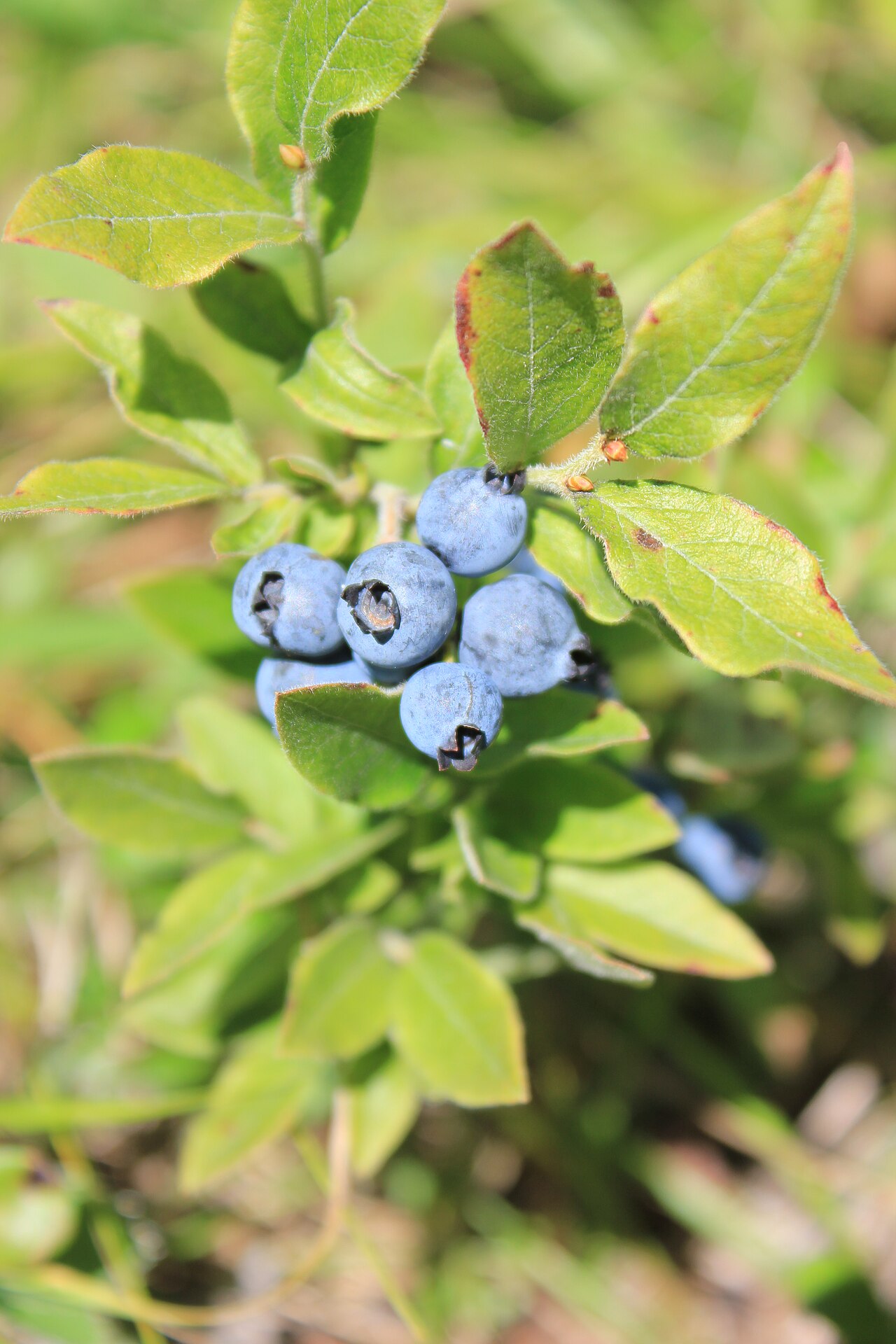
Vaccinium myrtilloides, commonly known as Velvetleaf Blueberry (also called velvet-leaved blueberry or Canada blueberry), is a low, colony-forming native shrub found in the cool coniferous and mixed forests, bogs, and rocky barrens of the northern United States and across most of Canada. It is one of the two classic wild “lowbush” blueberries of the North Woods, prized for generations for its small, intensely flavorful fruit and easily identified by the soft, velvety down that covers its young twigs and leaf undersides — a feature no other common native blueberry shares.
Velvetleaf blueberry typically grows just 6 inches to 2 feet tall, spreading by rhizomes into dense, low colonies that carpet the floor of dry-to-moist coniferous and mixed woods, old burns, rocky outcrops, and bog margins from the Upper Midwest and Northeast through the boreal forest of Canada and into Alaska. Its fruit — small, round, powder-blue berries — ripens through mid to late summer and is genuinely edible, long harvested by Indigenous peoples and later settlers alike wherever the plant grows in abundance.
For gardeners in its native range, velvetleaf blueberry is an excellent low groundcover for acidic, sandy or rocky soil in part sun, offering fine texture, soft red-orange fall color, and the bonus of homegrown blueberries without the size of a highbush shrub.
Identification
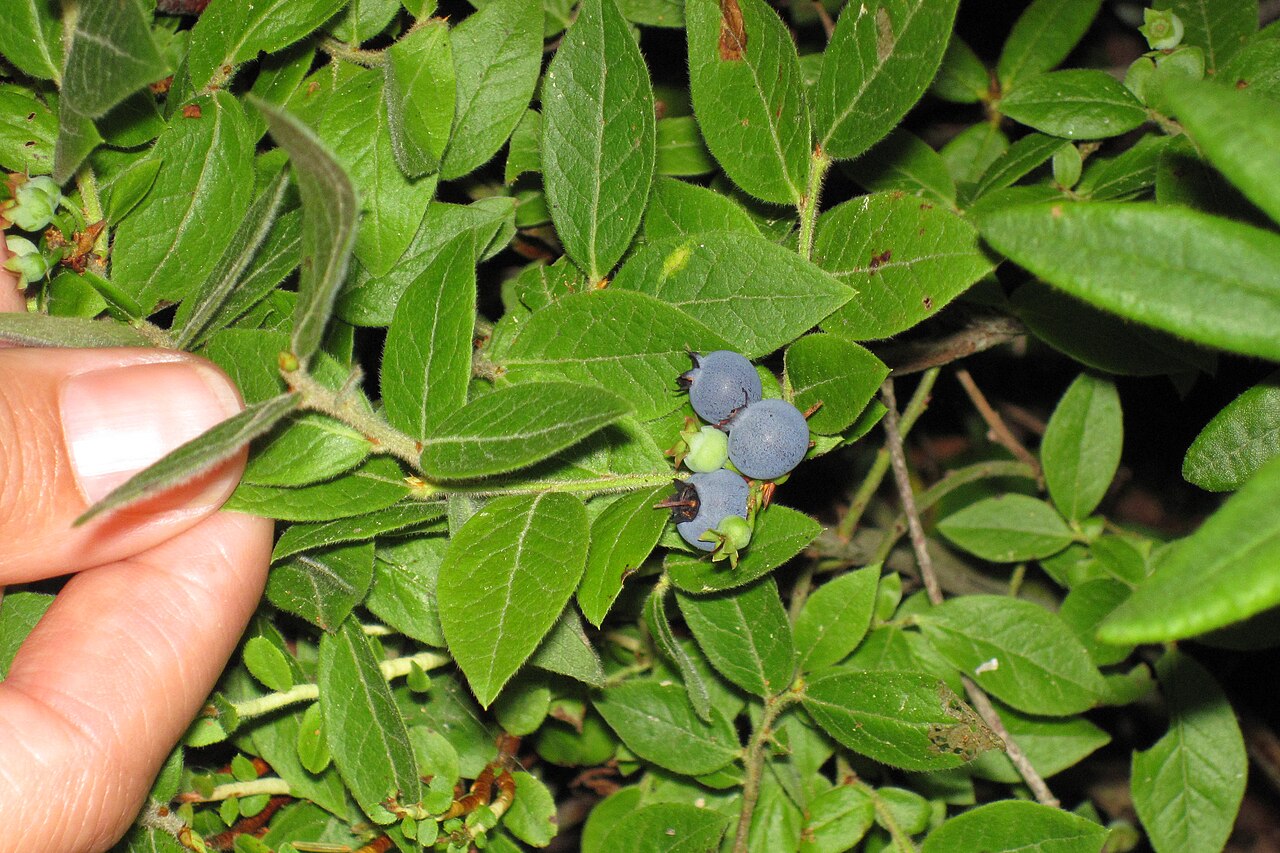
Velvetleaf blueberry is most easily told apart from other low native blueberries by touch — run a finger along a young twig or the underside of a leaf, and the fine, soft pubescence is unmistakable.
Growth Form
This is a low, deciduous, colony-forming shrub, usually 6 to 24 inches tall, spreading steadily by underground rhizomes to form broad mats or patches rather than growing as an isolated specimen. Twigs are slender, green to yellow-green when young, and densely covered in short, soft hairs.
Leaves
Leaves are alternate, simple, elliptic to oblong, about 1 to 2 inches long, with smooth (entire) margins — unlike some other low blueberries, which have finely toothed leaf edges. The defining field mark is the fine, velvety pubescence covering the leaf undersides and young stems, giving the whole plant a soft, slightly grayish-green cast compared to the shinier leaves of other native blueberries. Fall color is a warm red to orange.
Flowers & Fruit
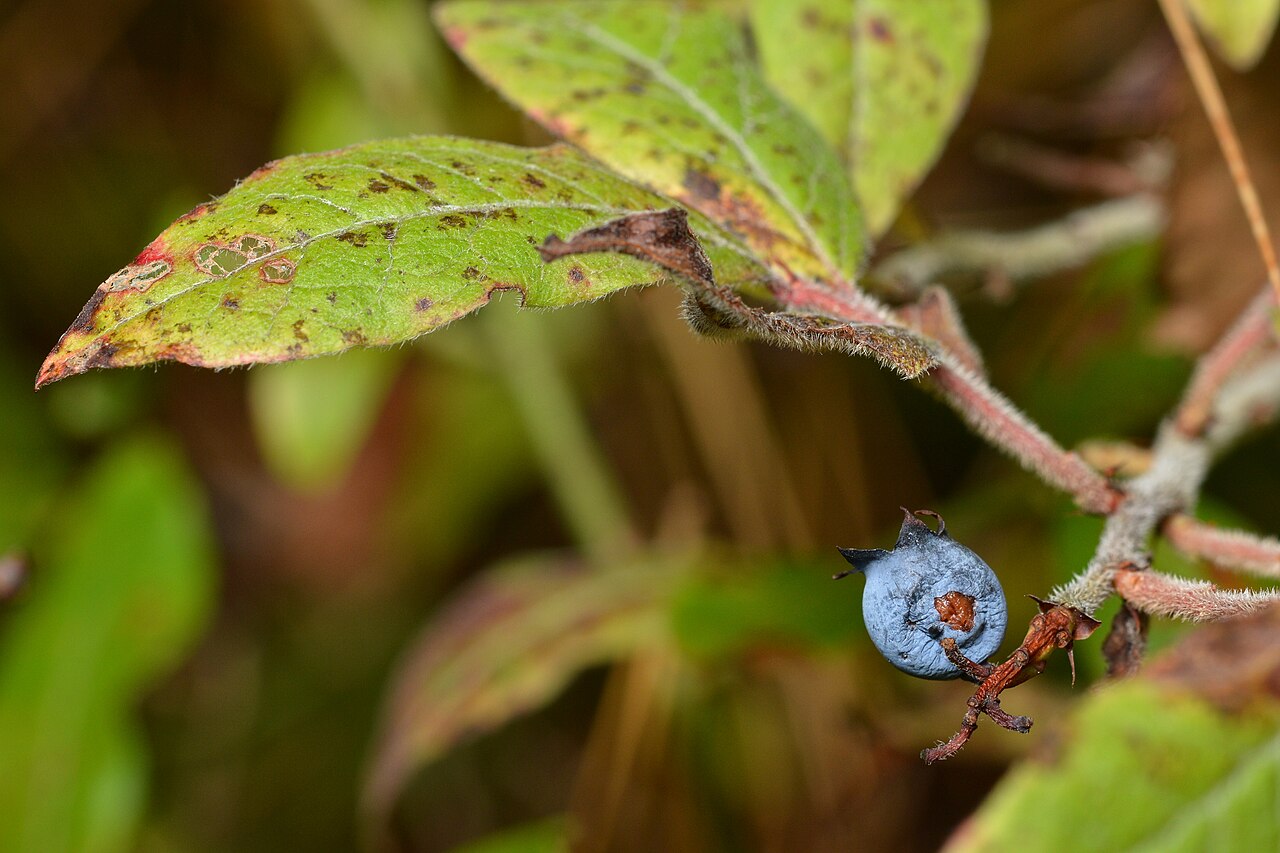
Small, white to pale pink, urn-shaped flowers appear in spring, typically just before or as the leaves emerge, in small clusters along the previous year’s growth. They are classic blueberry-family flowers — bell-like and nodding — and are visited heavily by native bees. The fruit is a round, powder-blue berry about ¼ to ⅓ inch across, ripening from midsummer into early fall. The berries are edible and sweet, smaller but often more flavorful than cultivated blueberries, and are a traditional foraged food across their range.
Quick Facts
| Scientific Name | Vaccinium myrtilloides |
| Family | Ericaceae (Heath) |
| Plant Type | Deciduous, rhizomatous low shrub |
| Mature Height | 6–24 in |
| Mature Spread | Spreads by rhizome into broad colonies |
| Growth Rate | Slow to moderate |
| Sun Exposure | Full Sun to Part Shade |
| Water Needs | Low to moderate; good drainage important |
| Soil Type | Sandy, rocky or peaty, acidic, well-drained |
| Soil pH | 4.0–5.5 (strongly to moderately acidic) |
| Bloom Time | May – June |
| Flower Color | White to pale pink |
| Fall Color | Red to orange |
| Fruit | Small, sweet, powder-blue berries; edible |
| Deer Resistant | No (browsed by deer; fruit eaten by many animals) |
| USDA Hardiness Zones | 2–6 |
Native Range
Velvetleaf blueberry is native to the boreal and northern mixed forest zone of North America: Alaska and across most of Canada, extending south into the northern United States, including the Great Lakes states, the Northeast and New England, and small disjunct populations in the northern Rocky Mountains of Idaho and Montana.
Within that range it occupies dry to moderately moist, acidic, sandy or rocky soils — typically in the understory or edges of coniferous and mixed forests, on old burns and rocky outcrops, and around the drier margins of bogs. It is a cold-climate specialist, generally absent from the warmer soils and milder winters of the mid-Atlantic and points south.
Velvetleaf blueberry often grows alongside or is confused with the similar lowbush blueberry (Vaccinium angustifolium), which shares much of its range but has shinier, finely toothed leaves and hairless twigs — the velvety pubescence of V. myrtilloides is the most reliable way to tell the two apart in the field.
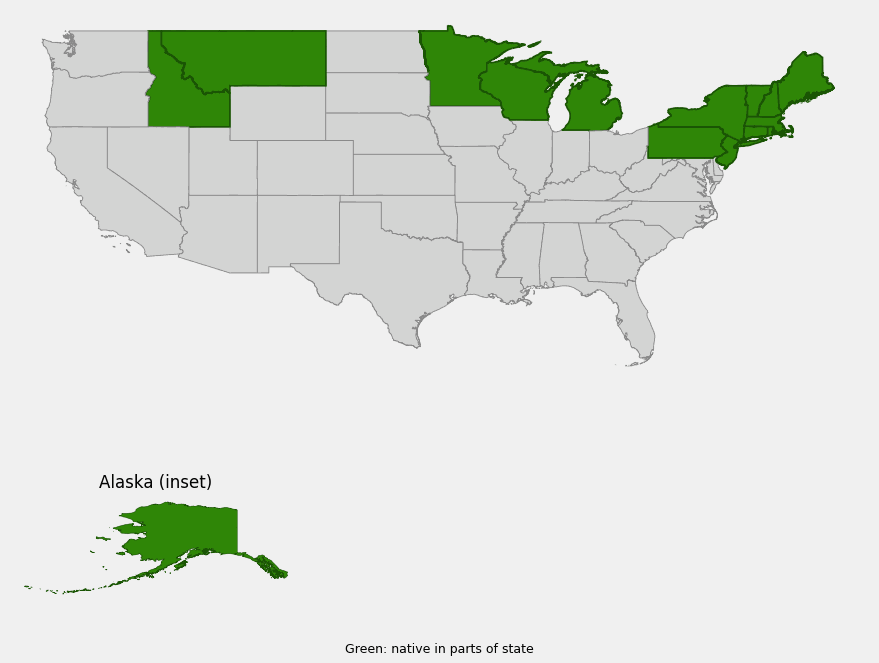
📋 Regional plant lists featuring Velvetleaf Blueberry: Alaska · Idaho, Eastern Oregon & Eastern Washington · Montana & Wyoming · Michigan, Wisconsin & Eastern Minnesota · New York, Pennsylvania & Northern New Jersey · Connecticut, Massachusetts & Rhode Island · New Hampshire, Maine & Vermont
Growing & Care Guide
Velvetleaf blueberry is a wonderful low-growing native shrub for cold-climate gardens with acidic soil, but it does need those specific soil conditions to thrive — it is not a plant for ordinary neutral or alkaline garden beds.
Light
Give velvetleaf blueberry full sun to part shade. Full sun produces the heaviest fruit crop and best fall color, while light shade mimics its natural understory habitat and is fine for a woodland groundcover planting.
Soil & Water
Acidic, well-drained, sandy or rocky soil is essential — this species will struggle or fail in neutral to alkaline clay. A pH of 4.0 to 5.5 is ideal. Once established, it is fairly drought tolerant, reflecting its natural habitat on dry, rocky, or sandy ground, though it appreciates even moisture during fruit set in early summer.
Planting Tips
Plant container-grown stock in spring or fall, amending with peat moss or pine bark fines if your soil isn’t already acidic. Space plants 12 to 18 inches apart to let the rhizomes fill in as a groundcover over a few seasons. Like most blueberries, fruit set improves with more than one genetically distinct plant nearby for cross-pollination.
Pruning & Maintenance
Very little pruning is needed. Established colonies can be rejuvenated by mowing or cutting back hard every several years (a traditional management technique in commercial wild blueberry barrens), which encourages vigorous new growth and heavier fruiting the following season.
Landscape Uses
Velvetleaf blueberry fits a specific but valuable niche in cold-climate native landscapes:
- Low groundcover for sunny, sandy or rocky acidic sites
- Edible landscaping — a compact alternative to highbush blueberry
- Woodland garden understory beneath pines and other conifers
- Naturalized plantings on dry, infertile, acidic ground where little else thrives
- Wildlife gardens for birds and pollinators
Wildlife & Ecological Value
Velvetleaf blueberry is a workhorse of the northern forest understory, supporting pollinators, birds, and mammals across its range.
For Pollinators
The spring flowers are an important early-season nectar and pollen source for native bees, particularly bumblebees and other blueberry specialists that use “buzz pollination” to shake pollen loose from the flower’s anthers.
For Birds
Grouse, thrushes, and many other woodland birds eat the berries through summer and into fall, and the low, dense growth habit provides ground-level cover.
For Mammals
Black bears are major consumers of velvetleaf blueberry fruit across the boreal forest, and the foliage and twigs are browsed by white-tailed deer and other herbivores. Small mammals also forage the berries and use the low thickets for cover.
Ecosystem Role
As a rhizomatous colonizer, velvetleaf blueberry is often among the first shrubs to recover ground after fire in boreal and northern forests, helping stabilize soil on burns and rocky barrens while providing an early food source for wildlife in recovering landscapes.
Cultural & Historical Uses
Velvetleaf blueberry has been harvested as food for generations across its range. Indigenous peoples throughout the boreal forest and Great Lakes region gathered the berries fresh and dried them for winter use, and the species remains an important traditional and commercial wild-harvested fruit in parts of Canada today, often picked alongside the similar lowbush blueberry.
The berries are edible and were a genuine dietary staple in regions where the plant grows abundantly, valued for their sweetness and for how well they dried and stored compared to many other wild fruits. Beyond food use, the low, spreading growth of recovering burn sites made velvetleaf blueberry patches a familiar and welcome sign of forest regeneration to generations of northern foragers.
Frequently Asked Questions
How do I tell velvetleaf blueberry from lowbush blueberry?
Feel the twigs and the undersides of the leaves. Velvetleaf blueberry (Vaccinium myrtilloides) has fine, soft hairs (pubescence) on both; lowbush blueberry (Vaccinium angustifolium) has smooth, hairless twigs and shinier, finely toothed leaves. The two often grow side by side.
Are velvetleaf blueberries safe to eat?
Yes. The berries are edible and have long been a traditional foraged and cultivated food in the plant’s native range. As with any wild fruit, be certain of your identification before eating.
Will velvetleaf blueberry grow in ordinary garden soil?
Not well. It needs acidic, well-drained, sandy or rocky soil (pH 4.0–5.5) to thrive; neutral or alkaline clay soils will generally cause it to struggle or fail. Amend with peat moss or acidic mulch if your native soil isn’t already suitable.
How tall does velvetleaf blueberry get?
It stays low, typically 6 inches to 2 feet tall, spreading horizontally by rhizome rather than growing upright like highbush blueberry, which can reach 6 feet or more.
Does velvetleaf blueberry need another plant nearby to fruit?
Fruit set is usually better with more than one genetically distinct plant for cross-pollination, though established colonies (which are often genetically diverse clusters of rhizome-connected stems) can still produce a useful crop on their own.

Looking for a nursery that carries Velvetleaf Blueberry?
Browse our native plant nursery directory: Alaska · Idaho · Montana, Minnesota, Michigan & Maine · Wisconsin · Pennsylvania, Rhode Island & Vermont · New York, New Jersey & New Hampshire · Connecticut