Freckled Milkvetch (Astragalus lentiginosus)
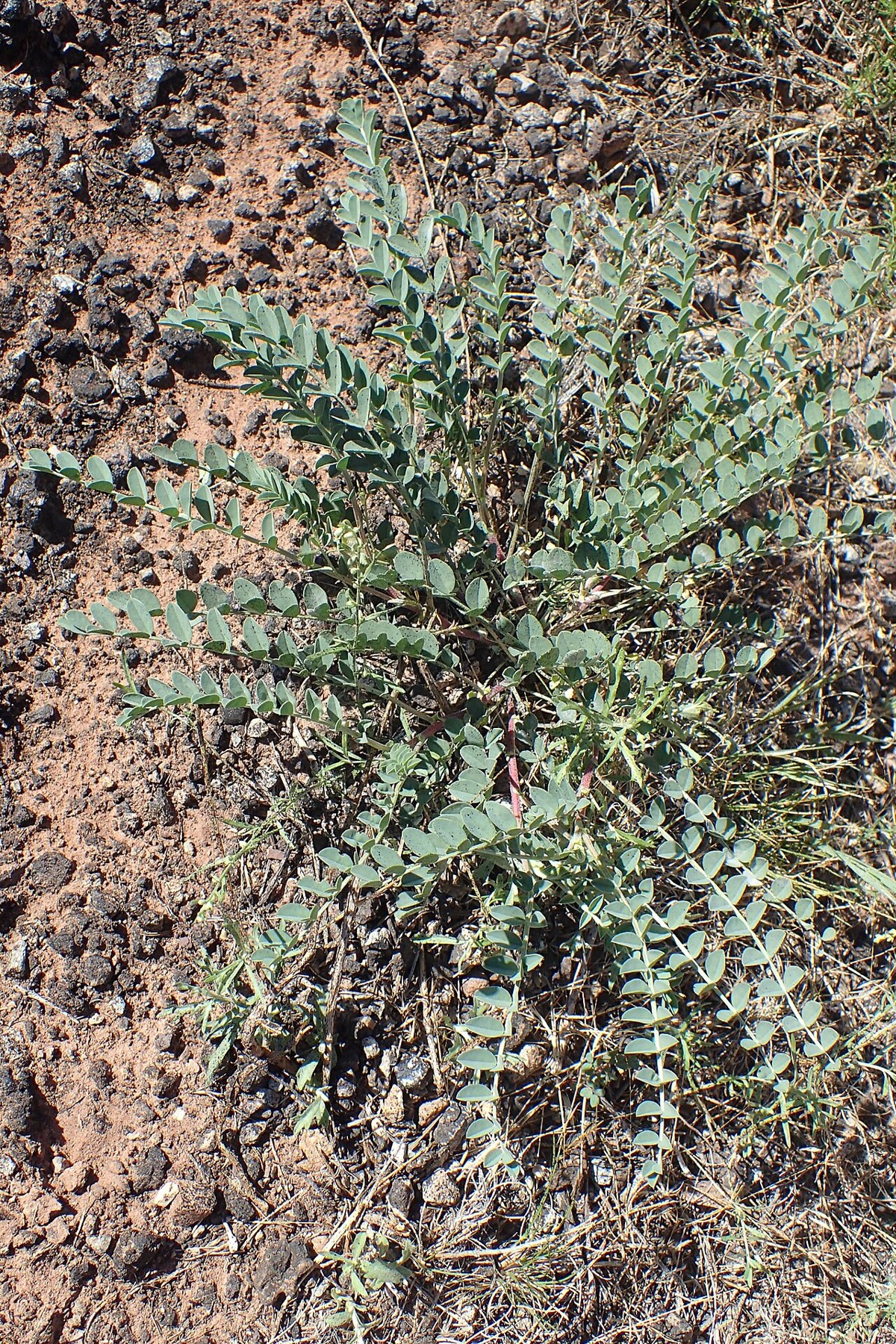
Astragalus lentiginosus, commonly called freckled milkvetch or spotted locoweed, is the single most variable and widespread member of the huge milkvetch genus in North America, with dozens of recognized varieties spanning deserts, sagebrush steppe, alpine slopes, and dry grasslands across the western United States. Its name comes from the distinctive red or purple speckling that often mottles its inflated, papery seed pods, giving them a “freckled” look unlike the smoother pods of most other Astragalus species.
This low, spreading perennial (occasionally behaving as a biennial) typically forms a loose mound of silvery-haired, pinnately compound leaves a few inches to a foot tall, topped from spring into summer by small clusters of white, cream, pink, or purple pea-like flowers. Because the species is so widespread, its exact size, hairiness, and flower color vary considerably depending on the variety and the harsh habitat it occupies — plants of high alpine screes look quite different from those of hot low-desert flats.
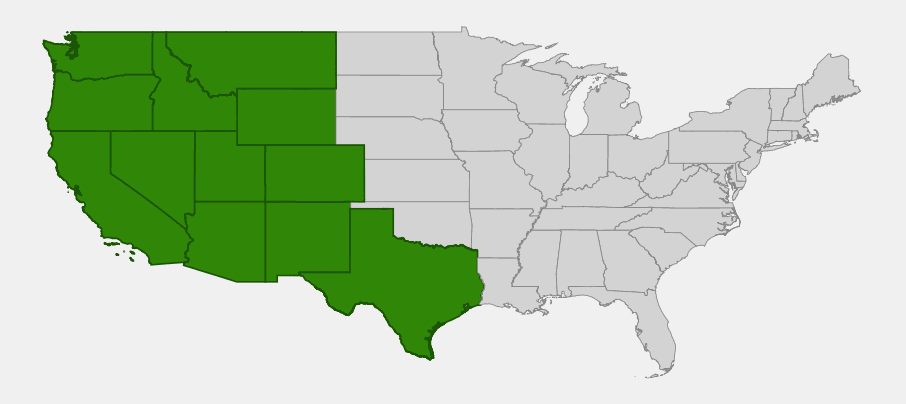
Freckled milkvetch is found across nearly the entire Intermountain West and Southwest, from the sagebrush plains of eastern Washington and Oregon to the deserts of California, Nevada, Arizona, New Mexico, and far west Texas, and north through Idaho, Montana, Wyoming, Utah, and Colorado. It is a true generalist of dry, open, often rocky or sandy ground, and while it is not typically grown as an ornamental, it is an important and often overlooked member of native plant communities throughout its vast range.
Identification
Freckled milkvetch is best recognized by the combination of silvery, hairy, pinnately compound leaves, small pea-type flowers in loose spikes, and — most distinctively — inflated, often mottled seed pods that are unlike the pods of most other native legumes.
Growth Form
Plants are low and spreading to loosely mounded, typically 4 inches to about 20 inches tall depending on variety and habitat, with multiple stems rising from a stout taproot. In harsh alpine or high-desert sites the plant hugs the ground tightly; in milder valley habitats it can form a looser, more upright clump.
Leaves
Leaves are pinnately compound, 1 to 4 inches long, with 7 to 25 small, oval to narrow leaflets. Both leaves and stems are typically covered in fine white or silvery hairs, giving the foliage a soft gray-green to silvery cast, though hairiness varies by variety.
Flowers
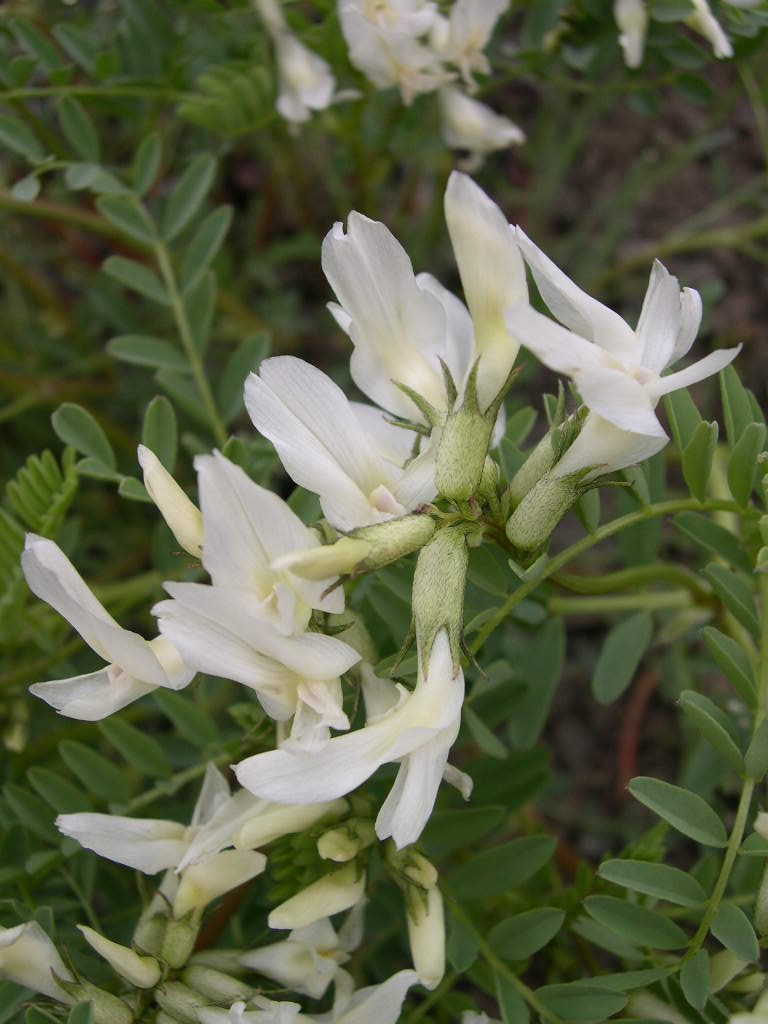
Flowers are small, typically ½ to ¾ inch long, pea-shaped, and borne in loose, elongated clusters (racemes) of 5 to 30 blooms on stalks rising above or among the leaves. Flower color is notably variable across the species’ many varieties, ranging from white and cream to pink, lavender, and purple, often with darker keel tips. Bloom time runs from April through July depending on elevation and local climate.
Fruit & Seeds
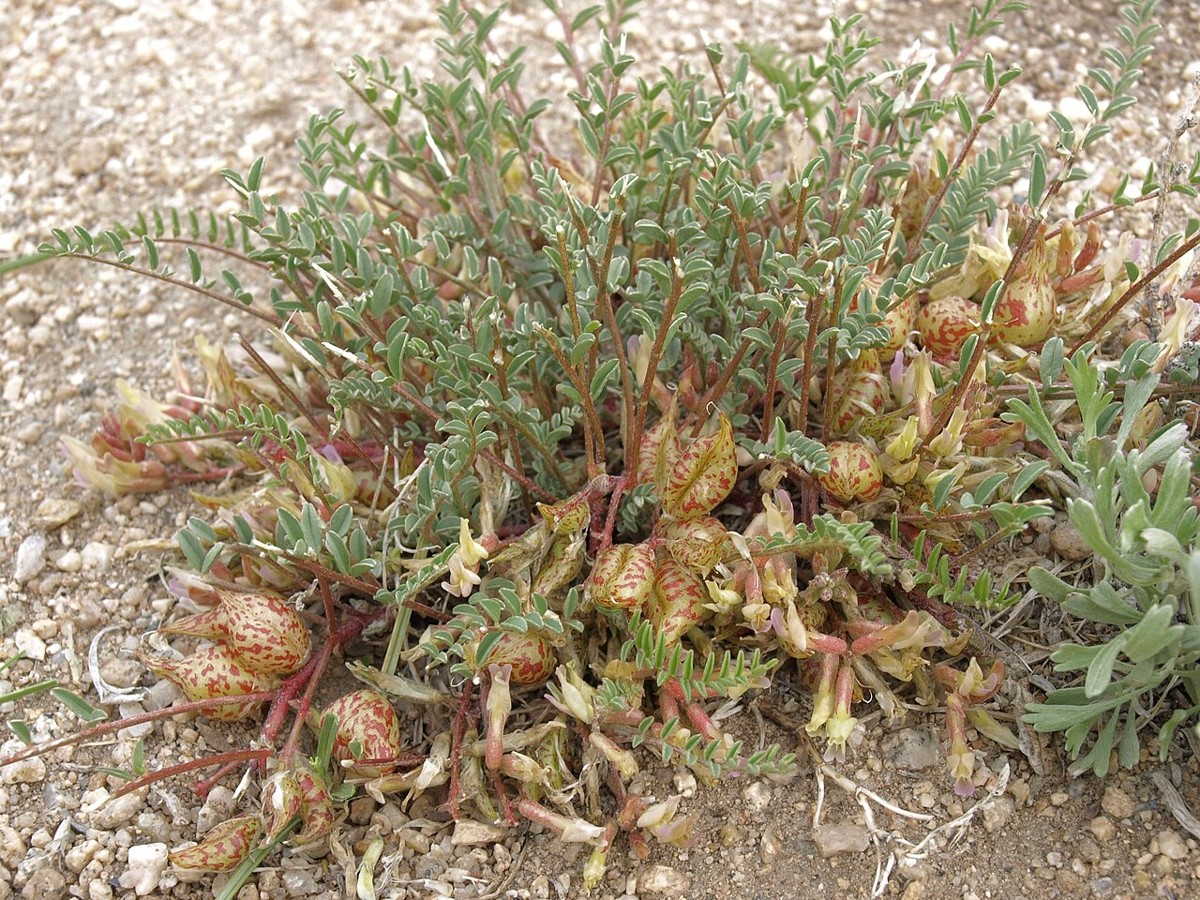
The most distinctive feature of freckled milkvetch is its fruit: an inflated, papery or leathery pod, often an inch or more long, that is frequently mottled or streaked with red or purple blotches against a pale green to straw-colored background — the “freckles” that give the plant its common name. The pods dry to a thin, rattling husk that persists on the plant and helps disperse seed by wind and by animals brushing past.
Quick Facts
| Scientific Name | Astragalus lentiginosus |
| Family | Fabaceae (Pea) |
| Plant Type | Perennial (occasionally biennial) herb |
| Mature Height | 4–20 in (varies by variety) |
| Mature Spread | 1–2 ft |
| Growth Rate | Moderate |
| Sun Exposure | Full sun |
| Water Needs | Low once established |
| Soil Type | Dry, sandy or rocky, well-drained |
| Soil pH | Neutral to alkaline |
| Bloom Time | April – July |
| Flower Color | White, cream, pink, lavender or purple |
| Fall Color | None notable |
| Fruit | Inflated papery pods, often red-mottled, to 1.5 in |
| Deer Resistant | Yes |
| USDA Hardiness Zones | 4–9 |
Native Range
Freckled milkvetch has one of the broadest native ranges of any western Astragalus, occurring across nearly the entire Intermountain West and the Southwest. It is native to eastern Washington and eastern Oregon, all of Idaho, Montana, Wyoming, Utah, Nevada and California, Arizona and New Mexico, western Colorado, and far western Texas. It is generally absent from the moister, forested areas west of the Cascade crest in Washington and Oregon, reflecting its strong preference for dry, open country.
Across this huge range, freckled milkvetch grows in a remarkable variety of dry habitats: desert flats and washes, sagebrush steppe, pinyon-juniper woodlands, dry grasslands, and even rocky alpine and subalpine slopes at high elevation, from near sea level to above 11,000 feet in some mountain varieties. Common associates include sagebrush, shadscale, blackbrush, and various native bunchgrasses, though the specific plant community varies enormously with elevation and region.
Because of its wide range and many locally adapted varieties, freckled milkvetch is not considered rare or at risk as a species, though a handful of its many named varieties are restricted to small areas and have more specific conservation concerns. It is not currently cultivated to any significant degree, and gardeners in its native range are more likely to encounter it on a hike than find it offered at a nursery.
📋 Regional plant lists featuring Freckled Milkvetch: Idaho, Eastern Oregon & Eastern Washington · Montana & Wyoming · Utah & Western Colorado · California & Nevada · Arizona & New Mexico · South & West Texas
Growing & Care Guide
Freckled milkvetch is rarely sold in the nursery trade, but gardeners in dry-climate native plant gardens within its range who do obtain seed or plants will find it a tough, undemanding species suited to lean, rocky soil and minimal water.
Light
Plant in full sun. Across its native range this species grows in open, unshaded desert, steppe, and rocky slope habitats, and it performs poorly with significant shade.
Soil & Water
Freckled milkvetch needs sharply drained, lean soil — sandy, gravelly, or rocky ground that does not hold moisture. It is adapted to arid and semi-arid climates and needs very little supplemental water once established; overwatering or rich, moisture-retentive soil is the most likely cause of failure in cultivation. Natural winter and spring precipitation is generally sufficient within its native range.
Planting Tips
Where seed or nursery stock is available, plant in fall so seedlings can establish over the cooler months ahead of summer heat. Choose an open, sunny site with coarse, fast-draining soil, and avoid low spots where water collects after storms. Because the species includes many regionally adapted varieties, it is best to source seed or plants from a local population or a reputable native plant supplier close to the intended planting site.
Pruning & Maintenance
This species needs essentially no maintenance. Spent flower stalks and dried pods can be left in place over winter, both for visual interest and because they may still be shedding seed. Avoid fertilizing, which tends to produce soft, short-lived growth in plants adapted to very lean desert and steppe soils.
Landscape Uses
- Dryland and xeriscape gardens within the species’ native elevation and climate zone
- Native plant and restoration plantings in sagebrush steppe or high-desert settings
- Rock gardens, especially with higher-elevation varieties suited to gritty, fast-draining soil
- Pollinator gardens focused on native bees in arid-climate landscapes
Wildlife & Ecological Value
As one of the most widespread native legumes of the western drylands, freckled milkvetch plays a steady, if understated, ecological role across a huge range of elevations and habitats.
For Pollinators
The flowers are visited and pollinated primarily by native bees, including bumblebees and solitary bees adapted to arid and high-elevation environments, which rely on milkvetches and other legumes for nectar and pollen in dry habitats where blooming plants can be scarce.
For Birds
Various seed-eating birds take advantage of the seeds released from the dry, rattling pods in late summer, and the low, spreading growth form offers minor ground-level cover in open habitats with little other vegetation.
For Mammals
Like many species in the genus, freckled milkvetch can accumulate compounds that make it unpalatable or potentially toxic to livestock and large grazers, a trait reflected in the “locoweed” name used for the species and many of its relatives; it is generally avoided by browsing mammals as a result.
Ecosystem Role
As a nitrogen-fixing legume, freckled milkvetch contributes to soil fertility in nutrient-poor desert and steppe soils, a role shared by many members of the pea family. Its wide distribution and tolerance of disturbed, rocky, or recently exposed ground also make it a useful early colonizer in some high-desert restoration contexts.
Cultural & Historical Uses
Freckled milkvetch has little documented history as a food, medicinal, or material plant among Indigenous peoples of the region, consistent with the broader pattern among Astragalus species suspected of accumulating compounds toxic to grazing animals. The common name “locoweed,” applied to this and many related species, reflects historical observations of livestock poisoning associated with the genus rather than any traditional human use.
The plant’s main significance has been botanical and ecological rather than cultural. Because Astragalus lentiginosus is so variable across its enormous range, it has long been a subject of taxonomic study, with botanists describing dozens of regional varieties that differ in size, hairiness, flower color, and pod shape — making it something of a textbook example of how a single widespread species can diversify across varied western landscapes.
Today, freckled milkvetch is primarily of interest to botanists, desert naturalists, and wildflower enthusiasts who encounter its mottled, papery pods on hikes through sagebrush country and desert washes, rather than as a cultivated garden plant.
Frequently Asked Questions
Is freckled milkvetch toxic?
Like many Astragalus species, freckled milkvetch is suspected of containing compounds that can be toxic to livestock, which is reflected in the shared common name “locoweed.” It is not used as food or medicine, and grazing animals should not have unsupervised access to it in quantity.
Why do the pods look spotted or freckled?
The inflated, papery pods of this species are frequently mottled with red or purple blotches, which is the source of both the common name “freckled milkvetch” and the species name lentiginosus, Latin for “freckled.” Not every plant or variety shows strong mottling, but it is a useful identification clue where present.
Why does freckled milkvetch look so different from place to place?
This is one of the most variable native plant species in the West, with dozens of recognized varieties adapted to different elevations and habitats, from low desert to alpine slopes. Size, hairiness, and flower color can all differ noticeably between varieties, even though they are all the same species.
Can I buy freckled milkvetch at a nursery?
It is rarely offered commercially. Most native plant nurseries do not carry it, and gardeners interested in growing it typically need to source seed from a specialty native seed supplier that handles regional ecotypes, matched to their local variety and elevation.
Where is freckled milkvetch most likely to be seen?
Look for it on dry, open ground — desert flats, sagebrush steppe, rocky slopes, and dry grassland — nearly anywhere across the Intermountain West and Southwest, from Washington and Oregon east of the Cascades south through California, Nevada, Arizona, New Mexico, Utah, Colorado, and the Rockies.

Looking for a nursery that carries Freckled Milkvetch?
Browse our native plant nursery directory: Idaho · Oregon · Washington · Montana & Wyoming · Utah & Texas · Nevada, New Mexico & Colorado · California · Arizona