White Tridens (Tridens albescens)
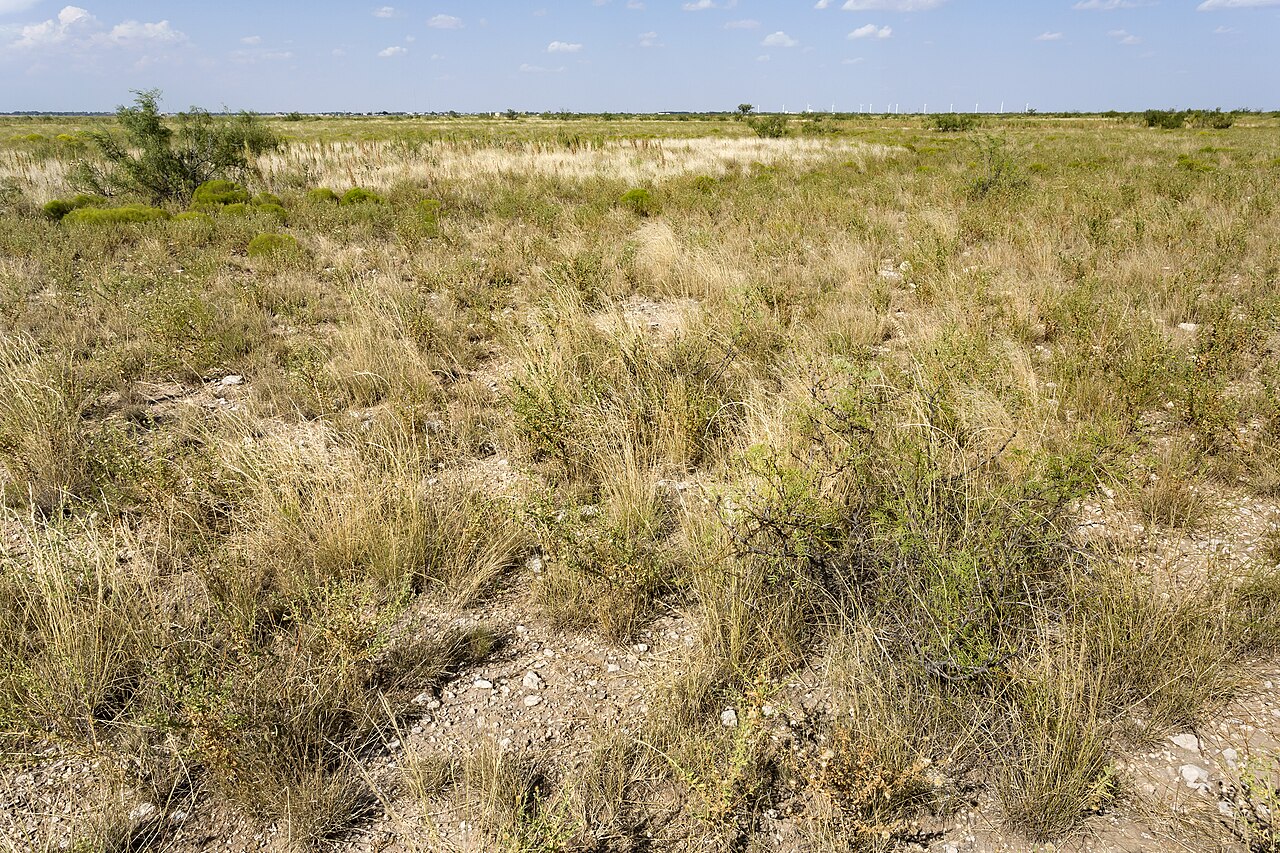
Tridens albescens, commonly known as White Tridens, is a native warm-season perennial bunchgrass of the southern Great Plains and Chihuahuan Desert borderlands. It belongs to the Chloridoideae grass subfamily, the same group that includes the gramas and buffalograss, and its genus name Tridens (“three teeth”) refers to the three-pointed lemma tip found on many species in the group. The common name “white” comes from its pale, almost bleached-looking seed head, which stands out against the tawny gold of surrounding prairie grasses in late summer and fall.
White Tridens forms dense, upright tufts 1 to 2.5 feet tall topped by a narrow, tapering, densely flowered panicle that ranges from pale greenish to nearly white — a useful field mark that distinguishes it at a glance from the more purplish or tan seed heads of many neighboring grasses. The plant is deeply drought-adapted, going dormant and straw-colored in the driest months and greening up quickly after rain, making it a dependable, low-maintenance presence on hot, exposed Plains and desert-grassland ground.
Across its range in Kansas, New Mexico, Arizona, and Texas, White Tridens grows on open plains, caliche flats, roadsides, and disturbed ground, often in the company of blue grama, sideoats grama, and mesquite. It has modest ornamental appeal but real practical value: as forage, as erosion-control cover on disturbed arid soils, and as a reliable, water-thrifty component of a native shortgrass prairie or desert-grassland planting.
Identification
White Tridens is a cespitose (tufted) perennial grass that forms a dense clump of erect culms rising from a fibrous root crown, without rhizomes or stolons to spread it beyond its original footprint. Culms are typically 12 to 31 inches (30–80 cm) tall, smooth, and unbranched below the inflorescence.
Leaves & Growth Habit
Leaf blades are narrow, 2 to 4 mm wide, flat to loosely rolled (involute) along the margins, and elongated, tapering gradually to a fine point. The foliage is typically gray-green during the growing season, curing to a pale straw color in dormancy, and the clump has a tidy, upright, tufted form rather than a sprawling or mat-forming habit.
Flowers & Seed Heads
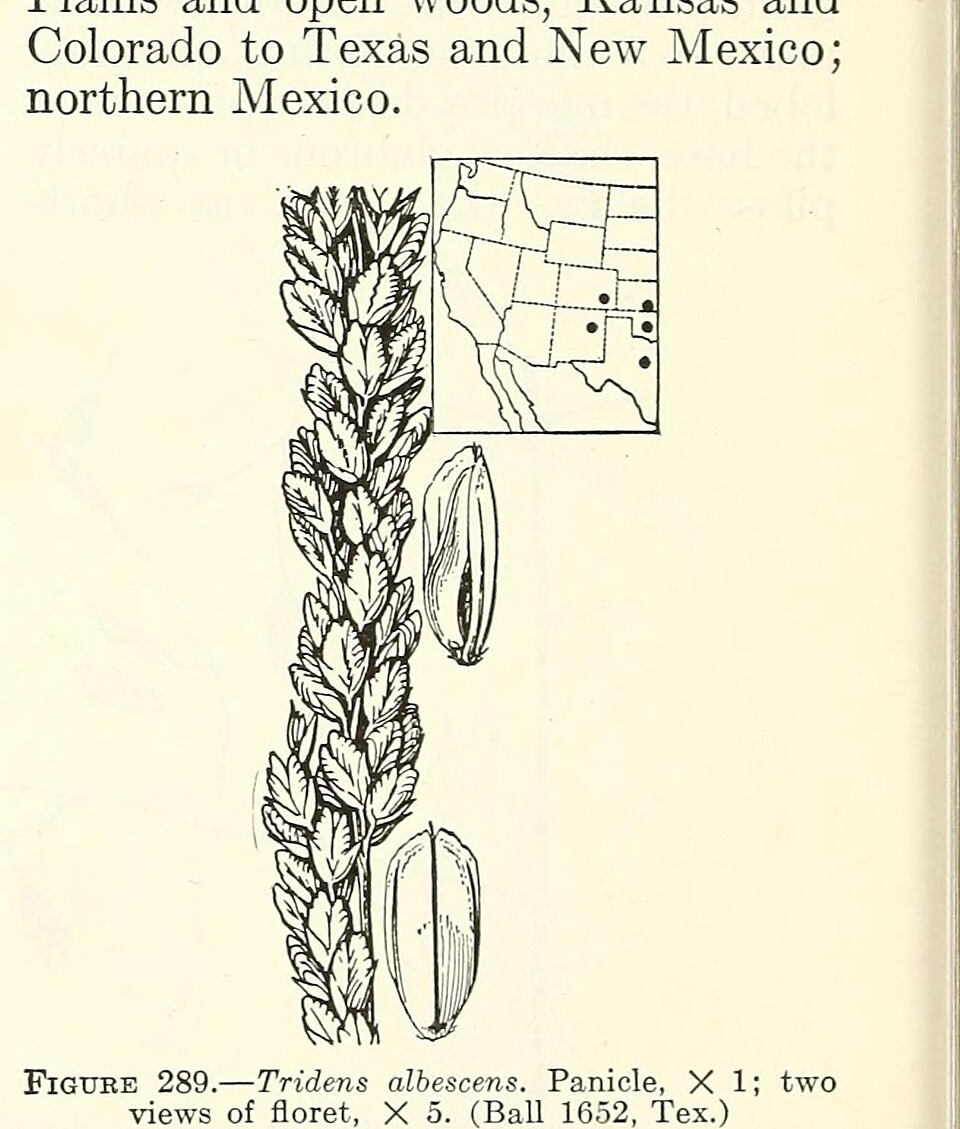
The panicle is the plant’s most distinctive feature: narrow, dense, and tapering evenly to a fine point, 4 to 8 inches (10–20 cm) long, and colored a pale greenish to nearly white — paler than almost any other common native grass in its range. Spikelets are short-stalked, each packed with 8 to 12 florets held tightly together (imbricate), which gives the panicle its dense, slightly fuzzy-looking texture up close. This pale, tightly packed seed head is the single best field mark for telling White Tridens apart from similar-looking Plains grasses.
Fruit & Seeds
Each spikelet contains numerous small florets; the lemmas are about 3 mm long, lightly hairy near the base and otherwise smooth, with little or no awn. Seed is small and wind-dispersed, shedding gradually from the dried panicle through fall and winter and providing a long season of forage for seed-eating wildlife.
Quick Facts
| Scientific Name | Tridens albescens (syn. Triodia albescens, Rhombolytrum albescens) |
| Family | Poaceae (Grass) |
| Plant Type | Warm-Season Perennial Bunchgrass |
| Mature Height | 1–2.5 ft (12–31 in culms) |
| Mature Spread | 1–1.5 ft clump |
| Growth Rate | Moderate |
| Sun Exposure | Full Sun |
| Water Needs | Low |
| Soil Type | Clay, caliche, or rocky soils; well-drained |
| Soil pH | 6.5–8.5 (neutral to alkaline) |
| Bloom Time | Late Summer – Fall |
| Flower Color | Pale greenish to nearly white |
| Fall Color | Straw-tan, pale seed heads persist |
| Fruit | Small grass seed (caryopsis), little to no awn |
| Deer Resistant | Moderate (grazed as forage by livestock and wildlife) |
| USDA Hardiness Zones | 6–10 |
Native Range
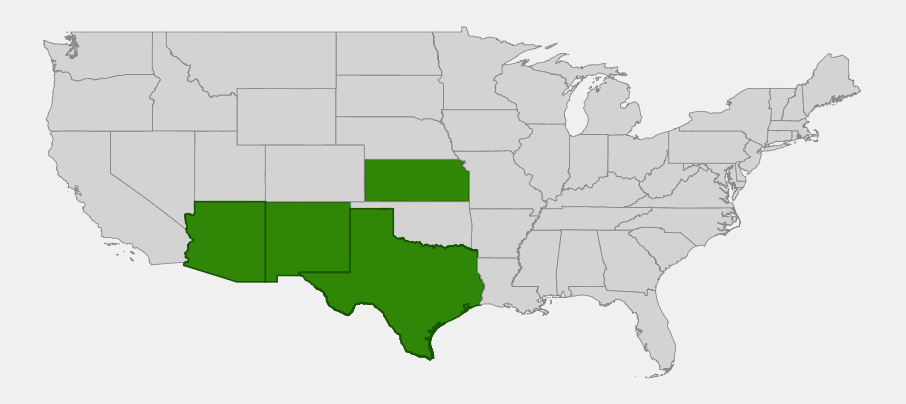
White Tridens is native to the southern Great Plains and the arid Southwest, ranging from Kansas south through New Mexico, Arizona, and Texas, and continuing into northern Mexico. Within this range it is most common on the plains and open grasslands of Texas, where it is a familiar component of shortgrass and mixed-grass prairie, as well as on caliche flats and disturbed ground farther west into New Mexico and southern Arizona.
It typically grows on flat to gently rolling open ground — plains, prairie swales, caliche and clay flats, roadsides, and overgrazed or disturbed pasture — rather than rocky slopes or riparian corridors. It tolerates heavy, alkaline clay soils that many other native grasses avoid, which helps explain its persistence on hard-used rangeland across its range.
White Tridens is frequently found growing alongside blue grama (Bouteloua gracilis), sideoats grama (Bouteloua curtipendula), tobosa grass, and honey mesquite (Prosopis glandulosa), forming part of the resilient grass community that has allowed southern Plains rangeland to recover from decades of heavy grazing pressure.
📋 Regional plant lists featuring White Tridens: Arizona & New Mexico · South and West Texas · Nebraska, Kansas & Eastern Colorado
Growing & Care Guide
White Tridens is an unfussy, tough native grass best suited to open, sunny sites with heavier or alkaline soils where many other ornamental grasses struggle. It is grown more for its ecological and forage value than for showy ornamental appeal, but its pale, tidy seed heads add a soft contrast in a native grassland planting.
Light
Plant in full sun. White Tridens is adapted to open Plains and desert-grassland conditions and does not perform well with significant shade competition from trees or shrubs.
Soil & Water
White Tridens is notably tolerant of heavy clay, caliche, and alkaline soils that limit many other native grasses, making it a useful choice on difficult, compacted, or disturbed ground. Established plants need little supplemental water beyond natural rainfall; occasional deep watering during extended summer drought will keep the clump looking fuller, but is not required for survival.
Planting Tips
Set out container-grown plants in spring, or seed in late spring ahead of early-summer rains. Space plants 12 to 18 inches apart for a naturalistic prairie planting. Because it does not spread by rhizomes, White Tridens stays where it is planted and is a good choice for defined beds or restoration plots where a non-aggressive native grass is wanted.
Pruning & Maintenance
Cut clumps back to a few inches in late winter before spring growth resumes, to remove the previous season’s dried foliage and tidy the clump. No fertilizer is typically needed; White Tridens is adapted to lean, mineral soils and performs best without rich amendment.
Landscape Uses
White Tridens fits best in practical, ecological plantings:
- Native shortgrass prairie restoration on the southern Plains
- Erosion control on disturbed clay or caliche ground
- Rangeland and pasture revegetation for forage value
- Low-water native grass gardens paired with gramas and wildflowers
- Difficult-soil plantings where heavy clay or alkalinity limits other species
Wildlife & Ecological Value
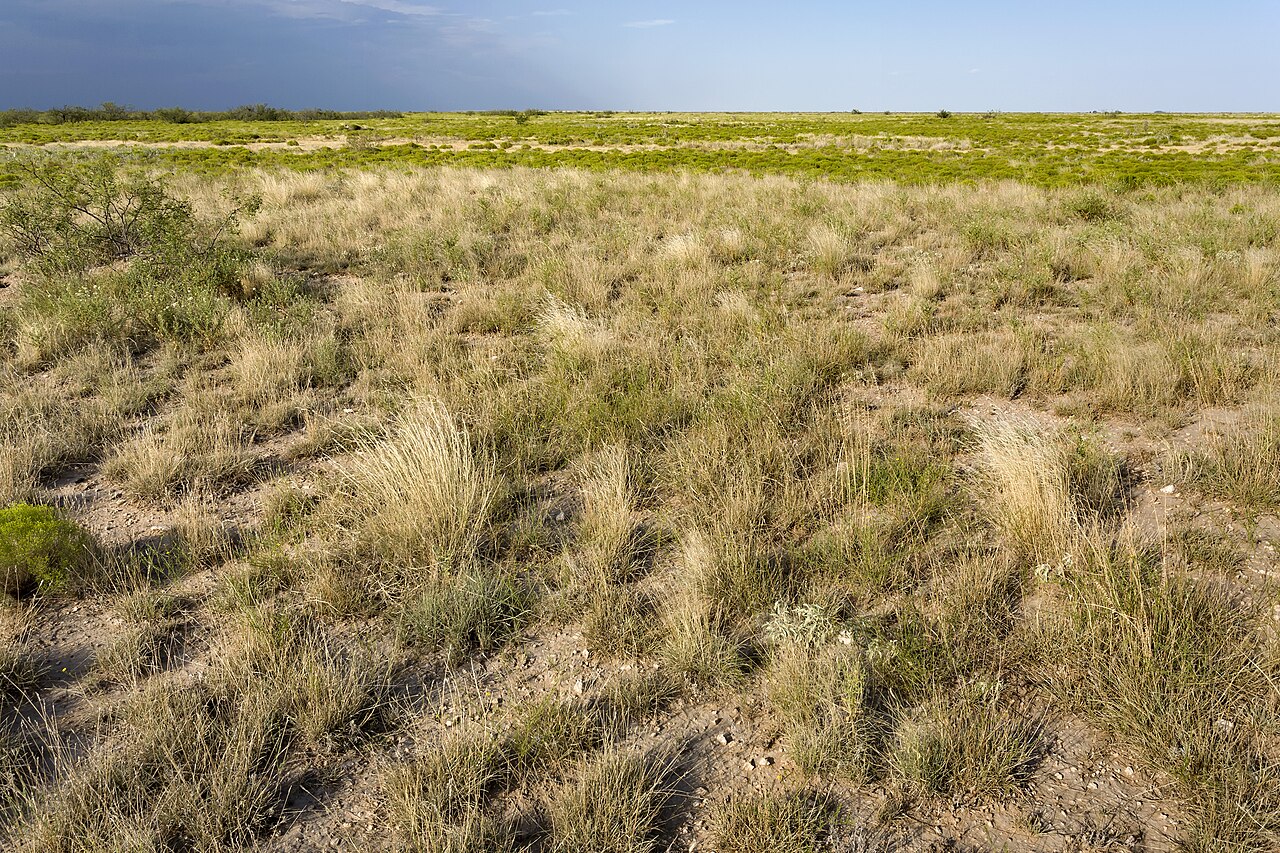
As one of the durable native grasses that anchors southern Plains and desert-grassland rangeland, White Tridens contributes meaningfully to soil stability and wildlife food webs even where it is not the showiest species present.
For Birds
Ground-foraging seed-eating birds, including sparrows, quail, and meadowlarks, feed on the abundant small seed shed from mature panicles through fall and winter, and the tufted clump structure provides low cover for nesting and escape from predators on otherwise open ground.
For Mammals
White Tridens is palatable to cattle and other livestock and is considered a useful, if not premier, warm-season forage grass across its range. Pronghorn and other Plains grazers browse it opportunistically, and small mammals use clump bases for shelter in open grassland.
For Pollinators
As a wind-pollinated grass, White Tridens offers no floral resources directly, but mature clumps support grassland insects — grasshoppers, beetles, and other arthropods — that form an important part of the food base for birds and other wildlife in prairie and desert-grassland ecosystems.
Ecosystem Role
White Tridens’ tolerance for heavy, alkaline, and disturbed soils makes it an important stabilizer on rangeland recovering from drought or overgrazing, helping hold soil and outcompete weedy annuals on difficult ground where many other native grasses are slower to establish.
Cultural & Historical Uses
White Tridens has long been recognized primarily as a rangeland forage grass across the southern Great Plains and the Southwest, valued by ranchers for persisting on heavy clay and caliche soils where more palatable grasses often thin out under grazing pressure. Its presence has historically been read by range managers as an indicator of grassland condition on hard-used pasture.
Soil conservation and range revegetation programs in Texas, New Mexico, and the southern Plains have included White Tridens in seed mixes aimed at stabilizing eroded or disturbed rangeland, building on its natural tolerance for difficult, compacted soils. It continues to be used today in native seed mixes for rangeland restoration in its native region.
Unlike many showier native grasses, White Tridens has not been widely adopted for ornamental landscaping, but interest in native shortgrass prairie restoration and low-water gardening has brought it modest attention from native-plant gardeners and conservation plantings seeking authentic Plains and desert-grassland species.
Frequently Asked Questions
How can I tell White Tridens apart from similar native grasses?
Its narrow, dense, tapering seed head in a distinctive pale greenish-to-white color is the best field mark — most neighboring Plains and desert grasses have tan, purplish, or golden seed heads, making White Tridens’ pale panicle stand out once you know to look for it.
Does White Tridens spread aggressively?
No. It is a non-rhizomatous bunchgrass that grows larger in clump size over time and may self-seed modestly, but it does not spread by runners and stays within its planted footprint.
What kind of soil does White Tridens need?
It is notably tolerant of heavy clay, caliche, and alkaline soils that many other native grasses struggle with, making it a useful choice for difficult rangeland and disturbed sites across its native range.
Is White Tridens good forage for livestock?
Yes, it is considered a useful warm-season forage grass, grazed by cattle and wild grazers alike, though it is not regarded as a premium forage species compared with some of the grama grasses it grows alongside.
When does White Tridens flower?
It typically produces its distinctive pale panicles in late summer and fall, following the warm-season growth period, and the dried seed heads often persist into winter, continuing to feed seed-eating wildlife.

Looking for a nursery that carries White Tridens?
Browse our native plant nursery directory: Arizona · New Mexico · Kansas · Texas