
Sand Hickory (Carya pallida)
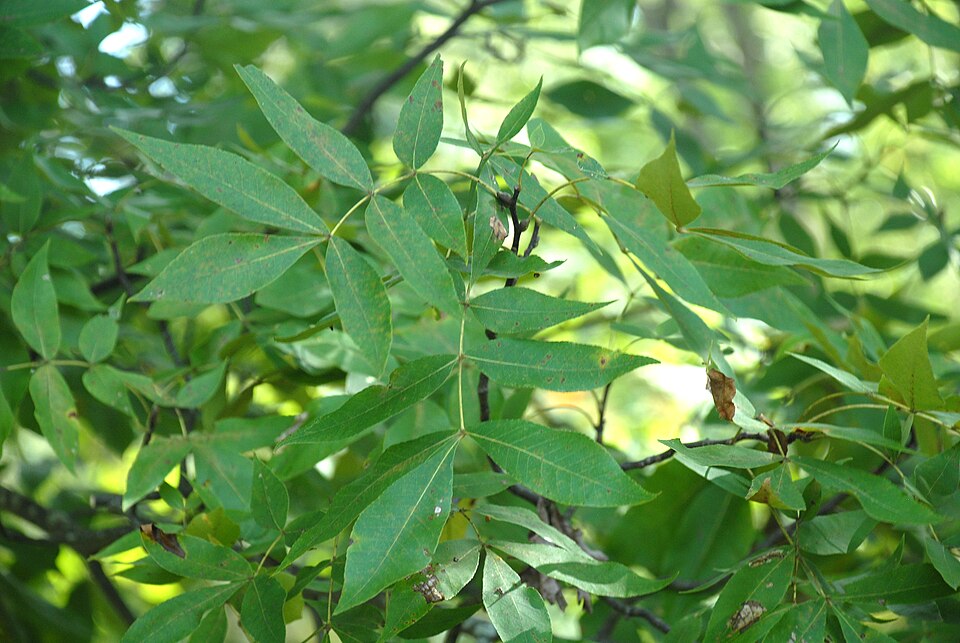
Carya pallida, known as Sand Hickory or Pale Hickory, is a modest-sized tree of the driest, sandiest soils in the southeastern United States — ground too poor and droughty for most of its hickory relatives. The species name pallida (“pale”) and the common name both point to the same feature: a fine coating of silvery to golden scales on the underside of the leaflets that gives the foliage a pale, almost dusty look compared to other hickories. Where you find deep, well-drained sand — old dune ridges, sandhill scrub, pine-oak woodland on coastal plain terraces — Sand Hickory is often one of the few hickories able to compete.
Sand Hickory rarely grows as large as river-bottom hickories; in its harsh, sandy habitat it typically tops out at 50 to 70 feet, with a slender trunk and a narrow, somewhat open crown. What it lacks in stature it makes up for in toughness, thriving on nutrient-poor, excessively drained soils that would stunt or kill most other canopy trees. For gardeners and land managers working with sandy, droughty sites in the Southeast — particularly in longleaf pine and sandhill restoration contexts — Sand Hickory is a genuinely useful, underused native tree.
Like all true hickories, Sand Hickory develops a deep taproot early in life, which makes larger nursery stock difficult to transplant successfully. It is best established from small container seedlings or direct-seeded nuts. Mature trees produce a small, sweet-kerneled nut relished by wildlife, and the tree’s tolerance of poor, acidic, excessively drained sand makes it a candidate for naturalized plantings where irrigation is not an option.
Identification
Sand Hickory is a medium-sized deciduous tree, usually 50 to 70 feet tall with a slender trunk 1 to 2 feet in diameter and a narrow, rounded crown. In open, sandy habitat the crown tends to stay thin and somewhat irregular compared to the full, dense crowns hickories develop on richer soil.
Bark
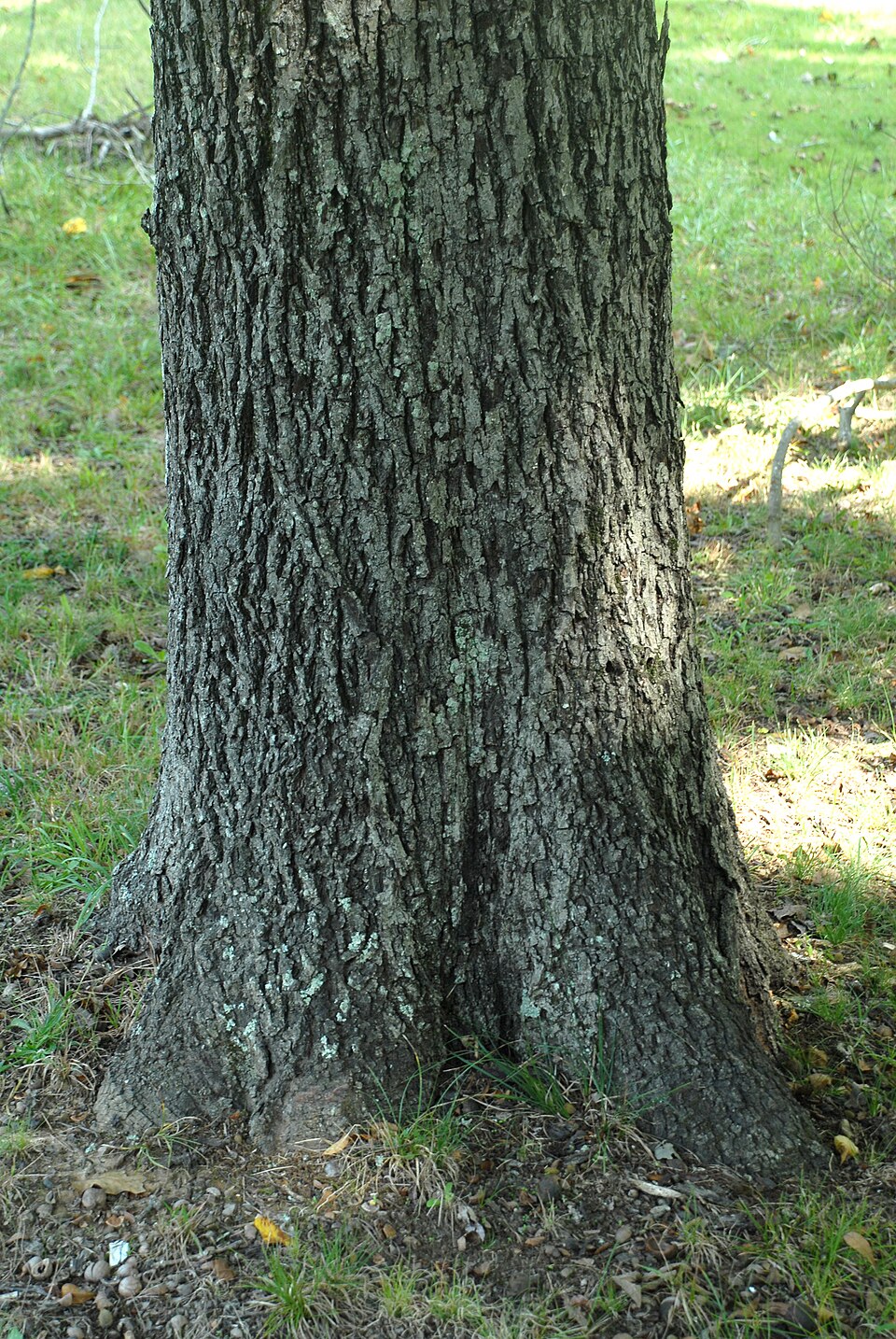
Bark on young trees is smooth and light gray to brownish, gradually developing shallow fissures and flattened, interlacing ridges with age — a tight, finely furrowed pattern that darkens to gray-brown on older trunks. It does not peel into loose plates the way Shagbark Hickory’s bark does.
Leaves
Leaves are pinnately compound, 8 to 12 inches long, with 5 to 9 leaflets (7 is most typical) that are ovate to lance-shaped and finely toothed. The defining field mark is on the underside: a dense covering of small, silvery to golden-yellow scales gives the lower leaf surface a distinctly pale, almost metallic sheen, especially when new growth catches the light. The rachis and midrib are softly hairy. Fall color is a warm golden yellow.
Flowers & Fruit
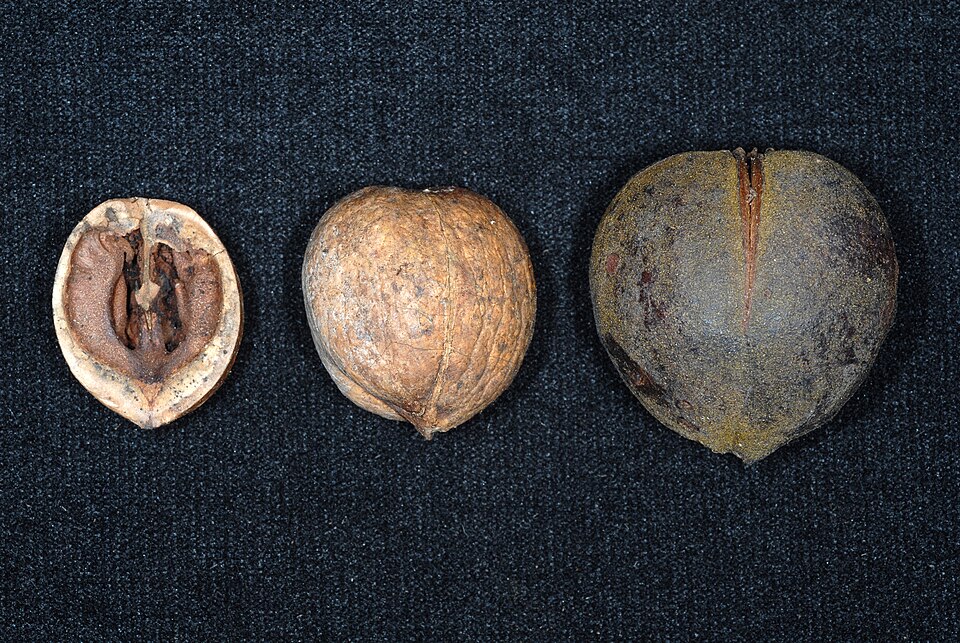
Sand Hickory is monoecious, with slender, drooping male catkins and small female flower spikes appearing in spring alongside the new leaves. The nut is small, round to slightly flattened, enclosed in a thin husk that splits into four sections at maturity. The kernel is sweet and edible, though small compared to many hickory species — a tradeoff for the tree’s ability to produce fruit on soil too poor for larger-fruited relatives.
Quick Facts
| Scientific Name | Carya pallida |
| Family | Juglandaceae (Walnut) |
| Plant Type | Deciduous Tree |
| Mature Height | 50–70 ft |
| Mature Spread | 25–40 ft |
| Growth Rate | Slow |
| Sun Exposure | Full Sun to Partial Shade |
| Water Needs | Low |
| Soil Type | Deep, dry, excessively drained sand |
| Soil pH | Acidic |
| Bloom Time | April – May |
| Fall Color | Golden yellow |
| Fruit | Small, sweet-kerneled nut in a thin four-valved husk |
| Wildlife Value | Moderate to high — nuts eaten by squirrels and other mammals |
| USDA Hardiness Zones | 6–9 |
Native Range
Sand Hickory is native to the southeastern United States, with a core range running from Delaware and southern New Jersey south through the Carolinas, Georgia, Alabama, and Mississippi to the Florida panhandle, west to Louisiana, Arkansas, and Texas, and north in scattered, more localized populations into southern Illinois, Indiana, and Missouri. Throughout this range it is tied closely to particular soil types rather than broad geography — deep sand ridges, sandhills, and dry, excessively drained coastal plain and piedmont terraces.
Typical habitat includes sandhill pine-oak woodland, dry upland longleaf pine savanna, and dry sandy ridges within mixed oak-hickory forest. These are sites that are often droughty, low in nutrients, and subject to periodic fire in their natural state — conditions Sand Hickory tolerates far better than most other hickories. It is rarely, if ever, found on moist bottomland or clay soils.
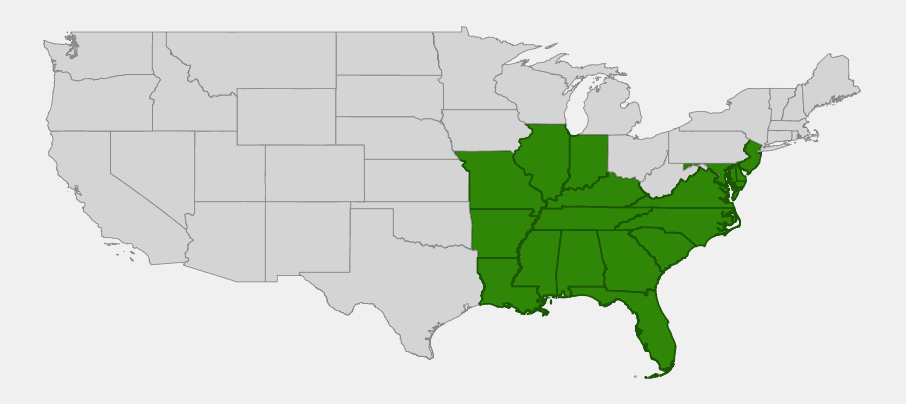
📋 Regional plant lists featuring Sand Hickory: Georgia, Alabama & Mississippi · Arkansas, Louisiana, Eastern Oklahoma & Eastern Texas · Delaware, Southern New Jersey & Long Island · Illinois, Iowa & Missouri · Ohio & Indiana · Kentucky & Tennessee · Maryland, Virginia & West Virginia · North Carolina & South Carolina · New York, Pennsylvania & Northern New Jersey
Growing & Care Guide
Sand Hickory is tailor-made for the poor, dry, sandy sites that frustrate most other trees — a genuinely useful native for restoration and low-input landscaping where other hickories would struggle.
Light
Full sun produces the best growth and nut production, though young trees tolerate partial shade as understory saplings in open pine-oak woodland, where they can persist for years waiting for a canopy gap.
Soil & Water
This is the hickory to choose for deep, dry, acidic sand where irrigation is limited or absent. Sand Hickory is notably more drought-tolerant than nearly all of its relatives and performs poorly, if at all, on heavy clay or consistently moist soil. If your site holds water after rain, this is not the right hickory for it.
Planting Tips
As with other hickories, the deep taproot makes larger transplants risky. Start with small container seedlings or direct-seed seed nuts in fall, protecting them from rodents with wire mesh until they germinate. Choose the final planting location carefully, since Sand Hickory does not transplant well once established. Allow 25 to 40 feet of spread at maturity.
Pruning & Maintenance
Minimal pruning is needed — remove dead or damaged wood during dormancy. Because Sand Hickory grows in naturally fire-adapted sandhill and pine woodland communities, established trees generally tolerate occasional light surface fire better than many hardwoods, though young saplings are vulnerable. No significant pest or disease problems are typical.
Landscape Uses
Sand Hickory fits a narrow but valuable niche in native landscaping:
- Sandhill and longleaf pine restoration, paired with Blackjack Oak and Post Oak
- Low-water landscaping on droughty, sandy residential or rural sites in the Southeast
- Wildlife plantings where nut-bearing trees are wanted but soil is too poor for richer-site hickories
- Erosion control on loose, sandy slopes once established
Wildlife & Ecological Value
For Mammals
Squirrels, especially fox squirrels common in sandhill and longleaf pine habitats, rely on Sand Hickory nuts as a fall and winter food source, along with chipmunks and other small mammals. Deer browse young foliage and saplings.
For Birds & Insects
Like other hickories, Sand Hickory hosts a range of native moth and butterfly larvae, contributing to the insect food base that supports breeding songbirds in sandhill and pine-oak woodland. Woodpeckers forage on insects in and under the bark of mature and dead trees.
Ecosystem Role
Sand Hickory is an indicator and stabilizing component of fire-adapted sandhill and longleaf pine ecosystems — among the most biodiverse but also most reduced habitats in the southeastern United States. Its deep root system helps anchor loose, erodible sand, and its presence alongside Blackjack Oak and pines signals a healthy, well-drained upland sandhill community.
Cultural & Historical Uses
Sand Hickory wood shares the exceptional strength, density, and shock resistance common to the genus, historically valued for tool handles and other uses demanding durability, though its smaller stature made it less commercially significant than larger hickories like Shagbark or Shellbark. Indigenous peoples throughout the Southeast made use of hickory nuts broadly for food, pounding and boiling them to extract an oily liquid used in cooking. This is presented as historical context rather than a foraging recommendation; accurate identification and proper preparation knowledge are essential before consuming any wild nut.
Frequently Asked Questions
How do I identify Sand Hickory versus other hickories?
Look at the underside of the leaflets: Sand Hickory has a dense covering of silvery to golden scales that gives the foliage a distinctly pale cast, especially visible in good light. Combined with its preference for deep, dry sand rather than richer soils, this is usually enough to separate it from other hickories growing nearby.
Can Sand Hickory grow in clay soil?
It generally performs poorly in heavy clay or consistently wet soils. Sand Hickory is adapted to deep, dry, excessively drained sand, and that preference carries over into cultivation — it is not a good choice for soils that hold moisture after rain.
Are Sand Hickory nuts edible?
Yes, the kernel is sweet, though the nut is smaller than many other hickory species, yielding less edible kernel per nut. Wildlife, especially squirrels, typically harvest the crop quickly.
How fast does Sand Hickory grow?
It is a slow-growing tree, even slower than many other hickories, reflecting the nutrient-poor, droughty soils it is adapted to. Patience is part of growing this species successfully.
Is Sand Hickory good for restoration projects?
Yes — it is a valuable but underused species for longleaf pine and sandhill restoration work in the Southeast, where few other hardwood trees tolerate the deep, dry sand conditions as well.

Looking for a nursery that carries Sand Hickory?
Browse our native plant nursery directory: Alabama & Arkansas · Delaware, Florida & Georgia · Illinois & Indiana · Kentucky, Louisiana, Maryland, Mississippi & Missouri · New Jersey & North Carolina · South Carolina, Tennessee & Virginia

