
Poisonwood (Metopium toxiferum)
⚠ Identification & safety note: Metopium toxiferum, the Poisonwood, is a close relative of poison ivy and poison sumac, and contact with its sap, bark, leaves, or smoke can cause severe allergic contact dermatitis in most people. This page is written primarily as an identification and safety guide: poisonwood should never be handled, cut, or burned without protection, even though it is a valuable and common native wildlife tree where it grows.
Poisonwood is a common, often multi-trunked tree of South and Central Florida’s pine rocklands, hammocks, and coastal hardwood forests — far more widespread in the state than Florida’s rarest hammock trees. Unlike many of its tropical hardwood hammock neighbors, poisonwood is in no danger of disappearing from Florida; it remains a familiar, if hazardous, presence throughout its range. Its sap contains urushiol-related compounds closely related to those in poison ivy and poison sumac, and reactions in sensitive people can be severe, including significant blistering and swelling.
Despite the hazard it poses to people, poisonwood is ecologically important. Its abundant orange fruit is a key food source for the white-crowned pigeon, a species of conservation concern in Florida that depends heavily on poisonwood and other hammock fruit trees, along with many other birds and some mammals that show no ill effects from the fruit or foliage.
Identification
Poisonwood is most reliably identified by its distinctive bark, its pinnately compound leaves with black sap spots, and its black-streaked foliage and dead wood, all of which result from its sap darkening on exposure to air.
Bark & Stems
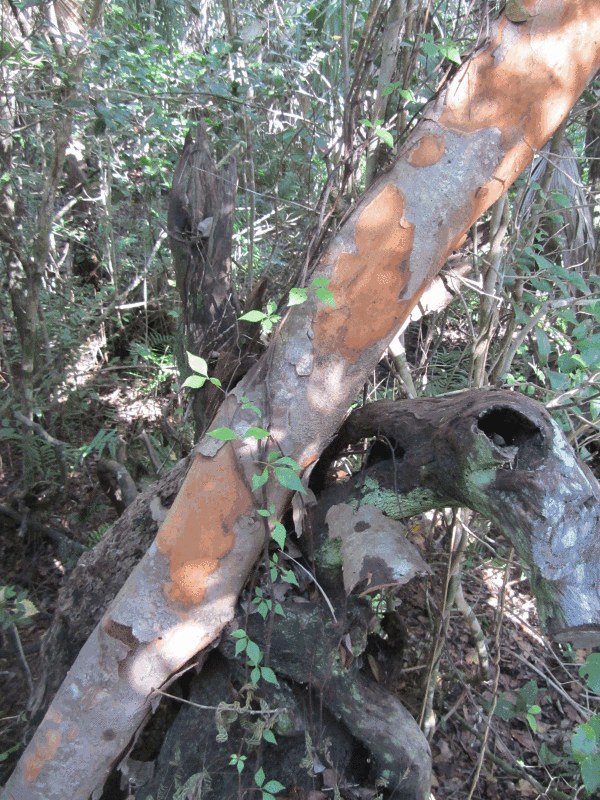
The bark is one of poisonwood’s most distinctive features: reddish-brown and blotchy, often peeling in patches to reveal lighter inner bark, with black staining where sap has oxidized after a wound or natural crack. This blotchy, black-streaked bark pattern is a reliable identification clue even when leaves are not visible.
Leaves
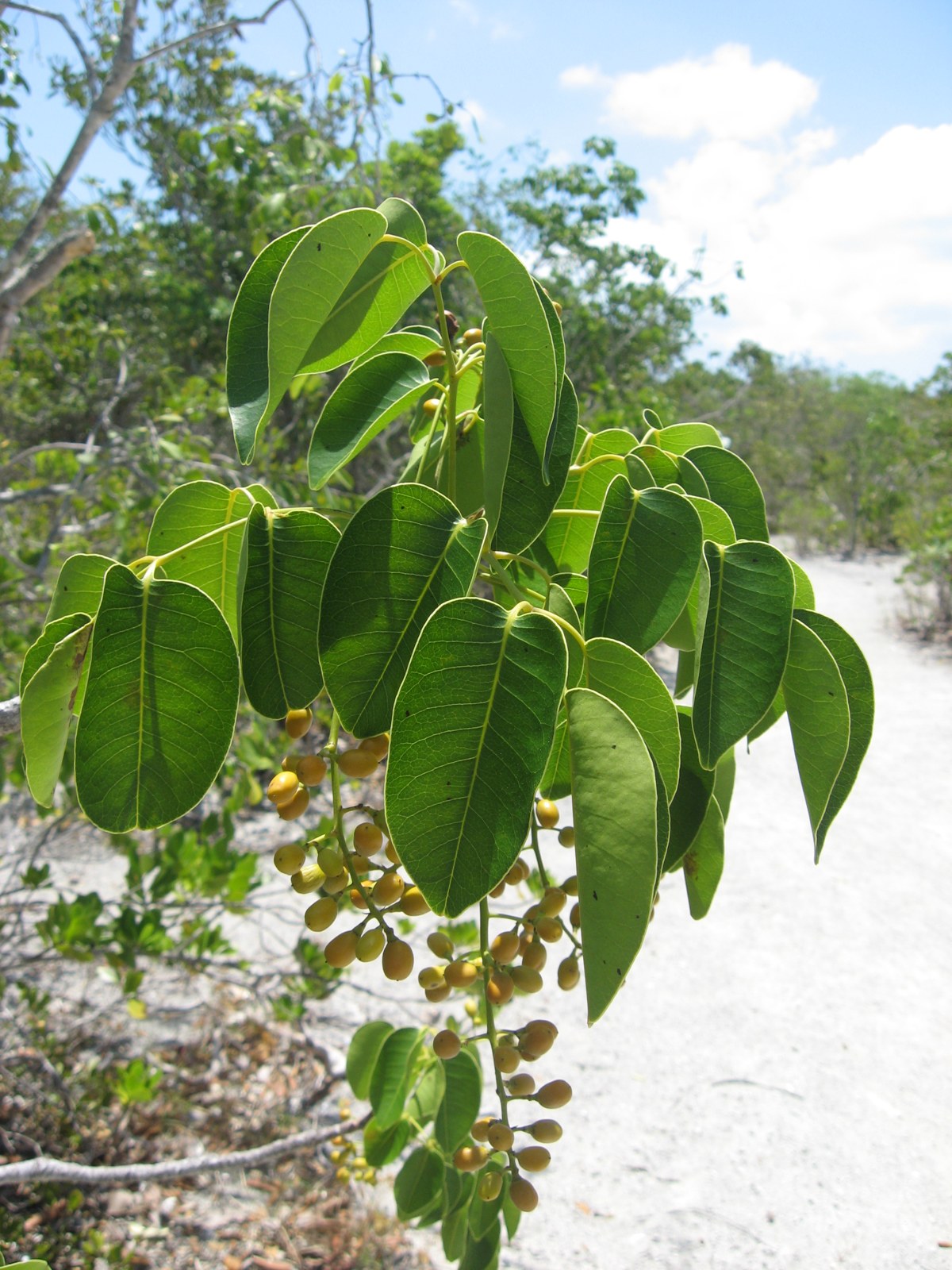
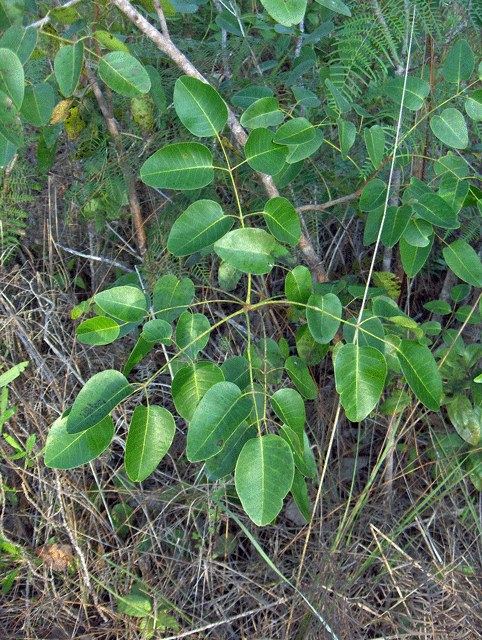
Leaves are pinnately compound with three to seven (usually five) glossy, leathery leaflets, each 2 to 4 inches long with a rounded or slightly notched tip. Leaflets often show small black spots or blotches where sap has oxidized on the leaf surface — another useful identification marker, since few other Florida hammock trees show this blackened-sap pattern.
Flowers
Small greenish-yellow flowers are borne in loose, branched clusters (panicles) in the leaf axils, mainly in late winter and spring. Like many Anacardiaceae relatives, the flowers are inconspicuous compared to the plant’s fruit and foliage.
Fruit & Seeds
The fruit is a small, orange-yellow drupe about 1/3 to 1/2 inch long, borne in loose hanging clusters that ripen over an extended season. Although the fruit is a major wildlife food source, it should not be handled or eaten by people, since the same irritant compounds found in the sap and bark can also be present in and around the fruit.
Quick Facts
| Scientific Name | Metopium toxiferum |
| Family | Anacardiaceae (Cashew/Sumac) |
| Plant Type | Evergreen tree — causes severe skin irritation |
| Mature Height | 15–35 ft (occasionally larger) |
| Mature Spread | 15–25 ft |
| Growth Rate | Moderate |
| Sun Exposure | Full Sun to Partial Shade |
| Water Needs | Low; drought-tolerant once established |
| Soil Type | Limestone, sandy, or rocky hammock/pineland soils |
| Soil pH | Neutral to alkaline |
| Bloom Time | Late winter–spring |
| Flower Color | Greenish-yellow |
| Fall Color | Evergreen; no notable fall color |
| Fruit | Orange-yellow drupes; key white-crowned pigeon food |
| Toxicity | High — causes severe allergic dermatitis on contact |
| USDA Hardiness Zones | 10 – 11 |
Native Range
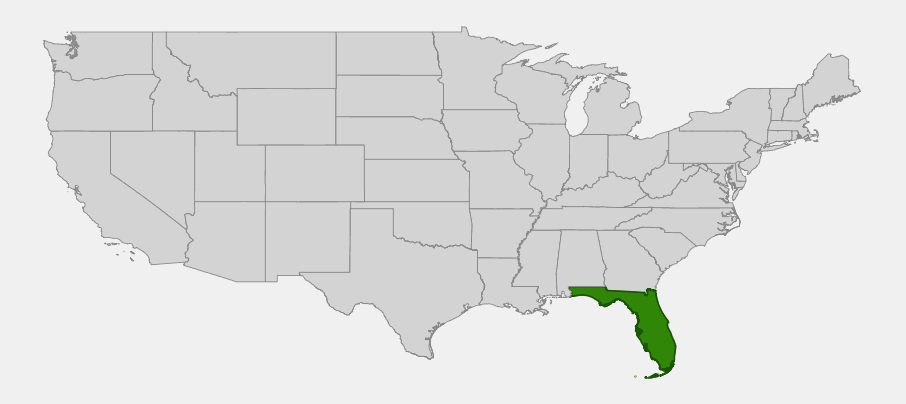
In the United States, poisonwood is native to South and Central Florida, occurring from around Martin and Lee counties south through Miami-Dade County and the Florida Keys. Unlike several of its rarer tropical hammock neighbors, poisonwood remains a common and widespread tree throughout this range, found in a variety of upland habitats rather than a handful of isolated sites.
Poisonwood grows in pine rocklands, tropical hardwood hammocks, rockland hammocks, and coastal berms, often alongside gumbo limbo, wild tamarind, and other South Florida hammock species. It tolerates the thin, rocky, well-drained soils typical of these habitats and shows good resilience to Florida’s dry season.
Outside the United States, poisonwood occurs throughout the Bahamas and the wider Caribbean, where it is similarly recognized as both an ecologically valuable tree and a significant contact hazard.
📋 Regional plant lists featuring Poisonwood: none yet — no plantnative.org regional list currently covers South Florida’s pine rockland and hammock species; see our full native plant directory for other Florida-native trees.
Identification & Safety in the Field
Poisonwood is not a tree for typical home landscaping, and this section focuses on recognizing and safely avoiding it rather than planting instructions. If you are hiking or working in South Florida pine rocklands or hammocks, learning to recognize poisonwood is an important field skill.
How to Recognize It
Look for the combination of blotchy, peeling, black-streaked bark and glossy compound leaves with small black sap spots. These black markings — on both bark and leaves — are a strong identification clue, since few other common Florida hammock trees develop this blackened-sap pattern.
Avoid All Contact
Do not touch the sap, bark, leaves, or broken twigs with bare skin. Reactions range from mild redness to severe blistering and swelling in sensitive individuals, similar to a serious poison ivy reaction, and symptoms may be delayed by a day or more after contact.
Never Burn the Wood
Never burn poisonwood brush, deadwood, or trimmings. As with poison ivy and poison sumac, the smoke carries irritant compounds that can cause severe respiratory and eye irritation if inhaled.
If Exposed
If skin contacts poisonwood sap, wash the area promptly with soap and water, avoid scratching, and watch for a developing rash over the following day or two. For significant reactions — especially swelling, blistering, or any eye exposure — seek medical attention, as symptoms can be more severe than standard poison ivy dermatitis for some people.
Wildlife & Ecological Value
Unlike manchineel, poisonwood’s hazard to humans does not diminish its ecological importance — it is one of the more valuable native wildlife trees in South Florida’s hammocks and pinelands.
For Birds
Poisonwood’s abundant fruit is a critical food source for the white-crowned pigeon, a Florida species of conservation concern that relies heavily on poisonwood and related hammock fruit trees for its diet, particularly during the nesting season. Many other hammock birds also feed on the fruit, making poisonwood an ecologically significant, if hazardous, native tree. For more on supporting native bird populations through plant choices, see our guide to attracting songbirds with native plants.
For Pollinators
The small greenish-yellow flowers attract native bees and other pollinating insects during the late winter and spring bloom period, adding to the floral resources available in South Florida’s pine rocklands and hammocks.
Ecosystem Role
As a common component of pine rockland and hammock habitats, poisonwood contributes meaningfully to the structure and fruit resources of these increasingly fragmented South Florida ecosystems. Because pine rocklands themselves are a globally imperiled habitat type, largely confined today to small preserved fragments in Miami-Dade County, every intact native component — including hazardous ones like poisonwood — plays a role in supporting the broader ecosystem’s wildlife.
Cultural & Historical Uses
Poisonwood has long been recognized by South Florida’s Indigenous peoples and later residents as a tree to avoid handling, a caution reflected in both its common and scientific names (“toxiferum,” meaning toxin-bearing). Unlike some of its Anacardiaceae relatives elsewhere in the world that have been used historically for lacquer or dye production, poisonwood in Florida is not documented as having had significant traditional craft or material uses, largely because of the hazard its sap poses to anyone attempting to work with the wood.
Today, poisonwood is best known among South Florida naturalists and hikers as a tree to identify and avoid, and among birders as an important food plant for the white-crowned pigeon — a dual reputation as both hazard and habitat cornerstone that is fairly unique among Florida’s native trees.
Frequently Asked Questions
Is poisonwood related to poison ivy?
Yes. Poisonwood belongs to the same plant family (Anacardiaceae) as poison ivy and poison sumac, and its sap contains related irritant compounds that cause similar allergic contact dermatitis in sensitive people.
How do I identify poisonwood in the field?
Look for blotchy, peeling, black-streaked bark and glossy compound leaves (usually five leaflets) with small black sap spots on the leaf surface — both features result from the sap darkening on exposure to air and are strong identification clues.
Is poisonwood common in Florida, or is it rare?
It is common and widespread within its South and Central Florida range, unlike some of Florida’s rarer hammock trees. Its abundance is actually part of why encountering it is a real concern for hikers and land managers in the region.
Can I eat poisonwood fruit?
No. Although birds, especially the white-crowned pigeon, rely heavily on poisonwood fruit, it is not safe for human consumption and should never be eaten or handled without protection.
What should I do if I think I touched poisonwood?
Wash the exposed skin promptly with soap and water, avoid touching your eyes or face before washing, and monitor for a developing rash over the next day or two; seek medical care if you experience significant swelling, blistering, or any eye exposure.

Looking for a nursery that carries Poisonwood?
Poisonwood is not typically grown in home landscapes due to its contact hazard; for safe, bird-friendly South Florida native trees, browse our native plant nursery directory instead: Florida
For non-hazardous South Florida hammock trees that make excellent landscape choices, see our pages on Gumbo Limbo and Lime Pricklyash. To learn more about Florida’s native tree palette, see our guide to shade trees for South Florida.

