
Arkansas Oak (Quercus arkansana)
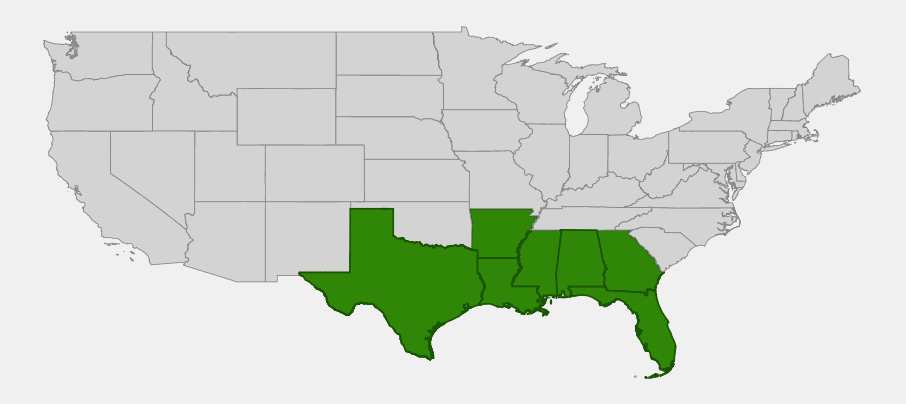
Quercus arkansana, the Arkansas Oak, is a small to medium red oak with one of the most scattered, least-understood distributions of any southeastern tree. Despite the name, it is not confined to Arkansas; it turns up in small, isolated populations across the Gulf and South Atlantic Coastal Plain, from eastern Texas to the Florida Panhandle, almost always in dry, sandy upland sites that few other hardwoods favor.
This is a genuinely uncommon tree. The IUCN lists it as Vulnerable, and across most of its range it occurs as scattered individuals rather than dense stands, with a couple of notable exceptions in Arkansas and the Florida Panhandle where it can locally dominate the understory of pine woodlands. It grows slowly in the shade of taller pines and oaks, reaching only 30 to 50 feet, with a slender trunk and black, roughened bark that darkens with age.
Because it is rare in cultivation and rarely offered by nurseries, Arkansas oak is mostly a tree for conservation-minded gardeners, land managers restoring sandhill or longleaf pine habitat, and collectors of uncommon native oaks. Its slow, unhurried pace is typical of many southern oaks; see our general guide to how fast oak trees grow for more on what to expect. Where it is planted in appropriate dry, sandy, well-drained soil, it asks for very little and rewards patience with a tough, long-lived addition to a native pine-oak woodland planting, in line with the general benefits of planting native trees for regional wildlife.
Identification
Arkansas oak is a small to medium tree, usually 30 to 50 feet tall with a slender, often leaning or crooked trunk under a foot in diameter. It is a true understory tree through much of its range, growing beneath taller pines and oaks rather than forming its own canopy layer, which gives it a more open, airy crown than many oaks.
Bark
The bark is dark gray to black, relatively smooth on young trunks and developing shallow, irregular fissures and small blocky plates with age. The dark color is distinctive among the sandhill oaks it grows with, most of which have paler, rougher bark.
Leaves
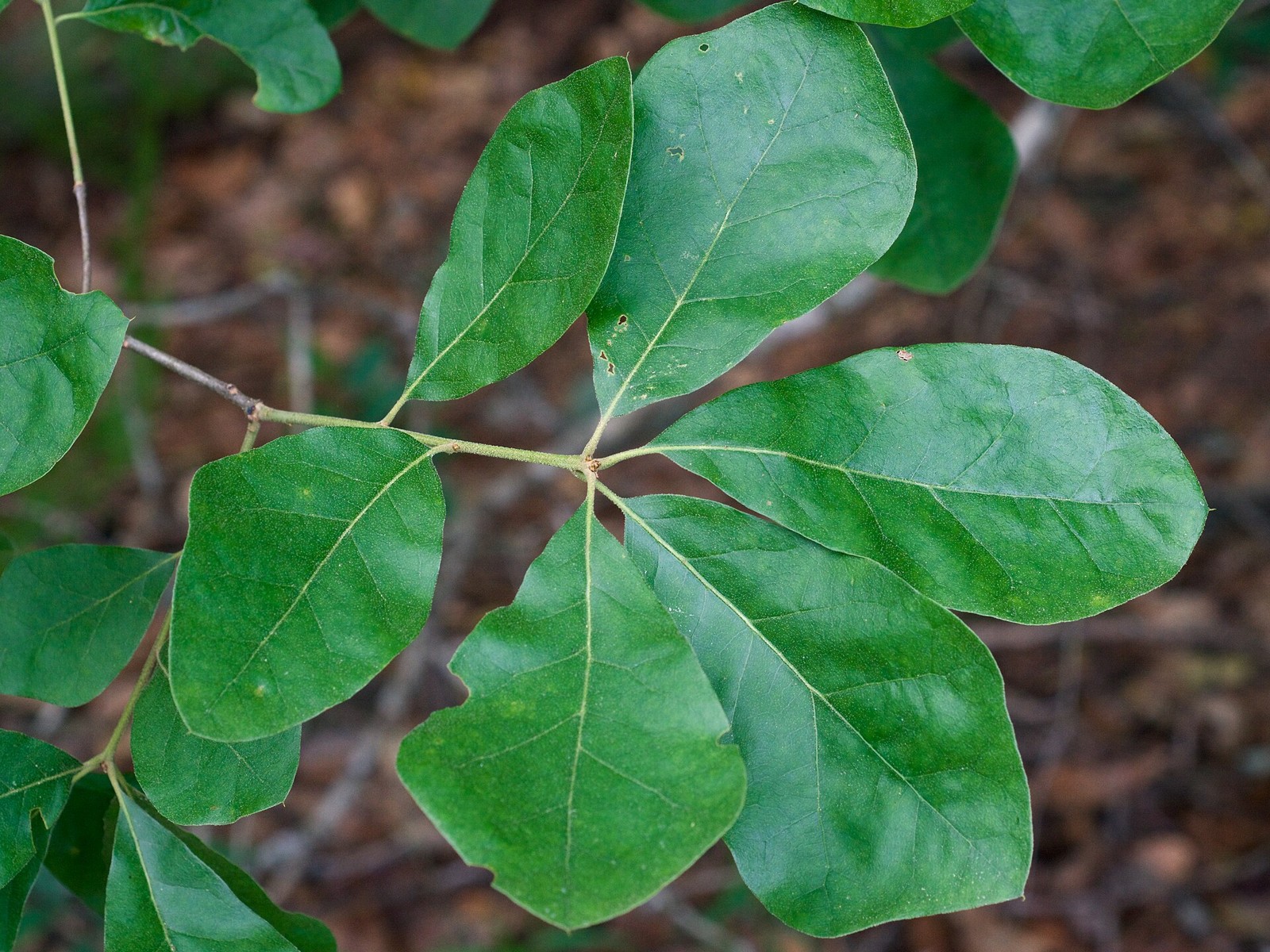
Leaves are 2 to 5 inches long, alternate, and glossy dark green above with a paler, often slightly hairy underside. Leaf shape is unusually variable even on the same branch: some leaves are simple and unlobed with a rounded or slightly notched tip, while others show two or three shallow, bristle-tipped lobes reminiscent of blackjack oak. This variability, combined with its rarity, makes Arkansas oak one of the trickier southeastern oaks to identify with confidence; comparing bark, habitat, and several leaves together gives the best result.
Flowers & Acorns
Like other red oaks, Arkansas oak flowers in spring with inconspicuous wind-pollinated catkins, and its acorns take two growing seasons to mature, ripening in the fall of their second year. The acorns are small, rounded, and enclosed for about a third of their length in a thin, scaly cap, similar in general appearance to the acorns of its close relatives water oak and blackjack oak.
Quick Facts
| Scientific Name | Quercus arkansana |
| Family | Fagaceae (Beech/Oak) |
| Plant Type | Deciduous understory tree |
| Mature Height | 30–50 ft |
| Mature Spread | 20–30 ft |
| Growth Rate | Slow |
| Sun Exposure | Part Shade to Full Sun |
| Water Needs | Low to average; very drought tolerant once established |
| Soil Type | Dry, sandy, well-drained upland soil |
| Soil pH | Acidic |
| Bloom Time | March – April |
| Flower Color | Yellow-green (inconspicuous catkins) |
| Fall Color | Yellow-brown |
| Fruit | Small acorns, maturing over two seasons |
| Deer Resistant | Moderate |
| USDA Hardiness Zones | 7–9 |
Native Range
Arkansas oak occurs in scattered, disjunct populations across the Gulf and South Atlantic Coastal Plain: eastern Texas, southern Arkansas, Louisiana, Mississippi, Alabama, Georgia, and the Florida Panhandle. It is rarely a dominant tree; most populations consist of a handful of scattered individuals, with a few notable exceptions in Ouachita County, Arkansas, and parts of the Florida Panhandle where it forms larger, locally common stands.
Typical habitat is dry, sandy upland ground: sandhills, the tops of ravines, steepheads, and areas just above the headwaters of small streams, usually under a canopy of loblolly and shortleaf pine mixed with other oaks such as water oak, cherrybark oak, and sand post oak. It tolerates shade well as an understory tree but can also persist in more open sandhill woodlands with longleaf pine and turkey oak.
The IUCN lists Arkansas oak as Vulnerable, and its scattered populations face ongoing pressure from conversion of natural pine woodland to pine plantation, land clearing, and periodic drought-related dieback. Because reproduction is often sparse and seedlings compete poorly in disturbed ground, protecting existing stands and favoring natural pine-hardwood management over clear-cutting are important for the species’ long-term survival.
📋 Regional plant lists featuring Arkansas Oak: Arkansas, Louisiana, Eastern Oklahoma & Eastern Texas · Georgia, Alabama & Mississippi
Growing & Care Guide
Arkansas oak is not a tree for average garden soil; it needs the dry, sandy conditions of its native sandhills to thrive, and it is mainly planted by native-plant enthusiasts and restoration projects rather than general landscapers.
Light
In the wild Arkansas oak tolerates significant shade as a pine-forest understory tree, but it also grows well in more open, sunny sandhill settings. For garden planting, part shade to full sun both work, as long as the soil is appropriately dry and well drained.
Soil & Water
Give Arkansas oak dry, acidic, sandy soil with excellent drainage; it does not tolerate heavy clay, poor drainage, or consistently moist conditions, unlike many of its Coastal Plain relatives. Once established it is very drought tolerant, reflecting its origin on upland sand ridges where water drains away quickly. Water occasionally during the first year or two, then let the tree manage on its own.
Planting Tips
Plant small container-grown trees, since the species transplants poorly once it develops a long taproot. Choose a well-drained, sandy site that mimics a natural sandhill, and avoid amending the soil with organic matter or fertilizer, which can work against this lean-soil specialist. Because nursery stock is scarce, plan ahead and expect to source trees from specialty native-plant growers within its range.
Pruning & Maintenance
Arkansas oak needs very little pruning. Remove dead or crossing branches in late winter while the tree is dormant, and otherwise leave it alone; its naturally open, slightly irregular form is part of its character as an understory species. It has no significant pest or disease problems beyond the general issues that affect oaks.
Propagation
Propagation is from acorns, collected in fall of their second year when they mature and drop. Since red oak acorns (unlike white oak acorns) can be stored over winter with cold, moist stratification, collected seed can be refrigerated in slightly damp sand or peat for a few months before spring sowing. Germination and early growth are slow, matching the species’ overall unhurried pace.
Landscape Uses
- Longleaf pine and sandhill restoration alongside turkey oak and sand pine
- Dry woodland gardens on sandy, well-drained sites where few other oaks will grow
- Conservation plantings for a vulnerable, locally rare species
- Mixed pine-hardwood understory plantings with blackjack oak and bluejack oak
Wildlife & Ecological Value
Arkansas oak is a modest but meaningful contributor to the sandhill and dry pine-woodland ecosystems where it grows.
For Pollinators
Like all oaks, Arkansas oak is wind-pollinated rather than insect-pollinated, but as a member of the genus it hosts an outsized share of native moth and butterfly caterpillars, which in turn support a wide range of pollinators and insect-eating wildlife in the surrounding habitat.
For Birds
Acorns provide fall and winter food for jays, woodpeckers, and other birds, while the understory canopy offers nesting cover in otherwise open pine woodlands. Caterpillars feeding on its leaves are an important food source for breeding songbirds in spring, part of the larger case for planting native trees for wildlife.
For Mammals
Squirrels and other small mammals feed on the acorns and help disperse seed into new sandy openings. Deer browse young growth, which, combined with naturally sparse reproduction, can be a limiting factor for seedling survival in some populations.
Ecosystem Role
As an understory component of fire-adapted longleaf pine and sandhill ecosystems, Arkansas oak adds structural diversity to a habitat type that has shrunk dramatically across the Southeast, making every intact population valuable to the many species, from gopher tortoises to pine warblers, that depend on healthy sandhill habitat.
Cultural & Historical Uses
Because Arkansas oak has always been rare and scattered, it has no significant history of commercial timber use or documented traditional use separate from the general sandhill oak community. Charles Sprague Sargent first described the species in the late nineteenth century from Arkansas material, and its taxonomy and true distribution remained poorly understood for decades afterward, with new populations still occasionally documented by botanists today.
Its main modern significance is as an indicator of intact, high-quality sandhill and dry pine-hardwood habitat. Land managers restoring longleaf pine ecosystems increasingly recognize Arkansas oak as a species worth protecting and reintroducing where it has been lost, both for its own conservation value and as a marker of healthy fire-maintained woodland.
Frequently Asked Questions
Why is Arkansas oak so hard to find?
It is genuinely uncommon in the wild, classified as Vulnerable by the IUCN, and it is rarely propagated commercially. Most gardeners who grow it source seedlings from specialty native-plant nurseries or conservation programs within its native range.
Is Arkansas oak native only to Arkansas?
No. Despite the name, it occurs in scattered populations from eastern Texas through Louisiana, Mississippi, Alabama, Georgia, and the Florida Panhandle, with some of its largest stands actually in Arkansas and Florida.
What soil does Arkansas oak need?
Dry, sandy, acidic, well-drained upland soil, similar to turkey oak and other sandhill species. It struggles in heavy clay or consistently wet ground.
How can you tell Arkansas oak apart from blackjack oak?
Both can have shallowly lobed leaves, but Arkansas oak leaves are generally more glossy and less leathery, and the tree has a more slender, understory habit compared to blackjack oak’s stouter, more open-grown form. Habitat and range overlap, so checking several leaves and the bark together helps.
Is Arkansas oak endangered?
It is not federally listed under the Endangered Species Act, but the IUCN Red List classifies it as Vulnerable due to its scattered populations, habitat loss to pine plantations and land clearing, and sparse natural regeneration.

Looking for a nursery that carries Arkansas Oak?
Browse our native plant nursery directory: Florida & Georgia · Alabama & Arkansas · Mississippi & Louisiana · Texas

