
Barberry Hawthorn (Crataegus berberifolia)
Quick Facts
| Scientific Name | Crataegus berberifolia |
| Family | Rosaceae (Rose) |
| Plant Type | Deciduous shrub or small tree |
| Mature Height | 15–30 ft |
| Mature Spread | 15–35 ft, wide-spreading |
| Growth Rate | Moderate |
| Sun Exposure | Full Sun to Part Shade |
| Water Needs | Moist, well-drained; drought tolerant once established |
| Soil Type | Adaptable, well-drained; woodland and streambank soils |
| Bloom Time | April |
| Flower Color | White |
| Fruit | Small pome, orange to dark red, late summer–fall |
| USDA Hardiness Zones | 6–9 |
Crataegus berberifolia, commonly known as Barberry Hawthorn (or barberry-leaf hawthorn), is a thorny deciduous shrub or small tree native to woodlands and streambanks across the south-central and southeastern United States. Like its relative Littlehip Hawthorn, it belongs to the rose family (Rosaceae) and the famously variable hawthorn genus Crataegus, a group whose hundreds of described species and forms have challenged botanists for generations. It is closely related to the widely planted landscape species Cockspur Hawthorn (Crataegus crus-galli).
The common name comes from the plant’s small, oval, leathery leaves, which recall the foliage of barberry (Berberis) shrubs — a resemblance sharp enough that early botanists used it to name the species. Barberry Hawthorn grows with an irregular, wide-spreading, horizontal branching habit armed with stout thorns up to about 2.5 inches long, shiny black to chestnut-brown on older growth. In April it produces clusters of white flowers, followed by small pomes that range in color from orange to dark red depending on the individual tree — a notable amount of natural variation even within the species, which botanists have further split into two recognized varieties based on flower size and anther color.
For gardeners within its native range looking for a tough, thorny, wildlife-friendly small tree for naturalized plantings, woodland edges, or a genuinely impenetrable hedge, Barberry Hawthorn is a solid, under-planted native choice.
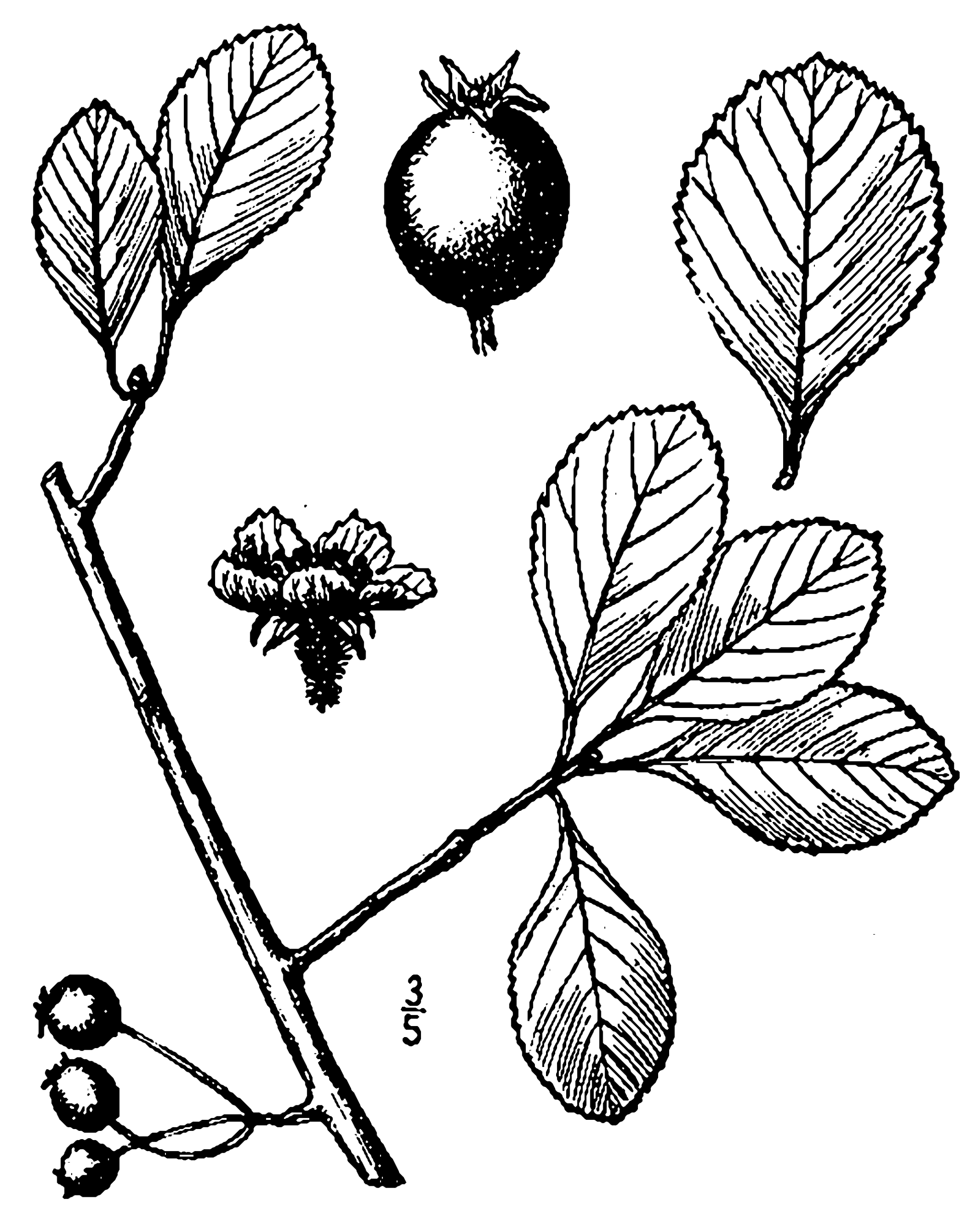
Identification
Barberry Hawthorn grows as a shrub or small tree with wide-spreading, horizontal branches, typically reaching 15 to 30 feet tall with an equal or greater spread.
Bark & Thorns
Young twigs emerge orange-brown or green tinged with red and lightly hairy, maturing to brown in their first year and gray with age. The branches carry straight to slightly recurved thorns, fine to fairly stout, about 1 to 2.5 inches (2–6.5 cm) long, shiny black to chestnut brown on second-year wood — a key identification feature for the hawthorn genus as a whole.
Leaves
The leaves are small, oval, and leathery, with a glossy to blue-green color, generally under 1.5 inches long, and a texture reminiscent of barberry foliage, which gives the species its common name.
Flowers & Fruit
White flowers about 0.4 to 0.8 inch (10–20 mm) across open in clusters in April. Botanists recognize two varieties based on flower structure: variety berberifolia, with 20 cream-colored anthers and larger flowers, and variety engelmannii, with 10 pink anthers and somewhat smaller flowers; both forms, and intermediate combinations, can occur within the species’ range. The fruit is a small pome that ripens in late summer to fall, varying in color from orange to dark red from tree to tree — a degree of individual variation that is one of the species’ more distinctive traits.
Native Range
Barberry Hawthorn is native to the south-central and southeastern United States, with confirmed populations across Alabama, Arkansas, Florida, Georgia, Illinois, Indiana, Kentucky, Louisiana, Mississippi, Missouri, Ohio, Oklahoma, Tennessee, Texas, and Virginia. Its range runs roughly from central Virginia south to northern Florida and west to Texas and Missouri, and it is most common across Louisiana and the surrounding Gulf Coastal Plain and lower Mississippi Valley.
In the wild, Barberry Hawthorn grows in woodlands, along streambanks, and in other moist, well-drained sites, often as part of the understory or edge community in mixed hardwood and pine forest.
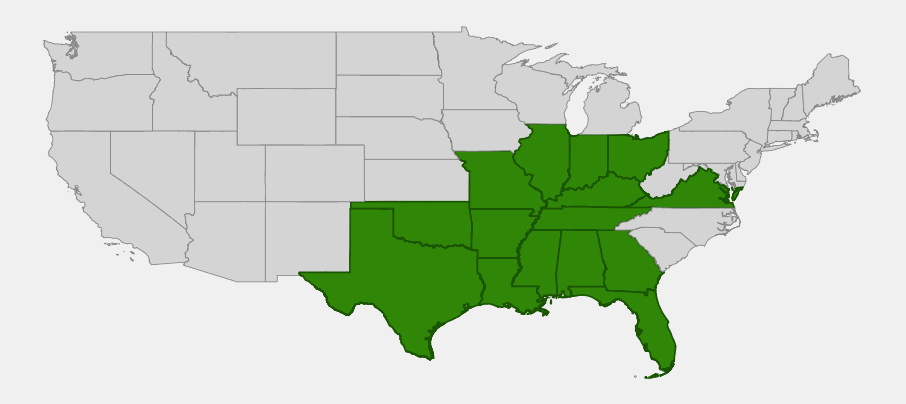
📋 Regional plant lists featuring Barberry Hawthorn: Georgia, Alabama & Mississippi · Arkansas, Louisiana, Eastern Oklahoma & Eastern Texas · Illinois, Iowa & Missouri · Indiana & Ohio · Kentucky & Tennessee · Maryland, Virginia & West Virginia
Growing & Care Guide
Barberry Hawthorn is a durable, easy-to-grow native small tree for gardeners within its range who want a genuinely tough, wildlife-friendly specimen.
Light
It grows best in full sun to part shade, flowering and fruiting most heavily with more direct light, while still tolerating the dappled conditions of a woodland edge.
Soil & Water
Plant in moist, well-drained soil, as found along the streambanks and woodland margins where it grows wild. It adapts to a range of well-drained soil types and becomes reasonably drought tolerant once established, though it performs best with consistent moisture, particularly while young.
Planting Tips
Give Barberry Hawthorn room for its wide-spreading, horizontal branching habit, which can reach 20 to 35 feet across at maturity. Because of its thorns, site it away from paths, play areas, or anywhere people or pets will brush against it regularly — the same thorniness that makes it a poor choice near walkways makes it an excellent living barrier elsewhere on the property.
Pruning & Maintenance
Prune in late winter to remove dead or crossing branches, using sturdy gloves and long sleeves given the stout thorns. Like other hawthorns, it can be susceptible to fire blight and cedar-hawthorn rust, but is not generally considered a high-maintenance species when sited in reasonably well-drained soil with adequate air circulation.
Landscape Uses
Barberry Hawthorn’s thorny, spreading form suits several native landscape roles:
- Impenetrable living hedge or barrier planting, thanks to its stout thorns
- Naturalized woodland-edge specimen in mixed hardwood or pine plantings
- Wildlife hedgerow, offering food and well-protected nesting cover
- Streambank or low-area planting, echoing its native moist-soil habitat
Wildlife & Ecological Value
As with most native hawthorns, Barberry Hawthorn is a reliable, multi-season wildlife resource.
For Birds & Mammals
The orange to dark red fruits ripen in late summer and fall, providing food for birds and small mammals into the colder months when other food sources become scarce. The dense, thorny branching also offers well-protected nesting and escape cover, a trait shared across the hawthorn genus and especially valuable to smaller birds seeking refuge from predators.
For Pollinators
The April flower clusters provide nectar and pollen for native bees and other insects during a key early-season window.
Ecosystem Role
Growing as part of the woodland and streambank understory, Barberry Hawthorn adds structural density to edge habitats, and its thicket-forming, thorny growth can help protect more vulnerable regenerating trees and shrubs from browsing by deer and other large herbivores.
Cultural & Historical Uses
Like many hawthorns, Barberry Hawthorn has fine-grained, dense hardwood that has historically been used for small turned or carved objects such as tool handles, though it has never been an important timber species given the generally small size of the tree. No medicinal use specific to this species is documented, and none should be assumed; while hawthorn fruits and flowers as a genus have a long history of use in traditional and herbal preparations elsewhere in the world, no such use is claimed here, and the fruit of this species is best regarded as wildlife food rather than a human food or remedy.
Frequently Asked Questions
How is Barberry Hawthorn different from Littlehip Hawthorn?
Both are native hawthorns of the southeastern and south-central U.S. with white spring flowers and small fall fruit, but Barberry Hawthorn has small, leathery, barberry-like leaves and typically grows larger (15–30 ft) with a more horizontal, spreading branch structure, while Littlehip Hawthorn has finer, spatula-shaped leaves, stays smaller (20–25 ft), and tolerates deeper shade.
Why do the fruit colors vary so much on this species?
Barberry Hawthorn shows significant natural variation, including two recognized varieties that differ in flower size and anther color; fruit color likewise ranges from orange to dark red from one individual tree to another, which is a normal and well-documented trait of the species rather than a sign of a different plant.
Is Barberry Hawthorn a good choice for a hedge?
Yes — its stout, sharp thorns and dense branching make it an effective living barrier, though its wide mature spread (up to 35 ft) means it needs significant room compared to a clipped, formal hedge shrub.
Does Barberry Hawthorn need full sun?
It flowers and fruits best in full sun but tolerates part shade, making it adaptable to both open and woodland-edge plantings.
For companion species that share Barberry Hawthorn’s woodland habitat, see our profiles of Cherrybark Oak, Black Hickory, and Parsley Hawthorn. For more on putting its wildlife value to work, see our guides to native hedgerows for birds and pollinator garden design.

Looking for a nursery that carries Barberry Hawthorn?
Browse our native plant nursery directory: Alabama & Arkansas · Florida & Georgia · Illinois, Indiana & Missouri · Kentucky, Louisiana & Mississippi · Ohio & Oklahoma · Texas & Virginia

