Netleaf Oak (Quercus rugosa)
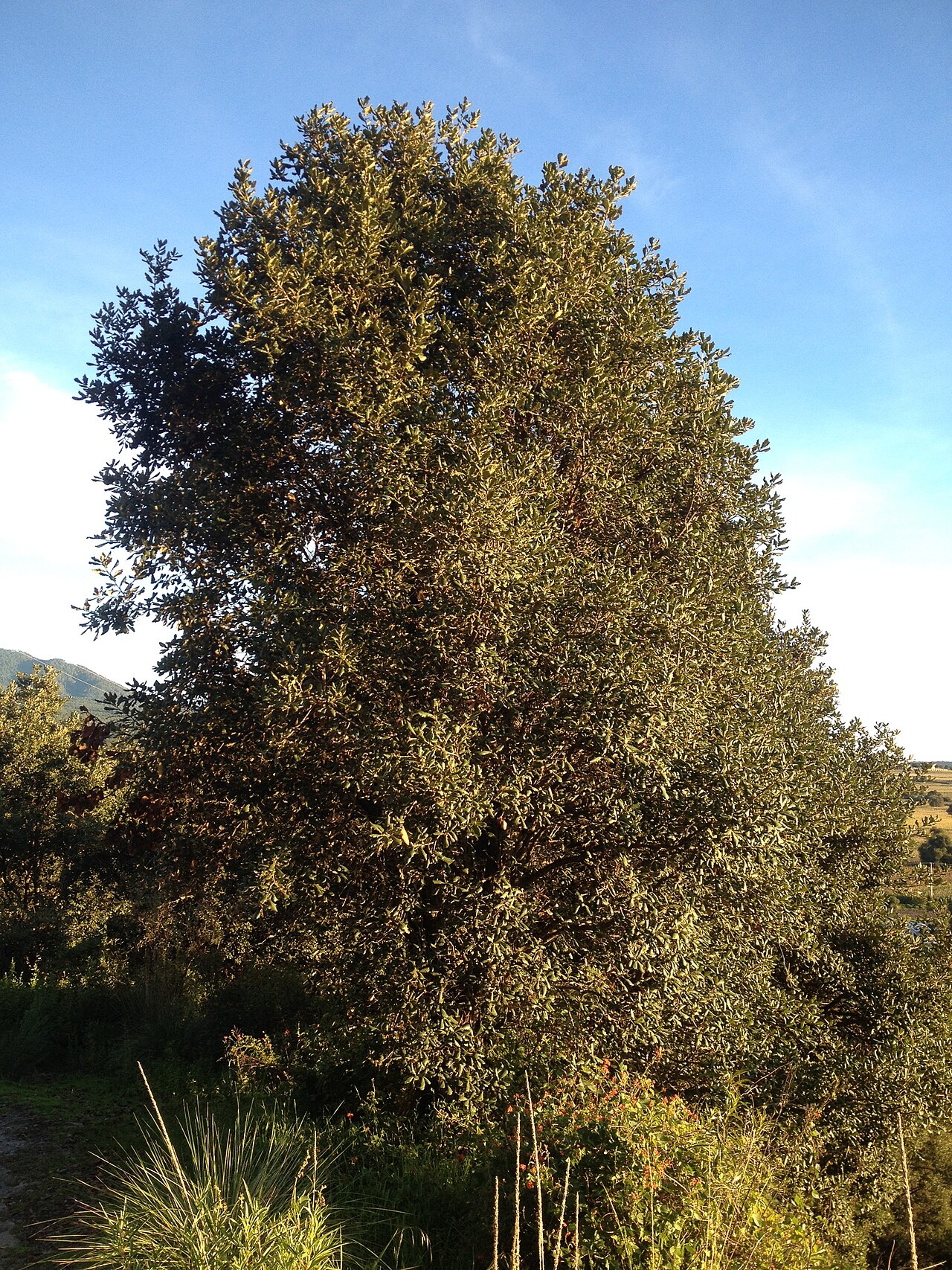
Quercus rugosa, known in the United States as Netleaf Oak, is a broad-leaved evergreen oak that reaches the northern edge of its range in two isolated, high-elevation pockets of far western Texas — the only places in the country where it grows wild outside the Southwest’s Madrean sky-island mountains of Arizona and, locally, New Mexico. Through most of its range it is a common, often dominant evergreen oak of Mexican highland woodlands, where it is known by names including encino quiebra hacha (“axe-breaker oak”) for its notoriously hard, dense wood.
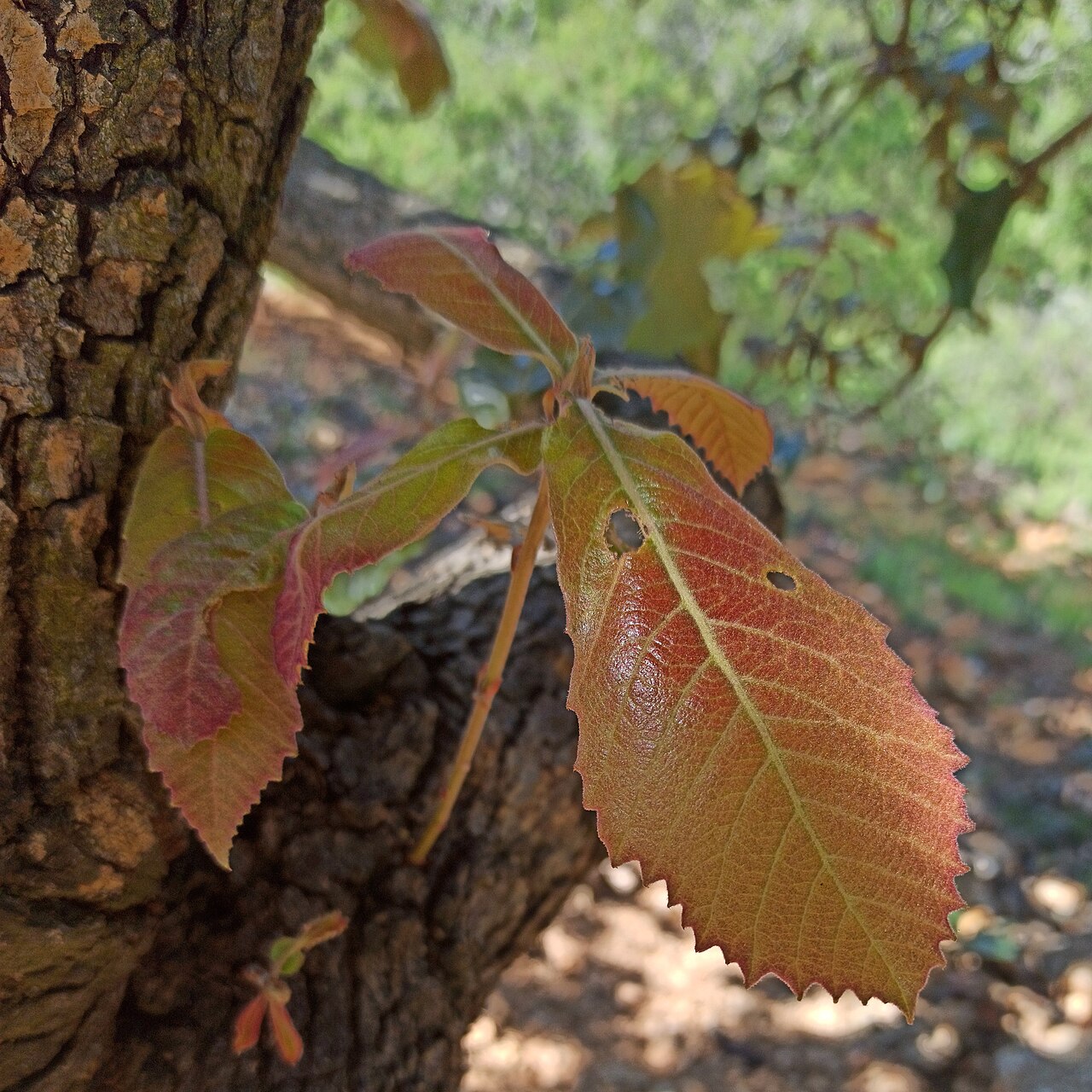
The common name “netleaf” refers to the leaf’s most distinctive feature: a network of deeply impressed, prominent veins on the thick, leathery, often cupped or wavy-margined leaf surface, giving it a quilted or netted texture unlike almost any other native oak. In Texas, Netleaf Oak is a genuine rarity, restricted to a handful of high peaks in the Trans-Pecos, while in Arizona (and in scattered New Mexico sky-island canyons) it is a locally common component of evergreen oak and pine-oak woodland.
Where it occurs naturally, Netleaf Oak is a valuable evergreen anchor for a Southwestern native garden; in Texas specifically, given its extreme rarity and restriction to protected high-elevation sites, it should be enjoyed in place rather than collected, and even in Arizona and New Mexico, nursery-propagated stock — not wild material — is the only acceptable source.
Identification
Netleaf Oak is typically a shrub or small to medium evergreen tree, most often 15 to 30 feet tall in the United States, though it can grow considerably larger — to 50 feet or more — in favorable Mexican highland forests. It commonly forms a dense, rounded crown and may grow as a multi-stemmed thicket-forming shrub on exposed, rocky sites or as a single-trunked tree in more sheltered canyons.
Leaves
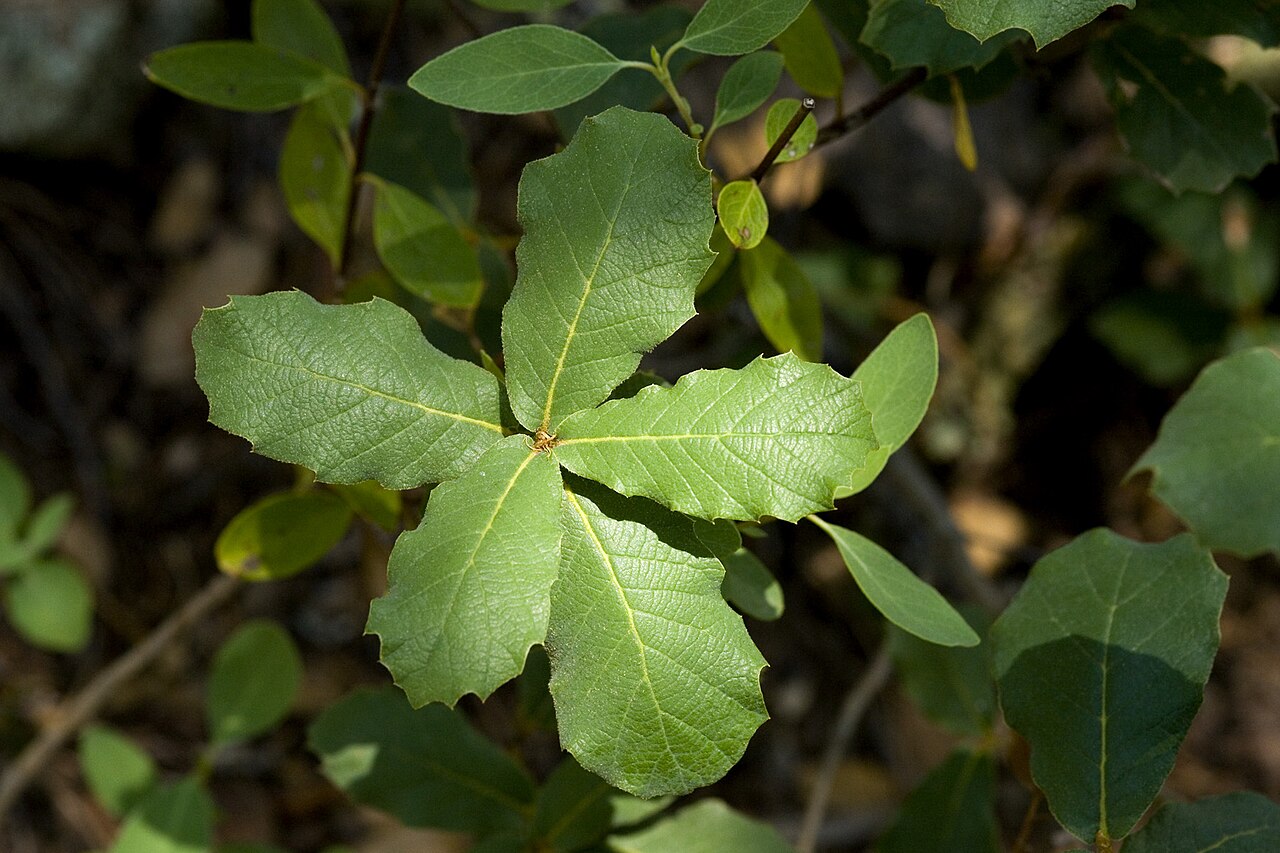
The leaves are the signature feature: thick, leathery, evergreen, broadly oval to obovate, 1½ to 4 inches long, with margins that are often wavy, cupped, or spiny-toothed, especially on young growth and lower branches. The upper surface is dark, glossy green with conspicuously impressed, net-like veining; the underside is paler and often finely hairy (tomentose). New spring growth frequently emerges in shades of red, pink, or bronze before maturing to green — a striking seasonal display.
Bark
Bark is light gray to grayish-brown, finely scaly, and becomes more deeply furrowed and plated with age, broadly similar in texture to several other Southwestern evergreen oaks.
Acorns
Acorns are small, typically ½ to ¾ inch long, with a scaly cup that covers roughly a third to half of the nut; they mature in a single growing season and are produced most heavily in Mexican highland populations, though Southwestern plants also bear a useful crop in good years.
Quick Facts
| Scientific Name | Quercus rugosa |
| Family | Fagaceae (Beech/Oak) |
| Plant Type | Evergreen Tree / Large Shrub |
| Mature Height | 15–30 ft in the U.S.; larger in Mexican highlands |
| Growth Rate | Slow |
| Sun Exposure | Full Sun to Part Shade |
| Water Needs | Low to Moderate once established |
| Soil Type | Rocky, well-drained mountain soils |
| Soil pH | 6.5–8.0 |
| Foliage | Evergreen, leathery, net-veined; new growth often red-bronze |
| Fruit | Small acorns, matures in one season |
| USDA Hardiness Zones | 7–9 |
Native Range
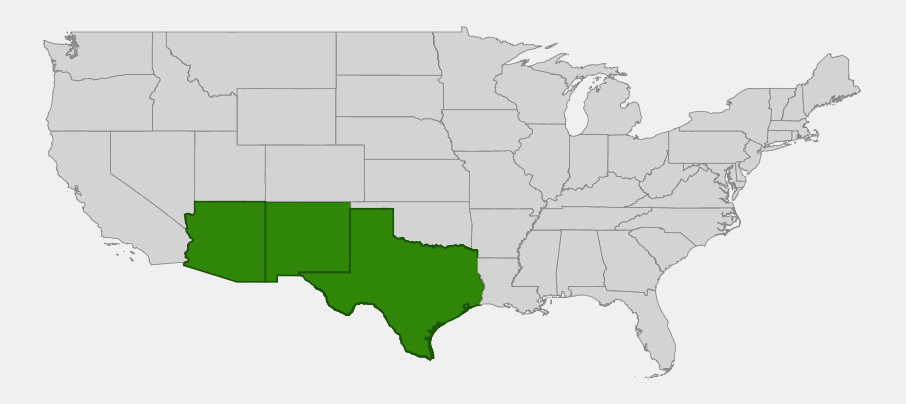
In the United States, Netleaf Oak is primarily a tree of southeastern Arizona’s Madrean sky-island mountain ranges, with additional scattered occurrences reported in sky-island canyons of southwestern New Mexico, such as the Mogollon Mountains, where it grows alongside Border Pinyon and other Madrean conifers in mixed pine-oak woodland. Its range then extends, far more extensively, south through the highlands of Mexico.
Far to the east, Netleaf Oak reaches a disjunct, genuinely rare outpost in the Trans-Pecos region of West Texas, known from only two locations in the entire state: Mount Emory in Big Bend National Park and Mount Livermore in the Davis Mountains. These isolated Texas populations grow at high elevation on protected peaks and represent the species’ easternmost and one of its most geographically isolated occurrences in the country. In the U.S. overall, Netleaf Oak typically grows between about 5,000 and 8,000 feet elevation, in pine-oak and evergreen oak woodland alongside species such as Arizona Oak, Emory Oak, and Gray Oak.
📋 Regional plant lists featuring Netleaf Oak: Arizona & New Mexico · South & West Texas
Growing & Care Guide
Netleaf Oak is a slow-growing but tough evergreen suited to a rocky, well-drained Southwestern garden that can approximate the high-elevation pine-oak woodland it comes from. It is not appropriate for low-desert valley floors, and in Texas it should not be sourced from the wild under any circumstances given the extreme narrowness of the state’s two known populations.
Light
Give Netleaf Oak full sun to part shade. In the wild it grows in open rocky woodland with plenty of direct sun, though young plants can benefit from light afternoon shade in hot, low-elevation gardens.
Soil & Water
Rocky, well-drained, neutral to alkaline mountain soils suit it best, echoing the thin, gravelly ground of its native canyons and slopes. Established trees are reasonably drought tolerant, needing only occasional deep watering during extended dry spells, though consistent watering during the first few years after planting will help establish a strong root system. Avoid heavy, poorly drained clay.
Planting Tips
Plant container-grown nursery stock in fall or early spring. Because growth is slow, choose the largest healthy specimen available and be patient; a young Netleaf Oak may take years to show significant height gain. Give it room to develop its naturally dense, rounded crown, and select a site at moderate to higher elevation where possible — it performs best where summer heat is tempered by elevation, similar to its native mountain range.
Pruning & Maintenance
Minimal pruning is needed; remove dead or crossing branches as they appear. Netleaf Oak’s evergreen foliage and dense form make it attractive largely left to its own natural shape, and established trees require little ongoing care beyond occasional deep watering in drought.
Landscape Uses
Netleaf Oak offers year-round structure in the right setting:
- Evergreen specimen or screen in Southwestern mountain and foothill gardens
- Rock gardens and slope plantings with sharp drainage
- Wildlife gardens, where its acorns support birds and small mammals
- Regionally authentic woodland plantings in Arizona and New Mexico sky-island communities
Wildlife & Ecological Value
As an evergreen oak of Madrean woodland, Netleaf Oak provides year-round structure and a reliable late-season food source in a plant community where many other species are deciduous or dormant through the cooler months.
For Birds & Mammals
Acorns are consumed by Acorn Woodpeckers, Mexican Jays, and other woodland birds, as well as by rock squirrels and other small mammals, which also help disperse and cache seed. The dense, evergreen crown provides year-round cover and nesting habitat, a valuable resource in woodlands where deciduous associates are bare for part of the year.
Ecosystem Role
Netleaf Oak is a structural component of Madrean evergreen oak and pine-oak woodland, one of the richest and most biodiverse forest types in the American Southwest, where temperate and subtropical species intermingle at the northern edge of Mexico’s Sierra Madre. Its presence in the handful of U.S. locations where it grows — especially the two isolated Texas peaks — represents an ecologically and biogeographically significant outlier population worth protecting in place.
Cultural & Historical Uses
Throughout its much larger range in the Mexican highlands, Netleaf Oak is known locally as encino quiebra hacha — “axe-breaking oak” — a nod to its extremely hard, dense wood, which has long been valued regionally for fuel, charcoal, and construction where it is common. In the limited areas where it grows wild in the United States, however, it has seen little documented historical use, owing to both its rarity in Texas and its more recent taxonomic recognition as distinct from related Southwestern oaks in botanical literature.
Frequently Asked Questions
Why is Netleaf Oak called “netleaf”?
The name refers to the leaf’s deeply impressed, prominent network of veins, which give the thick, leathery leaf surface a distinctly quilted or netted texture — a feature visible at a glance and useful for identification.
Is Netleaf Oak rare in Texas?
Yes, genuinely rare. It is known from only two mountain peaks in the entire state — Mount Emory in Big Bend National Park and Mount Livermore in the Davis Mountains — making it one of the most geographically restricted native trees in Texas. It should never be collected from either site.
Is Netleaf Oak evergreen?
Yes. Unlike many native Southwestern oaks, Netleaf Oak retains its thick, leathery leaves year-round, shedding and replacing them gradually rather than dropping them all at once in fall.
How is Netleaf Oak different from Gray Oak or Arizona Oak?
Netleaf Oak is distinguished by its thicker, more leathery, strongly net-veined and often cupped or wavy-margined leaves, compared to the flatter, less heavily veined foliage of Gray Oak and Arizona Oak. All three can grow together in the same Southwestern sky-island woodlands.
Can Netleaf Oak be grown outside Arizona, New Mexico, or Texas?
It can be grown as an ornamental in other regions with suitable climate and drainage, including parts of California, but it is only considered native within its Southwestern and Trans-Pecos Texas range described here.

Looking for a nursery that carries Netleaf Oak?
Browse our native plant nursery directory: Alabama, Alaska, Arizona & Arkansas · Nebraska, Nevada, New Hampshire, New Jersey, New Mexico, New York, North Carolina, North Dakota, Ohio & Oklahoma · Pennsylvania, Rhode Island, South Carolina, South Dakota, Tennessee, Texas, Utah, Vermont & Virginia
For other Southwestern evergreen oaks, see our pages on Arizona Oak, Emory Oak, and Gray Oak. For more on the region’s oaks, see our guide to New Mexico oak trees.