When to Divide Blazing Star: Reading the Clump Before Digging
Last updated: November 6, 2026
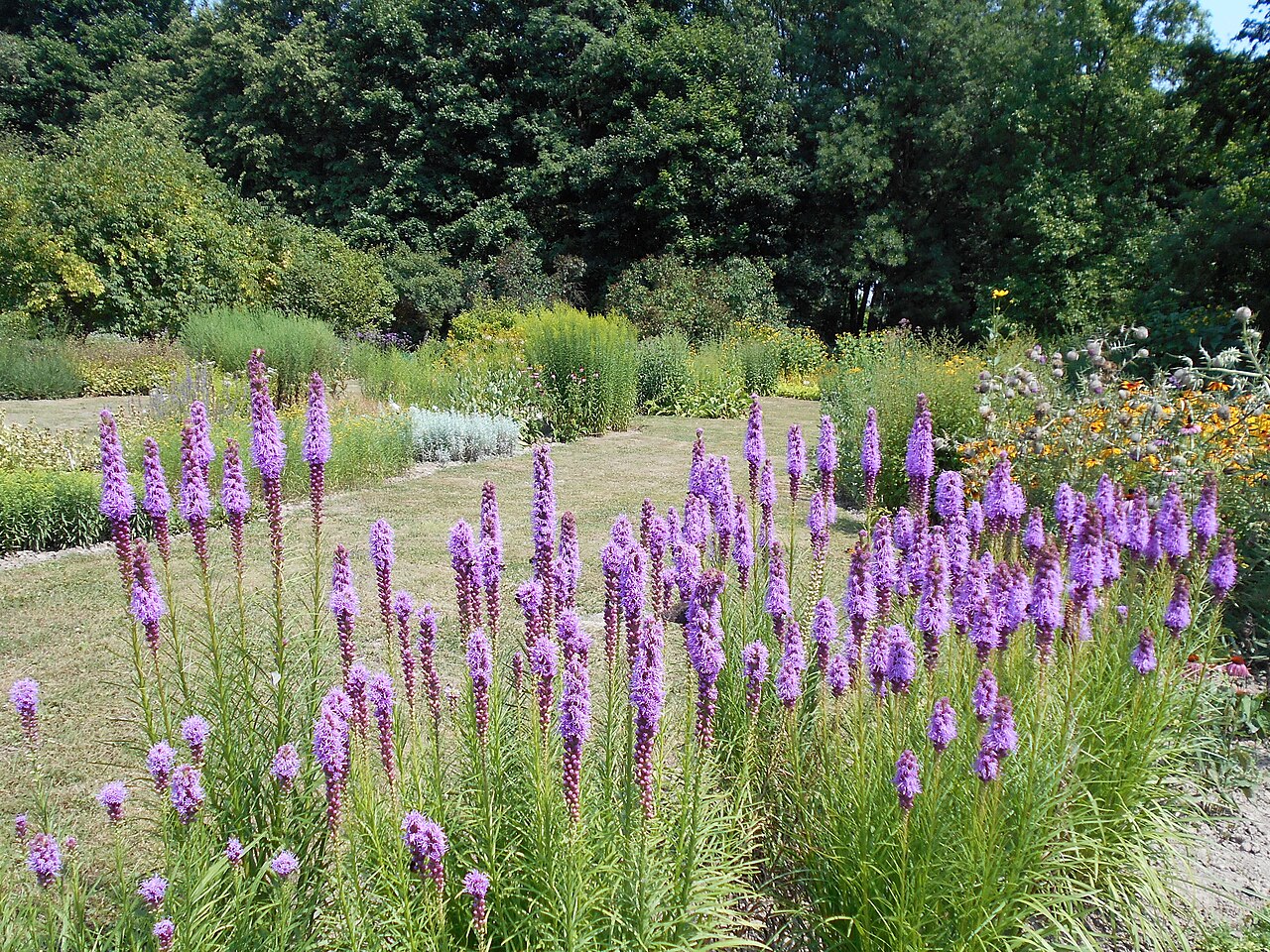
Plenty of perennial guides say to divide your plants every few years. With blazing star, that rule needs a second look.
Blazing star grows from corms, not a spreading mat of roots. It doesn’t creep outward on spreading rhizomes the way many perennials do, and it recovers from division slowly. Digging a clump that didn’t need it can cost you a season of flowers.
So before you pick up the spade, read the clump. This guide shows you what to look for, when to dig if you do, and how to split the corms so every piece grows.
The Short Answer
Divide blazing star (Liatris spicata) only when the clump gives you a reason. The best time is early spring, just as the new leaves appear. Good reasons to divide:
- Bloom has dropped off while the clump itself has kept getting wider and more crowded.
- The center is thin or empty, with shoots only around the edge.
- The clump has outgrown its space or is crowding a neighbor.
- You want more plants of a particular cultivar or color.
- The plant needs to move to a sunnier or better-drained spot anyway.
How a Blazing Star Clump Grows
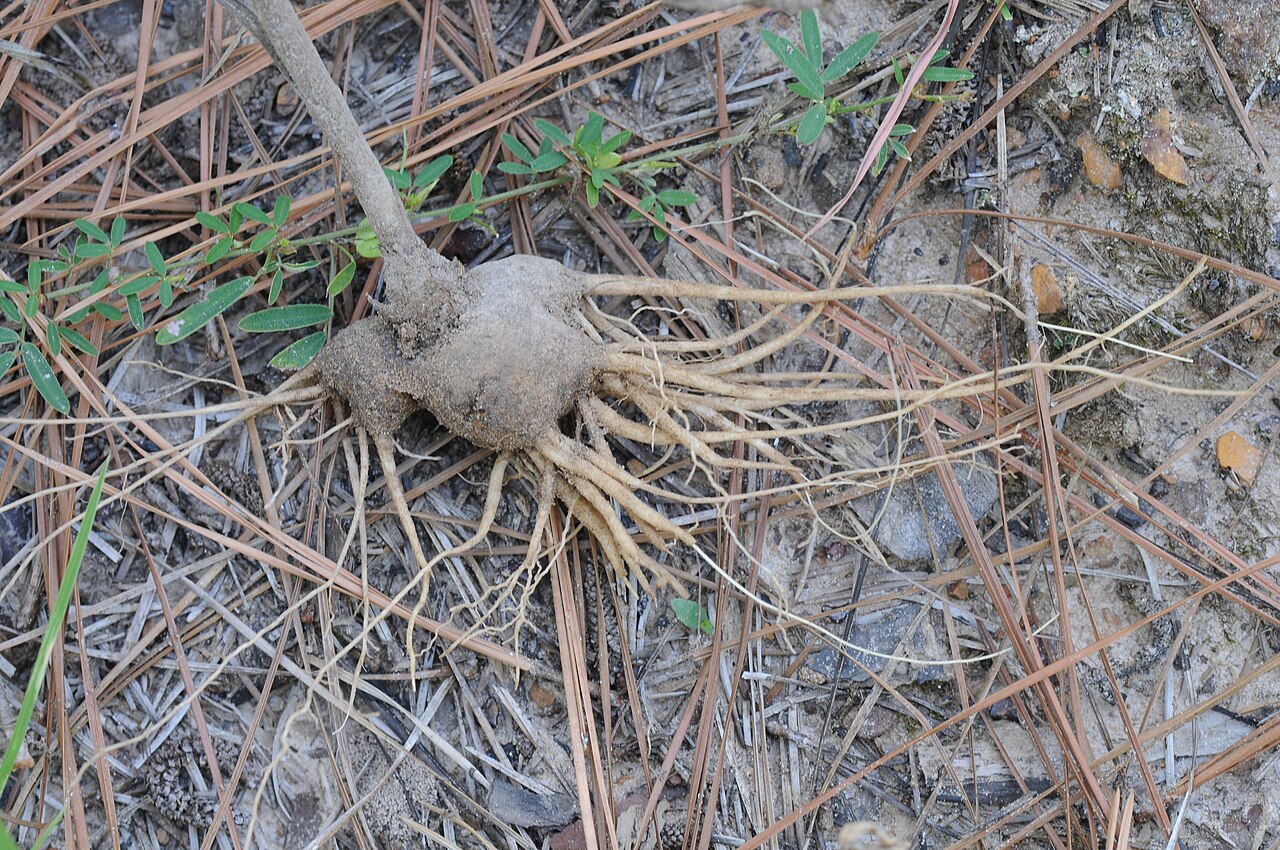
Each blazing star stem rises from an underground corm, a rounded storage organ with an “eye,” or bud, on top. Fibrous roots grow from the corm into the surrounding soil.
Over time, a healthy corm can form offsets alongside it. Illinois Wildflowers notes that prairie blazing star corms occasionally produce offsets near the parent plant. NC State Extension says dense blazing star can form new colonies from its corms, though it spreads most often by seed.
That means a clump grows slowly outward, a few corms at a time. It doesn’t race across the bed, and it rarely chokes itself out the way fast-spreading perennials do.
Reading the Clump: Divide or Leave It?
| Plant is 1 to 3 years old | Leave it. It’s still building corms and roots. |
| Dense clump, blooming well | Leave it, unless you want more plants. |
| Wide clump, fewer and shorter spikes | Likely crowded. Divide next spring. |
| Empty center, ring of shoots | Divide and replant the vigorous outer pieces. |
| Poor bloom, leaning stems, shady site | Light problem, not crowding. Move the clump instead. |
| Few shoots, soft corms at the edge | Drainage or rot problem. Fix the site before dividing. |
Step 1: Look at the Clump in Early Spring
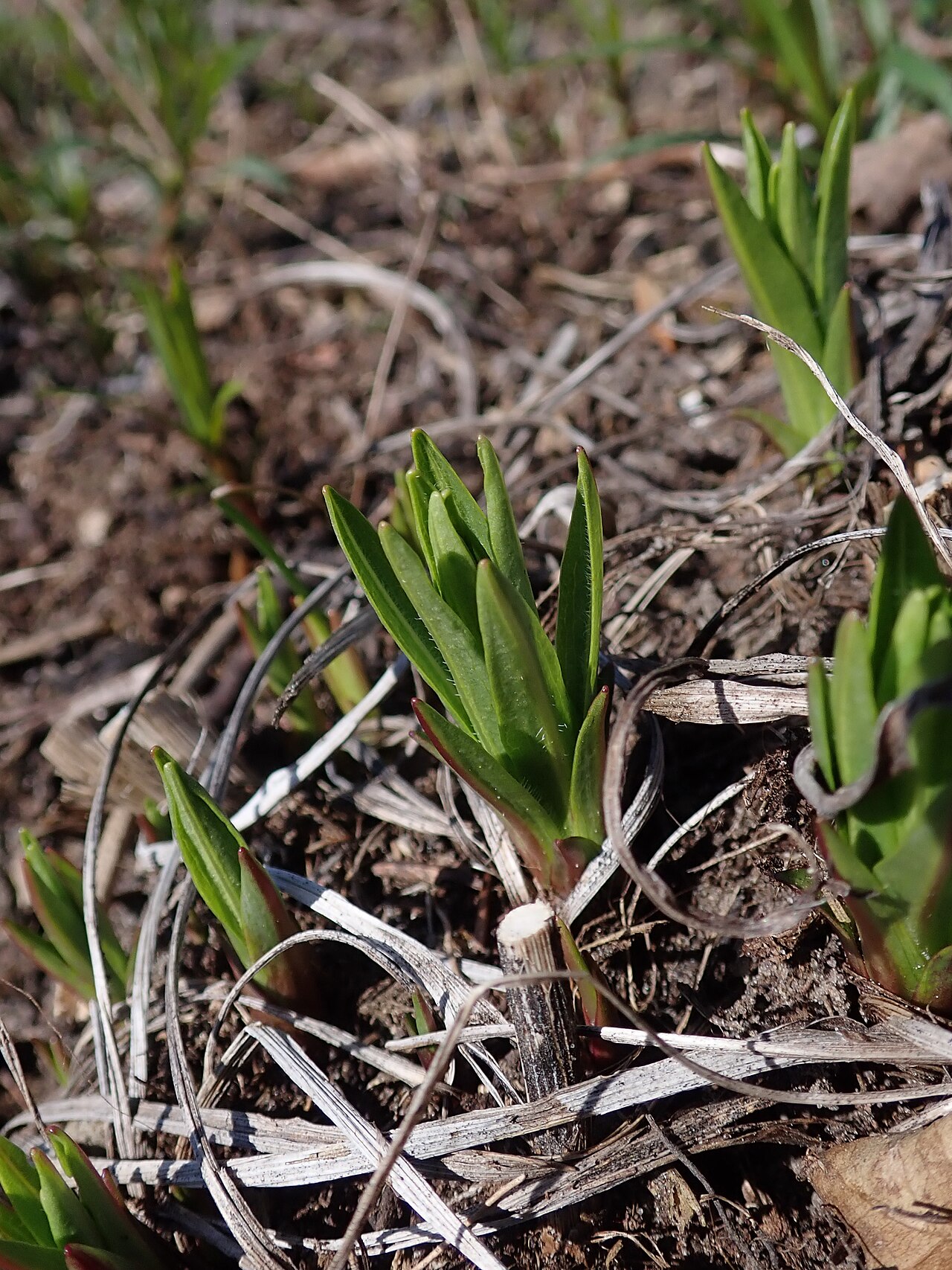
The best time to read a blazing star clump is when the new shoots first appear. The old foliage is gone, and each new tuft marks a living corm underneath.
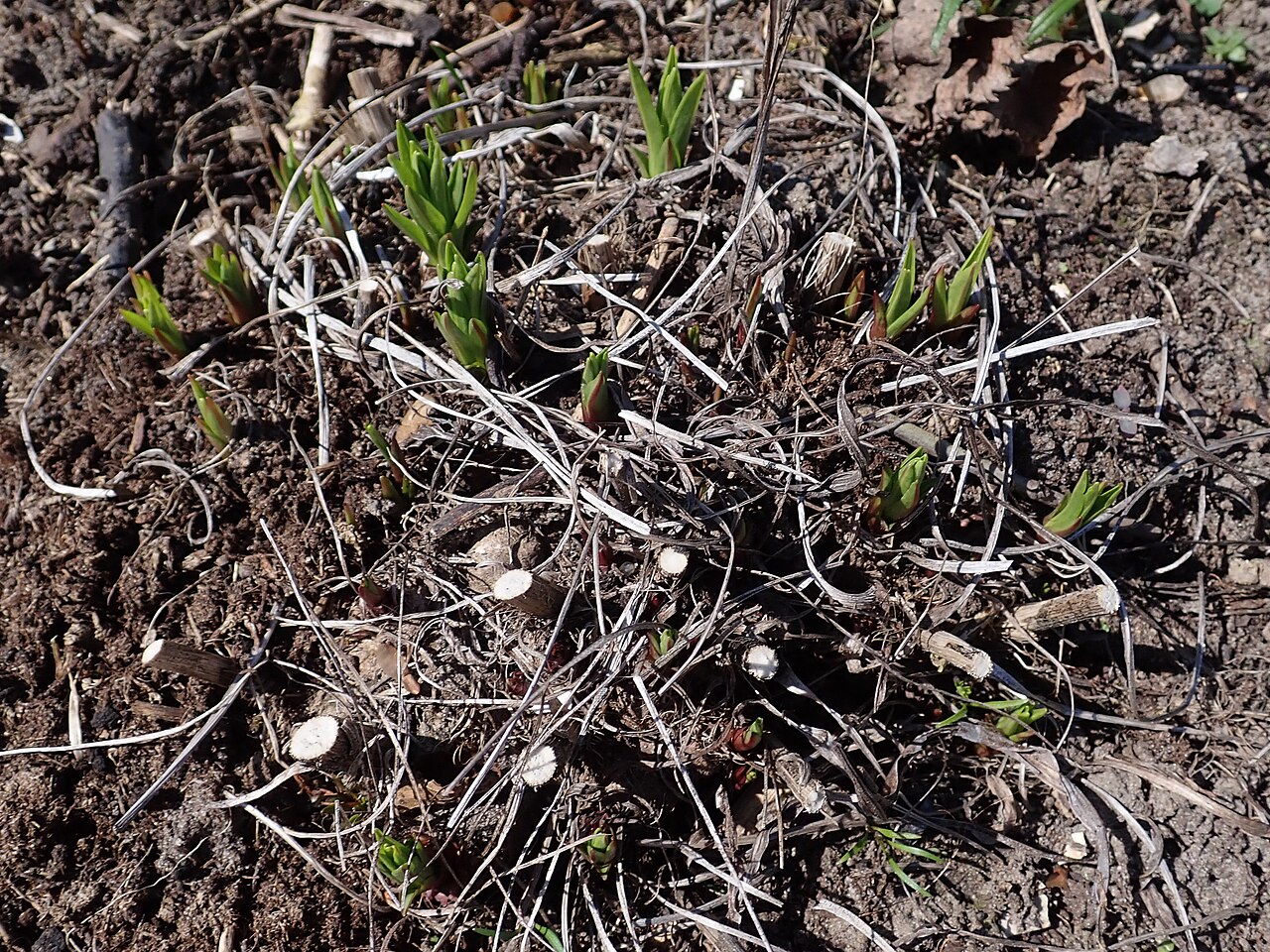
Walk around the clump and note three things:
- How many shoots are there? A dozen or more tightly packed tufts suggests a mature clump that could be split.
- Where are they? Shoots spread evenly across the clump are fine. A ring with a bare middle suggests the center is aging out.
- How did it bloom last year? Compare spike count and height with earlier years if you can. Photos help.
If the clump is young, small, or bloomed well last summer, there’s no reason to dig. Leave it and check again next spring.
Step 2: Rule Out Other Causes of Poor Bloom
Crowding is only one reason blazing star flowers less. Shade, rich soil, and wet ground cause the same symptoms, and dividing won’t fix any of them. Our checklist for blazing star with leaves but no flowers helps you sort them out.
Ask whether nearby trees or shrubs have grown and cut the light. Ask whether the bed gets fertilizer or daily water. If spikes have also been leaning or flopping, see our guide to blazing star spikes falling over. In that case, moving the clump to a better spot does more good than splitting it in place.
Also look at the edges. Shriveled, soft, or missing corms on one side of the clump often point to rot from poor drainage. Our guide to the best soil for blazing star explains what the corms need.
Step 3: Time the Dig
Wisconsin Horticulture Extension recommends digging and dividing large clumps in spring, just as the leaves are emerging. At that stage, the eyes are easy to see, the corms are full of stored energy, and the plant has a whole season to root in.
Some sources also list fall, after the foliage dies back, as an option. Spring is the safer choice in cold or wet regions. A freshly divided corm sitting through a soggy winter has a higher chance of rotting.
Avoid summer division. Once the flower stems are growing, disturbing the corms costs you that year’s bloom and stresses the plant in heat.
Step 4: Dig Wide and Lift Gently
Blazing star corms sit a few inches below the surface, with roots reaching out around them. Start digging several inches outside the outermost shoots so you don’t slice through corms at the edge.
Work your spade or fork around the whole clump, then lever it up from underneath. Lift the clump onto a tarp and gently shake or rinse off loose soil so you can see the corms clearly.
Step 5: Separate the Corms
Look for natural divisions first. Offsets and separate corms often pull apart by hand with a gentle twist.
Where corms are fused, use a clean, sharp knife. Wisconsin Horticulture advises cutting so that every division keeps at least one eye. A division without an eye won’t sprout.
- Keep: firm, plump corms with at least one visible bud or shoot and some healthy roots.
- Discard: soft, hollow, dark, or foul-smelling corms. They’re rotting and can spread decay.
- Consider: the old, woody center of a ring-shaped clump. It’s often weaker than the outer pieces, so replant the vigorous edge corms first.
Don’t make the pieces too small. A division with several eyes re-establishes faster and is more likely to bloom sooner. Wisconsin Horticulture notes that growth from corm division is slow, so bigger pieces are worth it.
Step 6: Replant Right Away
Replant the divisions the same day if you can. Set each corm at the depth it was growing before, with the shoot pointing up. Space them about 12 to 15 inches apart, the spacing Wisconsin Horticulture suggests for blazing star.
Choose a full-sun spot with well-drained soil. If you’re moving the clump because of shade or wet ground, this is your chance to fix it. Spare divisions also do well in containers; see our guide to blazing star in a pot.
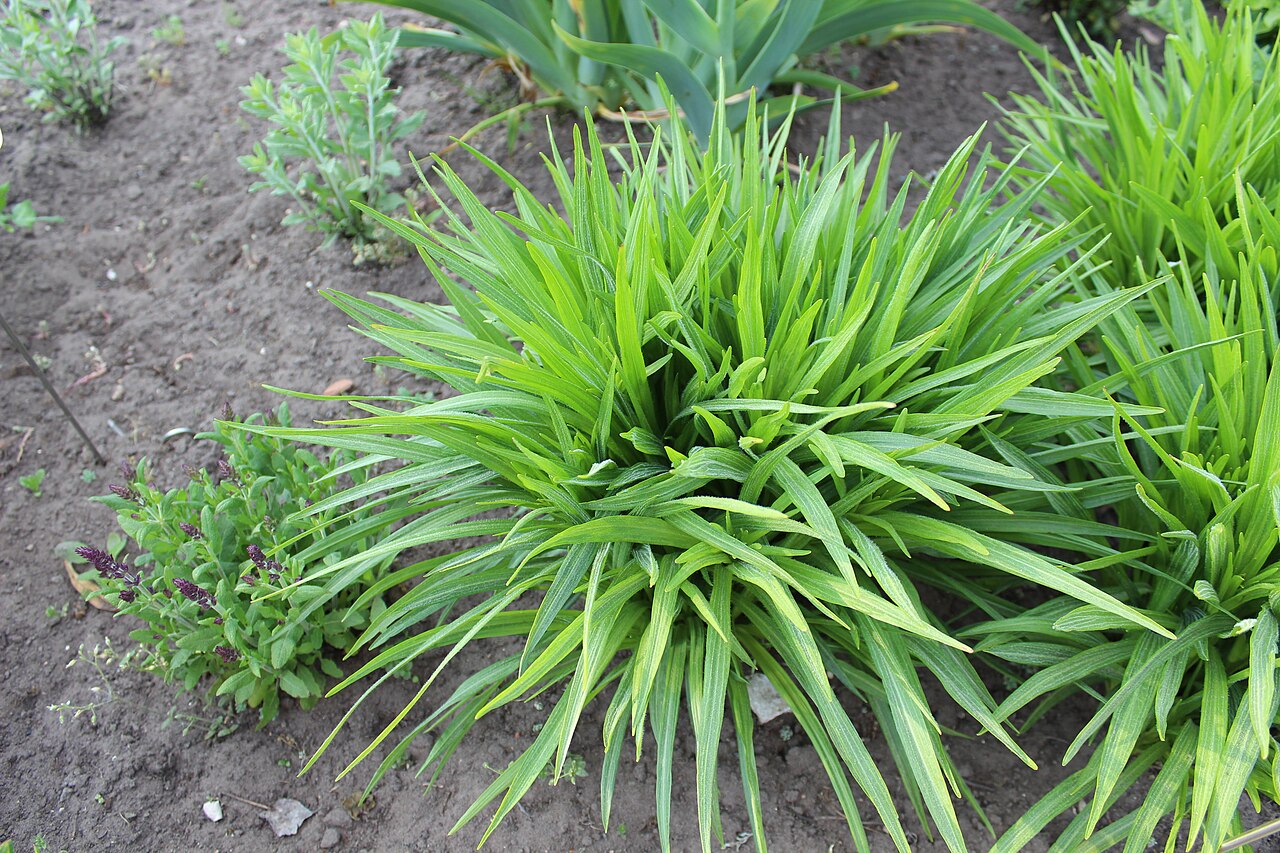
Water each division once to settle the soil. After that, water only when the top couple of inches dry out. Divisions have fewer roots than an established clump, but soggy soil is still the bigger risk.
Step 7: Expect a Slow First Year
Divided blazing star usually sends up leaves within a few weeks. Flowers are another matter. Small divisions often skip blooming the first summer while they rebuild.
Our blazing star profile notes that divided plants can take a year or more to recover fully. That’s normal, and it’s the main reason not to divide unless you need to.
Mulch lightly and keep weeds down around the new plantings. Mark each spot, because young blazing star shoots look a lot like grass.
Quick Reference
| Best timing | Early spring, as leaves emerge |
| Each division needs | At least one eye and some roots; several eyes is better |
| Replant depth | Same depth it grew at before |
| Spacing | About 12–15 inches |
| Site | Full sun, well-drained, not rich |
| Bloom after dividing | Often reduced or skipped the first year |
An Alternative: Let Seedlings Do the Work
If your goal is simply more blazing star, you may not need to divide at all. Blazing star sets plenty of seed, and self-sown seedlings often appear around an established clump.
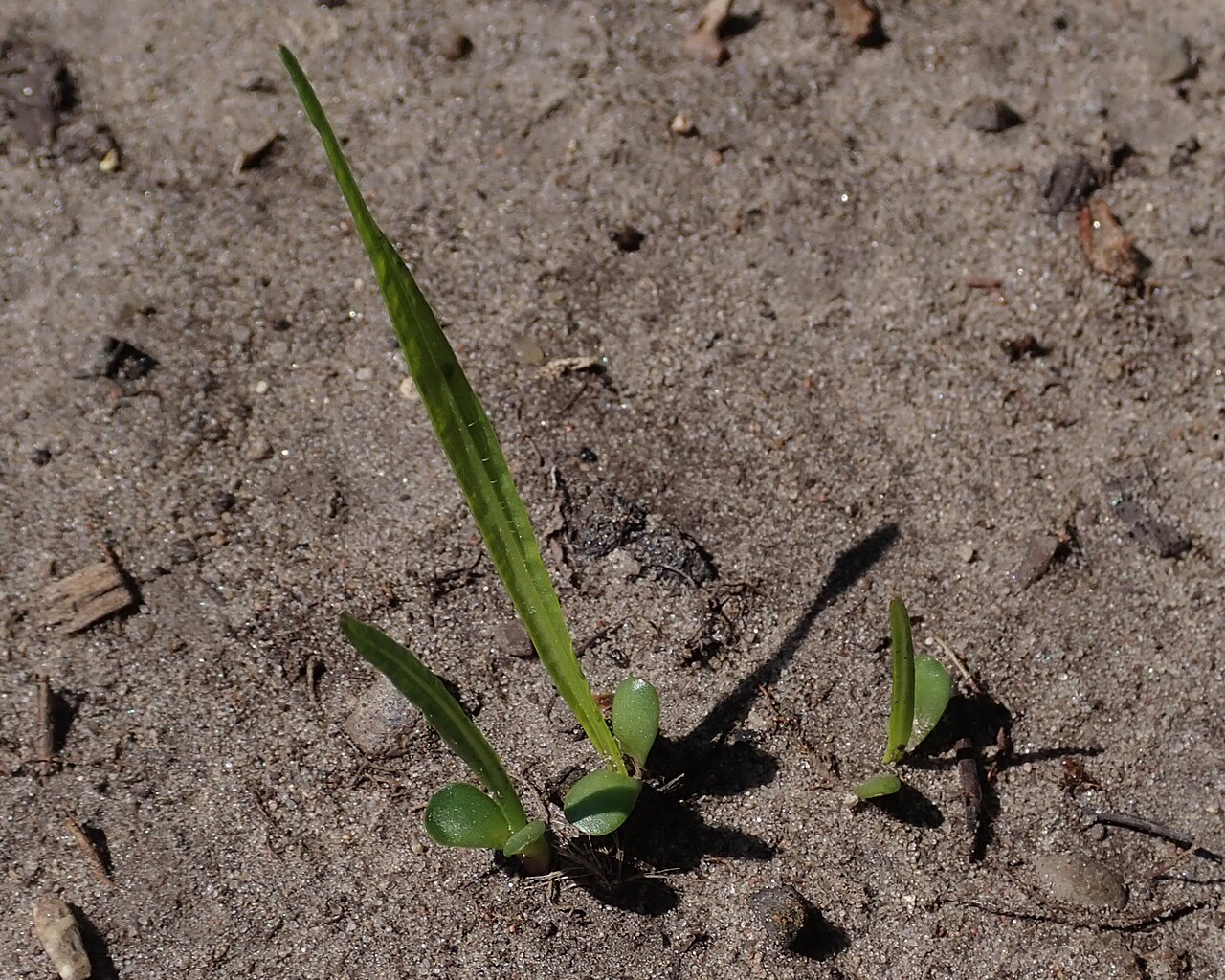
You can also sow seed directly. Wisconsin Horticulture notes that germination improves after four to six weeks of cold, moist stratification, or when seed is sown outside in fall or early winter. Seed-grown plants generally bloom in their second or third year.
Keep in mind that seedlings of a named cultivar may not match the parent. If you want an exact copy of a white or compact form, division is the way to get it. The same reading-the-clump approach works for grasses too; see our guide to dividing little bluestem.
A Year-Round Plan for Healthy Clumps
- Early spring: read the clump as shoots emerge. Divide or move only if it shows a real need.
- Late spring: water new divisions sparingly and mark them. Leave established clumps alone.
- Summer: note bloom count and height, and take a photo. That’s your baseline for next year’s decision.
- Fall: leave seed heads for goldfinches and other birds, and let some seed fall for new plants.
- Winter to early spring: cut back old stems before new growth starts. Our blazing star pruning guide covers timing and technique.
New divisions behave a lot like freshly planted corms. If yours don’t come up, our guide to blazing star corms not sprouting walks through what to check.
📋 More on this plant: read the full Blazing Star (Liatris spicata) profile and the Prairie Blazing Star (Liatris pycnostachya) profile, or see dense blazing star in our native plant lists for North Carolina & South Carolina, Georgia, Alabama & Mississippi, Arkansas, Louisiana, Eastern Oklahoma & Eastern Texas, Ohio & Indiana, and Michigan, Wisconsin & Eastern Minnesota.
Frequently Asked Questions
How often should you divide blazing star?
There’s no fixed schedule. Many clumps go years without needing it. Divide when bloom declines in a crowded clump, the center dies out, or you want more plants.
Can you divide blazing star in the fall?
Some sources allow fall division after the foliage dies back. Early spring, as the leaves emerge, is the more reliable timing, especially where winters are cold and wet.
Will blazing star bloom the year I divide it?
Large divisions sometimes do. Small ones usually make leaves only and bloom the following year once they’ve rebuilt their corms.
How do I find the eyes on a blazing star corm?
In early spring, the eyes are the points where new shoots are emerging. On a dormant corm, look for small pinkish or pale buds on the upper surface.
Can I just pull off the offsets instead of digging the whole clump?
Yes. Dig carefully at the edge of the clump, lift an outer corm or offset with roots and an eye attached, and replant it. This leaves the main clump undisturbed.
Sources
- Wisconsin Horticulture, Division of Extension, Liatris: spring division as leaves emerge, at least one eye per division, slow growth from corm division, spacing, seed stratification and time to bloom.
- North Carolina Extension Gardener Plant Toolbox, Liatris spicata: corms with fibrous roots, colonies from corms, spread mainly by seed.
- Illinois Wildflowers, Prairie Blazingstar: corm offsets near the parent plant.
- Gardening Know How, Liatris Care: fall division after die-back as an alternative to spring.
- Lady Bird Johnson Wildflower Center, Liatris spicata: native range and habitat.