Blazing Star in a Pot: Drainage, Watering, and Winter Decisions
Last updated: November 6, 2026
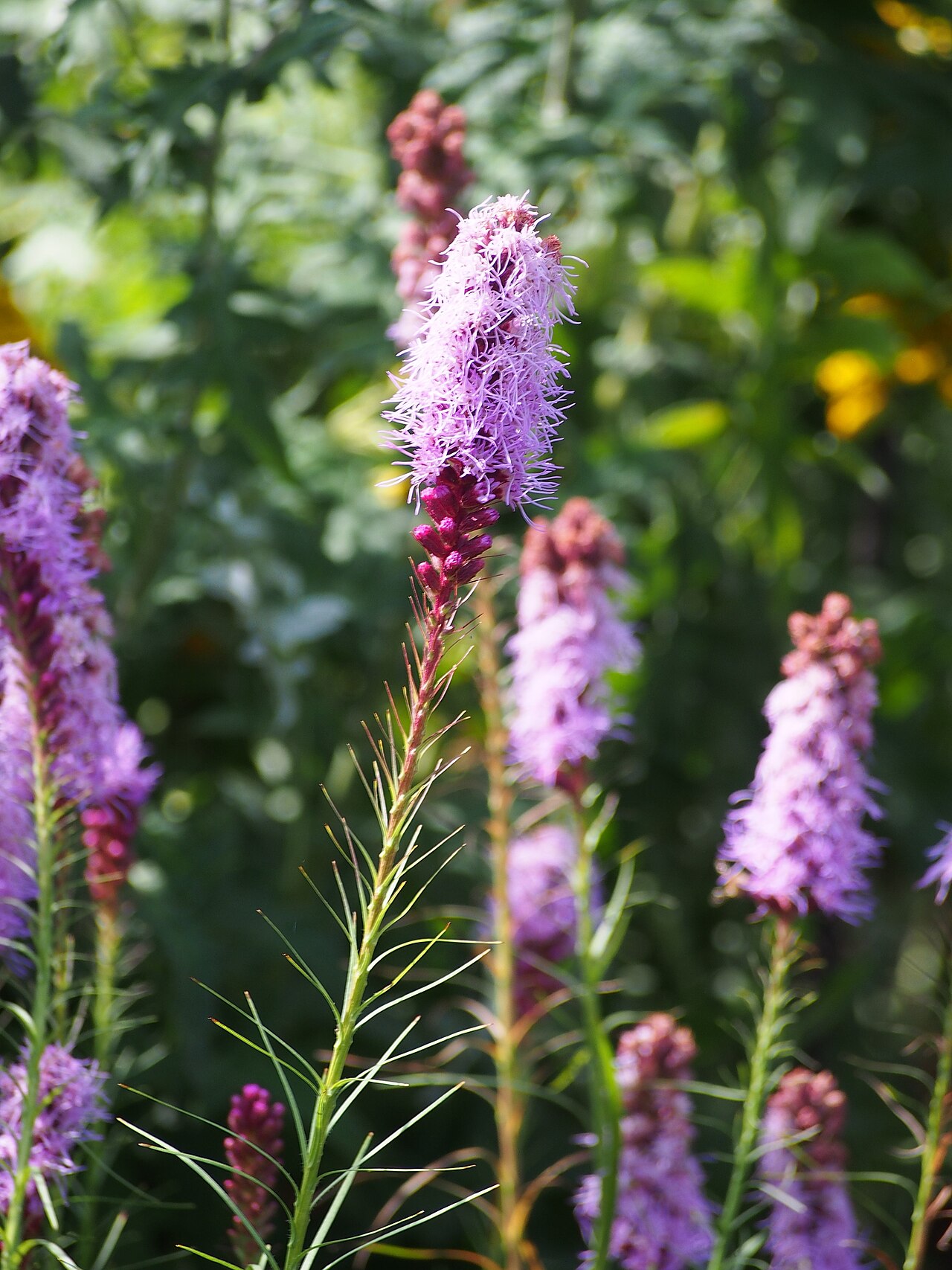
No garden bed? No problem, mostly. Blazing star can live in a pot on a sunny patio or balcony and still pull in bees and butterflies.
But a pot changes the rules. The roots can’t reach deep for water in summer. Rain and irrigation can’t drain away into the ground. And in winter, the corm sits above ground, exposed to cold that would never reach it in a bed.
This guide covers the three decisions that make or break potted blazing star: how to set up drainage, how to water through the season, and what to do with the pot when winter comes.
The Short Answer
Blazing star (Liatris spicata) can grow in a container if you:
- Choose a compact cultivar like ‘Kobold’ and the largest pot you can manage.
- Use a gritty, fast-draining mix in a pot with open drainage holes.
- Water deeply but only when the top of the mix is dry.
- Put it in full sun, ideally six hours or more.
- Protect the pot in winter, by burying it, moving it to an unheated shelter, or insulating it.
- Keep winter moisture low, because a wet, cold corm rots.
Why Pots Are Harder on Blazing Star
In the ground, blazing star is tough. Wisconsin Horticulture Extension describes it as hardy to zone 3 and fairly drought tolerant once established.
That toughness depends on soil. In winter, the ground insulates the corm. In summer, the roots draw water from a big volume of soil. In a pot, both buffers shrink to a few gallons.
Penn State Extension points out that a plant’s hardiness zone is based on growing in the ground. The roots of a container plant above ground can get as cold as the winter air. That single fact drives most of the winter decisions later in this guide.
Step 1: Choose the Right Plant
Dense blazing star can grow 3 to 6 feet tall in the ground, according to NC State Extension. A tall spike in a pot gets top-heavy and tips over in wind.
Look for compact cultivars instead. Wisconsin Horticulture describes ‘Kobold’ as a compact variety with dense, deep purple flowers. The white form ‘Alba’ is also listed at about 18 inches.
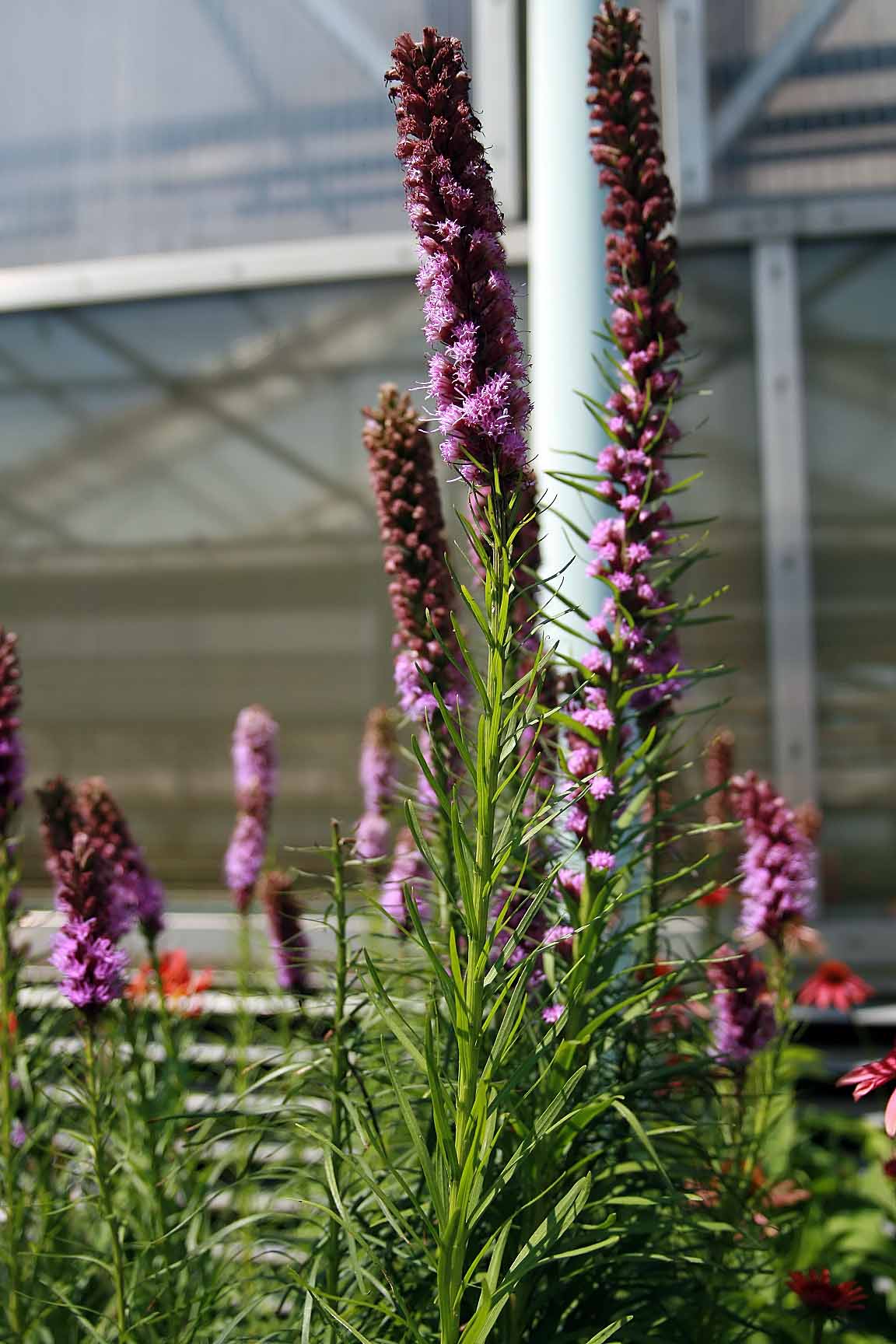
Starting with a potted nursery plant is simpler than starting from corms. You can see that it’s alive, and you skip the risk of a dormant corm rotting in wet mix before it roots. If you do plant corms, our guide to blazing star corms not sprouting covers depth and orientation.
Keep in mind that cultivars like ‘Kobold’ are selections of the native species. They feed pollinators well, but if you want plants that match local wild populations, look for straight-species plants from a regional native nursery.
Step 2: Pick a Pot That Drains and Insulates
The nursery pot your plant came in is a temporary home. It holds too little soil to keep the roots evenly moist in summer or protect them in winter.
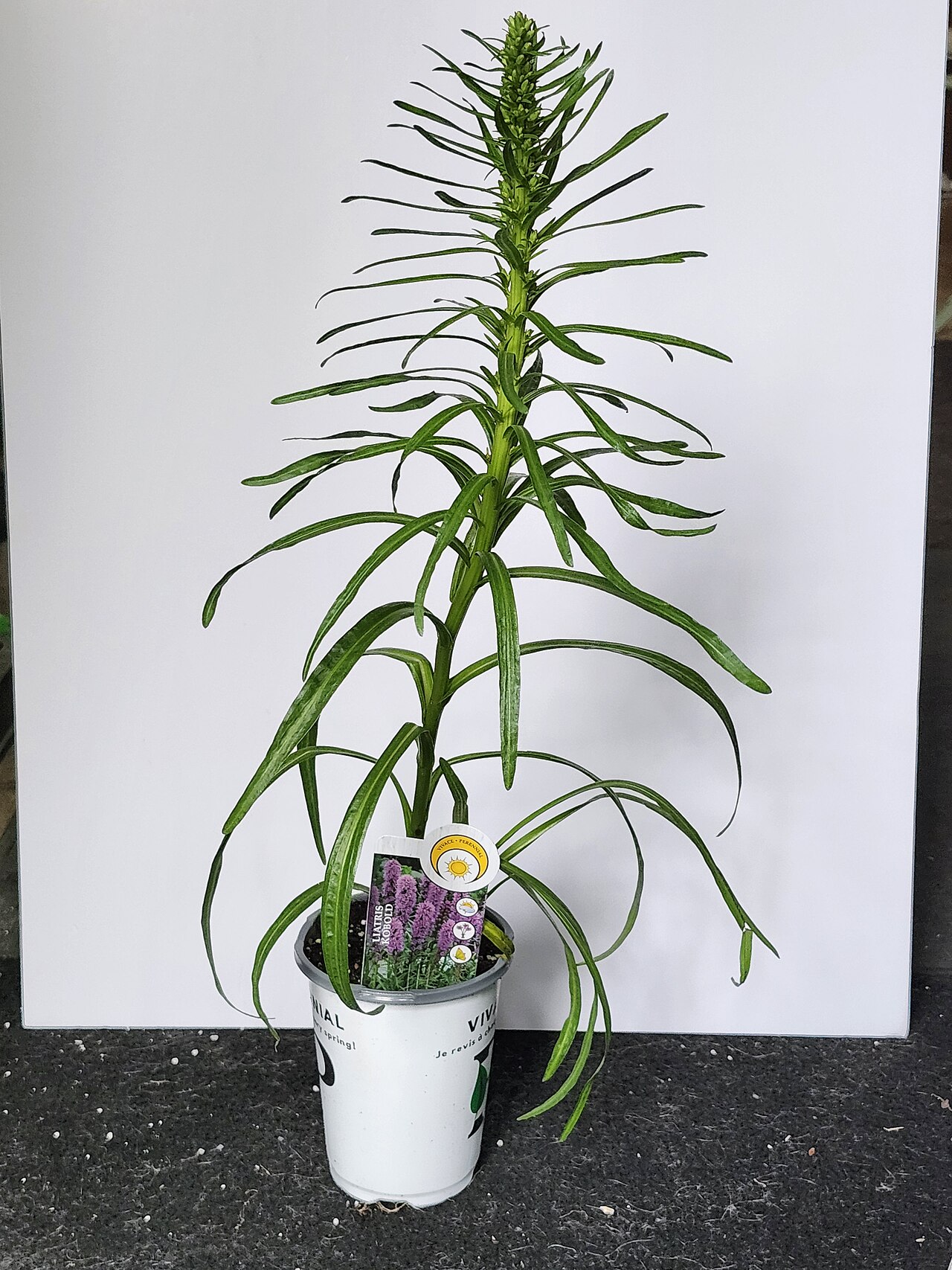
Choose the largest container that suits your space. Penn State Extension recommends larger pots for any perennial you plan to keep over winter, because more soil means more insulation.
- Drainage holes: at least one large hole, and more is better. Never use a pot without holes.
- Material: Penn State warns that clay, ceramic, and glazed pots can crack if left out over winter. Plastic, fiberglass, wood, or concrete are safer for year-round use.
- Shape: a wide, stable base resists tipping when spikes catch the wind.
- Feet: raise the pot slightly off the patio so water can escape from the holes.
Step 3: Mix for Drainage, Not Richness
Wisconsin Horticulture notes that blazing star tolerates poor soil, and that plants rot if the soil stays too moist. Good drainage and aeration are what let it survive wet winters. In a pot, that means a coarse, airy mix.
A practical recipe is a standard bagged potting mix blended with a generous share of coarse grit, perlite, or fine bark. The mix should feel loose and gritty in your hand and drain quickly when watered.
Avoid garden soil, which compacts in pots, and avoid mixes loaded with compost or slow-release fertilizer. Rich mix grows soft, floppy stems, the same problem covered in our guide to blazing star spikes falling over.
Our article on the best soil for blazing star explains the plant’s preferences in more detail. For general container setup with natives, see our guide to container gardening with native plants.
Step 4: Water by Feel, Not by Schedule
Potted blazing star needs more watering than one in the ground. That surprises people, because the plant is known for drought tolerance. The difference is root room: a pot dries out fast in summer sun and wind.
Use your finger as the guide. Push it into the mix up to the second knuckle.
- Dry at that depth: water slowly until it runs out the bottom.
- Still damp: wait and check again tomorrow.
In hot weather, a pot in full sun may need water every day or two. In cool spring and fall weather, it may go a week or more. Never let the pot sit in a saucer of water.
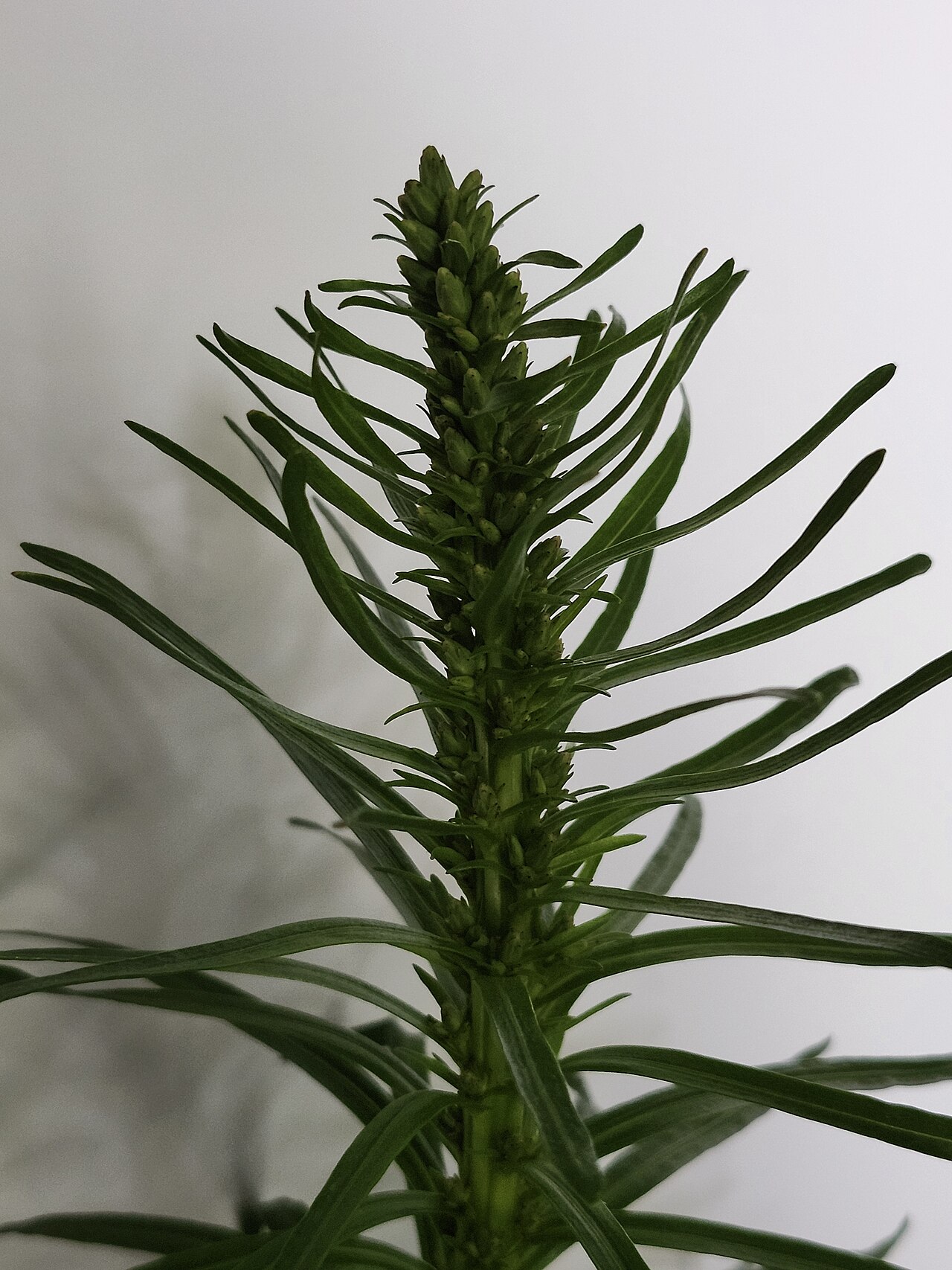
Water at the soil line rather than over the leaves. The Old Farmer’s Almanac notes that blazing star is prone to powdery mildew, and dry foliage helps.
Step 5: Give It Full Sun and Light Feeding
Place the pot where it gets at least six hours of direct sun. A pot is easy to move, so you can follow the light as the season changes. In shade, the plant may stay leafy and skip flowering; our guide to blazing star with leaves but no flowers covers that in detail.
Wisconsin Horticulture suggests fertilizing before new growth begins in spring. In a pot, frequent watering does flush nutrients out of the mix, so one light spring feeding with a balanced, slow-release product is reasonable. Skip anything high in nitrogen.
Step 6: Make the Winter Decision
This is where container blazing star succeeds or fails. When the foliage turns bronze and dies back in fall, the corm goes dormant. It still needs protection from deep cold and from soggy mix.
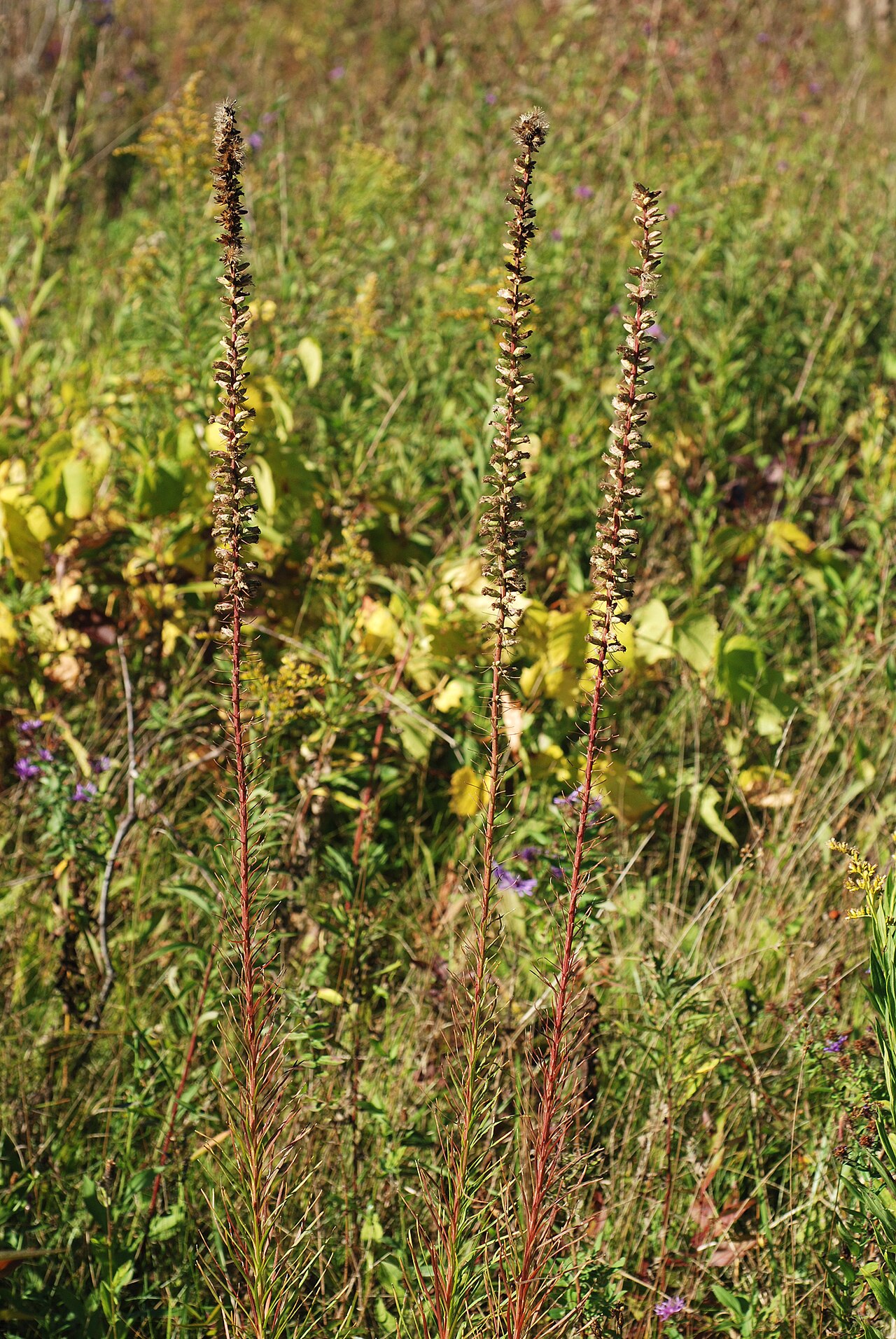
Penn State Extension’s rule of thumb is to go two zones colder with containerized plants. Blazing star is listed as hardy to zone 3, so on paper a potted plant might ride out winter outdoors in about zone 5 or warmer. In practice, protection is still wise anywhere the ground freezes hard.
Choose one of these methods:
- Bury the pot. Iowa State Extension calls this one of the most reliable methods. Dig a hole in a garden bed, set the pot in, and fill soil around it after the plant goes dormant but before the ground freezes. Lift it out in spring once the soil thaws.
- Move it to an unheated garage or shed. Iowa State advises this only if temperatures stay consistently between 20°F and 45°F. Penn State recommends checking moisture now and then but not overwatering, to avoid root rot.
- Group and insulate. Penn State suggests clustering pots in a sheltered spot and covering them with straw, shredded leaves, bark mulch, or evergreen boughs, or setting a pot inside a larger box lined with insulation.
- Plant it out. If you have any garden space, moving the plant into the ground in early fall gives it the best odds.
Whatever method you choose, keep the mix barely moist, not wet. Penn State notes that dry soil freezes faster than moist soil, but blazing star corms rot in cold, soggy conditions. Lightly moist is the target. In spring, remove covers gradually so the plant can adjust.
Winter Options at a Glance
| Bury the pot | Best insulation. Needs a garden spot that drains well. |
| Unheated garage or shed | Good if it stays about 20–45°F. Check moisture monthly. |
| Group and mulch outdoors | Works in milder zones. Use a sheltered, well-drained spot. |
| Leave it exposed | Risky in cold climates. Clay and ceramic pots can crack. |
| Bring it into a warm house | Not recommended. The corm needs a cold dormant period. |
Troubleshooting Potted Blazing Star
- Yellowing lower leaves in summer: often drought stress between waterings. Check the mix more often in heat.
- No growth in spring: dig gently to check the corm. Soft and brown means winter rot; firm means it’s just late.
- Spikes tipping the pot over: move it out of the wind, switch to a heavier pot, or choose a shorter cultivar.
- Fewer flowers after a few years: the pot may be crowded. Repot or divide in early spring; see our guide on when to divide blazing star.
- White powder on leaves: likely powdery mildew. Improve air flow and keep water off the foliage.
A Season-by-Season Plan for Container Blazing Star
- Early spring: remove winter protection gradually. Repot or divide if crowded. Give one light feeding before growth starts.
- Late spring: move the pot into full sun. Start checking moisture every few days as growth speeds up.
- Summer: water deeply whenever the top of the mix is dry, possibly daily in heat. Keep water off the leaves.
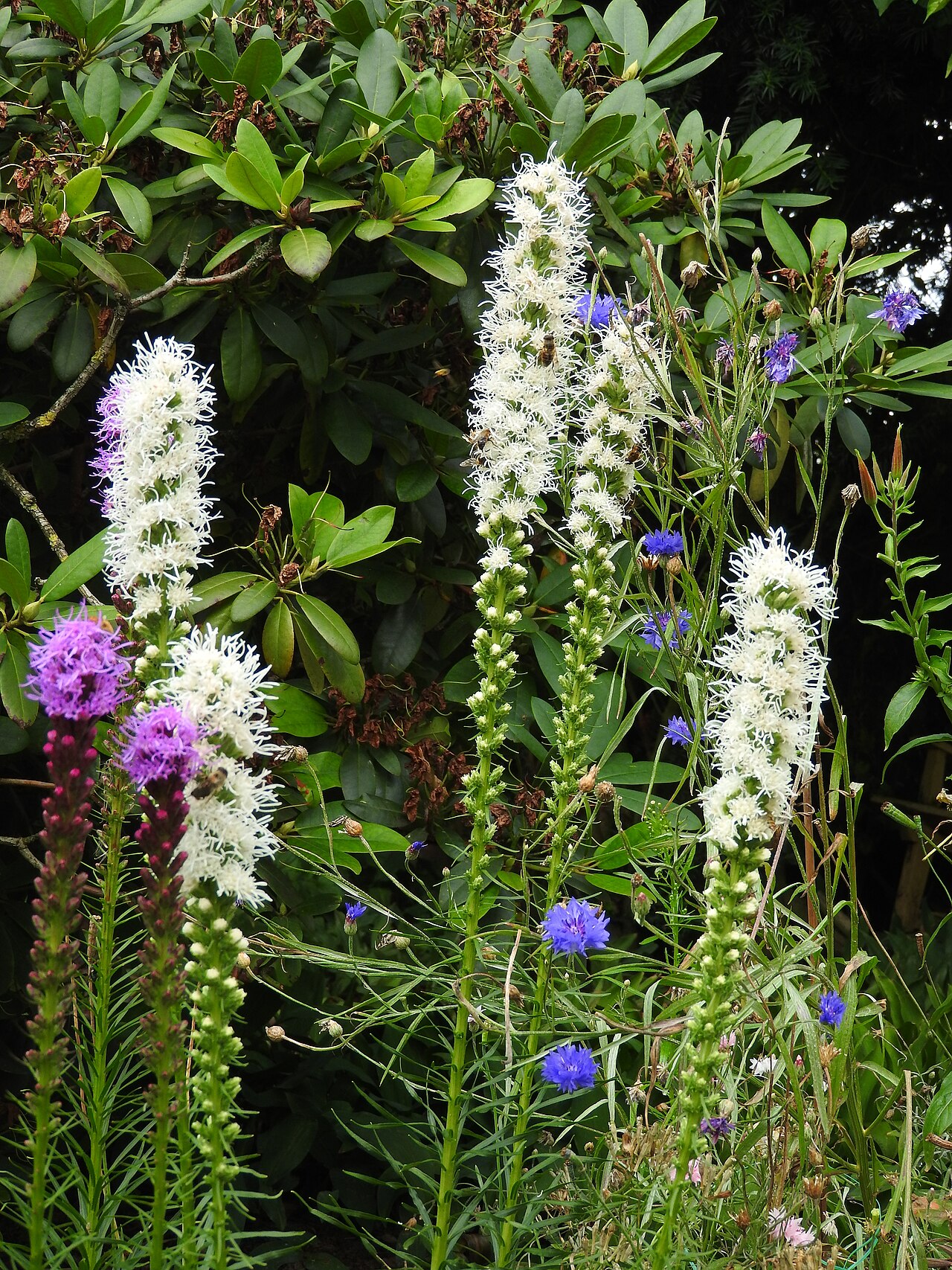
- Late summer: enjoy the bloom. Leave some spikes to go to seed for birds if you like.
- Fall: let the foliage die back. Cut stems down, ease off watering, and set up winter protection before the ground freezes.
- Winter: check moisture once a month. Barely moist, never soggy.
📋 More on this plant: read the full Blazing Star (Liatris spicata) profile, or see it in our native plant lists for North Carolina & South Carolina, Georgia, Alabama & Mississippi, Arkansas, Louisiana, Eastern Oklahoma & Eastern Texas, Ohio & Indiana, and Michigan, Wisconsin & Eastern Minnesota.
Frequently Asked Questions
Can blazing star grow in a pot year-round?
Yes, if the pot is large, drains freely, and gets winter protection in cold climates. It’s more work than growing it in the ground, and plants in pots are often less vigorous over time.
What size pot does blazing star need?
Bigger is better. A larger pot holds moisture longer in summer and insulates the corm in winter. Start with a container much larger than the nursery pot, and choose a compact cultivar if space is tight.
How often should I water blazing star in a container?
Whenever the mix is dry a couple of inches down. That might be daily in a hot summer and weekly in cool weather. Always let excess water drain away.
Can I leave potted blazing star outside in winter?
In mild climates, often yes. In colder areas, bury the pot, move it to an unheated garage that stays roughly 20–45°F, or insulate it. Container roots get much colder than roots in the ground.
Should I bring my potted blazing star indoors for winter?
No. A warm house keeps the corm from going properly dormant. An unheated, sheltered space is the right choice.
Sources
- Penn State Extension, Overwintering Plants in Containers: container roots as cold as winter air, two-zone rule, larger pots, cracking pots, burying, unheated storage, grouping and insulating, moisture checks.
- Iowa State University Extension, Keeping unplanted perennials alive over winter: burying pots, timing, and the 20–45°F range for unheated structures.
- Wisconsin Horticulture, Division of Extension, Liatris: hardiness, drainage and rot, poor-soil tolerance, spring fertilizing, ‘Kobold’ and ‘Alba’ cultivars.
- North Carolina Extension Gardener Plant Toolbox, Liatris spicata: mature height and growth habit.
- Gardening Know How, Liatris Care: container growing and the cold period corms need before spring growth.
- The Old Farmer’s Almanac, Liatris (Blazing Star): powdery mildew and watering at the soil line.