When to Stop Watering Bulbing Onions: Reading the Tops and Soil
Last updated: November 6, 2026
All season you have been told the same thing about onions: keep them evenly moist. Then, near the end, the advice flips to stop watering. The hard part is knowing when.
Stop too early and you cut off the last, fastest stretch of bulb growth. Keep watering too long and the bulbs sit in wet soil as they mature, which delays curing and sets up rot in storage.
The plant tells you when to switch. This guide shows you how to read the tops, the necks and the soil so you can make the call with confidence.
The Short Answer
Keep bulbing onions evenly moist until the bulbs are full size. Then:
- Stop watering when the tops start to fall over on their own and the bulbs look full size. That is the timing Minnesota, Utah State and Oregon State extension all give.
- Check the neck: a soft, limber neck means the bulb is maturing; a stiff neck means it is still growing.
- Check the soil with a trowel. You want it drying down from the surface, not soggy at bulb level.
- Don’t confuse thirst with maturity. Tops that flop from drought or wind, with stiff necks, still need water.
- Harvest about a week after roughly half the tops are down, then cure.
Why Onions Need Water, Then Need It to Stop
Onions are shallow-rooted. University of Minnesota Extension says they need constant moisture for proper growth, and Utah State University Extension recommends keeping the soil near field capacity, moistened to about 12 inches.
Water matters most once bulbs start to swell. University of Maryland Extension says to ensure ample moisture especially after bulbs begin enlarging, and that bulb size is directly proportional to the water the onions get during the season.
Once the bulb is full, the job changes. The plant pulls its leaves’ reserves into the bulb, the neck softens, and the outer scales begin to dry into skins. Utah State warns that excess water as the crop matures delays curing and causes storage problems.
Onion Watering by Stage
| Leaf growth | Even moisture. About 1 inch of water a week if rain falls short (University of Minnesota Extension). |
| Bulb swelling | Most critical period. Keep moisture steady; avoid big dry-wet swings. |
| Tops begin to fall | Stop watering so bulbs finish in drying soil. |
| About half the tops down | Wait about a week, then lift (Oregon State University Extension). |
| After lifting | No water. Cure in a warm, dry, airy spot out of direct rain. |
Step 1: Know What “Enough Water” Looked Like
Before you can judge when to stop, you need to know you were watering well. University of Minnesota Extension suggests soaking the soil thoroughly at least once a week when rain falls short of an inch.
The same guide gives a useful rule: an inch of water wets sandy soil to about 10 inches but heavy clay to only about 6. Sandy beds need water more often than once a week.
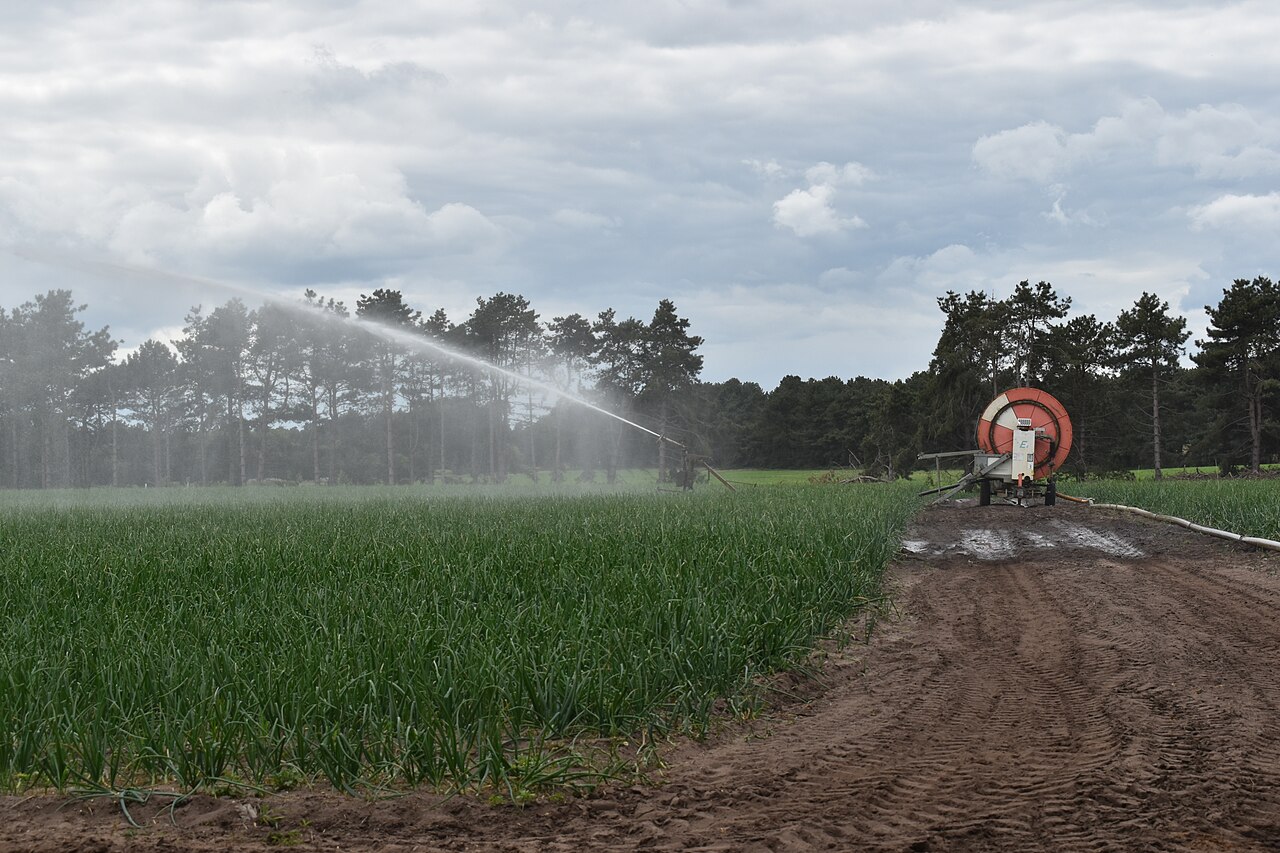
Drip lines or soaker hoses put water at the roots without soaking the leaves. Our drip irrigation primer covers layout and run times, and a light organic mulch slows surface drying between waterings.
Step 2: Watch the Tops
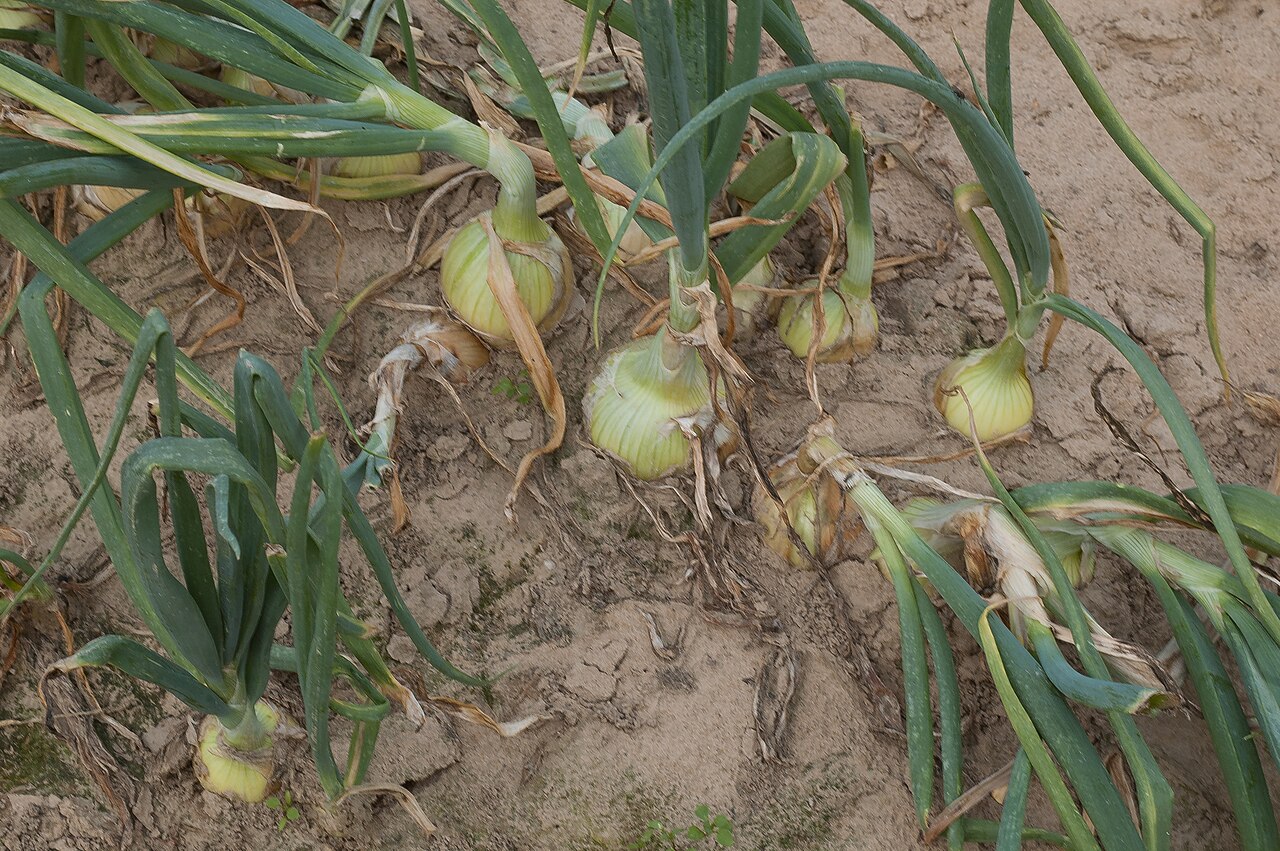
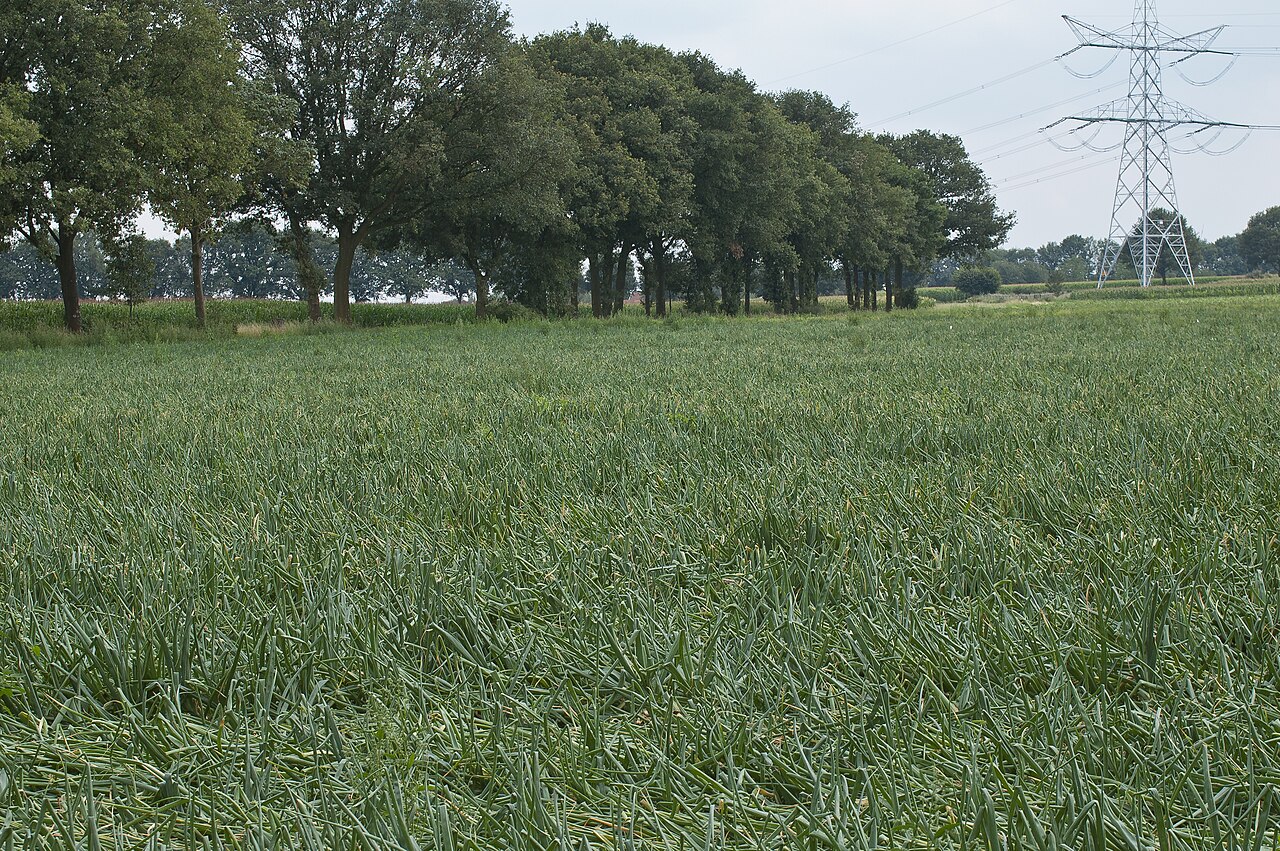
As a bulb matures, the neck just above it softens and can no longer hold the leaves up. The tops bend over at the neck and lie on the ground, usually starting with a few plants and spreading across the bed over a week or two.
University of Minnesota Extension says to stop watering when bulbs have reached full size and the tops begin to fall. Oregon State University Extension puts it the same way: when tops begin to dry and fall, stop watering so bulbs mature in dry soil.
Utah State uses the same signal, telling gardeners to stop watering when the plants start to mature and the tops fall over.
Step 3: Pinch the Neck
Fallen tops are a good sign but not a perfect one. A UMass Extension fact sheet quotes University of Georgia Extension on this point: maturity is best judged by pinching the neck.
Immature onions have stiff necks. Optimally mature onions have soft, limber necks. When the necks are so weak they cannot support the tops at all, the onions are over-mature.
The same source warns that tops can be knocked over by strong wind or rain, or go limp from lack of moisture, so the percentage of fallen tops on its own is not a true measure of maturity.
Mature or Just Thirsty?
| Maturing | Tops bend at the neck and stay down. Neck soft and limber. Bulb full size with skins starting to color. Leaves yellowing from the tips. |
| Thirsty | Whole plant limp, often in afternoon heat. Neck still stiff. Soil dry several inches down. Tops perk up after watering. |
| Wind or rain damage | Tops flattened in one direction after a storm. Necks still firm. Keep watering normally. |
Step 4: Read the Soil
Dig a small hole beside a bulb with a trowel. University of Minnesota Extension recommends this as the way to see how far down the soil is actually wet.
While bulbs are swelling, the soil should be moist through the root zone. Once you have stopped watering, you want it drying down from the top so the bulb shoulders and necks sit in dry soil.
Heavy clay holds water much longer than sand, so you may need to stop a little earlier there. If your onions sit in wet clay every year, consider improving the clay or growing them in a raised bed.
Also check that soil has not been mounded over the bulbs. University of Maryland Extension notes that bulbs push up above the soil as they enlarge and advises against hilling, which encourages stem rot.
Step 5: Time the Harvest
Extension guides vary a little on the exact trigger. Minnesota says to harvest when about half the tops are falling over and dry; Maryland says about two-thirds. Oregon State suggests waiting a week after about half have fallen.
There is a trade-off. The UMass fact sheet notes that yield can still rise 30 to 40 percent between the tops starting to go down and being fully down and dry, but that bulbs lifted while 30 to 40 percent of the foliage is still upright store longest before sprouting.
For most home gardeners, the middle path works: stop watering when tops start to fall, harvest about a week after roughly half are down, and lift sooner if storage is your main goal.
What Not to Do
- Don’t knock the tops over to speed things up. South Dakota State Extension advises against it, because you give up the bulb growth the plant would still have made.
- Don’t keep fertilizing. Utah State recommends no fertilizer after mid-July in Utah because late nitrogen drives leaf growth and hurts storage. Adjust the date to your season.
- Don’t water “just in case” in a heat wave once tops are down. A day or two of wilt is not the problem it would be earlier.
- Don’t leave mature onions sitting through a long wet spell. Colorado State Extension notes cool, moist conditions near harvest favor Botrytis. Lift them and finish drying under cover.
Troubleshooting at a Glance
| Tops falling, necks soft, bulbs full | Stop watering. Harvest in about a week. |
| Tops limp, necks stiff, soil dry | Thirsty, not mature. Water deeply. |
| Tops flattened after a storm | Not a maturity signal. Keep normal care. |
| Rain forecast when crop is ready | Lift and cure under cover. |
| Bulbs small but tops falling early | Earlier drought or crowding. Harvest anyway; fix water and spacing next year. |
After You Stop: Lifting and Curing
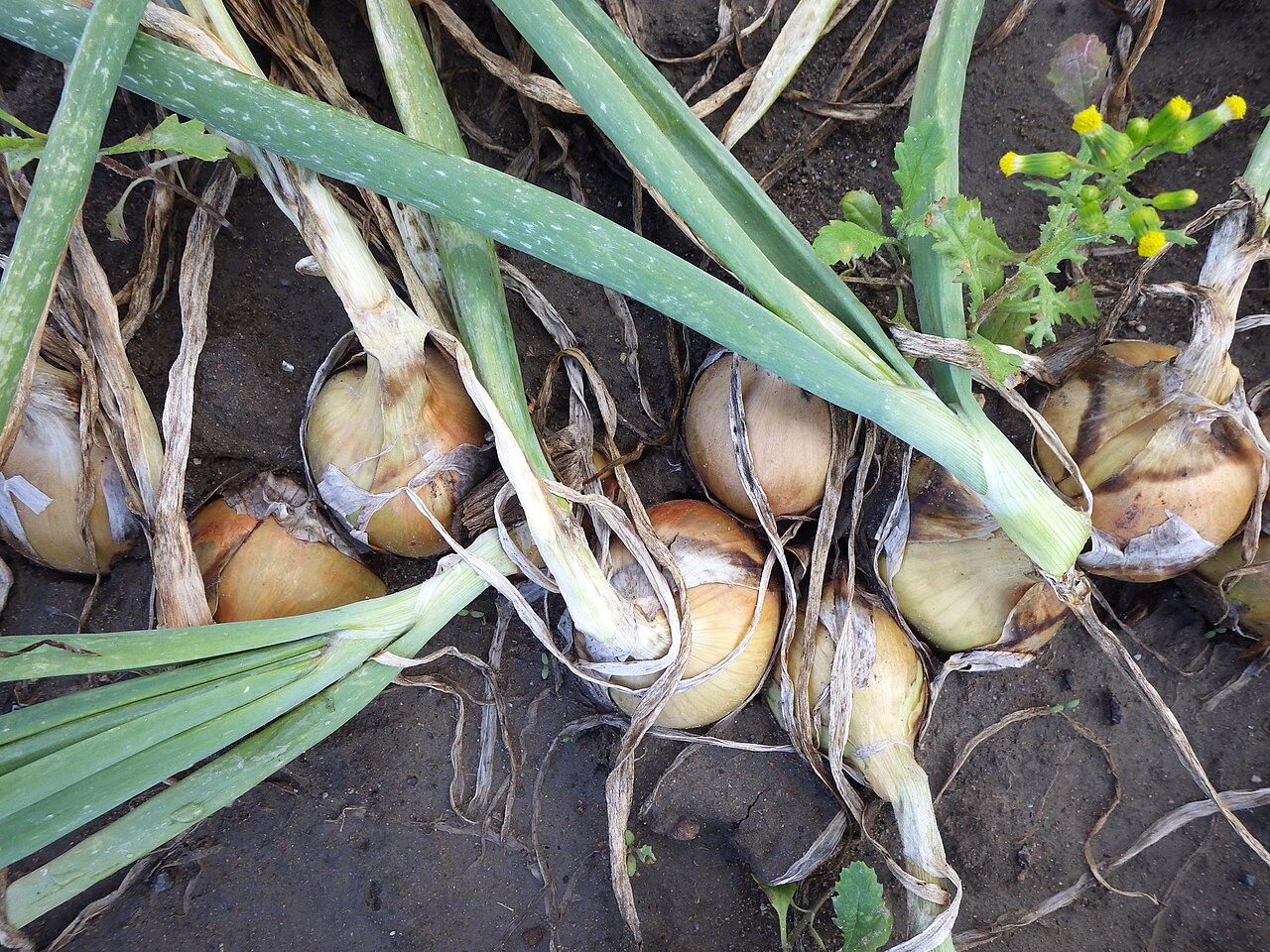
Lift bulbs gently with a fork and handle them carefully. Maryland Extension notes that careful handling to avoid bruising helps prevent storage rots.
Minnesota Extension says onions can stay on the ground for a few days if the weather is dry and warm, or come indoors to cure. Oregon State suggests 7 to 10 days in the sun, covered at night.
If the weather is humid or rainy at harvest, curing gets trickier; see curing onions in humid weather for ventilation and storage checks.
A Season-by-Season Watering Plan
- Planting to early growth: keep soil evenly moist. Water deeply once a week if rain falls short of an inch, more often in sand.
- Bulb swelling: the critical window. Keep moisture steady and mulch to hold it.
- First tops falling: pinch necks and check soil. Stop watering once tops fall from maturity, not thirst.
- About half the tops down: wait roughly a week in dry weather, then lift.
- Curing: keep bulbs dry and airy until necks are tight and skins rustle.
Still in the planning stage? Our guide to planting onion sets covers spacing, which affects how much each onion needs. If the bulbs never formed at all, see onions growing leaves but no bulbs. If some plants sent up flower stalks, harvest those first, as explained in onion sets bolting early. And if you are raising next year’s crop from seed, start with healthy, upright seedlings.
Frequently Asked Questions
How long before harvest should I stop watering onions?
Stop when the tops begin to fall over from maturity, which is usually one to two weeks before you lift. Oregon State suggests harvesting about a week after roughly half the tops have fallen.
What if it rains after I stop watering?
You cannot stop rain, and a shower will not ruin the crop. If a long wet spell is forecast when the bulbs are ready, lift them and finish drying under cover.
Should I water onions after the tops fall over?
Generally no. Minnesota, Utah State and Oregon State extension services all say to stop once tops begin to fall. The exception is tops that flopped from drought with stiff necks; those still need water.
Can I stop watering earlier to make onions store better?
Stopping before bulbs are full size reduces yield. For storage, lift a bit earlier, while some tops are still upright, rather than starving the crop of water.
Do green onions follow the same rule?
No. Green onions are harvested young and keep growing while watered. The stop-watering rule applies to onions grown for mature, storable bulbs.
Sources
- University of Minnesota Extension, Growing onions in home gardens: weekly water, soil wetting depth, trowel check, stop watering, harvest timing.
- Utah State University Extension, How to Grow Onions in Your Garden: field capacity, stop watering at maturity, late nitrogen.
- Oregon State University Extension, Plant onions early for bigger summer bulbs: stop watering as tops fall, harvest timing, curing.
- University of Maryland Extension, Growing Onions in a Home Garden: water and bulb size, no hilling, harvest at two-thirds down.
- UMass Amherst Extension, Harvesting & Curing Onions: yield vs. storage trade-off, neck pinch test (quoting UGA Extension).
- South Dakota State University Extension, Growing Onions: don’t break over tops.
- Colorado State University Extension, Botrytis, Downy Mildew, and Purple Blotch of Onion: moisture near harvest and Botrytis.