American Hazelnut in a Boundary Planting: Nuts, Wildlife, and Room to Spread
Last updated: November 6, 2026
American hazelnut is one of the most useful shrubs you can put along a property line. It screens, it feeds people and wildlife, and it needs very little care.
It also wants to become a thicket. Plant it in a narrow strip against a fence and it will push sprouts into the lawn, the garden and your neighbor’s yard.
The fix is to plan the boundary around that habit from the start. This guide covers the space hazelnut needs, how to group plants for nuts, which shrubs to pair with it, and what to do in regions where it doesn’t belong.
Plan at a Glance
- Site: a back or side property line, a woodland edge, or a divider between yard and field.
- Size: a band about 12 to 15 feet deep; mature shrubs can be 8 to 13 feet wide.
- Sun: full sun for the best nut crops; part shade is tolerated.
- Soil: well-drained, moist to dry; wide pH tolerance. Not salt tolerant.
- Maintenance: low. Thin suckers at the edges and remove old stems every few years.
- Best regions: the eastern half of North America, from southern Maine and Quebec to northern Florida, west to the Great Plains.
How American Hazelnut Grows
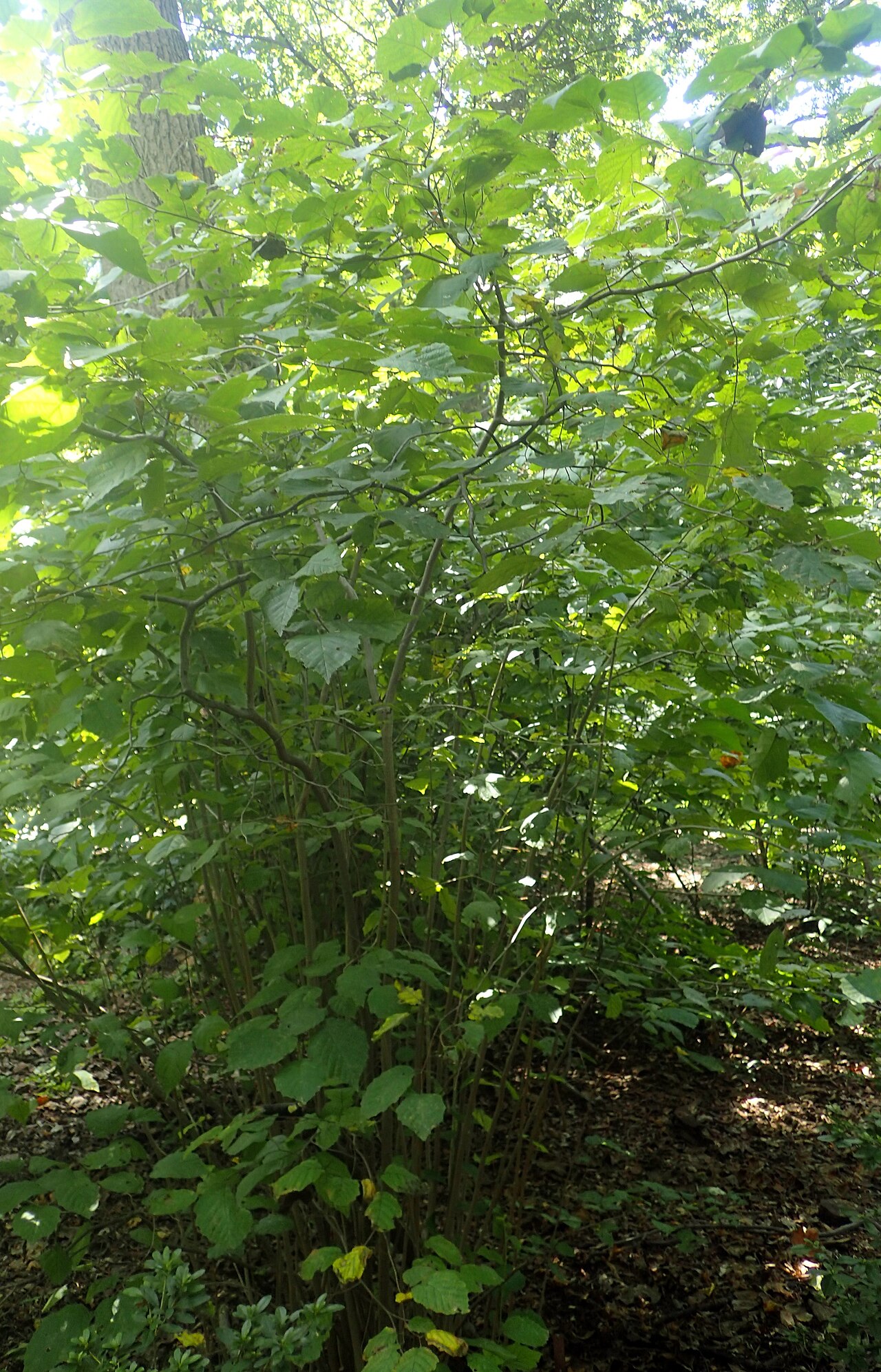
American hazelnut is a multi-stemmed shrub in the birch family. The USDA plant guide describes it as strongly rhizomatous, forming colonial thickets, and notes it is “useful for borders because of its colonial tendency.”
Size varies by source and site. The Morton Arboretum gives 6 to 10 feet tall and 4 to 6 feet wide; NC State gives 9 to 12 feet tall and 8 to 13 feet wide; Utah State expects about 15 feet tall and 10 feet wide at maturity.
That spread has a reputation. The same USDA guide notes that growers of managed timber remove hazelnut because of its “aggressive colonial habit.” In a garden, that same habit makes a dense, self-thickening screen, as long as it has room.
Step 1: Assess the Boundary
Light. Morton and NC State both say nut production is best in full sun. The USDA notes the plant can survive in deep shade, but a shaded boundary will be leafier and less productive.
Soil and moisture. Hazelnut grows in moist to dry, well-drained soils, according to the Lady Bird Johnson Wildflower Center. The USDA plant guide says it grows best on rich, moist, well-drained ground. Avoid spots that stay waterlogged.
Salt. NC State notes hazelnut is not salt tolerant. Keep it back from roadsides and driveways that get deicing salt or plow spray.
What’s on each side. Note whether the boundary borders lawn, a vegetable bed, a fence or open field. A thicket next to a field can spread freely; next to a lawn it needs an edge.
Step 2: Lay Out the Boundary Band
Think of the planting as a band with three parts, not a single line of shrubs.
- Back layer: taller natives along the property line, such as wild plum or serviceberry.
- Hazelnut layer: a staggered row or loose groups of hazelnut in front, where they get the most sun.
- Front edge: a mulched or mown strip several feet wide where you can spot and remove stray sprouts.
Plant hazelnut on the sunniest face of the band. On a north property line, that’s the side facing your yard; on a south line, put the hazelnuts closest to the fence.
Leave a maintenance gap between the back layer and any fence. You’ll want to reach behind the shrubs to thin stems and pick nuts.
Spacing and Quantity
| Minimum group | Two to three plants for cross-pollination (NC State, Utah State). |
| Screen spacing | Roughly half to two-thirds of mature width, a common rule of thumb for informal screens: about 5 to 8 feet apart. |
| Nut-focused spacing | Wider. Utah State gives 15 to 20 feet in orchard settings. |
| Plants per 50 feet | About 7 to 10 hazelnuts at screen spacing. |
| Band depth | 12 to 15 feet including the front edge strip. |
Step 3: Plan for Pollination and Nuts
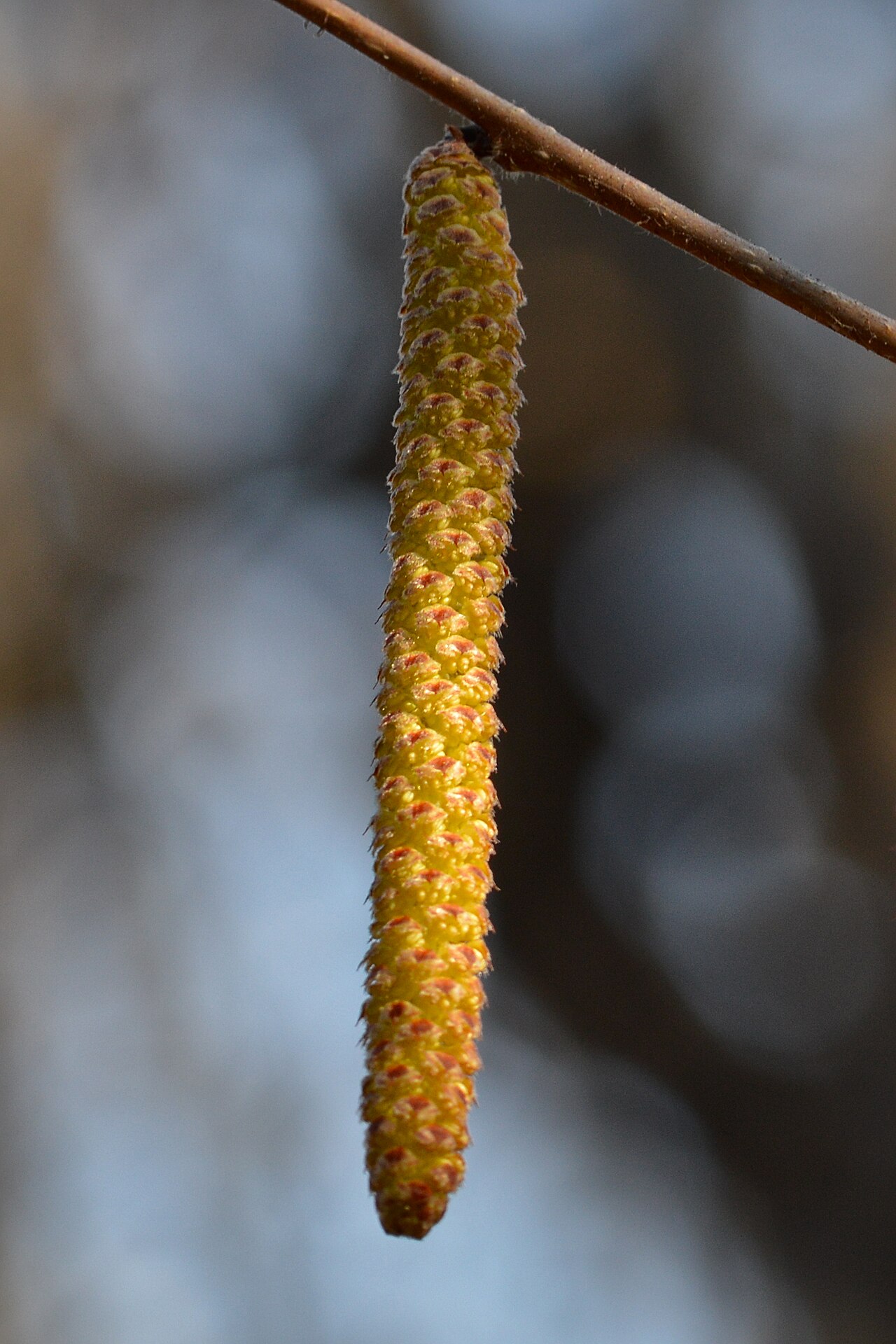
Each hazelnut carries both male and female flowers. The males are the dangling yellow-brown catkins of late winter; the females are tiny red tufts at the tips of buds.
Having both on one plant doesn’t mean a single shrub will fruit. NC State notes the plants are not self-fertile and recommends planting in multiples for cross-pollination. Utah State suggests buying two or three seed-grown plants.
Seed-grown stock is the norm. The USDA plant guide notes there are no named cultivars of American hazelnut apart from the wild type, so plants from different seed sources naturally differ genetically.
Patience helps. NC State says nuts typically appear on plants two to three years old and older, and the USDA reports good seed crops every two to three years.
Step 4: Plan for Wildlife (and Share)
A hazelnut boundary is a wildlife corridor. The USDA plant guide lists squirrels, foxes, deer, northern bobwhite, ruffed grouse, turkey, woodpeckers and pheasants among the animals that eat the nuts.
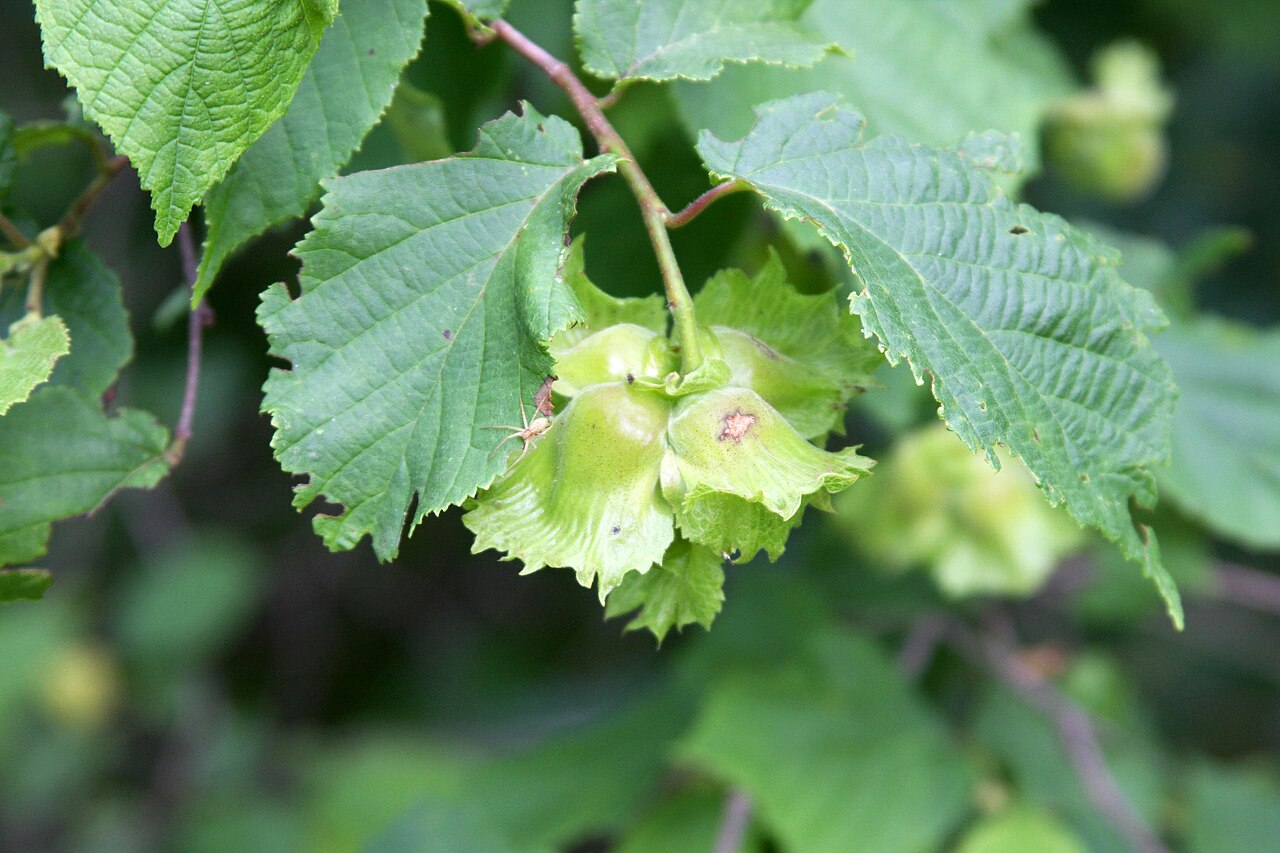
The Morton Arboretum notes that blue jays and woodpeckers are drawn to the ripening nuts. The USDA adds that turkey and ruffed grouse eat the male catkins in winter, and that the dense, low growth offers cover and nesting sites.
If you want a share of the nuts, timing matters. NC State notes you can harvest while husks are still green, and that competition with wildlife increases once husks turn tan, typically in September to October.
Deer are a factor too. NC State rates damage from deer as moderate, and the USDA notes rabbits, deer and moose browse twigs and catkins. Protect young plants where browsing is heavy.
Step 5: Choose Companions for the Band
Plant Palette
| Plant | Role | Height | Sun / moisture | Native range |
|---|---|---|---|---|
| American hazelnut (Corylus americana) | Main screen and nut crop | 6–12 ft | Sun to part shade; moist to dry | Maine and Quebec to northern Florida, west to the Plains |
| Wild plum (Prunus americana) | Back layer; spring bloom, fruit | 15–25 ft | Sun to part shade; dry to medium | Most of the U.S. east of the Rockies, southern Canada |
| Downy serviceberry (Amelanchier arborea) | Back layer; early bloom, summer fruit | 15–25 ft | Sun to part shade; moist, well-drained | SE Canada to northern Florida, west to Minnesota and Kansas |
| Gray dogwood (Cornus racemosa) | Thicket partner; white fruit | 4–15 ft | Sun to part shade; dry to wet | SE Canada to Georgia, west to the Plains |
| Carolina rose (Rosa carolina) | Low front edge | 1–3 ft, to 5 ft | Sun to part shade; dry to medium | Maine to Minnesota, south to Florida and Texas |
| Western hazelnut (Corylus cornuta var. californica) | Pacific Coast alternate | 5–12 ft or more | Part shade; moderate to dry | British Columbia to California |
Heights from NC State, The Morton Arboretum and our plant profiles. Ranges are broad summaries; confirm local status before planting.
In the back layer, wild plum adds early white blossoms and its own fruit. NC State notes you can remove its suckers to limit spread, so it stays manageable behind the hazelnuts.
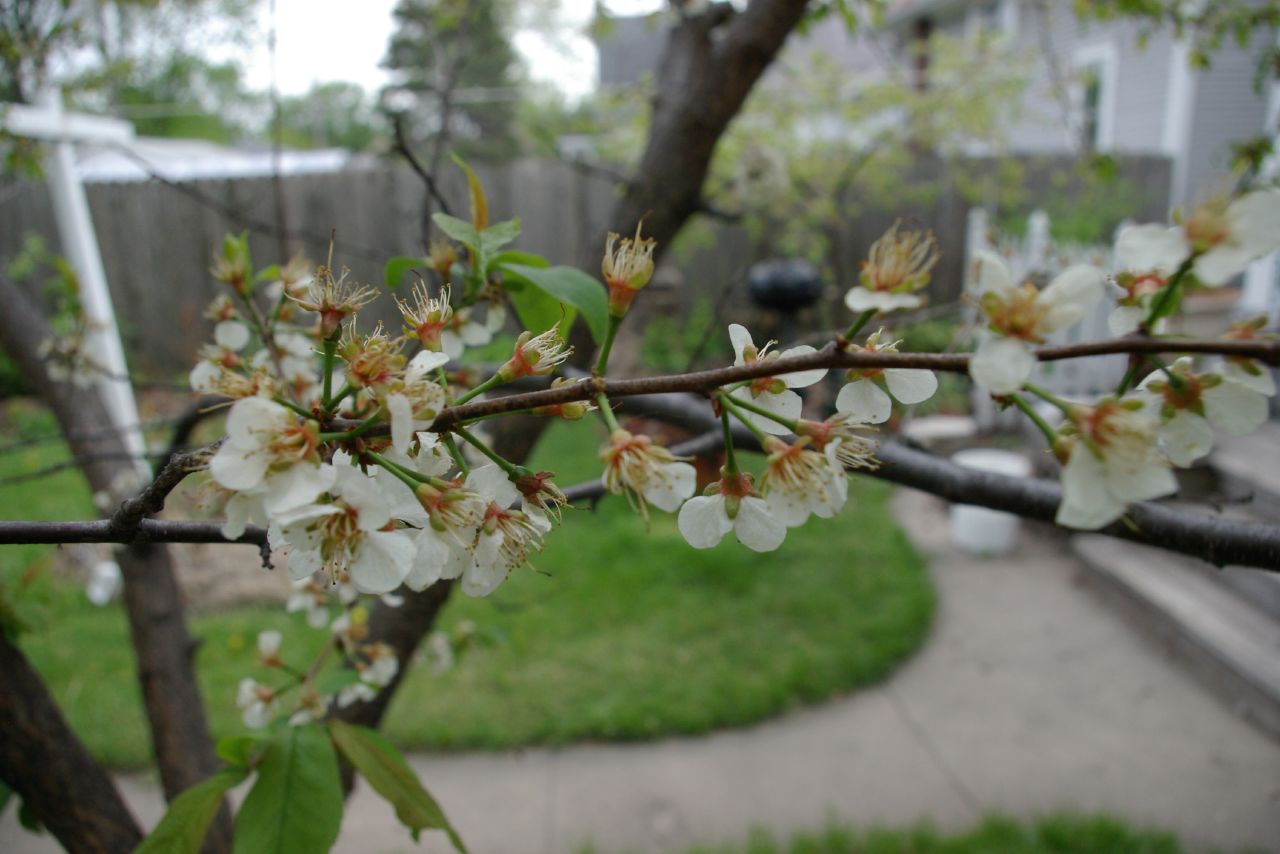
Downy serviceberry is a good alternative or partner for the back layer, flowering early and fruiting in early summer, before the hazelnuts ripen.
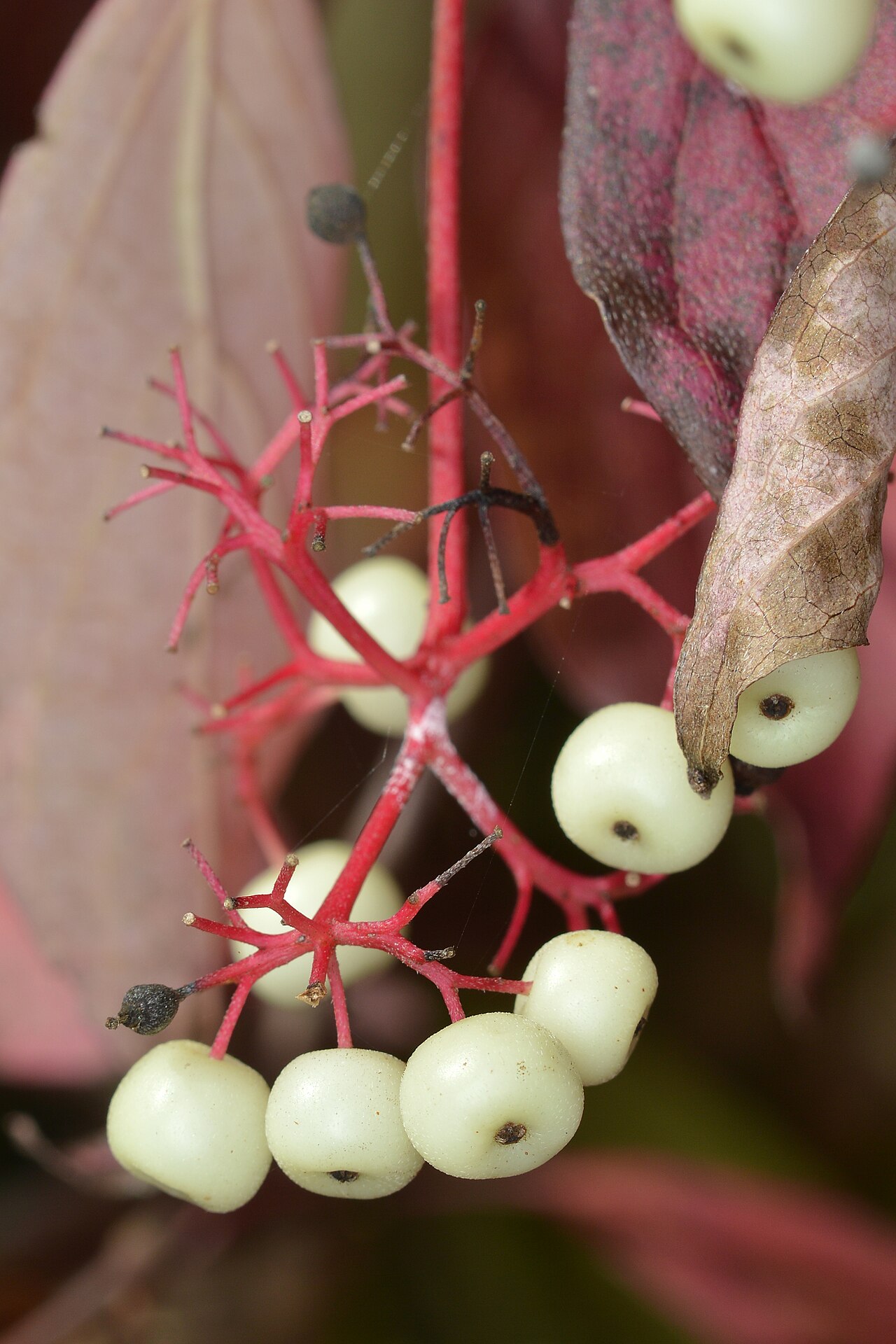
Where you want an even denser wildlife thicket, mix in gray dogwood. NC State notes it withstands dry, wet and poor soils, and its white fruit on red stalks extends the food supply into fall.
For the front edge, low, suckering Carolina rose softens the line without blocking sun to the hazelnuts. If you have room for a deeper, layered planting, our plan for a mixed native shrub border built around nannyberry uses a similar approach. For more ideas on mixing berry and nut shrubs, see our guide to native hedgerows for birds.
Regional Alternates
American hazelnut covers most of the eastern half of the continent, reaching west to Saskatchewan, eastern Montana, Wyoming and Colorado, Oklahoma and eastern Texas.
On the Pacific Coast, use western hazelnut instead, which ranges from British Columbia to California. In the dry interior West, check a regional list for a native shrub suited to your rainfall.
Be careful with nursery hazelnuts sold for nut production. Many are European filberts or hybrids. Utah State notes that European types bloom earlier and are more prone to frost damage to their flowers, and that one popular variety is being used less because of eastern filbert blight. If a native boundary is the goal, buy plants labeled Corylus americana.
Installation Steps
- Mark the band. Stake the back line, the hazelnut line and the front edge.
- Remove turf. Utah State notes turf competes with young trees and shrubs and recommends clearing sod at least 2 to 3 feet around each plant and replacing it with mulch. Clearing the whole band is easier.
- Plant in groups. Set hazelnuts in staggered groups of three or more, with back-layer plants behind.
- Mulch. Cover the band with wood mulch, kept off the stems.
- Protect from browse. Use cages or fencing on young plants where deer and rabbits are common.
- Water through the first seasons. Water deeply in dry spells until the shrubs are established.
First-Three-Years Maintenance Calendar
- Year 1: water during dry spells, keep the mulch weed-free, and check browse guards.
- Year 2, spring: let sprouts fill gaps within the hazelnut layer. Cut any that come up in the front edge strip.
- Year 2, fall: look for the first nuts. Note which plants bear.
- Year 3 onward: thin sprouts at the edges each season, as NC State and the Wildflower Center advise. Pruning can be done any time of year.
- Every few years: remove a few of the oldest stems at the base to keep the band vigorous and sunny inside.
Mistakes to Avoid
- Planting a single shrub and expecting nuts. Plant at least two or three.
- Squeezing it into a narrow strip. Give it a band, not a sliver along the fence.
- Planting in heavy shade. It survives, but the nut crop drops.
- Siting it beside a salted road or driveway. It is not salt tolerant.
- Buying filberts by mistake. Check the label for Corylus americana.
- Waiting too long to harvest. Wildlife takes most nuts once husks brown.
Want a lower, tidier option for a shorter boundary? See our layout for black chokeberry as a low hedge.
📋 Check your region: American hazelnut appears in our native plant lists for New Hampshire, Maine & Vermont, Delaware, Southern New Jersey & Long Island, North Carolina & South Carolina, Michigan, Wisconsin & Eastern Minnesota, Illinois, Iowa & Missouri, North Dakota, South Dakota & Western Minnesota, and Nebraska, Kansas & Eastern Colorado.
Frequently Asked Questions
How much room does an American hazelnut boundary need?
Plan a band about 12 to 15 feet deep. NC State lists mature width at 8 to 13 feet, and the plant spreads by rhizomes into thickets over time.
Do I need more than one hazelnut to get nuts?
Yes. NC State notes the plants are not self-fertile and recommends planting multiples. Utah State suggests two or three seed-grown plants.
How long until American hazelnut produces nuts?
NC State says nuts are typically produced on plants two to three years old and older. Crops vary from year to year.
Will hazelnut spread into my lawn?
It can. The USDA describes it as strongly rhizomatous and colonial. Keep a mulched or mown edge strip and thin sprouts each season.
Can I grow American hazelnut in shade?
It tolerates part shade and can survive deep shade, per the USDA, but Morton and NC State both note nut production is best in full sun.
Sources
- USDA NRCS, American Hazelnut Plant Guide: rhizomatous thickets, use in borders, wildlife food and cover, habitat, seed crops, lack of cultivars.
- NC State Extension Gardener Plant Toolbox: Corylus americana, Prunus americana, Amelanchier arborea, Cornus racemosa, Rosa carolina: size, pollination, nut timing, harvest, wildlife, deer, salt, sucker management.
- The Morton Arboretum, American hazelnut: size, sun, soil pH, suckers, birds.
- Lady Bird Johnson Wildflower Center, Corylus americana: habitat, soils, suckering, pruning.
- Utah State University Extension, Hazelnuts in the Home Orchard: mature size, cross-pollination, orchard spacing, turf competition, European types and eastern filbert blight.