Little Bluestem vs. Switchgrass: Choosing Scale for a Small Native Garden
Last updated: November 6, 2026
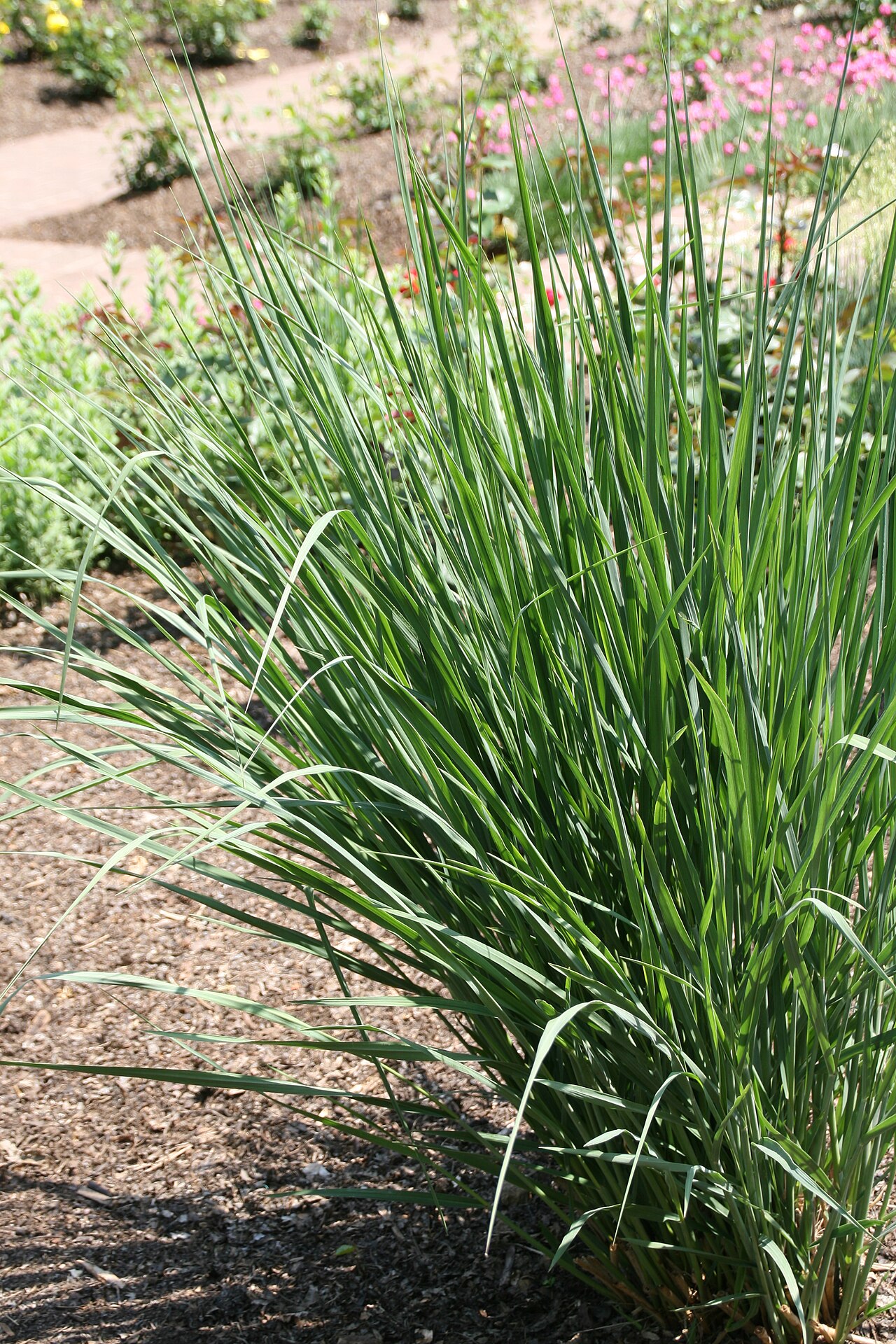
Little bluestem and switchgrass are two of the most popular native grasses for home gardens. Both are warm-season prairie grasses, both color up in fall, and both stand through winter.
The big difference is scale. In a small garden, picking the wrong one can mean a grass that swallows the bed, leans over the path, or blocks the view you wanted to keep.
This guide compares the two side by side and shows how to match each grass to the size of your space, your soil and the look you want, with planting plans for three bed sizes.
Plan at a Glance
| Site | Small sunny garden, front bed, side yard or patio border |
| Size | Beds from 3 to 10 feet deep; plans below for three sizes |
| Sun | Full sun for both grasses |
| Soil | Little bluestem: dry, well-drained. Switchgrass: dry to moist, tolerates poor drainage |
| Maintenance | Low: late-winter cutback, seedling editing |
| Best regions | Both are native across much of North America east of the Rockies; check your state list |
Start With the Space, Not the Plant
Before you choose a grass, measure three things: how deep the bed is from front to back, what you see over it, and how wet the soil stays.
- Bed depth. A clump needs room to spread without leaning over pavement. A useful rule of thumb is to keep a grass’s mature height no more than about the depth of the bed, so tall grasses sit in deep beds.
- Views. Note what the bed frames: a window, a doorway, a neighbor’s wall. Decide whether you want to see over the grass or not.
- Moisture. Dig a hole a day after heavy rain. If it still holds water, that matters for which grass will thrive.
Those three answers usually make the decision for you.
How the Two Grasses Differ
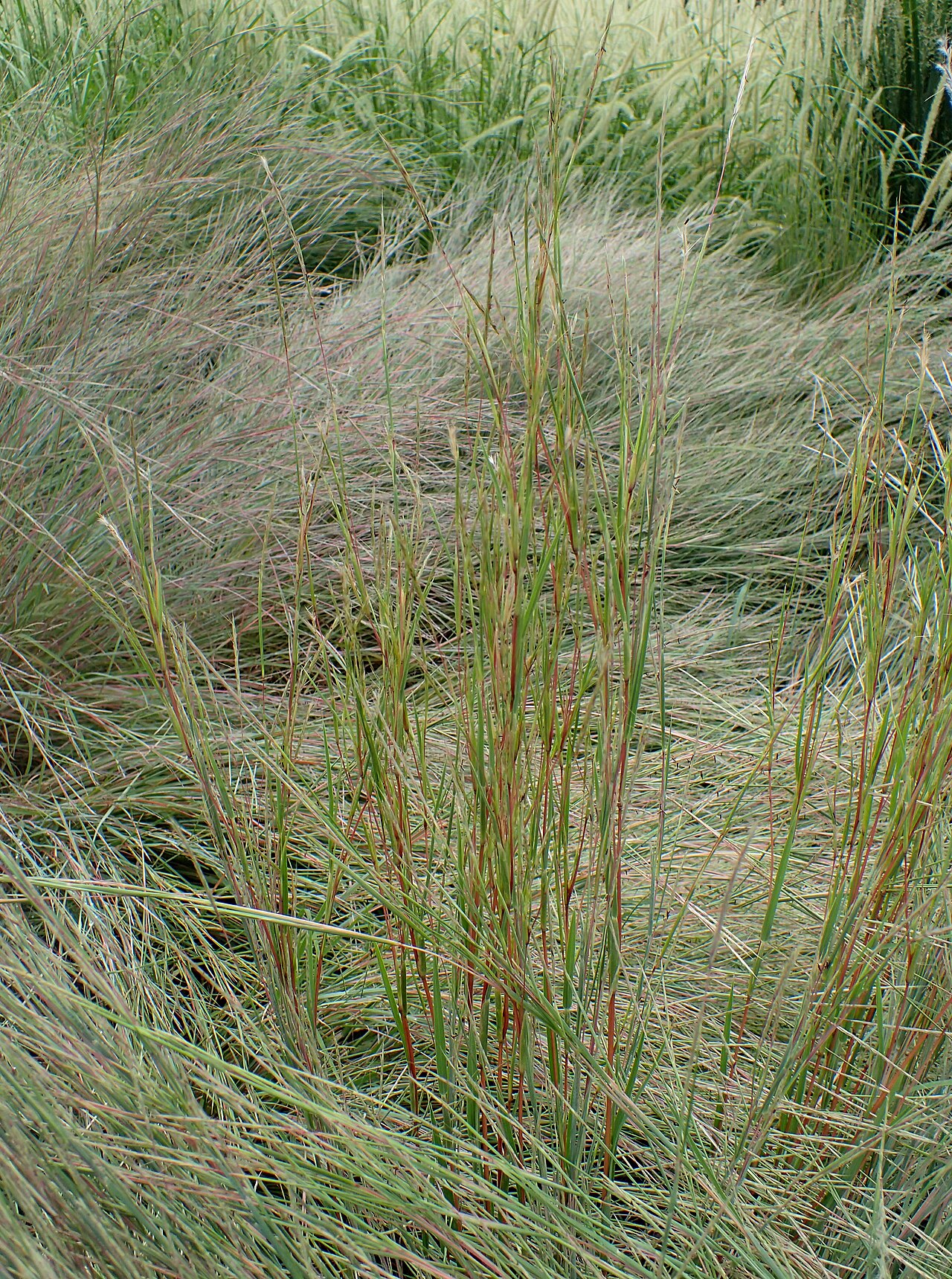
Little bluestem is the smaller of the two. NC State Extension lists it at 2 to 4 feet tall and 1.5 to 3 feet wide, with narrow, erect clumps. It prefers dry to medium, well-drained soil, and the Lady Bird Johnson Wildflower Center notes it will not tolerate wetlands or sub-irrigated sites.
Switchgrass is bigger in every way. NC State gives it 3 to 4 feet of foliage with flower plumes reaching up to 7 feet, and 2 to 3 feet wide. The Morton Arboretum says the species can reach 8 feet. It forms a dense, columnar clump that spreads slowly through creeping rhizomes.
Switchgrass also handles a wider range of moisture. The Wildflower Center lists dry to moist soils and says poor drainage is okay, and NC State notes it withstands occasional flooding. That makes it the better choice for low spots and rain-garden edges where little bluestem would struggle.
Side-by-Side Comparison
| Trait | Little bluestem | Switchgrass |
|---|---|---|
| Height | 2–4 ft (NC State) | 3–4 ft foliage, plumes to 7 ft (NC State); species to 8 ft (Morton) |
| Width | 1.5–3 ft | 2–3 ft, slowly widening |
| Growth habit | Narrow, erect bunchgrass | Dense, columnar clump; spreads slowly by rhizomes |
| Soil moisture | Dry to medium; no wet sites | Dry to moist; tolerates poor drainage and occasional flooding |
| Texture | Fine leaves, small fluffy seedheads | Wider leaves, large airy panicles |
| Fall and winter | Copper fall color that holds through winter (NC State) | Yellow-orange fall color, fading to light brown that persists through winter (NC State) |
| Self-seeding | Readily reseeds (Wildflower Center) | Can be an aggressive seeder (Morton) |
| Best small-garden role | Repeated mid-border grass, front-yard borders, edging | Back of border, corner anchor, seasonal screen, wet edges |
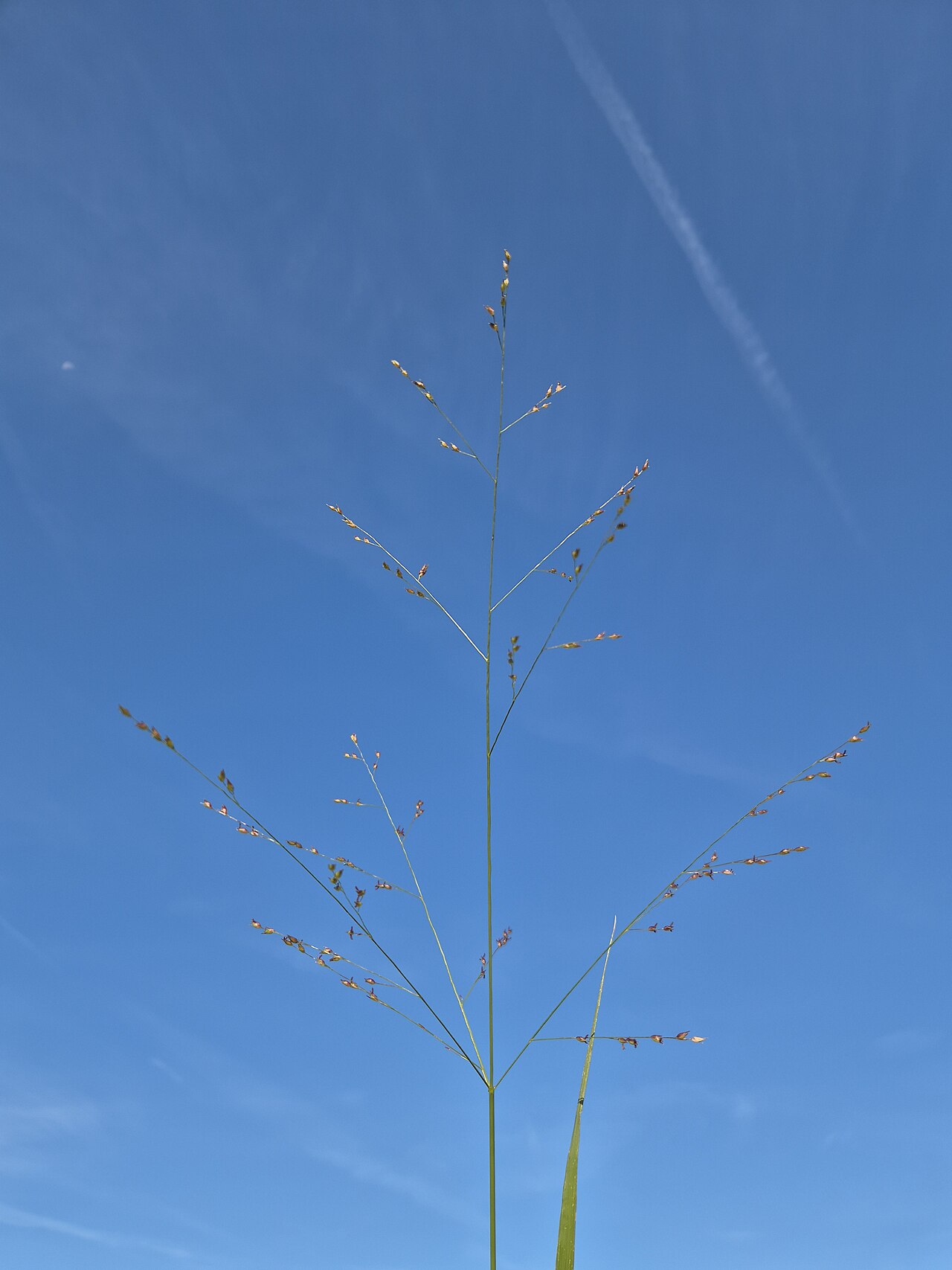
Visual Weight: Why Switchgrass Feels Bigger
Height is only part of the story. Switchgrass leaves are wider, and its panicles form a cloud above the clump. NC State describes them as finely textured, pink-tinged flower panicles that hover over the foliage like a cloud.
In a small garden, that cloud adds height and volume from late summer on. It reads well at the back of a bed or as a single anchor plant. Repeated along a small front bed, it can feel crowded.
Little bluestem has a lighter look. Its seedheads are small and fluffy, and the clump stays slender. You can repeat it several times in a small space and it still reads as an open planting. Our guide to little bluestem in a front-yard border shows how repetition works with this grass.
Choosing by Garden Size
Which Grass for Which Space
- Bed 3–4 feet deep: little bluestem, or a compact switchgrass cultivar used once as an accent. Species switchgrass is usually too big.
- Bed 5–7 feet deep: little bluestem repeated through the middle, with one to three compact switchgrass clumps at the back or ends.
- Bed 8 feet or deeper, or a corner: species switchgrass or a tall cultivar as the back layer, little bluestem in front. For screening, see switchgrass as a seasonal screen.
- Low, damp spot: switchgrass, regardless of size. Little bluestem does not tolerate wet soil.
For spacing, our profiles recommend little bluestem at 18 to 24 inches apart for quick coverage, or 2 to 3 feet for a looser look. Switchgrass is spaced 2 to 3 feet apart for individual specimens, or 18 inches for mass plantings.
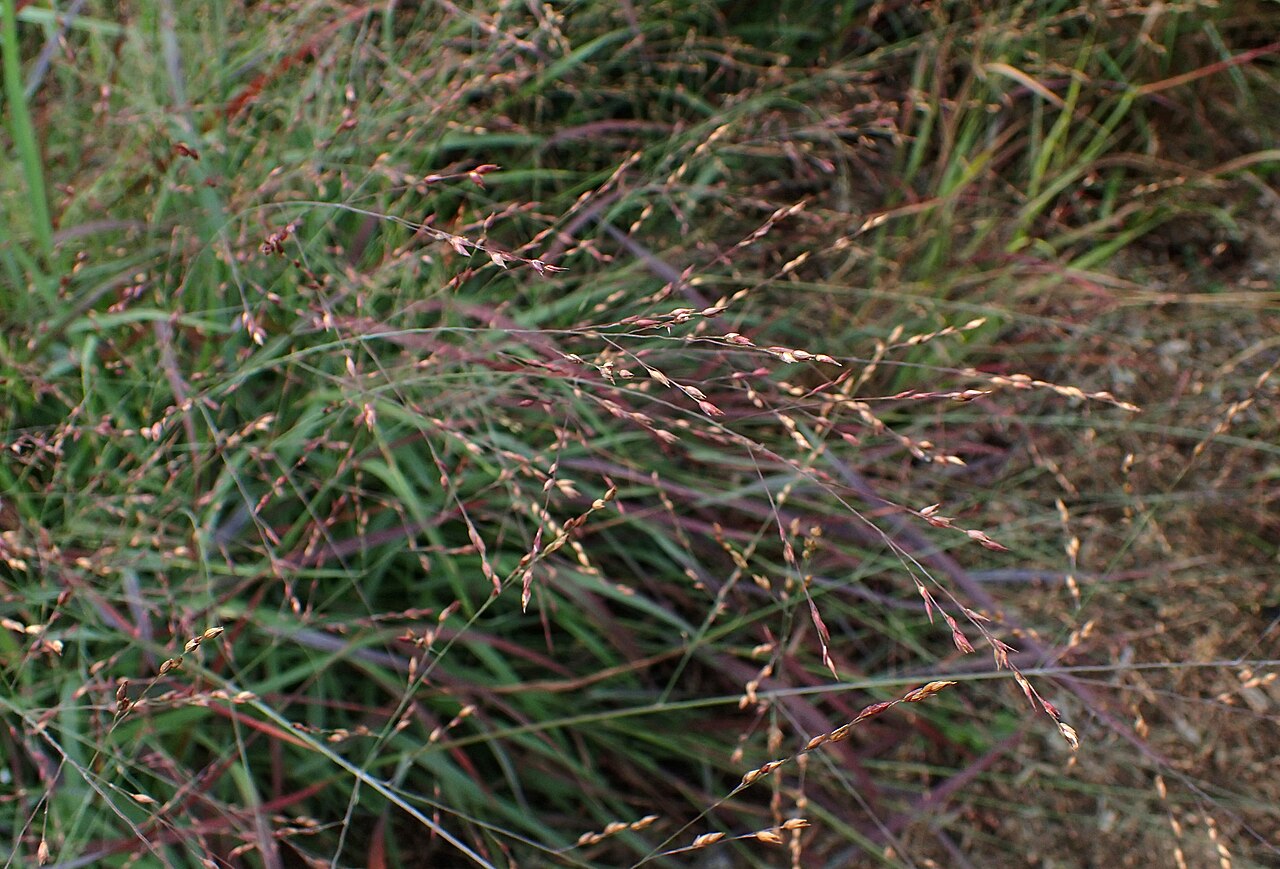
Compact Switchgrass Cultivars for Small Gardens
If you love switchgrass but have a small space, a compact cultivar closes much of the size gap. The Morton Arboretum lists these heights:
- ‘Cape Breeze’: about 2.5 feet, leaves edged red, yellow and orange in late fall.
- ‘Cheyenne Sky’: about 3 feet, blue-green leaves turning wine-red in summer.
- ‘Heavy Metal’: 3 to 4 feet, upright to columnar, metallic blue leaves.
- ‘Shenandoah’: about 4 feet, leaves tipped reddish-purple in summer, all red-purple by fall.
Avoid the tall selections in small beds. The Morton Arboretum lists ‘Cloud Nine’ at 7 to 8 feet and ‘Northwind’ and ‘Dallas Blues’ at 5 to 6 feet.
For compact little bluestem, the Morton Arboretum lists ‘Carousel’ and ‘Prairie Munchkin’ at about 2.5 feet. Keep in mind that cultivars are clones. Many native gardeners prefer seed-grown, locally sourced plants where size allows.
Plant Palette
Heights and ranges are from the Lady Bird Johnson Wildflower Center unless noted. Confirm each plant is native to your state.
| Plant | Role | Height | Sun / moisture | Native range |
|---|---|---|---|---|
| Little bluestem (Schizachyrium scoparium) | Repeated mid-border grass | 2–4 ft | Sun / dry, well-drained | Que. and ME to AB and ID, south through much of the U.S. east of the Rockies |
| Switchgrass (Panicum virgatum) | Back-layer anchor or screen | 3–7 ft with plumes (NC State) | Sun to part shade / dry to moist | Que. to Sask. and MT, south through FL and all but the westernmost U.S. |
| Prairie dropseed (Sporobolus heterolepis) | Low front-edge grass | Up to about 3 ft | Sun / dry | Que. to Sask., locally south to NC, KY, e. TX and CO |
| Black-eyed Susan (Rudbeckia hirta) | Summer color between grasses | Up to about 3 ft | Sun / dry to moist | W. MA to Man. and WY, south to FL and NM |
| Wild bergamot (Monarda fistulosa) | Mid-height bloom beside switchgrass | Up to about 5 ft | Sun to part shade / dry to moist | Most of southern Canada and the U.S. east of the Rockies |
Three Small-Garden Plans
Plan A: 4 × 16 foot front bed. Seven little bluestem at about 2 feet apart in a gentle zigzag, with black-eyed Susans in the gaps and prairie dropseed at each end. No switchgrass.
Plan B: 6 × 20 foot side-yard bed. Two compact switchgrass, such as ‘Heavy Metal’, at the back corners. Little bluestem repeated through the middle at 2.5 to 3 feet apart. Wild bergamot between the switchgrass clumps, and prairie dropseed along the front.
Plan C: 10 × 10 foot corner. Three species switchgrass in a triangle at the back corner, 3 feet apart. A curved band of little bluestem in front of them, then black-eyed Susans at the front edge.
In all three, lay pots out at final spacing first and look at them from the house and street before planting.
Regional Notes
Both grasses have wide ranges, but your local conditions still matter. Choose plants grown from seed collected in your region where possible.
- Eastern and Midwestern states: both grasses are native across most of this area. Switchgrass is the stronger choice for damp clay; little bluestem for dry, sandy or rocky soil.
- Southeast: NC State notes little bluestem tolerates heat, humidity and salt, and switchgrass is slightly salt tolerant. Both work in coastal gardens with good sun.
- Great Plains: both are prairie natives. In the driest areas, consider sideoats grama or blue grama in a dry-site planting as the small-scale grass instead.
- Far West: switchgrass is not native to the westernmost states. Check your state list for regional alternatives.
Installation Steps
Step 1: Clear turf and weeds. Both grasses establish slowly. Remove lawn and perennial weeds before planting.
Step 2: Do not enrich the soil. NC State notes switchgrass may flop in part shade, and our profile notes that overly rich soil can lead to soft, floppy growth. Little bluestem also tolerates infertile soil.
Step 3: Place the switchgrass first. It is the larger plant and sets the structure. Then fill in with little bluestem and flowers.
Step 4: Plant in spring. Warm-season grasses grow when the soil warms. Set the crown level with the soil surface.
Step 5: Water through the first season. Water deeply when the top few inches of soil dry, then taper off as plants establish.
The First Three Years
- Year 1: water during dry spells, weed regularly, leave all growth standing through winter.
- Year 2, late winter: cut both grasses to the ground before new growth begins. NC State recommends this timing for both.
- Year 2, summer: pull grass seedlings that come up between plants. Both grasses self-sow.
- Year 3: check switchgrass clump width. Its rhizomes widen it slowly; divide or trim the edge if it is crowding neighbors.
- Every year: watch little bluestem for leaning in rich or shaded spots. See our guide to little bluestem flopping over, and our guide to dividing little bluestem when clumps decline in the center.
Mistakes to Avoid
- Judging by the nursery pot. Both grasses look similar in a one-gallon pot. Plan for mature size, and the same goes for big bluestem in a small yard.
- Using species switchgrass in a narrow bed. Plumes up to 7 feet will lean over paths and lawns.
- Putting little bluestem in a wet spot. Use switchgrass for damp ground instead.
- Planting switchgrass right against the house. NC State gives switchgrass a high flammability rating and advises against planting it within the defensible space around your home.
- Cutting back in fall. You lose winter structure and seed for birds. Wait until late winter.
- Ignoring seedlings. Both grasses self-sow. Pull extras each spring so the design stays clear.
📋 Find plants for your region: see the full Little Bluestem (Schizachyrium scoparium) and Switchgrass (Panicum virgatum) profiles, or our native plant lists for Maryland, Virginia & West Virginia, New York, Pennsylvania & Northern New Jersey, North Dakota, South Dakota & Western Minnesota, and Arkansas, Louisiana, Eastern Oklahoma & Eastern Texas.
Frequently Asked Questions
Which is better for a small garden, little bluestem or switchgrass?
Little bluestem, in most cases. At 2 to 4 feet tall and 1.5 to 3 feet wide (NC State), it fits small beds and can be repeated. Use switchgrass where you need height, screening or tolerance of damp soil.
Is switchgrass invasive?
It is native across most of North America, but it spreads slowly by rhizomes, and the Morton Arboretum notes it can be an aggressive seeder. In a small garden, pull seedlings each spring and trim the clump edge if it widens too far.
Can I plant little bluestem and switchgrass together?
Yes. They share full sun and a late-winter cutback. Put switchgrass at the back and little bluestem in front, and keep little bluestem out of the wettest spots.
Which grass handles wet soil?
Switchgrass. The Wildflower Center says poor drainage is okay for it, and NC State notes it withstands occasional flooding. Little bluestem does not tolerate wet or sub-irrigated sites.
Do both grasses look good in winter?
Yes. NC State notes little bluestem keeps copper color through winter, and switchgrass leaves fade to light brown and persist through winter. Leave both standing until late winter.
Sources
- NC State Extension Gardener Plant Toolbox: Schizachyrium scoparium and Panicum virgatum: sizes, habit, soil and light, flopping in shade, winter color, cutback timing, salt tolerance, flammability rating.
- Lady Bird Johnson Wildflower Center: Schizachyrium scoparium and Panicum virgatum: native ranges, moisture, reseeding, drainage tolerance. Companion data from pages for prairie dropseed, black-eyed Susan and wild bergamot.
- The Morton Arboretum: Switch grass and Little bluestem: maximum height, self-seeding, cultivar heights.