Little Bluestem Flopping Over: Check Light and Soil Before Adding Support
Last updated: November 5, 2026
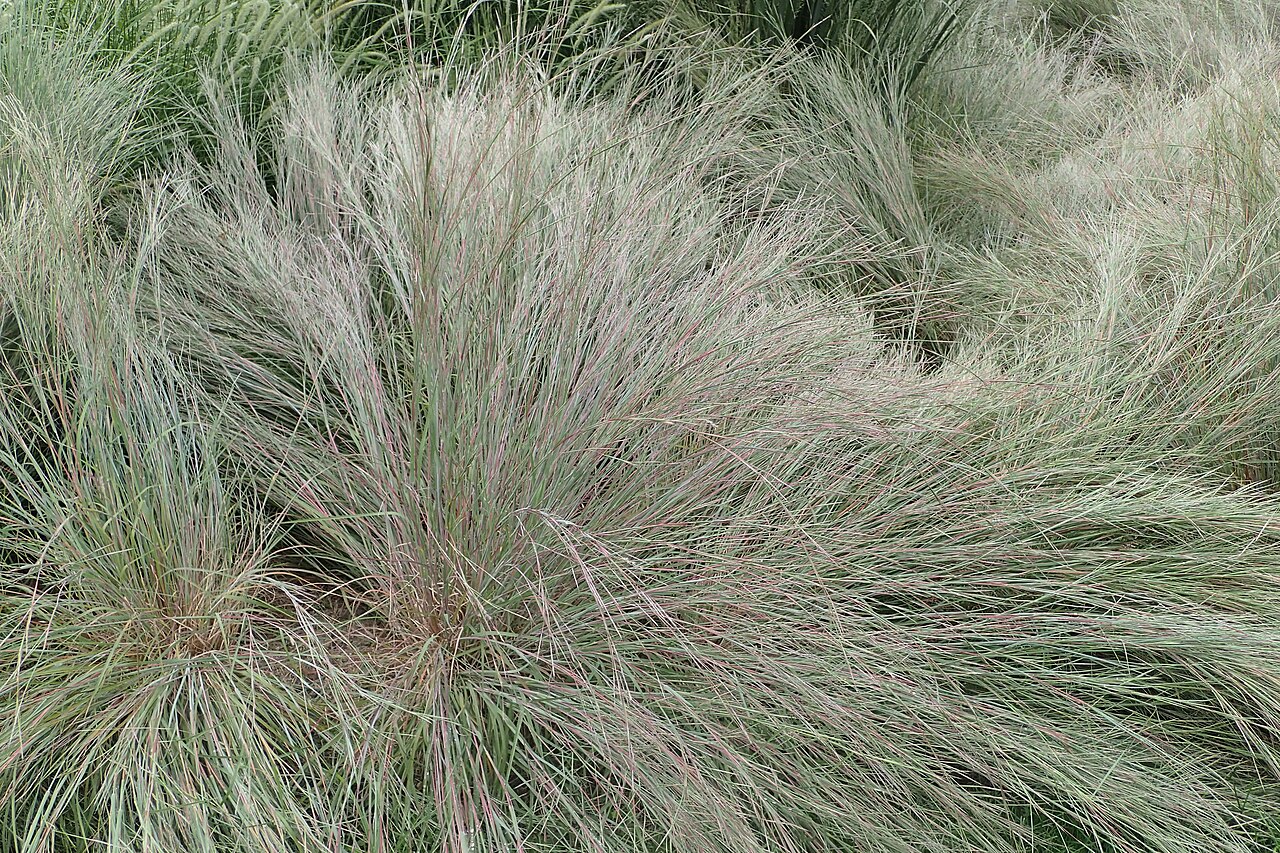
Your little bluestem looked like a neat blue-green column in June. By late August it has split open in the middle, and the stems are lying across the path or the plants next to it.
A stake and some twine will hold it up for now. But flopping is usually a sign that the grass is getting more of something than it wants: shade, water, or nutrients.
Work through the checks below before you add support. Most of them are free, and fixing the cause means you won’t have to tie the clump up every year.
The Short Answer
Little bluestem (Schizachyrium scoparium) is a prairie bunchgrass adapted to sunny, dry, lean ground. Extension specialists tie flopping (also called lodging) to a short list of causes:
- Too much shade, which makes the stems taller and weaker.
- Soil that is too rich, or fertilizer, including lawn fertilizer that drifts into the bed.
- Too much water from irrigation, a wet spot, or a shared lawn sprinkler zone.
- A loose-growing seed strain rather than one of the upright garden cultivars.
- Normal late-season lean as the flowering stems grow, made worse by storms.
How Little Bluestem Grows Through the Season
Little bluestem is a warm-season grass. It starts growing late in spring, after cool-season grasses are already green, and does most of its growing in summer heat.
For most of the summer the plant is a clump of leaves. University of Wisconsin Extension describes clumps 1 to 2 feet high until late summer, when the flowering stems lengthen and can reach about 5 feet.
That late surge is when most flopping happens. The clump suddenly carries much more height, and seed heads add weight at the top just as late-summer storms arrive.
The Little Bluestem Year
| Late winter – early spring | Last year’s copper stems still standing. Cut back before new growth starts. |
| Late spring | New flat, bluish shoots emerge from the crown. |
| Early – midsummer | A leafy clump forms. Flopping is rare at this stage. |
| Late summer – early fall | Flowering stems lengthen and seed heads form. This is when weak clumps split open. |
| After frost | Foliage turns copper to red and usually stands through winter. |
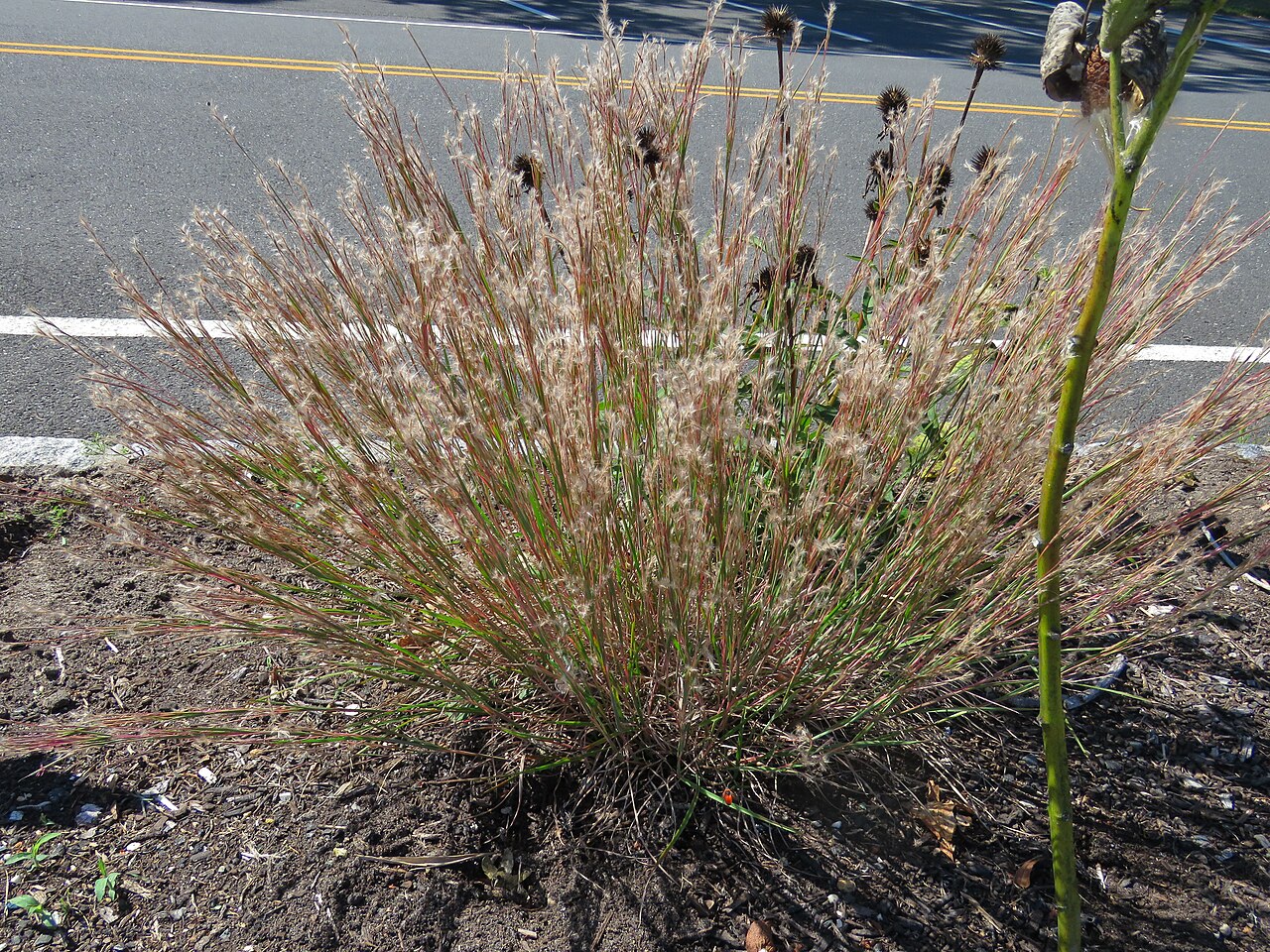
Check 1: When and How Is It Flopping?
Start by looking closely at what the clump is doing. The pattern points you toward the cause.
- Splits open from the center in late summer, everything else healthy: the stems are too tall and soft. Go to Checks 2 through 4.
- Flattened after a storm, then partly stands back up: mostly weather. Check 5 still applies if it happens every year.
- Leans one way, toward the light: shade from one side. Go to Check 2.
- Flops every year no matter what you change: it may be the strain you planted. Go to Check 6.
Note how tall the stems are, too. A clump that is much taller than nearby plants of the same kind is growing soft, and soft stems bend.
Check 2: Measure the Light
University of Wisconsin Extension says little bluestem grows best in full sun. Our species profile notes that it tolerates part shade, but in shade it grows greener, taller, and more open.
Taller and more open is exactly the shape that falls over. Nebraska Extension lists too much shade as one of the three main reasons little bluestem flops.
Count the hours of direct sun the clump gets in midsummer, when trees are fully leafed out. Check in the morning, at midday, and in late afternoon.
- Six or more hours: light is probably not the problem.
- Four to six hours: a likely contributor, especially combined with rich soil.
- Less than four, or shade from a fence or building on one side: light is probably the main cause.
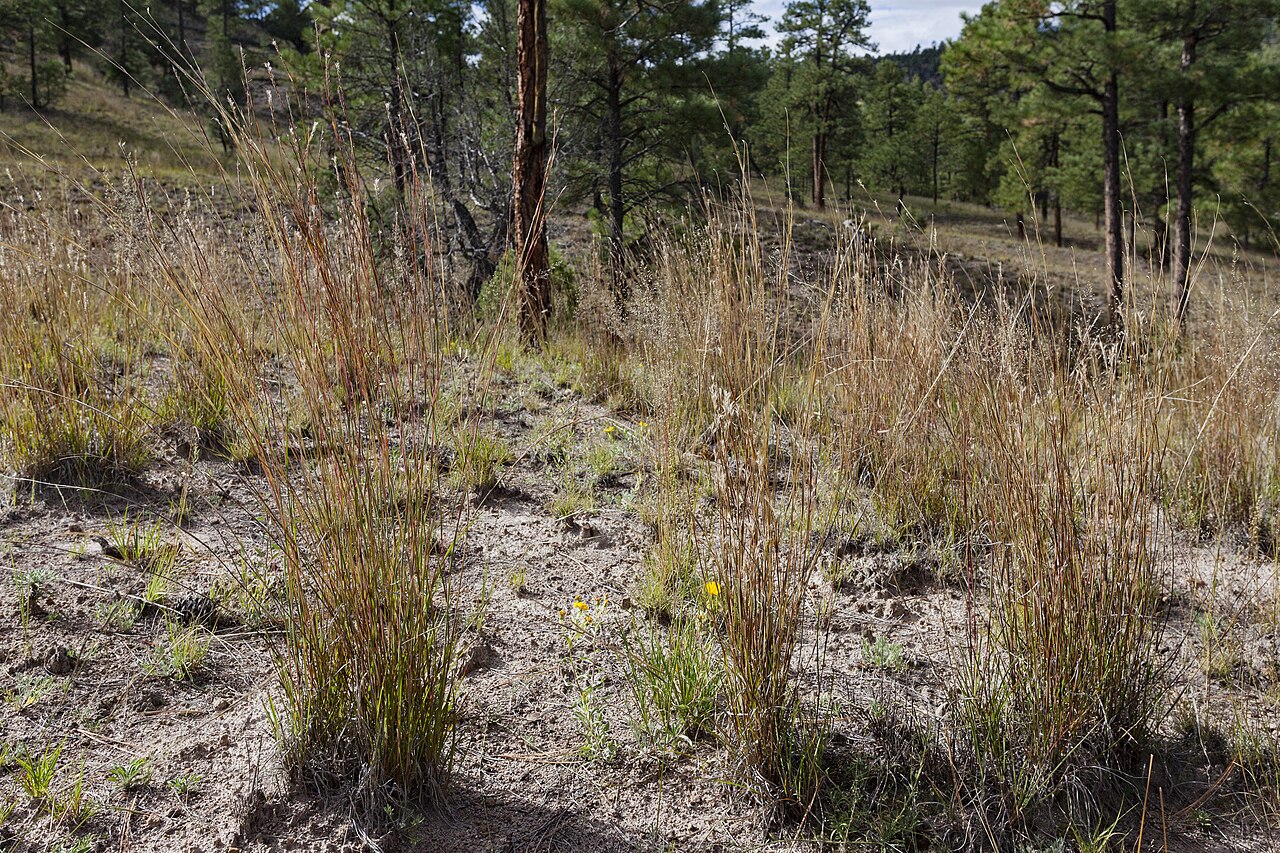
Shade problems creep up slowly. A clump that stood straight when it was planted can start leaning years later as a nearby tree or shrub fills in.
Check 3: Test the Soil and Stop the Fertilizer
This is the most common cause in home gardens. University of Wisconsin Extension says the plant grows taller, and is more likely to flop late in the season, on fertile soil. On dry, infertile sites it stays shorter.
Nebraska Extension makes the same point: keeping soil nitrogen low is important to prevent lodging and the need for staking. Both sources advise against heavy fertilizing.
Ask yourself these questions:
- Was the bed amended with compost, manure, or bagged garden soil at planting?
- Does lawn fertilizer get spread right up to the bed edge?
- Is the grass mixed in with roses, vegetables, or annuals that you feed?
- Has anyone used an all-purpose fertilizer on the whole bed?
If the answer to any of these is yes, you have probably found your cause. Stop feeding the area and keep lawn products a few feet back from the clump.
If you aren’t sure how rich the soil is, a basic soil test beats guessing. When you do need to feed nearby plants, our guide to reading fertilizer labels shows how to spot a nitrogen-heavy product.
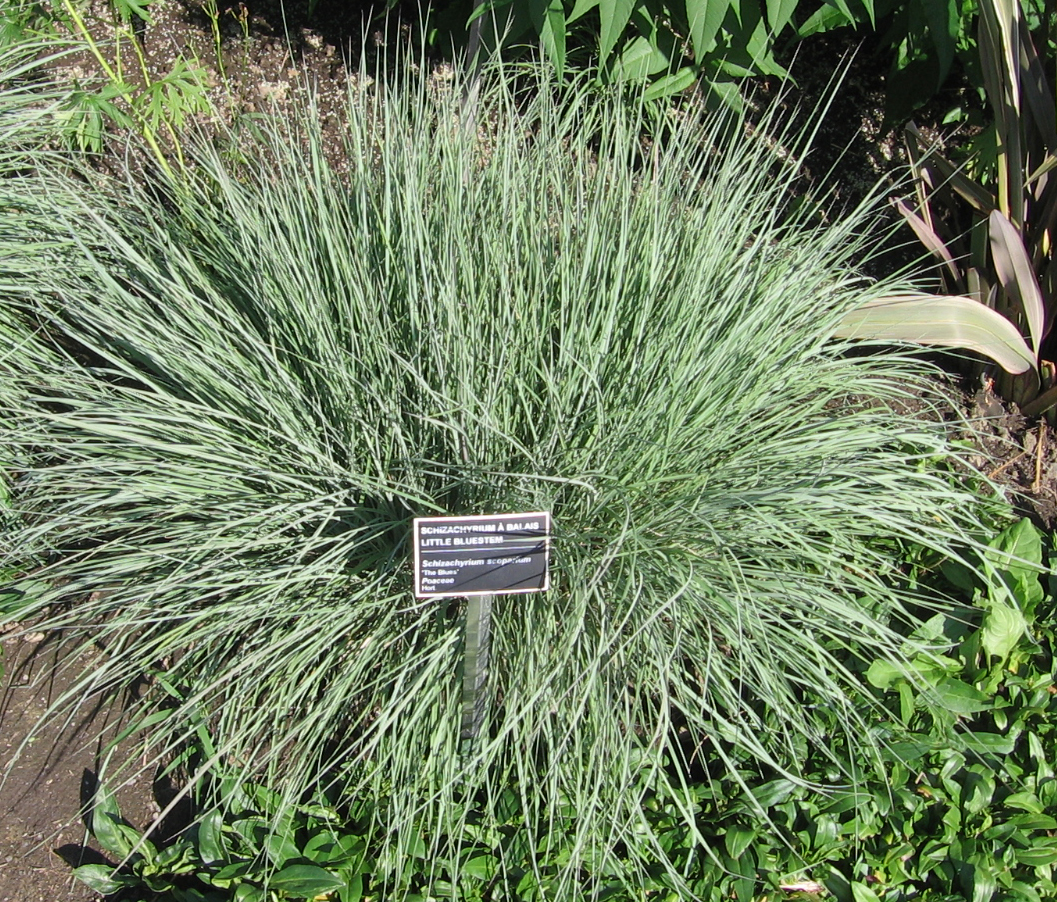
Check 4: Look at Water and Drainage
Little bluestem is drought tolerant once established. University of Wisconsin Extension notes that watering, as well as overfertilizing, will promote lodging.
The Lady Bird Johnson Wildflower Center adds that the species does not tolerate wetlands or sites with constantly wet subsoil. Soggy ground produces weak, soft growth and can also damage the crown.
Common sources of extra water:
- A lawn sprinkler zone that also covers the grass.
- A downspout, patio, or driveway draining toward the bed.
- Drip lines set up for thirstier plants nearby.
- A low spot where water stands after rain.
After the first year, most established clumps need little or no extra water outside of long droughts. If the clump sits on a sprinkler zone, cap the head or move the grass.
Mulch matters here too. NC State Extension advises keeping mulch away from the crown. Use a thin layer, keep it pulled back, and see our mulching techniques for native gardens for options that don’t hold too much moisture.
Check 5: Look at the Neighbors and the Weather
In the wild, little bluestem rarely grows alone. In tallgrass prairie it grows with grasses like big bluestem. In shortgrass prairie it is often dominant alongside sideoats grama.
A clump planted alone in an open bed of mulch has nothing around it to lean on. Planting it in a group, or among sturdy prairie perennials, gives the stems some support from their neighbors.
University of Wisconsin Extension suggests companions like yarrow, rudbeckias, goldenrod, and purple coneflower. Our overview of native grasses for prairie gardens has more combinations.
Weather is the other factor you can’t control. Heavy late-summer rain or wind can flatten even well-grown clumps for a few days. If the stems mostly lift back up and it doesn’t happen every year, there’s nothing to fix.
Check 6: Find Out Which Little Bluestem You Have
University of Wisconsin Extension describes the species as having an upright form but an open, spreading habit and fine texture that make it susceptible to lodging. Wild strains vary a lot, and the USDA NRCS plant guide notes that newer varieties are being developed that don’t lodge.
Several selections were bred for upright form:
- ‘Standing Ovation’: a tight, upright clump about 2 to 3 feet tall, described as having sturdier stems.
- Blue Heaven (‘MinnBlueA’): a University of Minnesota selection with very upright, broom-like growth.
- ‘Jazz’: shorter, at about 2 to 2.5 feet.
- ‘Prairie Munchkin’ and ‘Carousel’: compact forms about 2.5 feet tall.
Be aware that ‘Blaze’, ‘Aldous’, ‘Camper’, ‘Cimmaron’, and ‘Pastura’ were developed as pasture grasses. University of Wisconsin Extension notes they were selected for productivity rather than garden form.
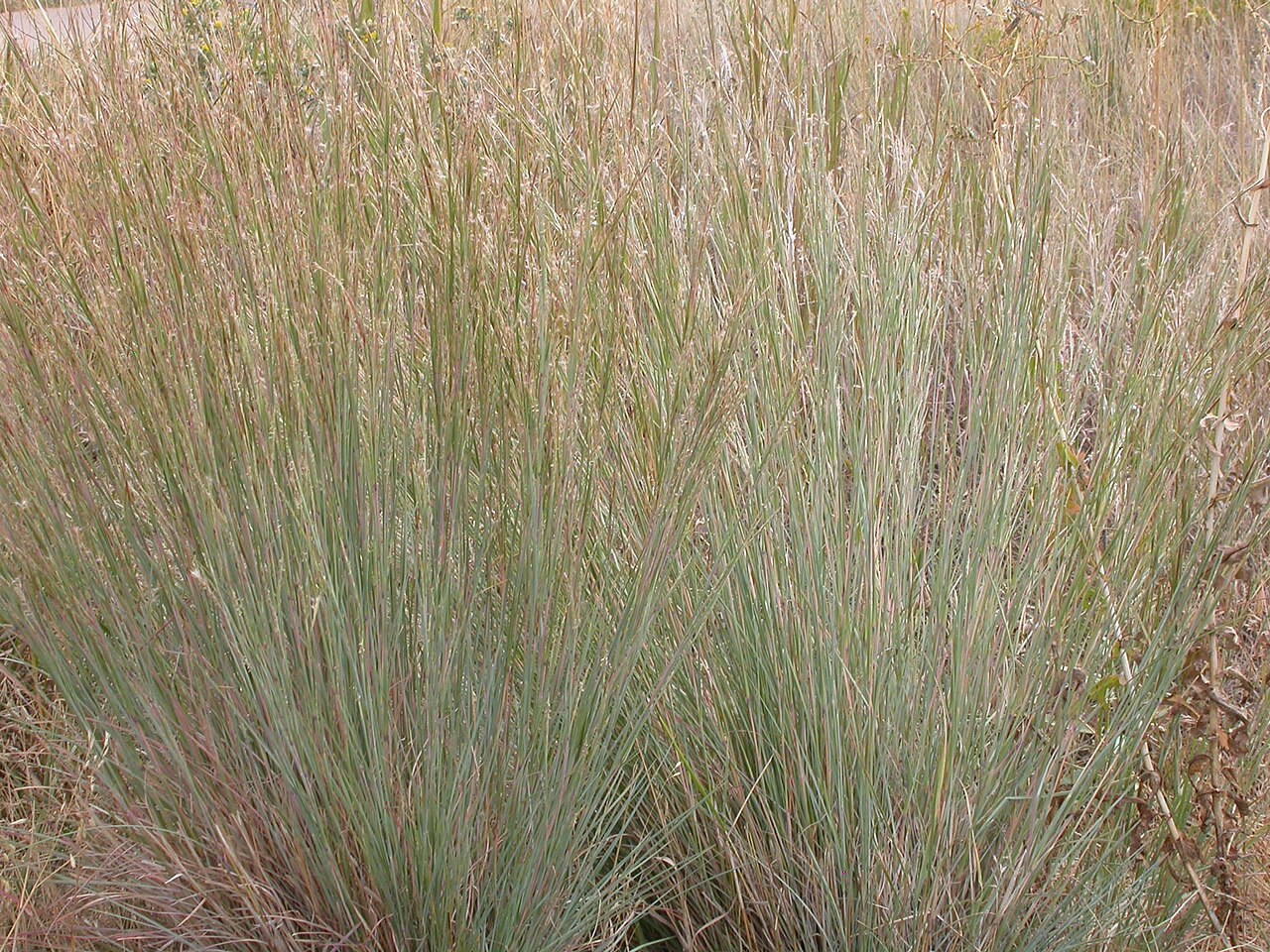
Straight-species plants grown from local seed are often the best choice for wildlife and restoration plantings. They just need the lean, sunny conditions they evolved in to stay upright.
Troubleshooting at a Glance
| Tall, open, greener than usual | Too much shade. Thin overhead branches or move the clump in spring. |
| Lush and oversized, splits in August | Rich soil or fertilizer. Stop feeding and keep lawn products away. |
| Flops in an irrigated bed | Too much water. Take it off the sprinkler zone once established. |
| Leans toward one side | One-sided shade. Open up the light or relocate. |
| Flattened after a storm | Weather. Wait a few days before doing anything. |
| Single clump in bare mulch | No neighbors to lean on. Plant in groups or among sturdy perennials. |
| Flops every year in a lean, sunny spot | Loose-growing strain. Replace with an upright cultivar or add support. |
So Should You Add Support?
Sometimes, yes. Support is a reasonable fix when the cause can’t change, like a bed you share with heavy feeders or a spot that gets only part sun. Here’s how to decide.
If it’s late summer and the clump is already down: loop soft garden twine loosely around the outside of the clump at about mid-height. Don’t cinch it into a tight bundle. That looks unnatural and traps moisture in the center.
If it flops every year in the same spot: set a round grow-through ring or a few short stakes in late spring, while the clump is small. The leaves grow up through it and hide the hardware by midsummer.
If you can change the conditions: do that instead. Move the clump to full sun and lean soil in spring, when it’s dividing and transplanting time for warm-season grasses. Stop all fertilizer, and keep it off the sprinkler zone.
If it only falls over in storms: leave it. A slightly tousled clump is part of the plant’s natural look, and the standing stems still give birds and insects winter cover.
A Season-by-Season Plan for Next Year
- Late winter – early spring: cut the old stems back to a few inches before new growth starts. Our guide on when to cut back grasses covers the timing.
- Spring: move clumps out of shade or wet spots. Pull back mulch from the crown. Skip fertilizer entirely.
- Late spring: install a grow-through ring if this clump has a history of flopping.
- Summer: water only during long dry spells. Turn off or redirect any sprinklers that reach the grass.
- Late summer – fall: note which clumps stayed upright and which didn’t, and in what light. Use that to plan next spring’s moves.
📋 More on this plant: read the full Little Bluestem (Schizachyrium scoparium) profile, or see it in our native plant lists for North Dakota, South Dakota & Western Minnesota, Arkansas, Louisiana, Eastern Oklahoma & Eastern Texas, South & West Texas, Maryland, Virginia & West Virginia, and Delaware, Southern New Jersey & Long Island.
Frequently Asked Questions
Why is my little bluestem falling over?
The most common causes are too much shade, too much water, and soil that is too rich or fertilized. All three produce tall, soft stems that can’t hold up the late-summer flowering stalks and seed heads.
Should I fertilize little bluestem to make it stronger?
No. Extension sources advise against heavy fertilizing because extra nitrogen makes the grass taller and more likely to flop. It grows well in poor soil.
Can I cut little bluestem back in summer to keep it shorter?
The standard advice from extension services is a single cutback in late winter or early spring. If flopping is a recurring problem, fixing light, water, and fertility is the more reliable long-term answer.
Which little bluestem cultivars stay upright?
‘Standing Ovation’ and Blue Heaven are described as tight, upright selections. ‘Jazz’, ‘Carousel’, and ‘Prairie Munchkin’ are shorter or more compact. Even these do best in full sun and lean soil.
Does little bluestem flop over in winter?
Usually not. After frost the stems turn copper and typically stand through winter. Heavy, wet snow can flatten clumps, and that’s a good reason to cut them back on schedule in late winter.
Sources
- University of Wisconsin–Madison Extension, Wisconsin Horticulture, Little Bluestem, Schizachyrium scoparium: lodging on fertile soils, effect of watering and fertilizer, seasonal growth, cultivars.
- Nebraska Extension in Lancaster County, Little Bluestem: 2022 Perennial Plant of the Year: shade, water and nitrogen as causes of flopping; keeping nitrogen low.
- USDA NRCS, Plant Guide: Little Bluestem: habitat, growth timing, non-lodging varieties.
- Lady Bird Johnson Wildflower Center, Schizachyrium scoparium: light and soil tolerances, intolerance of wet sites.
- North Carolina Extension Gardener Plant Toolbox, Schizachyrium scoparium: soil tolerance, keeping mulch away from the crown.
- The Morton Arboretum, Little bluestem: cultivar heights and habits.
- Prairie Moon Nursery, Little Bluestem: companion grasses in shortgrass and tallgrass prairie.
- Wikipedia, Schizachyrium scoparium: cultivar descriptions.