American Hornbeam as an Understory Tree: A Shady-Yard Layout
Last updated: November 6, 2026
Shady yards often end up with two layers: tall trees overhead and a struggling lawn below. The middle is empty, so the space feels bare even when the canopy is full.
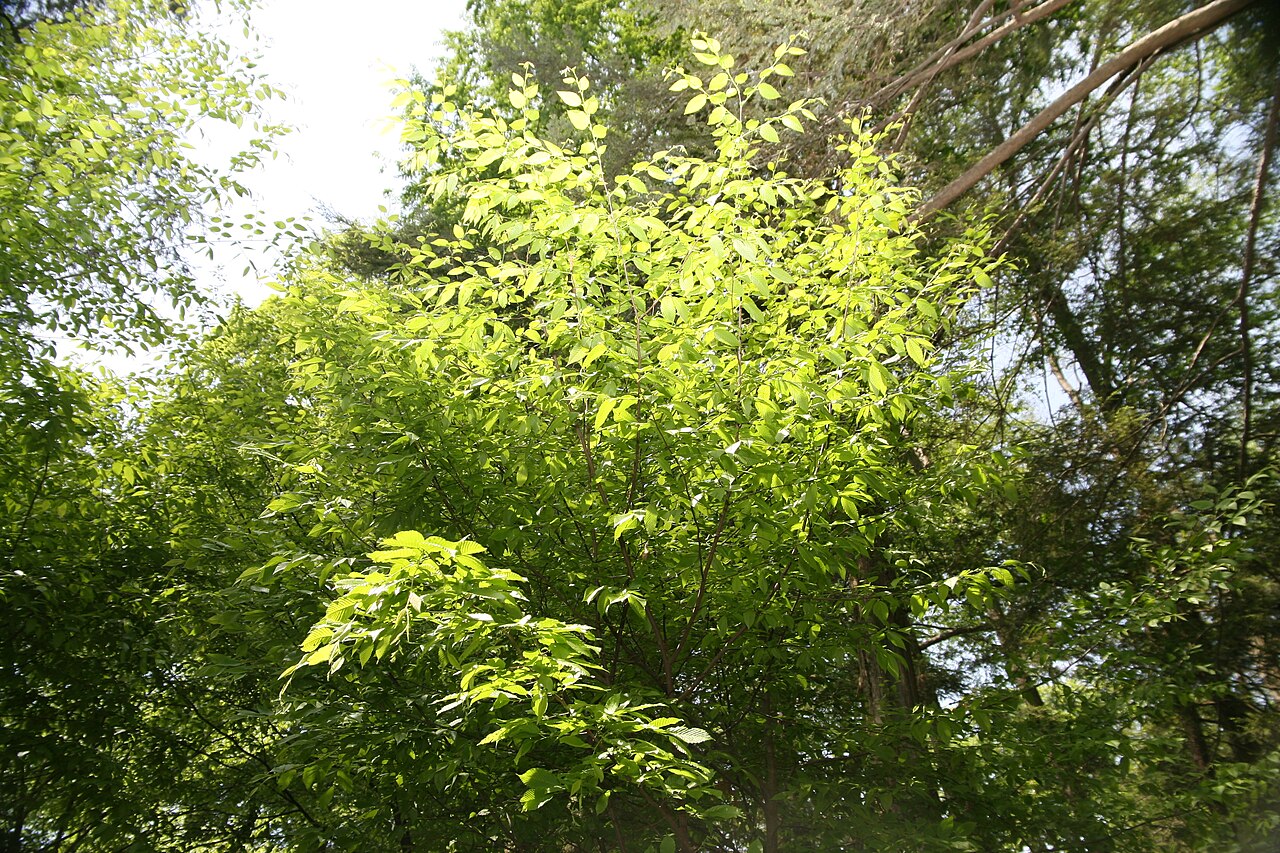
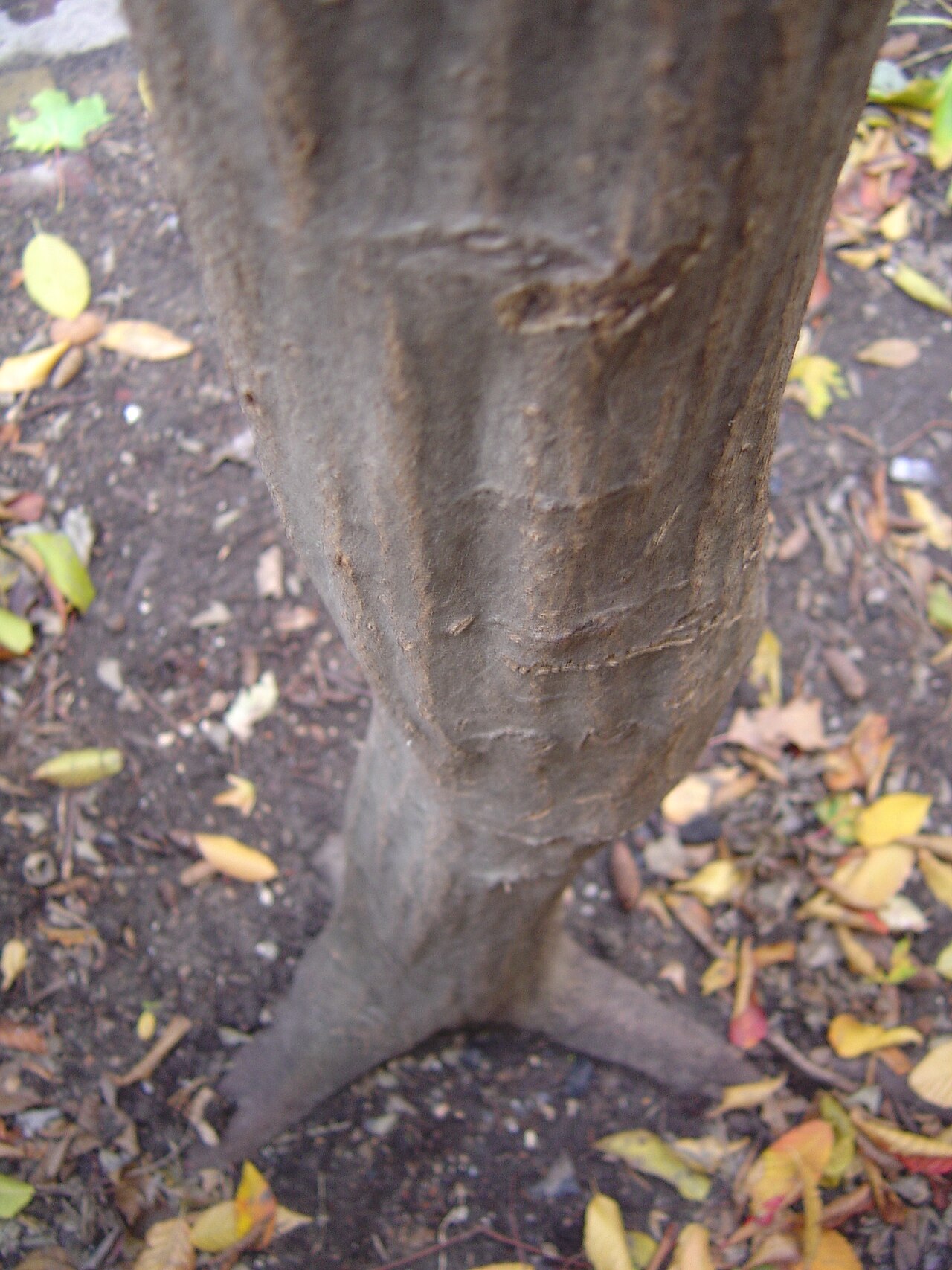
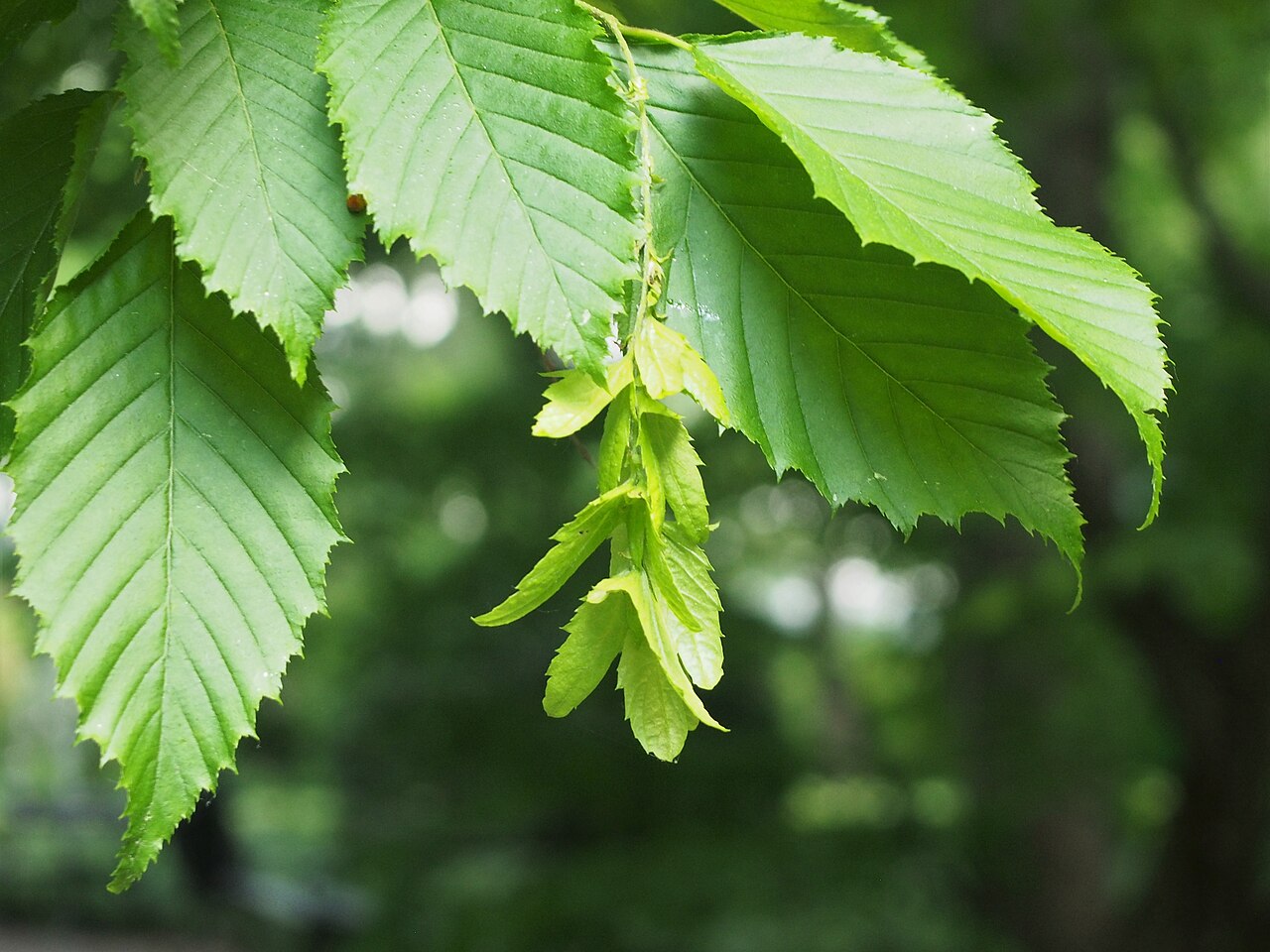
American hornbeam is one of the best native trees for filling that gap. It grows naturally beneath larger trees, handles shade that most flowering trees will not, and has smooth, muscle-like bark that looks good in every season.
This plan shows how to place one or more hornbeams in a shady yard, what to grow around them, and how to get them through the slow first three years.
Plan at a Glance
| Site | Shady or part-shade yard beneath or beside existing large trees |
| Size | Usually 20 to 30 feet tall and 20 to 35 feet wide (NC State Extension); up to about 40 feet in the wild |
| Sun | Part shade to deep shade; tolerates some sun with steady moisture |
| Soil | Moist, rich soil high in organic matter; tolerates clay and periodic flooding |
| Maintenance | Low once established, but slow to settle in and sensitive to drought and compaction |
| Best regions | Eastern North America from southern Ontario and Maine to Florida and eastern Texas |
Assess the Shade and the Soil First
Start by watching how light moves across the yard on a summer day. NC State Extension lists American hornbeam for partial shade (two to six hours of direct sun) down to deep shade (under two hours), so most spots under or beside existing trees qualify.
Soil matters more than light. NC State recommends sandy or clay loams with high organic matter, regular moisture and slightly acidic pH. The Lady Bird Johnson Wildflower Center says it works best as an understory tree in low, shady places, but adapts to drier and sunnier sites.
Look for the spots that stay a little damp after rain. NC State notes the tree is especially sensitive to drought, heat and soil compaction, so a dry, packed patch near a driveway is a poor choice.
One bonus for some yards: the Morton Arboretum notes that American hornbeam tolerates black walnut toxicity, so it can work near walnuts where many plants fail.
If your open spot gets more sun and you want a larger tree with brilliant fall color, see our guide to choosing a place for black gum.
Check the Space and What Is Overhead
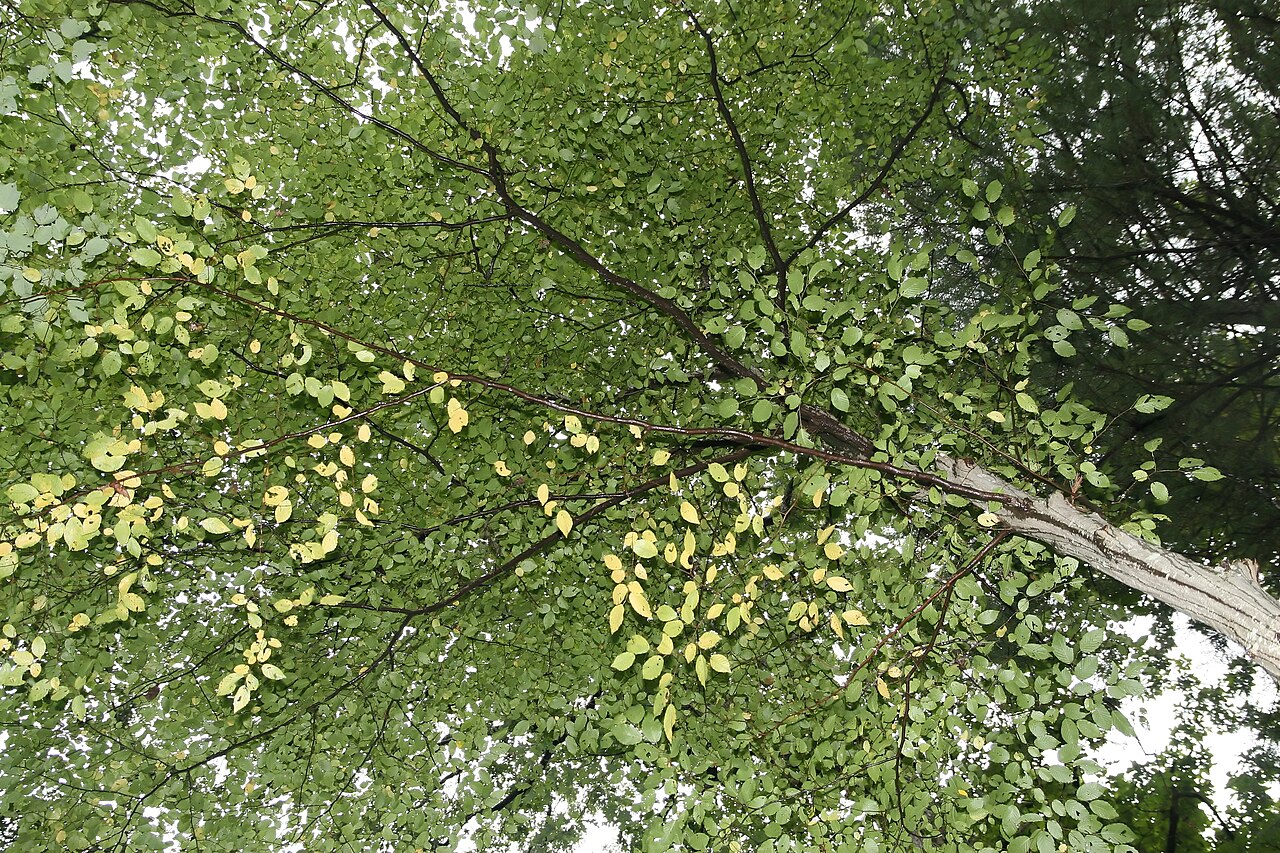
Hornbeam is a small-to-medium tree, but it is wide. NC State gives 20 to 35 feet of spread, and the Morton Arboretum lists 20 to 30 feet. Mark that circle on the ground before you plant, and keep walls, roof edges and decks outside it. Our canopy-mapping guide for tulip tree shows a simple way to do this with string and flags.
Even a modest tree can reach low wires over time. The International Society of Arboriculture (ISA) advises gardeners to look up for overhead lines and look down for buried ones before choosing a site. In the United States, contact 811 a few business days before digging, and wait for all utilities to mark their lines.
Under existing trees, dig carefully. If you hit large roots of a mature tree, shift the hole rather than cutting through them, and avoid piling extra soil over the older tree’s root zone.
Design the Layers
A good shady-yard layout copies a woodland edge: existing tall trees as the canopy, hornbeam as the understory, native shrubs beneath, and a ground layer of ferns and sedges instead of thin lawn.
Understory: one tree or a small grove
A single hornbeam works as a focal point, especially where its trunk can be seen from a window or path. NC State notes it can grow with one or more trunks, and multi-trunked trees show off the bark best.
For a grove, NC State lists 12 to 24 feet of available space per tree. Plant toward the closer end if you want crowns to knit together into a shaded room; use the wider end for individual specimens.
Shrub layer
Place shrubs at the edge of the hornbeam’s crown and in the brighter gaps between trees. Group them in threes or fives rather than scattering single plants, so the planting reads as a layer.
Ground layer
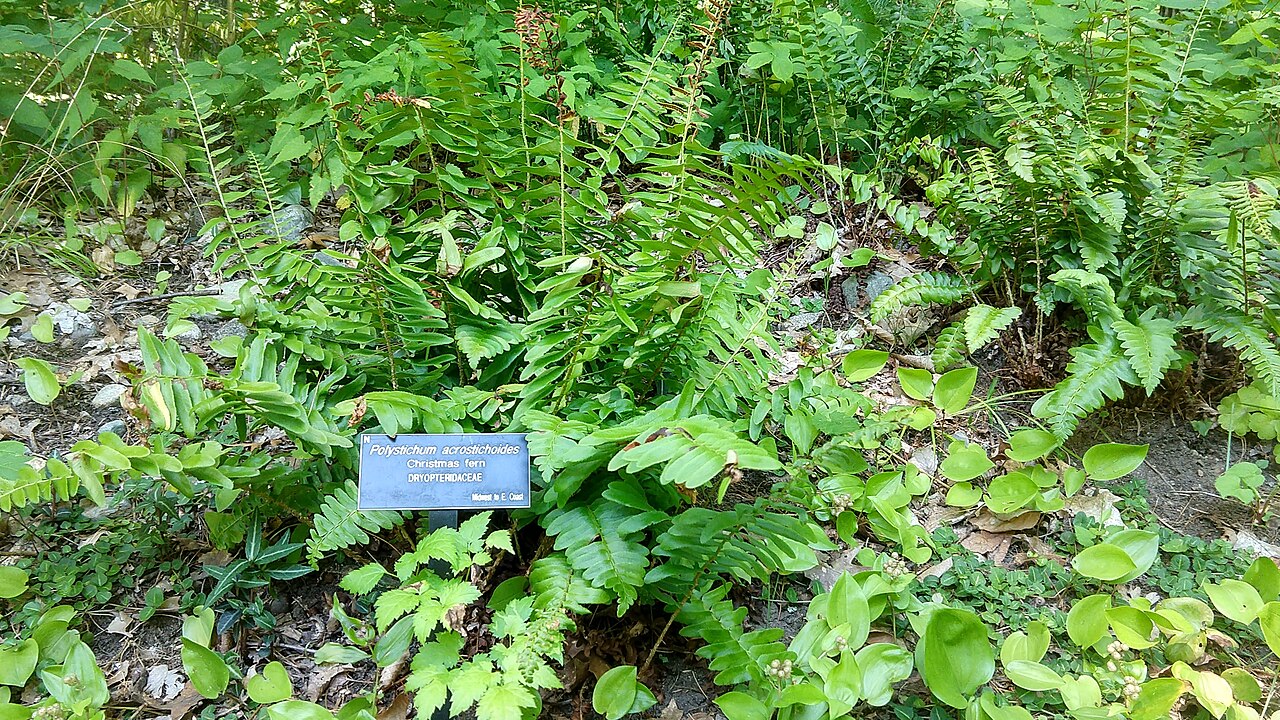
Replace struggling lawn under the trees with masses of ferns, sedges and wild ginger. Plant in drifts of one species, and repeat each drift in two or three places for a calmer look.
Paths
Run a mulched or stepping-stone path that passes close to the hornbeam trunks. That keeps foot traffic in one line, which protects the soil from compaction elsewhere, and puts the bark where people can see it.
Plant Palette
Heights and ranges are from the Lady Bird Johnson Wildflower Center unless noted. Confirm each plant is native to your county before buying.
| Plant | Role | Height | Sun / moisture | Native range |
|---|---|---|---|---|
| American hornbeam (Carpinus caroliniana) | Understory tree | 20–30 ft (NC State); up to about 40 ft | Part shade to shade / moist | S. Ontario and central ME to central FL, west to MN, IA, AR and east TX |
| Spicebush (Lindera benzoin) | Shrub layer, early spring bloom | Usually to about 15 ft | Sun to shade / dry to wet | S.W. ME, central MI and S.E. KS to FL and S.E. TX |
| Witch hazel (Hamamelis virginiana) | Large shrub, fall bloom | Up to about 35 ft, often much shorter | Part shade to shade / dry to moist | Quebec and Nova Scotia to MN, south to FL and TX |
| Christmas fern (Polystichum acrostichoides) | Evergreen ground layer | 1.5–2 ft | Part shade to shade / moist | Nova Scotia to S.E. MN, south to central FL and east TX |
| Pennsylvania sedge (Carex pensylvanica) | Lawn substitute in drier shade | Up to about 20 in | Sun to shade / dry | S. Quebec and Ontario to ND and MT, south to GA and AR |
| Wild ginger (Asarum canadense) | Low ground cover in moist shade | Up to about 8 in | Part shade to shade / moist | Quebec and New Brunswick to MN, south to FL and LA |
Regional alternates
Plant choices must match your region, and the ranges above differ. Pennsylvania sedge reaches only as far south as Georgia and Arkansas, so Gulf Coast gardeners should lean on Christmas fern or a sedge that is native locally.
Spicebush reaches only to southwestern Maine and central Michigan, so northern gardeners near the edge of its range should check their state list for a local shrub. In every region, the regional plant lists linked below are the best place to confirm choices.
American hornbeam is also easy to confuse with eastern hophornbeam (Ostrya virginiana), which shares the “ironwood” nickname. Check the botanical name on the label before you buy.
Sample Layout for a 40-by-30-Foot Shady Corner
Quantities for the Sample Plan
| Understory trees | 1 multi-trunk American hornbeam as a focal point, or 2 single-trunk trees about 15–20 feet apart |
| Shrubs | 3 spicebush in one group at the brighter edge; 1 witch hazel near a path or window for fall bloom |
| Ground layer | Christmas fern in 2–3 drifts; Pennsylvania sedge in the drier root zone; wild ginger in damp low spots |
| Path | One mulched path, 3 feet wide, passing within a few feet of the hornbeam trunk |
Adjust the numbers to your space. The point is a few larger groups rather than many single plants, so each layer is easy to read.
For more on layering shrubs at the edge of a woodland, see our spicebush woodland-edge garden plan.
Installation Steps
Timing matters with this tree. NC State says American hornbeam is difficult to transplant and best moved in spring, and the Morton Arboretum also recommends spring planting, noting that its deep, spreading lateral roots make transplanting hard.
- Buy small. A young container-grown tree is easier to handle and plant well, which matters for a slow grower that dislikes being moved.
- Call 811 and mark the site. Flag the trunk location and the full crown circle.
- Dig wide and shallow. ISA recommends a hole two to three times wider than the root ball and no deeper than the root ball, with the trunk flare partly visible.
- Fix circling roots. Straighten or cut them before setting the tree.
- Backfill and water. Fill firmly and water as you go to remove air pockets. Skip fertilizer at planting, as ISA advises.
- Mulch the whole bed. Spread 2 to 3 inches of mulch, keeping it off the trunk, and extend it to cover the future shrub and fern beds.
- Add the ground layer. Plant ferns, sedges and ginger after the tree, working around its root ball rather than through it.
First-Three-Years Maintenance Calendar
- Year 1, spring to fall: water weekly during dry weather, more in heat, tapering off by mid-fall (ISA). This tree is drought sensitive, so do not skip dry spells.
- Year 1, summer: expect little visible growth. Slow top growth is normal while roots establish; the Wildflower Center and NC State both describe it as slow-growing.
- Year 2: keep watering through droughts, refresh mulch, and hand-weed the ground layer until it fills in. Keep foot traffic on the path.
- Year 3: decide whether to keep a single trunk or several, and remove any crossing or damaged branches in late winter. Divide or add ferns and sedges where gaps remain.
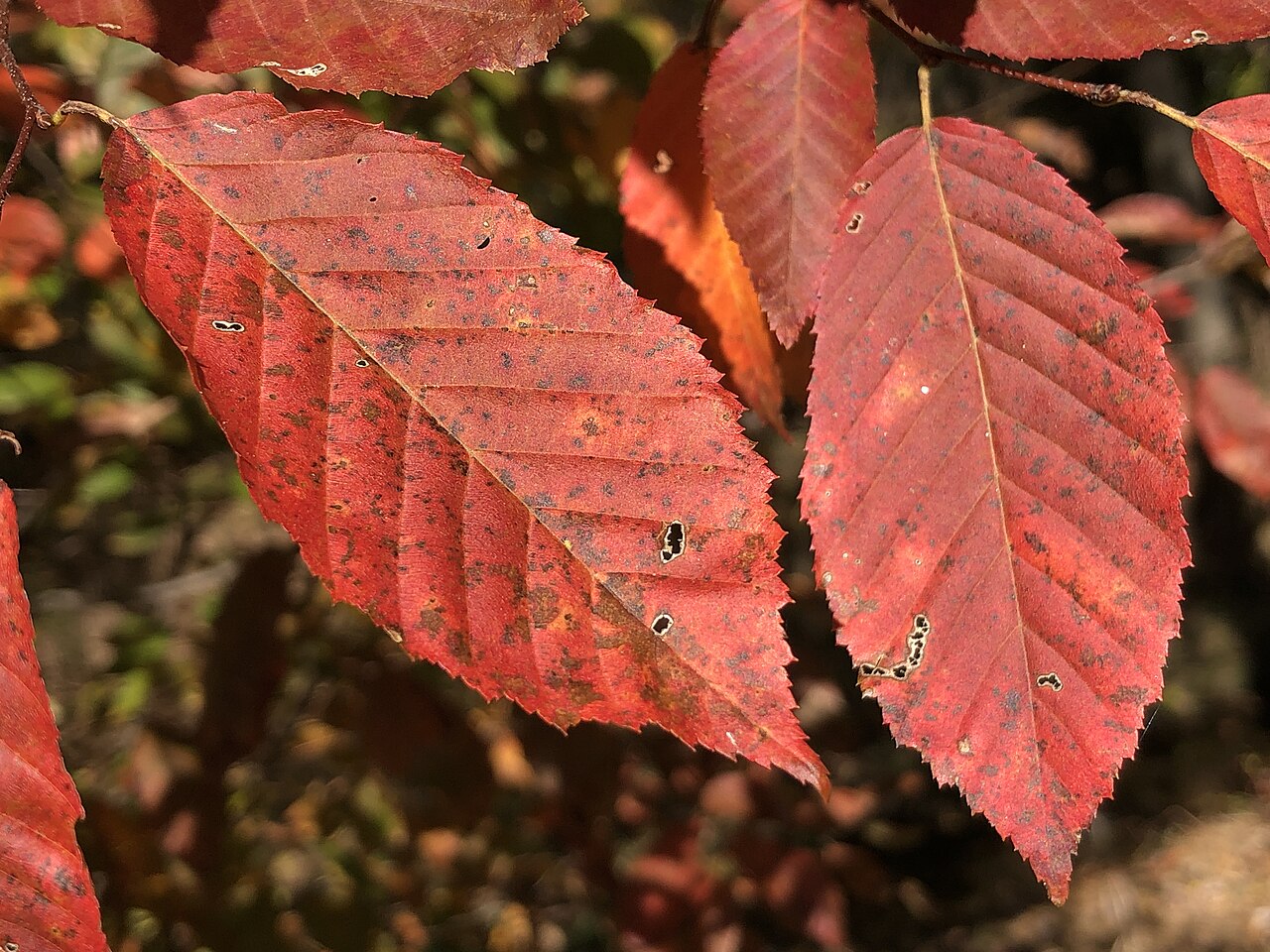
- Every fall: enjoy the color, then leave the leaves in the beds as mulch rather than raking them all away.
Mistakes to Avoid
- Planting in compacted or dry soil. NC State lists drought, heat and compaction as the tree’s main weaknesses.
- Moving it in fall. Spring planting is the consistent recommendation for this hard-to-transplant tree.
- Expecting fast shade. It is slow. Plant it for the long-term structure of the yard, not quick cover.
- Underestimating width. The crown can be as wide as the tree is tall or wider.
- Cutting big roots of existing trees. Shift the planting hole instead.
📋 Find plants for your region: see the full American Hornbeam (Carpinus caroliniana) profile or our native plant lists for New Hampshire, Maine & Vermont, Connecticut, Massachusetts & Rhode Island, New York, Pennsylvania & Northern New Jersey, Delaware, Southern New Jersey & Long Island, North & South Carolina, Georgia, Alabama & Mississippi, and Michigan, Wisconsin & Eastern Minnesota.
Frequently Asked Questions
Can American hornbeam grow in full shade?
Yes. NC State lists it for partial to deep shade, and it grows naturally as an understory tree. It still needs reasonably moist, uncompacted soil.
How big does American hornbeam get?
Most landscape trees reach 20 to 30 feet tall and 20 to 35 feet wide, according to NC State, though the Wildflower Center notes wild trees can reach about 40 feet. Narrower cultivars such as ‘J.N. Upright’ (Firespire) stay closer to 20 feet tall and 10 feet wide.
Why is my new hornbeam growing so slowly?
Slow growth is normal for this species, especially in the first years after planting. Keep it watered in dry weather and protect the soil from compaction.
Is American hornbeam good for wildlife?
The Wildflower Center lists it as a larval host for eastern tiger swallowtail, striped hairstreak and red-spotted purple butterflies, and its nutlets are eaten by birds and small mammals.
Can I plant it in a wet spot?
Yes, within reason. Both NC State and the Wildflower Center say it tolerates periodic flooding, and NC State lists it as a rain-garden candidate. Constantly waterlogged ground is a different matter.
Sources
- NC State Extension Gardener Plant Toolbox, Carpinus caroliniana: size, spacing, shade and soil needs, drought, heat and compaction sensitivity, spring transplanting, flood tolerance, cultivars.
- Lady Bird Johnson Wildflower Center, Carpinus caroliniana: height, distribution, understory habit, larval hosts. Companion data from Wildflower Center pages for spicebush, witch hazel, Christmas fern, Pennsylvania sedge and wild ginger.
- The Morton Arboretum, American hornbeam: size, light range, spring planting, lateral roots, black walnut tolerance, seasonal leaf color.
- International Society of Arboriculture, Planting a Tree: planting steps, mulching, watering and utility checks.
- 811 Before You Dig, Contact 811 before every dig.