Planning a Meadow Transition: Short Plants at the Lawn Edge, Tall Plants Behind
Last updated: November 6, 2026
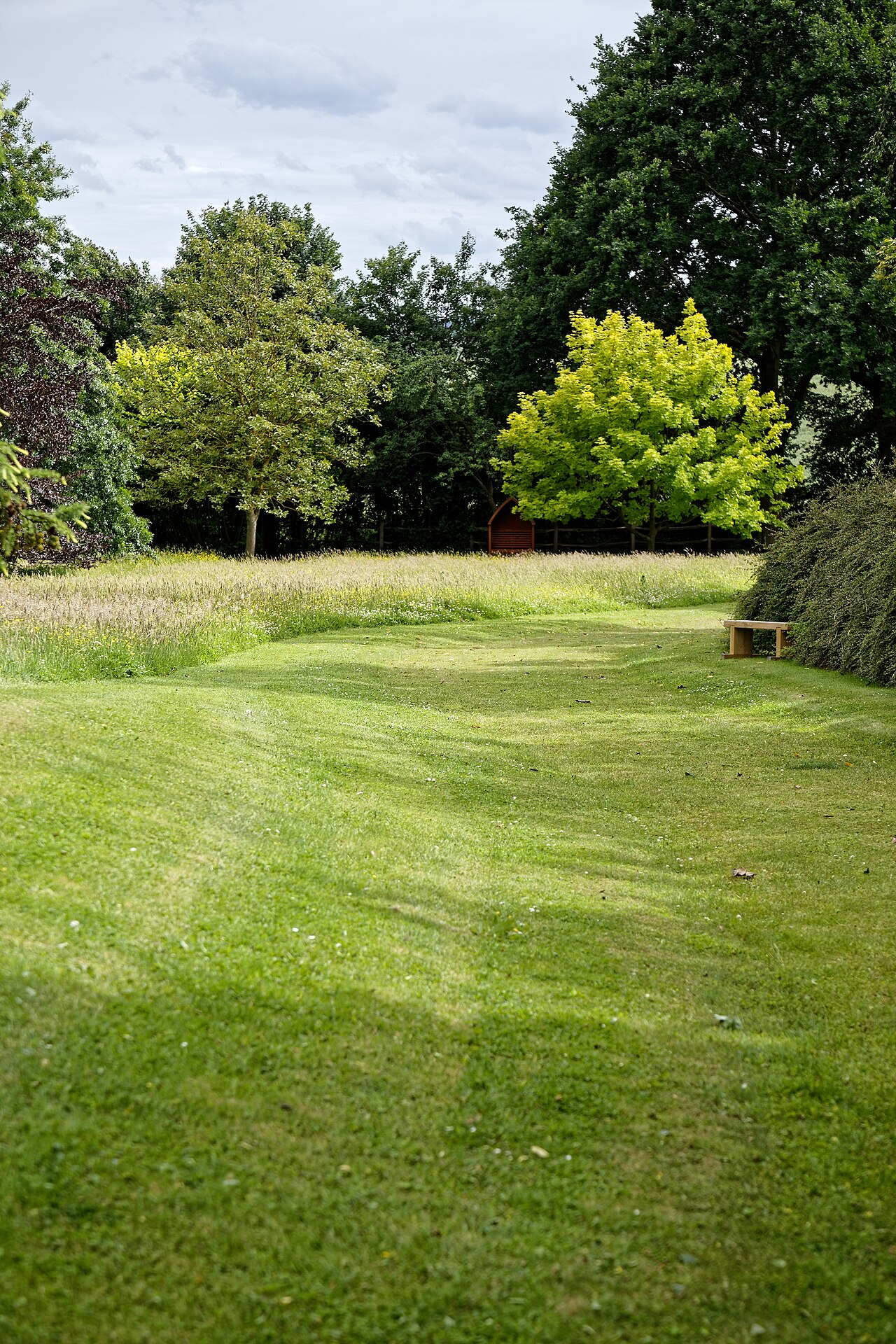
When a meadow meets a lawn head-on, the jump from 3-inch turf to 6-foot grasses is jarring. The tall plants look like they are spilling into the yard, and the meadow reads as a wall rather than a planting.
A height transition fixes that. Short plants sit at the lawn edge, medium plants come next, and the tallest grasses and flowers stand at the back, so the eye steps up gradually from lawn to meadow.
This plan shows how deep each zone should be, which native plants belong in each one, how to blend the zones so they don’t look like stair steps, and how to install and mow the transition over the first three years. If you are still deciding whether to convert lawn at all, our guide to replacing lawn with wildflowers covers the basics.
Plan at a Glance
| Site | Where an existing or planned meadow meets lawn |
| Size | Sample plan 40 feet long × 20 feet deep, in three zones |
| Sun | Full sun |
| Soil | Average to dry, well-drained, unamended |
| Maintenance | Weeding in years 1–2; mown edge on the lawn schedule; one late-winter mow a year |
| Best regions | Central and eastern U.S. and the Plains as written; western swaps below |
Measure the Depth Before Choosing Plants
The depth you can give the transition decides how tall the back zone can be. Cornell Cooperative Extension passes on a landscape designer’s rule of thumb: plants’ mature height should be no more than half the bed width.
Applied to a meadow edge, that means a planting 20 feet deep can carry back-zone plants up to about 8 to 10 feet, while a 10-foot-deep strip should top out around 5 feet. Measure from the lawn edge to the back of the planting, and use that to set your tallest plants.
Also check what the transition will hide. A tall back zone screens whatever lies behind it from the house and lawn. That is a plus in front of a fence or shed, and a minus in front of a view you like.
Design Principles for a Smooth Transition
Fine and short near the lawn. The Xerces Society’s meadow guidelines note that areas next to lawns and walkways suit fine-textured, short plants, and that bold plants with big leaves fit better farther away.
Avoid sudden height jumps. Cornell Extension cautions that plantings with drastically varying heights can read as messy and unplanned. Each zone should be roughly one step taller than the one in front of it.
Blur the zone lines. Straight bands look like bleachers. Let drifts from each zone reach a few feet into the next, so the boundaries wave rather than run straight.
Repeat a few plants. Xerces notes that limiting species or repeating a few distinctive ones across the site helps a meadow look intentional. Carry one or two flowers through more than one zone.
Frame it. Keep a mown strip between the lawn and the short zone. Our guide to keeping a small meadow organized with paths and edges covers mown edges and paths in detail.
Zone 1: The Lawn Edge (0 to 3 Feet)
This zone meets people’s eyes first, so it should stay low and tidy all season. Aim for plants under about 2 feet.
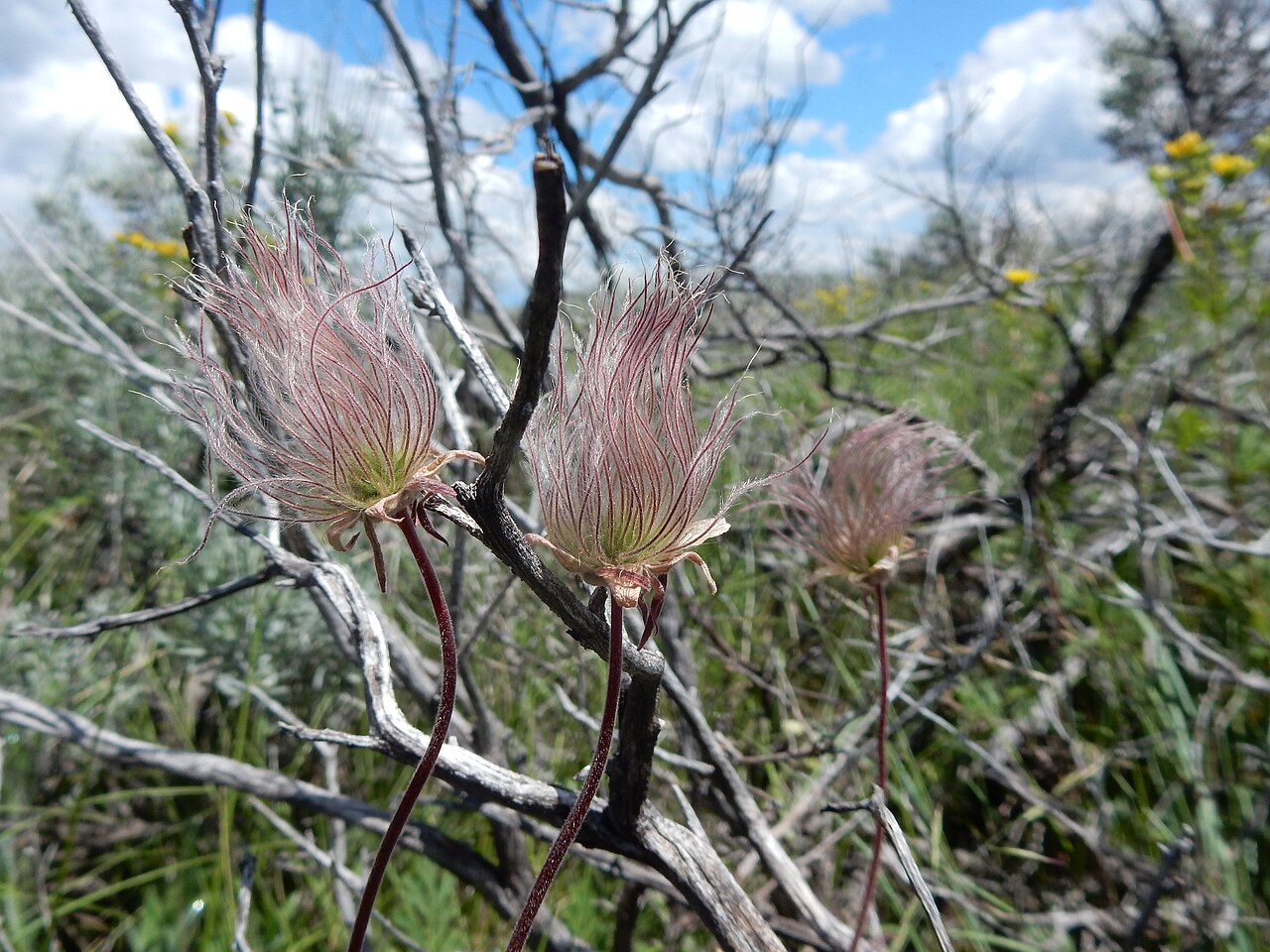
- Prairie smoke: up to about 18 inches, per the Wildflower Center, with feathery pink seed plumes in late spring. Native from New York and southern Ontario west across the northern Plains and into the Rockies.
- Purple lovegrass: 8 to 14 inches, per NC State, with a reddish haze in late summer; native from Maine to Minnesota, south to Florida and Arizona.
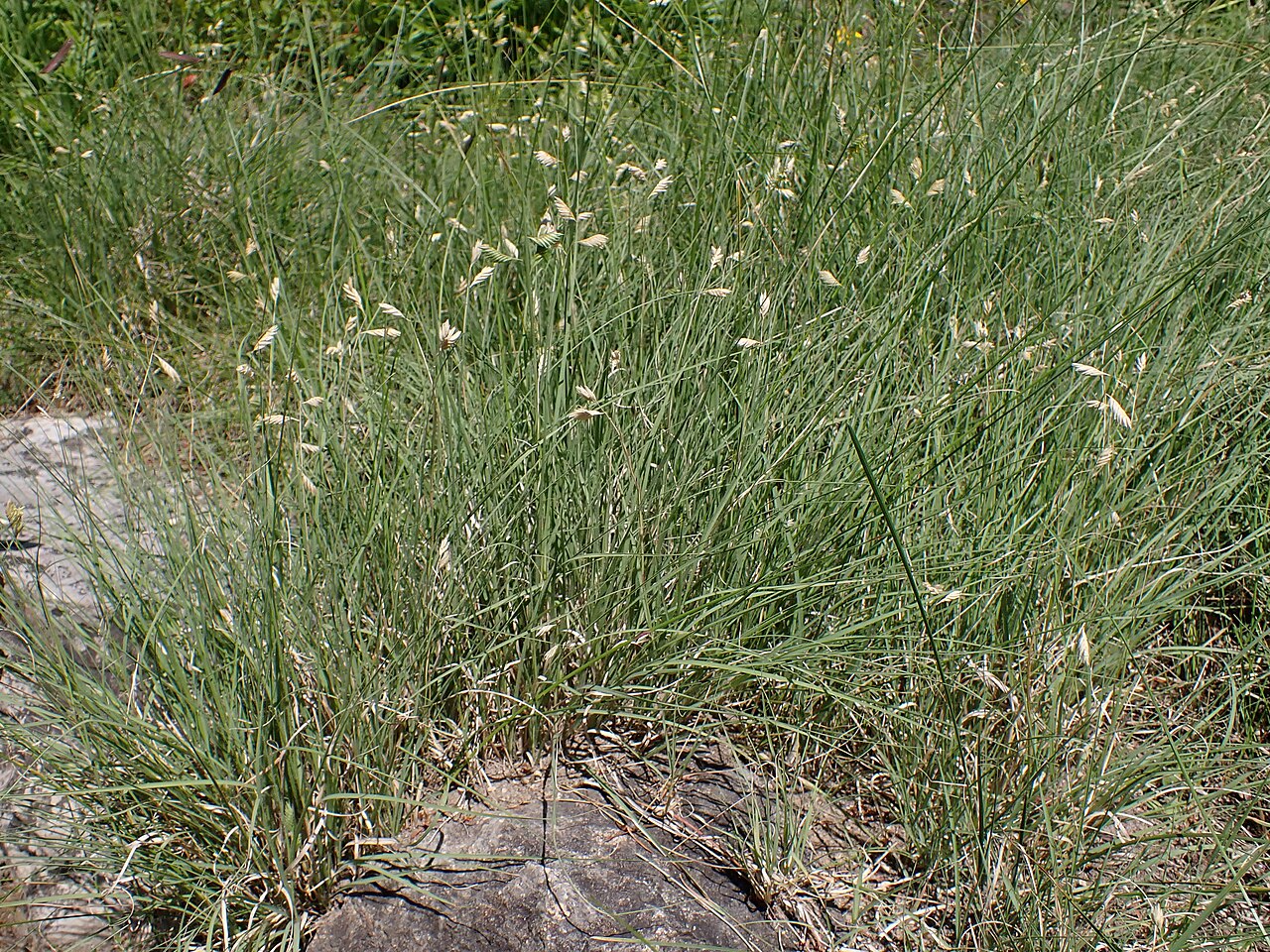
- Blue grama: the western choice. The Wildflower Center notes its foliage normally stays under 4 inches, with seed heads 1 to 2 feet tall. Our plan for blue grama in a dry-site planting covers it in more depth.
- Butterfly weed: 1 to 2 feet, per NC State, for orange color at the front.
Zone 2: The Middle (3 to 10 Feet)
The middle zone carries most of the summer color. Plants here run about 2 to 4 feet tall.
- Little bluestem: 2 to 4 feet, per NC State, as the backbone grass.
- Prairie dropseed: 2 to 3 feet, a neat fountain shape that also works at the front of this zone.
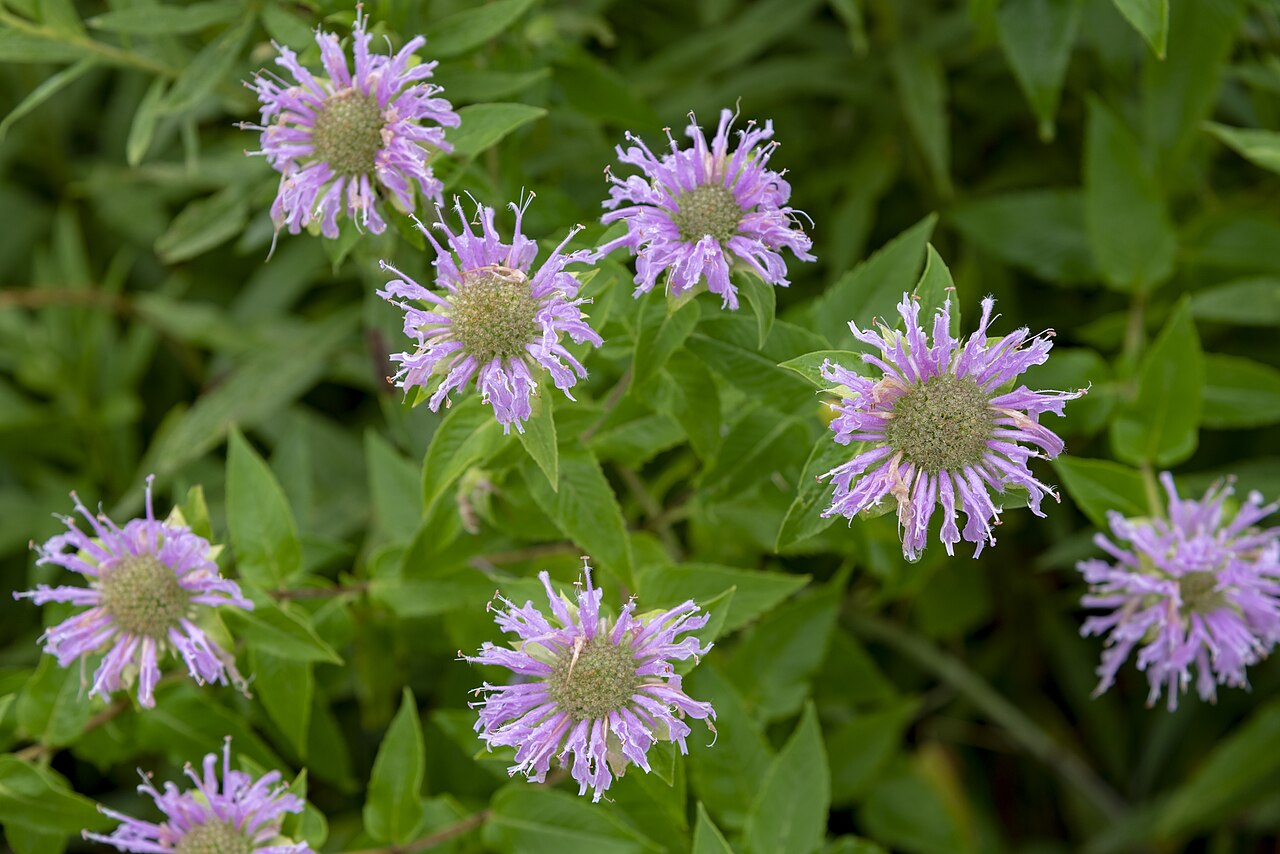
- Wild bergamot: 2 to 4 feet, per NC State, native across most of the U.S. east of the Rockies. The Wildflower Center notes it colonizes by rhizomes, so give it room.
- Purple coneflower and aromatic aster: summer and fall color where they are native.
Zone 3: The Back (10 Feet and Beyond)
The tallest prairie grasses and flowers go here, where their height becomes a backdrop instead of a barrier.
- Big bluestem: 4 to 8 feet, per the Wildflower Center, which notes it needs more moisture to look its best than little bluestem.
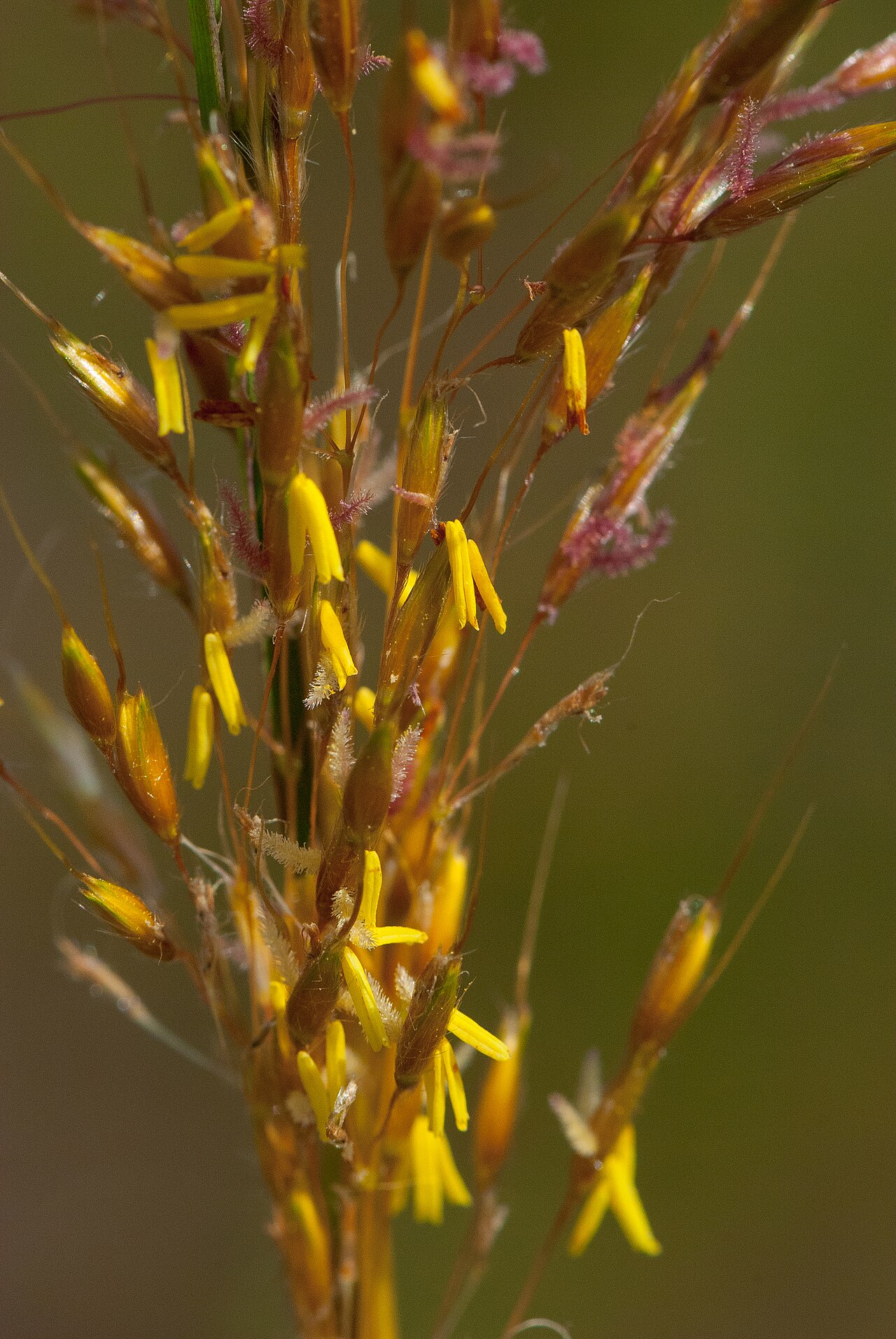
- Indiangrass: up to about 8 feet, with golden plumes. The Wildflower Center notes it needs tall companions to remain upright, which is why it belongs in a mass at the back.
- Switchgrass: 3 to 7 feet, per NC State, for moister spots.
- Rattlesnake master: 4 to 6 feet, per NC State, for a bold, spiky accent.
Plant Palette
Ranges from the Lady Bird Johnson Wildflower Center (LBJ); heights from NC State unless noted. Confirm each plant is native to your state.
| Plant | Zone | Height | Sun / moisture | Native range |
|---|---|---|---|---|
| Prairie smoke (Geum triflorum) | 1: lawn edge | Up to about 18 in (LBJ) | Sun to shade / dry to moist | NY and s. Ont. to Alb., south to n. IL and the Dakotas; Rockies |
| Blue grama (Bouteloua gracilis) | 1: lawn edge (West, Plains) | Leaves to about 4 in; seed heads 1–2 ft (LBJ) | Sun / dry | Western North America, east into the Great Plains |
| Little bluestem (Schizachyrium scoparium) | 2: middle | 2–4 ft | Sun / dry | Much of the U.S. east of the Rockies |
| Wild bergamot (Monarda fistulosa) | 2: middle | 2–4 ft | Sun to part shade / dry to moist | Most of s. Canada and the U.S. east of the Rockies |
| Big bluestem (Andropogon gerardii) | 3: back | 4–8 ft (LBJ) | Sun to part shade / moist | Que. and ME to Sask. and e. MT, southeast to FL, west to AZ |
| Indiangrass (Sorghastrum nutans) | 3: back, in a mass | 5–7 ft; up to about 8 ft (LBJ) | Sun / dry to moist | Que. and ME to Man., south to FL and AZ |
Sample Plan: 40 × 20-Foot Transition
Zones and Quantities
- Mown strip: one or two mower passes between lawn and Zone 1.
- Zone 1 (3 ft deep, about 120 sq ft): plugs about 15 inches apart, roughly 75 plants of two or three low species.
- Zone 2 (7 ft deep, about 280 sq ft): plugs about 18 inches apart, roughly 125 plants, about half grasses.
- Zone 3 (10 ft deep, about 400 sq ft): seed, or plugs about 2 feet apart (roughly 100 plants), mostly big bluestem and Indiangrass with a few tall flowers.
Depth check: 20 feet total supports back-zone plants up to about 10 feet under Cornell’s half-the-width rule.
For seeded zones, UMN Extension gives a general rule of about 30 seeds per square foot, with grasses as low as 20 and wildflowers as high as 60; follow your seed supplier’s mix. The Wildflower Center notes that most meadow managers aim for native grasses to make up 50 to 80 percent of a meadow’s species.
Plugs Up Front, Seed in Back
The zones nearest the lawn are the most visible, so plant them from pots or plugs. The Xerces guidelines point out that potted grasses and perennials fill in faster than a seeded meadow, which matters at the edge people see most.
The back zone can be seeded to save money. UMN Extension notes that seeded prairies can take two to five years to reach full size, while transplants establish faster.
Installation Steps
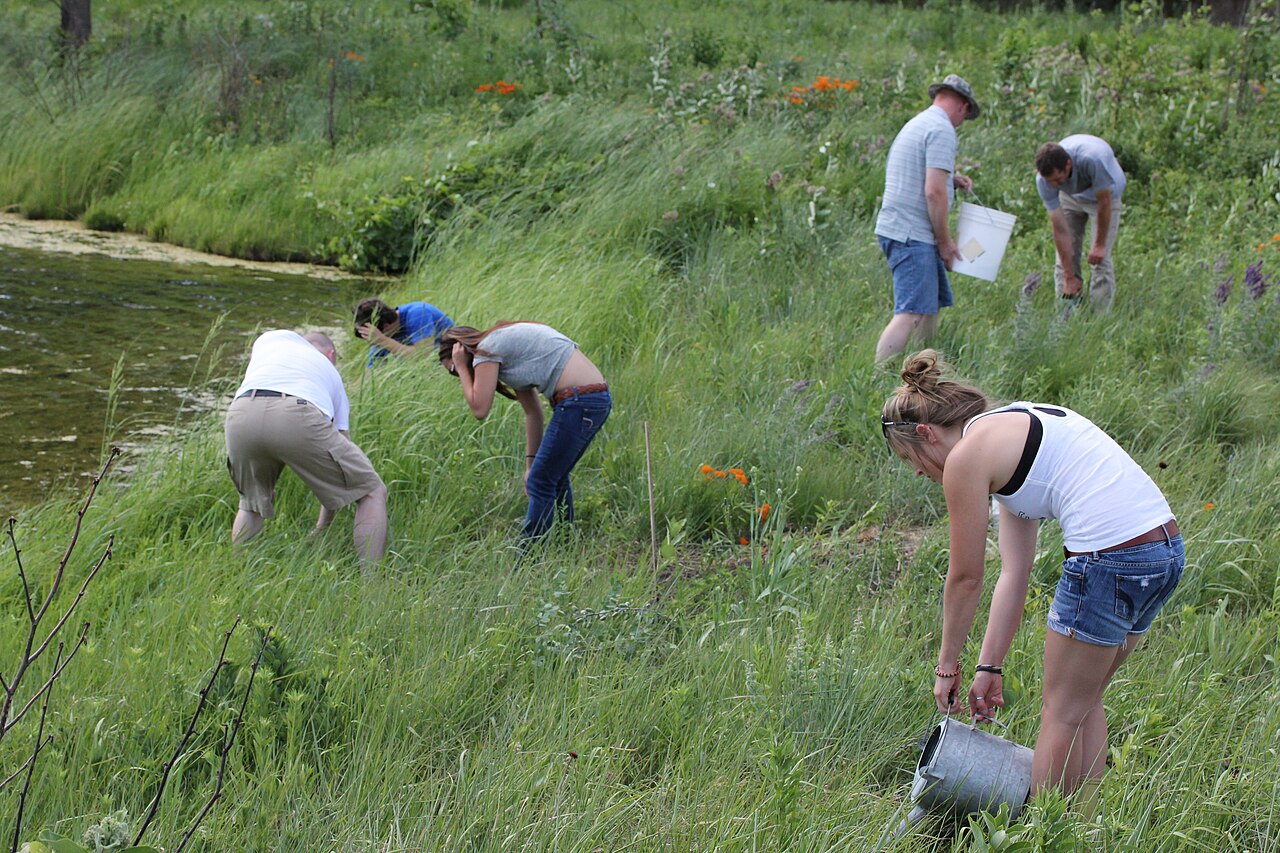
- Mark the zones. Lay hoses for the mown strip and the wavy boundaries between zones.
- Remove the turf. Strip or smother the lawn in all three zones. Leave the mown strip as lawn.
- Plant Zone 1 and Zone 2 from plugs. Work from the lawn edge back, letting drifts cross into the next zone.
- Seed or plant Zone 3. Follow the supplier’s rate and timing for seed, or set plugs in large drifts.
- Water the plugs. Keep them watered through dry spells in the first season.
The First Three Years
- Year 1: Hand-weed the plug zones. In a seeded back zone, Xerces recommends mowing to about 8 inches whenever it reaches 12 to 18 inches, so annual weeds can’t set seed. Mow the edge strip on your lawn schedule.
- Year 2: Fill gaps in Zone 1 first, since that is where gaps show most. Keep weeds from seeding. Watch whether wild bergamot is spreading into Zone 1.
- Year 3 and after: Per Xerces, mow the meadow once a year in late winter or early spring while plants are dormant: half of it to 4 to 6 inches, or all of it to 8 to 12 inches. Adjust the zone boundaries if any plants turn out taller than expected.
Mistakes to Avoid
- Tall grass right against the lawn. It looks like a wall and flops onto the grass.
- Too little depth for the tallest plants. If the transition is only 10 feet deep, leave out big bluestem and Indiangrass. See big bluestem in a small yard for shorter alternatives.
- Straight-line zones. Wavy, overlapping drifts look natural; ruler-straight bands do not.
- Indiangrass on its own. The Wildflower Center notes it needs tall companions to stay upright.
- Spreaders at the edge. Keep rhizomatous plants like wild bergamot in Zone 2, away from the lawn.
- Fall mowing. Leave the meadow standing for winter structure and wildlife; see our guide to what to leave standing in winter.
📋 Find plants for your region: see our native plant lists for North Dakota, South Dakota & Western Minnesota, Michigan, Wisconsin & Eastern Minnesota, Maryland, Virginia & West Virginia, Arkansas, Louisiana, Eastern Oklahoma & Eastern Texas, and Montana & Wyoming.
Frequently Asked Questions
How deep should a lawn-to-meadow transition be?
Deep enough that your tallest plants are no more than half the total depth. For 8-foot grasses, that means about 16 to 20 feet.
What are good short native plants for a lawn edge?
Prairie smoke in the North, purple lovegrass in the East and South, blue grama in the West, and butterfly weed across much of the country, where each is native.
Can I seed the whole transition?
You can, but the edge will take longer to fill in. Xerces notes potted plants fill faster than seed, so plugs are worth it in the most visible zone.
How do I keep tall grasses from flopping onto the lawn?
Put them at the back, plant them in masses so they support each other, and don’t fertilize. A mown strip also gives a little buffer.
When should I mow a meadow transition?
Mow the edge strip like lawn. Once the meadow is established, mow the planted zones once a year in late winter or early spring, before new growth begins.
Sources
- Alice Sturm and Stephanie Frischie, Mid-Atlantic Native Meadows, Xerces Society and Mahan Rykiel Associates: short, fine-textured plants near lawns, repetition, potted edges, mowing schedule.
- Cornell Cooperative Extension, Putnam County, “Cues to Care” Can Help: height-to-width rule and avoiding drastic height jumps.
- University of Minnesota Extension, Planting and Maintaining a Prairie Garden: seeding rates and establishment time.
- Lady Bird Johnson Wildflower Center, Plant a Wildflower Meadow: grass share of meadow species.
- NC State Extension Gardener Plant Toolbox: little bluestem, wild bergamot, Indiangrass, purple lovegrass, butterfly weed, switchgrass, rattlesnake master: heights.
- Lady Bird Johnson Wildflower Center plant database: prairie smoke, blue grama, big bluestem, Indiangrass, wild bergamot, little bluestem: ranges, heights and habit notes.