Native Plants in Large Patio Containers: Match Root Space and Winter Exposure
Last updated: November 6, 2026
A large patio container can hold a surprising amount of native color: a clump of grass, a summer-blooming daisy, an aster for fall. It also asks more of a plant than a garden bed does.
In a pot, roots have a fixed amount of space, dry out faster, and face winter cold on every side instead of from above. A plant that is perfectly hardy in your yard can die over winter in a pot on the same patio.
This guide matches native plants to containers by two things: how much root space they need, and how much winter exposure the pot will get. The examples are natives of the eastern and central U.S.; check your own state’s list before you buy.
Plan at a Glance
| Site | Patio, deck, balcony or front steps; containers that stay outdoors year-round |
| Size | Large containers, roughly 18 to 30 inches across, one to three plants per pot |
| Sun | Full sun for most of the plants named here; part shade for wild columbine |
| Soil | Commercial soilless potting mix, never straight garden soil |
| Maintenance | Moderate: regular summer watering, winter protection, dividing every few years |
| Best regions | Eastern and central U.S. for these plants; the winter rules apply everywhere |
Assess the Patio Before Choosing Plants
Start with the same questions you would ask about a garden bed, then add the container-specific ones.
Sun and reflected heat
Count hours of direct sun in midsummer. A pot on pale paving against a south or west wall gets reflected heat as well. N.C. State Extension notes that dark containers absorb more heat than light ones, drying the mix faster and raising root temperatures in summer.
Your winter low
Look up your USDA plant hardiness zone, then subtract two. Penn State Extension explains that a plant’s hardiness zone is based on the plant growing in the ground, while the roots of an above-ground container can be as cold as the winter air. Its advice is to go two zones colder with containerized plants.
That means a patio in zone 6 needs plants rated to zone 4 if the pots will stay outside unprotected. In zone 4, the same rule calls for zone 2 plants, which is why cold-climate gardeners usually protect or move their pots.
Wind and weight
Tall grasses in a light plastic pot can blow over on an exposed deck. N.C. State recommends considering container weight for top-heavy plants and windy sites. On a balcony or deck, also check how much load the structure can safely carry before adding several large, wet pots.
Match Root Space to the Plant
N.C. State Extension puts it plainly: restricted roots mean decreased growth, and flowering is reduced in pots that are too small. It adds that perennials need large containers, and that larger containers dry out less quickly and need less frequent watering.
For natives, the root type matters as much as the plant’s top growth. Sort candidates into three groups before you buy.
Fibrous-rooted clumps: the best fit
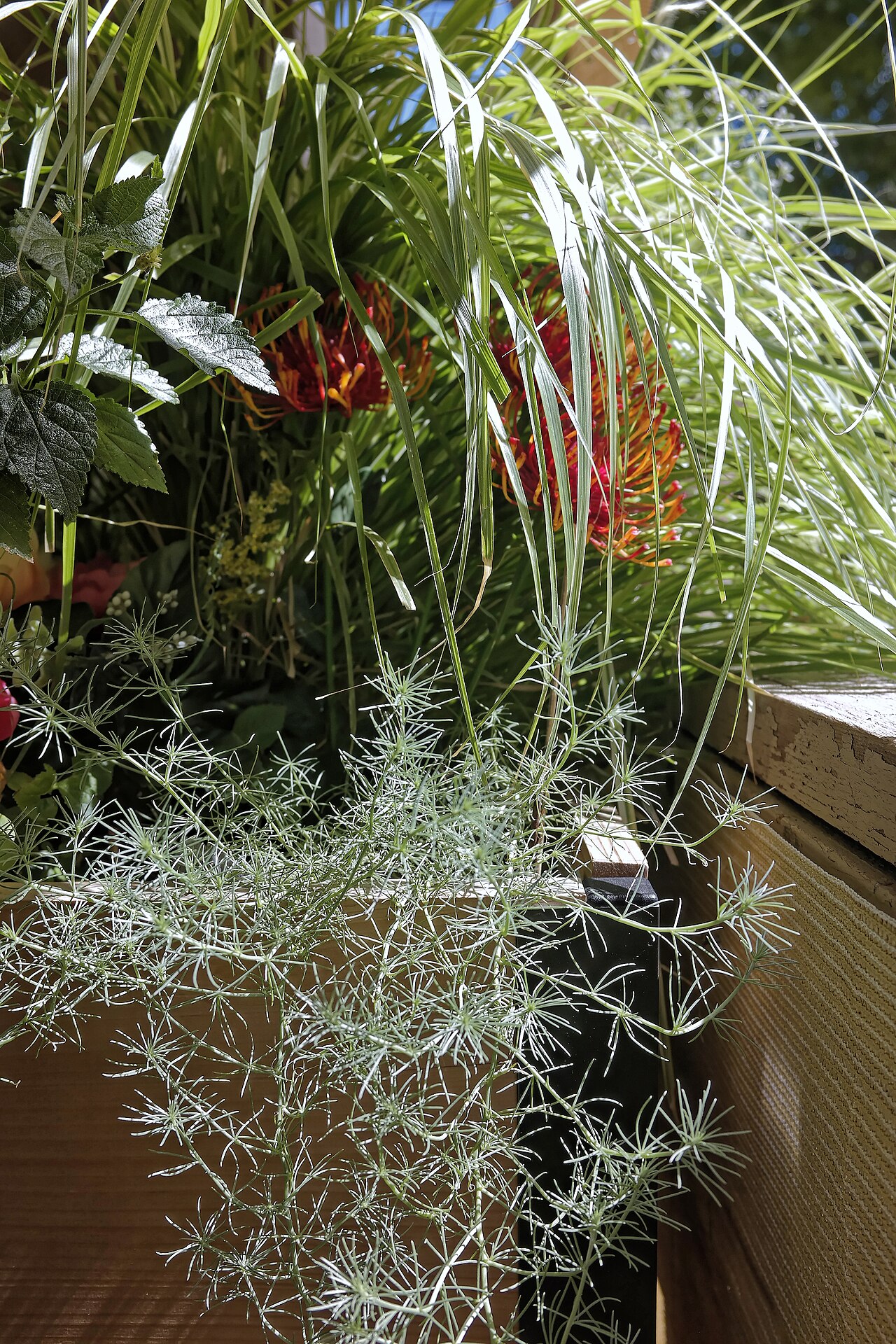
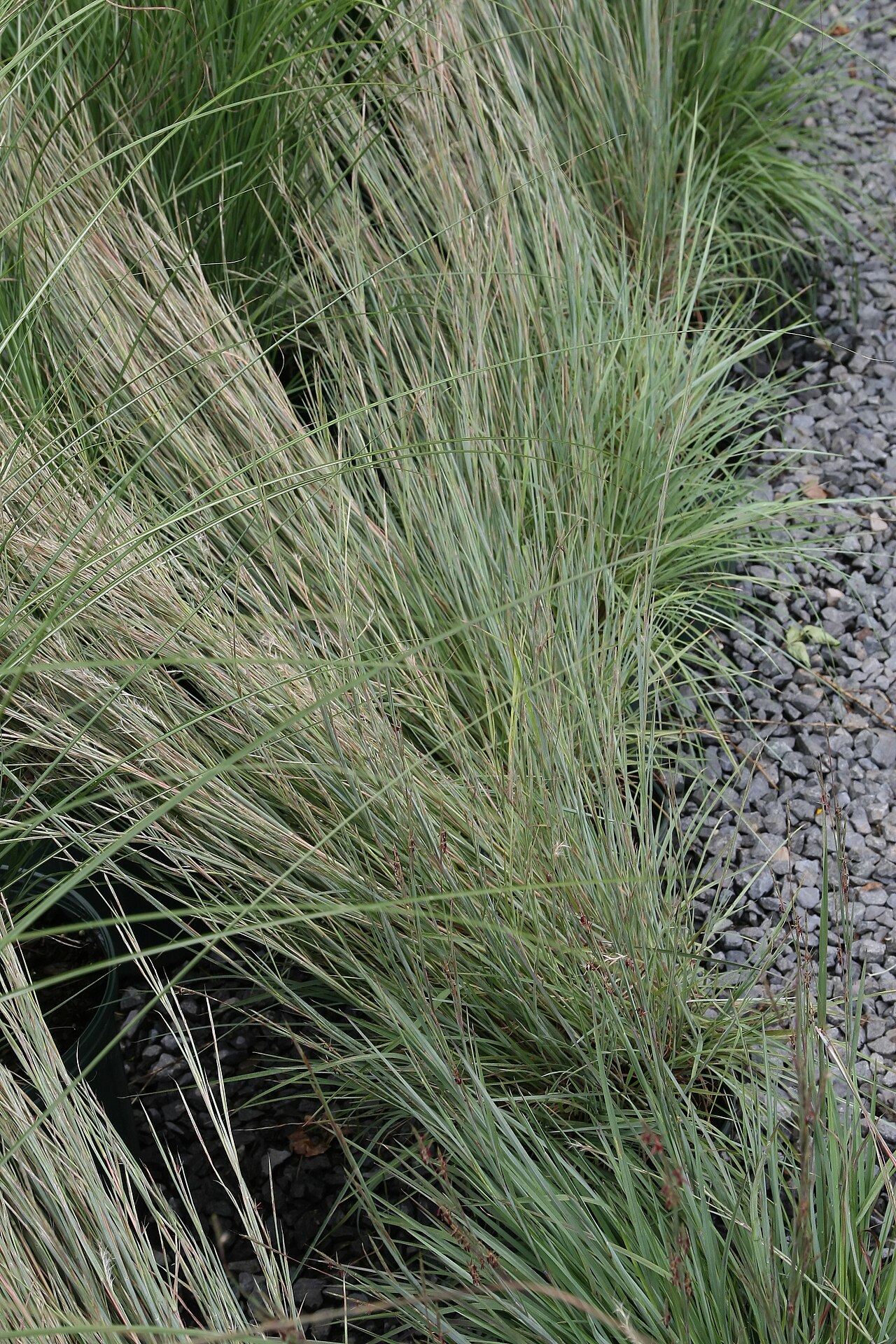
Clump-forming grasses and perennials with fibrous roots use container space efficiently. N.C. State describes prairie dropseed as having a fibrous, short-rhizomatous root system, and says little bluestem adapts well to container plantings.
One caution: the Wildflower Center notes that little bluestem readily reseeds and does not recommend it for small gardens. On a patio, watch for seedlings in nearby cracks and beds, or trim seedheads before they shed if that becomes a nuisance.
Short-lived plants: easy to replace
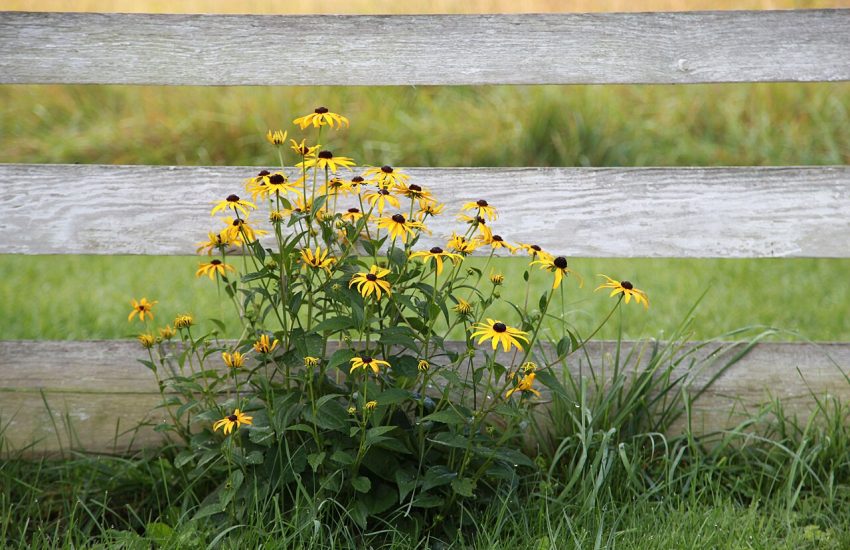
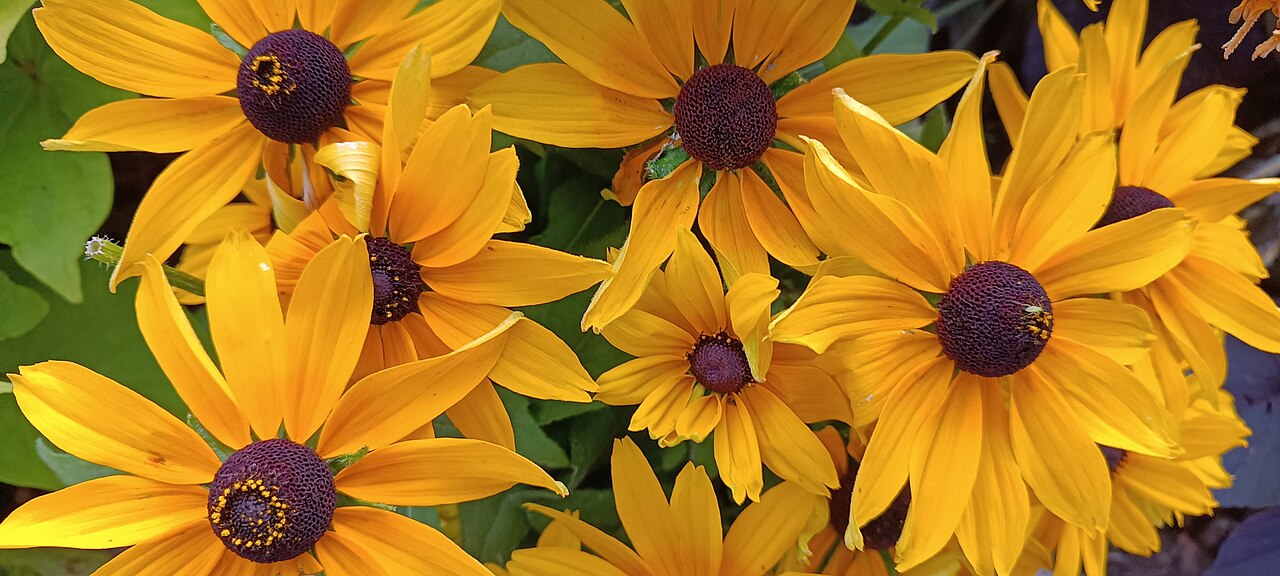
Black-eyed Susan is a biennial or short-lived perennial, per N.C. State, and blooms the first year from early-spring seed. In a pot, that is an advantage. Treat it as a two-year filler and replace it when it fades.
Deep taproots: better in the ground
Some natives are poor long-term container plants. N.C. State notes that butterfly weed does not transplant well because of its deep taproot and is best left undisturbed. A pot that has to be lifted, moved or divided is the opposite of undisturbed. Grow it in the ground instead.
How big a container?
Plant databases list mature width, and that is a practical starting point. Choose a container at least as wide as the largest plant’s listed mature width, and as deep as you can manage. For combinations, add the widths of the plants that will sit side by side.
When in doubt, go bigger. A larger volume of mix holds more water in summer and buffers roots against cold in winter, which Penn State lists as one of the main ways to improve winter survival.
Plant Palette
Heights, widths and hardiness zones are from N.C. State Extension’s plant toolbox; light, moisture and native range from the Lady Bird Johnson Wildflower Center. All are listed to zone 3, so by the two-zone rule they are reasonable outdoor container candidates in zone 5 and warmer.
| Plant | Container role | Height × width | Sun / moisture | Native range |
|---|---|---|---|---|
| Little bluestem (Schizachyrium scoparium) | Upright grass centerpiece | 2–4 ft × 1.5–3 ft | Sun–part shade; dry | Que. & ME to Alta. & ID, south through much of the U.S. east of the Rockies |
| Prairie dropseed (Sporobolus heterolepis) | Fine-textured mound | 2–3 ft × 2–3 ft | Sun; dry | Que. to Sask., locally s. to NC, KY, e. TX & CO |
| Black-eyed Susan (Rudbeckia hirta) | Summer color, replaceable | 2–4 ft × 1–2 ft | Sun; dry to moist | W. MA to Man. & WY, s. to FL & NM |
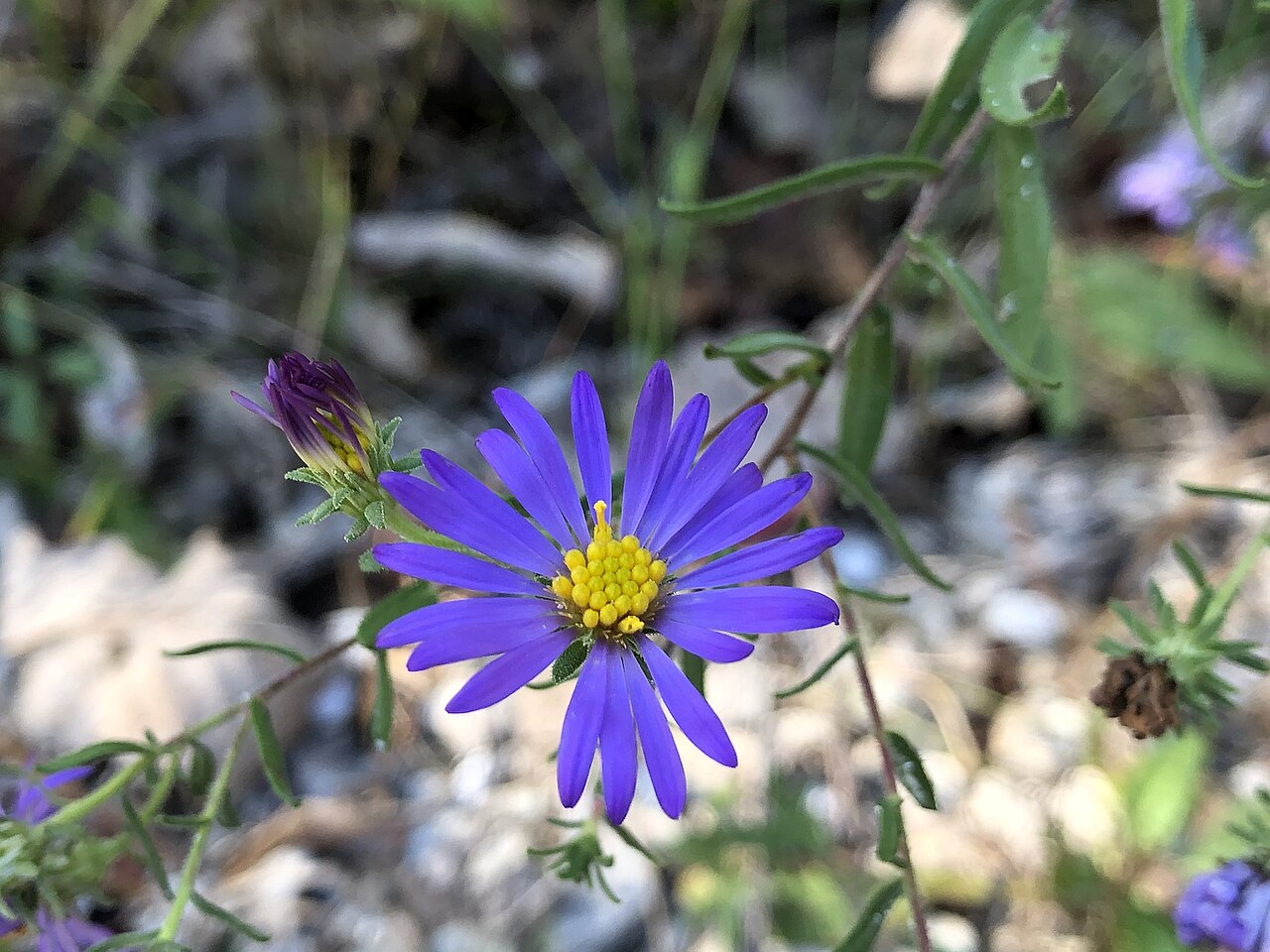
| Aromatic aster (Symphyotrichum oblongifolium) | Fall color, solo pot | 1–3 ft × 1–3 ft | Sun–part shade; dry to moist | PA to NC, w. to WY & TX |
| Wild columbine (Aquilegia canadensis) | Spring color, part shade | 1–3 ft × 1–1.5 ft | Part shade–shade; well-drained | N. America east of the Rockies |
| Pussytoes (Antennaria plantaginifolia) | Low edge or spiller | 4–6 in foliage × 1–2 ft | Sun–part shade; dry | ME & Que. to FL, west to LA, north to MN |
Three Container Combinations
- Sunny grass pot (about 24 inches across): one little bluestem in the center with pussytoes around the rim. Both prefer dry conditions, so they share a watering schedule.
- Summer color pot (about 20 inches across): two or three black-eyed Susans. Replace them as they decline, usually after the second season.
- Fall pot (24 inches or wider): one aromatic aster on its own. N.C. State lists it at up to 3 feet wide, so it needs the whole container.
- Part-shade pot: wild columbine with pussytoes at the edge, in a spot with morning sun and afternoon shade.
Plan for Winter Exposure
Winter is where most container natives fail, and it is worth deciding in spring how each pot will spend the winter.
Option 1: Leave large pots in place
Penn State says very large wooden or concrete planters can usually be left in place. N.C. State adds that wood and plastic containers can safely stay outside year-round. Choose plants that pass the two-zone test, water well before the soil freezes, and move pots against a sheltered wall if you can.
Option 2: Bury or group the pots
Iowa State Extension calls burying the pot in the ground one of the most reliable ways to overwinter container perennials; the soil acts as insulation. Penn State also suggests grouping pots in a protected spot and covering them with straw, shredded leaves, bark mulch or evergreen boughs.
Option 3: Move them to an unheated shelter
An attached, unheated garage can work if you are confident it will stay between 20°F and 45°F, according to Iowa State. Check moisture periodically, but Penn State warns not to overwater, which can cause root rot.
Do not forget winter water
Colorado State University Extension notes that roots in outdoor containers can dry out over winter, so winter watering and protection are necessary. Check pots during thaws, particularly evergreen-leaved plants such as pussytoes.
Choose a pot that survives winter, too
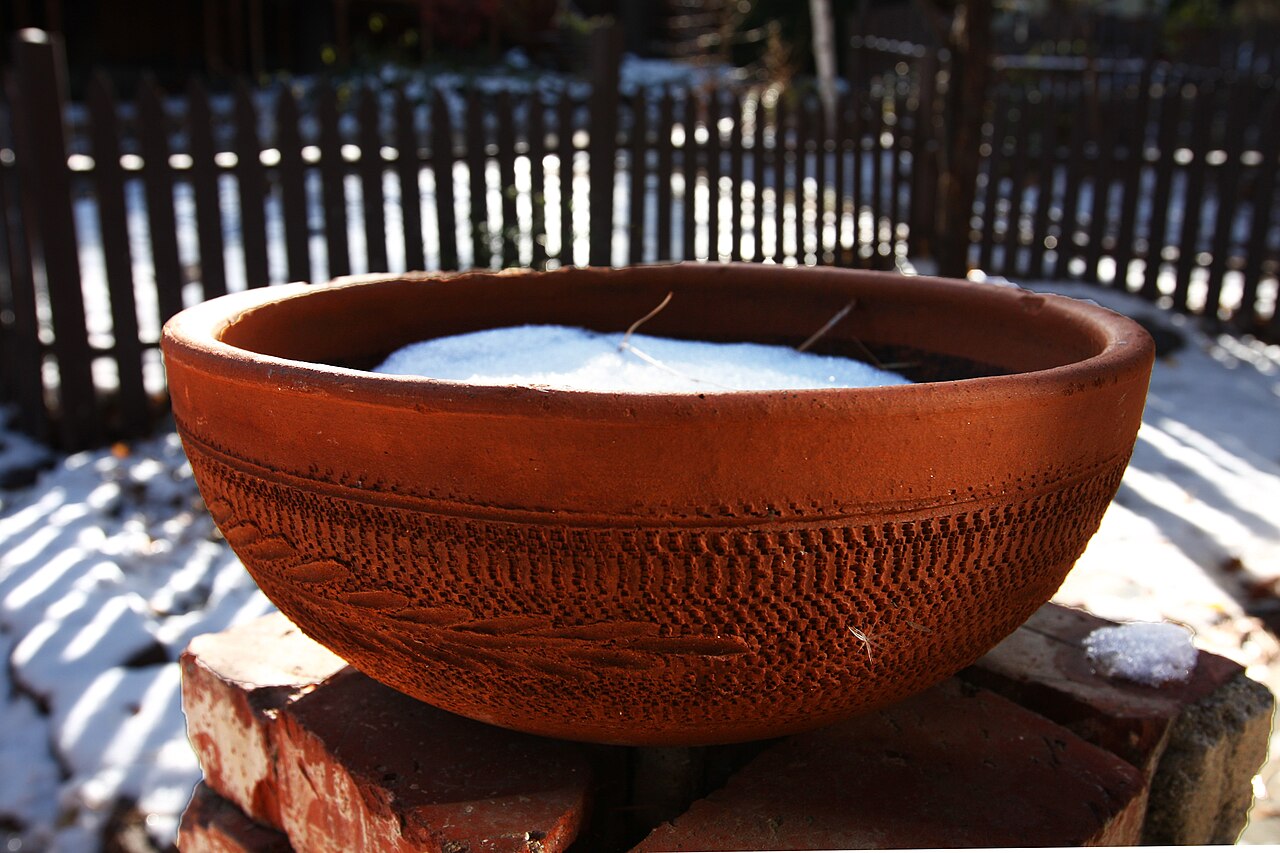
N.C. State says unglazed ceramic pots should not be used for plants that stay outdoors in winter, because absorbed water freezes and cracks them. Penn State gives the same warning for clay, ceramic and glazed pottery left exposed. For year-round native plantings, wood, heavy plastic, fiberglass or concrete is safer.
Planting Steps
- Check drainage. N.C. State says drainage holes are necessary in all containers. On a flat patio, holes on the side, ¼ to ½ inch above the bottom, keep water from pooling.
- Use potting mix. N.C. State explains that field soils hold too much water and have too little air space for containers. Use a commercial soilless mix; for dry-soil natives such as little bluestem, choose one that drains freely.
- Set the crown at the right depth. Keep the crown level with the top of the mix, not buried and not exposed, as N.C. State describes.
- Water thoroughly. Water until it runs from the holes. If water channels through and leaves dry pockets, top up the mix and water again.
- Place for the season. Put sun lovers where they get six or more hours of light, and keep dark pots out of the harshest afternoon sun.
The First Three Years
- Year 1: Water whenever the top inch or two of mix is dry; containers in sun may need it daily in midsummer. Go easy on fertilizer; the Wildflower Center notes that rich soil makes wild columbine rank and short-lived. Decide the winter plan by early fall.
- Year 2: Cut back grasses and dead stems in late winter. Replace black-eyed Susans that decline. Watch for stunting, which N.C. State lists as a sign a plant is outgrowing its pot.
- Year 3: Divide crowded grasses and asters in spring, or move them to a larger pot or into the ground. Refresh the top few inches of mix.
Mistakes to Avoid
- Using your garden zone for pots. Container roots are colder; apply the two-zone rule or plan protection.
- Choosing taprooted natives. Butterfly weed and similar deep-rooted plants resent being confined and moved.
- Undersized pots. Small pots dry quickly, freeze quickly and stunt growth.
- Leaving terra-cotta out all winter. It can crack, taking the root ball with it.
- Forgetting winter water. A dry pot in a January thaw can lose its roots.
For a single-species example, see our guide to growing blazing star in a pot. For broader design ideas, our overview of container gardening with natives covers mixing plants and potting mixes. If your patio sits beside a narrow strip of soil, our fence-and-path native garden plan shows how to plant it, and our article on mountain mint near a patio covers bees and foot traffic.
📋 Find plants for your region: start with the profiles linked above, then see our native plant lists for Illinois, Iowa & Missouri, Maryland, Virginia & West Virginia and the Dakotas & Western Minnesota, or the list for your own state.
Frequently Asked Questions
Can native perennials stay in pots outside all winter?
Many can, if they are hardy to two zones colder than yours and the pot is large and frost-proof. Otherwise, bury the pot, group and mulch it, or move it to an unheated shelter.
What size pot does a native grass need?
Start with a container at least as wide as the grass’s listed mature width. N.C. State lists little bluestem at 1.5 to 3 feet wide, so a 24-inch pot is a reasonable minimum for one plant.
Which natives should I avoid in containers?
Avoid deep-taprooted plants such as butterfly weed, trees and large shrubs, and aggressive spreaders that will fill a pot within a season.
Should I use garden soil in a native container?
No. N.C. State Extension explains that field soil holds too much water and too little air in a container. Use a soilless potting mix.
Do container natives still help pollinators?
Yes, on a smaller scale. A pot of black-eyed Susan or aromatic aster can still offer flowers on a patio where there is no bed.
Sources
- Penn State Extension, Overwintering Plants in Containers: two-zone rule, container root temperatures, larger pots, pot materials, burying, grouping, unheated storage.
- Iowa State University Extension, overwintering container perennials: burying pots, unheated garage temperature range.
- N.C. State Extension Gardener Handbook, Ch. 18, Plants Grown in Containers: container material, weight, color, drainage holes, size and root restriction, potting mixes, planting depth, repotting signs.
- Colorado State University Extension, Container Gardens: winter desiccation and watering, porous pots.
- N.C. State Extension Gardener Plant Toolbox, little bluestem, prairie dropseed, black-eyed Susan, aromatic aster, wild columbine, pussytoes, butterfly weed: sizes, hardiness zones, root notes.
- Lady Bird Johnson Wildflower Center plant database, little bluestem, prairie dropseed, black-eyed Susan, aromatic aster, wild columbine, pussytoes: native range, light and moisture.