A Native Garden Beside a Fence: Sun Mapping and Mature-Width Planning
Last updated: November 6, 2026
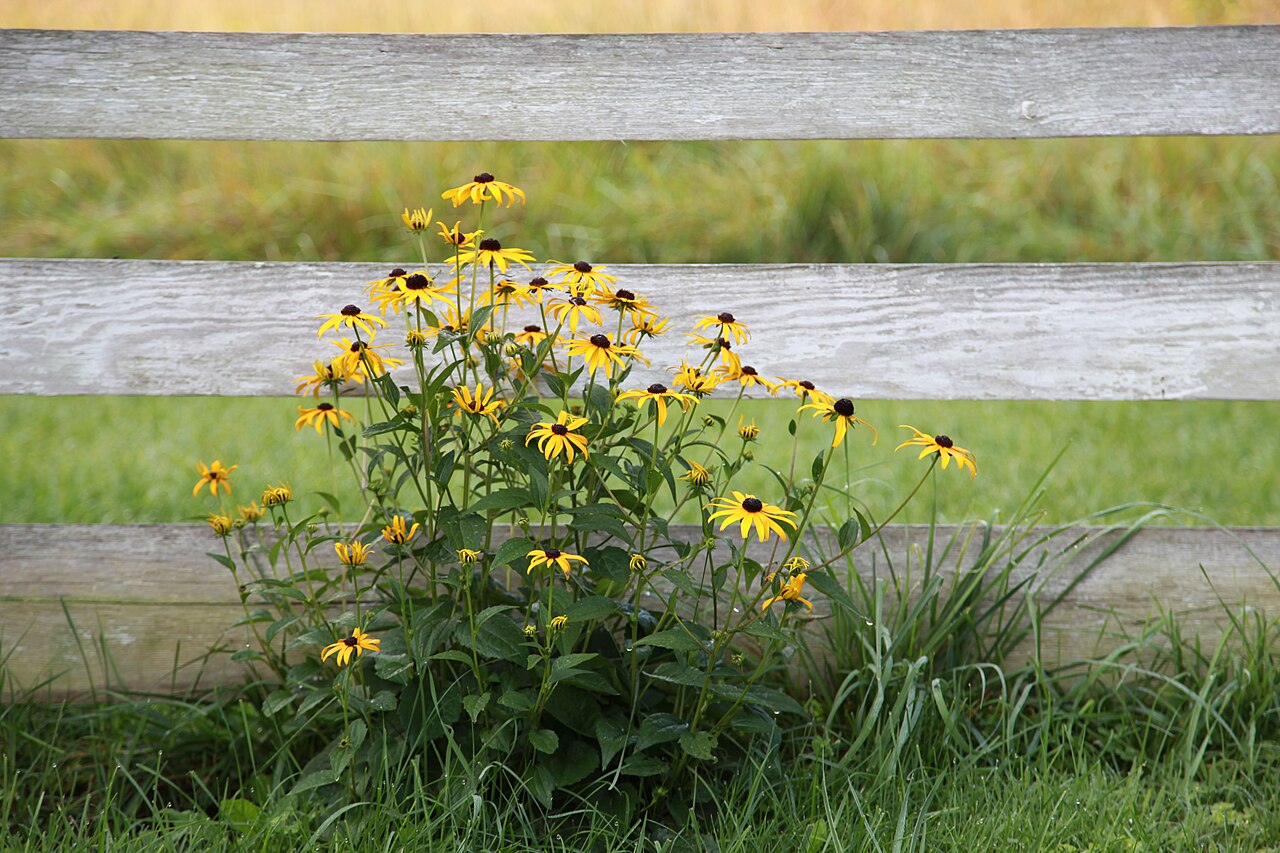
A fence is one of the most natural places to start a native border. It gives the planting a backdrop, hides the bare boards and turns a forgotten edge of the yard into habitat.
The fence also changes the site. It casts shade on one side, bounces heat on the other, blocks some rain and sets a hard limit on how far plants can spread. Shrubs planted too close end up pressed flat against the boards, and you lose the room you need to repair or stain the fence.
This plan covers the two decisions that fix most fence-side problems before they start: mapping the sun on your side of the fence, and spacing every plant by its mature width rather than its pot size.
Plan at a Glance
| Site | A border along a wood, vinyl or chain-link fence, at least 5 feet deep |
| Size | The sample plan is 8 feet deep and 24 feet long |
| Sun | Depends on which side of the fence you are on; map it first |
| Soil | Average garden soil; often drier right at the fence line |
| Maintenance | Low to moderate; yearly cutback and occasional shrub pruning |
| Best regions | Eastern and central U.S. for the plants named; regional alternates included |
This guide is for a deeper border. If you have a narrow strip squeezed between a fence and a path, start with our plan for a narrow native garden between a fence and a path.
Step 1: Work Out Which Side of the Fence You Are On
In the Northern Hemisphere, the sun travels across the southern part of the sky, so a fence casts its shadow to the north. The direction your border faces is the first clue to how much light it gets.
- South-facing border (fence on the north side of the bed): sun most of the day, plus heat off the fence. Treat it as a hot, full-sun site.
- North-facing border (fence to the south): shaded much of the day. The shade band is widest in spring and fall, when the sun is lower, and narrowest in midsummer.
- East-facing border: morning sun, afternoon shade. University of Minnesota Extension notes that morning sun is less intense, giving full-sun light without extreme heat.
- West-facing border: shade in the morning and strong afternoon sun. Minnesota describes afternoon sun as stronger and warmer.
Most fences do not run exactly east-west or north-south, so treat these as starting points and confirm them with a sun map.
Step 2: Make a Simple Sun Map
Minnesota Extension recommends spending time observing light levels in your landscape and how they change through the day and the seasons.
- Sketch the bed and fence on paper, then make several copies.
- On a clear day, mark where sun and shade fall every hour or two from morning to evening.
- Count the hours of direct sun for the front, middle and back of the bed. The strip nearest the fence often differs from the front.
- Repeat in spring or fall if you can. Shadows from a 6-foot fence reach much further when the sun is low.
Then sort each zone using Minnesota’s light levels: part shade is about 3 to 6 hours of sun, full shade less than 3 hours. Six or more hours is generally treated as full sun.
Look for the rain shadow, too
Minnesota Extension also points out that structures and overhangs can keep the soil beneath them dry by blocking rain. A solid fence may do the same at its base, so dig a few test holes there after a rain and compare them with the front of the bed.
Step 3: Plan Every Plant by Its Mature Width
Minnesota Extension advises measuring the plantable space and giving plants enough room to reach their full mature size. Along a fence, that rule has a second half: leave space between the shrubs and the boards.
Use this simple rule for each shrub:
Distance from fence to plant center = half the mature width + an access gap.
The access gap is the strip you keep open for walking behind the shrubs, cleaning out leaves and repairing or staining the fence. Size it for your fence and tools; the table below uses 2 feet as an example.
Mature Widths and Planting Distances
Heights and widths are from the N.C. State Extension Plant Toolbox. Distances assume the widest listed spread and a 2-foot access gap.
| Plant | Height | Width | Plant center from fence |
|---|---|---|---|
| Common ninebark | 5–8 ft | 4–6 ft | About 5 ft |
| Summersweet | 5–10 ft | 4–6 ft | About 5 ft |
| Virginia sweetspire | 4–8 ft | 3–6 ft | About 5 ft |
| Wild bergamot | 2–4 ft | 2–3 ft | In front of shrubs |
| Smooth blue aster | 2–4 ft | 2–4 ft | In front of shrubs |
| Purple coneflower | 3–4 ft | 1–2 ft | In front of shrubs |
| Wild geranium | 1–1.5 ft | 1–1.5 ft | Front edge, shady side |
Perennials go in front of the shrubs, spaced by their own widths. A 2-foot-wide plant set 2 feet from its neighbor will touch at maturity, which is usually what you want in a border.
Check height against the fence
Compare mature heights with your fence. A 5- to 8-foot ninebark will top a 4-foot fence and may lean over into the neighbor’s yard. A shrub that stays at or below fence height keeps the boundary simple.
Mind the property line
Branches that cross the fence can become a neighbor issue. Place larger shrubs far enough back that they will not hang over, and check any local rules or homeowners’ association guidelines for plantings on a boundary.
Step 4: Decide What the Fence Itself Will Do
A fence can hold a vine, but not every vine suits every fence. University of Maryland Extension sorts vines by how they climb:
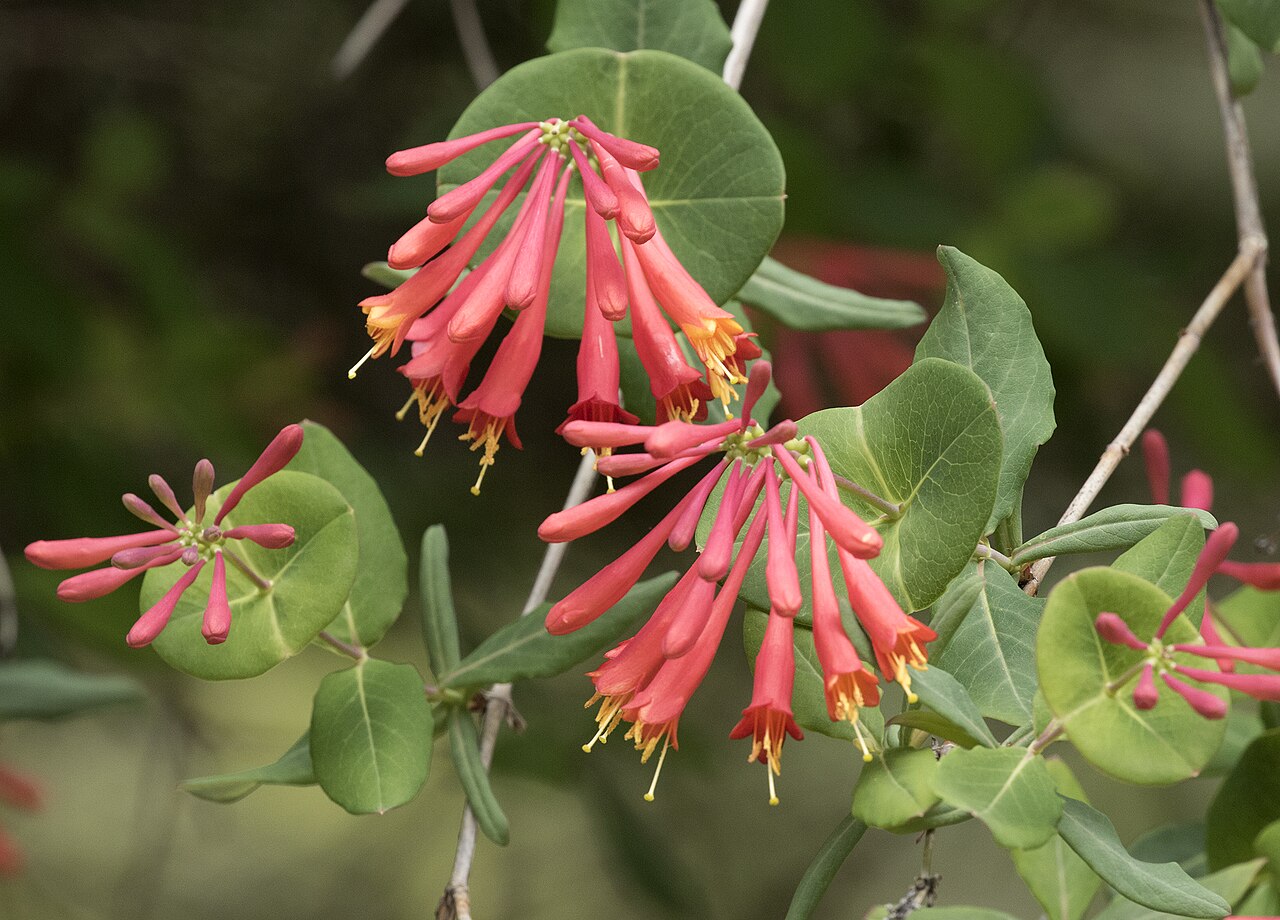
- Twining vines wrap their stems around a support. Coral honeysuckle and American wisteria twine, so they need wires, a trellis panel or chain-link to grip.
- Clinging vines attach directly to surfaces with root-like holdfasts or adhesive discs. Maryland names Virginia creeper as an example and warns that holdfasts can damage wood surfaces if the vine is not trained to a separate trellis.
- Grabbing vines use tendrils or leaf stalks, like clematis, and do best on twine or wire.
Maryland also notes that large-maturing vines put a lot of weight on a support, which must be sturdy and rot resistant. A heavy vine can strain an aging fence.
Coral honeysuckle is the best-behaved choice for most home fences. N.C. State lists it at 10 to 20 feet long and 3 to 6 feet wide, and the Lady Bird Johnson Wildflower Center gives its range as southern Maine to Florida and east Texas, scattered inland to Illinois. Mount a trellis a few inches off the boards so you can still maintain the fence.
Skip the giants on ordinary fences. N.C. State lists Virginia creeper at 30 to 50 feet and warns that its fruit is poisonous, and trumpet creeper at 30 to 40 feet with sap that can irritate skin.
Plant Palette
Pick plants for each zone of your sun map. Check every plant against your state’s native range before buying.
Plant Palette for a Fence-Side Border
Light and range from the Lady Bird Johnson Wildflower Center (LBJ); size from N.C. State Extension.
| Plant | Role | Light (LBJ) | Moisture (LBJ) | Native range (LBJ) |
|---|---|---|---|---|
| Common ninebark | Large shrub, sunny side | Sun–shade | Dry–moist | NY to MN and SD, south to FL, AR and KS |
| Summersweet | Shrub, sun or shade side | Sun–shade | Moist | Coastal states from southern ME to FL and MS; locally LA and TX |
| Virginia sweetspire | Shrub, shady or east side | Part shade | Moist | Southern NJ to KY, southern IL, MO and OK, south to FL and TX |
| Coral honeysuckle | Vine on a trellis | Sun–part shade | Moist, well drained | Southern ME to FL and east TX |
| Wild bergamot | Summer flower, sunny side | Sun–part shade | Dry–moist | Most of southern Canada and the U.S. east of the Rockies |
| Purple coneflower | Summer flower, sunny side | Sun–part shade | Dry | GA to NE TX, north to NC, OH, IL and IA |
| Smooth blue aster | Fall flower, sunny side | Sun | Dry | Much of North America except FL, CA and the far north |
| Wild geranium | Spring flower, shady side | Part shade–shade | Moist | ME and southern Canada to GA, west to MB, SD, KS and AR |
Sunny side picks
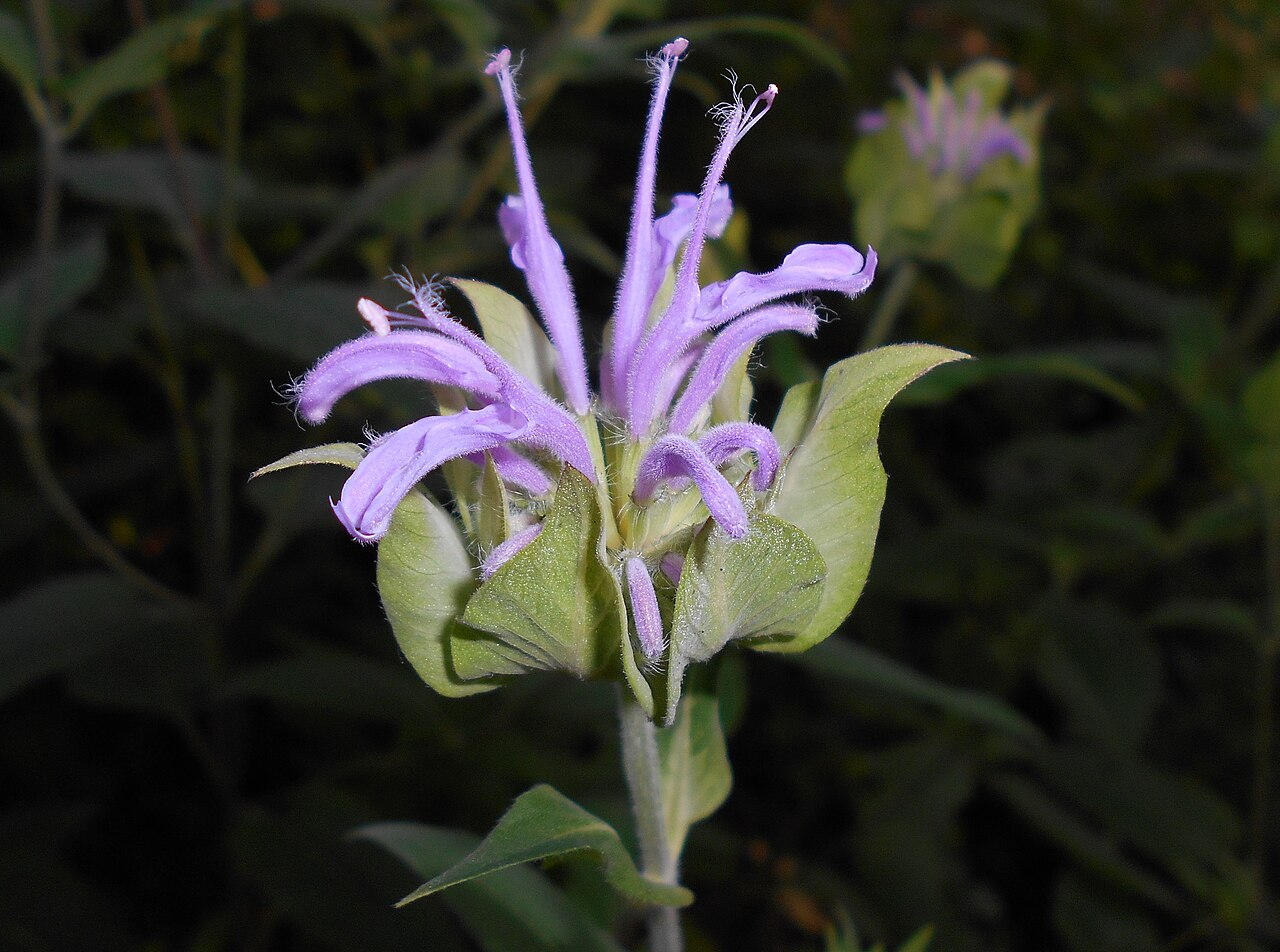
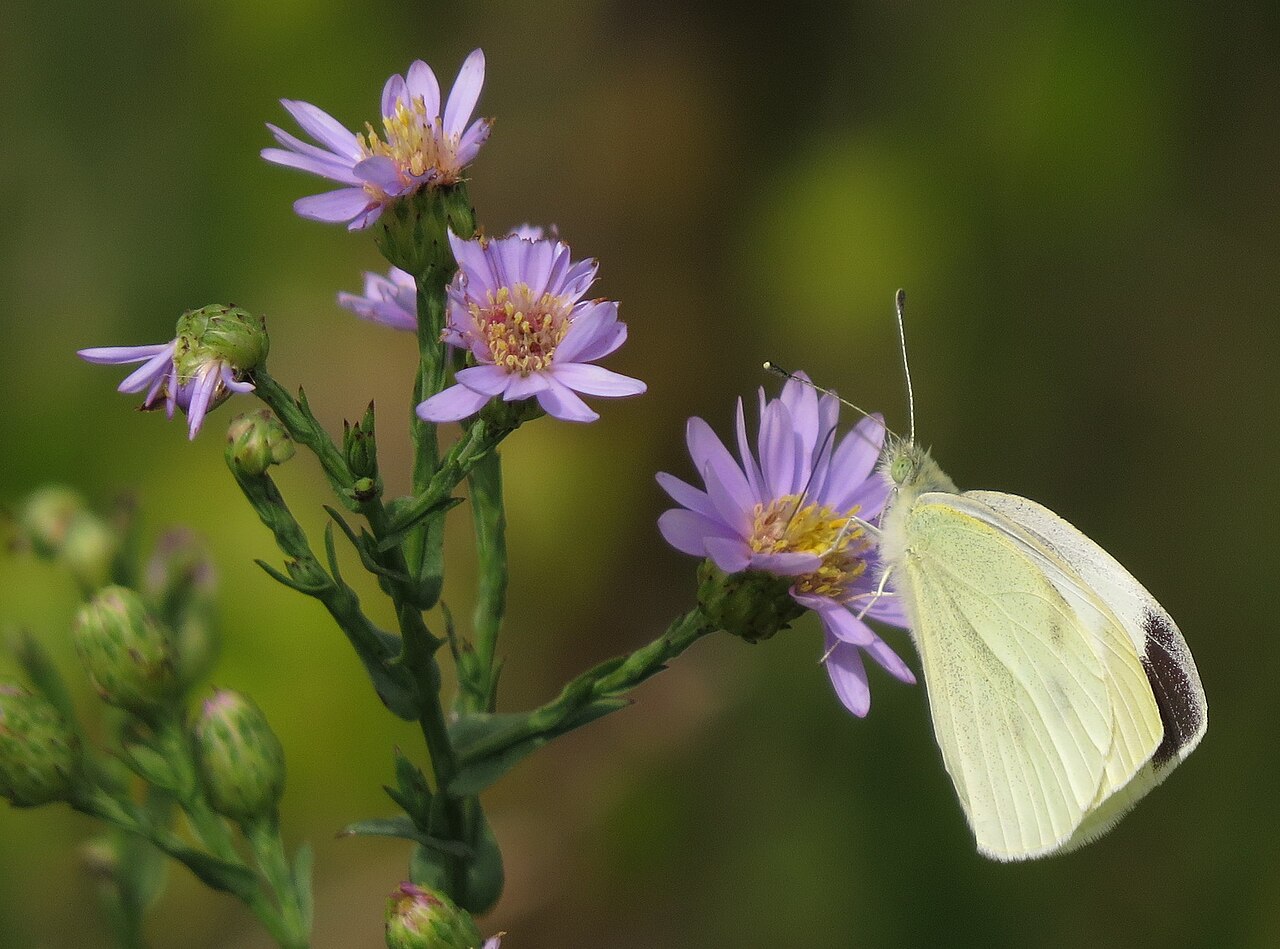
Wild bergamot, smooth blue aster and purple coneflower give a sequence of color from summer into fall. N.C. State lists wild bergamot and purple coneflower as drought tolerant, which helps in the drier strip near the fence.
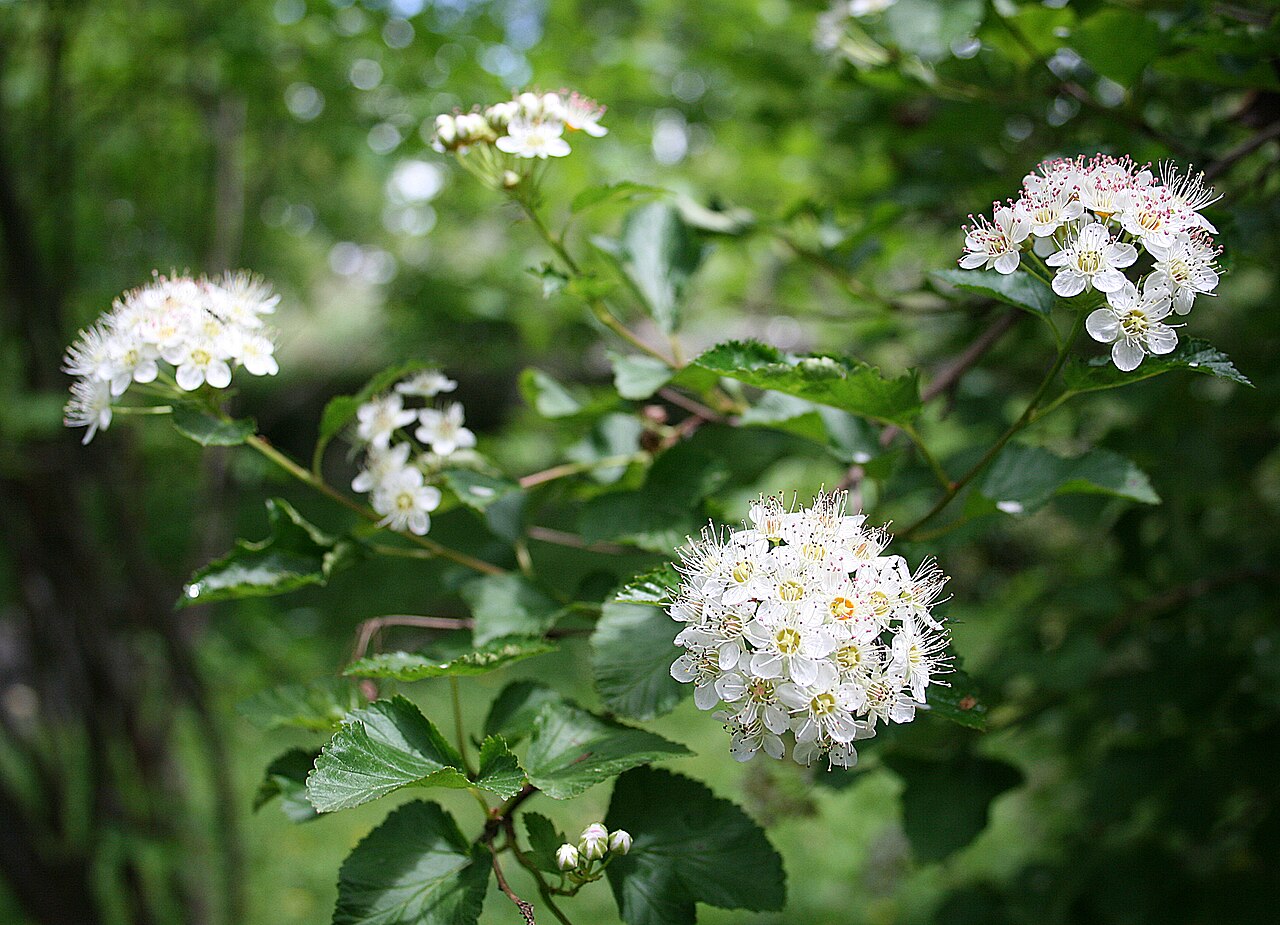
Common ninebark is the anchor shrub here. The Wildflower Center calls it fast-growing, insect and disease resistant, with arching branches and peeling bark.
Shady side picks
Virginia sweetspire and wild geranium suit the north or east side. The Wildflower Center lists sweetspire for part shade and moist soil, and wild geranium for part shade to shade.
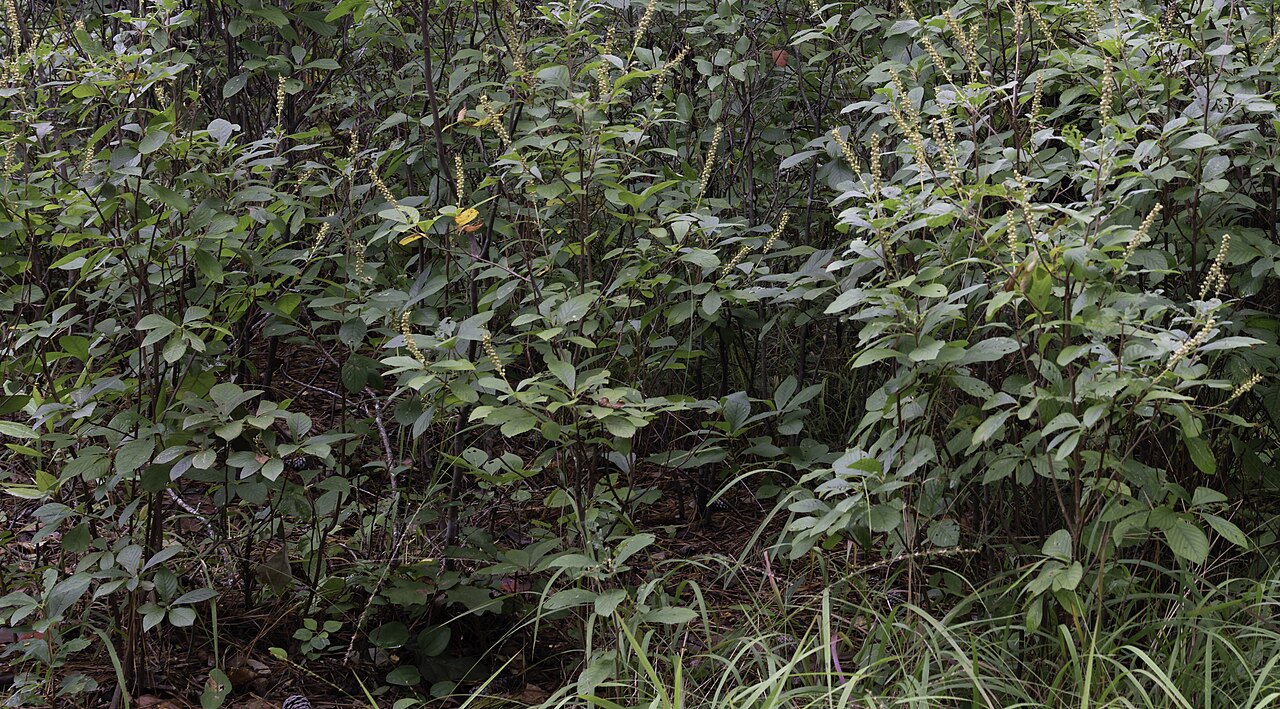
Summersweet works on either side. The Wildflower Center lists it for sun, part shade or shade, though it prefers moist soil, so keep it out of the driest fence-line strip.
For a north-facing border under trees, see our guide to a dry-shade native border.
Regional alternates
- Northeast and Midwest: ninebark, wild bergamot, smooth blue aster and wild geranium cover much of the region.
- Southeast: coral honeysuckle, Virginia sweetspire, summersweet and purple coneflower are native through much of it.
- Plains and West: choose from your regional list and keep the same structure of shrub, vine and flowering layers.
Installation Steps
Step 1: Fix the fence first
Repair, stain or treat the fence before you plant. It is far harder to do once shrubs and vines are in place.
Step 2: Mark the access gap
Run a string or hose along the fence at your chosen gap width. Keep shrubs and perennials out of that strip.
Step 3: Set out shrubs at mature spacing
Place shrubs in their pots at the distances in the table before digging. The bed will look sparse at first. Fill the space between shrubs with perennials rather than crowding the shrubs.
Step 4: Install vine supports
Attach wires or a trellis to sturdy posts, a few inches off the fence. Plant the vine at the base and guide young stems onto the support.
Step 5: Plant and mulch
Plant perennials in front of the shrubs, water everything in, and mulch the whole bed, including the access strip.
Maintenance: The First Three Years
First-Three-Years Maintenance Calendar
Year 1
- Spring and summer: water new plants deeply during dry spells, especially in the drier strip near the fence.
- Summer: keep weeds out of the access gap. Guide vine stems onto their support.
- Fall: leave perennial stems standing for winter cover.
Year 2
- Late winter: cut back last year’s perennial stems.
- Spring: check that shrubs are not leaning toward the fence. Add perennials if gaps remain.
- Summer: prune vine shoots that wander off the trellis or onto the fence.
Year 3
- Spring: walk the access gap and remove any shrub stems growing into it.
- Summer: divide perennials that have outgrown their spacing.
- Fall: review your sun map. Growing shrubs can shade the front of the bed.
Mistakes to Avoid
- Planting shrubs at pot spacing. A 1-gallon ninebark looks small, but N.C. State lists its width at 4 to 6 feet.
- Planting against the boards. Without an access gap you cannot repair the fence or rake out leaves.
- Clinging vines on wood. Maryland Extension warns that holdfasts can damage wood surfaces.
- One plant list for both sides. The shady and sunny faces of a fence need different plants.
- Skipping the seasonal shadow. A bed that looks sunny in June can be shaded in April and October.
📋 Find plants for your region: compare the palette with our native plant lists for Kentucky and Tennessee and Illinois, Iowa & Missouri, or your own state’s list.
Frequently Asked Questions
How far from a fence should I plant shrubs?
Use half the shrub’s mature width plus an access gap for fence maintenance. For a ninebark that N.C. State lists at up to 6 feet wide, that puts the center about 5 feet out with a 2-foot gap.
What can I plant on the shady north side of a fence?
Shade-tolerant natives such as wild geranium and Virginia sweetspire, which the Wildflower Center lists for part shade. Map the sun first, since the shade band changes with the seasons.
Will a vine damage my fence?
It can. Maryland Extension warns that clinging vines can damage wood, and large vines add heavy weight. Use a twining vine like coral honeysuckle on a separate trellis.
Why is the soil next to my fence so dry?
A solid fence can block rain, much like the overhangs Minnesota Extension describes. Check the soil after rain and choose drought-tolerant plants for that strip.
How do I map sun if I am planting in winter?
Watch the bed on a few clear days and remember that summer shadows are shorter. Minnesota recommends observing light through the seasons when you can.
Sources
- University of Minnesota Extension, Gardening in the shade: observing light through the day and seasons, morning versus afternoon sun, light levels, dry soil under structures, mature size.
- University of Maryland Extension, Vines: how vines climb, holdfast damage to wood, support strength.
- N.C. State Extension Plant Toolbox: common ninebark, summersweet, Virginia sweetspire, coral honeysuckle, wild bergamot, purple coneflower, smooth blue aster, wild geranium, Virginia creeper, trumpet creeper: height, width, tolerances and warnings.
- Lady Bird Johnson Wildflower Center plant database: common ninebark, summersweet, Virginia sweetspire, coral honeysuckle, wild bergamot, purple coneflower, smooth blue aster, wild geranium: light, moisture and native range.