A Woodland Butterfly Garden Built Around Host Plants, Not Just Flowers
Last updated: November 7, 2026
Most butterfly gardens are planned around flowers. That feeds the adults for a few weeks, but it skips the part of the life cycle that decides whether butterflies can breed in your yard at all.
Caterpillars are picky eaters. Many can only feed on a short list of plants, and some woodland butterflies depend on a single genus of tree, shrub or vine. A shady yard full of nectar flowers but none of those hosts is a stopover, not a nursery.
This plan turns a shady or part-shade lot into a woodland butterfly garden built around host plants first, with flowers added to fill the gaps. It is written for the eastern U.S., where these hosts are native. It cannot promise any particular butterfly will find your yard, but it gives them the plants they need if they do.
Plan at a Glance
| Site | A woodland edge, shady side yard or the area under existing trees |
| Size | From one shrub group plus a violet patch to a full layered edge; the plan scales up or down |
| Sun | Part shade to shade, with a sunnier edge for a few plants |
| Soil | Moist, organic soil suits most of the palette; New Jersey tea takes drier spots |
| Maintenance | Low: leave leaves, skip pesticides, accept chewed foliage |
| Best regions | Eastern and central U.S.; check each host against your state list, and see the western notes below |
Why Host Plants Come First
Adult butterflies can sip from many kinds of flowers. Their caterpillars are a different story. Piedmont Master Gardeners in Virginia explain that most caterpillars can only eat certain plants, usually native ones, and some are so specialized they can eat only one species.
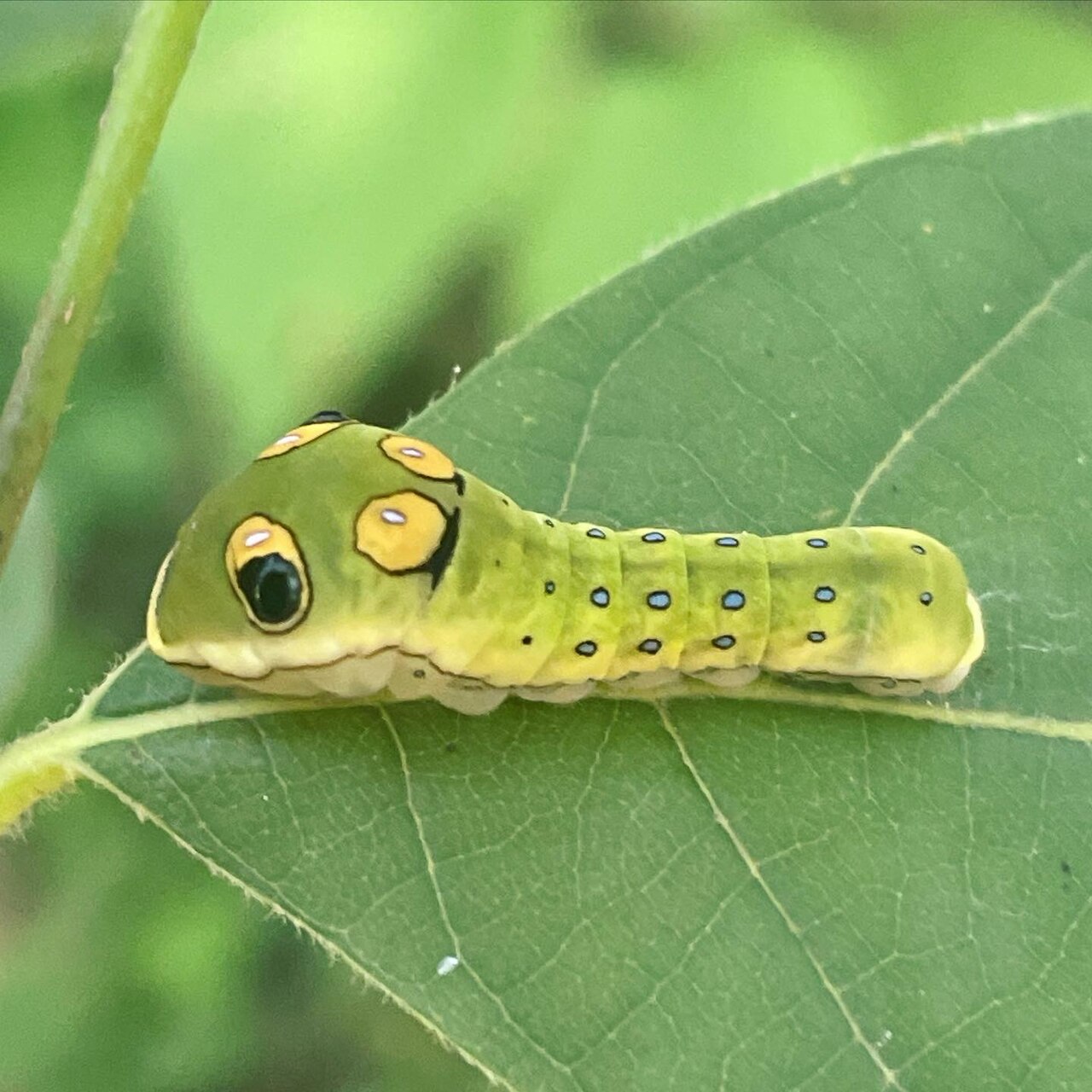
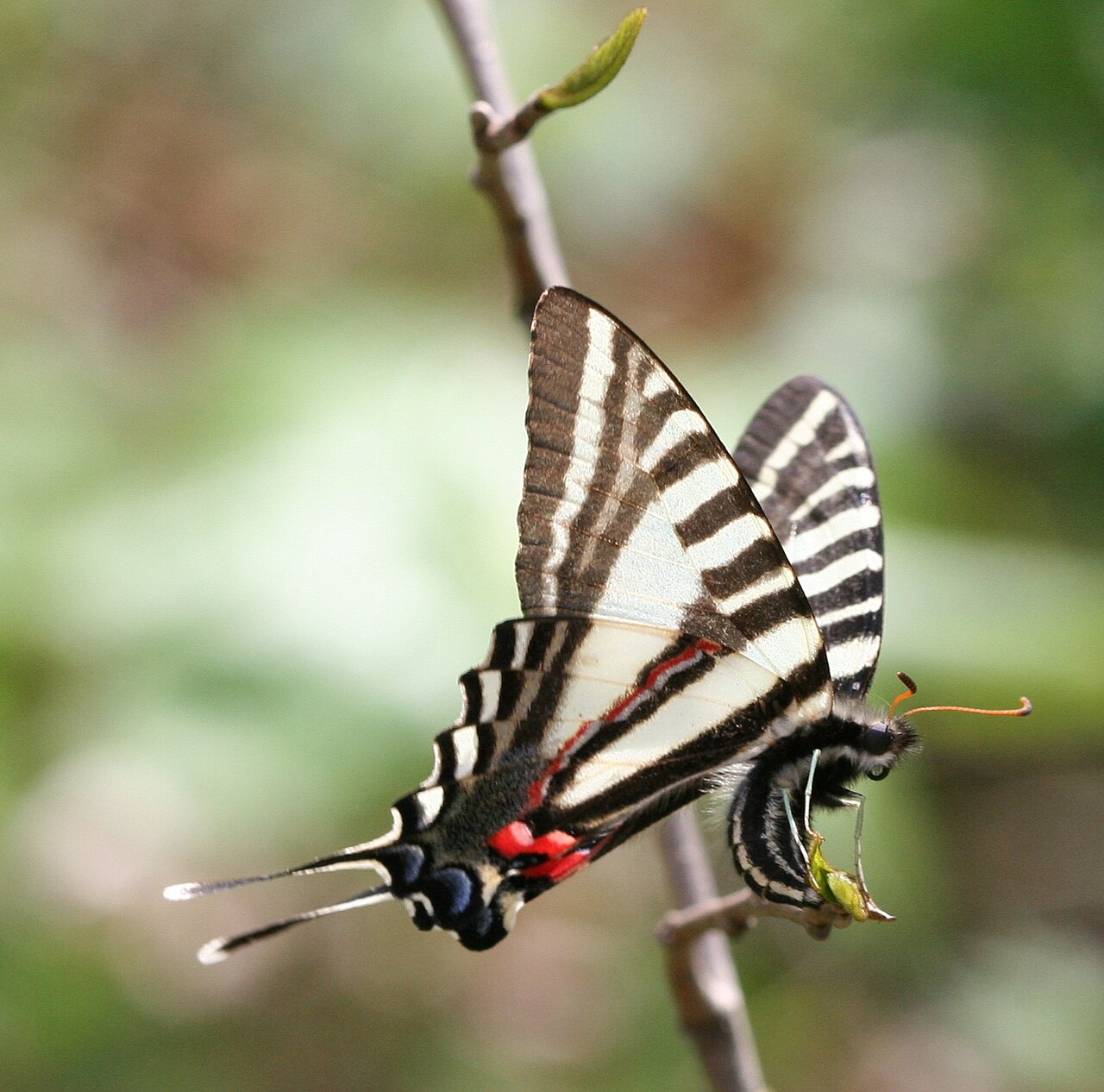
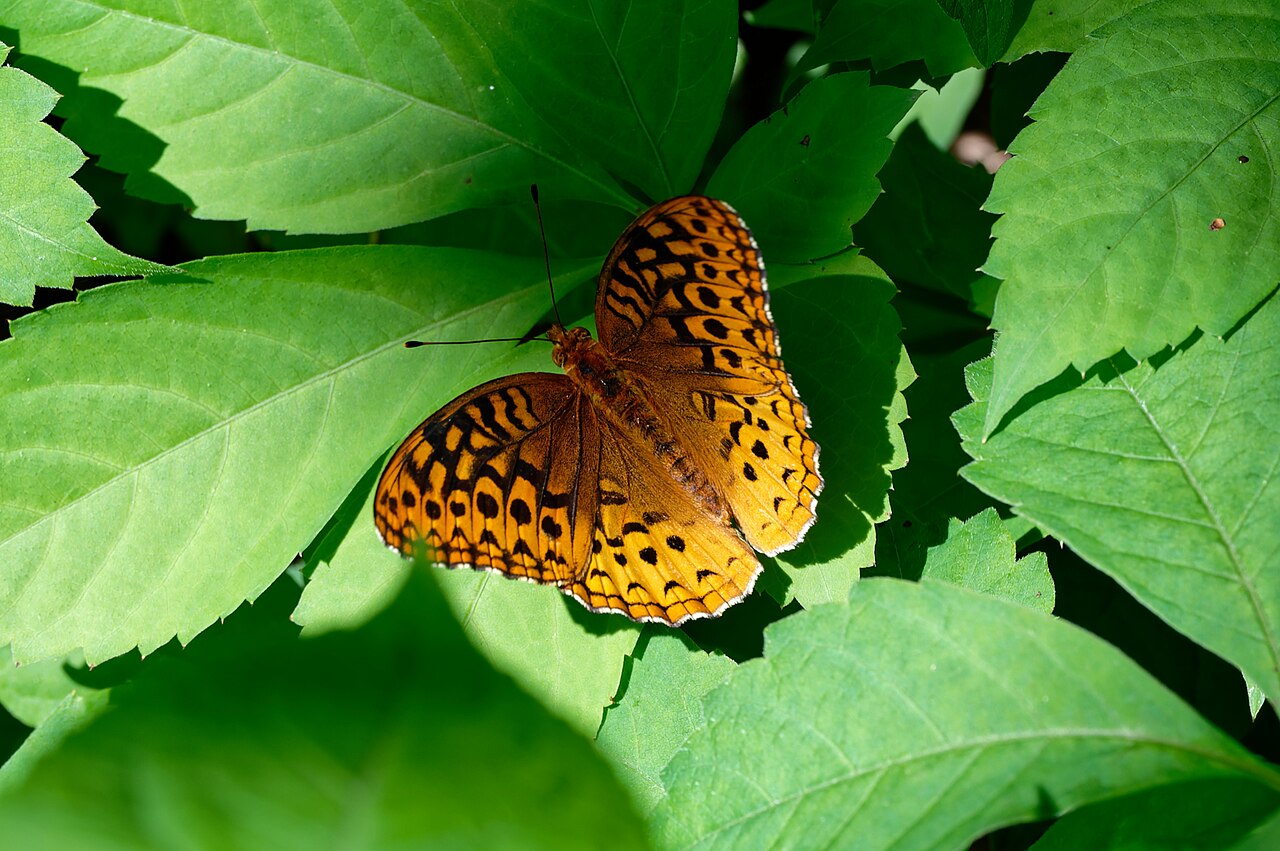
The Penn State Extension master gardener list for York County shows how tight those links are in eastern woods. Pipevine swallowtails use pipevines (Aristolochia). Zebra swallowtails use pawpaw. Spicebush swallowtails use spicebush and sassafras. Great spangled fritillaries use violets.
The same list notes that females can travel for miles looking for host plants, and recommends planting more than one of each native host, especially small herbaceous ones. That is the core of this design: groups of hosts, not single specimens.
Flowers come second, filling the gaps for adults. For bloom timing, see our spring-to-fall native bloom calendar.
Assess Your Site
Walk the area at different times of day. Note where shade is deep all day, where morning sun reaches, and where a bright edge meets lawn or a path.
Next, list the trees you already have. Piedmont Master Gardeners point out that native trees are some of the most important caterpillar hosts, and that in the mid-Atlantic, oaks alone support over 500 species of butterflies and moths, citing Douglas Tallamy. An existing oak, cherry or tulip tree is a head start.
Check the soil too. Pawpaw, spicebush and Dutchman’s pipe all come from rich, moist woods and stream banks, according to the Lady Bird Johnson Wildflower Center. A dry, root-filled spot under maples suits different plants; our guide to the native woodland floor covers that layer in more detail.
- Deep shade: violets, wild geranium, woodland phlox, ferns and sedges.
- Part shade or dappled light: spicebush, pawpaw, Dutchman’s pipe on a support.
- Sunny edge: New Jersey tea, plus the best spot for pawpaw and spicebush to flower and fruit well.
Design in Layers, One Host Per Layer
Give each woodland layer, from canopy to ground, at least one host plant. The same footprint then supports more kinds of caterpillars.
Canopy: Keep or Add a Host Tree
If you have room for a large tree, tulip tree is a larval host for the eastern tiger swallowtail, according to the Wildflower Center. It can reach about 150 feet and does not tolerate compacted soil, so it only belongs on large lots well away from pavement.
On smaller lots, sassafras is a more flexible choice. The Wildflower Center lists it as a host for spicebush and tiger swallowtails, and notes it can sucker into a small grove. Plant it where a small colony is welcome.
Understory: A Pawpaw Group
Pawpaw is the host for the zebra swallowtail, whose green or black caterpillars feed on pawpaw leaves. The Wildflower Center describes it as a small tree or multi-stemmed shrub, 10 to 40 feet tall, that grows in sun, part shade or shade.
Plant pawpaws as a group. The Wildflower Center notes that pawpaws seldom set much fruit without cross-pollination, so a cluster serves fruit and caterpillars at once.
Shrub Layer: Spicebush Drifts
Spicebush is the namesake host of the spicebush swallowtail, and the Wildflower Center also lists it for the eastern tiger swallowtail. It is usually 6 to 15 feet tall and handles sun to shade and dry to wet soil.
Plant spicebush in drifts of three or more along the edge. A group gives females more leaves to choose from and makes a fuller screen. Our spicebush woodland-edge plan covers companions and path spacing.
Vine Layer: Native Pipevine on a Support
Dutchman’s pipe (Aristolochia macrophylla) hosts the pipevine swallowtail. The Wildflower Center lists stems up to about 35 feet long and a native range from southwestern Pennsylvania south through the uplands to Georgia and Alabama.
Give it a sturdy arbor, fence or trellis in part shade. Woolly pipevine (Aristolochia tomentosa), native to stream banks and floodplains farther south and west, is the usual alternative outside that upland range.
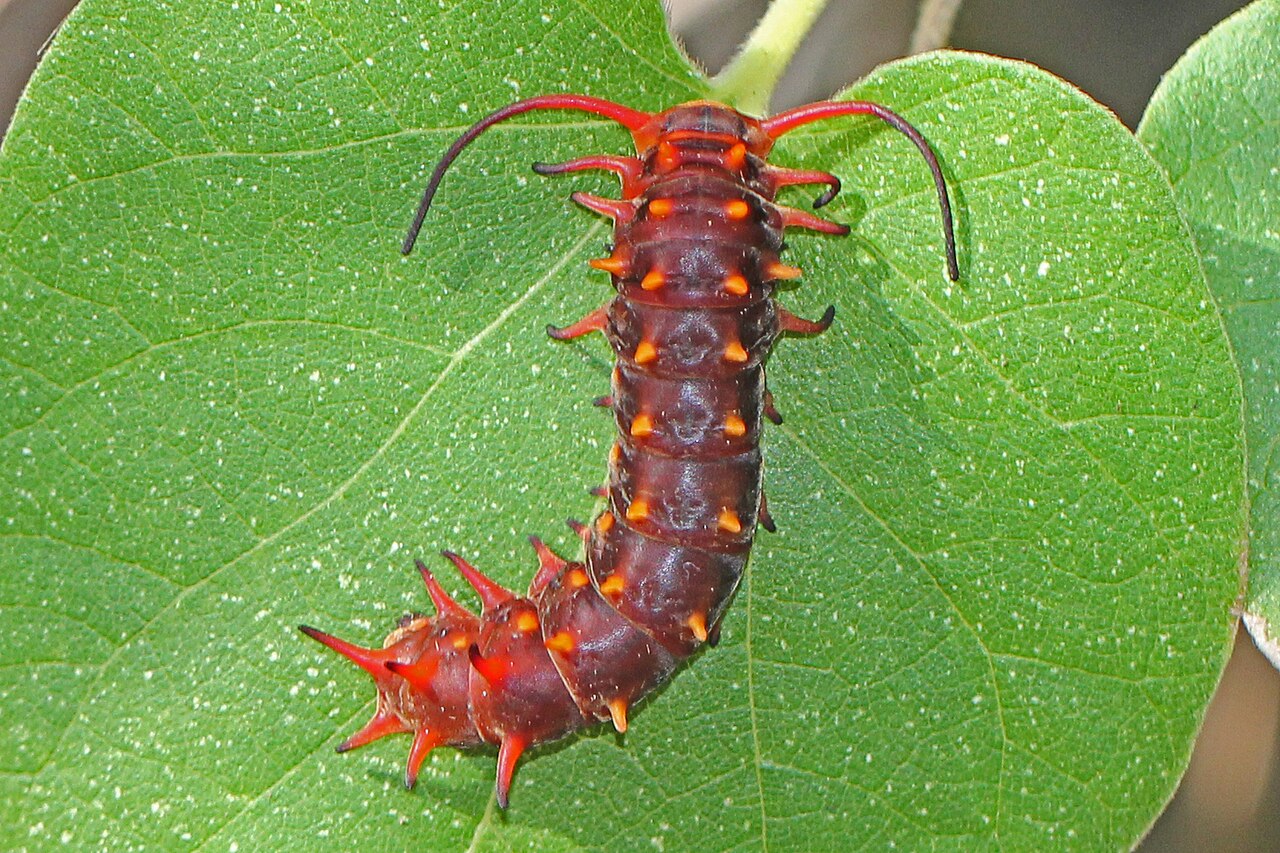
Choose native pipevine only. Wikipedia’s pipevine swallowtail article notes that some Aristolochia species, mostly tropical ones, are toxic or very distasteful to the larvae and can act as death traps. Ornamental tropical pipevines sold for their large flowers are not a substitute.
Ground Layer: Violets in Quantity
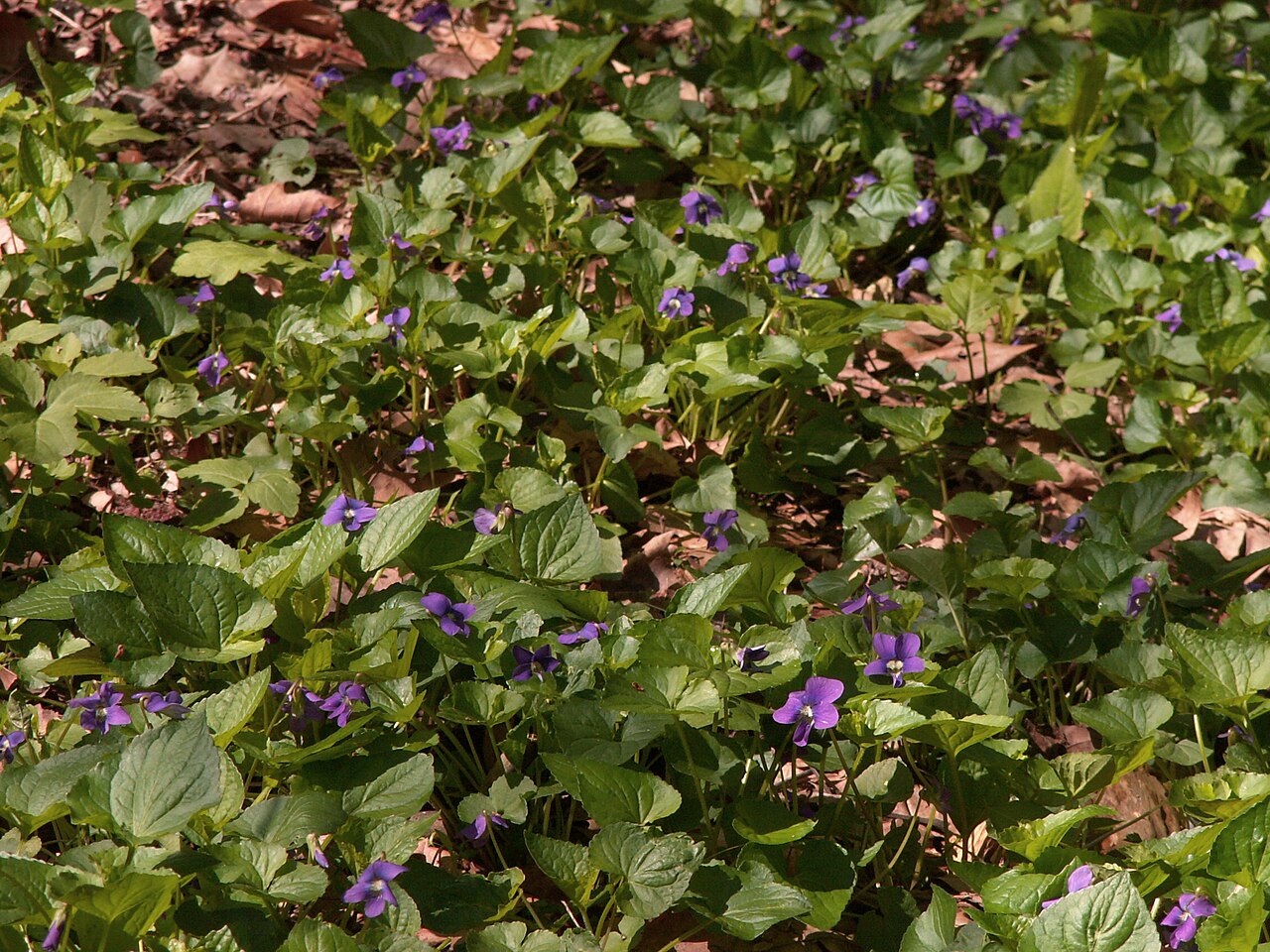
Common blue violet is one of several native violets that serve as hosts for the great spangled fritillary. The Wildflower Center describes it as a 6- to 10-inch plant of rich, moist woods that self-seeds freely.
That self-seeding is useful here. Let violets fill the ground layer between shrubs instead of mulching them out. Penn State’s list also names violets as hosts for the meadow and variegated fritillaries.
Sunny Edge: New Jersey Tea
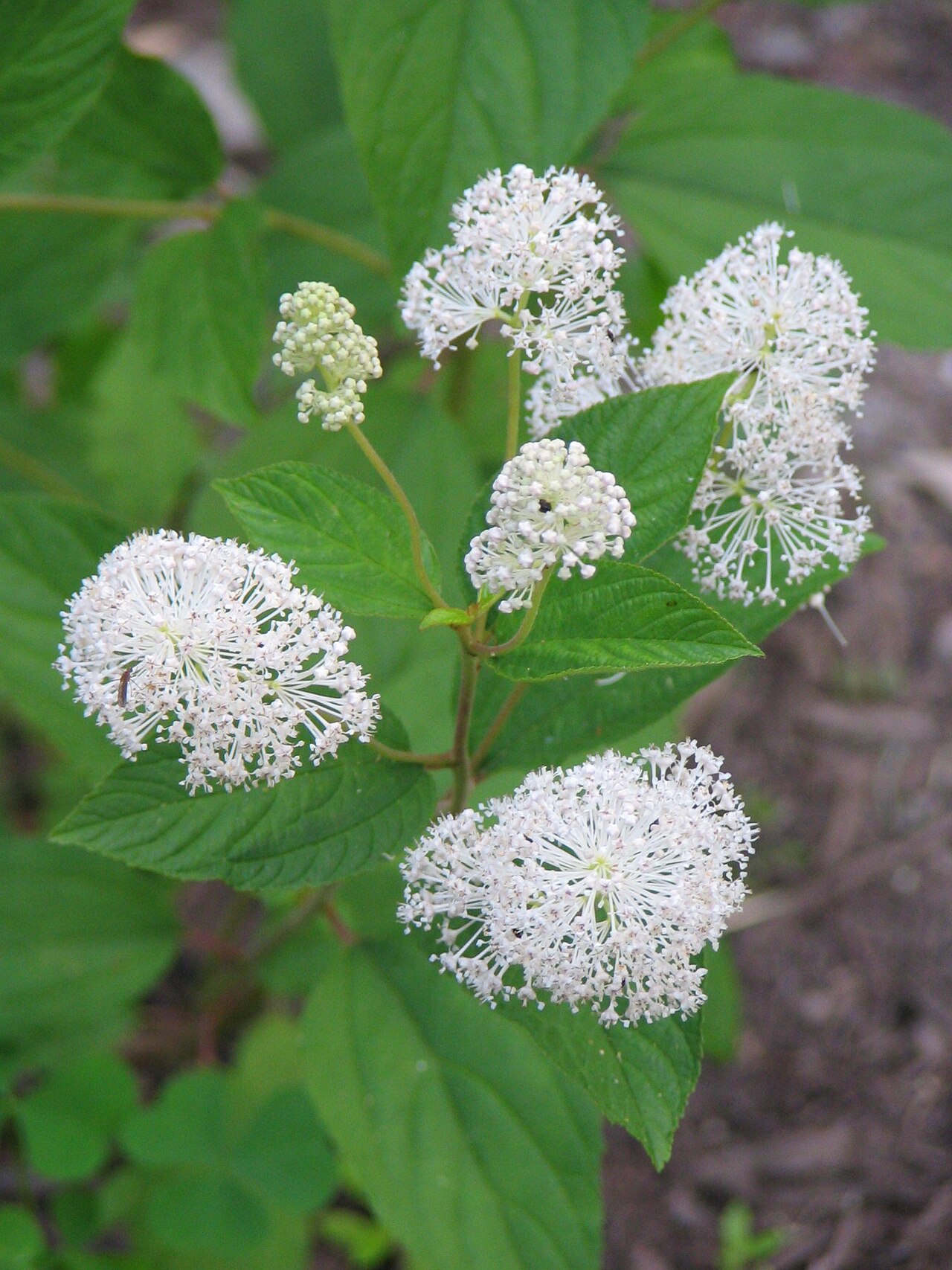
New Jersey tea works at the bright margin. The Wildflower Center lists it as a larval host for the spring azure, summer azure and mottled duskywing, and notes butterflies use its flowers too, so it does double duty.
It usually stays around 3 feet tall, likes sun or part shade, and tolerates dry soil thanks to deep roots. Put it where the woodland meets lawn, a driveway or a path.
Add Flowers to Fill the Gaps
Once the hosts are placed, add woodland flowers between them. Wild geranium and woodland phlox both bloom in spring in part shade to shade, according to the Wildflower Center.
Piedmont Master Gardeners also list wild geranium, violets and wild columbine among perennials that support early-season caterpillars, so these flowers can serve as hosts for some moths and butterflies as well.
If part of your yard gets more sun, a native hummingbird corner built around coral honeysuckle makes a good companion planting.
Plant Palette
Heights, conditions and ranges are from the Lady Bird Johnson Wildflower Center; host links are from the Wildflower Center, Penn State Extension and Wikipedia. Confirm each plant is native to your state.
| Plant | Role | Height | Sun / moisture | Native range |
|---|---|---|---|---|
| Tulip tree (Liriodendron tulipifera) | Canopy host: eastern tiger swallowtail | Up to about 150 ft | Sun–shade; moist | W. VT to s. MI & se. IL, south to n. FL & LA |
| Sassafras (Sassafras albidum) | Tree host: spicebush & tiger swallowtails | Up to 100 ft, often much shorter | Sun–shade; moist | Sw. ME to c. MI & se. KS, south to FL & e. TX |
| Pawpaw (Asimina triloba) | Understory host: zebra swallowtail | 10–40 ft | Sun–shade; moist | FL to TX, north to w. NY, s. Ont., MI, IL, se. IA & se. NE |
| Spicebush (Lindera benzoin) | Shrub host: spicebush & tiger swallowtails | 6–15 ft | Sun–shade; dry to wet | Sw. ME, c. MI & se. KS, south to FL & se. TX |
| Dutchman’s pipe (Aristolochia macrophylla) | Vine host: pipevine swallowtail | Stems to about 35 ft | Part shade; moist | Sw. PA south in the uplands to GA & AL |
| New Jersey tea (Ceanothus americanus) | Edge host: azures, mottled duskywing; nectar | About 3 ft, up to 5 ft | Sun–part shade; dry to moist | Que. to FL, west to MN, e. NE, e. KS & TX |
| Common blue violet (Viola sororia) | Ground host: great spangled fritillary | 6–10 in | Sun–part shade; moist | Most of the eastern & central U.S. and e. Canada |
| Wild geranium (Geranium maculatum) | Spring flowers between hosts | Up to about 3 ft | Part shade–shade; moist | ME to GA, west to Man., se. SD, e. KS & AR |
| Woodland phlox (Phlox divaricata) | Spring flowers in shade | Up to about 20 in | Part shade–shade; moist | Sw. Que. to MI, south to NC & AL |
Spacing, Grouping and Paths
Exact spacing depends on the nursery size you buy and your site, so use mature size as the guide. Leave each shrub and small tree room to reach its full width without being sheared back, because pruning removes the leaves caterpillars eat.
Grouping Rules of Thumb
- Hosts in groups: plant at least three spicebush and two or more pawpaws rather than one of each, following Penn State’s advice to plant more than one host.
- Small hosts in quantity: violets work best as a patch or carpet, not a few scattered plants.
- Vine near a viewing spot: put Dutchman’s pipe on an arbor or fence you pass often, so you can check leaves for eggs and caterpillars.
- Paths at the edges: run paths along the outside of host groups, not through the middle, so leaf litter under shrubs stays undisturbed.
Leave Room for the Whole Life Cycle
Host plants feed caterpillars, but butterflies also need places to pupate and spend the winter. Piedmont Master Gardeners note that butterflies may overwinter as eggs, caterpillars, pupae or adults, hiding in bark, plant stems, old logs or leaf litter.
Several woodland species pupate low. Wikipedia notes spicebush swallowtail larvae leave their leaf shelter and pupate on the underside of a leaf near the ground, and that zebra swallowtail chrysalises overwinter where winters are cold.
That is why this design keeps leaf litter under shrubs, leaves perennial stalks standing until spring, and avoids raking beneath host plants. Our guide to a native seedhead garden for winter shows how to keep standing stems looking intentional.
Installation Steps
- Remove invasive plants first. Penn State notes that some butterflies feed on non-native relatives of their hosts, but that invasive plants such as garlic mustard should never be cultivated. Clear them before planting.
- Mark mature sizes. Use stakes or flags to mark the full spread of each tree and shrub before digging.
- Plant the woody hosts. Set trees and shrubs in fall or early spring, water well and mulch with shredded leaves rather than thick bark.
- Install the support. Build the arbor or trellis before planting Dutchman’s pipe so roots are not disturbed later.
- Add the ground layer. Plant violets, geranium and phlox in groups between the shrubs.
- Water through the first season. Most of this palette prefers moist soil, so check during dry spells.
The First Three Years
- Year 1, spring: plant, water and keep weeds down around young hosts. Do not expect caterpillars yet.
- Year 1, fall: leave fallen leaves under shrubs; do not cut back perennials.
- Year 2, spring: remove only last year’s stems that block new growth; pull invasive seedlings.
- Year 2, summer: look under leaves of spicebush, pawpaw and pipevine for eggs and caterpillars, and leave chewed leaves alone.
- Year 2, fall: fill gaps with more violets or another host group if there is room.
- Year 3: shrubs fill out; prune only for paths or safety, in the dormant season, and never strip foliage to tidy it.
Mistakes to Avoid
- Planting only nectar flowers. Adults visit, but caterpillars have nothing to eat.
- Using one plant of each host. A single small host may be stripped or overlooked.
- Spraying “safe” products. Piedmont Master Gardeners warn that Bt, horticultural oils and insecticidal soaps can kill caterpillars.
- Buying tropical pipevines. Some non-native Aristolochia are toxic to pipevine swallowtail larvae.
- Assuming a same-name plant works. Western spicebush (Calycanthus occidentalis) is a different genus from eastern spicebush and is not listed as a spicebush swallowtail host in the sources used here.
Regional Notes
Every host in this plan is eastern or central. Before you buy, check that each plant is native to your state, since pawpaw, Dutchman’s pipe and tulip tree all have narrower ranges than spicebush or violets.
In the Southeast and lower Midwest, woolly pipevine may be the better vine. In northern areas outside pawpaw’s range, put the emphasis on spicebush, violets, cherries and oaks. In the West, the pipevine swallowtail’s range includes California, where Wikipedia lists California pipevine (Aristolochia californica) as a host; western gardeners should work from a local native plant society host list.
📋 Find plants for your region: start with the profiles linked above, then see our native plant lists for Maryland, Virginia & West Virginia and North & South Carolina, or the list for your own state.
Frequently Asked Questions
What is the difference between a host plant and a nectar plant?
A host plant is where a butterfly lays eggs and its caterpillars feed. A nectar plant feeds the adult. Many caterpillars can eat only a few kinds of plants, so hosts decide whether butterflies can breed in your yard.
Will caterpillars ruin my shrubs?
Expect some chewed leaves. Henderson County’s N.C. Cooperative Extension Center says this feeding does not harm host plants. Leave the damage in place rather than spraying.
Can a shady yard really be a butterfly garden?
Yes, if you plan for woodland species. Spicebush swallowtails are typically found in deciduous woods, flying low through shaded areas, and zebra swallowtails stay close to pawpaw.
How many host plants do I need?
There is no fixed number. Penn State recommends planting more than one of each native host, especially small herbaceous ones, so plan groups rather than singles.
Will I definitely see these butterflies?
It cannot be guaranteed. Which species arrive depends on your region, nearby habitat and the year.
Sources
- Penn State Extension, York County Master Gardeners, Butterfly Larval Host Plant List: host pairings, planting more than one host, invasive look-alikes, no pesticides.
- Piedmont Master Gardeners, Creating Habitat for Lepidoptera: caterpillar specialization, native trees as hosts, early-season perennials, overwintering sites, pesticides including Bt.
- N.C. Cooperative Extension, Henderson County Center, Plants That Host Butterfly Larvae: definition of host plants.
- Lady Bird Johnson Wildflower Center plant database: Lindera benzoin, Asimina triloba, Aristolochia macrophylla, Aristolochia tomentosa, Ceanothus americanus, Viola sororia, Liriodendron tulipifera, Sassafras albidum, Geranium maculatum, Phlox divaricata.
- Wikipedia: Spicebush swallowtail, Zebra swallowtail, Pipevine swallowtail, Great spangled fritillary.