A Native Walkway Border: Low Plants, Clear Edges, and Seasonal Color
Last updated: November 7, 2026
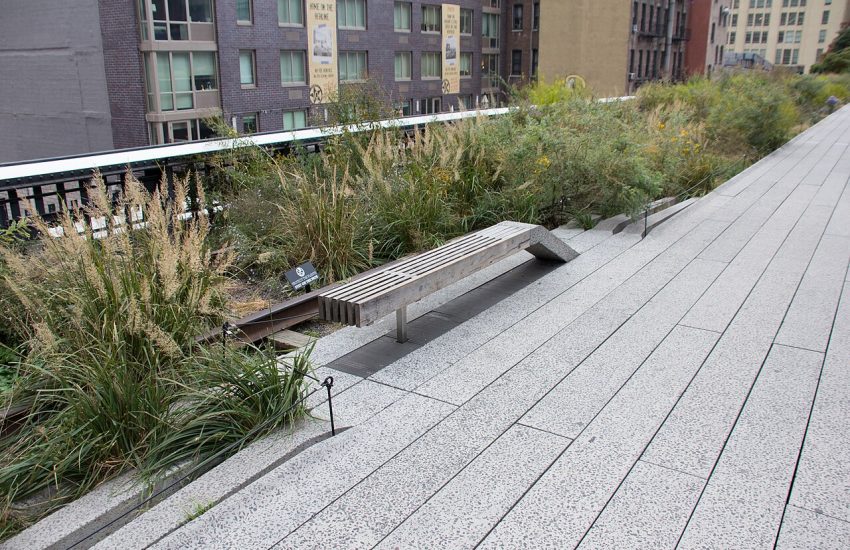
A walkway border has a harder job than most garden beds. It has to look good from three feet away, every day, while staying out of the way of feet, strollers, snow shovels and the mail carrier.
Most walkway plantings fail in one of two ways. Either tall perennials flop across the path by midsummer, or the border is so sparse that it reads as mulch with a few lonely plants.
This plan solves both problems with three ideas: keep the front row truly low, give the bed a crisp physical edge, and choose plants so something is in flower from early spring into fall. The plant names below are examples; always check that each one is native to your own region before buying.
Plan at a Glance
| Site | A bed running along one side of a front walk or side path |
| Size | Example plan is 3 feet deep by 20 feet long (60 square feet) |
| Sun | Full sun to light part shade for the main plan; a shadier variant is included |
| Soil | Average to well-drained for the main plan; a moister variant is included |
| Maintenance | Edge trim and one spring cleanup; very little deadheading |
| Best regions | Eastern and central U.S. as written; swap species for your region |
Start With the Walk Itself
Before choosing a single plant, stand on the walk and look at how people actually use it. Note where car doors open, where someone steps off to let another person pass, and where snow gets piled in winter.
Measure the full length and the depth you can realistically plant. A 3-foot depth is enough for two or three rows of low plants; less than 2 feet usually means one row of edge plants and nothing more.
Count the hours of direct sun along the bed in midsummer. A walk on the north side of a house may get full sun at one end and heavy shade near the porch, which means you may need two plant lists for one border.
Finally, check drainage and winter treatment. Low spots that hold puddles, downspouts that empty onto the bed, and de-icing salt thrown off the walk all limit which plants will last.
Build a Clear Edge Before You Plant
A clean edge does more for curb appeal than any single plant. It tells passersby the planting is deliberate, and it keeps mulch and soil off the path.
You have three practical options. A hand-cut edge, a shallow vertical cut between lawn and bed, is free but needs re-cutting once or twice a season.
Steel or aluminum edging holds a crisp line for years. A single row of pavers or flat stones set flush with the soil gives a mowing strip and a place for low plants to spill without touching the walk.
Leave a narrow “spill zone” of 6 to 12 inches between the path and the crowns of your front-row plants. Low mat-formers can then creep toward the walk without growing onto it, and you can see the edge clearly.
Keep mulch thin. University of Maryland Extension notes that about 1 inch of mulch around herbaceous perennials is enough for weed suppression and that more is not better.
Layer by Height: Ankle, Shin, Knee
The simplest rule for a walkway border is that nothing next to the path should be taller than your shin. Taller plants belong at the back of the bed, where they can lean without reaching the walk.
Edge row: under about 10 inches
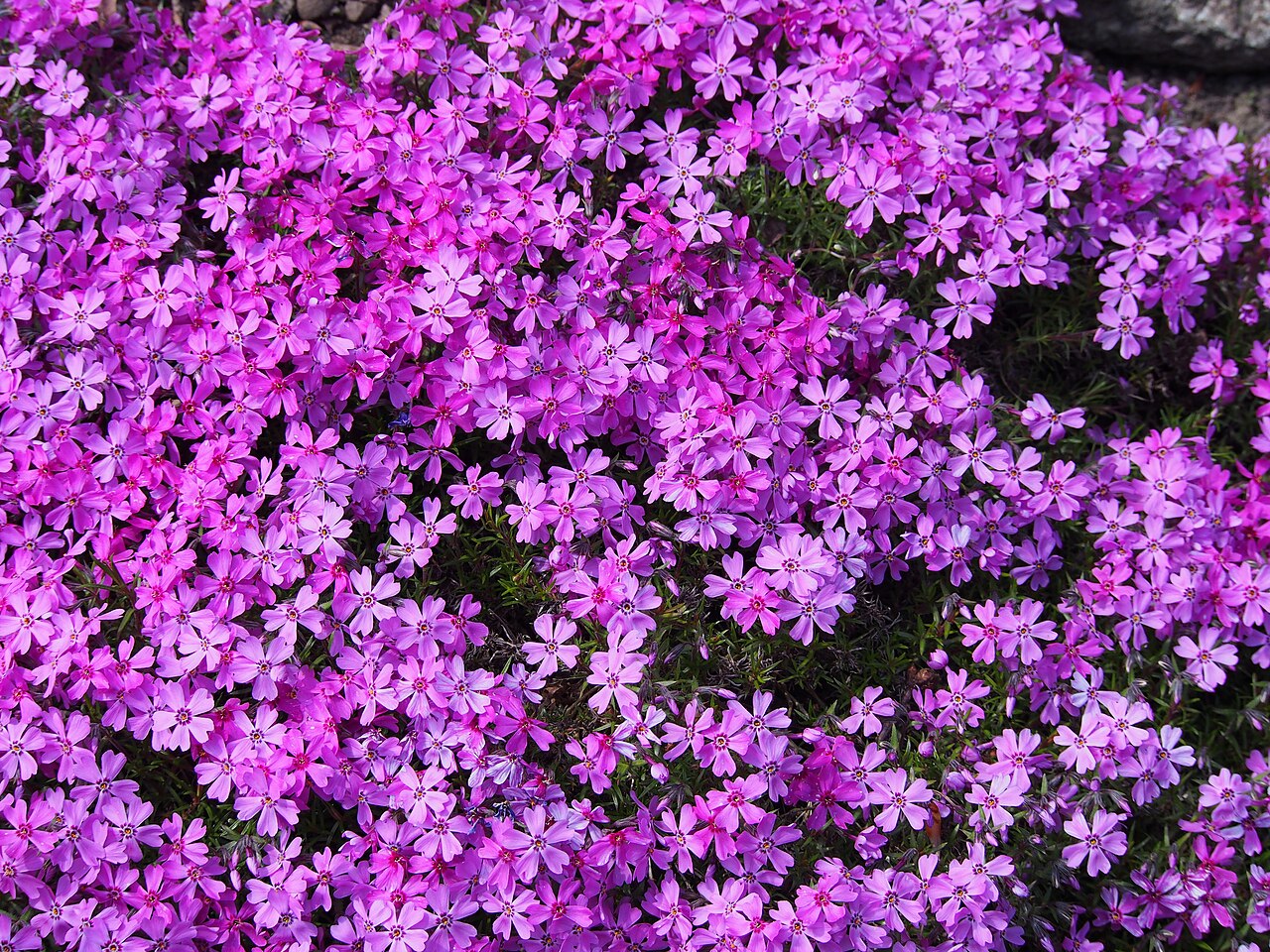
This is the row people see first, so choose plants that look tidy for most of the year. Moss phlox grows only 4 to 6 inches tall and 2 to 3 feet wide with semi-evergreen leaves, according to NC State Extension.
Plantain pussytoes stays about 6 inches tall and spreads 1 to 2 feet by rooting stolons. It handles dry soil and sun to part shade, which makes it useful right beside hot pavement.
Middle row: about 1 to 2 feet
The middle row adds summer color without blocking the view to the house. Nodding onion reaches up to about 2 feet in flower and blooms in summer; the Lady Bird Johnson Wildflower Center notes it looks best in small groups.
Back row: up to about 2 to 3 feet
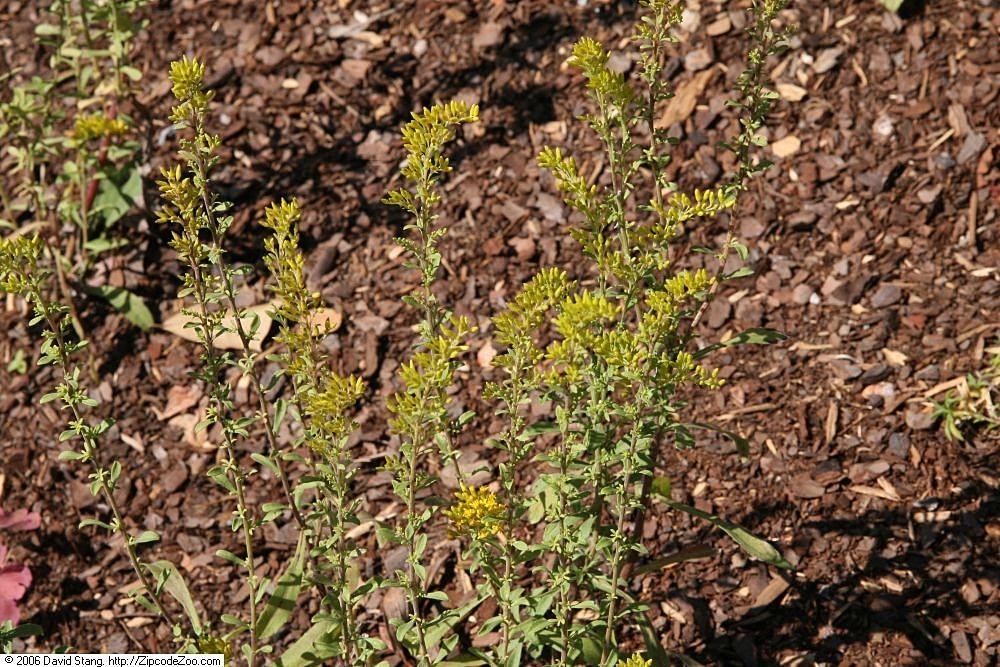
The back row carries the late-season show. Gray goldenrod is a shorter, less aggressive goldenrod, and aromatic aster forms purple mounds in fall. Both can reach about 3 feet, so keep them at least 2 feet back from the walk.
Plan Seasonal Color as a Relay
A border with one big bloom moment looks empty for the rest of the year. Instead, think of the bed as a relay where each plant hands off to the next.
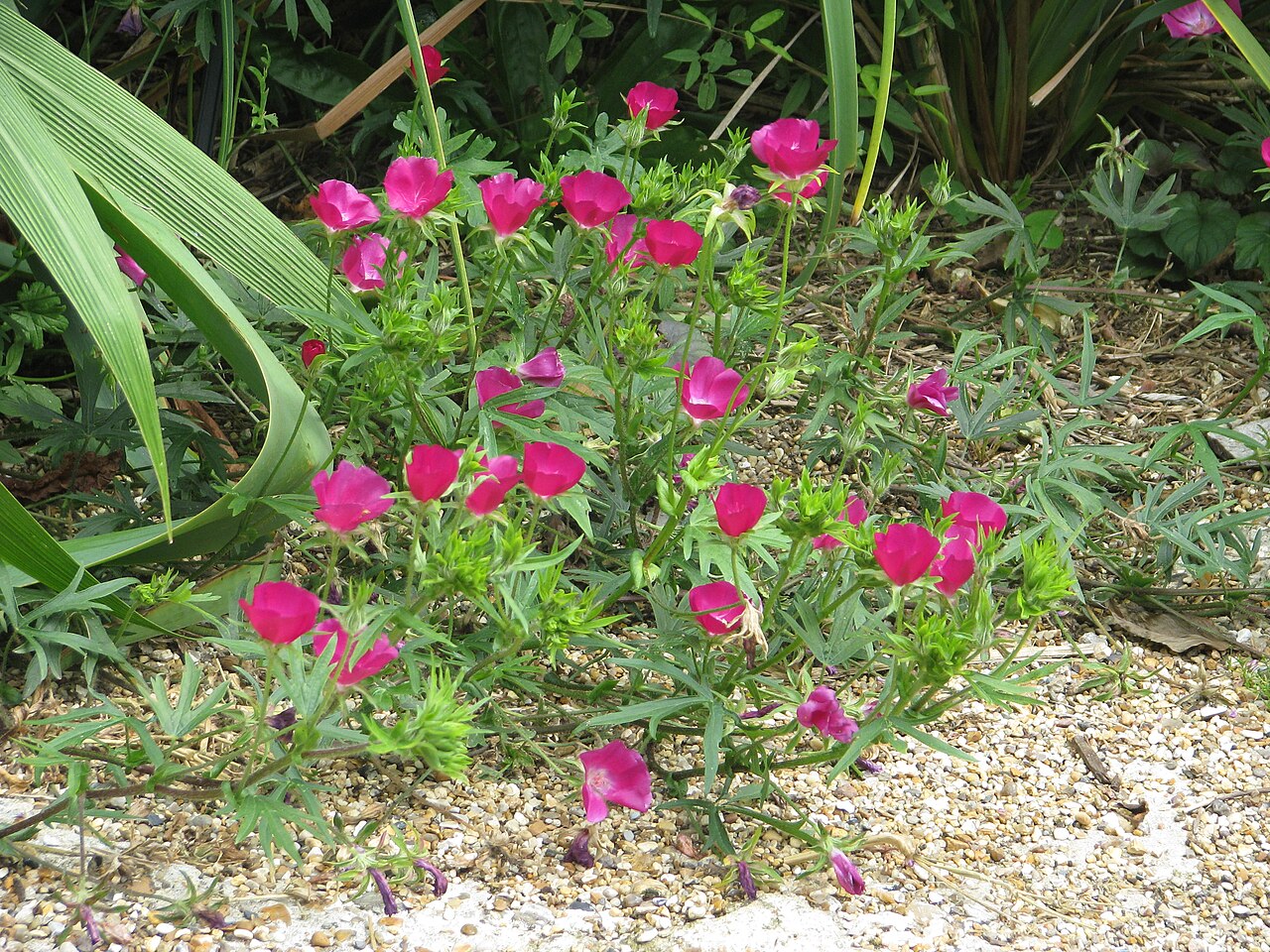
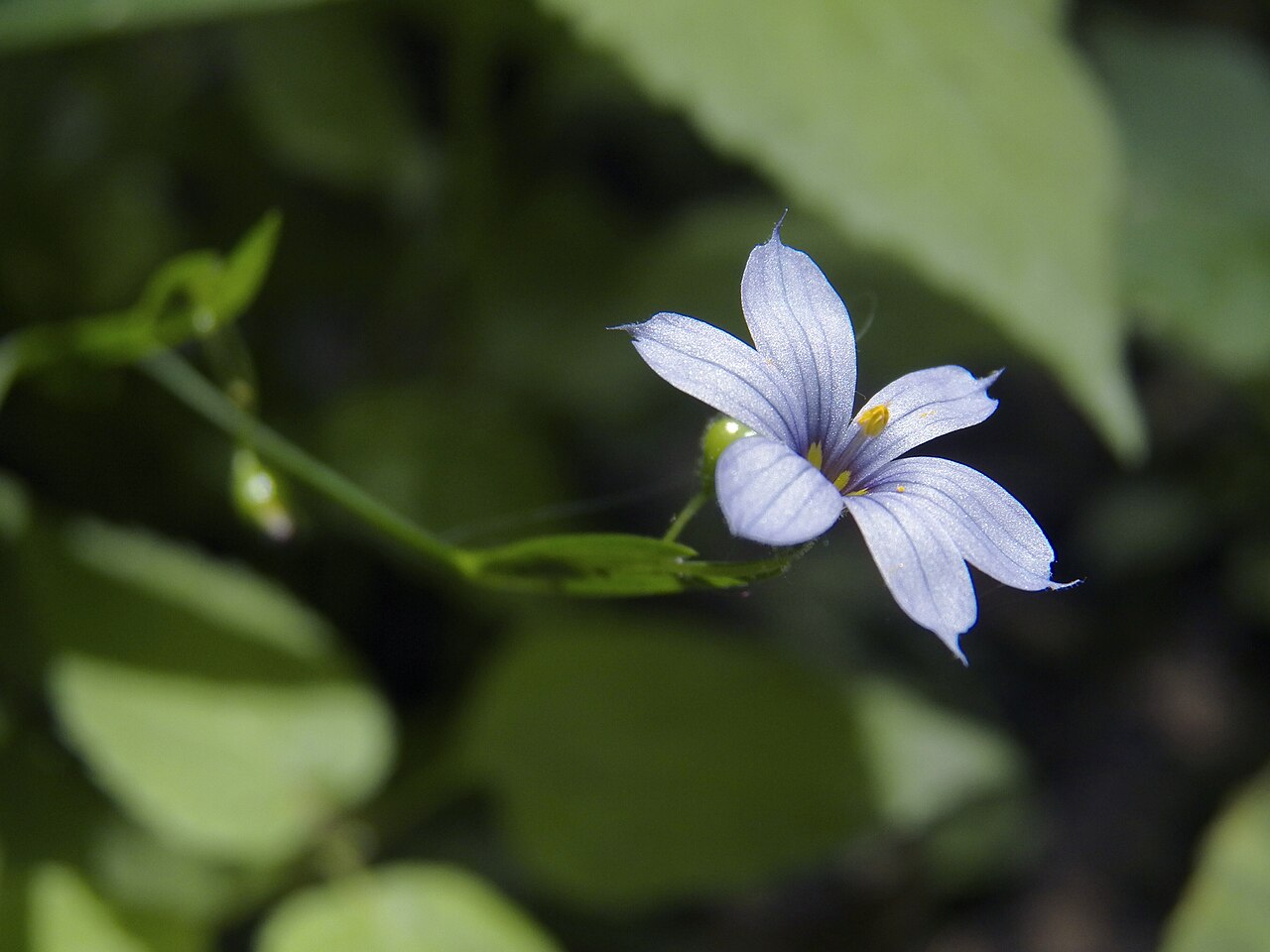
In spring, moss phlox and pussytoes flower at the very front. In late spring and early summer, blue-eyed grass or winecup take over, depending on your site.
Nodding onion carries the middle of summer. Gray goldenrod starts as early as June in some areas and continues into fall, and aromatic aster closes the season in September through November.
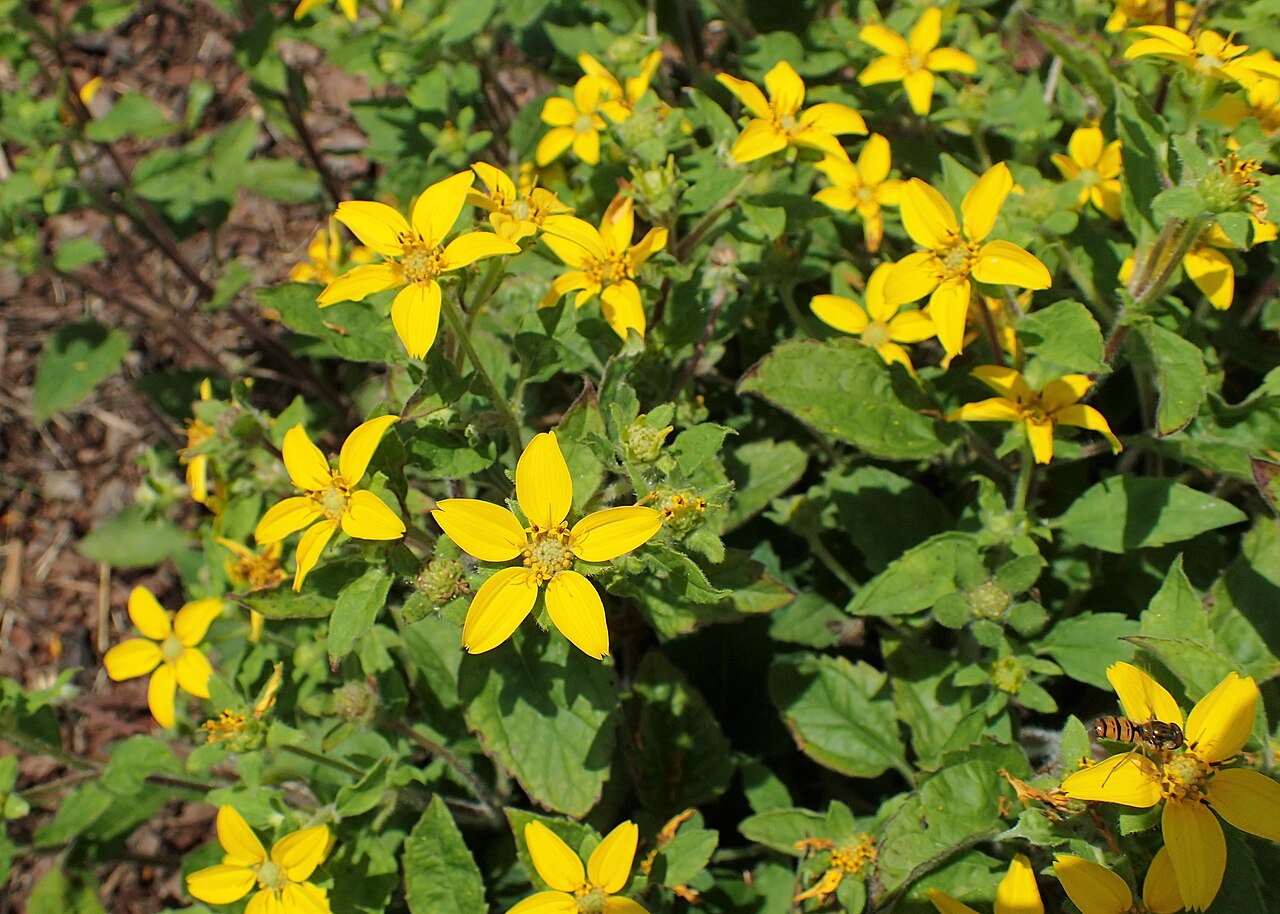
In winter, the semi-evergreen foliage of moss phlox, pussytoes and green-and-gold keeps the front edge from looking bare.
Plant Palette
Heights and ranges are typical values from the sources below. Confirm each species is native to your county before planting.
| Plant | Role | Height | Sun / moisture | Native range |
|---|---|---|---|---|
| Moss phlox (Phlox subulata) | Spring edge mat | 4–6 in | Sun to dappled shade; well-drained | Central and eastern U.S. and Canada |
| Plantain pussytoes (Antennaria plantaginifolia) | Silver edge, dry spots | About 6–10 in | Sun to part shade; dry | Eastern U.S. and Canada |
| Green-and-gold (Chrysogonum virginianum) | Shady edge mat | Foliage about 2 in | Part to full shade; well-drained | Eastern woodlands, PA to SC per NC State |
| Winecup (Callirhoe involucrata) | Trailing summer color | 8–12 in | Full sun; dry to moist | Central U.S., Iowa to Wyoming, south to Texas |
| Blue-eyed grass (Sisyrinchium angustifolium) | Spring accent, moist sites | Up to about 18 in | Sun to part shade; moist | Much of eastern and central North America |
| Nodding onion (Allium cernuum) | Summer middle row | Up to about 2 ft | Sun; moist, well-drained | Widespread, NY to B.C. and south in mountains |
| Gray goldenrod (Solidago nemoralis) | Late-season back row | 6 in to about 3 ft | Sun; dry | Southern Canada through much of the U.S. east of the Rockies |
| Aromatic aster (Symphyotrichum oblongifolium) | Fall back row | 1 to 3 ft | Sun to part shade; dry to moist | Pennsylvania to N.C., west to Wyoming and Texas |
Two Versions of the Same Border
Do not mix dry-soil and moist-soil plants in one narrow bed. Instead, pick the version that matches your walk.
Sunny, well-drained walk: moss phlox and pussytoes at the edge, nodding onion in the middle, gray goldenrod and aromatic aster at the back. In the Plains, add winecup to trail along the front.
Moister or part-shade walk: green-and-gold and pussytoes at the edge, blue-eyed grass in the middle, and aromatic aster at the sunnier end. The Wildflower Center notes blue-eyed grass declines if it dries out and that heavy mulch can rot its crowns.
Quantities for a 3 × 20-Foot Sunny Border
Spacing follows the Ask Extension guidance to space at roughly mature width, with about 12 inches as a dense-planting rule of thumb.
| Band | Depth from walk | Plants | Approx. spacing | Quantity |
|---|---|---|---|---|
| Spill zone | 0–8 in | Mulch or stone only | — | — |
| Edge row | 8–20 in | Moss phlox and pussytoes, alternating drifts | 12–18 in | 6 phlox, 8 pussytoes |
| Middle row | 20–28 in | Nodding onion in groups of 3 | 8–12 in within groups | 12 (4 groups) |
| Back row | 28–36 in | Gray goldenrod and aromatic aster, alternating | 18–24 in | 5 goldenrod, 4 aster |
This totals about 39 plants for 60 square feet. If your budget is tight, buy the edge row first; it does the most to make the border look finished.
Regional Alternates
The plan works anywhere, but the species must change with your region. Use these swaps as starting points, then check your state list.
- Mid-Atlantic and Southeast: keep moss phlox and green-and-gold; both are native from Pennsylvania southward.
- Great Plains: lead with winecup at the edge, gray goldenrod and aromatic aster at the back.
- Northeast and upper Midwest: pussytoes, moss phlox and nodding onion are reliable cold-hardy choices.
- Arid West and Pacific Northwest: choose low natives from your own state list rather than the eastern species here.
For more on matching plants to a front yard, see this 6-by-10-foot native front-yard bed plan. If your walk runs between a fence and the house, the narrow fence-and-path garden guide covers tighter spaces, and a native grass border along walkways is a good option where you want more height near the house.
Installation Steps
- Mark the walk edge and the back of the bed with string or a hose, then cut or install your edge first.
- Remove turf. If you prefer not to dig, UMD Extension describes covering an area with an opaque tarp or cardboard for at least four weeks to smother existing growth.
- Loosen the top few inches of soil. Skip heavy compost for the dry-soil version; most of these plants do best in average or lean soil.
- Lay out pots in their bands before planting, and step back onto the walk to check heights and gaps.
- Plant at the same depth as the pot, water deeply, and spread about 1 inch of fine mulch, keeping it off plant crowns.
- Water new plants regularly through the first growing season until they root in.
The First Three Years
- Year 1, spring and summer: water during dry spells, hand-pull weeds weekly, and expect slow top growth while roots establish.
- Year 1, fall: leave stems and seed heads standing; re-cut the edge once.
- Year 2, early spring: cut back last year’s stems before new growth, and fill obvious gaps with a few extra edge plants.
- Year 2, summer: the edge row should be closing in. Trim any phlox or winecup stems reaching past the spill zone.
- Year 3, spring: thin aromatic aster, which the Wildflower Center notes slowly colonizes by stolons. Divide nodding onion when clumps hold about 8 to 10 bulbs.
- Every year: re-cut or check the edge in spring and late summer.
Mistakes to Avoid
- Planting tall perennials at the edge. Coneflowers and tall asters look fine in June but can lean over the walk by late summer.
- Skipping the edge. Without a defined line, spreading plants and mulch drift onto the walk within a season.
- Heavy mulch. Thick mulch smothers low mat-formers and, per the Wildflower Center, can rot blue-eyed grass crowns.
- Mixing moisture needs. Blue-eyed grass and gray goldenrod want very different soils, so pick one version of the plan.
- One plant of each kind. Repeating a few species along the walk reads as a design; single plants read as a collection.
📋 Find native options for your area on the regional lists for Maryland, Virginia, and West Virginia, Connecticut, Massachusetts, and Rhode Island, and Nebraska, Kansas, and Eastern Colorado.
Frequently Asked Questions
How far from a walkway should I plant?
Keep the crowns of low edge plants about 6 to 12 inches back from the paving so they can spread toward it without growing onto it. Anything taller than about 18 inches should be at least 2 feet back.
What are the lowest native plants for lining a path?
In the East, moss phlox, plantain pussytoes and green-and-gold all stay within a few inches of the ground. In the Plains, winecup trails along the ground at under a foot tall.
Can I use these plants where de-icing salt hits the bed?
Be cautious. NC State lists blue-eyed grass as salt intolerant, so keep it away from salted walks and shovel snow onto the lawn side when you can.
Do I need to deadhead a native walkway border?
Rarely. Most of these plants look fine without it; simply trim any stems that reach over the edge and cut the bed back in early spring.
How long until the border fills in?
Expect the edge row to close most gaps by the second or third growing season. Closer spacing fills in faster but costs more up front.
Sources
- NC State Extension Plant Toolbox: Phlox subulata
- NC State Extension Plant Toolbox: Chrysogonum virginianum
- NC State Extension Plant Toolbox: Antennaria plantaginifolia
- NC State Extension Plant Toolbox: Sisyrinchium angustifolium
- NC State Extension Plant Toolbox: Solidago nemoralis
- Lady Bird Johnson Wildflower Center: Antennaria plantaginifolia
- Lady Bird Johnson Wildflower Center: Sisyrinchium angustifolium
- Lady Bird Johnson Wildflower Center: Callirhoe involucrata
- Lady Bird Johnson Wildflower Center: Allium cernuum
- Lady Bird Johnson Wildflower Center: Solidago nemoralis
- Lady Bird Johnson Wildflower Center: Symphyotrichum oblongifolium
- University of Maryland Extension: Manage Weeds Without Chemicals
- Ask Extension (University of Maryland HGIC): Planting distances for native perennials