Three Native Plants Repeated Well: A Simple Alternative to a Crowded Mixed Bed
Last updated: November 7, 2026
Many first native beds start with good intentions and end up crowded. One of every plant on the nursery bench goes in, and by year two the bed looks busy, gappy and hard to weed.
There is a simpler way. Choose three native plants that suit your site, give each a clear job, and repeat them across the bed.
This article explains how to pick the three, how many of each to buy, and how to arrange them so the bed looks intentional in every season. The example species are for sunny eastern and central gardens, with alternate trios for dry Plains sites and for shade.
Plan at a Glance
| Site | A front or side bed that needs to look tidy and intentional |
| Size | Example plan is 5 feet deep by 15 feet long (75 square feet) |
| Sun | Full sun for the main plan; dry-sun and shade trios included |
| Soil | Average, well-drained soil for the main plan |
| Maintenance | One spring cutback; occasional weeding and editing |
| Best regions | Eastern and central U.S. as written; swap trios for your region |
Why Fewer Species Can Look Better
NC State Extension’s landscape design chapter makes the point directly: in limited residential space, it is more effective to plant groups of one type of plant than one or two each of many plants.
The same chapter notes that repetition contributes to unity and simplicity, and that rhythm comes from elements repeated in a definite direction and at regular intervals. A three-plant bed is built entirely on that idea.
Fewer species also make care easier. You learn what three seedlings look like, so weeding is faster, and every plant in the bed wants roughly the same sun and soil.
Step 1: Read the Site Before Choosing the Three
A short plant list only works when all three plants suit the same conditions. Start with sun hours, soil drainage and how dry the bed gets in late summer.
A bed against a south-facing wall in lean soil needs a different trio from a bed under a shade tree. Do not try to make one trio fit both; split the bed into two areas if the light changes sharply along its length.
Check mature height, too. If the bed sits under a window or beside a walk, keep the tallest plant at the back and make sure it will not block the view.
Step 2: Give Each Plant a Job
The easiest way to choose is by role rather than by favorite flower. Each of the three should do something the other two cannot.
- The structure plant: a grass, sedge or fern that looks good for the longest part of the year and holds the bed together in winter.
- The main bloom: the plant that gives the bed its big seasonal show.
- The season extender: a plant that adds a different bloom time, flower color or texture from the main bloom.
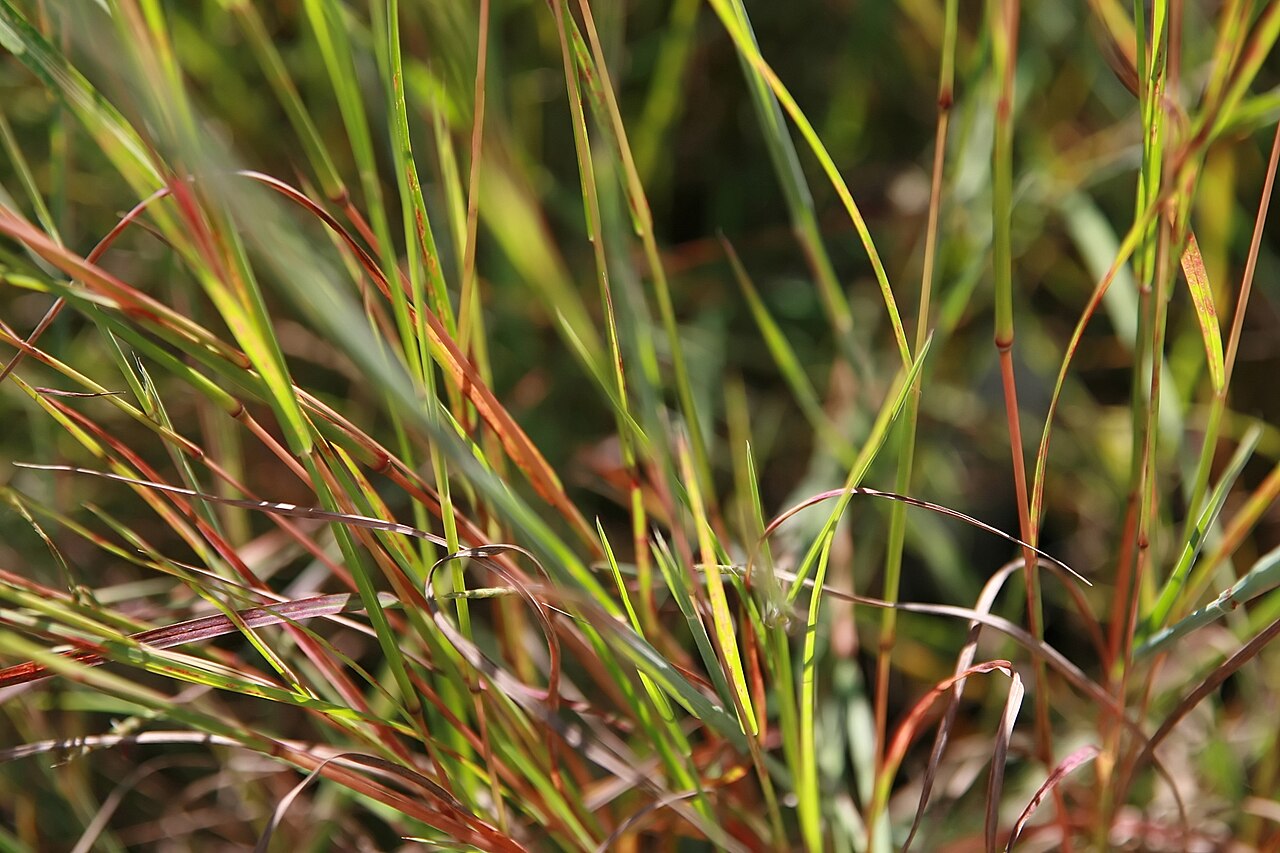
In the main plan, little bluestem is the structure plant. The Wildflower Center notes it is wonderful planted en masse, shifting from blue-green in late summer to golden with fluffy seed heads in winter.
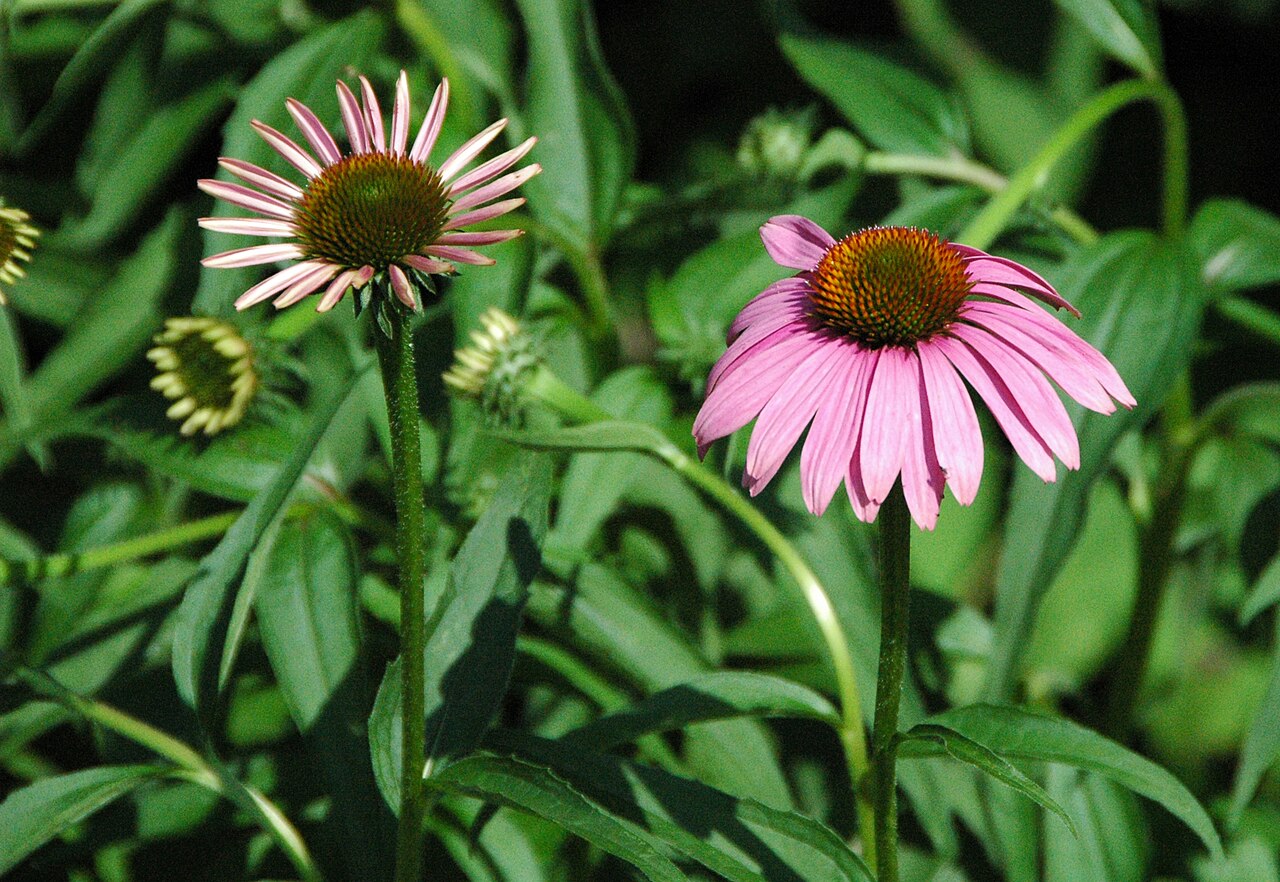
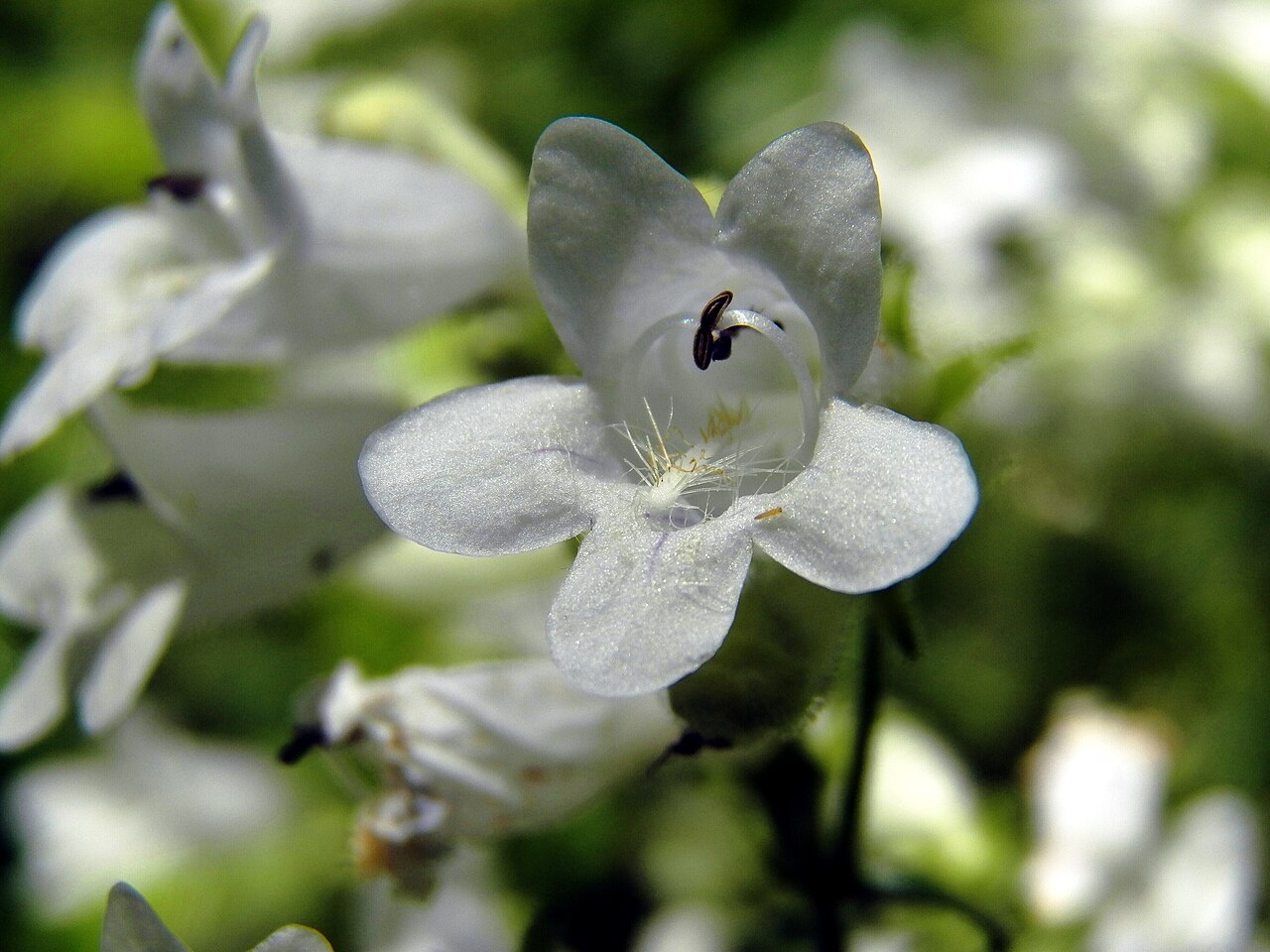
Purple coneflower is the main bloom, and foxglove beardtongue is the contrast plant, adding white tubular flowers from about May into July.
The Main Trio for a Sunny Bed
Plant Palette: Sunny, Average Soil
Heights and ranges are from NC State Extension and the Lady Bird Johnson Wildflower Center. Confirm each species is native to your county.
| Plant | Role | Height | Sun / moisture | Native range |
|---|---|---|---|---|
| Little bluestem (Schizachyrium scoparium) | Structure, fall and winter color | 2–4 ft | Full sun; well-drained to dry | Quebec and Maine to Alberta, south through much of the U.S. east of the Rockies |
| Purple coneflower (Echinacea purpurea) | Main summer bloom | 3–4 ft | Sun to part shade; well-drained | Georgia to northeast Texas, north to N.C., Ohio, Illinois and Iowa |
| Foxglove beardtongue (Penstemon digitalis) | Early-summer bloom | 2–4 ft | Sun to part shade; dry to moist | Maine to Michigan and South Dakota, south to Virginia, Alabama and east Texas |
All three tolerate similar sunny, well-drained conditions. The Wildflower Center also notes foxglove beardtongue does well in clay loam with poor drainage, which makes it a forgiving partner on heavier soils.
Step 3: Decide How Many of Each
NC State lists mature widths of roughly 1.5 to 3 feet for little bluestem, 1 to 2 feet for purple coneflower and 1.5 to 2 feet for foxglove beardtongue. Spacing plants about 18 to 24 inches apart fits those widths.
Ask Extension advice from University of Maryland Extension supports this approach: space plants at roughly their mature width, or use a denser grid of about 12 inches if you want faster cover and are willing to edit later.
Quantities for a 5 × 15-Foot Bed
About 2 feet on center, with the structure plant making up the largest share.
| Plant | Share of bed | Quantity | Placement |
|---|---|---|---|
| Little bluestem | About 40% | 10 | Back two-thirds of the bed and repeated at both ends |
| Purple coneflower | About 35% | 8 | Groups of 2 to 3 spaced along the middle |
| Foxglove beardtongue | About 25% | 6 | Groups of 2 to 3 alternating with the coneflowers |
| Total | 100% | 24 | Roughly one plant per 3 square feet |
If your budget is tight, buy all of the structure plant first. A bed of evenly spaced little bluestem already looks deliberate, and you can fill in the flowers the next spring.
Step 4: Arrange the Repeats
There are three simple patterns. Pick one and stick with it so the bed reads clearly from the street.
Pattern A: Repeating drifts
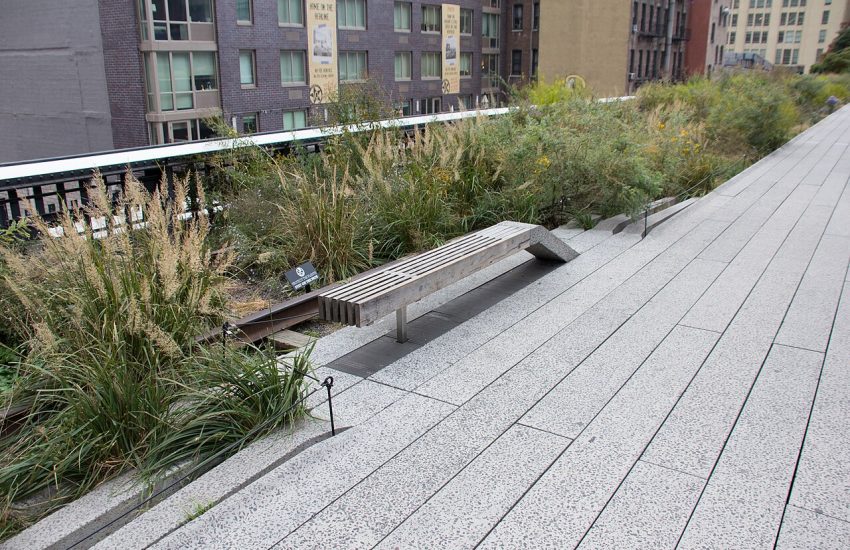
Plant each species in loose groups and repeat the sequence along the bed: grass, coneflower, beardtongue, grass, coneflower, beardtongue. This creates the regular rhythm NC State describes and works well in long, narrow beds.
Pattern B: Grass matrix with flowers scattered through it
Plant little bluestem as an even base across the whole bed, then tuck the two flowering plants into gaps in small clusters. This looks more like a meadow and hides fading flower foliage well.
Pattern C: Mirror the ends
Use the same group of plants at both ends of the bed and let the middle vary slightly. Matching ends make even a short bed look planned.
Do not worry about planting in “threes and fives.” NC State’s design chapter cautions that arbitrary rules like always grouping in threes or fives rarely make good design on their own; what matters is that the repeats are visible.
Alternate Trios for Other Sites
Dry, lean soil (Plains and Midwest)
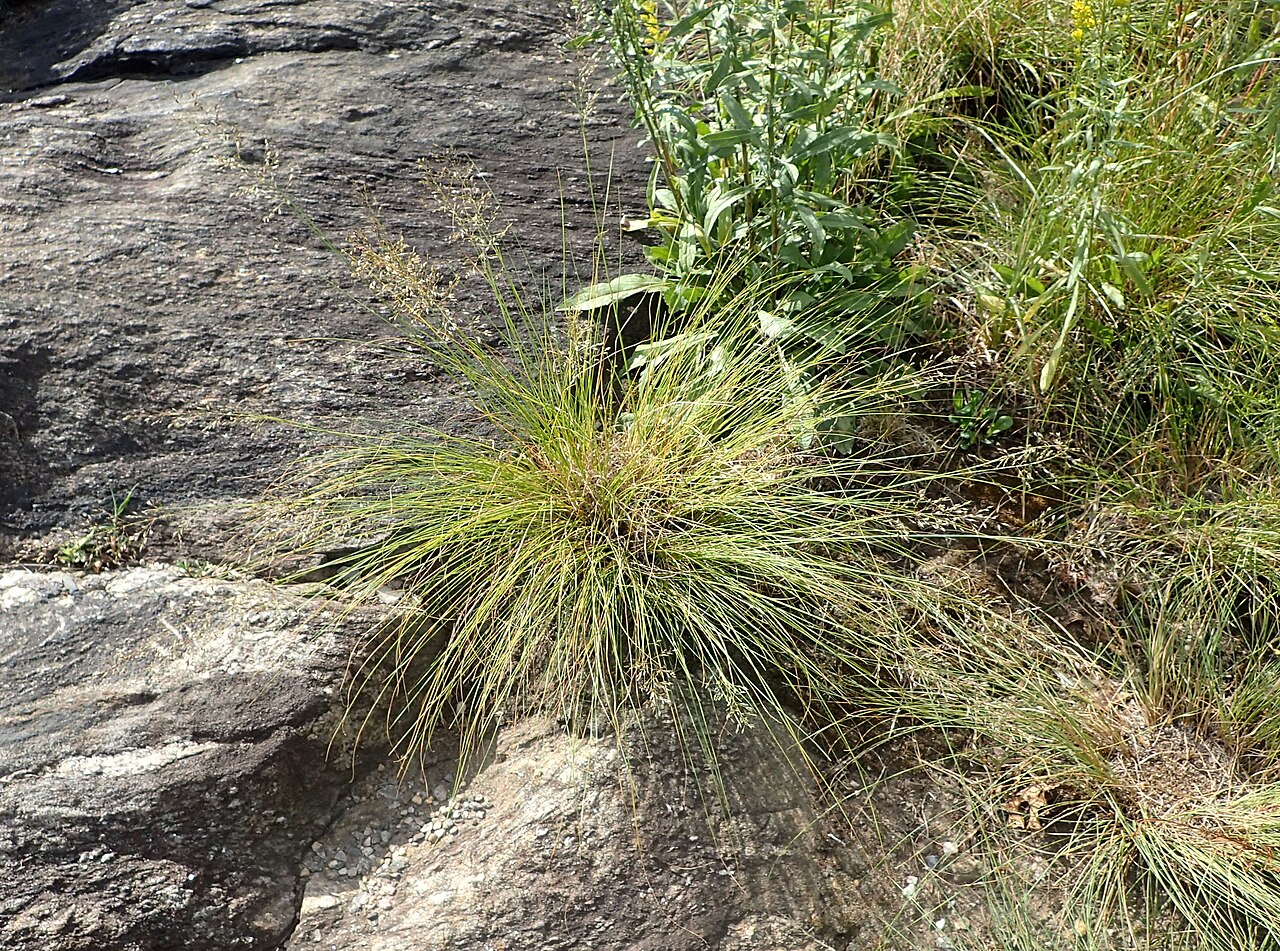
Use prairie dropseed as the structure plant. The Wildflower Center describes it as a slow-establishing clump grass whose foliage turns golden with orange hues in fall.
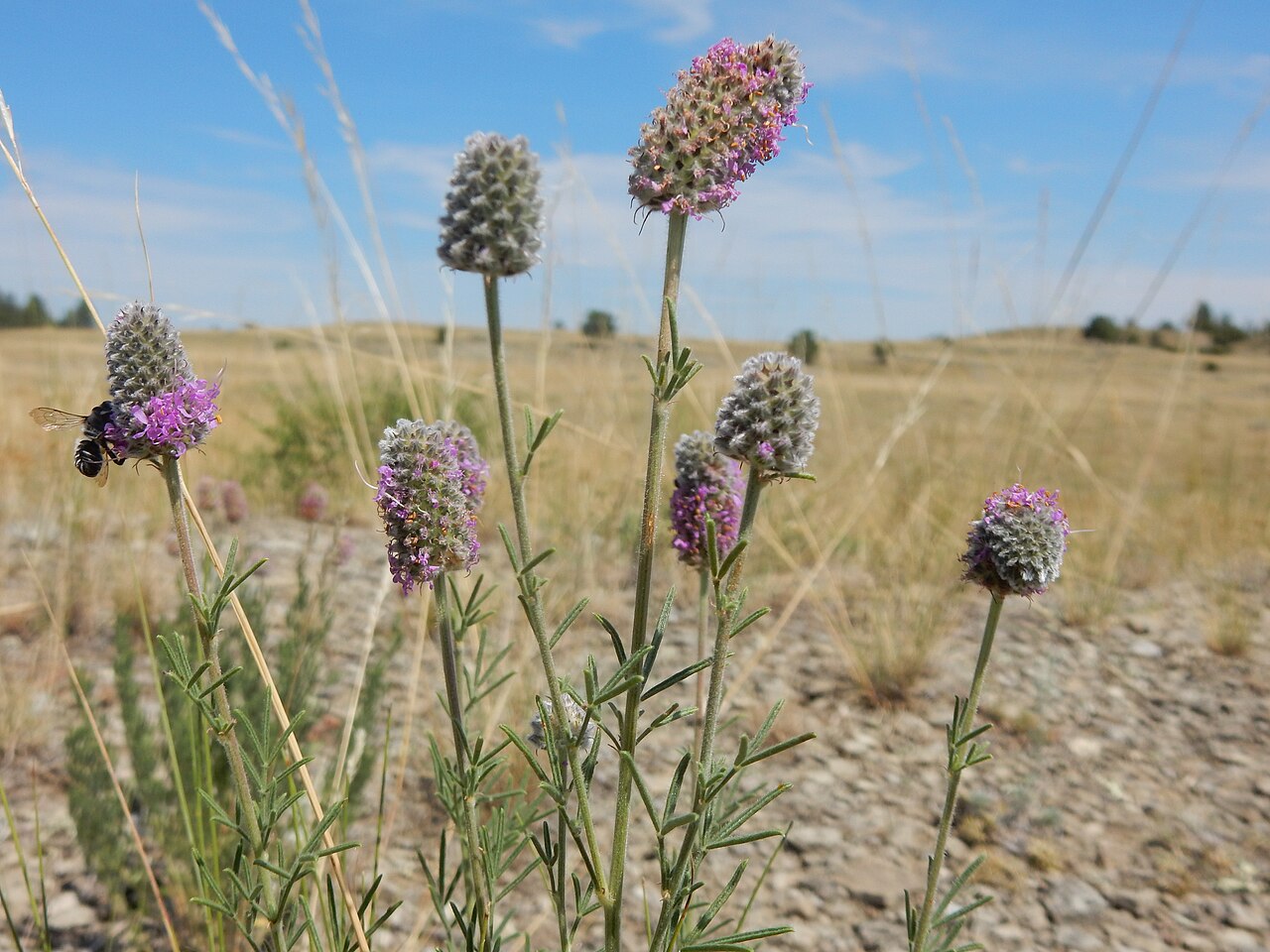
Pair it with purple prairie clover, which reaches 1 to 3 feet and blooms from about June to September in dry soil, and butterfly weed, a 1- to 2-foot orange bloomer for full sun.
Part to full shade (eastern woodlands)
Use Pennsylvania sedge as a low, grassy base. NC State lists it at about 1 to 8 inches tall, and the Wildflower Center notes it spreads steadily by rhizomes.
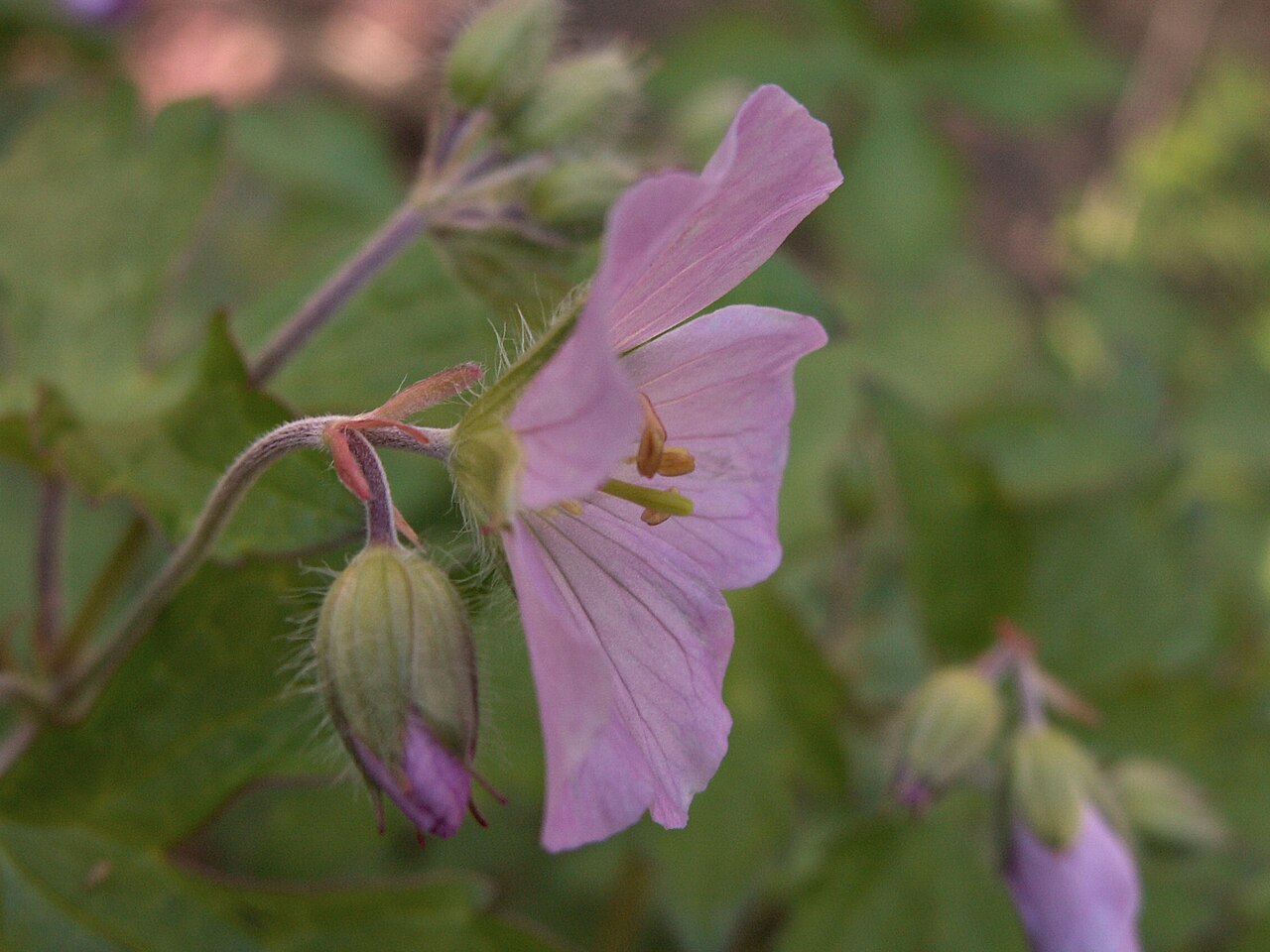
Add wild geranium for spring flowers at about 14 to 18 inches, and Christmas fern, an evergreen fern NC State lists at 1 to 3 feet tall and wide, for winter structure.
Choosing Your Trio
Pick the row that matches your site, then check your state list.
| Site | Structure plant | Main bloom | Season extender |
|---|---|---|---|
| Sunny, average soil | Little bluestem | Purple coneflower | Foxglove beardtongue |
| Dry, lean, sunny | Prairie dropseed | Purple prairie clover | Butterfly weed |
| Part to full shade | Pennsylvania sedge | Wild geranium | Christmas fern |
Installation Steps
- Mark the bed outline and remove turf or weeds. Cut a clean edge before planting.
- Set out every pot in your chosen pattern before digging. Step back to the street or sidewalk and adjust until the repeats are easy to see.
- Plant at the same depth as the pots, water deeply, and add a thin layer of mulch kept off the crowns.
- Label one plant of each species so you can tell seedlings from weeds next spring.
- Water regularly through the first growing season until the plants root in.
The First Three Years
- Year 1: water during dry spells and weed often. Grasses may look small; most of their growth is underground.
- Year 1, fall: leave seed heads and grass blades standing for winter structure.
- Year 2, early spring: cut back old stems before new growth starts. Replace any losses with the same species to keep the pattern.
- Year 2, summer: the bed should start to close. Pull coneflower or beardtongue seedlings that land outside their groups.
- Year 3: edit, don’t add. If one plant is crowding the others, thin it rather than introducing a fourth species.
Butterfly weed in the dry trio will almost certainly host aphids at some point. The Wildflower Center suggests leaving them for ladybugs rather than spraying.
Mistakes to Avoid
- Picking three plants with different needs. A dry-prairie plant and a moisture-loving one will not both thrive in the same bed.
- Three bloomers and no structure. Without a grass, sedge or fern, the bed goes flat after flowering.
- Planting singles. One coneflower here and one there undoes the point of a short list.
- Adding “just one more.” Each new species weakens the repetition. Put extras in a different bed.
- Choosing by photos alone. Check native range for your region before you buy.
For a deeper look at grass repetition in a street-facing bed, see little bluestem in a front-yard border. The same three-role idea also scales down to a 6-by-10-foot front-yard bed or a low native walkway border.
📋 Check these trios against your regional list, such as Illinois, Iowa and Missouri, Kentucky and Tennessee, or North Dakota, South Dakota and western Minnesota.
Frequently Asked Questions
Won’t a three-plant bed look boring?
Not if the three plants have different jobs. A grass for texture, one bloom for summer and one for another season give the bed change across the year while the repetition keeps it calm.
Can I use more than three plants?
You can, but each extra species reduces the effect. If you want variety, plant a second simple bed with a different trio rather than mixing everything into one.
Is this good for pollinators?
A short list offers fewer flower types than a mixed meadow. Choose bloomers with different flowering times and consider adding more trios elsewhere in the yard to widen the season.
What if one of the three dies?
Replace it with the same species so the pattern stays intact. If the same plant keeps failing, the site probably does not suit it, and it is better to switch the whole trio.
How far apart should I plant?
Space plants at about their mature width. For the main trio, roughly 18 to 24 inches works; denser planting fills in faster but needs more editing later.
Sources
- NC State Extension Gardener Handbook, Chapter 19: Landscape Design
- NC State Extension Plant Toolbox: Schizachyrium scoparium
- NC State Extension Plant Toolbox: Echinacea purpurea
- NC State Extension Plant Toolbox: Penstemon digitalis
- NC State Extension Plant Toolbox: Carex pensylvanica
- NC State Extension Plant Toolbox: Polystichum acrostichoides
- Lady Bird Johnson Wildflower Center: Schizachyrium scoparium
- Lady Bird Johnson Wildflower Center: Echinacea purpurea
- Lady Bird Johnson Wildflower Center: Penstemon digitalis
- Lady Bird Johnson Wildflower Center: Sporobolus heterolepis
- Lady Bird Johnson Wildflower Center: Dalea purpurea
- Lady Bird Johnson Wildflower Center: Asclepias tuberosa
- Lady Bird Johnson Wildflower Center: Carex pensylvanica
- Ask Extension (University of Maryland HGIC): Planting distances for native perennials