Native Plugs vs. Seed for Lawn Conversion: Cost, Timing, and Weed Pressure
Last updated: November 7, 2026
Once the lawn is gone, you face the next decision: buy plugs or sow seed. Both can produce a good native planting, but they differ in cost per square foot, in when you can start, and in how much weeding the first two years demand.
The right answer depends mostly on the size of the area and on how many weed seeds are already in the soil. A small bed cut from long-mown turf behaves very differently from a half-acre of old pasture.
This guide compares plugs and seed on cost, timing and weed pressure. It then lays out a hybrid approach that many extension programs use: plugs where you need control, and seed where you need coverage.
Plan at a Glance
| Site | Freshly cleared lawn, whether the sod was stripped or smothered |
| Size | Plugs suit small beds; seed becomes practical as the area grows |
| Sun | Full sun for the meadow-style mix described here |
| Soil | Average to lean; seed needs a firm, weed-free surface |
| Maintenance | Plugs: weekly weeding and watering at first; seed: patient mowing and spot weeding for two to three years |
| Best regions | Methods apply widely; species must come from your own region’s list |
How Plugs and Seed Differ
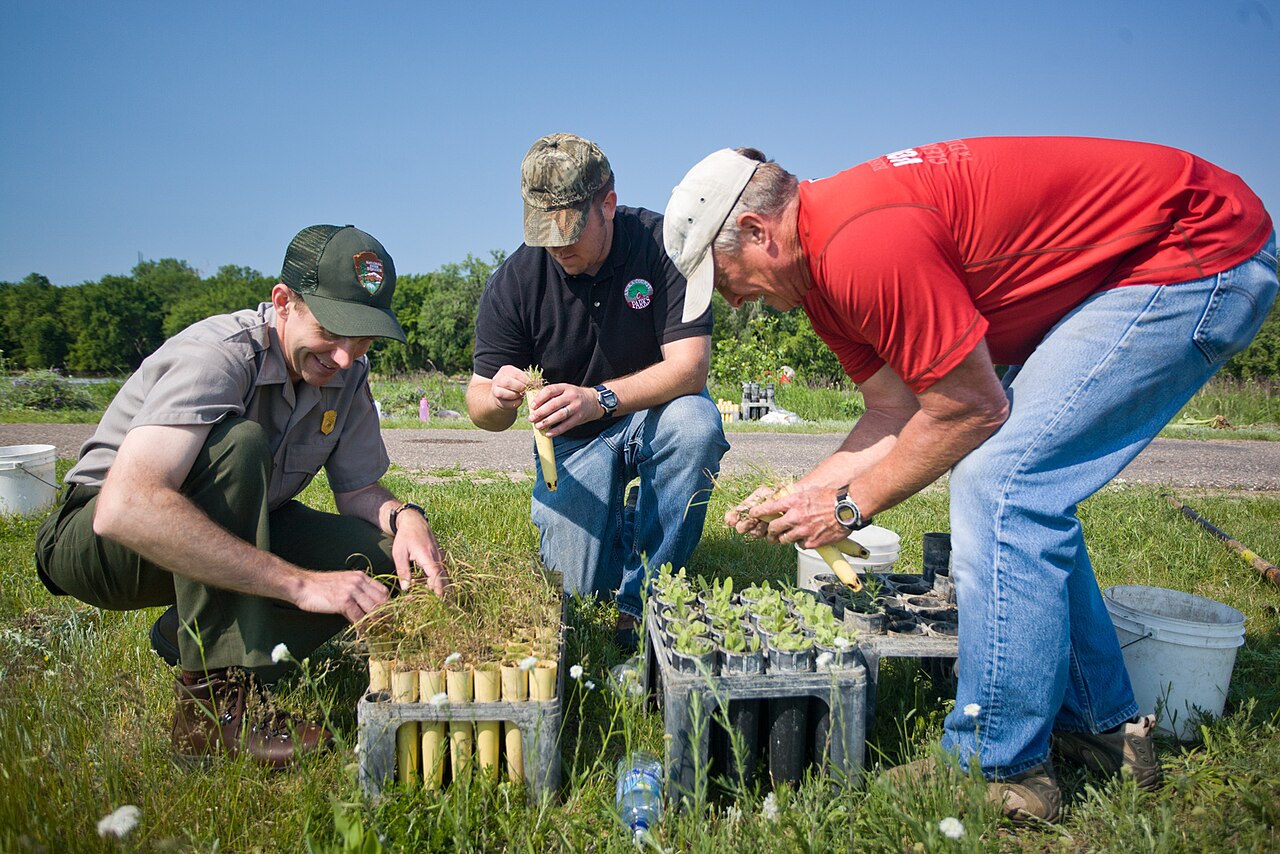
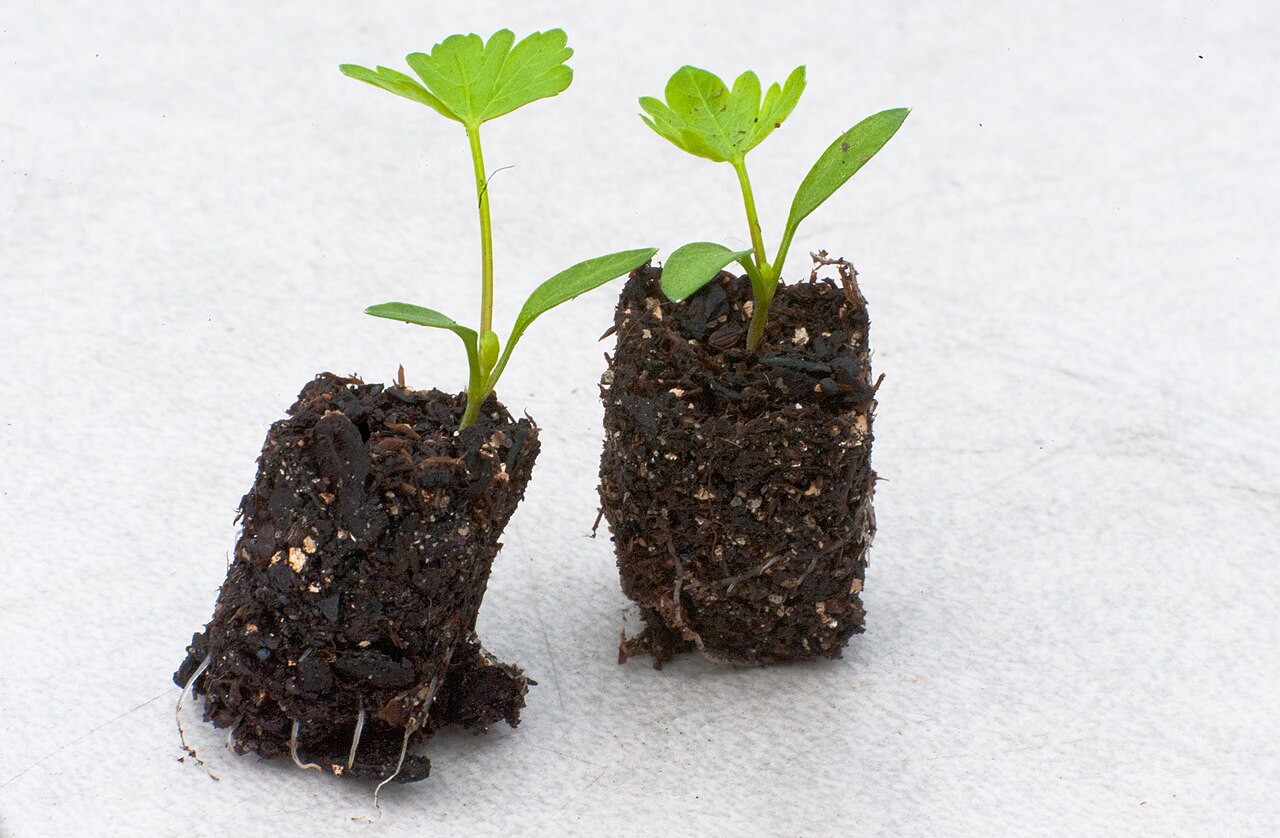
A plug is a young plant grown in a small, deep cell, with roots that already fill its soil. Planted at close spacing, plugs give you a planting you can see from day one.
The University of Maryland Extension recommends about one plug per square foot for meadow plantings. That density closes the canopy quickly and reduces weed competition.
Seed starts much further back. The Xerces Society’s Mid-Atlantic meadow guide suggests a rough range of 40 to 120 seeds per square foot, because many seeds will be buried, washed away or eaten before they germinate. A higher rate fills in faster but costs more.
Seeded perennials are slow. Xerces sums up their establishment as “the first year they sleep, the second year they creep, and the third year they leap,” and UNH Extension notes that some wildflowers will not even germinate for two or three years after sowing.
Compare Cost, Timing, and Weed Pressure
Plugs vs. Seed for Lawn Conversion
Summarized from University of Maryland Extension, UNH Extension, University of Delaware Extension and the Xerces Society.
| Factor | Plugs | Seed |
|---|---|---|
| Cost per square foot | High; Maryland Extension’s 2024 guidance estimated roughly $1 per plug at one plug per square foot | Low per square foot, though a native seed mix usually costs more than a turf mix |
| How cost scales | Rises in step with area | Becomes far cheaper than plugs as area grows |
| Best planting time | Fall or spring | Late fall into winter (dormant seeding), or early spring |
| First-year look | Recognizable plants, some flowers | Patchy; mostly annuals and nurse crops |
| Weed identification | Easy: you know where every plant is | Hard: seedlings and weeds look alike |
| First-year weed control | Hand weeding between plants | Mowing high to stop weeds setting seed |
| Time to a full look | Often by the second season | Often three or more seasons |
| Species control | Exact placement and ratios | Ratios set by the mix and germination |
Cost: What You Are Really Paying For
With plugs, you pay for a nursery’s time in germinating and growing on each plant. A 100-square-foot bed at one plug per square foot needs about 100 plants. A 1,000-square-foot area needs ten times that, so plug costs climb steeply with size.
Before pricing a large area, map the lawn you actually use. The area worth converting is often smaller than the whole yard.
Seed costs far less per square foot. The Xerces meadow guide adds that a native meadow seed mix is often more expensive than turf seed, but that seeded meadows still tend to be cheaper to install and maintain than seeded lawns.
The hidden cost of seed is time. You trade plant cost for two to three years of patient, unglamorous management. If a seeded patch fails because weeds win, you pay twice.
Timing: When Each Method Works
Seed in fall or winter. UNH Extension recommends fall seeding because many wildflower seeds germinate better after a winter of cold, damp soil. In northern New England it suggests aiming for mid- to late October.
The University of Delaware notes that in the Mid-Atlantic, fall seeding tends to favor grasses and spring seeding favors flowering forbs. It advises sowing no later than October 31 for a fall seeding or May 31 for a spring one.
Plugs in fall or spring. The Xerces Society suggests setting transplants into prepared ground in fall or the following spring. Fall plugs root in while the soil is still warm.
Spring plugs need regular watering through their first summer; our guide to watering new little bluestem plugs shows the schedule.
Site preparation comes first either way. Seed needs a firm surface with little weed seed, so it is less forgiving of short-cut site preparation than plugs. Our comparison of sheet mulching and sod removal covers the two most practical methods for turf.
Weed Pressure: The Deciding Factor
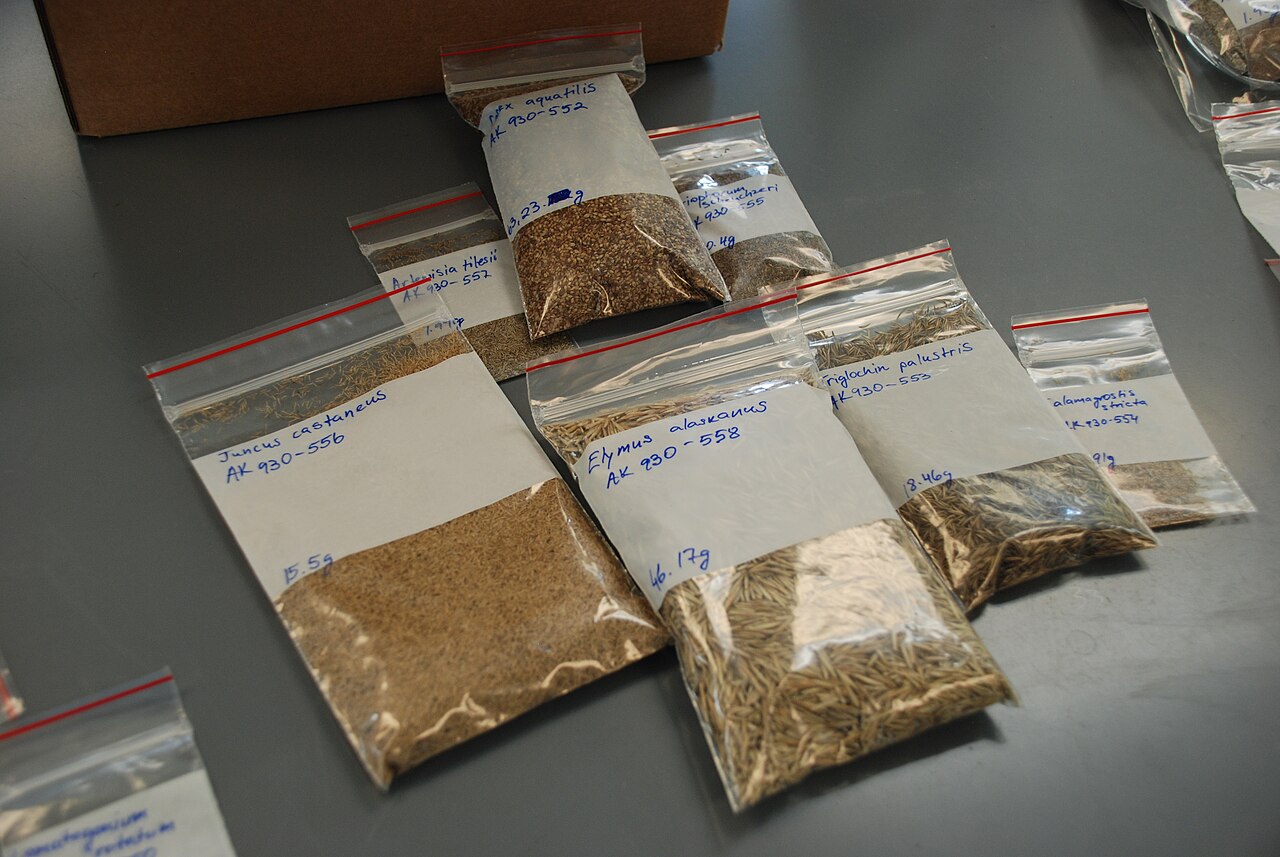
Weeds decide most plug-versus-seed questions. UNH Extension notes that young wildflower seedlings stay small and low in their first year and cannot compete with vigorous weeds. It adds that hand weeding can disturb the seedlings you are trying to protect.
Seeded areas are therefore managed by mowing rather than pulling. In the first year, Xerces recommends mowing to about 8 inches whenever the planting reaches 12 to 18 inches, so annual weeds cannot set seed. The University of Delaware gives a similar range of 6 to 12 inches.
Plugs give you a head start over weeds. You know exactly where each plant is, so anything coming up between them can go. The Maryland Extension still advises learning what your plants’ seedlings look like, so you do not pull volunteers later.
If the soil holds a heavy weed seed bank, such as old pasture, an abandoned garden or turf that was not mown regularly, plugs or a hybrid are safer. On long-mown lawn that you have stripped cleanly, seed has a better chance.
Plant Palette: What to Plug and What to Seed
Plant Palette: Plug or Seed?
Heights from NC State Extension’s plant toolbox or the Lady Bird Johnson Wildflower Center; native ranges from the Wildflower Center. Use only species native to your area.
| Plant | Role | Height | Sun / Moisture | Native range |
|---|---|---|---|---|
| Partridge pea | Seed: annual legume that self-sows into gaps | Up to 3 ft | Sun to part shade / dry to medium | MA to the FL Panhandle, west to MN, e. NE, OK and e. TX |
| Black-eyed Susan | Seed: quick early color | 2–4 ft | Sun / dry to medium | Western MA to Manitoba and WY, south to FL and NM |
| Lanceleaf coreopsis | Seed: early bloomer | 1–3 ft | Sun / dry to medium | FL to e. TX and n. NM, north to VA, Ontario, MI, WI, MO and CO |
| Little bluestem | Seed in fall, or plug the edges | 2–4 ft | Full sun / dry to medium | Much of the US and southern Canada east of the Rockies |
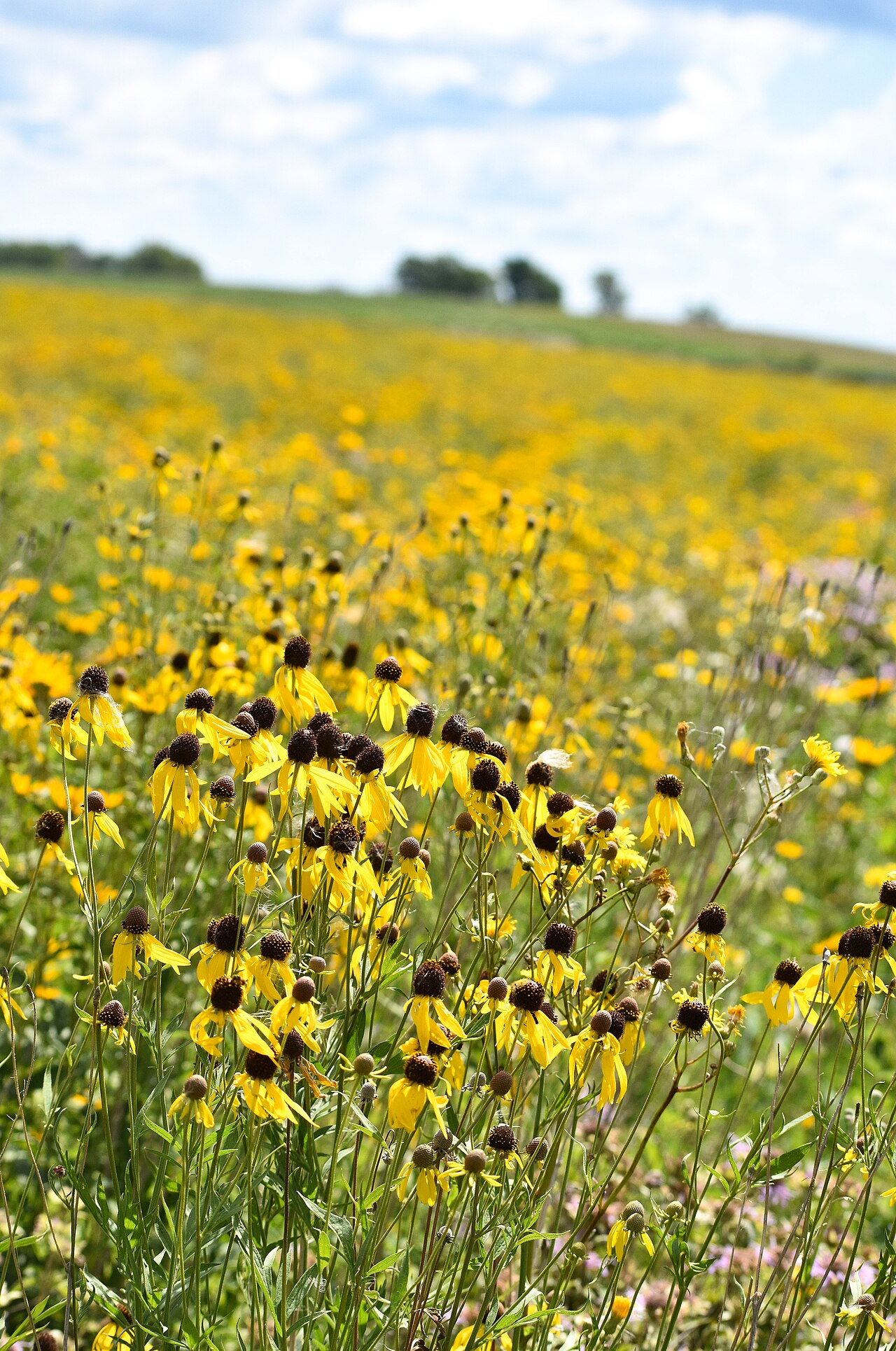
| Purple coneflower | Seed or plug | 3–4 ft | Sun to part shade / dry to medium | GA to extreme NE TX, north to NC, OH, IL and IA |
| False indigo | Plug: slow to flower from seed | 3–4 ft | Full sun / medium | PA to s. IN, south to GA and TN; var. minor from IA and SE NE to TX |
The University of Delaware notes that partridge pea self-sows into empty spaces each year. It also says Baptisia species take years to reach flowering size from seed and are better added to a meadow as plugs.
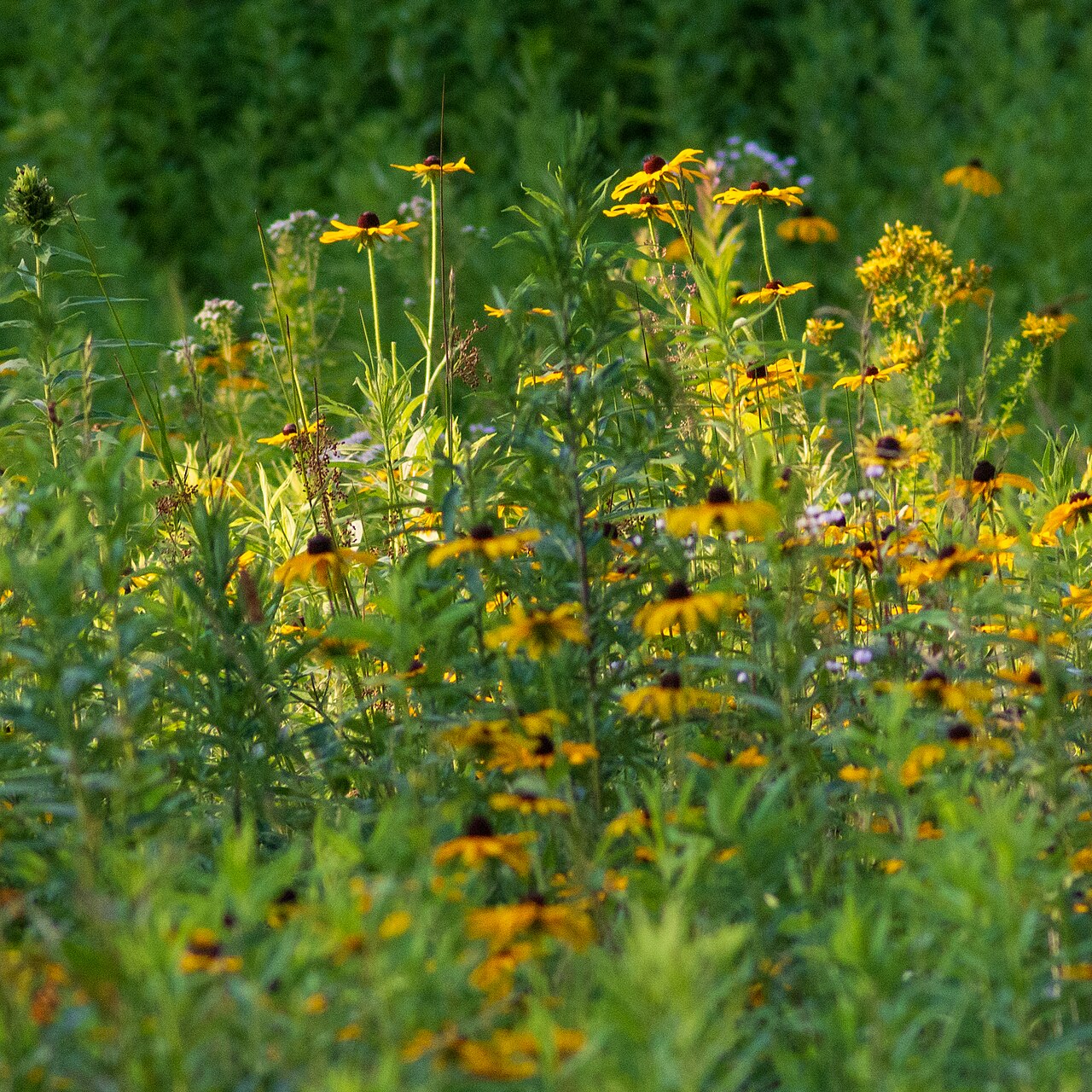
UNH Extension observes that black-eyed Susan and coreopsis tend to thin out over the years and drift to the edges, while longer-lived perennials take over. That is why both work as seeded “starter” flowers rather than as the backbone of a planting.
Regional alternates. Purple coneflower’s natural range is limited to the south-central and eastern interior states, so it should not be treated as native everywhere.
On the western Plains, seed mixes built on blue grama and sideoats grama are more appropriate. In the West, ask a regional native seed supplier for an ecoregion-sourced mix.
Installation: A Hybrid Plan That Works
- Prepare the whole area by removing or smothering the turf, and wait until it is weed-free.
- Plug the edges and focal points first. A plugged band along a walk or lawn edge looks intentional from the start and is easy to weed.
- Plug the slow species such as false indigo where you want them, at their mature spacing.
- Seed the interior in late fall or winter at your mix’s recommended rate. UNH suggests bulking small seeds with a carrier such as vermiculite or sand so they spread evenly.
- Press the seed in. UNH recommends rolling for good seed-to-soil contact, then covering lightly with clean straw.
- Mark where seed was sown so you can mow that area high in year one instead of hand-weeding it.
The Maryland Extension’s module approach is another hybrid. Plug your first small module, collect seed from it, and use that seed to sow the next module.
If your time is limited, our two-season installation plan fits the plugged part of this work around fall and spring.
First-Three-Years Maintenance Calendar
- Year 1: Weed plugged areas by hand every week or two. Mow seeded areas high before weeds set seed. Water plugs during dry spells, and water seeded areas only in extended drought.
- Year 2: Seedlings become recognizable. Pull obvious weeds, fill gaps with plugs, and cut back the whole planting in late winter or early spring.
- Year 3: Perennials from seed begin to show their typical form and flowers. Spot-weed, and consider overseeding grasses in fall if they are thin, as the University of Delaware suggests.
Mistakes to Avoid
- Seeding into a weedy seed bank. Seed cannot outcompete weeds that are already waiting in the soil.
- Judging seed after one season. A patchy first year is normal, not a failure.
- Hand-weeding seeded patches too early. You will pull more seedlings than weeds. Mow high instead.
- Buying plugs for a large area all at once. Plug in modules, or plug only edges and accents.
- Generic wildflower mixes. Many garden-center mixes are mostly non-native annuals; buy regionally sourced native seed.
📋 Build your species list from a regional native plant list such as the Nebraska, Kansas and eastern Colorado list or the Iowa, Illinois and Missouri list, and check each species against your county.
Frequently Asked Questions
Are native plugs worth the extra cost?
For small beds, usually yes. You get a recognizable planting quickly and can weed confidently. For large areas, seed with plugs at the edges is more economical.
How many seeds per square foot should I sow?
The Xerces Society suggests a rough range of 40 to 120 seeds per square foot. Use the higher end where you expect more weed pressure or want faster fill-in.
Can I sow seed between plugs?
Yes, as a hybrid. Sow in the dormant season, keep the seeded areas marked, and weed carefully around plugs so you do not disturb seedlings.
When is the best time to sow native seed after removing a lawn?
Late fall into early winter in most cold-winter regions, because many species germinate better after a cold, damp winter. Spring sowing is possible but tends to favor flowers over grasses in the Mid-Atlantic.
Should I start with plugs for my first conversion?
Most beginners do better with plugs on a small first module. See our phased plan for the first 100 square feet, and our guide to replacing lawn with wildflowers for larger seeded areas.
Sources
- University of Maryland Extension: How to Make a Meadow
- University of Maryland Extension: Lawn Alternatives
- UNH Extension: Establishing a Wildflower Meadow from Seed
- University of Delaware Cooperative Extension: Establishing Meadows from Seed
- Xerces Society: Mid-Atlantic Native Meadows
- Xerces Society: Organic Site Preparation for Wildflower Establishment
- NC State Extension Plant Toolbox (Baptisia australis and related species pages)
- Lady Bird Johnson Wildflower Center: Plant Database (CHFA2, RUHI2, COLA5, SCSC, ECPU, BAAU)