Native Alternatives to Japanese Barberry: Choose for Your Site, Not Just Thorniness
Last updated: November 7, 2026
Japanese barberry earned its place in foundation beds because it was hard to kill. It stayed low, took sun or shade, shrugged off deer, and came in red, purple, and gold leaf colors.
Those same traits are why it’s now a problem. Wikipedia’s summary of the research notes that it has naturalized widely in North America, crowds out native understory plants, changes soil, and creates humid, sheltered habitat where black-legged ticks thrive.
Most “barberry alternatives” lists pick a substitute by one trait, usually thorns or red leaves. This guide works the other way. Start with the job the barberry did and the site it grew in, then pick a native shrub that can handle both.
Plan at a Glance
| Site | Any bed where Japanese barberry is growing now or was planned: foundations, walk edges, slopes, shady corners, wet low spots |
| Size | Most replacements here run 2 to 8 feet tall; several spread wider than barberry did |
| Sun | Full sun to full shade, depending on the shrub you choose |
| Soil | Dry and rocky, average, or wet; match the shrub to the soil, not the other way around |
| Maintenance | Low once established; some choices sucker and need an edge |
| Best regions | Eastern and central U.S. for most shrubs listed, with Pacific Northwest and Texas/Southwest options |
Why Replace Barberry at All?
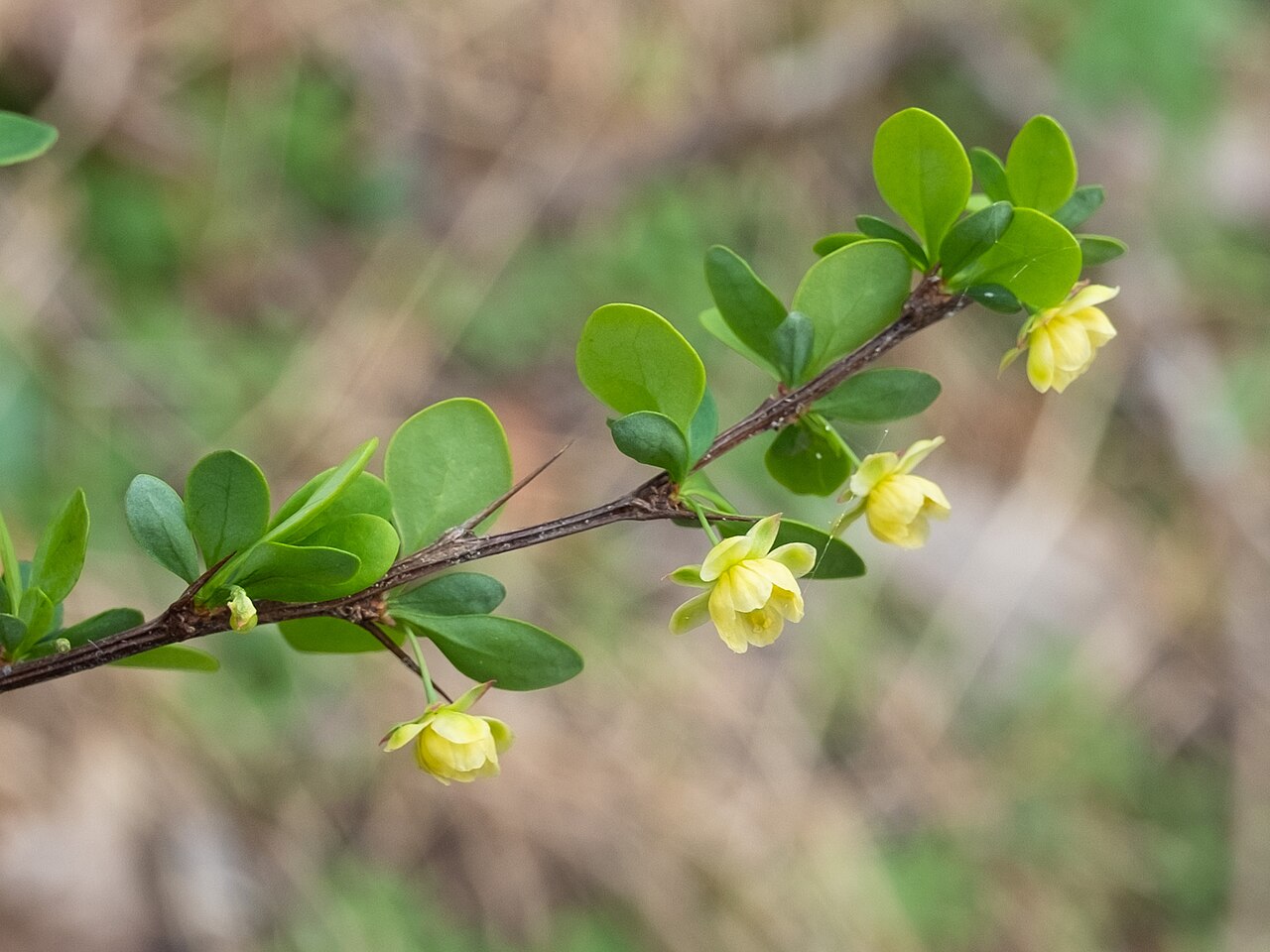
Japanese barberry is native to Japan and eastern Asia. In North America its red fruit persists into winter, and the plant has spread from yards into woodlands across much of the eastern U.S. and Canada.
Deer avoid it, so where deer browse heavily, barberry thickets can expand while native shrubs around them get eaten. Studies summarized on Wikipedia found more black-legged ticks in dense barberry understories than in areas where barberry was controlled or absent.
Several states regulate it. New Hampshire lists it as a prohibited invasive, which makes it illegal to sell, propagate, or transplant there, though UNH Extension notes that removing existing plants isn’t required by law. Massachusetts and West Virginia have also banned its sale.
Check your own state’s list before you buy or move any barberry.
If you’re removing barberry, work in long sleeves, gloves, and long pants, then check yourself for ticks afterward. For larger infestations, ask your county extension office about control methods that fit your site.
Site Assessment: What Job Was the Barberry Doing?
Walk out to the shrub, or the spot where you planned one, and answer four questions. Write the answers down. They’ll narrow a long list of “alternatives” to two or three plants that actually fit.
1. How much room does it really have?
Measure from the wall, walk, or driveway to where the shrub’s outer edge can sit at maturity. Barberry stayed low and fairly compact, which is why it fit under windows and beside steps.
Many native replacements spread wider. Fragrant sumac, for example, is listed by NC State Extension at 2 to 6 feet tall but 6 to 10 feet wide. That’s excellent on a slope and a poor fit in an 18-inch strip.
2. How many hours of sun?
Count direct sun on a clear summer day. NC State defines full sun as six or more hours and partial shade as two to six hours.
Barberry tolerated both. Most replacements don’t, so this one answer will rule out half the list.
3. Is the soil dry, average, or wet?
Dig a hole a spade deep a day or two after rain. Dry, rocky soil and soggy clay call for completely different shrubs.
Virginia sweetspire can grow where water stands for a while, according to the Lady Bird Johnson Wildflower Center. Dwarf fothergilla wants acidic soil and the Wildflower Center warns to avoid very dry sites.
4. What did you want from it?
Be honest about the reason. Was it the purple color, a barrier that keeps people and dogs off a bed, deer resistance, a low hedge, or just something tough enough to survive neglect?
UNH Extension makes the key point: you can find native shrubs with barberry’s color, and native shrubs with barberry’s compact form, but it’s hard to get both in one plant. Decide which matters more.
Design: Pick the Trait That Matters Most
For red or purple foliage
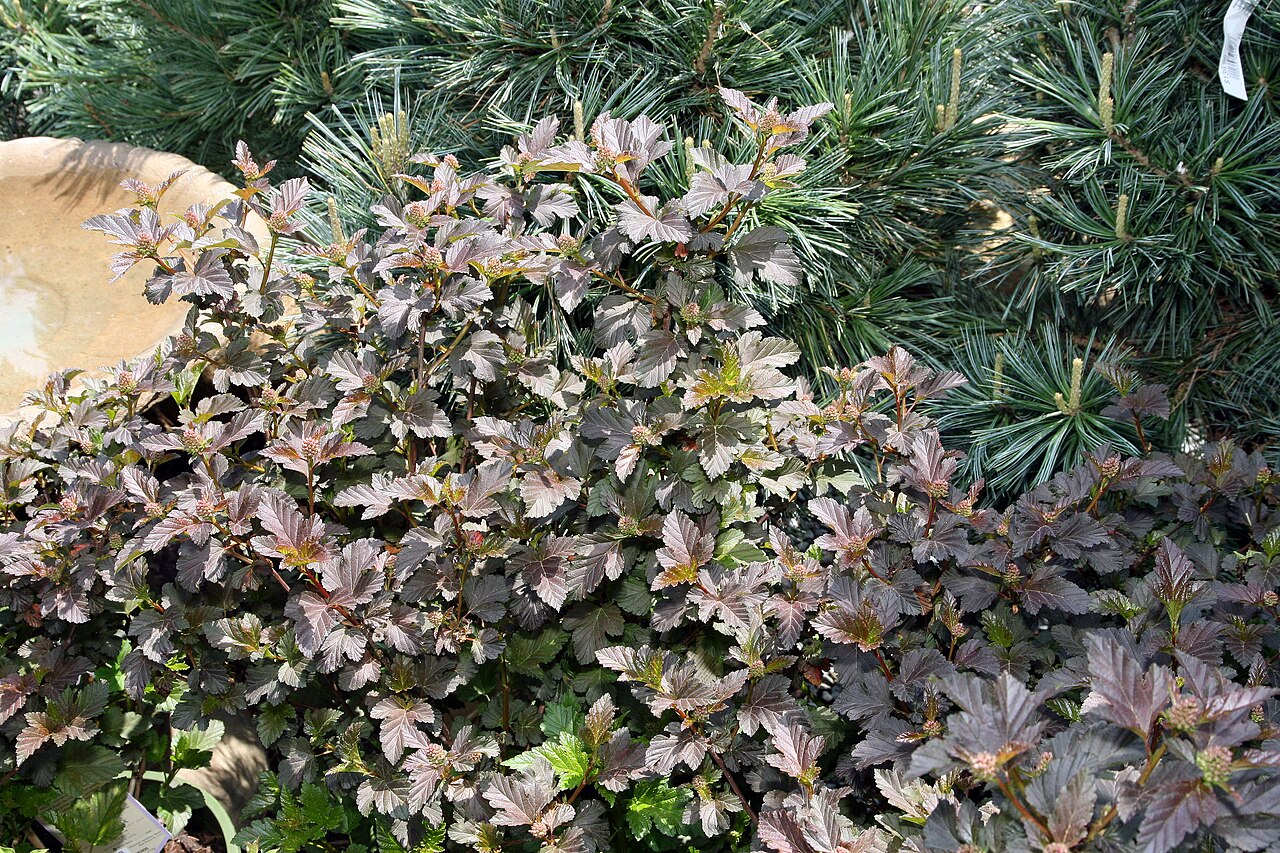
Common ninebark is the usual answer. UNH Extension notes that purple-leaved cultivars range from about 3 to 10 feet tall, all with white flowers in midsummer and peeling bark. The species is adaptable to sun or part shade and to clay, loam, or sand.
Ninebark is upright and coarser than barberry. UNH suggests cutting it back in winter to keep it compact. Choose a smaller cultivar for a front bed instead of planning to shear a big one every year.
For a low, spreading mass on dry ground
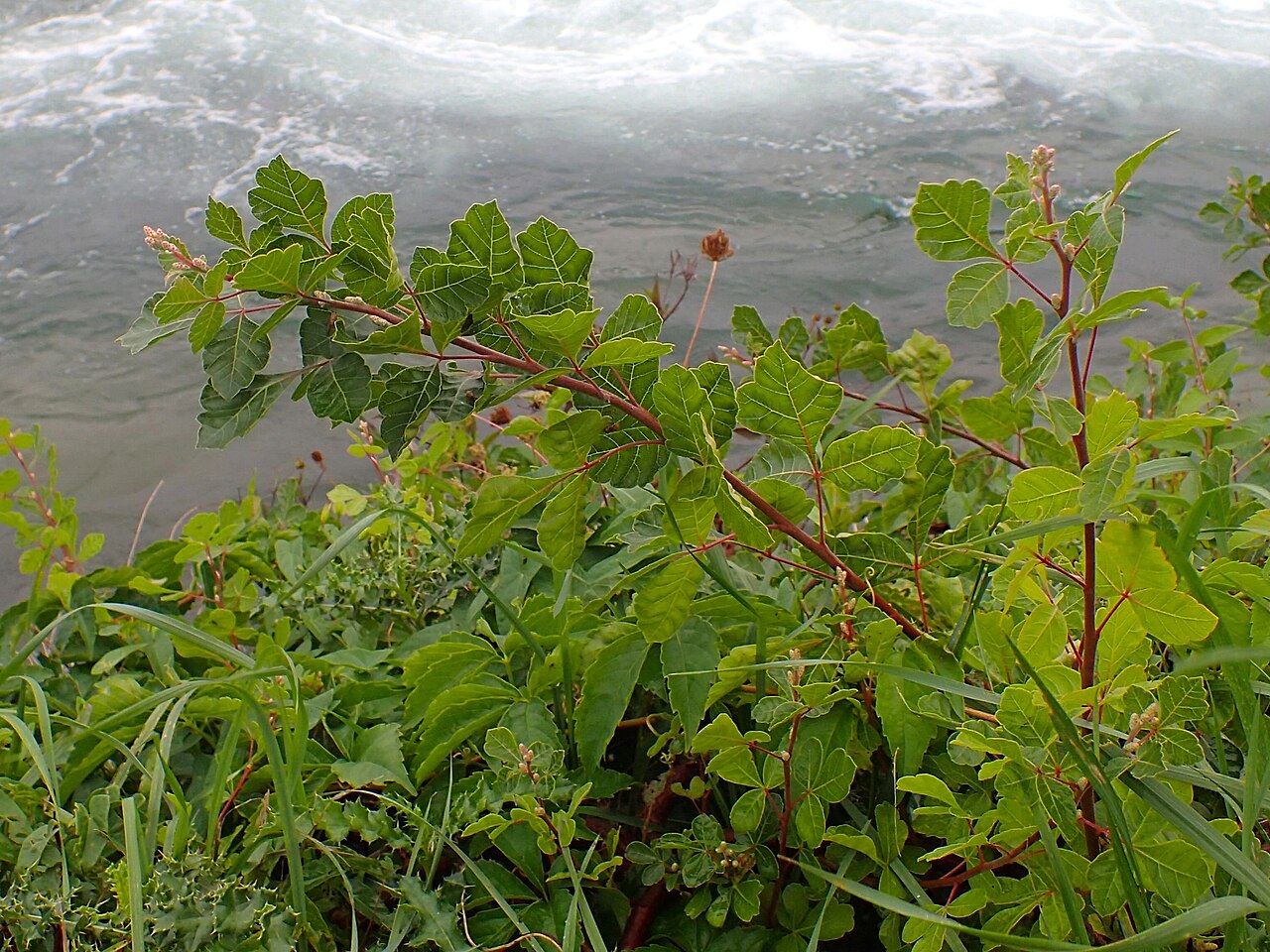
Fragrant sumac handles dry, rocky soils, including limestone-based ground, and the Wildflower Center notes it colonizes to form thickets. NC State lists it as resistant to deer and rabbits and tolerant of drought and erosion.
Use it on banks, along the dry side of a driveway, or anywhere you want a low mass that fills in. UNH lists it among native shrubs to consider in place of barberry.
For a thorny barrier
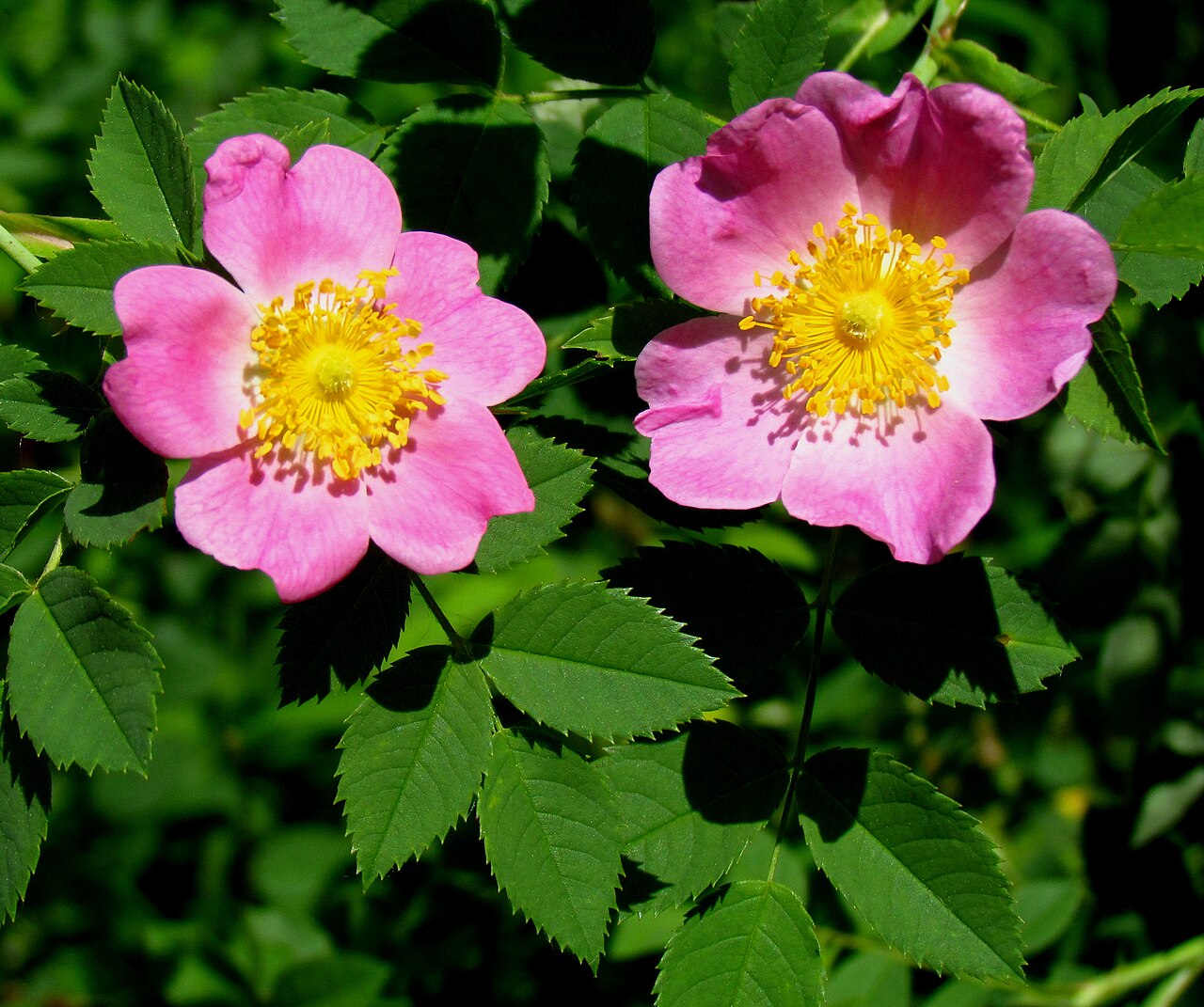
If you need prickles to keep foot traffic out, a native rose is a closer match than most shrubs. Carolina rose is a low, freely suckering shrub, 1 to 3 feet or more tall according to the Wildflower Center, with fragrant pink flowers and red hips.
It grows best in open, sunny spots on well-drained soil. NC State notes it’s resistant to rose rosette virus, and both sources note it can have disease problems.
For deer pressure
No shrub is deer-proof, but some are browsed less. NC State lists deer resistance for fragrant sumac, dwarf fothergilla, Virginia sweetspire, and tall Oregon grape. Group several of those together rather than relying on one.
For shade under trees
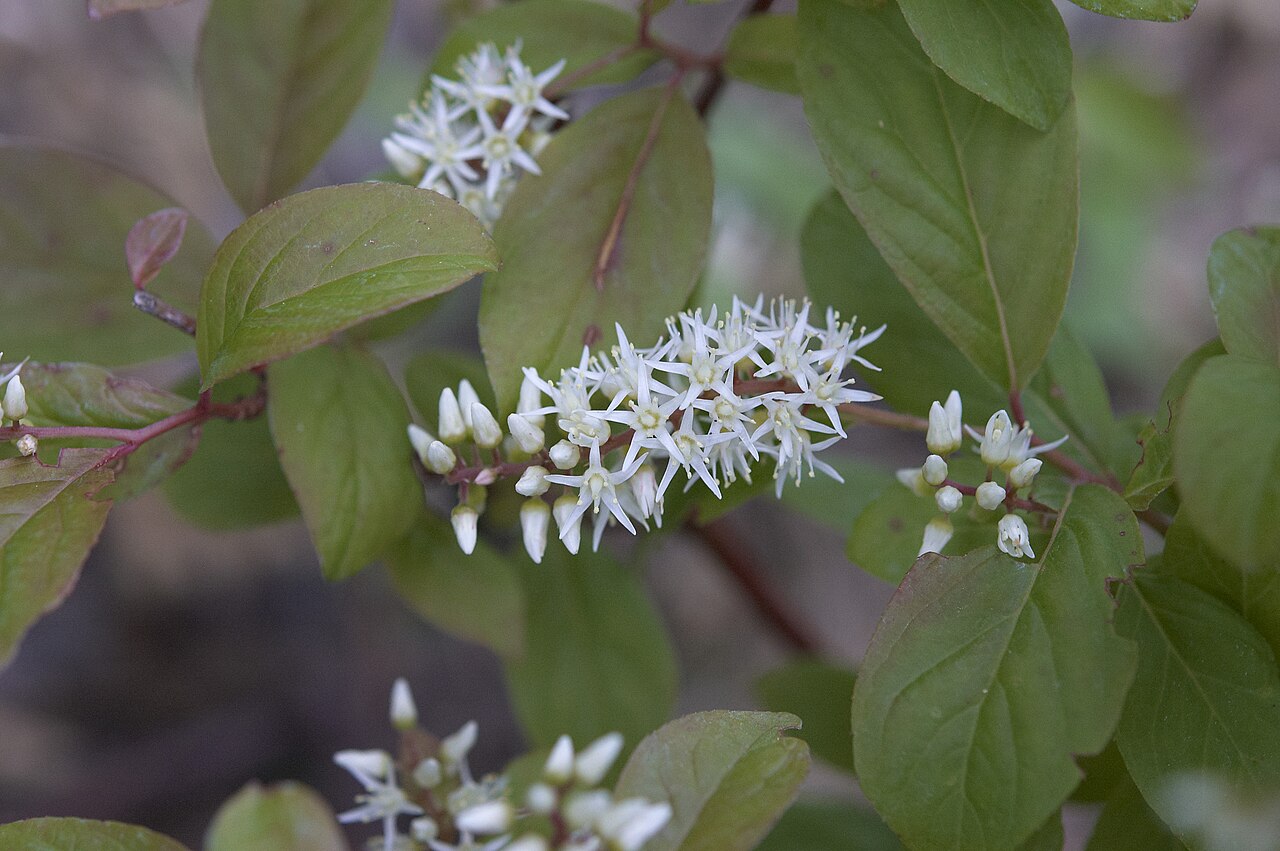
Barberry tolerated shade; many sun shrubs don’t. In dry shade in the North, northern bush honeysuckle grows to about 3 feet in dry, rocky, slightly acid soils, says the Wildflower Center. It suckers into broad patches.
In moist shade with more room, spicebush is a fast-growing shrub, usually 6 to 15 feet tall, that the Wildflower Center calls useful in moist, shady places. It’s a background plant, not a barberry-sized one, but it replaces a barberry thicket at a woodland edge well.
For wet or poorly drained spots
Virginia sweetspire tolerates wet soil and even frequent standing water, per NC State, and its fall color is better with some sun. Black chokeberry is very flood tolerant and suckers profusely.
For evergreen structure
Barberry is deciduous, but if you want winter structure, inkberry is a broadleaf evergreen holly of the eastern coastal plain. It likes moist, acid soil and NC State lists it at 5 to 10 feet tall, so plan for compact selections near a house.
Plant Palette
Heights from NC State Extension’s plant database where listed, otherwise the Wildflower Center. Native ranges from the Lady Bird Johnson Wildflower Center. Confirm each plant is native to your county before buying.
| Plant | Barberry job it replaces | Height | Sun / soil | Native range |
|---|---|---|---|---|
| Common ninebark | Purple foliage, tough hedge | 5–8 ft (cultivars 3–10 ft) | Sun to part shade; dry to wet | NY to MN and SD, south to FL, AR, KS |
| Fragrant sumac | Low mass, slopes, deer | 2–6 ft tall, 6–10 ft wide | Sun to shade; dry, rocky | Quebec to KS and south; also west to CA and OR |
| Carolina rose | Thorny barrier | 1–3+ ft | Sun; well-drained | Eastern U.S., west to WI, IA, MO, east TX |
| Dwarf fothergilla | Compact front-of-bed shrub | 1.5–3 ft | Sun to part shade; acid, not dry | Coastal plain, NC to MS |
| Virginia sweetspire | Wet spots, fall color | 4–8 ft | Part shade; moist to wet | S. NJ to IL and MO, south to FL and TX |
| Northern bush honeysuckle | Dry shade groundcover shrub | to 3 ft | Part shade to shade; dry | Newfoundland to Manitoba, south to New England and NC mountains |
| Black chokeberry | Wet-tolerant low hedge | 3–10 ft | Sun to part shade; moist to wet | Newfoundland to MN, south to GA mountains and AR |
| Inkberry | Evergreen structure | 5–10 ft | Sun to part shade; moist, acid | Coastal plain, Nova Scotia to FL and LA |
| Tall Oregon grape | Spiny evergreen (West) | 3–6 ft | Part shade to shade | BC to ID and MT, south to northern CA |
| Agarita | Spiny evergreen (Texas/Southwest) | 3–6 ft, up to 10 | Sun to part shade; rocky limestone | South TX through Trans-Pecos to southern AZ |
Match the Job, Then the Region
- Purple leaves near the house: compact purple ninebark cultivar (East, Midwest)
- Sunny, dry bank: fragrant sumac; agarita in central and west Texas
- Keep people off the bed: Carolina rose (East); agarita or tall Oregon grape where native
- Under windows, acid soil: dwarf fothergilla (native to the Southeast coastal plain)
- Wet low spot: Virginia sweetspire or black chokeberry
- Dry shade under trees: northern bush honeysuckle (North); tall Oregon grape (Pacific Northwest)
- Moist shade, more room: spicebush
West and Southwest: Use a Native Barberry Relative
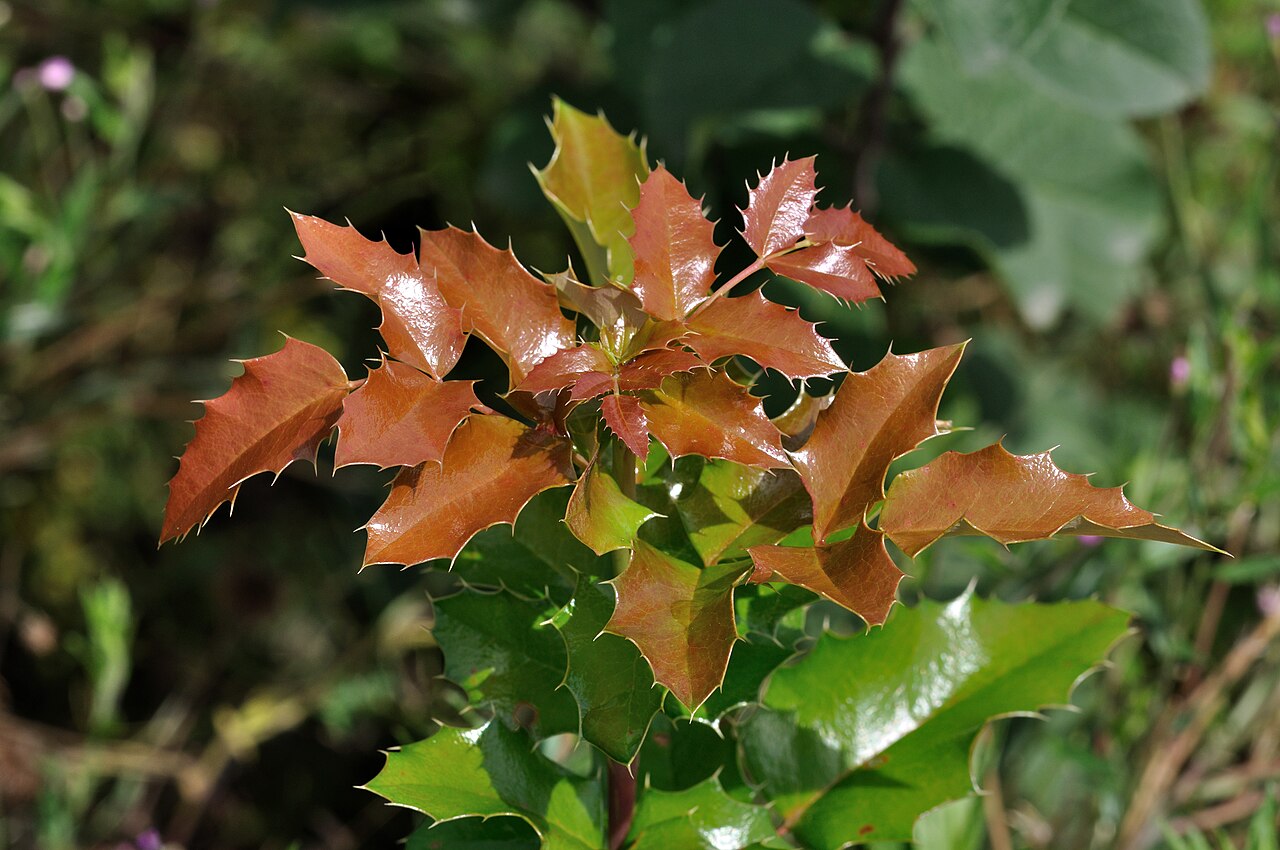
Western gardeners have an easier swap. Tall Oregon grape is in the barberry family. NC State describes it as an evergreen understory shrub of western forests with spiny leaflets, and lists it as resistant to deer and heavy shade.
The Wildflower Center notes that it needs protection from drying winter winds, which can scorch the leaves. Plant it on the sheltered side of a building or among other shrubs.
In Texas and the Southwest, agarita plays the same role. The Wildflower Center describes rigid, thicket-forming branches and blue-gray leaves with needle-sharp tips on rocky limestone hills. It’s a strong barrier plant for sun and dry soil, and it should be kept back from walkways.
Installation Steps
- Remove the barberry first. Dig out the crown and as many roots as you can, wearing gloves and long sleeves. Bag branches that carry fruit instead of composting them.
- Fix the bed edge. Mark the replacement’s mature width on the ground with flour or a hose. Move the planting line out from the wall if needed.
- Loosen, don’t amend heavily. Choose a shrub for the soil you have. Loosen the planting area and plant at the same depth the shrub grew in the pot.
- Space by mature width. Set shrubs so their listed widths just meet. Suckering plants like sumac, chokeberry, and Carolina rose will fill gaps on their own.
- Mulch lightly and water deeply. Keep mulch a few inches away from stems. Water at planting and then whenever the root ball starts to dry during the first season.
The First Three Years
- Year one, spring to fall: Water through dry spells. Pull any barberry seedlings that sprout where the old shrubs grew, while they’re small enough to remove by hand.
- Year one, winter: Leave shrubs unpruned. Note any that sat in standing water or wilted in summer.
- Year two: Expect more top growth. Start edging suckering shrubs at the bed line. Keep scouting for barberry seedlings.
- Year three: Prune for shape only where a shrub crowds a walk or window. Cut ninebark back in winter if you want it more compact, as UNH suggests. Replace any shrub that clearly doesn’t like the site rather than nursing it along.
Mistakes to Avoid
- Choosing by thorns alone. A thorny shrub in the wrong light or soil will struggle. Start with site, then look for prickles if you still need them.
- Planting a big shrub in a barberry-sized gap. Barberry stayed small. Check width, not just height.
- Buying a cultivar of the invasive. “Seedless” or “low-fruiting” barberry cultivars are still Japanese barberry. Where it’s prohibited, they’re prohibited too.
- Assuming one list fits every region. Dwarf fothergilla is a southeastern coastal plain native. Oregon grape is western. Agarita belongs in Texas and the Southwest.
- Forgetting follow-up. Barberry seedlings and root sprouts can show up after removal. Walk the bed each spring and pull them.
📋 Before buying, check whether a shrub appears on your regional list: New York, Pennsylvania, and northern New Jersey (ninebark, fragrant sumac, sweetspire), western Oregon and western Washington (tall Oregon grape), or south and west Texas (agarita).
Frequently Asked Questions
Is there a native shrub that looks exactly like red barberry?
Not really. UNH Extension notes you can usually get barberry’s color or its compact form, but rarely both. Purple ninebark cultivars come closest on color; dwarf fothergilla and Carolina rose come closer on size.
Are “sterile” barberry cultivars safe to plant?
They’re still Japanese barberry. Some states that prohibit the species also cover its cultivars; New Hampshire’s prohibition, for example, includes all cultivars and varieties. Check your state’s invasive plant list.
What native shrub replaces barberry in dry shade?
In the North, northern bush honeysuckle handles dry, rocky, slightly acid shade. In the Pacific Northwest, tall Oregon grape tolerates heavy shade. Fragrant sumac also tolerates some shade on dry soils.
Will native replacements be eaten by deer?
Some will. NC State lists fragrant sumac, dwarf fothergilla, Virginia sweetspire, and tall Oregon grape as deer resistant, but hungry deer will browse almost anything. Protect young shrubs the first year in heavy-browse areas.
Do I have to remove barberry I already have?
Laws vary by state. In New Hampshire, removing existing plants isn’t required. Removing them still helps nearby woods, and replacing them with natives keeps your garden’s structure.
Sources
- UNH Extension: Alternatives to Invasive Landscape Plants
- Wikipedia: Berberis thunbergii
- NC State Extension Plant Toolbox: Physocarpus opulifolius
- NC State Extension Plant Toolbox: Rhus aromatica
- NC State Extension Plant Toolbox: Rosa carolina
- NC State Extension Plant Toolbox: Fothergilla gardenii
- NC State Extension Plant Toolbox: Itea virginica
- NC State Extension Plant Toolbox: Ilex glabra
- NC State Extension Plant Toolbox: Aronia melanocarpa
- NC State Extension Plant Toolbox: Berberis aquifolium
- Lady Bird Johnson Wildflower Center: Physocarpus opulifolius
- Lady Bird Johnson Wildflower Center: Rhus aromatica
- Lady Bird Johnson Wildflower Center: Rosa carolina
- Lady Bird Johnson Wildflower Center: Diervilla lonicera
- Lady Bird Johnson Wildflower Center: Fothergilla gardenii
- Lady Bird Johnson Wildflower Center: Itea virginica
- Lady Bird Johnson Wildflower Center: Lindera benzoin
- Lady Bird Johnson Wildflower Center: Aronia melanocarpa
- Lady Bird Johnson Wildflower Center: Ilex glabra
- Lady Bird Johnson Wildflower Center: Mahonia aquifolium
- Lady Bird Johnson Wildflower Center: Mahonia trifoliolata