
Savanna Blazing Star (Liatris savannensis)
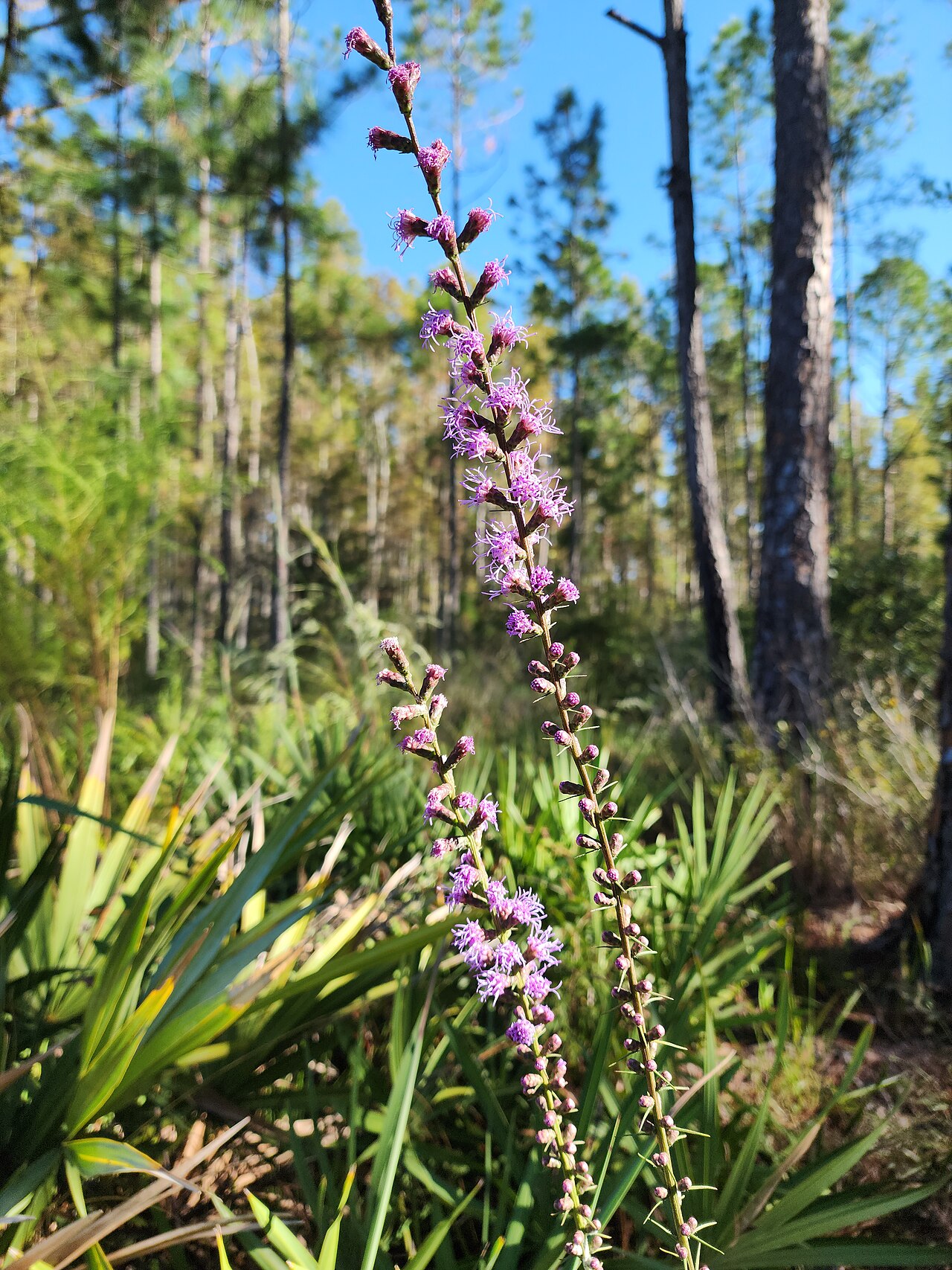
Liatris savannensis, known as Savanna Blazing Star or savanna gayfeather, is a late-season wildflower of Florida’s pine flatwoods and wet savannas. From a rounded underground corm it sends up stiff, leafy stems 2 to 4 feet tall, and from late summer into November the upper part of each stem becomes a long wand of small lavender to rose-purple flower heads. It belongs to the aster family (Asteraceae) and is one of roughly a dozen blazing stars native to Florida.
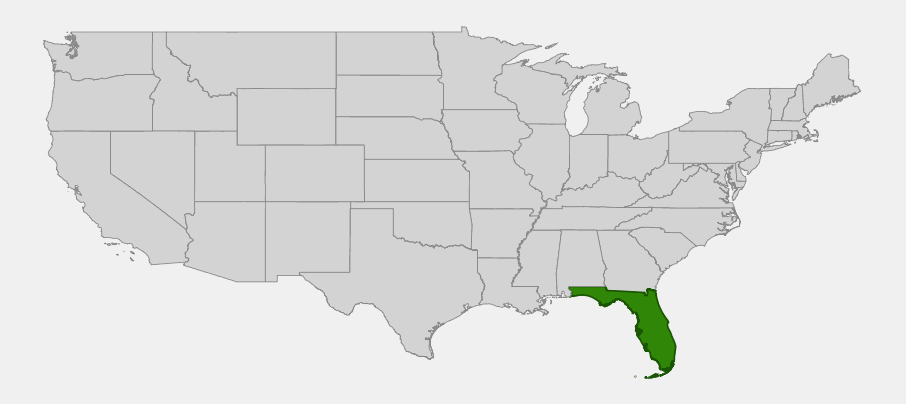
Savanna blazing star is endemic to Florida per the Atlas of Florida Plants: it grows nowhere else in the world. Its known range is small, centered on the flatwoods of the southwest Gulf Coast around Tampa Bay and south toward Fort Myers. It is not on Florida’s state list of endangered or threatened plants, but NatureServe ranks it as globally vulnerable (G3), because much of its flatwoods habitat has been converted to housing, citrus and pasture, and many remaining stands go unburned for years.
This guide explains how to tell savanna blazing star from its relatives, where it grows, and how Florida gardeners can grow it in a sunny, sandy native garden. If you want to grow it, buy nursery-propagated plants or seed from a reputable native nursery, and never dig plants or collect seed from wild populations.
Identification
Blazing stars are easy to recognize as a group: wand-like spikes of fluffy purple heads on grassy-leaved stems. Telling the species apart takes a closer look at the heads, the bracts that wrap them, and the leaves. Savanna blazing star was described as a separate species only in the early 2000s, by botanists Robert Kral and Guy Nesom, so older Florida guides do not list it, and earlier collections were filed under other spike-flowered blazing stars.
Corm & Stems
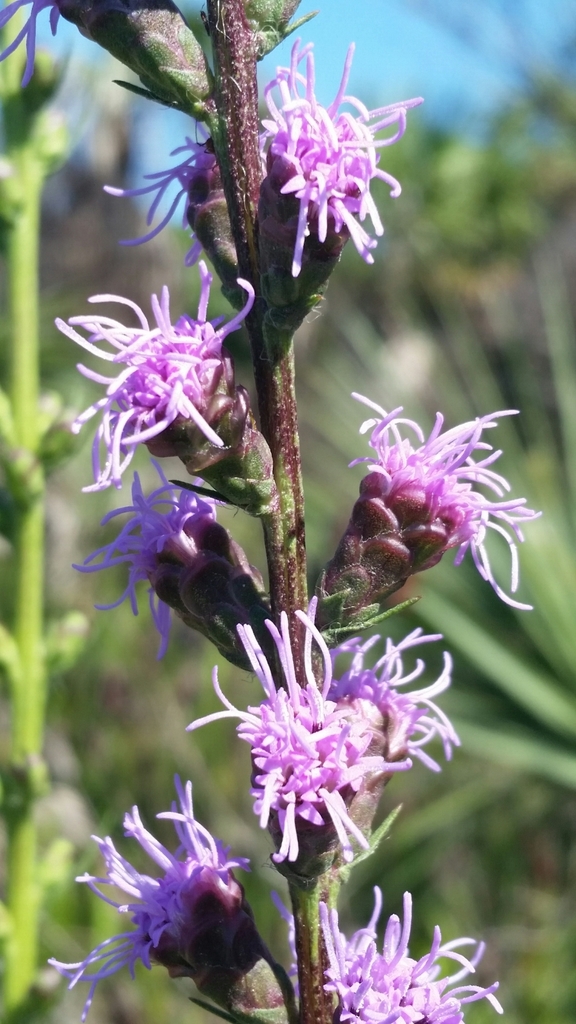
Each plant grows from a rounded corm buried a few inches deep in sandy soil. In spring the corm produces one to several upright, unbranched stems. In flower they usually stand 2 to 4 feet tall. The stems are densely leafy, green, and often finely hairy, which helps separate it from smoother-stemmed relatives.
Leaves
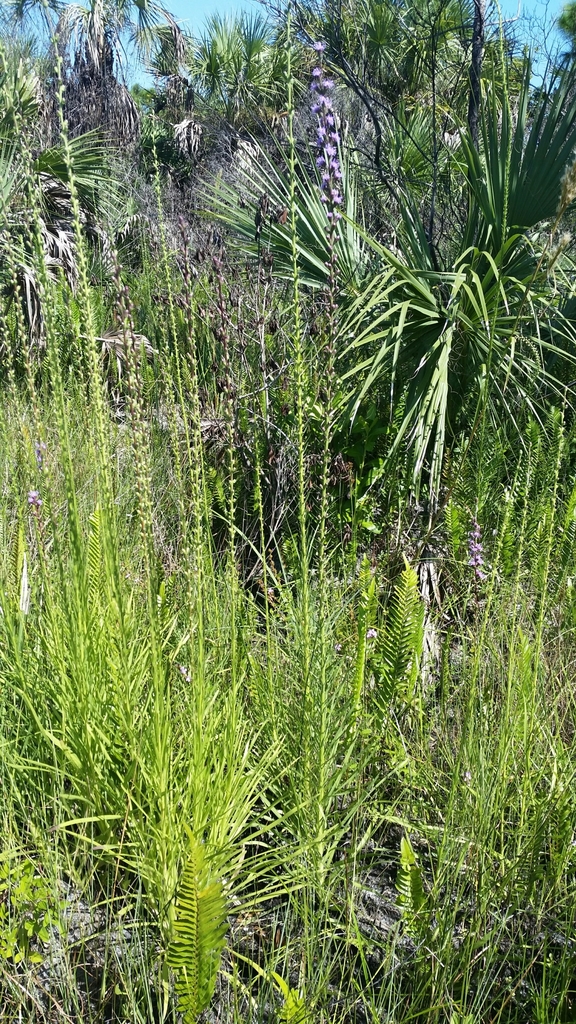
The leaves are narrow and grass-like, crowded along the stem and largest near the base, where they can be 8 inches or more long. Higher on the stem they become progressively shorter and narrower, so the plant has a bottle-brush look before it flowers. Like most blazing stars, the leaves are dotted with tiny resin glands.
Flowers
Flower heads are small and set close to the stem, packed along the upper third or more of the stalk in a long spike. Each head contains only a handful of tubular disk florets; there are no ray petals. Lavender to pink-purple, the florets have long, thread-like style branches that give the spike its feathery look. As in all blazing stars, the spike opens from the top downward, so a stem often has fading heads at the tip and fresh buds below.
Flowering runs from August to November, with a peak in September and October. Savanna blazing star is one of the last purple wildflowers in the flatwoods before winter, together with other fall blazing stars and asters.
Fruit & Seeds
Each floret produces a small, ribbed, dark seed (a cypsela) crowned with a ring of bristly, feathery hairs (the pappus). In late fall the spikes dry to tan, and the seeds drift short distances on the wind. Seed collected from your own nursery-grown plants can be sown in fall.
Similar Species
Several other blazing stars grow in the same counties. Dense blazing star (Liatris spicata) is usually taller in wet sites, with smooth stems and a tight spike of crowded heads in summer. Slender gayfeather (L. gracilis) has heads on short stalks rather than set right against the stem. Garber’s gayfeather (L. garberi) has broader, flatter leaves and larger heads. When in doubt, the Atlas of Florida Plants and a local Florida Native Plant Society chapter can help confirm an identification.
Quick Facts
| Scientific Name | Liatris savannensis Kral & G.L. Nesom |
| Family | Asteraceae (aster family) |
| Plant Type | Herbaceous perennial wildflower from a corm |
| Mature Height | 2–4 ft in flower |
| Mature Spread | 6–12 in per clump |
| Growth Rate | Moderate |
| Sun Exposure | Full sun |
| Water Needs | Moderate; moist sand in summer, tolerates short dry spells |
| Soil Type | Acidic sand or sandy loam, low in nutrients |
| Soil pH | About 4.5–6.5 (acidic) |
| Bloom Time | August–November |
| Flower Color | Lavender to rose-purple |
| Fall Color | Spikes dry to tan; leaves brown after frost or drought |
| Fruit | Small ribbed cypsela with a feathery bristle pappus |
| Deer Resistant | Moderately; deer and rabbits occasionally browse young stems |
| USDA Hardiness Zones | 9–10 |
Native Range
Savanna blazing star grows only in Florida. USDA PLANTS and the Lady Bird Johnson Wildflower Center record it from Florida alone, and the Atlas of Florida Plants treats it as a Florida endemic. Most records come from the southwest peninsula along the Gulf Coast: it is known historically from Pinellas, Hillsborough, Manatee, Sarasota, Charlotte and Lee counties, with scattered records farther inland in the central peninsula.
Within that range it is a plant of mesic to wet pine flatwoods and savannas: flat, sandy, acidic ground with a seasonally high water table, open slash pine or longleaf pine overhead, and a groundcover of saw palmetto, wiregrass, other grasses and wildflowers. It also grows on the margins of wet prairies and in open, mowed rights-of-way where the original flatwoods soil remains.
Because its range overlaps one of the fastest-growing regions of Florida, a large share of its original habitat is gone. Surviving populations are mostly on preserves, state lands and utility corridors, where prescribed fire or mowing keeps the ground open. Fire suppression lets saw palmetto and shrubs grow tall and dense, and blazing stars decline under that shade.
📋 Regional plant lists featuring Savanna Blazing Star: North & South Florida
Growing & Care Guide
Savanna blazing star is a good choice for sunny, sandy Florida yards within and near its native range, especially in a flatwoods-style meadow or a pollinator bed. Because it is endemic to Florida and has a small wild range, start only with nursery-propagated plants or seed from a reputable native nursery. Never dig plants or collect seed from wild populations. Florida Association of Native Nurseries members and native plant sales are the best places to look; if it is not available, other Florida blazing stars give a similar effect.
Light
Plant in full sun. In the wild it flowers best in open, recently burned flatwoods, and in shade the stems lean and flowering drops off.
Soil & Water
Use the native sandy soil as it is. Savanna blazing star needs acidic, well-drained but not droughty sand, ideally where the soil stays slightly moist in the summer rainy season. It does not need fertilizer or soil amendments, which mostly feed weeds and can make the stems flop. Water new plants regularly for the first month or two. Established plants survive dry spells on their corms, though they grow taller and bloom more heavily in moister sites. Avoid places where water stands for weeks.
Planting Tips
Plant potted plants or dormant corms in late fall through early spring, or at the start of the summer rainy season. Set corms about 1 to 2 inches deep. Plant them in groups of five or more, 8 to 12 inches apart, so the spikes make a visible show in fall. Good companions are low native grasses, such as wiregrass and lopsided indiangrass, and other flatwoods wildflowers that bloom at different times.
Pruning & Maintenance
Leave the stems standing after flowering so seeds can ripen and drop, then cut them back in winter. In a larger meadow, an occasional winter mow or, where it is safe and permitted, a prescribed burn every few years keeps grasses and shrubs from crowding the blazing stars. Keep mulch thin near the crowns, since thick mulch keeps the corms wet and invites rot. Rabbits and deer may nibble young shoots; established clumps usually recover.
Propagation
Grow from seed sown in fall on the surface of a sandy seed mix, lightly pressed in and kept moist. Seedlings form a corm in their first year and usually flower in the second or third year. Older clumps with several corms can be divided while dormant in winter. Collect seed only from your own garden or nursery plants.
Landscape Uses
- Pollinator gardens: late-season nectar for butterflies and bees when few other plants are blooming
- Flatwoods-style meadows: with low native grasses and other Florida wildflowers in sunny, sandy yards
- Restoration plantings: in pine flatwoods within its southwest Florida range, using nursery-propagated stock
- Fall color accents: vertical purple spikes among palmettos and grasses from September into November
- Cut flowers: spikes from garden plants last well in arrangements and can be dried
Wildlife & Ecological Value
Blazing stars are among the most important fall nectar plants in Florida pinelands, and savanna blazing star blooms at the right time to feed migrating and late-season insects.
For Pollinators
The tubular florets hold nectar that suits long-tongued insects. Butterflies, including skippers, sulphurs and migrating monarchs, visit the spikes regularly, along with bumblebees, other native bees and day-flying moths. Because it flowers into November, it helps carry pollinators through the fall migration season.
For Birds
Sparrows and other seed-eating birds pick seeds from the dry spikes in late fall and winter. In flatwoods, the open, grassy groundcover where it grows is also habitat for birds such as Bachman’s sparrow and northern bobwhite.
For Mammals
Deer and rabbits occasionally browse the young stems, and small mammals may dig and eat the corms. It has no special importance as mammal food.
Ecosystem Role
Savanna blazing star is a characteristic wildflower of fire-maintained flatwoods. Its corms survive fires underground and resprout quickly, and plants often bloom heavily in the season after a burn. Its presence is a sign that a flatwoods site still has its native groundcover, which is much harder to restore than the pine canopy.
Cultural & Historical Uses
The genus name Liatris is of uncertain origin, and the common names blazing star and gayfeather both describe the bright, feathery spikes. The species name savannensis refers to the savannas and flatwoods where it grows. It is a recent addition to the Florida flora: Robert Kral, a leading authority on southeastern plants, and Guy Nesom, a specialist in the aster family, described it as a new species in the early 2000s from specimens collected in southwest Florida.
Because it was described so recently and has a small range, it has no recorded history of traditional use. Other blazing stars were used by Native American peoples, and their corms were sometimes used medicinally, but there is no record of this for the Florida species, and it should not be harvested from the wild for any purpose.
Today savanna blazing star is valued mainly as part of the natural heritage of southwest Florida. It appears on native plant society lists for the region, and growers have begun offering it in small numbers for gardeners who want to plant species unique to the state.
Frequently Asked Questions
Is savanna blazing star endemic to Florida?
Yes. The Atlas of Florida Plants treats it as endemic to Florida, and it is known mainly from the southwest Gulf Coast flatwoods. It is not state-listed as endangered or threatened, but it has a small range and NatureServe ranks it as globally vulnerable.
Can I dig savanna blazing star from the wild?
No. Buy nursery-propagated plants or seed from a reputable Florida native nursery. Digging wild plants damages limited populations, and collecting on public lands and preserves is prohibited without a permit.
How is it different from dense blazing star?
Dense blazing star (Liatris spicata) is common across the eastern U.S., blooms mainly in summer, and has smooth stems and a tight, crowded spike. Savanna blazing star blooms from late summer into November, usually has finely hairy, densely leafy stems, and is limited to Florida.
When does savanna blazing star bloom?
From August to November, with the peak in September and October. Each spike blooms from the top down over two to three weeks.
Will it grow in a regular garden bed?
It does best in unamended, acidic sandy soil in full sun, where it gets moisture in the summer rainy season. It does poorly in rich, heavily watered beds and in heavy mulch, where the corms can rot.

Looking for a nursery that carries Savanna Blazing Star?
Browse our native plant nursery directory: Florida