
Swamp Twinflower (Dyschoriste humistrata)
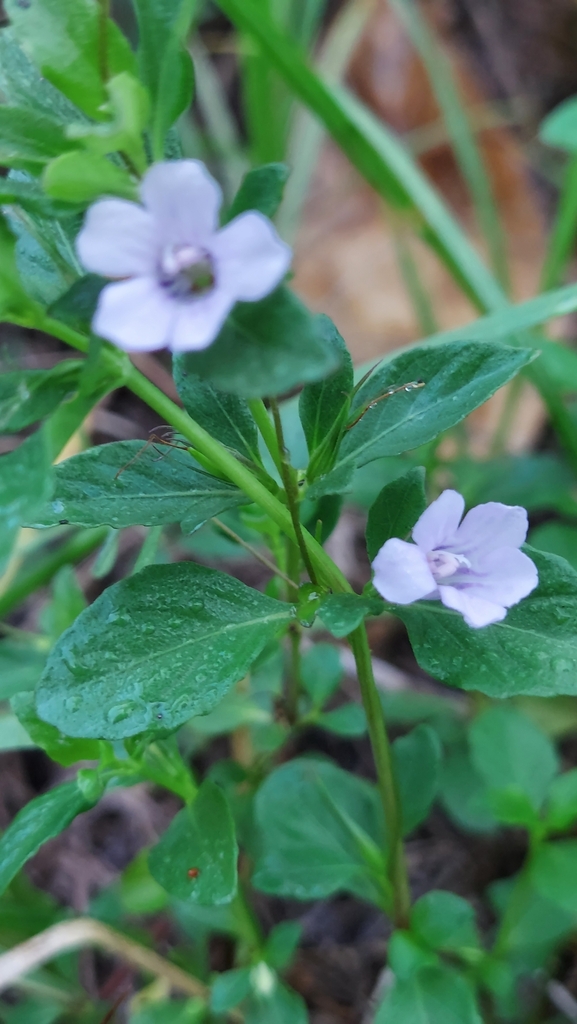
Dyschoriste humistrata, called Swamp Twinflower or swamp snakeherb, is a low, creeping wildflower of moist, shady forests in the southeastern Coastal Plain. Its trailing stems spread across the ground in floodplain woods, along stream banks and at the edges of swamps, and from spring into summer they carry pale lavender, tubular flowers in the leaf axils, often in pairs, which is the origin of the name twinflower.
It belongs to the acanthus family (Acanthaceae), which also includes the wild petunias (Ruellia). The species name humistrata means “spread on the ground”, a good description of its sprawling habit. It was first described as Ruellia humistrata by André Michaux before being moved to Dyschoriste, and USDA PLANTS lists it as swamp snakeherb.
Swamp twinflower is native to Florida, Georgia and South Carolina. It is much less known in gardens than its sun-loving relative, the upland twinflower (Dyschoriste oblongifolia), but it fills a different niche: a soft, low groundcover for damp, shady spots where few flowering natives thrive. This guide covers identification, range and how to grow it.
Identification
Swamp twinflower is a small plant that blends into the herb layer of moist woods until it flowers. Look for opposite, smooth, oval leaves on trailing or leaning stems, and pale, two-lipped flowers tucked in the leaf axils.
Stems
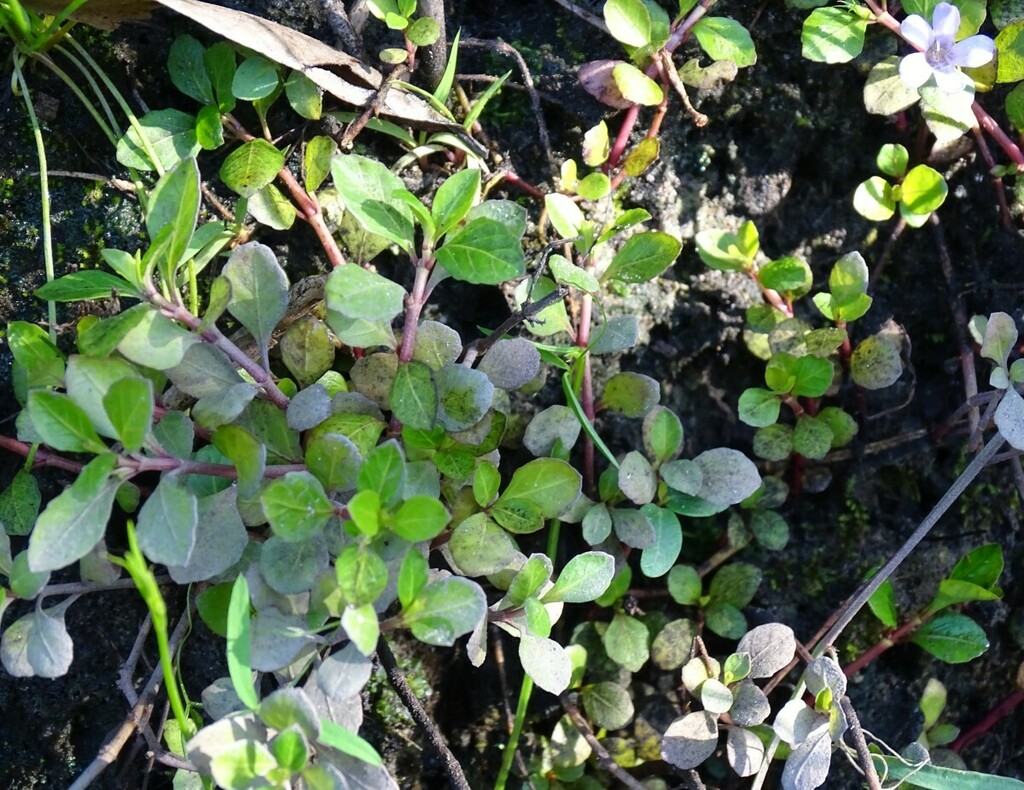
The stems are slender, four-angled when young, and creep or lean along the ground, rooting here and there at the nodes. Individual stems can reach 2 to 4 feet in length, but the plant rarely rises more than about a foot above the soil. Over time a single plant forms a loose, open mat.
Leaves
Leaves are opposite, simple and short-stalked, about 1 to 2½ inches long, elliptic to oval or slightly obovate, with smooth or faintly wavy margins. They are thin and bright green, larger and less hairy than the leaves of upland twinflower, which reflects the moister, shadier habitat.
Flowers
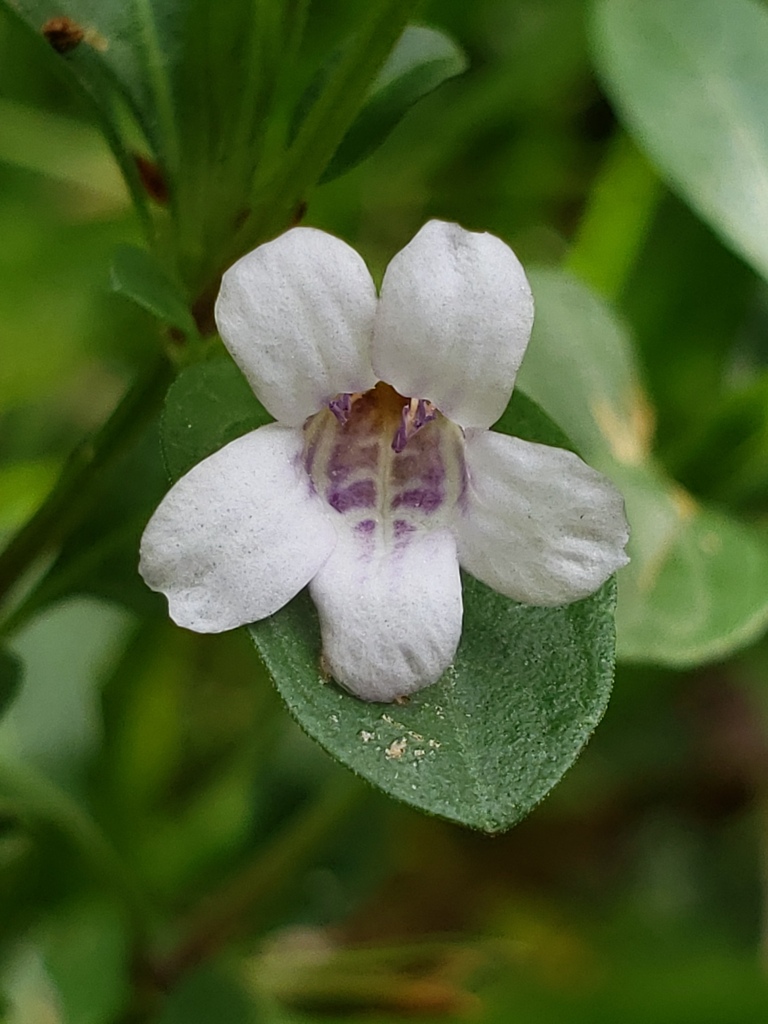
The flowers grow in small clusters of one to three in the leaf axils, often with two open at once. Each flower is a narrow tube about ½ to ¾ inch long that flares into five rounded lobes arranged as two lips. The color ranges from nearly white to pale lavender or light blue-violet, and the lower lip has fine purple spots and lines. A narrow, deeply cut green calyx surrounds the base of the tube.
In Florida flowers appear mainly from late spring through summer, with scattered blooms at other times in mild years.
Fruit & Seeds
After flowering, each fertile flower produces a small, narrow capsule enclosed in the calyx. When dry, the capsule splits open and flings out a few flattened seeds, as is typical of the acanthus family.
Quick Facts
| Scientific Name | Dyschoriste humistrata (Michx.) Kuntze (basionym Ruellia humistrata Michx.) |
| Family | Acanthaceae (acanthus family) |
| Plant Type | Creeping herbaceous perennial; groundcover |
| Mature Height | 4–12 in |
| Mature Spread | 2–4 ft per plant; slowly forms loose mats |
| Growth Rate | Moderate |
| Sun Exposure | Part shade to shade |
| Water Needs | Medium to high; moist to wet soil |
| Soil Type | Moist sandy loam, loam or mucky soil rich in organic matter |
| Soil pH | Slightly acidic to neutral, about 5.5–7.0 |
| Bloom Time | Late spring–summer (peak June–July) |
| Flower Color | Pale lavender to light blue-violet, with purple spots |
| Fall Color | None; often semi-evergreen in mild winters |
| Fruit | Small narrow capsule with flattened seeds |
| Deer Resistant | Moderate |
| USDA Hardiness Zones | 8–10 |
Native Range
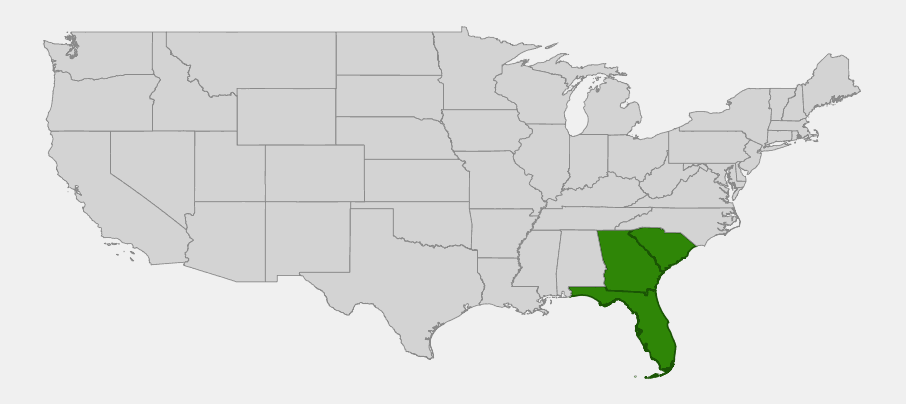
Swamp twinflower has a compact range on the southeastern Coastal Plain. USDA PLANTS and the Lady Bird Johnson Wildflower Center record it from three states: Florida, Georgia and South Carolina. It extends from the coastal plain of southern South Carolina through eastern and southern Georgia into the northern half of the Florida peninsula.
In Florida, the Atlas of Florida Plants maps it mainly in the north-central peninsula, and naturalists regularly find it in counties such as Alachua, Suwannee and Hernando, with scattered records farther south. It is most often found in the moist hardwood forests and spring-fed stream valleys that are common in that part of the state.
Typical habitats are floodplain forests, hydric and mesic hammocks, stream and river banks, seepage areas, and the shaded margins of swamps and spring runs. It is classified as a facultative wetland plant (FACW) in the national wetland plant list, meaning it usually grows in wetlands but is sometimes found in moist uplands.
📋 Regional plant lists featuring Swamp Twinflower: North & South Florida · Alabama, Georgia & Mississippi · North & South Carolina
Growing & Care Guide
Swamp twinflower is an easygoing groundcover for the damp, shady parts of a Southeastern native garden. It is sold by some Florida native plant nurseries, usually in small pots or as plugs. Buy nursery-propagated plants rather than digging them from the wild.
Light
Plant it in part shade to full shade, such as under high tree canopy, along the north side of a building, or in the dappled light of a woodland garden. A few hours of morning sun are fine if the soil stays moist. In strong afternoon sun the leaves scorch and the plant struggles.
Soil & Water
It prefers soil that stays evenly moist to wet and is rich in organic matter, such as a leafy loam or mucky sand. It tolerates brief flooding and does well beside ponds, streams, rain garden basins or drip lines. In dry sandy soil it needs regular watering and is better replaced by upland twinflower. Mulch with fine leaf litter to hold moisture.
Planting Tips
Set plants 12 to 18 inches apart in spring or early summer, when the soil is warm and the rainy season is near. They knit together into a loose mat within a season or two. Swamp twinflower combines well with ferns, sedges, wild petunia and other woodland plants, and it is a useful filler between larger shrubs in a moist shade garden.
Pruning & Maintenance
Little maintenance is needed. Trim back long stems that wander onto paths, and pull out vigorous weeds while the mat is filling in. Plants may die back partly in a hard freeze in north Florida but usually regrow from the base in spring. No fertilizer is needed in organic soil.
Propagation
Swamp twinflower roots easily where stems touch the ground, so the simplest method is to dig and pot rooted stem sections in spring or summer. Tip cuttings also root quickly in moist potting mix. Seed can be collected from ripe capsules, but plants are more often increased vegetatively.
Landscape Uses
- Shade groundcover: a soft, flowering mat for moist, shady ground under trees
- Rain gardens and pond edges: in partly shaded, damp zones that flood occasionally
- Woodland gardens: with ferns, sedges and spring wildflowers
- Lawn alternative: for small, damp, shady patches where turf grass fails
- Habitat restoration: in floodplain and hammock restoration within its native range
Wildlife & Ecological Value
Swamp twinflower is a small part of the herb layer in southeastern wet forests, but its long flowering season makes it useful to small pollinators in shady habitats where few other plants bloom in summer.
For Pollinators
The tubular, spotted flowers are visited by small bees, including native carpenter and sweat bees, and by small butterflies and skippers. The spots and lines on the lower lip act as nectar guides, pointing insects toward the throat of the flower.
For Birds
It has little direct food value for birds, but its mats provide cover for insects that ground-feeding birds such as thrushes, wrens and towhees hunt in the leaf litter.
For Mammals
Deer occasionally browse the soft leaves. It is of minor importance to mammals otherwise.
Ecosystem Role
Plants in the genus Dyschoriste belong to the acanthus family, and several acanthus-family plants are larval hosts for the common buckeye butterfly. The upland twinflower is a well-known buckeye host in Florida; whether buckeyes regularly use swamp twinflower is less well documented. Its creeping stems help hold soil on shaded stream banks and floodplains.
Cultural & Historical Uses
The French botanist André Michaux described this plant as Ruellia humistrata in his Flora Boreali-Americana (1803), based on his travels in the Carolinas, Georgia and Florida. The German botanist Otto Kuntze transferred it to Dyschoriste in 1891.
The genus name Dyschoriste comes from Greek words meaning roughly “hard to separate”. The common name snakeherb, used by USDA for several Dyschoriste species, is an old folk name; there is no reliable evidence that the plant was used to treat snakebite.
There is little recorded use of swamp twinflower by Native Americans or early settlers. Its modern value is as a native groundcover. Florida native plant societies have helped bring it, along with upland twinflower, into gardens as an alternative to non-native groundcovers.
Frequently Asked Questions
What is the difference between swamp twinflower and twinflower?
Twinflower (Dyschoriste oblongifolia) grows in dry, sunny pinelands and has small, narrow, hairy leaves and larger blue-violet flowers. Swamp twinflower grows in moist, shady woods and has larger, thinner, smoother leaves and paler flowers. Choose based on your site: dry sun for twinflower, damp shade for swamp twinflower.
Is swamp twinflower related to the northern twinflower?
No. The northern twinflower (Linnaea borealis) is a small shrub of cool northern forests in the honeysuckle family. The two plants share only a common name.
Can swamp twinflower replace a lawn?
It works well in small, damp, shady areas where grass fails, but it does not tolerate heavy foot traffic. Use stepping stones through larger plantings.
Does swamp twinflower spread aggressively?
It spreads steadily by rooting stems but is not aggressive. It is easy to pull back where it is not wanted.
Will swamp twinflower survive frost?
It is hardy through north Florida and coastal Georgia and South Carolina, roughly USDA zones 8 to 10. Hard freezes may kill the stems back, but plants usually regrow from the base.

Looking for a nursery that carries Swamp Twinflower?
Browse our native plant nursery directory: Florida & Georgia · South Carolina