
Lemon Bacopa (Bacopa caroliniana)
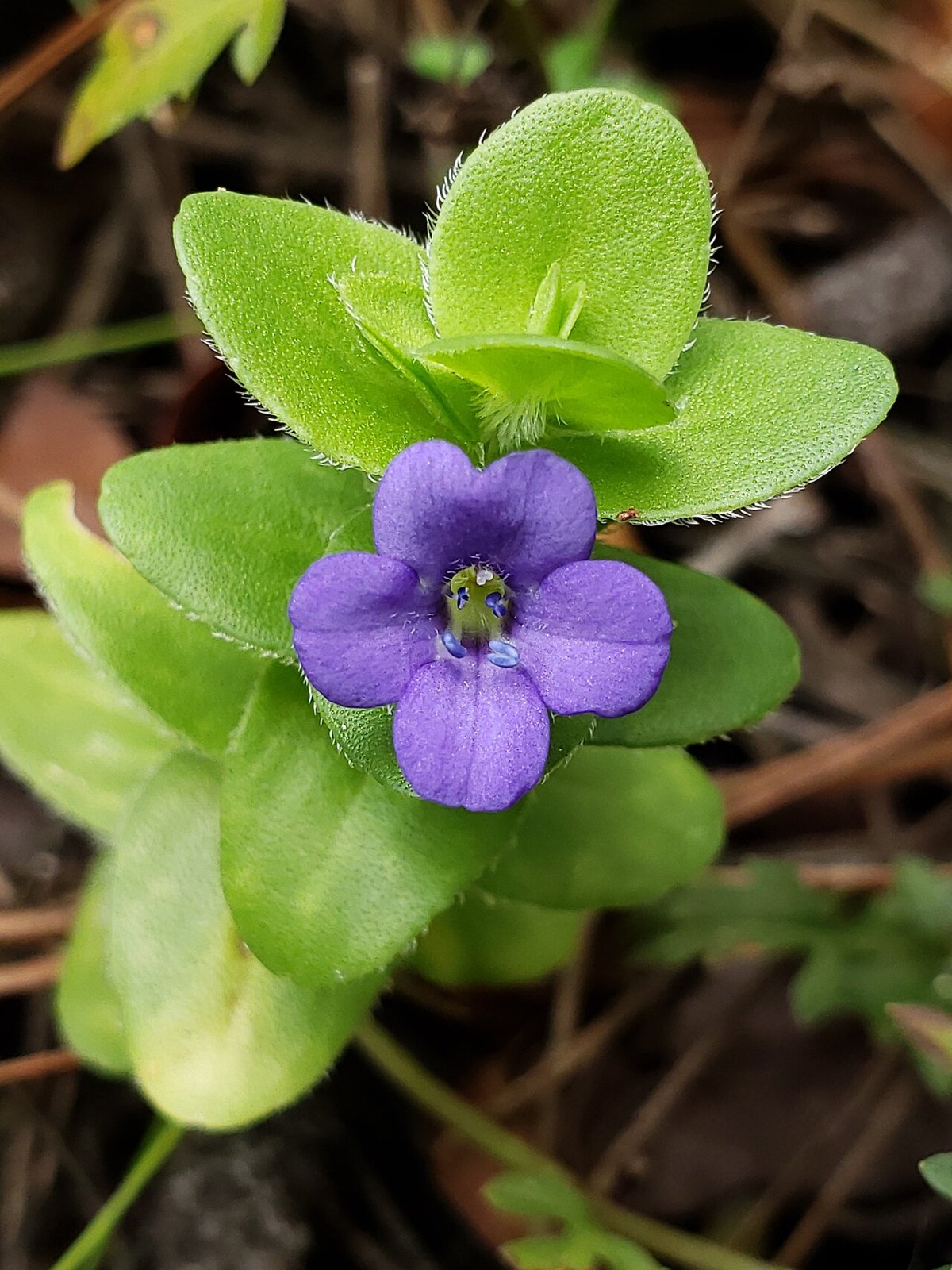
Bacopa caroliniana, known as Lemon Bacopa, blue waterhyssop or Carolina water-hyssop, is a low, creeping wetland perennial of the southeastern Coastal Plain. It forms soft mats of small, rounded, paired leaves along the muddy edges of ponds, marshes, swamps and ditches, and from late spring into fall it opens small, violet-blue flowers above the foliage. Its most memorable feature is the scent: crush a leaf and it smells distinctly of lemon. It belongs to the plantain family (Plantaginaceae), which now includes many plants formerly placed in the figwort family.
Lemon bacopa grows equally well creeping over wet mud, standing in a few inches of water, or fully submerged, and its submerged form has long been a popular aquarium plant. Older references list it under the names Bacopa amplexicaulis and Hydrotrida caroliniana.
In native gardens it is a useful, easy ground cover for pond edges, rain gardens, bog gardens and the shallow shelves of retention ponds. It is also a larval host for the white peacock butterfly in Florida. This guide covers how to recognize it, where it grows naturally, and how to use it in wet landscapes.
Identification
Lemon bacopa is a small plant that is easiest to identify by touch and smell. The combination of clasping, rounded leaves, hairy stem tips, blue flowers and the lemon scent of crushed leaves separates it from other low wetland plants.
Stems & Habit
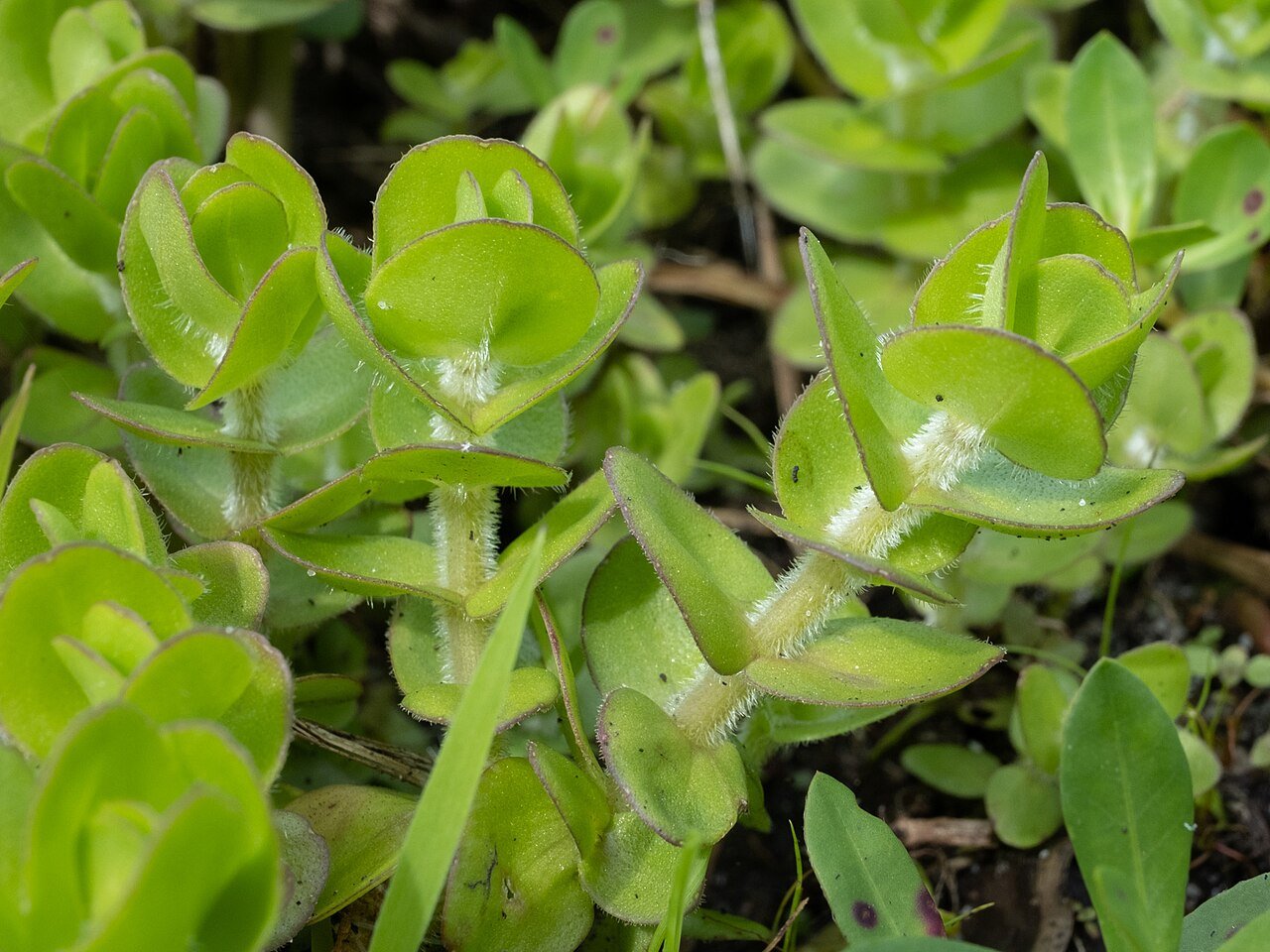
Lemon bacopa is a soft-stemmed perennial that creeps along wet ground and roots at the nodes, forming loose mats. The tips of the stems turn upward and reach about 3 to 6 inches above the mud, and plants growing in water can produce much longer stems that float or stand in the water column. The upper stems are covered in fine, soft, woolly hairs, while older stems are smooth and often reddish.
Leaves
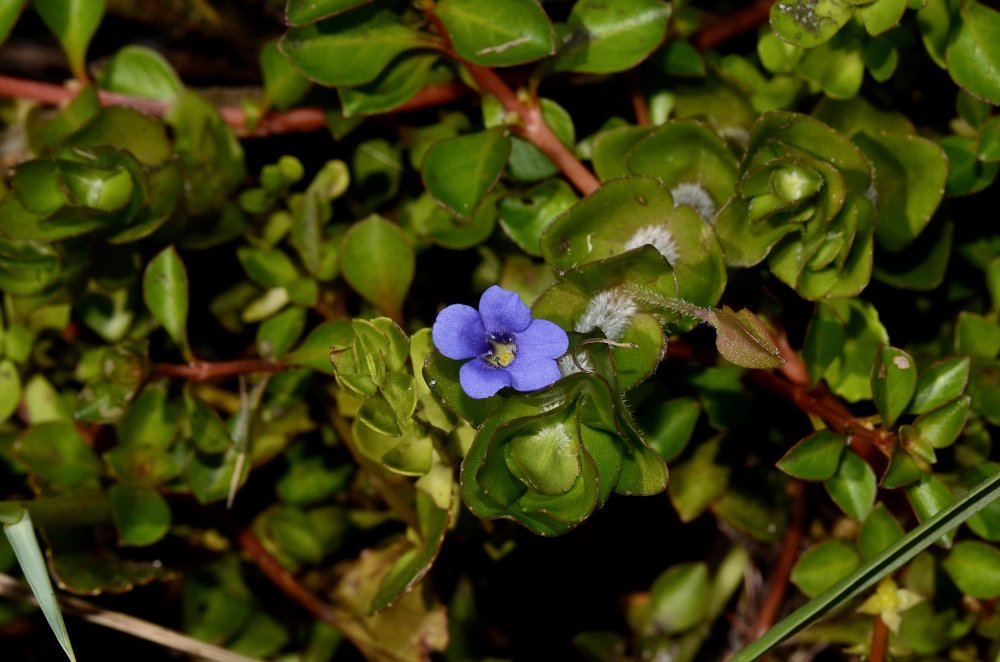
The leaves are opposite, stalkless and broadly oval to nearly round, about ½ to 1 inch long, with smooth edges and several fine, nearly parallel veins. They clasp the stem at their base, so each pair seems to wrap around it. The leaves are somewhat thick and succulent, and they release a lemony fragrance when crushed. Submerged leaves are thinner and greener; in strong light emersed leaves can take on bronze or reddish tones.
Flowers
The flowers are borne singly in the leaf axils on short stalks. Each is about ½ inch across, bell-shaped to slightly flared, with five rounded lobes of violet blue to light blue and a paler, often yellowish throat. They appear from late spring through early fall over most of the range, and nearly year-round in the warmest parts of Florida.
Fruit & Seeds
The fruit is a small, egg-shaped capsule enclosed by the persistent sepals. It splits open to release many tiny seeds. Most new plants arise from creeping stems rather than seed.
Similar Species
Herb-of-grace (Bacopa monnieri), also native in the Southeast, has smooth, narrower, wedge-shaped leaves that are not lemon-scented, and white to pale lavender flowers. Other small creeping wetland plants with blue flowers lack the clasping leaves and hairy stem tips of lemon bacopa.
Quick Facts
| Scientific Name | Bacopa caroliniana (syn. Bacopa amplexicaulis, Hydrotrida caroliniana) |
| Family | Plantaginaceae (plantain family) |
| Plant Type | Creeping aquatic to emergent herbaceous perennial |
| Mature Height | 3–6 in above mud or water (submerged stems longer) |
| Mature Spread | Spreads indefinitely by rooting stems; forms mats |
| Growth Rate | Moderate to fast in wet soil |
| Sun Exposure | Full sun to partial shade |
| Water Needs | High; wet soil to standing water a few inches deep |
| Soil Type | Wet sand, muck or mud |
| Soil pH | Broadly tolerant; slightly acidic to neutral |
| Bloom Time | May–September (nearly year-round in South Florida) |
| Flower Color | Violet blue to light blue |
| Fall Color | None notable; evergreen to semi-evergreen in mild climates |
| Fruit | Small egg-shaped capsule |
| Deer Resistant | Generally; rarely browsed |
| USDA Hardiness Zones | 7–11 |
Native Range
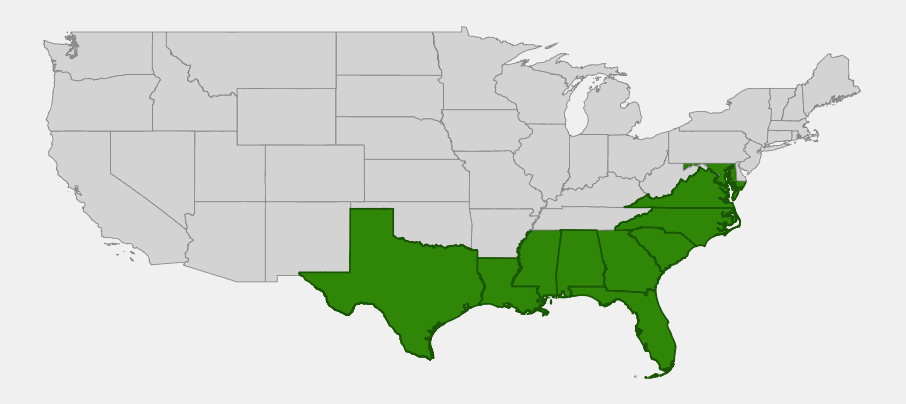
Lemon bacopa is native to the Atlantic and Gulf Coastal Plain of the southeastern United States. USDA PLANTS and the Lady Bird Johnson Wildflower Center record it from Maryland, Virginia, North Carolina, South Carolina, Georgia, Florida, Alabama, Mississippi, Louisiana and Texas. Florida is the center of its abundance, and it occurs throughout most of the state.
It grows in shallow, fresh water and on saturated ground: marshes, wet prairies, cypress and swamp margins, shallow ponds, lake shores, wet flatwoods depressions, ditches and canal banks. It is classified as an obligate wetland plant, meaning it almost always grows in wetlands. It tolerates a wide range of water levels, from damp mud to a foot or more of water, and survives periods when wetlands dry out by growing as a low terrestrial mat.
Outside its native range it is widely grown as an aquarium and water-garden plant. In the wild it spreads mainly by stem fragments that root wherever they settle on wet ground.
📋 Regional plant lists featuring Lemon Bacopa: North & South Florida · Alabama, Georgia & Mississippi · North & South Carolina · Maryland, Virginia & West Virginia · Arkansas, Louisiana, Eastern Oklahoma & Eastern Texas
Growing & Care Guide
Lemon bacopa is one of the easiest native wetland plants to grow. If its roots stay wet, it spreads quickly and needs almost no care. It is sold by native nurseries and aquatic plant suppliers; buy plants that are clearly labeled Bacopa caroliniana, since several other bacopas, including non-native ornamental species, are sold under similar names.
Light
Full sun to partial shade. Plants in full sun are compact and flower freely. In shade they are looser and greener, with fewer flowers.
Soil & Water
Grow it in wet sand, muck or mud that never dries out, or in standing water up to several inches deep. It does well on pond and stream edges, in the low zone of rain gardens, and on the planting shelves of retention ponds. It is not salt tolerant and should not be planted where brackish water floods. In a container water garden, a pot of loam or aquatic soil set just below the water surface works well.
Planting Tips
Plant rooted divisions or cuttings 12 to 18 inches apart in spring or early summer, and they will knit together within a season. Combine it with taller emergent plants such as pickerelweed and duck potato, letting the bacopa fill in the gaps. In the northern part of its range (zone 7), it may die back in hard freezes but usually regrows from stems near the water.
Pruning & Maintenance
Little maintenance is needed. Trim stems that creep onto paths or lawns, and thin mats if they crowd smaller plants. Don’t fertilize near ponds; excess nutrients feed algae more than they help bacopa.
Propagation
Lemon bacopa roots easily from stem cuttings. Simply push 3- to 4-inch pieces into wet soil or place them in water, and they will root within a week or two. Established mats can also be divided at any time during the growing season.
Landscape Uses
- Pond and stream edges: a soft, flowering ground cover for the wet margin between water and land
- Retention and stormwater ponds: fills shallow planting shelves and helps hold soft soil
- Rain and bog gardens: for the lowest, wettest zone
- Container water gardens: spills over the edges of pots and tubs
- Aquariums: a classic native aquarium plant that grows fully submerged
Wildlife & Ecological Value
Lemon bacopa is small, but its mats provide food, shelter and nursery habitat in shallow wetlands.
For Pollinators
The blue flowers are visited by small bees and other insects, which collect nectar and pollen. Flowering over a long season makes it a steady, if modest, resource at the water’s edge.
For Butterflies
The Florida Native Plant Society lists lemon bacopa as a larval host for the white peacock butterfly (Anartia jatrophae), a tropical species common in Florida whose caterpillars feed on several low wetland plants.
For Birds
Wading birds and ducks forage in shallow water among bacopa mats, which shelter the small fish, tadpoles and invertebrates they feed on. Waterfowl may eat the foliage.
For Mammals
The plant is of minor importance to mammals, though muskrats and other wetland mammals may eat it occasionally.
Ecosystem Role
Dense mats of lemon bacopa stabilize muddy shorelines, slow erosion and filter runoff. Submerged stems add oxygen to the water and provide cover for small fish, tadpoles and aquatic insects.
Cultural & Historical Uses
Thomas Walter, the botanist who worked in the Carolina Lowcountry in the late eighteenth century, first described this plant in his Flora Caroliniana of 1788, which is reflected in its species name caroliniana. It was later moved to the genus Bacopa by Benjamin Lincoln Robinson.
The genus name Bacopa comes from a name used for these plants by Indigenous people in French Guiana. The lemon scent of the leaves has made lemon bacopa a favorite curiosity in water gardens and nature-center ponds, where visitors are invited to crush a leaf and smell it.
Lemon bacopa has a long history in the aquarium trade, where its submerged form, sometimes called “giant red bacopa” for the reddish tint it develops under bright light, is one of the most widely sold native North American aquatic plants.
Frequently Asked Questions
Why is it called lemon bacopa?
Its leaves release a clear lemon fragrance when crushed or bruised. The scent is a reliable way to tell it from similar low wetland plants.
Can lemon bacopa grow underwater?
Yes. It grows emergent along shores, floating in shallow water, or fully submerged, which is why it is a popular aquarium plant. Submerged plants rarely flower.
Is lemon bacopa invasive?
No. It is native to the southeastern United States and spreads only by rooting stems in wet ground. It can form dense mats in ideal conditions but is easy to trim and does not spread into dry soil.
Does lemon bacopa need full sun?
It flowers best in full sun but grows well in partial shade. In heavy shade it becomes leggy and flowers sparsely.
Is lemon bacopa the same as the bacopa sold in hanging baskets?
No. The trailing “bacopa” sold for hanging baskets is usually Chaenostoma cordatum (formerly Sutera), a South African plant. Native lemon bacopa is a wetland plant that needs wet soil.

Looking for a nursery that carries Lemon Bacopa?
Browse our native plant nursery directory: Alabama · Florida & Georgia · Louisiana, Maryland & Mississippi · North Carolina · South Carolina, Texas & Virginia