
Variableleaf Sunflower (Helianthus heterophyllus)
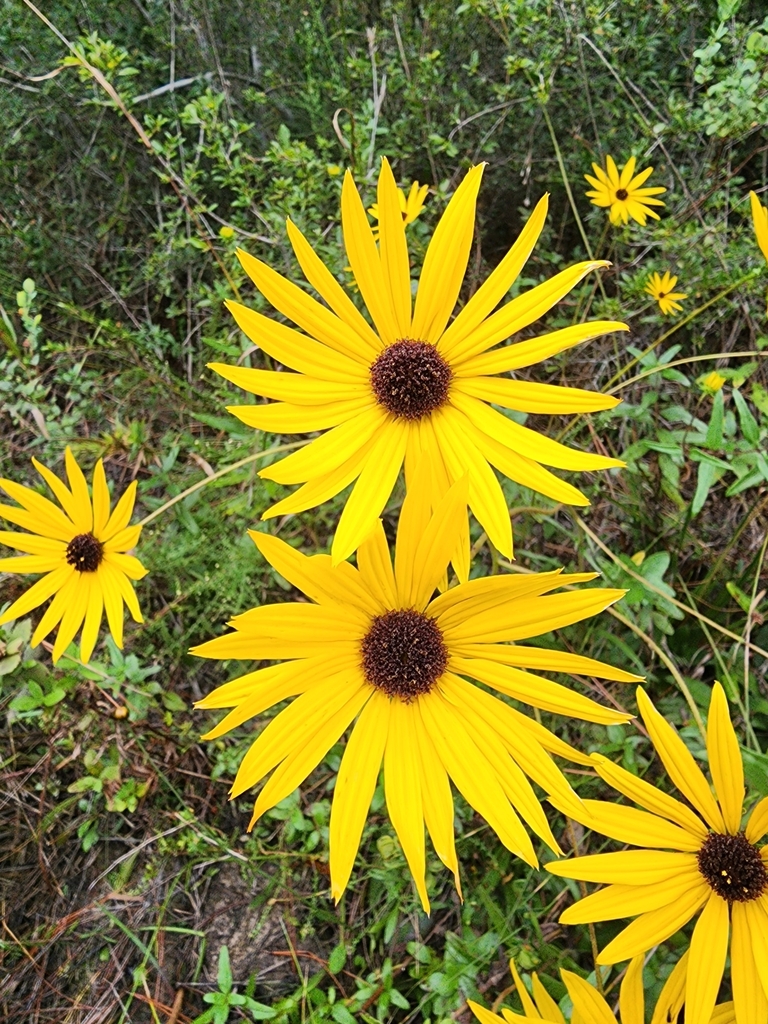
Helianthus heterophyllus, the Variableleaf Sunflower, is a wetland sunflower of the southeastern Coastal Plain. From late summer into fall it sends up tall, nearly leafless stems from a low clump of rough leaves, each ending in one or a few large, bright yellow flower heads with dark purple-brown centers. It grows in wet pine savannas, flatwoods, herb bogs and seepage slopes from North Carolina to Florida and Louisiana.
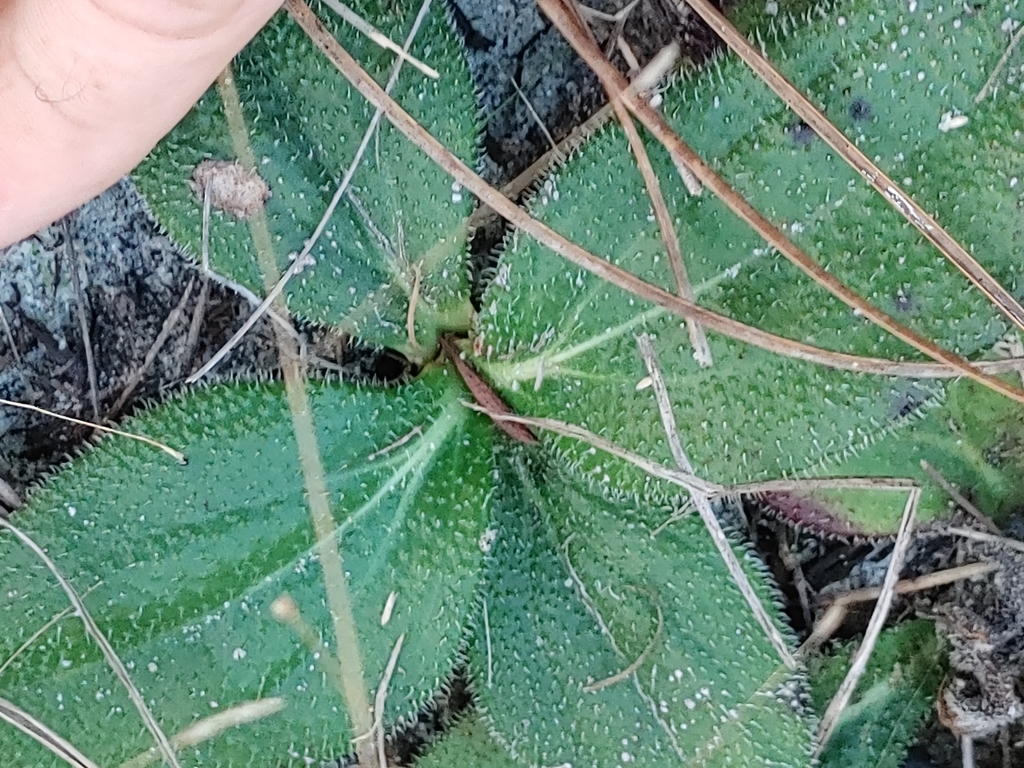
The name heterophyllus means “different leaves”. Its broad, oval leaves at the base of the plant look nothing like the few narrow, lance-shaped leaves higher on the stem. That contrast is the easiest way to tell it from its common relative, swamp sunflower, whose stems are densely leafy all the way up.
Variableleaf sunflower belongs to the aster family (Asteraceae). It is an obligate wetland plant, found almost always in wet ground, and it depends on regular fire to keep its sunny savanna habitat open. For gardeners it is a striking late-season wildflower for a sunny, moist, acidic site such as a rain garden or bog garden. This guide covers identification, range and care.
Identification
Variableleaf sunflower is most easily recognized by the combination of a ground-hugging rosette of broad, sandpapery leaves and tall, sparsely leafy stems carrying a few large, dark-centered flower heads.
Stems
The flowering stems are usually 2 to 4 feet tall, slender and stiff, rough-hairy, and unbranched or with a few branches near the top. Several stems may rise from one crown. Below the flowers they carry only a few pairs of small leaves.
Leaves
Basal leaves are clustered at the base of the plant, 3 to 7 inches long, oval to elliptic or broadly lance-shaped, thick, and very rough to the touch on both surfaces. They often lie flat on the ground and persist through much of the year. Stem leaves are opposite, much narrower, and shrink upward along the stem, so the upper stem looks almost bare.
Flowers
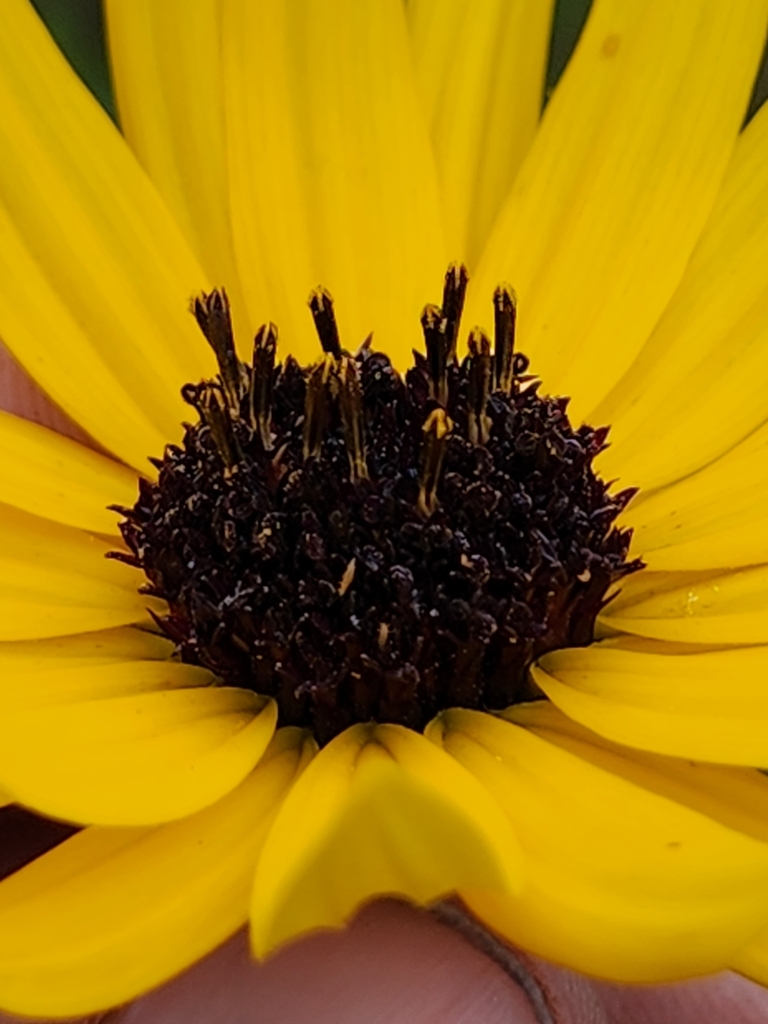
Each stem ends in one or a few flower heads 2½ to 4 inches across. There are usually 12 to 20 bright yellow ray florets around a disk ¾ to 1 inch wide made up of dark reddish-purple to brown disk florets. The bracts under the head are narrow and pointed. Flowering runs mainly from July into October, sometimes into November, with peak bloom in late summer and early fall.
Fruit & Seeds
After flowering, the disk ripens into a cluster of small, dark, flattened seeds (cypselae), each topped by two small scales. Like other sunflowers, the seeds are eaten by finches and sparrows.
Quick Facts
| Scientific Name | Helianthus heterophyllus Nutt. |
| Family | Asteraceae (aster family) |
| Plant Type | Herbaceous perennial wildflower |
| Mature Height | 2–4 ft in flower |
| Mature Spread | 1–2 ft |
| Growth Rate | Moderate |
| Sun Exposure | Full sun |
| Water Needs | High; moist to wet, seasonally saturated soil |
| Soil Type | Acidic sand, peaty sand or sandy loam |
| Soil pH | Acidic, about 4.5–6.0 |
| Bloom Time | July–October (occasionally into November) |
| Flower Color | Yellow rays with a dark reddish-purple disk |
| Fall Color | None; basal leaves persist |
| Fruit | Small dark cypselae |
| Deer Resistant | Moderate; rough leaves are seldom browsed |
| USDA Hardiness Zones | 7–9 |
Native Range
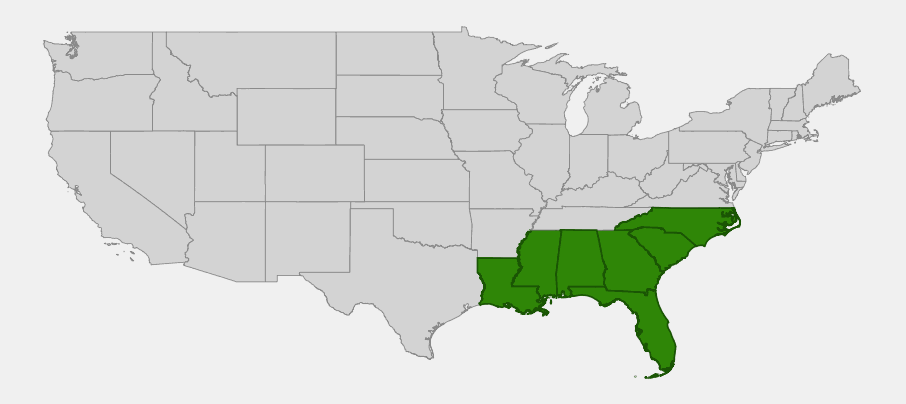
Variableleaf sunflower is native to the outer Coastal Plain of the southeastern United States. USDA PLANTS and the Lady Bird Johnson Wildflower Center record it from seven states: North Carolina, South Carolina, Georgia, Florida, Alabama, Mississippi and Louisiana. It does not reach the Piedmont or the interior.
In Florida the Atlas of Florida Plants maps it in the Panhandle and the northern part of the state, where wet longleaf pine savannas are most extensive, including the Apalachicola National Forest region. It is also found in the coastal savannas of southern Alabama and Mississippi, the Florida Parishes of Louisiana, southeastern Georgia, and the Carolina coastal plain.
Its habitats include wet pine savannas and flatwoods, herb bogs, seepage slopes, wet prairies, and the edges of pitcher plant bogs. It also grows in roadside ditches and power-line rights-of-way that are mowed regularly. The national wetland plant list classifies it as obligate (OBL) in every region where it grows.
📋 Regional plant lists featuring Variableleaf Sunflower: North & South Florida · Alabama, Georgia & Mississippi · North & South Carolina · Arkansas, Louisiana, Eastern Oklahoma & Eastern Texas
Growing & Care Guide
Variableleaf sunflower is a fine choice for wet, sunny native gardens on the Coastal Plain, though it is less common in nurseries than swamp sunflower. Look for it at native plant nurseries in Florida and the Gulf states. Do not dig plants from the wild.
Light
Plant in full sun. In the wild it disappears when savannas are shaded by shrubs and trees, and in gardens shade causes weak, leaning stems and few flowers.
Soil & Water
It needs acidic soil that stays moist to wet most of the year, such as sandy or peaty soil in a low spot, rain garden, pond margin or bog garden. Short dry periods are tolerated once plants are established, but it is not a plant for dry beds. Avoid lime and fertilizer, which favor competing weeds.
Planting Tips
Plant in fall or early spring, spacing plants 18 to 24 inches apart. Because the basal leaves are low and the flowering stems tall and slender, place it among lower grasses and sedges that will support the stems, or toward the middle of a bog or rain garden. It combines well with pitcher plants, blazing stars, meadow beauties and yellow-eyed grasses.
Pruning & Maintenance
Leave stems standing through fall so birds can eat the seeds, then cut them back in winter. Keep the basal rosettes free of leaf litter and invading shrubs. In larger plantings, a late-winter mow or controlled burn (where allowed) imitates natural fire and encourages flowering.
Propagation
Propagate by dividing clumps in late winter or by sowing seed. Seed benefits from a period of cold, moist stratification of a month or two before sowing in spring; plants grown from seed usually flower in their second year.
Landscape Uses
- Rain gardens and bog gardens: in sunny, acidic, wet sites
- Wet meadow and savanna restoration: within its native Coastal Plain range
- Pollinator gardens: late-season nectar and pollen for bees and butterflies
- Bird gardens: seeds for finches and sparrows in fall
- Pond edges: with sedges and other wetland wildflowers
Wildlife & Ecological Value
Variableleaf sunflower is part of the spectacular late-summer and fall flowering of Coastal Plain savannas, when sunflowers, blazing stars and goldenrods bloom together.
For Pollinators
Its flower heads attract many native bees, including bumble bees, long-horned bees and sunflower specialist bees, as well as butterflies and beetles. Sunflowers in general support a large number of specialist and generalist pollinators.
For Birds
American goldfinches, sparrows and other seed-eating birds eat the seeds in fall and early winter. Savanna birds such as Bachman’s sparrow share its habitat.
For Mammals
Rough leaves make it unattractive to most browsers, though deer occasionally eat the flower heads.
Ecosystem Role
Variableleaf sunflower is adapted to frequent fire. Its persistent basal leaves resprout quickly after burns, and plants often flower heavily in the season after a fire. Like many savanna wildflowers, it has declined where fire has been excluded and the land has grown up in shrubs or dense pine plantations.
Cultural & Historical Uses
The English naturalist Thomas Nuttall described Helianthus heterophyllus in the early nineteenth century, one of many southeastern plants he named during his years studying American flora. The genus name comes from Greek helios (sun) and anthos (flower).
No specific traditional uses of this species are well documented, although other sunflowers, especially the common sunflower and Jerusalem artichoke, were important food plants for Native peoples. Variableleaf sunflower is a wild plant of savannas rather than a crop relative of any economic importance.
Today it is valued by botanists and naturalists as an indicator of high-quality, fire-maintained wet savannas, and native plant gardeners in the Southeast grow it for its late-season flowers in wet, sunny gardens.
Frequently Asked Questions
How is variableleaf sunflower different from swamp sunflower?
Swamp sunflower (Helianthus angustifolius) has leafy, often branched stems with many narrow leaves and smaller heads. Variableleaf sunflower has broad, rough basal leaves, few narrow stem leaves, and usually one to a few larger heads per stem.
When does variableleaf sunflower bloom?
Mainly from July into October, with a peak in late summer and early fall.
Can I grow variableleaf sunflower in a regular garden bed?
Only if you can keep the soil consistently moist. It is a wetland plant and does best in a rain garden, bog garden or wet meadow.
Is variableleaf sunflower invasive?
No. It is a well-behaved clump-forming perennial and does not spread aggressively.
Does variableleaf sunflower attract wildlife?
Yes. Bees and butterflies visit the flowers, and finches and sparrows eat the seeds.

Looking for a nursery that carries Variableleaf Sunflower?
Browse our native plant nursery directory: Alabama · Florida & Georgia · Louisiana & Mississippi · North Carolina · South Carolina